Showing posts sorted by relevance for query Kayte Nunn. Sort by date Show all posts
26 June 2020

Review: The Silk House by Kayte Nunn

The Silk House by Kayte Nunn book cover
* Courtesy of Hachette Australia *

The Silk House is an historical fiction novel by Australian author Kayte Nunn with a gothic mystery at its heart that unfolds in dual narratives. In the present, Australian history teacher Thea Rust takes up residence in Silk House, located in Oxleigh in the British countryside. She's in charge of the first intake of female students in the exclusive boarding school nearby and she will reside in Silk House along with the students.

We go back in time to the 1760s where the house is owned and occupied by a silk merchant and his family and bolts of silk are sold from the shop at the front of the building. Young Rowan Caswell is hired as a maid and we follow her as she settles into the household, her talent for making the odd tincture soon in high demand. Mary-Louise Stephenson is a talented artist living in London who dreams of becoming a silk designer.

The lives of these three women begin to intersect and overlap as they weave a delightfully engaging and haunting tale for the reader.

I love historical fiction that includes: an old building with character and perhaps a murky history; strong female characters; boarding schools; life below stairs; whispers of witchcraft; secrets waiting to be unearthed and a window into the past. I became heavily invested in Thea and Rowan's stories and enjoyed both narratives equally.

Rowan's determination and spirit reminded me a little of Alinor from Tidelands, and if you're a fan of Laura Purcell (in particular The Silent Companions or The Corset) or The Familiars by Stacey Halls I think you'll love this.

I thoroughly enjoyed The Silk House by Kayte Nunn and looked forward to picking it up again every night, admiring the stunning cover design and re-joining Rowan and Thea. Highly recommended.

Carpe Librum!

My Rating:

P.S. Check out my review of The Forgotten Letters of Esther Durrant Kayte Nunn.

05 June 2019

Review: The Forgotten Letters of Esther Durrant by Kayte Nunn

The Forgotten Letters of Esther Durrant by Kayte Nunn book cover
* Copy courtesy of Hachette Australia *

The Forgotten Letters of Esther Durrant is a terrific historical fiction novel from Australian author Kayte Nunn. Unfolding in dual timelines (1950s and 2018), the story is told from three character perspectives: Rachel (Marine Scientist), Esther Durrant (of the title) and Eve, looking after her grandmother in London.

It has to be said that I'm not usually a fan of romance novels or a great love story, but somehow Kayte Nunn tricked me by writing such a compelling historical fiction novel about a woman committed to a mental asylum by her husband in the 1950s, that the romance elements kind of snuck up on me.

Esther Durrant is a young mother committed to a private hospice by her husband with the very best of intentions for her care and recovery. It's 1951 and Esther is outraged when she finds herself trapped at Little Embers, which seems to be little more than a mental asylum. She has no choice but to surrender to the treatment being offered to her and the other patients in residence; men suffering shell shock and PTSD from the war.


Rachel takes up her new research post in the Isles of Scilly, off the Cornish coast and soon comes across the isolated island location of Little Embers. It's there that she discovers a number of incredibly moving letters secreted away in an old suitcase. (Although by the end of the novel, there's never an explanation for why the suitcase wasn't 'sent on' as planned).

In London, Eve is taking care of her grandmother - a retired mountaineer - and helping to write her memoir. These three storylines intertwined exceptionally well with just the right amount of time spent with each character.

The location was vividly described and I enjoyed the remote locality and the rugged wilderness of the Isles of Scilly in both timelines. However I'm not convinced the cover accurately conveyed the content or feel of the novel for me. Perhaps an image of the mental asylum on a remote island with a pair of hiking boots next to the door step would have encompassed the feel of the novel better for me. I also have no idea why there’s a butterfly on the cover.

The promo for this novel promises it will appeal to readers who love Elizabeth Gilbert and Kate Morton. I heartily agree with this. However, I'd go one step further to say that Kayte Nunn achieves her story in a far more compact and precise way than Elizabeth Gilbert did in The Signature of All Things and managed the timelines far better than Kate Morton did in her last novel The Clockmaker's Daughter.


The Forgotten Letters of Esther Durrant is highly recommended for historical fiction fans; even those who don't typically enjoy a romance.

My rating = ****

Carpe Librum!
10 July 2020

Interview with Kayte Nunn, author of The Silk House

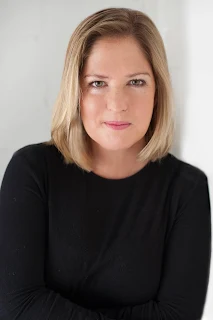
Author Kayte Nunn
Author Kayte Nunn
Today I have great pleasure in welcoming Australian author Kayte Nunn to Carpe Librum. Kayte has written The Botanist's Daughter, The Forgotten Letters of Esther Durrant and The Silk House and was kind enough to join me here today and answer a few questions about her latest book The Silk House, her interest in witchcraft, what she's reading next and what she's writing now.

Thanks for joining us Kayte. As I write, Melbourne is in lockdown. Have the events of this year had an impact on your reading and writing? If so, have they had a positive, negative or neutral effect?
Certainly to begin with they had a negative effect as I was so distracted that I couldn’t concentrate properly on writing or editing – a final read-through of The Silk House took me twice as long as it normally would have done. Then, both my daughters were doing school at home for a month or so and that was rather distracting. However, since then, where we live at least, things have settled into a new normal (for which I am very thankful and know we are very lucky) and I’m just trying to get on with things and not watch too much news coverage.

How different was the publication and release of your new novel The Silk House compared to last year's release of The Forgotten Letters of Esther Durrant?
Very different – normally I would visit bookshops in Sydney and Brisbane and meet booksellers and do a number of events at which I would meet readers. However, this year my events are online, so I can do them without leaving home! I am missing the interaction with readers – it’s harder to gauge their reactions in a crowded Zoom event – but the upside is that more people are able to access these events. I hope in future years that there might be a mix of the two.

I hope so too. The cover design for The Silk House is absolutely stunning and I just love the byline: Weaving. Healing. Haunting. It immediately drew me in. What can you tell us about the cover design process for this novel?
Thank you! I’m very fortunate that my publisher, Rebecca Saunders, involves me at the beginning of the process, so we investigate different angles and discuss what might work and what not. It’s then a process of refinement to arrive at the final cover. I was once a magazine editor, and briefing and deciding on covers – and cover lines – was one of my favourite parts of the job, so it’s nice to be able to continue that with my books!
The Silk House by Kayte Nunn cover
Published by Hachette Australia

What research did you undertake to enable you to successfully bring England - the silk weaving industry and life as a housemaid - in the late 1700s to life on the page?
There is a restored silk merchant’s house in the town where I grew up, so being able to see that was invaluable in imagining the practicalities of life in those times. I also did a great deal of general reading about life in 18th century England, and particularly as it pertained to servants and an emerging merchant class, and also about the silk weaving industry in Spitalfields at that time.

Did the botanical knowledge gathered and obtained in the writing of The Botanist's Daughter help you with Rowan's knowledge of herbalism and the medicinal properties of plants in The Silk House?
Somewhat. I did further research about the medicinal properties of plants, even finding out what books on herbal lore would have been available then.

What is it about herbal lore and apothecaries we readers find so fascinating? Could Rowan really have found all of those plants growing in her local area? Were apothecaries required to maintain client confidentiality? Tell us more.
I think anything with unusual properties is fascinating, particularly if it can be found growing wild and only someone with the right knowledge can unlock its power.

I made sure that the plants Rowan finds were all native to that part of England at the time, to the best of my ability. I love the sound of plants native to England – cuckoo pint, medlar, foxglove, etc so it was a pleasure to include them. Finally, I would imagine that it would have been in an apothecary’s best interests to be discreet about his customers.

In The Silk House, we learn in the blurb that a 'length of fabric woven with a pattern of deadly flowers will have far-reaching consequences for all who dwell in the silk house.' Do you believe an item can be - intentionally or un-intentionally - imbued with evil or bad luck?
If I really think about it logically, probably not, but then I am also a fairly superstitious person, so who knows?

I enjoyed that our main character and history teacher Thea Rust is researching persecution ideologies and witchcraft in sixteenth and seventeenth century England. Can you share a little about your own interest in witchcraft?
It developed as I wrote this book and began to research women accused of witchcraft in Wiltshire, of which I discovered there were quite a few, and notable cases. As part of my history A’Level (many years ago now) I undertook a project based on research of my choosing at the local records office – how I wish I had known about the women tried and often killed for being witches then, for I surely would have chosen that as my project!
Hamnet by Maggie O'Farrell book cover
Read an extract here

What book/s is on your bedside table at the moment?
A huge pile, but notably Maggie O’Farrell’s Hamnet, and Joanna Nell’s soon-to-be-released The Great Escape from Woodlands Nursing Home.

I'm looking forward to reading Hamnet too! Is there a book release you're looking forward to or a book you'd like to read before the end of the year?
I’m craving a bit of glamour and escapism, particularly as travel is off the agenda at the moment, so I can’t wait to get my hands on Kevin Kwan’s Sex and Vanity.

I've read that you're almost always working on multiple projects at a time. Can you share anything about your next novel with us?
I’ve finished the structural edit of a book for next year, set in Burma during the Second World War and Ireland leading up to New Year’s Eve 1999.

Anything else you'd like to add?
I hope my readers love The Silk House as much as they did my previous two books – with each book I write I try my hardest to write a better, more compelling, page-turning story.

Thanks so much for your time Kayte! I certainly enjoyed The Silk House and I'm really looking forward to reading your next book.


31 March 2021

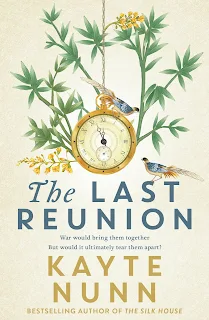
Review: The Last Reunion by Kayte Nunn

The Last Reunion by Kayte Nunn book cover
* Copy courtesy of Hachette Australia *


The Last Reunion by Kayte Nunn is the story of a group of women who volunteered to serve in the Women's Auxiliary Service (Burma) or WAS(B) in 1945. Known to the troops as the Wasbies, these hard-working women ran mobile canteens for the 14th Army in the Burma campaign during WWII and operated in the same tough conditions in dense jungle as the allied forces.

Beatrix was one of the Wasbies and many decades later in 1999, she is forced to reflect on her experiences when she has to sell her beloved Japanese fox-girl netsuke to fund the repairs to her crumbling estate. A netsuke is a small hand-carved sculpture worn with a kimono and acted as a toggle to suspend personal items in lieu of pockets.

Olivia is a young intern to a renowned art dealer and is instructed to meet Beatrix and establish whether she truly does have the infamous netsuke known as the fox-girl. This and several other Japanese netsuke were stolen from an exhibition in Oxford in 1976, so does Beatrix really have it? If so, how did she acquire it? Where has it been all of these years?

Unfolding in dual timelines in 1999 and 1945, the mystery of the netsuke drives the narrative forward and I'd have loved the title to reflect this. More than that though, The Last Reunion is a story of the bonds of friendship, mateship, love and loss and of course trauma.

The growing friendship between Olivia and Beatrix was a real pleasure to read and Kayte Nunn conveys some of the horrors of the Burma campaign and the conditions of war without giving the reader nightmares. I have enjoyed other historical fiction novels from this author, including The Forgotten Letters of Esther Durrant and The Silk House and I knew I was in safe hands here.

I know there has been a plethora of new releases set in WWII lately, but The Last Reunion is highly recommended for fans of historical fiction who are interested in character development more than the politics or strategies of war.

My Rating:


03 January 2021

2 Aussie Reading Challenge Wrap Ups for 2020

The final two reading challenge wrap ups for 2020 are the 2020 Australian Women Writer's Challenge and the 2020 Aussie Author Challenge. I successfully completed both challenges, as you'll see below.

2020 Australian Women Writer's Challenge

In 2020, I was attempting the Franklin level of the 2020 Australian Women Writer's Challenge and needed to read 10 books and review at least 6 of them in order to complete the challenge. Here's what I read:

2020 Australian Women Writer's Challenge
1.  A Month of Sundays by Liz Byrski
2.  Resurrection Bay by Emma Viskic
3.  And Fire Came Down by Emma Viskic
4.  The River Home by Hannah Richell
5.  The Erratics by Vicki Laveau-Harvie
6.  Any Ordinary Day by Leigh Sales
7.  Gulliver's Wife by Lauren Chater
8.  Torched by Kimberley Starr
9.  Where the Dead Go by Sarah Bailey
10. The Innocent Reader: Reflections on Reading & Writing by Debra Adelaide
11. The Silk House by Kayte Nunn
12. My Smoko Break by Hayley Maudsley
13. You Don't Know Me by Sara Foster
14. Find Your Light by Belinda Davidson

2020 Aussie Author Reading Challenge

I chose to attempt the newly created Emu level of the 2020 Aussie Author Reading challenge and had to read and review 24 titles written by Australian Authors. At least 10 of the books had to have female authors, 10 had to be written by male authors and at least 10 had to be authors I've never read before. I also needed to read from at least 4 different genres.

Here's what I read:
2020 Aussie Author Reading Challenge
1.  A Month of Sundays by Liz Byrski
2.  Resurrection Bay by Emma Viskic
3.  And Fire Came Down by Emma Viskic
4.  The River Home by Hannah Richell
5.  Shark Arm by Philip Roope & Kevin Meagher
6.  The Erratics by Vicki Laveau-Harvie
7.  Any Ordinary Day by Leigh Sales
8.  Gulliver's Wife by Lauren Chater
9.  Mammoth by Chris Flynn
10. Torched by Kimberley Starr
11. Where the Dead Go by Sarah Bailey
12. The Innocent Reader: Reflections on Reading & Writing by Debra Adelaide
13. The Rain Heron by Robbie Arnott
14. The Silk House by Kayte Nunn
15. My Smoko Break by Hayley Maudsley
16. Subterranean by B. Michael Radburn
17. You Don't Know Me by Sara Foster
18. Find Your Light by Belinda Davidson
19. Flyaway by Kathleen Jennings
20. Reasonable Doubt by Dr Xanthe Mallett
21. Look Evelyn Duck Dynasty Wiper Blades. We Should Get Them by David Thorne
22. The Good Turn by Dervla McTiernan
23. The Bushfire Book: How to Be Aware and Prepare by Polly Marsden, illustrated by Chris Nixon
24. The Survivors by Jane Harper
31. Death of a Typographer by Nick Gadd

📘📕📗📘📕📗📘📕📗📘📕📗📘📕📗📘📕📗📘📕📗📘📕📗📘📕📗📘📕📗📘

It was a close call on completing the Aussie Author Reading challenge, but I was pleased to meet all of the criteria for both challenges by year's end.

Sign ups for the 2021 challenges are already underway, so I'm looking forward to joining in again this year. Do you find reading challenges spur you on to read more widely? Or do they add extra pressure to your reading choices? I'd love to know.

Carpe Librum!


05 January 2022

3 Reading Challenge Wrap Ups for 2021

It was close, but I successfully completed all of my reading challenges during 2021 and read 75 books in total. You can see my wrap up of the Australian Women Writer's Challenge here and a list of all the books I read in 2021 here.

How did I go and what did I read?

2021 Nonfiction Reader Challenge


This was my second year participating in the 2021 Nonfiction Reader Challenge hosted by Shelleyrae at Book'd Out and I completed the Nonfiction Nibbler level. For this, I read 6 books from the categories below in order to complete the challenge.
2021 Nonfiction Reader Challenge logo


Aussie Author Reading Challenge 2021


Hosted by Jo at Booklover Book Reviews, I successfully completed the Emu level of the challenge to read and review 24 titles written by Australian Authors, of which at least 10 are female, 10 are male, and 10 are new-to-me authors. I also had to read from a minimum of 4 genres. 
Aussie Author Reading Challenge 2021 logo

1. My Best Friend's Murder by Polly Phillips
2. The Reach by B. Michael Radburn
3. Peanut Butter - Breakfast Lunch Dinner Midnight by Tim Lannan & James Annabel
4. Chromatopia - An Illustrated History of Colour by David Coles
5. The Last Reunion by Kayte Nunn
6. The Paris Affair by Pip Drysdale
7. Tussaud by Belinda Lyons-Lee
8. Before You Knew My Name by Jacqueline Bublitz
9. Grave Tales: Melbourne Vol. 1 by Helen Goltz & Chris Adams
10. The Family Doctor by Debra Oswald
11. A Voice In The Night by Sarah Hawthorn
12. The Emporium of Imagination by Tabitha Bird
13. The Inner Self by Hugh Mackay
14. The Lost Girls by Jennifer Spence
15. Nineteen Days by Kath Engebretson
16. As Swallows Fly by L. P. McMahon
17. Noni the Pony Counts to a Million by Alison Lester
18. Old Vintage Melbourne by Chris Macheras
19. Devotion by Hannah Kent
20. Christmas in Suburbia by Warren Kirk
21. The Housemate by Sarah Bailey
22. Modern Slow Cooker by Alyce Alexandra
23. Kill Your Brother by Jack Heath
24. John Safran vs The Occult by John Safran
📚📚📚📚📚📚📚📚📚📚📚📚📚📚📚📚📚📚📚📚📚📚📚📚📚📚📚📚📚📚📚📚📚
Have you read any of the books mentioned above?

I'm already thinking ahead to this year's reading challenges and have promised myself not to cut it so fine again on the Australian male author component of the Aussie Author challenge. I said that last year too, didn't I? 

How was your reading in 2021? Did you achieve what you wanted to?


30 December 2019

Australian Women Writer’s Challenge & Aussie Author Challenge Completed in 2019

Two reading challenges close to my heart (because they're both Australian and are run by some of my favourite bloggers) are the Australian Women Writer’s Challenge and Aussie Author Challenge. I successfully completed both challenges again this year and thought I'd wrap them up together.

2019 Australian Women Writer's Challenge

To complete the Franklin level of the 2019 Australian Women Writer's Challenge I had to read 10 books and review 6 of them. I improved on last year's tally of 15 books and read the following 21 books:
Australian Women Writer’s Challenge 2019 logo

1. The Easiest Slow Cooker Book Ever by Kim McCosker ✭✭✭1/2
2. The Scholar by Dervla McTiernan ✭✭✭
4. Under the Midnight Sky by Anna Romer ✭✭✭
5. The Dark Lake by Sarah Bailey ✭✭✭
6. Small Spaces by Sarah Epstein ✭✭✭✭
7. Into the Night by Sarah Bailey ✭✭✭
8. The Accusation by Wendy James ✭✭✭✭1/2
9. The Forgotten Letters of Esther Durrant by Kayte Nunn ✭✭✭✭
10. The Museum of Modern Love by Heather Rose ✭✭
11. Unsolved Australia: Lost Boys, Gone Girls by Justine Ford ✭✭✭
12. The Blue Rose by Kate Forsyth ✭✭✭✭
13. Cold Case Investigations by Xanthe Mallett ✭✭✭
14. Hide by S.J. Morgan ✭✭✭✭
15. The Van Apfel Girls are Gone by Felicity McLean ✭✭✭
16. Hive by A.J. Betts ✭✭✭
17. Rogue by A.J. Betts ✭✭✭
18. Dressing the Dearloves by Kelly Doust ✭✭✭✭
19. Death on the Derwent - Sue Neill-Fraser's Story by Robin Bowles ✭✭✭
20. The Choke by Sofie Laguna ✭✭
21. The Arsonist by Chloe Hooper ✭✭✭

Aussie Author 2019 Challenge

For the Aussie Author 2019 Challenge I had to read and review 12 titles by Australian authors across a minimum of 3 genres. 4 titles had to be by female authors, 4 titles by male authors and at least 4 had to be new (to me) authors. I improved on last year’s number of 26 and read the following 30 books:
Aussie Author Challenge 2019 logo

1. Dead Heat by Peter Cotton ✭
2. Hunter by Jack Heath ✭✭✭✭✭
3. Green Is The New Black by James Phelps ✭
4. The Easiest Slow Cooker Book Ever by Kim McCosker ✭✭✭1/2
5. The Scholar by Dervla McTiernan ✭✭✭
6. Under the Midnight Sky by Anna Romer ✭✭✭
7. My Book (Not Yours) by Ben Sanders ✭✭✭
8. The Dark Lake by Sarah Bailey ✭✭✭
9. Boxed by Richard Anderson ✭✭✭✭
10. A Lovely and Terrible Thing by Chris Womersley ✭✭✭
11. Small Spaces by Sarah Epstein ✭✭✭✭
12. Into the Night by Sarah Bailey ✭✭✭
13. The Accusation by Wendy James ✭✭✭✭1/2
14. The Forgotten Letters of Esther Durrant by Kayte Nunn ✭✭✭✭
15. The Museum of Modern Love by Heather Rose ✭✭
16. The Everlasting Sunday by Robert Lukins ✭✭✭
17. Unsolved Australia: Lost Boys, Gone Girls by Justine Ford ✭✭✭
18. The Blue Rose by Kate Forsyth ✭✭✭✭
19. Snake Island by Ben Hobson ✭✭✭✭✭
20. Cold Case Investigations by Xanthe Mallett ✭✭✭
21. Silver by Chris Hammer ✭✭✭
22. Hide by S.J. Morgan ✭✭✭✭
23. The Van Apfel Girls are Gone by Felicity McLean ✭✭✭
24. Sh*t Towns of Australia by Rick Furphy and Geoff Rissole ✭
25. Hive by A.J. Betts ✭✭✭
26. Rogue by A.J. Betts ✭✭✭
27. Dressing the Dearloves by Kelly Doust ✭✭✭✭
28. Death on the Derwent - Sue Neill-Fraser's Story by Robin Bowles ✭✭✭
29. The Choke by Sofie Laguna ✭✭
30. The Arsonist by Chloe Hooper ✭✭✭

As you can see, I had a prolific reading year in 2019 supporting Australian authors and publishers with some fantastic titles in the mix across a variety of genres.

I'll be signing up for both challenges again in 2020 and sign-up pages are already open so visit the 2020 Australian Women Writer's Challenge and 2020 Aussie Author Challenge pages for more info.

Carpe Librum!


15 December 2021

Australian Women Writer's Challenge 2021 Wrap Up and Wind Down

I've been participating in the Australian Women Writer's Challenge since 2014, however this year it was announced that the challenge is wrapping up permanently. From 2022 onwards, the focus will shift to lesser-known Australian women writers of the 19th and 20th Century which is largely outside my reading choices but I wish everyone well in their reading adventures.

Needless to say I'll greatly miss striving to meet my challenge requirements every year and engaging with all of the lovely reviews and reviewers participating in the challenge each month. Fortunately the Facebook group will continue to celebrate the works of contemporary Australian women, so I'll try to engage more regularly over there.

I'd like to thank the many volunteers across the years who gave freely of their time to host, edit and wrap up the various categories of the challenge for eager readers and participants like me who greatly enjoyed the regular content hitting their inbox. A special thanks to Theresa Smith who has become a friend to me over that time and whose dedication to AWW I have admired.

In 2021, I was attempting the Franklin level of the 2021 Australian Women Writer's Challenge and needed to read 10 books and review at least 6 of them in order to complete the challenge. I'm pleased to say I successfully completed the final year of the challenge (phew!) and here's what I read: 
Australian Women Writer's Challenge 2021 logo

9. The Emporium of Imagination by Tabitha Bird
10. The Lost Girls by Jennifer Spence

Additional books read for the challenge:
11. Nineteen Days by Kath Engebretson
15. Modern Slow Cooker by Alyce Alexandra

Last year I read 21 books for the challenge, so this number is a little down on previous years. Time permitting, I'd like to try and read The Dictionary of Lost Words by Pip Williams and Adrift in Melbourne by Robyn Annear by the end of the year, but we'll see how I go.

Carpe Librum!


21 December 2019

2019 Historical Fiction Reading Challenge Completed

It's been another successful reading year for me and historical fiction has constituted 20% of my overall reading. Thankfully I wasn't in any danger of failing to complete the 2019 Historical Fiction Reading Challenge this year, unlike other years.

Hosted as always by Amy at Passages to the Past, I had to read 10 historical fiction novels to complete the Renaissance Reader level of the challenge and did so with ease.

Here's what I read for the challenge:

1. The Familiars by Stacey Halls ⭑⭑⭑⭑⭑
2. Claude & Camille by Stephanie Cowell ⭑⭑
3. The Binding by Bridget Collins ⭑⭑⭑⭑⭑
4. Anna of Kleve - Queen of Secrets by Alison Weir ⭑⭑⭑⭑⭑
5. The Forgotten Letters of Esther Durrant by Kayte Nunn ⭑⭑⭑⭑
6. Wakenhyrst by Michelle Paver ⭑⭑⭑⭑⭑
7. The Butterfly Room by Lucinda Riley ⭑⭑⭑
8. The Blue Rose by Kate Forsyth ⭑⭑⭑⭑
9. Tidelands by Philippa Gregory ⭑⭑⭑⭑
10. The Warlow Experiment by Alix Nathan ⭑⭑⭑⭑
11. The Doll Factory by Elizabeth Macneal ⭑⭑⭑⭑⭑
12. Bone China by Laura Purcell ⭑⭑⭑⭑⭑
13. The Lost Ones by Anita Frank ⭑⭑⭑⭑
14. Dressing the Dearloves by Kelly Doust ⭑⭑⭑⭑
15. Things In Jars by Jess Kidd ⭑⭑⭑⭑

You can see from the star ratings that I had an enjoyable historical fiction reading year, which isn't too surprising given it's my favourite genre.

Have you read any of the books above?
2019 Historical Fiction Reading Challenge
Carpe Librum!


05 April 2021

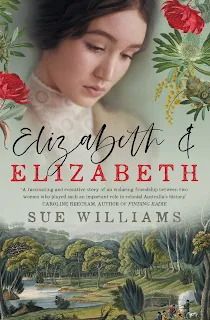
Guest Review: Elizabeth & Elizabeth by Sue Williams

Elizabeth & Elizabeth by Sue Williams book cover
* Copy courtesy of Allen & Unwin *


INTRO

While I was reading The Last Reunion by Kayte Nunn set in the 1940s, guest reviewer Neil Béchervaise stepped back in time to colonial Australia and shares his review of Elizabeth & Elizabeth by Australian author Sue Williams.

NEIL'S REVIEW

Many readers, I am sure, will be attracted to the stories of friendship and tension between two pioneering women in the early 1800s colony of New South Wales. Their tenuous initial contact, their starkly contrasting levels of privation, their losses of children and their developing recognition of common interests make for a powerful reading experience.

The timeliness of Elizabeth & Elizabeth, however, makes it a compelling reminder of how little has actually changed in the former British colonies now called Australia.

2021 marks the 213th anniversary of William Bligh’s appointment as governor of the colony with the support of Sir Joseph Banks, who had accompanied James Cook into Botany Bay several years before and declared it the perfect place to ship convicts. Coincidentally, it also marks the 150th anniversary of the publication of The Origin of Species in which Charles Darwin submitted his highly controversial theory that humans had evolved from apes. Sadly, there are still those who deny the social rights of anyone with a criminal record, regardless of their having ‘served their time’ and seeking to return to a respectable place in society.

Little, it seems has changed in Australia in the past 200 years. Refugees are still held in separated facilities, even on offshore islands; the streets of large cities (and small) still home the homelessness as others seek to provide public health and housing for them. Elizabeth Macquarie’s pursuit of civil treatment for the colony’s early settlers – whether freed convicts or poor migrants – remains a political football still largely resisted by those who might afford to resolve the problem. Farm work is still seen as a lowly occupation, best undertaken by migrant back-packers and students through deals which leave them tenuously employed and underpaid.

In contrast, Elizabeth MacArthur’s farming life, spent largely in isolation from her husband, offers a resilient woman raising a family while developing the wool export market which resulted in the claim that Australia lived ‘on the sheep’s back’. That it now probably lives more on the miner’s back is ironic when we regard the equally pioneering efforts of some of our more famous mining women – still largely in the reputational shadows of their husbands and the companies they now manage.

Certainly, Elizabeth & Elizabeth provides a wonderful celebration of the lives of two Australian pioneers who fought for, and achieved, many of the goals we take for granted; two women who brought imagination, tenacity and creative ability to a male-dominated, militarily administered outland where human rights were controlled by the rich and privileged; two women who, in starkly different ways, sought to re-vision Australia for an unimaginable but socially and economically sustainable future.

With Elizabeth & Elizabeth, Sue Williams presents an historical background for a country which may now have one of the most diverse ethnic backgrounds in the modern world, one of the most complex socio-cultural structures in the world, but which retains too many of the progress-resistant political structures that were identified by the time of the landing of the second fleet of convicts in the colony of New South Wales. A colony which had already rebelled against bullying, land grabbing and corrupt, manipulative structures which still largely deny the very rights that Sue Williams' heroic women were struggling for.

With Elizabeth & Elizabeth, Sue Williams offers a highly entertaining introduction to the early development of the British penal colony which has become Australia. For readers with an interest in the country’s early history, Williams' historical novel provides a compelling basis for discussion of our prevailing attitudes to our indigenous ancestors, to our current values and social attitudes and to our right to claim a respectable place in the modern world that is the 21st century.

Neil's Rating:


28 December 2020

4 Reading Challenge Wrap Ups for 2020

I'm a little behind on my reading challenge wrap ups, but I've been reading up a storm this year. In this wrap up, I'm going to check back in on the following four reading challenges I participated in this year.

- Non Fiction November 2020
- Book Bingo 2020
- 2020 Non Fiction Reader Challenge
- 2020 Historical Fiction Reading Challenge


Non Fiction November Wrap Up

How was your Non Fiction November? Here are the non fiction titles I read during the month. Unfortunately A Life Discarded: 148 Diaries Found in a Skip by Alexander Masters was a DNF for me at 26% as it just wasn't holding my interest. It happens.

- Sh*t Moments In New Zealand Sport by Rick Furphy and Geoff Rissole
- Northside: a time and place by Warren Kirk
- The Ultimate Bucket List: 50 buckets you must see before you die by Dixe Wills
- Underland by Robert Macfarlane
- Nodding Off by Alice Gregory

I finished reading the last two books on this list in December which is why this wrap up is late.

Book Bingo 2020

This was my first time participating in the Book Bingo 2020 reading challenge hosted by my bookish friends Theresa Smith Writes, Mrs B’s Book Reviews and The Book Muse. To successfully complete the challenge, I had to read and review a book from each of the following 12 bingo squares: 

1. Themes of culture (And Fire Came Down by Emma Viskic)
Book Bingo 2020 reading challenge image
2. About the environment (The Rain Heron by Robbie Arnott)
3. Set in a time of war (To Sleep In A Sea of Stars by Christopher Paolini)
4. Themes of inequality (Gulliver's Wife by Lauren Chater)
5. Prize winning book (The Erratics by Vicki Laveau-Harvie)
6. Set in a place you dream of visiting (The Midnight Library by Matt Haig)
7. Themes of crime and justice (Reasonable Doubt by Dr Xanthe Mallett)
8. Friendship, family & love (A Month of Sundays by Liz Byrski)
9. Set in an era you'd love to travel back in time to (Spirited by Julie Cohen)
10. Themes of politics and power (Katheryn Howard - The Tainted Queen by Alison Weir)
11. Coming of age (The Austen Girls by Lucy Worsley)
12. A classic you've never read before (Pride and Prejudice by Jane Austen)

This challenge isn't being run in 2021, but it was really fun to take part in this year.

2020 Non Fiction Reader Challenge

As you know, I love reading the odd non fiction book and mid way through the year, I decided to jump on board and join the 2020 Non Fiction Reader Challenge hosted by Shelleyrae over at Book'd Out. In order to complete the Know-It-All level of the challenge, I had to read one book for each of the categories below.


2020 Non Fiction Reader Challenge

2020 Historical Fiction Reading Challenge

In order to complete the Renaissance Reader level of the 2020 Historical Fiction Reading Challenge hosted by Passages to the Past, I had to read 10 historical fiction novels. Here's what I read:

______________________________________________________________________________

It was a lot of fun participating in these four challenges throughout the year and I was very pleased to successfully complete all of them. Soon I'll be wrapping up the last two reading challenges I participated in this year: the 2020 Australian Women Writer's Challenge and 2020 Aussie Author Reading Challenge. 

In the meantime, let me know if you participated in any of these challenges or if any of the books mentioned above take your fancy. Are you thinking about reading challenges for 2021 or is it too soon?

Carpe Librum


07 April 2022

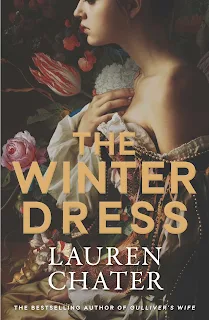
Blog Tour: The Winter Dress by Lauren Chater

The Winter Dress by Lauren Chater blog tour schedule

* Copy courtesy of Simon & Schuster *


Intro

Lauren Chater is a talented Australian author and it's an absolute pleasure to be part of the digital blog tour celebrating the release of her latest historical fiction novel The Winter Dress.

Blurb

Jo Baaker, a textiles historian and Dutch ex-pat is drawn back to the island where she was born to investigate the provenance of a 17th century silk dress. Retrieved by local divers from a sunken shipwreck, the dress offers tantalising clues about the way people lived and died during Holland’s famous Golden Age.

Jo’s research leads her to Anna Tesseltje, a poor Amsterdam laundress turned ladies companion who served the artist Catharina van Shurman for one season at her property outside the Hague. The two women were said to be close, so why did Anna abandon Catharina at the height of her misfortune? And was the dress a gift or did Anna come by it through less honest means? Jo is determined to find out, but as she delves deeper into Anna’s history, troubling details about her own past begin to emerge, disrupting the personal narrative she has trusted for sixteen years.

On the small Dutch island of Texel where fortunes are lost and secrets lie buried for centuries, Jo will finally discover the truth about herself and her connection to the woman who wore The Winter Dress.

Review
The Winter Dress by Lauren Chater book cover

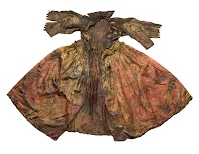
I love an historical fiction novel based on an element from history or a true story and we certainly have that here. In 2014, a big storm hit off the coast of Texel, clearing away layers upon layers of sand and mud from a known 17th century shipwreck. Texel is located off the coast of the Netherlands north of Amsterdam, and this natural event created an unexpected opportunity to explore the shipwreck known as the Palmwood wreck. Many items were recovered by divers, including a remarkably preserved 17th century silk dress.

Textiles are rarely recovered from shipwrecks and garments from this era rarely survive, so for this silk dress to survive on the bottom of the Wadden Sea for more than 350 years is quite extraordinary. 

The news of this incredible discovery travelled around the world and inspired Lauren Chater to imagine the woman who wore the dress. As a result, the seeds for The Winter Dress were well and truly sewn. (Sorry, couldn't resist).

Our main character Jo Baaker is a textiles historian and an interesting woman in her own right. In her words:
"One of the reasons I chose to pursue dress history was because I wanted to bear witness to the creation of textiles that simply won't be around in fifty years. The garments deserve better and so do the people who wore them." Page 155
Jo is astonished when she learns about the discovery of the dress in the book and I couldn't help but cringe alongside Jo when she hears how the dress was transported and hosed down by local divers trying to get the worst of the mud off. Eeeek!!! Jo is captivated by the dress and is honoured to be part of the curating process, desperately wondering about the life of the woman who once wore it.
17th century silk dress from the Palmwood wreck
The real silk dress
Source: www.archaeology.org
 

The Winter Dress is a dual narrative and the author takes us back in time to Amsterdam in 1651 where we meet Anna Tesseltje on the last day of her old life. Anna's family have fallen on hard times, and after starting work as a laundress, her brother secures her a position as a companion to artist Catharina van Shurman.

Meanwhile, Jo finds herself caught up in the excitement of the discovery in Texel and the lurking professional competition made me grind my teeth while my heart ached for the choices Anna faced in her timeline.

Expertly researched and beautifully told, this is a well woven and alluring story with a lustre between the pages you're not likely to forget.

A total of 100 signed boxed proofs of The Winter Dress were produced for Australia and New Zealand and as a member of this blog tour, I was lucky enough to receive one of these special editions! It's such a wonderful bookish touch that appeals to we booklovers and bibliophiles and is a pleasure to house on my bookshelves.

The Winter Dress by Lauren Chater is engaging and the author's enthusiasm to imagine and reveal the owner of the dress is contagious. This is a story about grief, love, loss and discovery and is highly recommended for fans of Kate Forsyth, Tracy Chevalier, Kayte Nunn, Philippa Gregory, Kate Morton; and of course if you enjoyed Gulliver's Wife by Lauren Chater, you'll love this!

My Rating:


Carpe Librum image of the signed and limited boxed edition of The Winter Dress by Lauren Chater
06 July 2012

Gothic Tales

Black rose on paper with script writing
I love a good gothic novel, so I've put together a list of gothic tales I've read and have mentioned them below. I've included links to my reviews where possible and continue to update this list each year. I would love to hear about any gothic tales you've enjoyed.

Gothic Novels*

Andahazi, Federico (The Merciful Women)
Carter, Angela (The Bloody Chamber and Other Stories)
Challinor, Deborah (Black Silk and Sympathy)
Chase, Eve (Black Rabbit Hall)
Fox, Hester (The Widow of Pale Harbour)
Griffiths, Elly (The Stranger Diaries)
Halls, Stacey (Mrs England)
Harris, Jane (The Observations)
Harrow, Alix E. (Starling House)
Hart, Emilia (Weyward)
Hawthorne, Nathaniel (The Scarlet Letter)
Hill, Susan (The Small Hand)
Hyland, Angus & Roberts, Caroline (The Book of the Raven - Corvids in Art & Legend)
Jackson, Shirley (We Have Always Lived in the Castle)
James, Henry (The Turn of the Screw)
James, Rebecca (The Woman in the Mirror)
Jennings, Kathleen (Flyaway)
Kidd, Jess (Things In Jars)
Purcell, Laura (The Shape of Darkness)
Purcell, Laura (The Whispering Muse)
Rayne, Sarah (What Lies Beneath)
Rice, Anne (Angel Time - The Songs of the Seraphim)
Rice, Anne (Interview With The Vampire)
Rice, Anne (Memnoch the Devil)
Rice, Anne (The Vampire Lestat)
Rice, Anne (Violin)
Rose, M.J. (Seduction: A Novel of Suspense)
Schwab, V.E. (Bury Our Bones in the Midnight Soil)
Setterfield, Diane (The Thirteenth Tale)
Setterfield, Diane (Once Upon a River)
Shelley, Mary (Frankenstein)
Shenje, Kuchenga (The Library Thief)
Stevens, Amanda (The Restorer)
Stoker, Bram (Dracula)
Ware, Ruth (The Turn of the Key)
Ware, Ruth (The Death of Mrs Westaway)
Waters, Sarah (The Little Stranger)
Webber, Andrew Lloyd (Andrew Lloyd Webber's The Phantom of the Opera Companion)
Wells, H.G. (The War of the Worlds)
Wilde, Oscar (The Picture of Dorian Gray)
Zafon, Carlos Ruiz (The Shadow of the Wind)
Zafon, Carlos Ruiz (The Angel’s Game)

* Last updated 30 March 2026


What makes a novel Gothic?

1. Setting in a castle. The action takes place in and around an old castle, sometimes seemingly abandoned, sometimes occupied. The castle often contains secret passages, trap doors, secret rooms, dark or hidden staircases, and possibly ruined sections. The castle may be near or connected to caves, which lend their own haunting flavor with their branchings, claustrophobia, and mystery. (Translated into modern filmmaking, the setting might be in an old house or mansion--or even a new house--where unusual camera angles, sustained close ups during movement, and darkness or shadows create the same sense of claustrophobia and entrapment.)

2. An atmosphere of mystery and suspense. The work is pervaded by a threatening feeling, a fear enhanced by the unknown. Often the plot itself is built around a mystery, such as unknown parentage, a disappearance, or some other inexplicable event. Elements 3, 4, and 5 below contribute to this atmosphere. (Again, in modern filmmaking, the inexplicable events are often murders.)

3. An ancient prophecy is connected with the castle or its inhabitants (either former or present). The prophecy is usually obscure, partial, or confusing. "What could it mean?" In more watered down modern examples, this may amount to merely a legend: "It's said that the ghost of old man Krebs still wanders these halls."

4. Omens, portents, visions. A character may have a disturbing dream vision, or some phenomenon may be seen as a portent of coming events. For example, if the statue of the lord of the manor falls over, it may portend his death. In modern fiction, a character might see something (a shadowy figure stabbing another shadowy figure) and think that it was a dream. This might be thought of as an "imitation vision."

5. Supernatural or otherwise inexplicable events. Dramatic, amazing events occur, such as ghosts or giants walking, or inanimate objects (such as a suit of armor or painting) coming to life. In some works, the events are ultimately given a natural explanation, while in others the events are truly supernatural.

6. High, even overwrought emotion. The narration may be highly sentimental, and the characters are often overcome by anger, sorrow, surprise, and especially, terror. Characters suffer from raw nerves and a feeling of impending doom. Crying and emotional speeches are frequent. Breathlessness and panic are common. In the filmed gothic, screaming is common.

7. Women in distress. As an appeal to the pathos and sympathy of the reader, the female characters often face events that leave them fainting, terrified, screaming, and/or sobbing. A lonely, pensive, and oppressed heroine is often the central figure of the novel, so her sufferings are even more pronounced and the focus of attention. The women suffer all the more because they are often abandoned, left alone (either on purpose or by accident), and have no protector at times.

8. Women threatened by a powerful, impulsive, tyrannical male. One or more male characters has the power, as king, lord of the manor, father, or guardian, to demand that one or more of the female characters do something intolerable. The woman may be commanded to marry someone she does not love (it may even be the powerful male himself), or commit a crime.

9. The metonymy of gloom and horror. Metonymy is a subtype of metaphor, in which something (like rain) is used to stand for something else (like sorrow). For example, the film industry likes to use metonymy as a quick shorthand, so we often notice that it is raining in funeral scenes. Note that the following metonymies for "doom and gloom" all suggest some element of mystery, danger, or the supernatural.

This list of gothic elements has come directly from the Virtual Salt website.