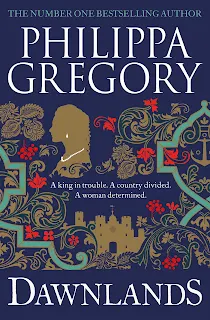
As a fan of historical fiction I've admired the work of Philippa Gregory from a distance for a long while now, and enjoyed the film The Other Boleyn Girl based on her novel of the same title.
I'm excited to have finally made her acquaintance so to speak after receiving two of her books from The Cousin's War series for Christmas last year: The White Queen and The Red Queen.
To be honest, I'd been procrastinating about reading The White Queen, enjoying the fantasy that Philippa Gregory could be my next favourite historical fiction author and at the same time prolonging any chance of disappointment. When I finally found the courage to take the plunge, I was both pleased and excited to find she exceeded my expectations in every possible way. Phew!
England in the late 1400s during the time of the House of Lancaster and the House of York is rich with material although some authors seem to drown in the details of court politics, rebellions and uprisings and end up confusing the hell out of their readers. And then there are authors like Philippa Gregory and Robin Maxwell who delight in the narrative and tantalise us with their tales of secrets and betrayals, war, love and sieges.
Elizabeth Woodville is a widow who meets King Edward IV on a roadside in an attempt to speak with him about her dead husband's land when a spark of attraction is ignited between them. They fall in love, although Elizabeth won't risk her reputation to lay with him and so the King proposes and they secretly marry. Elizabeth goes on to give birth to two sons; the Princes disappearance years later will mystify historians for centuries to come in the mystery known as the 'Princes in the Tower.'
Elizabeth is fiercely loyal to her family and protective of her children, ending her association with the House of Lancaster when she marries the King and joining the House of York; continuing to work out who she can trust and who to build alliances with until the very end.
Philippa Gregory walks us through complicated history with remarkable ease and I got a real sense of what it must have been like to live during these times of political unease and uncertainty. One day Elizabeth is a Queen and the next she is in sanctuary fearing for her life.
Regardless of the subject matter, The White Queen was easy to follow and the love story was quite a feature which I happened to quite enjoy; another surprise from Gregory (I don't usually handle the romance section of a novel too well).
Another bonus is that this novel contributes towards my Historical Fiction 2012 Reading Challenge, which is great news given I signed up for the Struggling the Addiction level of ten books. Click here if you'd like to join the challenge with me.
The next novel in this series is The Red Queen and I can't wait to read it soon. Have you read any books by Philippa Gregory? What were they and did you enjoy them? Drop me a line and share your reading experience.
My rating = ****
Carpe Librum!
Showing posts sorted by relevance for query Philippa Gregory. Sort by date Show all posts
13 April 2012
Review: The White Queen by Philippa Gregory
28 November 2025
Review: Boleyn Traitor by Philippa Gregory
* Copy courtesy of Harper Collins *
Boleyn Traitor by Philippa Gregory tells the story of Jane Boleyn in a first person narrative and is easy to slide into. Married to George Boleyn - Anne Boleyn's brother - Jane holds the title of Lady Rochford and we pick up her story in the year 1534. At almost thirty years old, Jane is the first lady at King Henry VIII's court serving her sister-in-law Anne Boleyn; who is mother to Princess Elizabeth and 5 months pregnant.
Jane is in love with George and the entire Boleyn family and has been married to George for almost half her life. Jane reflects on her service to the old Queen, Katherine of Aragon but relishes her prestigious place at court.
King Henry's court is full of rising and falling fortunes and Jane is banished from court following her attempt to remove one of the King's mistresses on Anne's behalf. Later brought back to court by Thomas Cromwell, Jane is grateful to return and agrees to be one of Cromwell's many informants.
Scandal rocks the court when Anne Boleyn is accused of adultery and incest with her brother George and they're both executed for treason. Many accounts portray Jane as betraying her husband George by giving Cromwell evidence against the pair but in Boleyn Traitor, Gregory offers a different perspective.
The King marries Jane Seymour very soon after while our protagonist is grieving the loss of her husband and beloved sister-in-law, feeling lost without them:
"Jane Seymour sails downriver from Chelsea in Anne's barge, wearing Anne's clothes, and sleeps in Anne's bed, in Anne's sheets. The monograms on the sheets and towels and linen are picked out, and the A under the coronet is replaced with a newly embroidered J. In the evenings, we light the candles that Anne ordered; they have not even burned down. Everything is the same; only the queen is different, and the newly joyous mood of the court." Page 174Much of the plot of this book felt familiar and not only because I've read so many books set in the Tudor court, but I happened to read The Boleyn Inheritance by Philippa Gregory in January 2025. Published in 2006, it contains first person narratives from Jane Boleyn, Anne of Cleves and Katherine Howard up until Jane and Katherine's death. Given Boleyn Traitor also follows Jane Boleyn until her death in 1542, much of the content was familiar, and I soon realised reading The Boleyn Inheritance just 9 months before Boleyn Traitor was bad timing on my part.
What sets these two books apart though is that Gregory portrays Jane Boleyn and Katherine Howard in a completely different way and there is greater emphasis on King Henry VIII as an out of control tyrant.
When it's clear Jane fears the worst for Katherine Howard (Kitty in this novel) she reflects:
"I think that those in service to a tyrant are called to strange and dark work. I want to think that I am a master courtier, steering her through a crisis in her marriage, and this will all blow over. But right now, I don't feel like a master courtier at all; I feel like her gaoler, and I think that when you enter the service of a tyrant, you never know what work you will sink to." Page 431As an historian and bestselling author, I believe the author is using her platform to comment here on tyrants in history as a warning to the modern reader about what happens when a narcissistic tyrant is continually flattered and placated and no longer bound by the constraints of law and government.
Boleyn Traitor by Philippa Gregory is recommended to fans of Tudor history open to a refreshingly different take on Jane Boleyn, previously portrayed as a villain and divisive figure in history.
For those interested, Jane Boleyn also features in the following books I've reviewed:
The Boleyn Inheritance by Philippa Gregory
Anne Boleyn - A King's Obsession by Alison Weir
Jane Seymour - The Haunted Queen by Alison Weir
Anna of Kleve - Queen of Secrets by Alison Weir
Katheryn Howard - The Tainted Queen by Alison Weir
My Rating:
★
★
★
★
★
13 May 2012
Review: The Red Queen by Philippa Gregory
The Red Queen by Philippa Gregory is the second book in the Cousins' War series and follows on from my reading of The White Queen which completely swept me away a few weeks ago, earning the novel four stars here on Carpe Librum.
The Red Queen of the title is Lady Margaret Beaufort, devout from a very young age she takes pride in her saints' knees, calluses on her knees from the hours spent in prayer on hard surfaces. Pious and determined to devote her life to God and be as influential as Joan of Arc, she is horrified when her Mother tells her that her lineage as descendant of Edward III and her being a girl means she has no choice but to be wedded and bedded, her sole duty to produce an heir for the throne.
Her dreams of being an Abbess now destroyed, Lady Margaret marries Edmund Tudor and gives birth to Henry Tudor at the tender age of just thirteen. She is lucky to survive the birth at all; at one point the mid wives even toss her in a blanket ten times making her vomit. The birth is so hard on her little body she will never be with child again.
The houses of Lancaster and York both fight for the throne and Lady Margaret plots for years to place her son Henry Tudor - in exile for most of his childhood - on the throne for the House of Lancaster against Elizabeth Woodville aka The White Queen and her King Edward IV and later against King Richard III and the sickly Queen Anne Neville.
Lady Margaret is punished for a failed uprising and we experience her hopes, disappointments, plans for rebellion, secret alliances and historical events from the Red Queen's perspective this time; whereas in Gregory's previous novel The White Queen, we viewed this dangerous and exciting period in history through the eyes of Elizabeth Woodville.
Lady Margaret Beaufort and Elizabeth Woodville were both powerful women in their own right although incredibly different from each other; Lady Margaret was pious and devout with a lineage directly from Edward III whilst Elizabeth Woodville was a commoner, a widower prior to marrying the King, a fertile woman of infinite beauty and reputed to be the daughter of a witch.
I thought it would be difficult for an author to write a book and character that was at such odds with their previous heroine so to speak, nevertheless, Philippa Gregory was able to remain unbiassed and create two completely different voices, overlapping in time and place but without favouring one or the other. Quite a feat of writing actually.
Historical fiction is my favourite genre and I'm excited to say that I've found my new favourite author in Philippa Gregory! The next in the Cousins' War series though is The Lady of the Rivers, which is the story of Elizabeth Woodville's mother Jacquetta. And after that she has a back catalogue of 20 books for me to choose from, phew! Do you have any recommendations?
My rating = ****1/2
Carpe Librum!
The Red Queen of the title is Lady Margaret Beaufort, devout from a very young age she takes pride in her saints' knees, calluses on her knees from the hours spent in prayer on hard surfaces. Pious and determined to devote her life to God and be as influential as Joan of Arc, she is horrified when her Mother tells her that her lineage as descendant of Edward III and her being a girl means she has no choice but to be wedded and bedded, her sole duty to produce an heir for the throne.
Her dreams of being an Abbess now destroyed, Lady Margaret marries Edmund Tudor and gives birth to Henry Tudor at the tender age of just thirteen. She is lucky to survive the birth at all; at one point the mid wives even toss her in a blanket ten times making her vomit. The birth is so hard on her little body she will never be with child again.
The houses of Lancaster and York both fight for the throne and Lady Margaret plots for years to place her son Henry Tudor - in exile for most of his childhood - on the throne for the House of Lancaster against Elizabeth Woodville aka The White Queen and her King Edward IV and later against King Richard III and the sickly Queen Anne Neville.
Lady Margaret is punished for a failed uprising and we experience her hopes, disappointments, plans for rebellion, secret alliances and historical events from the Red Queen's perspective this time; whereas in Gregory's previous novel The White Queen, we viewed this dangerous and exciting period in history through the eyes of Elizabeth Woodville.
Lady Margaret Beaufort and Elizabeth Woodville were both powerful women in their own right although incredibly different from each other; Lady Margaret was pious and devout with a lineage directly from Edward III whilst Elizabeth Woodville was a commoner, a widower prior to marrying the King, a fertile woman of infinite beauty and reputed to be the daughter of a witch.
I thought it would be difficult for an author to write a book and character that was at such odds with their previous heroine so to speak, nevertheless, Philippa Gregory was able to remain unbiassed and create two completely different voices, overlapping in time and place but without favouring one or the other. Quite a feat of writing actually.
Historical fiction is my favourite genre and I'm excited to say that I've found my new favourite author in Philippa Gregory! The next in the Cousins' War series though is The Lady of the Rivers, which is the story of Elizabeth Woodville's mother Jacquetta. And after that she has a back catalogue of 20 books for me to choose from, phew! Do you have any recommendations?
My rating = ****1/2
Carpe Librum!
25 November 2022
Review: Dawnlands by Philippa Gregory
* Copy courtesy of Simon & Schuster *
Dawnlands by Philippa Gregory is the third book in the Fairmile series that began in 2019 with Tidelands (Book 1) and follows straight on after the events in Dark Tides (Book 2). This instalment in the historical fiction series begins in spring 1685 and takes us through to summer in 1689. So much happens in this generational family saga that it's hard to believe the plot takes place in just 4 years, but this encompasses the disquiet around the religious beliefs and practices of King James II, the unrest around monarchy and parliament and of course, the divide between Catholics and Protestants.
Philippa Gregory has a talent for showing how the politics and living conditions of the day affected everyone from the Queen right down to the every man, or ferryman as the case may be. A sub plot in the book took a few characters to Barbados this time and introduced the reader to the atrocious conditions of the slave trade and sugar harvesting industry. In Dark Tides we followed Ned to New England and the two contrasting settings didn't strike the right chord for me. This time however, I was equally entertained by the goings on in Barbados as I was for the happenings back in England, and largely, I think that was down to the character of Rowan.
In Dawnlands we catch up with the same main characters in the family, and continue to follow them through their work lives, personal lives, loves, losses and changes in favour. This allows for deep character development and I enjoyed the introduction of a different sort of love one character has for another:
"No! Never. He loves her as a man loves a woman, as a young man loves a young woman, and that's good and right for him. But I love her as if she were a star in the sky. I love her as if she were the wind blowing over the water. I don't need to own her, I just want her to be in the sky, moving over the deep, I just want her to shine." Page 377Lady Livia Avery is still a force in their lives and a thorn in their side. A manipulative woman and a terrific villain in the series, here a character tries to deliver a warning about her:
"I promised myself I'd never look back. I advised you to do the same. She's like laudanum: at first it's wholly beneficial, then you can't imagine your health without it's support, and you want more and more." Page 92I enjoyed Gregory's take on the warming pan incident surrounding the birth of James Edward Francis Stuart to Queen Mary in 1688, although it could prove controversial for some readers. What was certain, is that the Royal couple needed a male heir, and it's clear in the following passage that the Court was equally desperate for her to conceive:
"There'd better be nothing in this that is dangerous," Livia warned her bluntly. "If she gets ill then I will be in terrible trouble, but you're a dead woman." "Nothing but thyme to boil in sweet wine. She should take honey and pepper every day, and she should eat hare and venison, male meat, the pizzle and the parts. Can you order that for her?" "Of course I can," Livia said. "She's the Queen of England. I can get almost anything in the world but a son in the cradle!" Page 261Dawnlands is just as entertaining as Tidelands and the machinations of Lady Avery are increasingly manipulative and self-serving and just as hard to deal with for the characters as they are for the reader. The author has created a terrific villain in the series and I can't wait to see what plans she has in store for this social climbing, conniving woman.
While I haven't heard of a fourth book in the Fairmile series, I have no reason to believe there won't be one. The characters are continuing to eke out their various livings as best they can, with some striving to improve their station in life while others remain motivated to pursue political justice or concentrate on their individual or family legacy.
Dawnlands by Philippa Gregory is highly recommended for fans of historical fiction and best read as part of a series.
My Rating:
★
★
★
★
★
12 August 2019
Review: Tidelands by Philippa Gregory
* Copy courtesy of Simon & Schuster *
Tidelands by Philippa Gregory is my most anticipated new release for 2019 and I was excited to get my hands on it. Set in England 1648, this is a brand new series from one of my favourite historical fiction authors.
In this new series, Philippa Gregory is going to be tracing generations of the same family through their lives beginning in 17th century England, and following them all the way to Europe and the United States. Spanning more than two centuries, this series will show how regular, everyday women shape history. Hell yes! Called the Fairmile series, it all starts with Tidelands.
Alinor lives in poverty with her two children, having seemingly been abandoned by her abusive fisherman husband. Struggling to scratch together a living, Alinor is a midwife and uses her skills with herbs to heal the sick and injured in her district. She also works at the nearby mill with her daughter, and earns money where she can.
Alinor describes how she makes a living on page 27:
Set against the backdrop of English Civil War between the Royalists and the Parliamentarians, news of these political issues is slow to reach the mire. Alinor's fortunes begin to change when she aids a young gentleman in hiding even though she suspects he is working to save the King. Meanwhile, Alinor's daughter falls in love with a wealthy farmer's son and they long to be together; despite Alinor having no means to raise a dowry.
The concept of class and station is a prominent theme in Tidelands, making it seemingly impossible for Alinor or her daughter to marry for love. The lack of rights for women was not a shock, but was still hard to read and the obvious difference between those in poverty and those from wealthy families was clearly apparent. I found this excerpt from the character of James (the young Royalist) on page 189 most revealing:
There was plenty of foreshadowing going on in the novel though and I just knew something was going to go terribly wrong. Feelings of foreboding permeated the writing and it was almost a relief when events started to take a turn for the worse.
Knowing this was the first of a series I felt Tidelands had a very fitting ending. It wasn't a cliffhanger but a clear separation preparing the reader for a future direction. I'm definitely eager to follow the Fairmile series and find out what happens next. Tidelands is recommended for readers of historical fiction and fans of Ken Follett will enjoy the beginnings of this generational family saga rooted in English history.
Tidelands by Philippa Gregory is my most anticipated new release for 2019 and I was excited to get my hands on it. Set in England 1648, this is a brand new series from one of my favourite historical fiction authors.
In this new series, Philippa Gregory is going to be tracing generations of the same family through their lives beginning in 17th century England, and following them all the way to Europe and the United States. Spanning more than two centuries, this series will show how regular, everyday women shape history. Hell yes! Called the Fairmile series, it all starts with Tidelands.
Alinor lives in poverty with her two children, having seemingly been abandoned by her abusive fisherman husband. Struggling to scratch together a living, Alinor is a midwife and uses her skills with herbs to heal the sick and injured in her district. She also works at the nearby mill with her daughter, and earns money where she can.
Alinor describes how she makes a living on page 27:
I'm a midwife. I used to have my licence, when the bishop was in his palace and could grant a licence - before he was thrown out and ran away. I can draw a tooth and set a bone, cut out a sore and heal an ulcer, but I do nothing else. I am a healer and a finder of lost things.Descended from generations of wise women, Alinor is constantly treading a fine line between healing and helping and being accused of witchcraft by locals who love to gossip. With her husband missing feared drowned, Alinor is in the unenviable position of being neither a widow nor a wife and is forced to take counsel from her brother.
Set against the backdrop of English Civil War between the Royalists and the Parliamentarians, news of these political issues is slow to reach the mire. Alinor's fortunes begin to change when she aids a young gentleman in hiding even though she suspects he is working to save the King. Meanwhile, Alinor's daughter falls in love with a wealthy farmer's son and they long to be together; despite Alinor having no means to raise a dowry.
The concept of class and station is a prominent theme in Tidelands, making it seemingly impossible for Alinor or her daughter to marry for love. The lack of rights for women was not a shock, but was still hard to read and the obvious difference between those in poverty and those from wealthy families was clearly apparent. I found this excerpt from the character of James (the young Royalist) on page 189 most revealing:
He shivered with distaste. He felt that he could not bear the ugliness of these people's lives on the very edge of the shore, with their loves and hates ebbing and flowing like a muddy tide, with their anger roaring like the water in the millrace, with their hatreds and fears as treacherous as the hushing well. .... James's shudder told him that he wanted nothing to do with any of them. He wished himself back with his own people, where cruelty was secret, violence was hidden, and good manners more important than crime.I largely came to love Philippa Gregory's writing via her Plantagenet and Tudor novels however she has left the Tudor courts and the wars of the roses behind. Whilst I enjoy reading about monarchs and famous women from history, Gregory is equally able to convincingly write about the everyday lives of regular people in England at the time. Fishermen, farmers, and millers populate the cast of characters in Tidelands and I thoroughly enjoyed learning about the rhythms of their lives and how they eked out a meagre wage. I was also inspired by just how hard Alinor and her daughter work to save for her dowry and their hardships reminded me how fortunate I am.
There was plenty of foreshadowing going on in the novel though and I just knew something was going to go terribly wrong. Feelings of foreboding permeated the writing and it was almost a relief when events started to take a turn for the worse.
Knowing this was the first of a series I felt Tidelands had a very fitting ending. It wasn't a cliffhanger but a clear separation preparing the reader for a future direction. I'm definitely eager to follow the Fairmile series and find out what happens next. Tidelands is recommended for readers of historical fiction and fans of Ken Follett will enjoy the beginnings of this generational family saga rooted in English history.
My Rating:
★
★
★
★
★
27 December 2016
Review: The Kingmaker's Daughter by Philippa Gregory
I can't tell you how much I love reading Philippa Gregory's books. In fact, she's getting very close to dethroning Anne Rice as my favourite author of all time. Wow.
The Kingmaker's Daughter is the story of Anne Neville, daughter of the Earl of Warwick (named the Kingmaker) who successfully survived a forced marriage and subsequent widowhood, then navigated the deadly politics of the time; which included changing allegiances and the execution of her father.
The Kingmaker's Daughter is the fourth book in the Cousins' War series, however it can easily be read out of sequence and as a stand alone novel.
The Kingmaker's Daughter is the story of Anne Neville, daughter of the Earl of Warwick (named the Kingmaker) who successfully survived a forced marriage and subsequent widowhood, then navigated the deadly politics of the time; which included changing allegiances and the execution of her father.
Anne Neville became Queen of England in 1483, but even knowing the historical outcome in advance didn't stop me from being gripped by her journey to the throne as told by the author.
The Kingmaker's Daughter is the fourth book in the Cousins' War series, however it can easily be read out of sequence and as a stand alone novel.
In a period where parents named their children after their fathers or the king, many of the characters share the same name. But don't panic, Gregory always manages to keep the characters separate in the reader's minds. This is a difficult feat and not one easily achieved by other historical fiction authors I've read; and I've read quite a few!
If you have even the slightest interest in the history of the period (mid to late 1400s England) then you are in the safest of hands with Philippa Gregory. She has a natural gift for making any period in history relatable and easy to follow despite the complexities of the times. Whenever I pick up one of her novels I'm thoroughly transported, entertained and educated without even realising it.
The Kingmaker's Daughter is outstanding, I loved loved loved it!
My rating = *****
Carpe Librum!
My rating = *****
Carpe Librum!
(The only reason this won't feature in my top 5 books of 2016 list is because I've already included a Philippa Gregory novel in the list).
03 December 2020
Review: Dark Tides by Philippa Gregory
* Copy courtesy of Simon & Schuster *
Dark Tides by Philippa Gregory is the second book in the historical fiction Fairmile series and picks up 21 years after the end of Tidelands. I was eagerly awaiting this release, but the huge time gap between books was a complete surprise. I was really looking forward to following Alinor and Alys as they left the mire with their cart and faced the dangers and challenges ahead.
Unfortunately, the reader picks up their story after these struggles and we find them with an established household working as poor wharfingers in a small warehouse on the south side of the Thames. Alinor has aged and while still very much the matriarch of the family, she is no longer the main character of the novel. Rob's widow arrives on their doorstep from Venice with her newborn baby and the devastating news he has drowned.
Alys and her daughter Sarah dominate the story along with the widow Livia, with intervening chapters from Alinor's brother Ned's point of view.
Ned has moved to New England and is quietly trying to eke out a living as a ferryman. There he finds himself caught between the settlers and the American Indians and his storyline is full of foreboding and dread about what is to come.
Ned's chapters were a complete contrast to the goings on in London and Venice and to be honest, I could have done without them. I typically don't enjoy reading about early settlement in the USA, so I didn't enjoy Ned's story in New England.
Back in London, wealthy widow Livia is turning the Reekie family on its head and I could tell it wasn't going to end well. Rob's widow is a well-written antagonist with some biting dialogue, but her storyline had an overbearing sense of a family betrayal brewing that made this reader feel uneasy.
The sense of foreboding evident in Tidelands is also present in Dark Tides, however the fact that all storylines were heading towards seemingly unavoidable disaster made this a worrisome read.
Dark Tides by Philippa Gregory is the second book in the historical fiction Fairmile series and picks up 21 years after the end of Tidelands. I was eagerly awaiting this release, but the huge time gap between books was a complete surprise. I was really looking forward to following Alinor and Alys as they left the mire with their cart and faced the dangers and challenges ahead.
Unfortunately, the reader picks up their story after these struggles and we find them with an established household working as poor wharfingers in a small warehouse on the south side of the Thames. Alinor has aged and while still very much the matriarch of the family, she is no longer the main character of the novel. Rob's widow arrives on their doorstep from Venice with her newborn baby and the devastating news he has drowned.
Alys and her daughter Sarah dominate the story along with the widow Livia, with intervening chapters from Alinor's brother Ned's point of view.
Ned has moved to New England and is quietly trying to eke out a living as a ferryman. There he finds himself caught between the settlers and the American Indians and his storyline is full of foreboding and dread about what is to come.
Ned's chapters were a complete contrast to the goings on in London and Venice and to be honest, I could have done without them. I typically don't enjoy reading about early settlement in the USA, so I didn't enjoy Ned's story in New England.
Back in London, wealthy widow Livia is turning the Reekie family on its head and I could tell it wasn't going to end well. Rob's widow is a well-written antagonist with some biting dialogue, but her storyline had an overbearing sense of a family betrayal brewing that made this reader feel uneasy.
The sense of foreboding evident in Tidelands is also present in Dark Tides, however the fact that all storylines were heading towards seemingly unavoidable disaster made this a worrisome read.
While there was ample foreshadowing throughout the novel, Gregory's signature writing talent was on full display. Here's a quote I enjoyed from very early on in the book:
"He thought the world was not whole anymore; but sundered into country and court, winners and the lost, protestants and heretics, royalists and roundheads, the unfairly blessed and the unjustly damned." Page 6Themes of class and the divide between the poor and the wealthy were again brought into focus with the seemingly wealthy widow's disappointment and shock at the Reekie family's position and living conditions and her desire to improve her station in life for the benefit of her son.
Dark Tides by Philippa Gregory is recommended for historical fiction fans with an interest in 1670s London, Venice or New England, and those who enjoy investing in a good generational family saga. I look forward to the next installation of the Fairmile series.
My Rating:
★
★
★
★
★
24 January 2025
Review: The Boleyn Inheritance by Philippa Gregory
It's been years since I read an ebook and The Boleyn Inheritance by Philippa Gregory has been on my Kindle App since 2016. This year I'm planning to read some bigger books from my backlist and coming in at 530 pages and waiting nine years, it was definitely time to read The Boleyn Inheritance.
Set in England during the reign of King Henry VIII, we're given first person narratives from Jane Boleyn (Lady Rochford, wife of George Boleyn and sister-in-law to Anne Boleyn), Anne of Cleves and Katherine Howard.
Beginning in 1539, we meet Anne when she's the Duchess of Cleves. She's keen to escape her domineering brother and make the biggest match possible to become Queen of England. I really enjoyed this different perspective on Anne's life, her mindset and the way in which she navigated the challenges of coming to a land without knowing the language. Navigating the tricky court of Henry VIII was a real culture shock:
"Clearly, I will never be alone again for another moment in all my life." Page 59 Anne, Calais, December 1539Anne's first meeting with the King was a disaster - as we know - but I enjoyed Gregory's interpretation of the events which have since become legendary.
Meanwhile, Jane Boleyn has been away from court following the execution of her husband and sister-in-law for treason in 1536. Jane is ambitious and a social climber, as becomes clear early on in the book:
"Once again I shall be at court. Once again I shall be the closest friend of the queen, a constant companion in her chamber. I shall see everything, know everything. I shall be at the very centre of life again, I shall be the new Queen Anne's lady in waiting, serving her as loyally and well as I have served the other three of King Henry's queens. If he can rise up and marry again without fear of ghosts, then so can I." Page 15, Jane Boleyn, Blickling Hall, Norfolk November 1539Jane struggles with her role in the demise of her husband and sister-in-law and again the author offers a refreshing perspective on her motives. Jane strives to be Anne's confidant, all the while recognising the precarious nature of her union with the King:
"She will have to learn to obey him. Not in the grand things, any woman can put on a bit of a show. But in the thousand petty compromises that come to a wife every day. The thousand times a day when one has to bite the lip and bow the head and not argue in public, nor in private, nor even in the quiet recesses of one's own mind. If your husband is a king, this is even more important. If your husband is King Henry, it is a life or death decision." Page 124 Jane Boleyn, Greenwich Palace, 6 January 1540Serving Anne of Cleves in court is Katherine Howard who is portrayed as a young, foolish, sexually active and extremely flirtatious young lady. Anne had been the subject of unkind gossip from the court when young Kitty Howard came to her defence:
"I was so grateful to her for that. She is a foolish, frivolous little thing but she has the cleverness of a stupid girl, since, like any stupid girl, she only thinks about one thing, and so she has become very expert in that." Page 189 Anne, Hampton Court, March 1540Despite the age gap, Katherine is encouraged to flirt with King Henry and is naive about what might follow. Seeking the King's favour and her time in the limelight, she convinces herself:
"The other wives did as they had to do, their lives ended as God and the king willed; it is really nothing to me. Even my cousin Anne Boleyn shall be nothing to me. I shall not think of her, nor of our uncle pushing her on to the throne and then pushing her on to the scaffold." Page 257 Katherine, Norfolk House, Lambeth, June 1540Meanwhile, King Henry takes his time setting aside Anne of Cleves and making her his sister in order to annul their loveless marriage. At the age of twenty-five, Anne is frustrated that she's done nothing wrong, yet by agreeing to the terms and saving her neck, the cost of staying alive is great:
"I will have to face a single life, without lover, or husband, or companion. I will have to face a lonely life, without family. I will never have a child of my own, I will never have a son to come after me, I will never have my own daughter to love. I will have to be a nun without a convent, a widow with no memories, a wife of six months and a virgin. I will have to face life in exile. I will never see Cleves again. I will never see my mother again." Page 288 Anne, Richmond Palace, 12 July 1540Despite knowing the history and seeing it portrayed in multiple documentaries, drama series, movies and historical fiction novels over the years, Philippa Gregory managed to make me care for all three characters. The novel takes us right up to the point of Katherine's and Jane's deaths at the Tower of London in February 1542, with a jump in time of five years to 1547 and the death of King Henry, setting Anne free from his reach at last.
This book is part of 'The Plantagenet and Tudor Novels' series, previously known as the 'Cousins War' and 'Tudor Court' series and each of the books can be read as a stand alone.
Here are all the books in the series in order, with reviews linked:
The Lady of the Rivers (Book 1) ⭐️⭐️⭐️⭐️⭐️
The White Queen (Book 2) ⭐️⭐️⭐️⭐️
The Red Queen (Book 3) ⭐️⭐️⭐️⭐️
The Kingmaker's Daughter (Book 4) ⭐️⭐️⭐️⭐️⭐️
The White Princess (Book 5) on my TBR
The Constant Princess (Book 6)
The King's Curse (Book 7)
Three Sisters, Three Queens (Book 8) ⭐️⭐️⭐️⭐️⭐️
The Other Boleyn Girl (Book 9)
The Boleyn Inheritance (Book 10)
The Taming of the Queen (Book 11) ⭐️⭐️⭐️⭐️⭐️
The Queen's Fool (Book 12)
The Virgin's Lover (Book 13)
The Last Tudor (Book 14) ⭐️⭐️⭐️⭐️⭐️
The Other Queen (Book 15) ⭐️⭐️⭐️
The Boleyn Inheritance is Book 10 and I can highly recommend it. The White Princess is next on my radar for the series and I've had a physical copy on my shelves since 2014. Have you read any of these?
My Rating:
★
★
★
★
★
09 October 2018
Review: The Other Queen by Philippa Gregory
The Other Queen by Philippa Gregory is number #15 in The Plantagenet and Tudor novels series, but just like the others in the series, it too can be read as a stand alone.
Set in the mid to late 1500s, this story of Mary Queen of Scots is told from three perspectives: Queen Mary, her keeper George Talbot, Earl of Shrewsbury and his wife, Bess of Hardwick.
Bess's sections were incredibly repetitive; the one exception being the opening paragraph of the book told to us by Bess which was incredibly gripping.
Set in the mid to late 1500s, this story of Mary Queen of Scots is told from three perspectives: Queen Mary, her keeper George Talbot, Earl of Shrewsbury and his wife, Bess of Hardwick.
Bess's sections were incredibly repetitive; the one exception being the opening paragraph of the book told to us by Bess which was incredibly gripping.
"Every woman should marry for her own advantage since her husband will represent her, as visible as her front door, for the rest of his life. If she chooses a wastrel she will be avoided by all her neighbours as a poor woman; catch a duke and she will be Your Grace, and everyone will be her friend. She can be pious, she can be learned, she can be witty and wise and beautiful; but if she is married to a fool she will be 'that poor Mrs Fool' until the day he dies." Page 1
How's that for an opening? I've read 10 novels in this series and overall, The Other Queen just wasn't as engaging or memorable as the others. I recommend it for completionists of the series, otherwise I know for a fact there are better Philippa Gregory novels awaiting discovery.
My rating = ***
Carpe Librum!
How's that for an opening? I've read 10 novels in this series and overall, The Other Queen just wasn't as engaging or memorable as the others. I recommend it for completionists of the series, otherwise I know for a fact there are better Philippa Gregory novels awaiting discovery.
My rating = ***
Carpe Librum!
13 January 2017
Top 5 Favourite Books of 2016
Without further ado, here are my Top 5 Favourite Books of 2016 in the order I read them.
The novel explores themes of identity and mental illness, and the impact the change has on one of the sisters in particular, making for a suspenseful and sometimes disturbing read.
Read in February (courtesy of Pan Macmillan Australia), I instantly felt this book was written for me. Noah has nightmares, repeatedly begs Janie for his real mother and keeps asking when he can go home. Nobody can tell Janie what's wrong with her son despite visiting a whole host of specialists.
The novel covers themes of identity, death, mental illness, re-incarnation and children who may (or may not) be able to remember their previous life. An overarching theme of a mother's love for her son drives this story.
I loved this book and Sharon Guskin is my favourite debut author for 2016.
I only read one classic in 2016 - which is unusual for me - but Watership Down was an absolute delight to discover.
Published in 1972 and set in the South of England, Adams creates a world where rabbits can talk and each warren of rabbits has their own culture. Primarily an adventure story, the rabbits face danger from men and animals and leave their home in search of a safe environment in which to build a new warren and live in peace.
I was sorry to hear Richard Adams passed away in December 2016 and I'm so glad I read this masterpiece.
Brilliantly written and based on a real person, Aemilia was England's first female poet and was thought to be Shakespeare's dark muse.

Read in August (courtesy of Simon & Schuster) and set in 1501, this is a story of three sisters, Margaret Tudor, her younger sister Mary and her future sister-in-law Katherine of Aragon. All three sisters will become Queens in their own right - of England, Scotland and France - and we see their lives unfold and overlap through the eyes of our narrator, Margaret Tudor.
Themes of sibling rivalry, envy, greed, betrayal and the pursuit of true love run throughout the novel as does the importance of delivering a male heir. Miscarriages and failure to produce an heir causes grief and angst for the sisters, and -unexpectedly for the modern reader - competition between them. Henry VIII's overarching influence over each of the women is also evident.
Philippa Gregory is swiftly becoming my favourite author. One of her books made it into my 2015 Top 5 list and this time I wanted to nominate two of her books for this list, which says it all.
Have you read any of the books in this list? What was your favourite book of 2016?
1. Beside Myself by Ann Morgan
Read in January (courtesy of NetGalley), this is a story about twin girls who swap identities for fun. Things begin to go wrong though when one of the sisters refuses to change back.
The novel explores themes of identity and mental illness, and the impact the change has on one of the sisters in particular, making for a suspenseful and sometimes disturbing read.2. The Forgetting Time by Sharon Guskin
The novel covers themes of identity, death, mental illness, re-incarnation and children who may (or may not) be able to remember their previous life. An overarching theme of a mother's love for her son drives this story.
I loved this book and Sharon Guskin is my favourite debut author for 2016.
3. Watership Down by Richard Adams
I only read one classic in 2016 - which is unusual for me - but Watership Down was an absolute delight to discover.
Published in 1972 and set in the South of England, Adams creates a world where rabbits can talk and each warren of rabbits has their own culture. Primarily an adventure story, the rabbits face danger from men and animals and leave their home in search of a safe environment in which to build a new warren and live in peace.
Featuring snippets of rabbit mythology and occasionally including tales told by storyteller rabbits (rabbits love to listen to stories), I thoroughly enjoyed the themes of leadership, sacrifice, freedom and peace that underpin the various stages of this adventure story.
I was sorry to hear Richard Adams passed away in December 2016 and I'm so glad I read this masterpiece.
4. Dark Aemilia by Sally O'Reilly
Read in August and set in London during the late 1500s during the time of Queen Elizabeth I, Dark Aemilia has it all: Shakespeare, plague, sorcery, witchcraft, witty dialogue, great writing and hot sex scenes. Everything I love in a book!Brilliantly written and based on a real person, Aemilia was England's first female poet and was thought to be Shakespeare's dark muse.
Dark Aemilia is for lovers of historical fiction, witty dialogue, Shakespeare and the darker side of London in the 16th Century.

5. Three Sisters, Three Queens by Philippa Gregory
Read in August (courtesy of Simon & Schuster) and set in 1501, this is a story of three sisters, Margaret Tudor, her younger sister Mary and her future sister-in-law Katherine of Aragon. All three sisters will become Queens in their own right - of England, Scotland and France - and we see their lives unfold and overlap through the eyes of our narrator, Margaret Tudor.
Themes of sibling rivalry, envy, greed, betrayal and the pursuit of true love run throughout the novel as does the importance of delivering a male heir. Miscarriages and failure to produce an heir causes grief and angst for the sisters, and -unexpectedly for the modern reader - competition between them. Henry VIII's overarching influence over each of the women is also evident.
Philippa Gregory is swiftly becoming my favourite author. One of her books made it into my 2015 Top 5 list and this time I wanted to nominate two of her books for this list, which says it all.
Have you read any of the books in this list? What was your favourite book of 2016?
Carpe Librum!
17 October 2017
Review: The Last Tudor by Philippa Gregory
* Copy courtesy of Simon & Schuster *
The Last Tudor is the story of the three Grey sisters, Jane, Katherine and Mary, cousins to Mary Tudor and Elizabeth Tudor. Beginning in 1550, the story unfolds from each sister's point of view in three separate sections, giving us uninterrupted access to their lives.
Jane Grey is the eldest and a steadfast Protestant and was made Queen of England for just nine days. Katherine is the polar opposite of her sister and plans to enjoy the trappings of her station as cousin to the Queen of England.
Mary Grey is the youngest of the three sisters and was said to be a little person, or a dwarf. She is largely overlooked and serves her cousin Elizabeth I faithfully, but like her sister Katherine, she falls in love and seeks only to be happy. Queen Elizabeth I is portrayed as a vain and jealous Queen, reluctant to let any of her ladies marry, and in the case of the Grey sisters, to prevent the birth of a Tudor heir.
Drawing on real letters and historical fact, The Last Tudor has been impeccably researched and as a fan of Philippa Gregory's writing, I have come to expect nothing less. I was most interested in the life of Mary Grey but the threat of treason and death accompanied the lives of all three sisters.
I highly recommend The Last Tudor by Philippa Gregory to readers everywhere. It's just a shame this is her final novel based on the Tudor family.
My rating = *****
Carpe Librum!
The Last Tudor is the story of the three Grey sisters, Jane, Katherine and Mary, cousins to Mary Tudor and Elizabeth Tudor. Beginning in 1550, the story unfolds from each sister's point of view in three separate sections, giving us uninterrupted access to their lives.
Jane Grey is the eldest and a steadfast Protestant and was made Queen of England for just nine days. Katherine is the polar opposite of her sister and plans to enjoy the trappings of her station as cousin to the Queen of England.
Mary Grey is the youngest of the three sisters and was said to be a little person, or a dwarf. She is largely overlooked and serves her cousin Elizabeth I faithfully, but like her sister Katherine, she falls in love and seeks only to be happy. Queen Elizabeth I is portrayed as a vain and jealous Queen, reluctant to let any of her ladies marry, and in the case of the Grey sisters, to prevent the birth of a Tudor heir.
Drawing on real letters and historical fact, The Last Tudor has been impeccably researched and as a fan of Philippa Gregory's writing, I have come to expect nothing less. I was most interested in the life of Mary Grey but the threat of treason and death accompanied the lives of all three sisters.
I highly recommend The Last Tudor by Philippa Gregory to readers everywhere. It's just a shame this is her final novel based on the Tudor family.
My rating = *****
Carpe Librum!
08 September 2016
Review: Three Sisters, Three Queens by Philippa Gregory
* Copy courtesy of Simon & Schuster Australia *
It's 1501 and Margaret Tudor (sister to the future Henry VIII) is our narrator in Three Sisters, Three Queens by Philippa Gregory.
The sisters in the title are Margaret Tudor, her younger sister Mary and her future sister-in-law Katherine of Aragon. All three sisters will become Queens in their own right - of England, Scotland and France - but it's how they get there that kept me enthralled.
In fact, after the first page I knew this was going to be a 5 star read and was already mourning the fact it was going to end too soon for my liking.
Three Sisters, Three Queens is primarily a story of sibling rivalry, envy, greed and the pursuit of true love. The importance of delivering a male heir and subsequent miscarriages is the cause of much angst and grief for the sisters, but also competition between them.
Secret weddings, betrayals and invasions take place and Henry VIII's overarching influence over each of the women is evident. When the women are in his favour, his attention and support is like the sun, and when he turns his back on Margaret, it almost costs her life.
I'm confident Three Sisters, Three Queens by Philippa Gregory will make it into my list of Top 5 Books for 2016. It's the perfect entry point for YA readers looking to dip their toe into historical fiction who may not know where to start. As well as offering a completely new perspective on the rule of Henry VIII and for me a welcome introduction to Margaret Tudor and her life in Scotland.
Incredibly accessible, the history of the early 1500s unfolds in this novel like a TV drama series, leaving me wanting to binge-watch episode after episode, or in this case, chapter after chapter. Brilliant!
My rating = *****
Carpe Librum!
It's 1501 and Margaret Tudor (sister to the future Henry VIII) is our narrator in Three Sisters, Three Queens by Philippa Gregory.
The sisters in the title are Margaret Tudor, her younger sister Mary and her future sister-in-law Katherine of Aragon. All three sisters will become Queens in their own right - of England, Scotland and France - but it's how they get there that kept me enthralled.
In fact, after the first page I knew this was going to be a 5 star read and was already mourning the fact it was going to end too soon for my liking.
Three Sisters, Three Queens is primarily a story of sibling rivalry, envy, greed and the pursuit of true love. The importance of delivering a male heir and subsequent miscarriages is the cause of much angst and grief for the sisters, but also competition between them.
Secret weddings, betrayals and invasions take place and Henry VIII's overarching influence over each of the women is evident. When the women are in his favour, his attention and support is like the sun, and when he turns his back on Margaret, it almost costs her life.
I'm confident Three Sisters, Three Queens by Philippa Gregory will make it into my list of Top 5 Books for 2016. It's the perfect entry point for YA readers looking to dip their toe into historical fiction who may not know where to start. As well as offering a completely new perspective on the rule of Henry VIII and for me a welcome introduction to Margaret Tudor and her life in Scotland.
Incredibly accessible, the history of the early 1500s unfolds in this novel like a TV drama series, leaving me wanting to binge-watch episode after episode, or in this case, chapter after chapter. Brilliant!
My rating = *****
Carpe Librum!
07 October 2014
Review: The Lady of the Rivers by Philippa Gregory
The Lady of the Rivers is the third in The Cousins' War series by Philippa Gregory, following on from The White Queen and The Red Queen; although chronologically it can be read first.
The Lady of the Rivers begins in France in 1430 and is about the life of Jacquetta of Luxembourg. The White Queen is the story of Elizabeth Woodville, (who meets and marries King Edward IV) while in The Lady of the Rivers we learn all about Elizabeth's mother, Jacquetta.
After being widowed by the Duke of Bedford, Jacquetta becomes a very close friend of Margaret of Anjou, King Henry VI's Queen.
The novel contains all of the intrigue, danger, alliances, betrayals, sieges and power for the throne that thrilled readers (and myself) in The White Queen, at the same time chronicling the life of a fascinating woman in history. During her lifetime, Jacquetta gave birth to 14 children (amazing that she survived), outranked every other lady at court (apart from her friend the Queen) changed allegiances from the House of Lancaster to the House of York, was trialled for witchcraft and later saw her daughter become Queen. In the novel she is portrayed as being loyal to Margaret of Anjou and a devoted and loving wife to her second husband, Richard.
The magic and gift of foresight learned and inherited from Jacquetta's Great Aunt play a small role in the novel yet provide a wonderful backstory to the magic in The White Queen. (It was one of my favourite aspects of the novel, and really sets it apart from any other historical novel covering the War of the Roses).
My only wish when reading any novel by Philippa Gregory is that I could retain (and later recall) 100% of the historical information imparted along the way. The White Queen was made into a successful and TV series, and I also hope her other novels in the Cousins' War make their way onto the big screen as well.
I thoroughly enjoyed this entertaining and engaging novel and was instantly caught up in this most fascinating period in our history all over again. The next in the series is The Kingmaker's Daughter and I can't wait to read it.
My rating = *****
Carpe Librum!
The Lady of the Rivers begins in France in 1430 and is about the life of Jacquetta of Luxembourg. The White Queen is the story of Elizabeth Woodville, (who meets and marries King Edward IV) while in The Lady of the Rivers we learn all about Elizabeth's mother, Jacquetta.
After being widowed by the Duke of Bedford, Jacquetta becomes a very close friend of Margaret of Anjou, King Henry VI's Queen.
The novel contains all of the intrigue, danger, alliances, betrayals, sieges and power for the throne that thrilled readers (and myself) in The White Queen, at the same time chronicling the life of a fascinating woman in history. During her lifetime, Jacquetta gave birth to 14 children (amazing that she survived), outranked every other lady at court (apart from her friend the Queen) changed allegiances from the House of Lancaster to the House of York, was trialled for witchcraft and later saw her daughter become Queen. In the novel she is portrayed as being loyal to Margaret of Anjou and a devoted and loving wife to her second husband, Richard.
The magic and gift of foresight learned and inherited from Jacquetta's Great Aunt play a small role in the novel yet provide a wonderful backstory to the magic in The White Queen. (It was one of my favourite aspects of the novel, and really sets it apart from any other historical novel covering the War of the Roses).
My only wish when reading any novel by Philippa Gregory is that I could retain (and later recall) 100% of the historical information imparted along the way. The White Queen was made into a successful and TV series, and I also hope her other novels in the Cousins' War make their way onto the big screen as well.
I thoroughly enjoyed this entertaining and engaging novel and was instantly caught up in this most fascinating period in our history all over again. The next in the series is The Kingmaker's Daughter and I can't wait to read it.
My rating = *****
Carpe Librum!
10 September 2015
Review: The Chosen Queen by Joanna Courtney
* Copy courtesy of Pan Macmillan Australia *
The Chosen Queen of the title is Edyth and the year is 1055, a decade before the Norman invasion of England in 1066, and yes, William the Conqueror.
Edyth is the granddaughter of Lady Godiva and dreams of marrying for love, but times were different 950 years ago and more often than not, women were married for political and monetary gain.
Edyth's father is close to King Edward (now known as Edward the Confessor), but after an angry outburst the family is exiled to Wales and the novel really takes off.
I read The Chosen Queen quite soon after the latest Philippa Gregory novel and I was a little worried this might pale in comparison, but I'm pleased to say it wasn't the case. Joanna Courtney manages to guide the reader through a turbulent time in the history of Wales and England with a tight, fast-paced plot and a hint of romance throughout.
Similar to Gregory, Courtney has chosen (see what I did there?) a strong female character from history in Edyth as her protagonist, and we are privy to her inner thoughts during her rise in power and influence. Lady Svana is Edyth's closest friend however their friendship is complicated and at one point they even find themselves on opposing sides. The loss of human life in battle after battle is deeply felt by the two women and Courtney has captured the times very well.
The Chosen Queen is a standalone but also the first in The Queens of the Conquest trilogy, and I recommend it to readers who enjoy historical fiction by Philippa Gregory, Elizabeth Chadwick or Jean Plaidy.
My rating = ****
Carpe Librum!
P.S. If you're a fan of the TV show The Vikings, then you'll enjoy some aspects of The Chosen Queen that include attacks and raids by Harald Hardrada, the Viking King.
P.P.S. Click here to have Chapter One emailed to you for FREE.
The Chosen Queen of the title is Edyth and the year is 1055, a decade before the Norman invasion of England in 1066, and yes, William the Conqueror.
Edyth is the granddaughter of Lady Godiva and dreams of marrying for love, but times were different 950 years ago and more often than not, women were married for political and monetary gain.
Edyth's father is close to King Edward (now known as Edward the Confessor), but after an angry outburst the family is exiled to Wales and the novel really takes off.
I read The Chosen Queen quite soon after the latest Philippa Gregory novel and I was a little worried this might pale in comparison, but I'm pleased to say it wasn't the case. Joanna Courtney manages to guide the reader through a turbulent time in the history of Wales and England with a tight, fast-paced plot and a hint of romance throughout.
Similar to Gregory, Courtney has chosen (see what I did there?) a strong female character from history in Edyth as her protagonist, and we are privy to her inner thoughts during her rise in power and influence. Lady Svana is Edyth's closest friend however their friendship is complicated and at one point they even find themselves on opposing sides. The loss of human life in battle after battle is deeply felt by the two women and Courtney has captured the times very well.
The Chosen Queen is a standalone but also the first in The Queens of the Conquest trilogy, and I recommend it to readers who enjoy historical fiction by Philippa Gregory, Elizabeth Chadwick or Jean Plaidy.
My rating = ****
Carpe Librum!
P.S. If you're a fan of the TV show The Vikings, then you'll enjoy some aspects of The Chosen Queen that include attacks and raids by Harald Hardrada, the Viking King.
P.P.S. Click here to have Chapter One emailed to you for FREE.
* Copy courtesy of Hachette Australia *
The Six Tudor Queens series by Alison Weir has finally come to an end with the release of Katharine Parr - The Sixth Wife. I've been following this historical fiction series since book two (Anne Boleyn: A King's Obsession) and they've all been 5 star reading experiences.
Each book is about the life of the queen in the title, and I was looking forward to Weir's representation of twice widowed Katharine Parr. The novel starts in 1517 when Katharine is just 5 years of age, and the excellent writing, research and storytelling in evidence throughout the series is definitely on show here. These historical figures are expertly brought to life, and I don't recall where I first heard it (it could have been from one of many Tudor inspired documentaries, movies, TV shows or books) but I enjoyed seeing this quote from King Henry VIII in the book:
"He has no idea what I really think of him. That's my method, Kate. Play off one against the other. Divide and rule, and keep your hand close. Believe me, if I thought my cap knew what I was thinking, I would throw it in the fire!" Page 346I enjoyed learning more about Katharine Parr, especially since the novel covers many of the same events as The Taming of the Queen by Philippa Gregory. Another favourite historical fiction author, In The Taming of the Queen, Gregory tells Kateryn (note different spelling) Parr's story in the first person. The fact that I read it when it was released back in 2015 provided enough distance to appreciate the similarities but also space to notice the differences between the two books. The painting that featured so prominently in Philippa Gregory's novel doesn't take up much time in this story and I can't help feeling a little disappointed by that; given how much I adore the portrait and the story behind it.
The slightly different take on Katharine's religious leanings, her achievement in bringing King Henry VIII's children Prince Edward, Mary and Elizabeth to court and convincing the King to change the Act of Succession made for fascinating reading. The deplorable behaviour by Prince Edward's uncle after the death of Henry VIII was just as frustrating to read here as it must have been to endure, but I could relate to Katharine's internal struggle about whether to fight the fact that the King wanted her to be Regent or let it go and focus on her own happiness instead.
Reading Katharine Parr - The Sixth Wife was a refresher on the scandals of the Tudor court, the political influences and of course the Reformation and changes in religious doctrine at the time. Weir takes us right up to Katharine Parr's death in 1548 from childbed fever at Sudely Castle. She was only 38 at the time of her death, and passed away just 1 year and 8 months after Henry VIII.
As with the rest of the series, the passing of the main character at the end of the book was a very moving scene. I found myself doing a lot of Googling after the last page to remind myself how things ended for the other characters and to get a better sense of Sudeley Castle. It's an amazing castle and I'd love to visit there one day, but it was a shock to find out that historians disagree about what eventually became of Katharine's daughter with Thomas Seymour.
Katharine Parr - The Sixth Wife by Alison Weir can easily be read as a stand alone and is recommended for historical fiction fans with an interest in the Tudor period. I'm sorry to have reached the end of this magnificent series, and the only thing left for me to do now is go back and read the first book, Katherine of Aragón: The True Queen.
Please enjoy my reviews of the previous novels in the Six Tudor Queens series by Alison Weir below:
Anne Boleyn: A King's Obsession (Book II)
Jane Seymour: The Haunted Queen (Book III)
Anna of Kleve: Queen of Secrets (Book IV)
Katheryn Howard: The Tainted Wife (Book V)
My Rating:
★
★
★
★
★
31 August 2015
Review: The Taming of the Queen by Philippa Gregory
* Copy courtesy of Simon & Schuster *
The Taming of the Queen is about the life of Kateryn Parr, the sixth and final Queen of King Henry VIII.
Told in the first person by Kateryn (the story begins in 1543 with a widowed Kateryn soon to become Queen), the reader is swept away to the court of King Henry VIII in the expert hands of historian and author Philippa Gregory.
Technically the 7th in the Tudor Court series, The Taming of the Queen can easily be read as a standalone as Gregory uses her expertise to ensure you never lose track of the characters; something other authors of the genre often fail to do.
Religion was the driving force at the time as King Henry's support for the Papists and the Reformers continues to waver back and forth, leaving the people of England unsure where the King's faith truly lays. This creates a dangerous and deadly environment at court, and Kateryn does her best to steer clear of any trouble.
Kateryn is painfully aware of the ghosts of Henry's previous wives (the King has buried four wives after all) and does an incredible job of staying alive; desperate to learn from the mistakes of the queens before her and living with constant fear and uncertainty.
The Taming of the Queen offers a magnificent portrait of Henry VIII at the latter stages of his life, suffering from ill health and some say paranoia. Kateryn brings the young royal children to court, (Prince Edward, Mary I, Elizabeth I) and she really brings the family together in a royal first. We see her influence on young Mary and Elizabeth, and knowing what will happen later on in their adulthood gives this period more meaning.
The cover of the novel (above) shows part of a family portrait commissioned by King Henry VIII, the sitting and unveiling of which is included in the novel. At the unveiling, Kateryn is shocked and hurt to see she has been replaced by the late Jane Seymour, beloved Queen who died in childbirth after giving Henry his male heir (Prince Edward). I knew that including a deceased person in a painting or portrait was done and not shocking at the time, but seeing this through Kateryn's eyes really upset me, and I couldn't stop thinking about it for days. How would we react if this happened today?
Then I remembered that I had seen this recently, in a photograph of the late Princess Diana looking at Princess Charlotte on the day of her christening. This image was photoshopped but I found it really moving, and perhaps King Henry was chasing or seeking this same sentiment in 1545.
I had at least two Henry VIII inspired dreams while reading The Taming of the Queen and am still thinking about it weeks after I finished reading the final pages.
The Taming of the Queen is expertly written and easily one of my favourite books of the year.
My rating = *****
Carpe Librum!
The Taming of the Queen is about the life of Kateryn Parr, the sixth and final Queen of King Henry VIII.
Told in the first person by Kateryn (the story begins in 1543 with a widowed Kateryn soon to become Queen), the reader is swept away to the court of King Henry VIII in the expert hands of historian and author Philippa Gregory.
Technically the 7th in the Tudor Court series, The Taming of the Queen can easily be read as a standalone as Gregory uses her expertise to ensure you never lose track of the characters; something other authors of the genre often fail to do.
Religion was the driving force at the time as King Henry's support for the Papists and the Reformers continues to waver back and forth, leaving the people of England unsure where the King's faith truly lays. This creates a dangerous and deadly environment at court, and Kateryn does her best to steer clear of any trouble.
Kateryn is painfully aware of the ghosts of Henry's previous wives (the King has buried four wives after all) and does an incredible job of staying alive; desperate to learn from the mistakes of the queens before her and living with constant fear and uncertainty.
The Taming of the Queen offers a magnificent portrait of Henry VIII at the latter stages of his life, suffering from ill health and some say paranoia. Kateryn brings the young royal children to court, (Prince Edward, Mary I, Elizabeth I) and she really brings the family together in a royal first. We see her influence on young Mary and Elizabeth, and knowing what will happen later on in their adulthood gives this period more meaning.
The cover of the novel (above) shows part of a family portrait commissioned by King Henry VIII, the sitting and unveiling of which is included in the novel. At the unveiling, Kateryn is shocked and hurt to see she has been replaced by the late Jane Seymour, beloved Queen who died in childbirth after giving Henry his male heir (Prince Edward). I knew that including a deceased person in a painting or portrait was done and not shocking at the time, but seeing this through Kateryn's eyes really upset me, and I couldn't stop thinking about it for days. How would we react if this happened today?
Then I remembered that I had seen this recently, in a photograph of the late Princess Diana looking at Princess Charlotte on the day of her christening. This image was photoshopped but I found it really moving, and perhaps King Henry was chasing or seeking this same sentiment in 1545.
I had at least two Henry VIII inspired dreams while reading The Taming of the Queen and am still thinking about it weeks after I finished reading the final pages.
The Taming of the Queen is expertly written and easily one of my favourite books of the year.
My rating = *****
Carpe Librum!
30 December 2015
Top 5 Favourite Books of 2015

It's the end of another reading year, and I thought I'd share my Top 5 Favourite Books of 2015 with you. Here they are, listed in the order I read them.
1. Stoner by John Williams
Read in July this year, I flagged it then as possibly my favourite book of the year, and I wasn't far wrong.Stoner is a deeply honest portrait of an average man, living an average and sometimes depressing life, but it's told with such care and beauty that I was completely swept away.
The final paragraph still makes my chest ache with sadness six months later and I'll always cherish this book. Interestingly I haven't recommended though, perhaps because it won't be a book for everyone.

2. The Taming of the Queen by Philippa Gregory
Read in August (courtesy of Simon & Schuster)
The Taming of the Queen is about the life of Kateryn Parr, the sixth and final Queen of King Henry VIII. Told in the first person by Kateryn (the story begins in 1543 with a widowed Kateryn soon to become Queen), I was transported to the court of King Henry VIII in the expert hands of historian and author Philippa Gregory.
Technically the 7th in the Tudor Court series, I heartily enjoyed The Taming of the Queen.
Read in September (courtesy of Scribe Publications) and shortlisted for the 2015 Man Booker Prize, I had a complete author crush on Chigozie Obioma after finishing his debut The Fishermen.
Set in 1990s Nigeria, I found myself telling others about the captivating premise: four brothers are given a prophecy from a local madman that the eldest will die at the hands of one of his brothers.
The impact of the prophecy on each of the brothers and their family is the essence of the novel, and it held me spellbound the entire time. I was so disappointed Chigozie Obioma didn't win the Man Booker but I can't wait to see what he'll write next.
Essentially a book about re-discovering the art of sending snail mail and full of inspirational ways to beautify your mail, I was enthralled and inspired; not hard given I already love stationery and send quite a lot of snail mail.
My review of Snail Mail has been popular on GoodReads, with several other readers also picking up the book and falling in love with it after seeing my review. There's no better feeling :-)
It's been on my radar for a while, but it was bumped up the list when I needed to read one more book by an Australian male in order to complete my Aussie Author Reading Challenge for the year.
In doing so, Markus Zusak took me on an unexpected journey that lit up my soul and made me laugh while asking me to consider my surroundings in a completely new way. Brilliant!
Technically the 7th in the Tudor Court series, I heartily enjoyed The Taming of the Queen.
Read in September (courtesy of Scribe Publications) and shortlisted for the 2015 Man Booker Prize, I had a complete author crush on Chigozie Obioma after finishing his debut The Fishermen.Set in 1990s Nigeria, I found myself telling others about the captivating premise: four brothers are given a prophecy from a local madman that the eldest will die at the hands of one of his brothers.
The impact of the prophecy on each of the brothers and their family is the essence of the novel, and it held me spellbound the entire time. I was so disappointed Chigozie Obioma didn't win the Man Booker but I can't wait to see what he'll write next.
4. Snail Mail by Michelle Mackintosh
From literary greatness to a fun craft book, I fell in love with Snail Mail by Michelle Mackintosh in November.Essentially a book about re-discovering the art of sending snail mail and full of inspirational ways to beautify your mail, I was enthralled and inspired; not hard given I already love stationery and send quite a lot of snail mail.
My review of Snail Mail has been popular on GoodReads, with several other readers also picking up the book and falling in love with it after seeing my review. There's no better feeling :-)
5. The Messenger by Markus Zusak
Finally the last in my Top 5, I read The Messenger this month, and have been trying to press it into a few hands since then.It's been on my radar for a while, but it was bumped up the list when I needed to read one more book by an Australian male in order to complete my Aussie Author Reading Challenge for the year.
In doing so, Markus Zusak took me on an unexpected journey that lit up my soul and made me laugh while asking me to consider my surroundings in a completely new way. Brilliant!
_________________________________________________________
Have you read any of the books mentioned above? What was your favourite read from 2015?
12 January 2012
Historical Fiction Reading Challenge 2012
The Historical Fiction Reading Challenge 2012 was hosted over at the Historical Tapestry blog again this year.
There were several levels in the challenge for readers to choose from:
Here is a list of the books I read and reviewed for the challenge:
1. The Name of the Rose | Umberto Eco
2. The White Queen | Philippa Gregory
3. The Light Between Oceans | M. L. Stedman
4. The Turn of the Screw | Henry James
5. The Red Queen | Philippa Gregory
6. The Car Thief | Theodore Weesner
7. Thursday At Noon | William F. Brown
8. Bitter Greens | Kate Forsyth
9. Only Time Will Tell | Jeffrey Archer
10.Heresy | S.J. Parris
There were several levels in the challenge for readers to choose from:
- Out of my comfort zone = 2 books
- Daring and curious = 5 books
- Struggling the addiction = 10 books
- Undoubtedly obsessed = 15 books
- Severe bookaholism = 20 books
Here is a list of the books I read and reviewed for the challenge:
1. The Name of the Rose | Umberto Eco
2. The White Queen | Philippa Gregory
3. The Light Between Oceans | M. L. Stedman
4. The Turn of the Screw | Henry James
5. The Red Queen | Philippa Gregory
6. The Car Thief | Theodore Weesner
7. Thursday At Noon | William F. Brown
8. Bitter Greens | Kate Forsyth
9. Only Time Will Tell | Jeffrey Archer
10.Heresy | S.J. Parris
Subscribe to:
Posts (Atom)