Classic
Showing posts with label Classic. Show all posts
08 August 2025

Review: The Count of Monte Cristo by Alexandre Dumas

The Count of Monte Cristo by Alexandre Dumas Penguin classic book cover

The Count of Monte Cristo by Alexandre Dumas is now the longest book I've ever read, coming in at 1,276 pages. It was definitely the most intimidating book on my TBR and I feel a huge sense of accomplishment having finished it. What can I say about this classic? Well, I enjoyed it more than I thought I would.

Many of you will know the basic outline of the book, Edmond Dantès is falsely imprisoned for a crime he didn't commit. Envious of his success, a number of people collaborate to conspire against him for their own personal gain and when Dantès learns the identity and motivations of his conspirators, he sets out to destroy them.

In order of severity, our conspirators are:

Caderousse - envious neighbour wracked with guilt over the fact he didn't stop the plot
Fernand - in love with Dantès' fiancé Mercédès and guilty of delivering the letter
Danglars - ship's purser and colleague envious of Dantès' recent promotion to ship's captain and responsible for writing the letter accusing him of treason
Villefort - Deputy Crown Prosecutor, sends Dantès to prison without release in order to protect the identity of his Bonapartist father

Later escaping the prison after 14 years and finding a hidden treasure on the island of Monte Cristo thanks to a touching relationship with a fellow prisoner, Dantès completely re-invents himself and becomes an entirely different man. After purchasing the island and founding a chivalric commandership, he leaves his old identity behind and re-enters society as the Count of Monte Cristo.

The descriptions of Dantès' incarceration and meeting with his fellow prisoner Abbé Faria were some of my favourite chapters. Abbé becomes a cherished companion and father figure and eagerly shares his extensive knowledge of languages, science, philosophy, history and politics with Dantès who is transformed by the wisdom generously shared.

During this time we're given access to Dantès thoughts and feelings but after his escape, the reader is no longer privy to his plotting and planning to bring down his enemies. Regrettably we only see the effects of his master plan by joining a range of individual characters including the conspirators and those in their immediate orbit as events transpire.

Here's an example of Villefort reflecting on the fact that he is sacrificing Dantès to his own ambition in order to protect his father:
"Now, in the depths of that sick heart the first seeds of a mortal abscess began to spread." Page 86
Suggesting Villefort will carry remorse in his soul until death is heavy indeed, although later in the book when Dantès catches up with Villefort, he's thriving and far from suffering. In fact, all but Caderousse have succeeded in the time Dantès was imprisoned.

Largely told in a third-person omniscient point of view, when Dantès re-enters society he finds his conspirators much changed:

Caderousse - has lost his livelihood as a tailor and is living in poverty
Fernand - has married Mercédès and is now the Comte de Morcerf after a distinguished service in the military
Danglars - has married into a noble family and is now Baron Danglars, an influential banker in Paris
Villefort - is now Chief Crown Prosecutor, however he's hiding the secret of an illegitimate child

There's a lot of detail and many characters to keep track of. The section in Rome with the bandits went for way too long and really only served to give Dantès an introduction to Parisian society. Sometimes it felt as though we were glimpsing the society goings on purely for the author's entertainment. I did enjoy the witty dialogue between Danglars and Villefort in Paris, but I found myself hoping it was all leading somewhere and part of the bigger plan.

Believing he's God's instrument, Dantès sets out to bring them down one by one:

Caderousse - Dantès gives him a second chance but eventually his greed gets him killed
Fernand (Comte de Morcerf) - Dantès proves Fernand committed treason and he is subsequently disgraced. His wife (Mercédès) and son leave him and he commits suicide from the shame.
Danglars - Dantès manipulates the stockmarket, bankrupting and disgracing Danglars. Fleeing his home in Paris, he steals money to establish a new life in Rome. Kidnapped by bandits (friends of Dantès from earlier in the book), he's imprisoned and starved, forced to buy food and water until he has little money left and is a broken man.
Villefort - Dantès manipulates Villefort's wife (a poisoner) and she poisons several members of Villefort's household. Dantès then exposes Villefort's secret of an illegitimate child in court and Villefort realises his wife is the poisoner. After forcing her to kill herself he suffers a mental breakdown.

Dantès' thirst for revenge seems to wane as the book goes on and there are many insights I enjoyed like this one:
"Truly generous men are always ready to feel compassion when their enemy's misfortune exceeds the bounds of their hatred." Page 953
The author breaks the fourth wall occasionally with phrases like "as we mentioned earlier" or "we owe it to our readers" or "in the previous chapter". And I was surprised when the author referred to himself in Chapter 36: "The author of this story, who lived for five or six years in Italy..." I wasn't expecting to be addressed directly by the author in this manner but readily enjoyed it.

I'll admit Dantès' relationship with the slave girl completely creeped me out. She saw him both as a father figure and a lover - blurgh - so when he ended the novel with her I screwed up my face in distaste. It was fitting that his relationship with Mercédès was beyond repair but what's wrong with sailing into the sunset alone?

Published in 1844, I read the Penguin Classics hardback edition translated by Robin Buss, and when compared to the ebook edition available on Libby, it was a very readable translation. Originally published as a weekly serial in a French newspaper, Dumas was paid by the word (or the line) and the book is understandably quite long as a result.

Enriching this month long reading experience (it took me 33 days, reading 3% each day) was reading The Count of Monte Cristo with fellow book blogger Suzie Eisfelder. Discussing it as we went along, Suzie recorded her thoughts on our buddy read on her YouTube channel where she says: "I thank Tracey for making it possible for me to actually finish this book." You're very welcome Suzie and thanks for sticking with it!

Immediately after finishing, I thought The Count of Monte Cristo by Alexandre Dumas was going to be a five star read. But in the considerable time it's taken for me to write this review - and include all of the character arcs for my own future reference - I'm reconsidering. I'm now able to separate the detailed narrative from the sense of achievement and satisfaction having conquered this sizeable classic and I'm going to settle on 4 stars.

Overall, a very enjoyable buddy read of this classic which I followed up by watching the 1975 version of The Count of Monte Cristo starring Richard Chamberlain.

My Rating:


24 April 2025

Review: Gothic by Fred Botting

Gothic by Fred Botting book cover

Many years ago I toyed with the idea of undertaking a course in gothic literature. There wasn't anything available in Melbourne at the time so I did the next best thing and purchased one of the most popular texts that kept coming up on the reading lists of other courses, Gothic by Fred Botting. It then sat on my shelf for 7 years.

Gothic by Fred Botting is literary criticism and an academic overview of gothic novels - and movies - and changes in the gothic genre from the 1700s - 2012. While it’s only a slim book at 224 pages, the academic nature of the approach meant it was always going to be a slog reading this without the supporting structure of a course or guidance from a Professor of Literature to bring it to life.

What is gothic literature anyway I hear you ask? My 2012 blog post entitled Gothic Tales has been viewed more than 21,000 times and contains an ongoing list of gothic novels I've read, including an overview of nine elements that can make a novel gothic. Some of these include: setting in a castle; an ancient prophecy; women in distress or threatened by a powerful, impulsive, tyrannical male and more.

Here Botting includes the following description of gothic elements from an essay published in 1797:
"... dark subterranean vaults, decaying abbeys, gloomy forests, jagged mountains and wild scenery inhabited by bandits, persecuted heroines, orphans and malevolent aristocrats." Page 41
In the gothic genre, authors set out to create an atmosphere of gloom and mystery populated by shocks, supernatural incidents, superstitious beliefs and threatening figures to create wonder and fear in the reader.

It was interesting to read that some cyberpunk and steampunk novels can also be classified as gothic novels and I'd never have guessed that the character of Ripley in Alien is a science fiction gothic heroine. Graveyard poetry was discussed and I think I'd like to read a book on gothic architecture and gothic revival architecture at some point because those styles send shivers down my spine for some reason.

Botting takes the reader through the gothic genre chronologically and while I hadn't read any of the offerings in the early pages, familiar titles certainly started to pop up so I made the lists below. Towards the end of the book the author begins to mention films that I wouldn't have thought were gothic in nature at all so I added those too.

Books referenced that I've read
Carter, Angela (The Bloody Chamber)
Conrad, Joseph (Heart of Darkness)
Dickens, Charles (Great Expectations, Oliver Twist)
Du Maurier, Daphne (Rebecca)
Eco, Umberto (The Name of the Rose)
Hawthorne, Nathaniel (The Scarlet Letter)
Meyer, Stephanie (Twilight)
Rice, Anne (Interview with a Vampire, The Vampire Lestat)
Shelley, Mary (Frankenstein)
Stoker, Bram (Dracula)
Wells, H.G. (The War of the Worlds)
Wilde, Oscar (The Picture of Dorian Gray)

Book referenced on my TBR
Morrison, Toni (Beloved)

Authors I've read but different books were referenced
Ackroyd, Peter
Austen, Jane
Harris, Charlaine
Jackson, Shirley
James, Henry
King, Stephen
Melville, Herman
Twain, Mark
Woolf, Virginia

Movies referenced I've watched
Alien
Blade
Blade Runner
Lost Boys
Poltergeist
Psycho
Terminator and Terminator 2
Texas Chainsaw Massacre
The Amityville Horror
The Name of the Rose
The Rocky Horror Picture Show
The Vampire Lestat
Twilight

The academic writing style is very dry and technical and without the structure of a literary course it fell flat for me. Having said that, what I found really disappointing was that it just ends. The author doesn't speculate or posit anything for the future of the gothic genre and that was a missed opportunity in my view.

Gothic - Second Edition by Fred Botting is part of The New Critical Idiom series recommended for students and non fiction readers of literary criticism.

My Rating:


18 October 2024

Review: Robinson Crusoe by Daniel Defoe

Robinson Crusoe by Daniel Defoe book cover

There are so many classics I still haven't read and thankfully my bookish buddy Veronica from The Burgeoning Bookshelf bravely agreed to tackle Robinson Crusoe by Daniel Defoe with me recently. We were both reading the Penguin clothbound edition and when I encountered a sentence 21 lines long within the first six pages - and looking further ahead saw zero chapter breaks - I knew I was in for a challenging read.

Published more than 300 years ago in 1719, this review is going to contain plot developments so if you're precious about having the plot of Robinson Crusoe spoiled you should give this review a miss. This book is about Robinson Crusoe and his adventures after being shipwrecked on an island. We get a surprising amount of backstory before the eventual shipwrecking but we're told on the title page that Crusoe spends 28 years alone on an un-inhabited island so how's that for a 300 year old spoiler from the author?

As a character, I wasn't a fan of Crusoe at all and I found him selfish and self-serving. The novel contains much internal reflection and thoughts about God and purpose and you could argue it was a spiritual story of sorts, although lacking a conclusion.
"Upon the whole, here was an undoubted testimony, that there was scarce any condition in the world so miserable, but there was something negative or something positive to be thankful for in it; and let this stand as a direction from the experience of the most miserable of all conditions in this world, that we may always find in it something to comfort our selves from, and to set in the description of good and evil, on the credit side of the accompt." Page 54
Crusoe has a good attitude in this regard and the ability to see the silver lining is an important life lesson still being learned today. There's also a heavy focus on gratitude, as this quote attests:
"It put me upon reflecting, how little repining there would be among mankind, at any condition of life, if people would rather compare their condition with those that are worse, in order to be thankful, than be always comparing them with those which are better, to assist their murmurings and complainings." Page 132
Naturally we have many sayings to this effect (the grass is always greener, there's always someone worse off than you, a bird in the hand etc.) but 300 years ago, I wonder if this sentiment was as well known as it is today.

However, I was most entertained when Crusoe was being industrious on the island. Scavenging everything he could from the shipwreck, he sets up a camp with defences, plans out his rations, ingeniously cultivates food sources and builds and makes almost anything. In the time he was alone, he dries grapes for raisins each season, builds pens for wild goats, sows corn and barley, weaves baskets and makes clothes, furniture and more.

The scariest part of the book by far was when Crusoe saw a footprint in the sand that wasn't his own. He was terrified and for the next two years worked to increase his defences while continuing to monitor his surroundings in fear.

Eventually we learn the footprint belongs to visiting 'savages' as Crusoe calls them - and again the reader needs to remember this was written 300 years ago - and he witnesses them killing and eating human prisoners. Embarking on a plan to rescue a prisoner was a grand idea, until Crusoe shares his ultimate purpose is not for a companion but to make one his slave.
"Besides, I fancied myself able to manage one, nay, two or three savages, if I had them so as to make them entirely slaves to me, to do whatever I should direct them, and to prevent their being able at any time to do me any hurt." Page 158
I found this abhorrent and was grinding my teeth in anger when Crusoe succeeds. He calls his freed captive Friday - for the day he was rescued - which I found terribly insulting. With all of that religious reflection, why didn't he choose to call the man Providence, Faith or Adam? He teaches Friday english and tells him his name is Master (eye roll). Friday is grateful to Crusoe for saving his life and swears fealty - in effect - for life.

Other similar rescues occur after this point, including Friday's father. Their reunion was an emotional moment, but he and a Spaniard return to the mainland in a canoe to rescue fellow Spaniards and plan to return to Crusoe's island and share in the plentiful provisions. In that time, a mutinied ship arrives, a battle of weapons and wits takes place, and Crusoe becomes the captain of sorts.

Without any hesitation, Crusoe decides to leave the island for good, completely setting aside his previous plan with Friday's father. I was infuriated that Crusoe has no qualms abandoning his previous agreement, instead believing a letter will suffice. He also doesn't acknowledge any reluctance by Friday to leave the island before his father has returned, knowing they may never see each other again.

When Crusoe reaches society, there was plenty about his business dealings but I was interested to hear how Friday was adjusting to the culture shock. Crusoe goes on to have a family, but did Friday want to return home or have a family of his own?

Alas we never find out because the protagonist is too selfish to care, taking pains to provide for a loyal old woman from his earlier life as a young man yet completely dismissive of his year's long companion. There's also no reflecting on God after his 'salvation' either. He just goes back to business and his affairs, ugh!

Having finished it, I'm shocked Robinson Crusoe by Daniel Defoe has been recommended reading for children and students over the years. The internal reflections are dull and the cannibalism and murders make it way too violent for young readers. If the book started with his shipwreck and focussed purely on his labours, then it would be one hell of an adventure. Alas, we have this story instead and I didn't enjoy it.

Thanks to Veronica for the buddy read and the encouragement to get through this. It's now off my list, woohoo! (I'm publishing this review on a Friday in tribute to an exploited and overlooked character).

My Rating:


03 October 2024

Review: Meditations by Marcus Aurelius

Meditations by Marcus Aurelius book cover

I was given a copy of Meditations by Marcus Aurelius by a family member for Christmas in 2021 and it contains the spiritual reflections of the Roman Emperor Marcus Aurelius from 180AD. I'll admit it was a little intimidating, difficult to read at times and the sentiments became repetitive but I’m pleased to have read it.

Meditations is a collection of personal thoughts divided into 12 books although I wasn't able to discern any clear theme or order to any of the books. Marcus Aureliuis had a staunch belief in the gods and that the soul lives on after death. Believing all things have a natural beginning and an end, he also held the view that the gods would never give a man more than he could endure.

Reading like a series of dot points from a self help book, here's an example of advice from early on in the book that we can still apply today:
"Do not waste the remaining part of your life in thoughts about other people, when you are not thinking with reference to some aspect of the common good. Why deprive yourself of the time for some other task? I mean, thinking about what so-and-so is doing, and why, what he is saying or contemplating or plotting, and all that line of thought, makes you stray from the close watch on your own directing mind." Page 17
The author never expected his work to be published which explains the lack of order or cohesion to his thoughts. Instead, these writings are personal reminders to himself on how to 'do better' as we say today. It includes sage advice for the ages, like this:
"The best revenge is not to be like your enemy." Page 46
Reading Meditations is akin to reading a series of distilled diary entries or prompts on how to lead a principled life and be a good example to others, and included suggestions like this one:
"So keep yourself simple, good, pure, serious, unpretentious, a friend of justice, god-fearing, kind, full of affection, strong for your proper work. Strive hard to remain the same man that philosophy wished to make you. Revere the gods, look after men. Life is short. The one harvest of existence on earth is a godly habit of mind and social action." Page 51
Marcus Aurelius mentions the duty of man many times in his writings, and believes strongly that to be a good person you need to contribute positively to the community, best summarised in this observation:
"What does not benefit the hive does not benefit the bee either." Page 57
I found some of his opinions harsh, particularly his thoughts about death and sleep:
"When you are reluctant to get up from your sleep, remind yourself that it is your constitution and man's nature to perform social acts, whereas sleep is something you share with dumb animals. Now what accords with the nature of each being is thereby the more closely related to it, the more in its essence, and indeed the more to its liking." Page 73
Marcus Aurelius didn't appear to fear death, quite the opposite actually. He wrote frequently of facing the fact death is inevitable and advising not to worry about it. Instead he encouraged embracing death although there's no way of knowing if he was able to do this himself when his time came.
"What dies does not pass out of the universe. If it remains here and is changed, then here too it is resolved into the everlasting constituents, which are the elements of the universe and of you yourself. These too change, and make no complaint of it." Page 74
If I had to summarise Meditations, I would say the overall sentiment is: life is short, we will all die soon and be forgotten so work hard, obey the gods and be an upstanding man.
"Work. Don't work as a miserable drudge, or in any expectation of pity or admiration. One aim only: action or inaction as civic cause demands." Page 86
I wonder what the author would think of today's society and work ethic. What's clear in his work is his recognition of the passage of time, and how quickly we die and will soon after be forgotten. Perhaps he would be pleased to know that centuries later people still study his work, but most of us can never hope to achieve this type of legacy.

Meditations by Marcus Aurelius was repetitive and a tough read given the translation, beliefs of the times and the dot point nature begging an overarching structure that just wasn't there. In this case, the sense of accomplishment I feel after reading Meditations is greater than my rating, but 'I make no complaint of it' and am more than satisfied.

My Rating:


02 January 2024

Review: The Bell Jar by Sylvia Plath

The Bell Jar by Sylvia Plath book cover

I finally read The Bell Jar by Sylvia Plath and I'm sad to say it was a disappointing experience. Esther Greenwood is a 19 year old student from Boston and the first half of this slim modern classic is a rather pedestrian coming of age story centring around the search for purpose and direction in life.

Knowing The Bell Jar is semi-autobiographical is part of the appeal and part of the problem. Sylvia Plath famously committed suicide just a month after The Bell Jar was published - under a pseudonym - by gassing herself in the kitchen with her children in the next room.

In The Bell Jar, Esther is paralysed by the possible futures, giving rise to my favourite passage from the book:
"I saw my life branching out before me like the green fig-tree in the story. From the tip of every branch, like a fat purple fig, a wonderful future beckoned and winked. One fig was a husband and a happy home and children, and another fig was a famous poet and another fig was a brilliant professor, and another fig was... and beyond and above these figs were many more figs I couldn't quite make out. I saw myself sitting in the crotch of this fig-tree, starving to death, just because I couldn't make up my mind which of the figs I would choose. I wanted each and every one of them, but choosing one meant losing all the rest, and, as I sat there, unable to decide, the figs began to wrinkle and go black, and, one by one, they plopped to the ground at my feet." Page 73
The fig tree metaphor was insightful but where other readers saw hope and optimism, I saw helpless misery. Plath uses her writing to provide insight into Esther's mental health, although we never learn of a specific diagnosis:
"Every time I tried to concentrate, my mind glided off, like a skater, into a large empty space, and pirouetted there, absently." Page 140
Esther's sudden and unexplained decline dominates the narrative in The Bell Jar as she deals with a failed romance, equivocates over whether to attend summer school and even fancies she'll spend the summer writing a novel.

Eventually Esther hasn't slept for seven nights, has worn the same clothes for three weeks without bathing or washing her hair, and doesn't see the point anymore because, in Esther's words: "everything people did seemed so silly, because they only died in the end." Oh save me!

While Plath's mother didn't want The Bell Jar published, Esther's mother helps her to seek medical advice and intervention which leads to a series of shock therapy treatments in private hospitals.

There were some moments of writing I enjoyed, like this one:
"I stepped from the air-conditioned compartment on to the station platform, and the motherly breath of the suburbs enfolded me. It smelt of lawn sprinklers and station-wagons and tennis rackets and dogs and babies." Page 109
However, these moments - of wondering what tennis rackets smell like - were few and far between, and when accompanying a narrative like this: "I might go and drown myself in the sea, or perhaps cut myself with razors," I found The Bell Jar to be an emotionally draining downer of a book.

Then there was the weird visit to see a doctor for a diaphragm fitting (it's the 1950s after all), and later Esther suffers from excessive haemorrhaging after losing her virginity in a scene that isn't adequately explained.

The Bell Jar by Sylvia Plath now joins the Carpe Librum Disappointing Classics Club and is in good company, along with Fahrenheit 451 by Ray Bradbury, The Plague by Albert Camus, Breakfast at Tiffany's by Truman Capote, The Great Gatsby by F. Scott Fitzgerald and Slaughterhouse-Five by Kurt Vonnegut.

If this is a beloved classic of yours or you think I've completely missed the point about how groundbreaking this novel was for its time, I'd love to hear from you in the comments below. Let me have it!

My Rating:


12 September 2023

Review: The Last Unicorn by Peter S. Beagle

The Last Unicorn by Peter S. Beagle book cover

I thoroughly enjoyed this young adult fantasy novel and it may even be a Top 5 contender for 2023. Published in 1968, The Last Unicorn by American author Peter S. Beagle has become a modern fantasy classic. Included in my copy of 501 Must-Read Books and voted by TIME Magazine as one of the 100 Best Fantasy Books of all time, The Last Unicorn by Peter S. Beagle is a new favourite and exceeded all of my hopes and expectations.

This quest novel features a unicorn who is worried she may be the last of her kind on earth. As she leaves the serenity and sanctuary of her wood to venture forth and find the truth, she meets fellow travellers along the way who join her in her quest.

While I'm generally not a fan of anthropomorphism (talking animals) in books, I have been known to make the odd exception (Watership Down by Richard Adams), and here it seemed natural and endearing.
'He ran,' the unicorn said. 'You must never run from anything immortal. It attracts their attention.' Her voice was gentle, and without pity. 'Never run,' she said. 'Walk slowly, and pretend to be thinking of something else. Sing a song, say a poem, do your tricks, but walk slowly and she may not follow. Walk very slowly, magician.' Page 53
The unicorn isn't the only immortal or mythical creature in the novel, we also have magicians, curses, an evil King, a hero Prince and even a harpy!
"I am a hero. It is a trade, no more, like weaving or brewing, and like them it has its own tricks and knacks and small arts. There are ways of perceiving witches, and of knowing poison streams; there are certain weak spots that all dragons have, and certain riddles that hooded strangers tend to set you. But the true secret of being a hero lies in knowing the order of things. The swineherd cannot already be wed to the princess when he embarks on his adventures, nor can the boy knock at the witch's door when she is away on vacation. The wicked uncle cannot be found out and foiled before he does something wicked. Things must happen when it is time for them to happen. Quests may not simply be abandoned; prophecies may not be left to rot like unpicked fruit; unicorns may go unrescued for a long time, but not forever. The happy ending cannot come in the middle of the story." Page 249
This quest novel was a real adventure and definitely gave me the feel-good fairytale vibes I was seeking when turning to The Brothers Grimm earlier this year. The writing also made me chuckle at times, with observations like this one in the face of immediate danger:
"The magician stood erect, menacing the attackers with demons, metamorphoses, paralyzing ailments, and secret judo holds. Molly picked up a rock." Page 130
As you can see, the author's writing is sublime and the descriptions are incredibly evocative and refreshing:
"So they journeyed together, following the fleeing darkness into a wind that tasted like nails." Page 105
Wow, such a punchy description! Reading and enjoying The Last Unicorn, I couldn't help wondering whether the book influenced Japanese author Kazuo Ishiguro in the writing of his quest novel The Buried Giant. In my opinion, The Buried Giant falls well short of The Last Unicorn, but I couldn't help noticing some similarities between the two.

Rich in allegory, The Last Unicorn has aged exceptionally well, but I'll leave you with one last quote I especially enjoyed, and which reminded me a little of Harry Potter:
"An old man in a dark, spangled gown and a pointed, spangled hat was standing there, and no one could say surely that he had not been standing there in plain sight since they entered the throne room. His beard and brows were white, and the cast of his face was mild and wise, but his eyes were as hard as hailstones." Page 163
Having sold more than 6 million copies, I can definitely see why The Last Unicorn by Peter S. Beagle is so beloved by children and adults, and why it continues to find new readers this past half century.

If you'd like to discover the magic for yourself, you can read the Introduction by Patrick Rothfuss and the first chapter and a half here for FREE.

Highly recommended!

My Rating:


28 June 2023

8 Books on my TBR with Birds on the Cover

I've recently noticed a trend in my to be read (TBR) pile, and it's the sheer number of books with birds on the cover. I don't know whether I have an unconscious bias towards books with birds on the cover, or whether the publishing industry and graphic designers have agreed that birds are used in cover designs for specific genres and I just happen to be attracted to those types of books. I'm not sure which came first, the chicken or the egg, but at last count I had 15 books with birds on the cover.

I thought it would be fun to share 8 of them with you, along with a summary of what I think they're about. Let's go!

A Shadow Above: The Fall and Rise of the Raven by Joe Shute book cover

A Shadow Above: The Fall and Rise of the Raven

Joe Shute

What better way to kick off this list than with a non fiction book all about the raven Corvus Corax. Ravens were once revered, and Viking and Norman warriors invaded England with ravens taking pride of place on their shields and banners. Centuries later, the birds were seen to represent evil and death, with ravens driven out of towns and cities as vermin. The last decade has seen a dramatic increase in raven numbers and I'm looking forward to learning just how intelligent ravens are and more about their ongoing relationship with humans.

Blackbirds

Chuck Wendig

Published in 2012, Blackbirds by Chuck Wendig is an urban fantasy novel and the first in a series that at the time of writing, was up to Book 6, Vultures. If the protagonist Miriam touches you, she is able to see the manner and time of your death. A GoodReads nominee for Best Horror 2012, this is the story of Miriam Black and how she deals with her unique gift. Not sure why it's called Blackbirds, but with an awesome cover design like this (your hair is a bird comes to mind) I'm keen to find out.
Blackbirds by Chuck Wendig book cover
Elsetime by Eve McDonnell book cover

Elsetime
Eve McDonnell

Elsetime by Eve McDonnell is a middle grade historical fiction novel set in the 1920s. I didn't know this, but in 1928 there was a terrible flood in London when the River Thames doubled in volume, killing fourteen people and leaving thousands homeless. The protagonist in Elsetime is Glory Bobbin, a 12yo orphan who works at the Frippery and Fandangle Emporium creating jewellery. Assisted by a peculiar crow, Glory meets Needle Luckett, a mudlark who has travelled through time, and the three of them together will try to save those endangered by the flood. I love stories about mudlarks, and you might remember my review of Mudlarking: Lost and Found on the River Thames by Lara Maiklem.

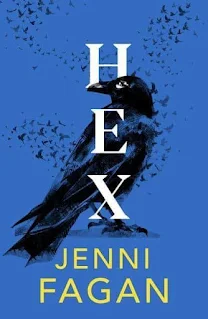
Hex

Jenni Fagan

I love the cover design for Hex by Jenni Fagan. It's one of my favourite covers in this list, but Luckenbooth by Jenni Fagan was a DNF for me in January this year, so I'm worried I won't enjoy Hex. It sounds so good though! On 4th December 1591, Geillis Duncan is a convicted witch in a prison cell awaiting death when she receives a visitor. Iris has come from the future and offers her support and solace. Coming in at just 100 pages and inspired by the North Berwick witch trials in 1590, I should know very quickly if this is for me or not within the first few pages.
Hex by Jenni Fagan book cover
Magpie Murders by Anthony Horowitz book cover

Magpie Murders

Anthony Horowitz

There's a good chance you may have already read Magpie Murders by Anthony Horowitz or have it waiting for you on your own towering TBR piles. Published in 2016, Alan Conway is the successful crime writer behind his fictional English Detective Atticus Pund. With nods to vintage crime fiction including Agatha Christie and Dorothy Sayers, Conway's editor Susan Ryeland is concerned about his latest manuscript, which seems to reveal a hidden story. Horowitz went on to publish a sequel Moonflower Murders in 2020 and according to GoodReads, each "volume is two mysteries; one in Susan’s world and a book-within-book detective story set in the 1950s".

Meditations

Marcus Aurelius

Time for a classic! Marcus Aurelius was Roman Emperor from 161 to 180 AD and a Stoic philosopher and I've been looking forward to reading this since receiving a copy in 2021. The famous Emperor and Philosopher is known for quotes like: "You have power over your mind - not outside events. Realise this, and you will find strength" and “The happiness of your life depends upon the quality of your thoughts.” I'm hoping for some timeless wisdom in these pages but with time to reflect on key insights for greatest impact, it'll likely to be a slow and meaningful reading experience.
Meditations by Marcus Aurelius book cover
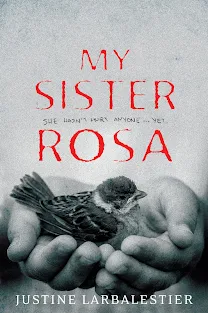
My Sister Rosa by Justine Larbalestier book cover

My Sister Rosa

Justine Larbalestier

This book captivated my attention instantly with a brilliant premise: "What if the most terrifying person you know is your ten-year-old sister?" It certainly puts the cute bird and black and white cover design into a new perspective doesn't it? I added this book to my TBR in 2017 but still haven't read it yet. What's it about? My Sister Rosa is a young adult thriller about Che Taylor who loves his younger sister Rosa despite fearing she's a psychopath. Nominated for a bunch of awards, Justine Larbalestier is an Australian author, so I'm pleased to include a homegrown author in this list.

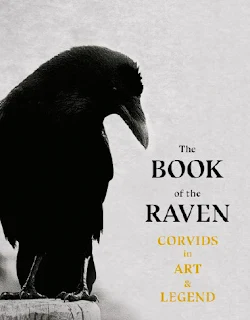
The Book of the Raven: Corvids in Art & Legend

Angus Hyland

This book explores the behaviour of ravens as tricksters, thieves, problem-solvers and gift-givers through artwork and includes photographs, paintings, texts and poems. I'm hoping for a stunning coffee table book that includes artwork and literature from Shakespeare and Edgar Allan Poe right through to Game of Thrones - "there was a raven in the night" being one of my favourite quotes of the series.
In case you thought it couldn't get any better, Christopher Skaife, author of The Ravenmaster - My Life with the Ravens at the Tower of London has written the Introduction.
The Book of Raven: Corvids in Art and Legend by Angus Hyland book cover

That's it! I'm pleased to see an Aussie author and a variety of genres represented in this list: middle fiction, historical fiction, non fiction, crime, urban fantasy and even a classic! Have you read any of these books? Which one are you most drawn to read?


08 June 2023

Review: The Brothers Grimm 101 Fairy Tales by Jacob and Wilhelm Grimm

The Brothers Grimm 101 Fairy Tales by Jacob and Wilhelm Grimm book cover

I did it! It took me 10 weeks, but I finally read The Brothers Grimm 101 Fairy Tales by Jacob and Wilhelm Grimm. I read the original Snow White and Sleeping Beauty tales and more besides. How do I feel about it? I feel proud of my reading achievement, but the writing style was unfamiliar and it was a somewhat draining reading experience. I was only able to read a few fairytales at a time before needing a break from all of the kings, princesses, curses and forests.

I was shocked to discover just how short some of the fairytales were, namely Rapunzel, Hansel and Gretel and Little Red Cap; or as we now know it, Little Red Riding Hood. The brevity of these tales and the way in which they've gone on to inspire untold spin offs and interpretations - one of which, The Archive of Alternate Endings by Lindsey Drager, I just read - is quite remarkable.

As expected, there were some terrific opening lines, like this one from The Hare's Bride:
"There was once a woman and her daughter who lived in a pretty garden with cabbages; and a little hare came into it, and during the wintertime ate all the cabbages." Page 282 The Hare's Bride
I'm instantly 'into' the story with this kind of opening line, and an intro like this reminds me of the stellar fable at the beginning of The Rain Heron by Robbie Arnott.

Blessed with some stellar opening lines, some of the fairytales had quite sudden, dreadful or unexpected endings. How's this one from The Mouse, The Bird, and the Sausage:
"Owing to his carelessness the wood caught fire, so that a conflagration ensued, the bird hastened to fetch water, and then the bucket dropped from his claws into the well, and he fell down with it, and could not recover himself, but had to drown there." Page 104 The Mouse, The Bird, and the Sausage
Some of the tales end with a sentiment like 'and they haven't been heard from since" or "where they live to this day." How about these though:
"And the mouth of the man who last told this story is still warm." Page 116 The Bremen Town-Musicians
"Then the children went home together, and were heartily delighted, and if they are not dead, they are living still." Page 204 Fledgling
Isn't that charming? This happy ending describes a wedding party:
"I wish you and I had been there too." Page 208 King Thrushbeard
This isn't the only time the authors break the fourth wall and address the reader directly either. When describing a scene whereby everyone present is collecting as many gold pieces as they can physically carry, comes a comment in brackets direct to the reader:
"(I can see in your face that you also would like to be there.)" Page 151 The Wishing Table, The Gold Ass, and the Cudgel in the Sack
I wonder if the brothers could have imagined readers enjoying their stories 200 years after publication. Reading The Devil with the Three Golden Hairs was a highlight of this collection, along with the classic Hansel and Gretel.

Now that I've read them, would I recommend Grimm's Fairytales to other readers? I actually don't think I would. Viewed through today's lenses, the lessons from these fairytales feel simplistic and out of touch: beauty and virtue is good, greed and envy is bad, being ugly is bad and good will always triumph. The fairytales aren't suitable for young children, and there's a lot of violence for children over the age of ten as well, with drownings, curses, amputations, poisonings, beheadings, hangings and all sorts of terrible endings. I actually think storytellers and children's authors from the last 50 years do an excellent job of providing educational and entertaining stories for young children and adults alike.

This collection has been worth reading and while I'm satisfied to have now read the original source material, the experience was enriched by reading it alongside three other book reviewers. Ashleigh (The Book Muse), Veronica (The Burgeoning Bookshelf) and Claire (Claire's Reads and Reviews) joined me for this Grimm's buddy read and Ashleigh lead our conversation based on her study of the subject matter at university. What a great buddy read!

What's your favourite fairytale? I think mine is Hansel and Gretel.

My Rating:


05 March 2023

Review: The Secret Garden by Frances Hodgson Burnett

The Secret Garden by Frances Hodgson Burnett book cover

I was on holiday recently and put the word out to see if there were any fellow Aussie reviewers who'd like to do a buddy read for The Secret Garden by Frances Hodgson Burnett. It's always fun to read a classic with a buddy so you can chat about it, but it turned out many of us have had this book sitting on our shelves for far too long!

Joining me in the buddy read was: Veronica Joy - The Burgeoning Bookshelf,  Ashleigh Meikle - The Book Muse (with her Grandmother's copy), Claire - Claire's Reads and Reviews and Suzie Eisfelder - Suz's Space. We were also joined by Andrea and Liz over on GoodReads. Thanks to you all for joining me, it was loads of fun!

When reading The Secret Garden, a few words caught me by surprise, including the frequent use of the words 'fat' and 'ugly'. As I write this, the media is full of articles about the censorship of Roald Dahl's books. While it's a shock to see words you wouldn't ordinarily read in children's dialogue published today, it's a timely reminder that this book was published more than 100 years ago in 1911. I don't think publishers should be attempting to apply today's sensitivity standards retrospectively to a book published so long ago and I do hope The Secret Garden is safe from censorship in the future. That said, onto the book!

Precocious young Mary is orphaned in India and sent to live with her Uncle in his English mansion on the moor. Spoiled and sickly, Mary is a sour faced young brat who slowly starts to turn her lonely little life around. One of the first people Mary meets is the gardener Ben Weatherstaff, and the scenes between him and Mary in the beginning were sublime:
'Tha' an' me are a good bit alike,' he said. 'We was wove out of th' same cloth. We're neither of us goodlookin' an' we're both of us as sour as we look. We've got the same nasty tempers, both of us, I'll warrant.' Page 45
Published in 1911, Mary's story has gone on to become a children's classic, so I'm going to be reviewing this story in full, with spoilers. If you are sensitive to spoilers and have yet to read the book, and honestly believe you'll do so one day, and that you'll remember the spoilers in this review, and readily recall I was the one who did that to you, then please close this tab.

Misselthwaite Manor has more than a hundred rooms, all of which are out of bounds until Mary covertly discovers a young boy also living in the house. The big family secret is that Colin is ill and bed bound and vulnerable to the most terrible tantrums. The children are cousins and both have had a privileged and indulgent upbringing as only children while also experiencing loss. Colin's mother is dead and Mary has recently lost both of her parents. The coming together of Mary and Colin was my favourite part of the book.

Both characters realise they're lonely and decide to become friends, despite a few false starts. The children begin enjoying each other's company which is a surprise to them both.
"And they both began to laugh over nothing as children will when they are happy together. And they laughed so that in the end they were making as much noise as if they had been two ordinary, healthy, natural, two-year-old creatures - instead of a hard, little, unloving girl and a sickly boy who believed that he was going to die." Page 168
Colin is ill and believes he'll die, making everyone's life a misery until he befriends Mary and meets her friend Dickon. Mary tells Colin there's nothing wrong with him and convinces him to get out of bed and outside in a wheelchair to live life and experience nature. Mary has discovered a secret garden and together with Dickon, the trio seek to bring it back to life.

The secret garden of the title is the walled garden where Colin's mother died, after which it was locked and abandoned for 10 years until a robin shows Mary the door and the key. As the children overcome their vast differences in class to help bring the garden back to life, Mary blossoms into a thoughtful and caring young girl, and Colin grows to believe he will live and is determined to show everyone he can walk again!

The entire time this is going on, Colin's father (Mary's uncle) is away on business, and I was worried he would return any minute and go ballistic about the garden, which was off limits. This created a sense of dread as eventually household members discover the children's secret and join the plan for Colin's big reveal moment.

Dickon's mother is the Mrs Weasley of the book and Mary and Colin gravitate toward her generosity of spirit and maternal love in the same way a sunflower follows the sun.

It's clear to the reader that the driving force behind Colin's recovery is the relationships between each of the characters - which boils down to love - as well as the garden, but Colin refers to it all as 'magic'. The author seems to have combined the laws of attraction, the power of positivity, and worship of nature to produce the essence of the 'magic'. To ask for your heart's desire, you just need to chant in a prayer like fashion and all the characters pull together to aid in Colin's restoration.

The 'magic' becomes a symbol or marker for nature, love and faith that is immediately obvious to mature readers, but innocuous for young children in the same way The Chronicles of Narnia by C.S. Lewis does. The young characters in the novel reminded me of Pollyanna by Eleanor H. Porter and if you loved that, then you'll definitely enjoy this.

I love a good makeover, and in The Secret Garden we have three! Mary's transformation is the first to begin, then the garden is discovered before change is afoot to restore it to its earlier magnificence. Colin's recovery is the most radiant of makeovers, as he goes from being a spoiled, hysterical hypochondriac who thinks he's dying to a confident and enthusiastic young man, respectful of his elders and kind to all staff with the desire to carry out scientific experiments and live life to the fullest!

If you're a fan of up-lit (uplifting literature), feel good stories about nature as medicine and the power of friendship then The Secret Garden by Frances Hodgson Burnett will enchant you.

My Rating: