Short Stories
Showing posts with label Short Stories. Show all posts
19 May 2025

Review: Blackbird House by Alice Hoffman

Blackbird House by Alice Hoffman book cover

Blackbird House by Alice Hoffman is the story of a farm house built in the outermost reaches of Cape Cod, Massachusetts in 1778. Beginning with its construction and taking us right up until the present day, each chapter contains the story of another generation of inhabitants who live at the farm house. The writing style often reads like a fairytale or fable with interconnected short stories that manage to convey much meaning.

At the beginning of each chapter we meet the next generation of occupants, quite often related or connected to the previous character/s. For instance Violet - a greedy and self-described ugly young girl who reads books as though she were eating apples, core and all - from the previous story becomes the mother in the next one and so on.

The reader notices the shifting times, with events like the first automobile to arrive in town in 1908. The driver was honking the horn so loudly that sea fowl and hunting dogs took up the racket, apples tumbled from the trees and milkweed was blown off its stalks.

I enjoyed the stories of how each of the incumbents found the house, and many of them felt like destiny or fate:
"People buy houses for all sorts of reasons, for shelter, for solace, for love, for investment. Katherine and Sam bought their summer house because they were drowning, and this was the first solid ground they thought they might be able to hold on to." Page 187
The author's description of the farm added to the narrative, and I could easily imagine the turnips, sweet peas, peach trees and summer raspberries growing on the farm; although I had to strain to imagine the red pear tree but won't forget it in a hurry.

Blackbirds - and a white one in particular - keep cropping up throughout the book and they take on different meanings for different characters. For Maya they were bad luck:
"Everyone knows a white blackbird is nothing more than a ghost, a shadow of what it ought to be." Page 154
The ramshackle farm is a welcome refuge for some, but takes on a darker meaning for the locals who believed it's haunted; and maybe it is. The house has witnessed births and tragedies over the generations and some years it even sits vacant. But eventually new owners and occupants arrive who overlook the outdoor toilet and leaking roof and decide to put down roots and establish a home there.

Set over a span of more than 200 years, Blackbird House by Alice Hoffman is surprisingly short at only 225 pages, but highly recommended for readers of historical fiction who enjoy feel good stories where the house is the main character. The overarching narrative explores themes of love and loss while also acknowledging the passage of time.

My Rating:


16 December 2024

Review: The Turning by Tim Winton

The Turning by Tim Winton book cover

The Turning by Tim Winton is a collection of short stories and I picked up a hard cover edition with deckled edges from a second hand bookshop back in 2017. At the time I'd been contacted by the BBC World Book Club about my 2013 review of Cloudstreet by Tim Winton, and while they acknowledged I'd read the book some years ago, they asked if I'd be interested in submitting a recorded question for their upcoming interview with the author. Naturally I said 'YES' and then picked up this little gem the next day.

I didn't get around to reading The Turning before the interview aired and it wasn't relevant to the question I decided to submit anyway, so the purchase then languished on my shelves for the next 7 years! Do you have books like that?

Set in and around a fictional town called Angelus on the coast of Western Australia, Winton returns to some of his favourite themes of adolescent boys, coming of age stories, working classes, domestic disharmony, beaches and surfing.

Early on, the main character in Big World enjoys camping and hiking with his mate Biggie and describes him as 'not a very introspective bloke':
"Biggie loves all the practical stuff, reading maps, trying survival techniques, learning bushcraft. I'm more into the birds and plants and stars and things... Biggie truly is a funny bugger.... He can fart whole sentences, a skill St Augustine admired in others. He's not much for hygiene. His hair's always greasy and that navel smells like toejam. He doesn't swim. He couldn't carry a tune in a bucket but he can find true north by instinct." Page 9
This relationship between two mates leaving school was a solid start to the collection and I found the deep insight provided into their bond of mateship eye opening.

Later in Aquifer, our narrator reflects on the time a red telephone box was installed near to where he lived, and those of us of a certain age will surely be able to relate:
"I suppose I was five or six when I learned to go in and stand on tiptoe to reach up and dial 1194 to hear a man with a BBC voice announce the exact time. I did that for years, alone and in company, listening to the authority in the man 's voice. He sounded like he knew what he was on about, that at the stroke it would indeed be the time he said it was. It was a delicious thing to know, that at any moment of the day, when adults weren't about, you could dial yourself something worth knowing, something irrefutable, and not need to pay." Page 40
Cloudstreet by Tim Winton remains one of my favourite books and I've been hesitant to pick up another by this much beloved Australian author out of fear it wouldn't be anywhere near as good. Regular Carpe Librum readers will know I hate it when authors don't include punctuation for dialogue in their novels, and while it curiously didn't bother me in Cloudstreet I found it irritating here; often interrupting my reading flow to determine who was speaking.

The settings, character arcs and dialogue are all very Australian, and I could definitely relate to this:
"Erin and I walked everywhere. Outside of school there was nothing else to do but traipse to the wharf or the beach or down the drab strip of shops where the unchanging window displays and familiar faces made me feel desperate." Page 255
Some of the short stories seemed to have a natural end point while others left me wanting more. I was hoping the author would bring all of the characters together in the end and while there was certainly some overlap of characters in the present and the past, the lack of resolution or overarching conclusion made for a 3 star reading experience overall.

Published in 2004, I've since learned The Turning was adapted into a film in 2013 starring Cate Blanchett, Hugo Weaving and Miranda Otto. The Turning by Tim Winton is recommended for those who enjoy short stories and Australian fiction.

My Rating:


23 April 2024

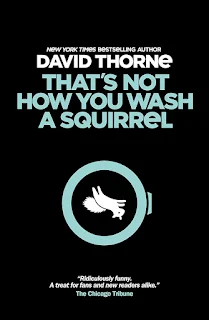
Review: That's Not How You Wash A Squirrel by David Thorne

That's Not How You Wash A Squirrel by David Thorne book cover

Residing in USA, David Thorne is the Australian author behind the notorious Missing Missy and despite a scathing review of Look Evelyn Duck Dynasty Wiper Blades. We Should Get Them in 2020, I still owned two more of the author's books. At the time I expressed my irritation at the fat phobic content and uncertainty around whether Thorne uses creative licence in a self deprecating manner in an ironic attempt to further his unlikable persona in the pursuit of entertainment; or if he's just a dick.

Four years have passed and many books have been read since then and I believe enough time has elapsed for me to tackle the next one on the pile. Did it make me chuckle or frown? Short answer, both!

The author does write humourous dialogue, and I enjoyed this excerpt from an exchange with partner Holly:
"No, you're supposed to say something nice back."
"Your hair looks nice today."
"Thanks. I used your conditioner in the little red tube."
"That's foot cream." Page 20
The title story about rearing a baby squirrel was my favourite from the collection and it was very cute. But then the author churns out a comment like this one that left a sour taste in my mouth for a few pages:
"We did visit my sister a few weeks later but there were no secret passageways in her house and neither Seb or I gave a fuck about her origami owls or potplant hangers. Any halfwit with a roll of string and a few sticks can set up an Etsy shop." Page 39
There's no context about Thorne's sister and she isn't referred to often. That particular comment came off the back of a reunion with his estranged father who had a secret passageway in his house, but without context or knowing anything about the author's sister, it's hard to interpret that comment as anything other than rude. Who writes like that publicly about their sibling anyway?

If he's joking, then it's not a joke I can join in on. I found it rude and insulting and it made me wonder if this guy means every word he writes or if he's just an arsehole. I'm starting to lean towards the latter, but you be the judge:
"I fully support discrimination against fat people but if one sat next to me on a plane I wouldn't move, ask them to move, or talk to them. I'd just be quietly annoyed the whole flight and try to breath through my mouth." Page 52
Seriously? Is this guy the real deal? Published in 2015, thankfully That's Not How You Wash A Squirrel contains fewer fat phobic references, but the fat shaming was still there. At one point he refers to a 'crazed looking flabby woman in her thirties named Rian', but it's not just fat people and fat women who irk our author:
"Penguin represent my first book but my marketing person there is a small angry Asian woman who yells a lot so I have her number blocked." Page 147
Wow, blocking the Marketing Rep from Penguin on your phone when you depend on their representation, hilarious! Hopefully you could hear the drip of my sarcasm there. It's just not funny.

The occasional fat phobic content was off putting and while I enjoyed a somewhat amusing story about hunting for the first time in the USA, I can't tell if the content has been inspired or lifted from the author's lived experience or whether it's all fiction. Is this self deprecating humour written by a humble guy unafraid of being judged harshly? Or is he just a run of the mill arsehole, wandering aimlessly around a camp site so that he doesn't have to help his mates pack up? He sounds like a tool, but that's also what used to make his writing funny.

There's a fine line and I'm never sure how close to it we are, but it feels like we're getting further away from the author's core talent for entertaining the reader. In a different example, Thorne shares a section detailing the passing of a friend after a dramatic car accident that was incredibly moving, yet I'm not sure if he's 'taking the piss'* or not.

I decided years ago not to purchase any more of David Thorne's new work, but I still have Walk It Off, Princess on my TBR pile. I can hear some of you thinking 'don't read it if you don't like his work' but have you ever decided not to read a book you purchased? Published in 2018 three years after this title, I'm hoping the downward trend on insulting people continues and the sense of humour so prevalent in his earlier work resurfaces in fine form. There's hope yet!

Check out my reviews to some of the author's better books:
- The Internet is a Playground ⭐⭐⭐⭐⭐
- I'll Go Home Then; It's Warm and Has Chairs - The Unpublished Emails ⭐⭐⭐⭐⭐
- Wrap It In A Bit Of Cheese Like You're Tricking The Dog ⭐⭐⭐
- Look Evelyn Duck Dynasty Wiper Blades. We Should Get Them ⭐⭐

My Rating:


*Australian slang term for 'having a lend'.
30 June 2023

Review: The Terrible Event by David Cohen

The Terrible Event by David Cohen book cover

* Copy courtesy of Transit Lounge *

Sporting one of the best cover designs of the year so far, The Terrible Event by David Cohen is a collection of short stories promising 'death, destruction, disappearance, decline and defeat' and sounded right up my alley. 

A brief word on the cover first. Designed by Josh Durham from Design by Committee, this cover design is immediately eye catching and I keep seeing it popping up everywhere. It really taps into my love of stationery and will no doubt be one of my favourite cover designs for 2023. The mention of parallels between this collection and the work of David Sedaris further stoked my anticipation for this Australian collection.

Containing eight stories in total, I enjoyed the sense of nostalgia that started to build.
"The toy was as addictive as it had been in bygone days. Pulling the string triggered memories of backyard cricket, Choc Wedges and Saturday morning cartoons - the very cartoons that had introduced him to Bugs Bunny in the first place. Those were the days." Page 44-45
The Australian setting and mention of Choc Wedges, Holden Commodores and rippled soled desert boots was ripped right from my own childhood and the sweary dialogue in the story entitled Bugs, was great. Here's our main character in Bugs reminiscing about inheriting his dad's old Olivetti typewriter.
"And when you pressed a key, you could see the type bar strike the paper, leaving behind a black letter or number. Nothing made interesting noises anymore. Nothing had any weight or resistance. Mark recalled the hole punches of his youth, the staplers. Where were they now?" Page 65
Yes, the hole punches!! I think back to how much our desk accessories have changed in my time, with liquid paper in bottles to hole punches, fax machines and staplers. I still have a mini red stapler purchased in 2000 that's so small it takes No. 25 staples and it's stapled thousands of bank statements, travel itineraries and meeting agendas over the years. If you love stationery as much as I do, see my review of Adventures in Stationery: A Journey Through Your Pencil Case by James Ward.

Back to the collection, hole punches feature in the aptly named short story Holes, and it was here that I started to notice a few common threads or easter eggs that connect through the collection. I won't include them in my review in case they're spoilers - I'm looking at you Nathan! - but not being a regular reader of short stories, I thought this was cool.

While there's limited time to connect with a character in a short story, character descriptions like this provided a neat shortcut to personality, and I could readily relate:
"Zoran's conversations were limited to two main subjects: cycling and craft beer. I didn't have a problem with that, but he seemed to assume that I was as interested in them as he was. If I tried to steer the conversation in another direction, he'd steer it back, before too long, to one or the other. He showed no particular curiosity about me: I think I was really just a receiver for whatever he wanted to talk about. He might ask me what I'd done on the weekend... but only as an entry point for him to tell me all about the cycling and beer drinking he'd done." Page 99
I have a person JUST LIKE THIS in my life too!

My favourite story in the collection was The Enigma of Keith: Another Memorial, which contained an interesting story about the erection of a fictitious roadside memorial, installed to determine whether the presence of a memorial (white cross, flowers) has any impact on driver speed. Do drivers slow down when they notice a memorial on the side of the road? You'll have to read The Terrible Event to find out!

My Rating:


08 June 2023

Review: The Brothers Grimm 101 Fairy Tales by Jacob and Wilhelm Grimm

The Brothers Grimm 101 Fairy Tales by Jacob and Wilhelm Grimm book cover

I did it! It took me 10 weeks, but I finally read The Brothers Grimm 101 Fairy Tales by Jacob and Wilhelm Grimm. I read the original Snow White and Sleeping Beauty tales and more besides. How do I feel about it? I feel proud of my reading achievement, but the writing style was unfamiliar and it was a somewhat draining reading experience. I was only able to read a few fairytales at a time before needing a break from all of the kings, princesses, curses and forests.

I was shocked to discover just how short some of the fairytales were, namely Rapunzel, Hansel and Gretel and Little Red Cap; or as we now know it, Little Red Riding Hood. The brevity of these tales and the way in which they've gone on to inspire untold spin offs and interpretations - one of which, The Archive of Alternate Endings by Lindsey Drager, I just read - is quite remarkable.

As expected, there were some terrific opening lines, like this one from The Hare's Bride:
"There was once a woman and her daughter who lived in a pretty garden with cabbages; and a little hare came into it, and during the wintertime ate all the cabbages." Page 282 The Hare's Bride
I'm instantly 'into' the story with this kind of opening line, and an intro like this reminds me of the stellar fable at the beginning of The Rain Heron by Robbie Arnott.

Blessed with some stellar opening lines, some of the fairytales had quite sudden, dreadful or unexpected endings. How's this one from The Mouse, The Bird, and the Sausage:
"Owing to his carelessness the wood caught fire, so that a conflagration ensued, the bird hastened to fetch water, and then the bucket dropped from his claws into the well, and he fell down with it, and could not recover himself, but had to drown there." Page 104 The Mouse, The Bird, and the Sausage
Some of the tales end with a sentiment like 'and they haven't been heard from since" or "where they live to this day." How about these though:
"And the mouth of the man who last told this story is still warm." Page 116 The Bremen Town-Musicians
"Then the children went home together, and were heartily delighted, and if they are not dead, they are living still." Page 204 Fledgling
Isn't that charming? This happy ending describes a wedding party:
"I wish you and I had been there too." Page 208 King Thrushbeard
This isn't the only time the authors break the fourth wall and address the reader directly either. When describing a scene whereby everyone present is collecting as many gold pieces as they can physically carry, comes a comment in brackets direct to the reader:
"(I can see in your face that you also would like to be there.)" Page 151 The Wishing Table, The Gold Ass, and the Cudgel in the Sack
I wonder if the brothers could have imagined readers enjoying their stories 200 years after publication. Reading The Devil with the Three Golden Hairs was a highlight of this collection, along with the classic Hansel and Gretel.

Now that I've read them, would I recommend Grimm's Fairytales to other readers? I actually don't think I would. Viewed through today's lenses, the lessons from these fairytales feel simplistic and out of touch: beauty and virtue is good, greed and envy is bad, being ugly is bad and good will always triumph. The fairytales aren't suitable for young children, and there's a lot of violence for children over the age of ten as well, with drownings, curses, amputations, poisonings, beheadings, hangings and all sorts of terrible endings. I actually think storytellers and children's authors from the last 50 years do an excellent job of providing educational and entertaining stories for young children and adults alike.

This collection has been worth reading and while I'm satisfied to have now read the original source material, the experience was enriched by reading it alongside three other book reviewers. Ashleigh (The Book Muse), Veronica (The Burgeoning Bookshelf) and Claire (Claire's Reads and Reviews) joined me for this Grimm's buddy read and Ashleigh lead our conversation based on her study of the subject matter at university. What a great buddy read!

What's your favourite fairytale? I think mine is Hansel and Gretel.

My Rating:


27 February 2023

Review: Bartleby, the Scrivener by Herman Melville

Bartleby, the Scrivener by Herman Melville book cover

I didn't get on with Moby Dick at University. I was far more interested in reading The Pillars of the Earth by Ken Follett at the time and found Herman Melville's writing to be inaccessible and a tiresome bore. Melville is a classic American writer though, and 20 years on I thought I'd give him a second chance by reading Bartleby, the Scrivener.

This is a short story narrated by an elderly lawyer about the office politics where he works. Here's a little about him in his own words:
"I am one of those unambitious lawyers who never addresses a jury, or in any way draws down public applause; but in the cool tranquility of a snug retreat, do a snug business among rich men's bonds and mortgagees and title deeds. All who know me consider me an eminently safe man." Page 6
Our narrator has a legal firm in an office on Wall Street in New York, and the novella begins with an overview of his two employees. These character studies of Turkey and Nippers were insightful and Bartleby of the title is a new hire and addition to the team that doesn't pan out well.

We learn that Bartleby is very good at his job as a Clerk, but when asked to do a specific task or run a particular errand he doesn't want to do, he responds with "I prefer not to".

The modern reader can immediately relate and no doubt knows someone in their own circle of friends, family or work colleagues just like Bartleby. Bartleby's attitude of passive resistance and the fact that he'd 'prefer not to' do as he is instructed wound me up immediately and was instantly relatable.

Published in 1853, it was surprisingly reassuring to know that people haven't changed that much over the intervening decades and century. The staffing problems faced in the workplace 170 years ago resonate immediately with the modern reader today.

Bartleby soon causes our narrator great tribulation, and while the narrator remains unnamed throughout the novella, his plight is compelling. There are chuckle worthy moments of dialogue and inner reflection as our lawyer attempts to navigate his way out of his problem with varying degrees of success. I wanted to shout out suggestions to him which is a sure sign of evocative writing, however I did wish for a different ending.

Bartleby, the Scrivener by Herman Melville is a timeless novella about office politics and in 2019 it featured on the BBC News list of the 100 Most Inspiring Novels. I'm not sure I'd agree it's inspiring, but it's certainly an accessible entry point for readers of Herman Melville.

You can access the novella for free on Project Gutenberg

Of course you might 'prefer not to' and that's okay too.

My Rating:


11 May 2022

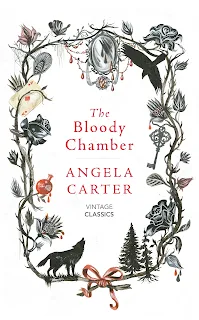
Review: The Bloody Chamber and Other Stories by Angela Carter

The Bloody Chamber and Other Stories by Angela Carter book cover

The Bloody Chamber and Other Stories by Angela Carter sounds right up my alley. Dark and subversive versions of fairy tales and legends told in the gothic tradition? Sign me up! I was so confident I would fall in love with this collection of short stories, I used a Christmas gift voucher to source a stunning little hardback edition back in January 2019. Since then, it's been sitting on my shelves while I enjoyed the anticipation of an automatic 5 star read within my reach. Recently I decided I was in the mood for some short stories - which doesn't happen often - and it was finally time to enjoy the collection. Sadly, I was quite disappointed.

The writing is superb, there's no doubt about that. And I'll never look at a cat or a ham bone in the same way again after this description from the Puss-In-Boots story:
"I went about my ablutions, tonguing my arsehole with the impeccable hygienic integrity of cats, one leg stuck in the air like a ham bone; I choose to remain silent. Love? What has my rakish master, for whom I've jumped through the window of every brothel in the city, besides haunting the virginal back garden of the convent and god knows what other goatish errands, to do with the tender passion?" Page 114 Puss-In-Boots
Saving this quote to include in my review and re-reading it again now, I'm once again stunned that this wasn't a great reading experience. I'm going to be giving this collection 3 stars, but how is that even possible with writing like this?
"It is winter and cold weather. In this region of mountain and forest, there is now nothing for the wolves to eat. Goats and sheep are locked up in the byre, the deer departed for the remaining pasturage on the southern slopes - wolves grow lean and famished. There is so little flesh on them that you could count the starveling ribs through their pelts, if they gave you time before they pounced. Those slavering jaws; the lolling tongue; the rime of saliva on the grizzled chops - of all the teeming perils of the night and the forest, ghosts, hobgoblins, ogres that grill babies upon gridirons, witches that fatten their captives in cages for cannibal tables, the wolf is worst for he cannot listen to reason." Page 186 The Company of Wolves
As you can see, Carter's writing is thought provoking and often made me stop to reflect. That was certainly the case when reading the last story in the collection about a girl raised by wolves:
"Like the wild beasts, she lives without a future. She inhabits only the present tense, a fugue of the continuous, a world of sensual immediacy as without hope as it is without despair." Page 202 Wolf-Alice
There's much to dissect in this relatively short collection, but I'm certain that many of the fairytale references went way over my head. Angela Carter died in 1992, so thankfully I don't have to worry that she'll ever see this review and disapprove of my meagre criticisms, but geez, how many hyphens and semi colons do you need? At one point I put the book down to Google 'angela carter semi colons' and was reassured to find I'm not the only reader who finds it a tad excessive.

I loved the writing style in The Bloody Chamber and even relished having to put the book down to expand my vocabulary by looking up a new-to-me word. However, I found the stories to be a little too obscure for my overall enjoyment. While reading this, I made a note that if I'd been studying it in a university setting, breaking it down and analysing the literary references cleverly contained within, I'd be writing a completely different review.

Read in isolation though, I enjoyed the language and the gothic undertones on every page, but overall, this collection never took me to the dizzying literary classic heights I had expected to reach.

My Rating:


05 September 2020

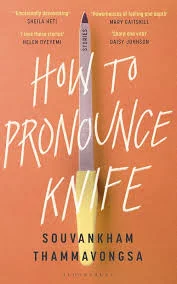
Guest Review: How to Pronounce Knife by Souvankham Thammavongsa

How to Pronounce Knife by Souvankham Thammavongsa book cover
* Copy courtesy of Bloomsbury *

Fellow neighbour, bibliophile and retired academic Neil Béchervaise is back for another guest post. We've been in Stage 4 lockdown in Melbourne for 5 weeks now and reading up a storm. Here's Neil's review of short story collection How to Pronounce Knife by Souvankham Thammavongsa. Over to you Neil!


Let me confess from the outset that ‘the short story’ is not my favourite ouvre. However, I was seduced by the title of this book and launched into it before I realised that it was, indeed, a collection.

Who has not pondered the vagaries of ‘The English language’? When ‘ph’ becomes ‘f’ in physical but ‘ps’ becomes a mere ‘s’ if we get psychological; when ‘is’ is pronounced ‘eye’ in island! Well, I had to discover how to pronounce ‘knife’, at least.

This fascinating, frequently gruelling and sometimes just downright heart-rending selection of episodes comes to its readers through the eyes of a Laotian refugee. From her early childhood towards old age; from seeing her father disappear under the surface of the river they are crossing in pursuit of ‘freedom’ to experimenting with the difference between love and sex at age 70, the stories are always engaging. Many of them are also deeply challenging to what most of us, probably, would see as ‘the norm’.

The unconscious racism of the children at school when the author struggles to find out how to pronounce ‘knife’ is both topical and humbling. Her humiliation when no-one at home could speak English despite her father doing his best to help - but only making matters worse - and her not yet confident enough to ask any classmates brought tears to my eyes. Some years later, doubting her own personal beauty, as so many teenagers girls do, she seriously contemplates having ‘a nose job’. Fortunately, her workmates, and her lack of money, dissuade her from proceeding as they see more and more failed surgeries creating terrible results.

The stories in this collection are sometimes uplifting, sometimes heart-breaking. The resilience of the refugees, essentially unsupported and battling to come to terms with cultural, language and even dietary differences in their new homeland make for compelling reading. 

I can only hope that Thammavongsa has many more stories to tell because I, for one, will be waiting for them. Highly recommended.

Reviewed by Neil Béchervaise August, 2020.

Neil's Rating:

25 August 2020

Review: Look Evelyn, Duck Dynasty Wiper Blades. We Should Get Them by David Thorne

Look Evelyn, Duck Dynasty Wiper Blades. We Should Get Them by David Thorne book cover
I've been enjoying David Thorne's sense of humour and reading his books for years now. See my reviews of his previous books below:

The Internet Is A Playground - 5 stars
I'll Go Home Then, It's Warm and Has Chairs - 5 stars
Wrap It In a Bit of Cheese Like You're Tricking the Dog - 3 stars

And I have two more on my shelves waiting to be read:
- That's Not How You Wash a Squirrel
- Walk It Off, Princess


I love his quirky sense of humour, his office antics and run-ins with family members, neighbours and anyone else unlucky enough to come across his path.

Look Evelyn, Duck Dynasty Wiper Blades. We Should Get Them is another collection of stories and anecdotes, many of which relate to his childhood. It was published back in 2014 (I know, I'm a little behind, but they're expensive to purchase from the USA so I save them for birthdays and Xmas) and GoodReads has plenty of existing reviews from readers shocked at how dramatic Thorne's childhood upbringing was.

Now, I don't for a minute believe any of his stories are actually true. I think he's like most comedians, comedy is his job and these email chains, graphic design stories and office antics have been created for the reader's - and presumably the author's - enjoyment.

However, what I didn't appreciate was the sheer number of references to overweight women in this collection. After finishing this book, I went back to check I wasn't over-reacting and made the following notations:

Fat, page 17
Normal weight, page 20
Heifer, page 26
Heifer and reference to Weight Watchers, page 37
An entire story around a large girl and her weight, fat references pages 48-50
Large woman, page 76
Chubby girl, page 101
Huge heifer, page 104
Chubby girl, page 118 and 119
Large woman, page 136
Fat wives, page 165
Fat multiple times, page 174
Fat wife, page 179

Without the ability to ask the author, I'm not sure if Thorne is using creative licence in an attempt to further his unlikable persona in the pursuit of entertaining the reader. If so, then it falls flat. If not, then it's just irritating and bordering on offensive.

With Thorne's humorous and clever story-telling abilities, I assumed he was above petty fat shaming like this and it just didn't sit well with me. Some of the content was very funny and quite enjoyable but these reappearing references dampened my enjoyment.

This was a disappointing read and I hope his next collection is a return to his earlier form.

Carpe Librum!

My Rating:
★ ★ ★