Poetry
Showing posts with label Poetry. Show all posts
23 June 2026

Review: Rite of Spring by Kris Kneen

Rite of Spring by Kris Kneen book cover

* Copy courtesy of Transit Lounge *

Miranda and Richard answer an advertisement in a nature magazine and agree to stay on an island off the coast of Tasmania for a period of six months. They'll be taking over from the previous caretakers but otherwise they'll be on their own in the remote wilderness the entire time. Taking all of their own supplies, the couple will be responsible for looking after the automated lighthouse and recording regular weather observations.

Miranda is recovering from a near death experience and the couple is reeling from Richard's infidelity. The environment is hostile, with winds so fierce that animals blow off the cliffs and down onto the rocks below. Yet somehow Miranda and Richard believe the seclusion, shared experience and time together will offer them the chance to heal their marriage. Yeah right! Obviously things were going to go wrong but I could never have guessed how.

Miranda is a Marine Biologist with a love of the ocean and spreadsheets.
"Keeping spreadsheets was not enough to distract her. She had revelled in the sorting and labelling of their produce, bought sticky labels for the bags, noting the date of drying, the variety of apple or pear or orange. She listed the total weight on each bag. When she had sealed one she lined it up next to all the others. The various colours and shapes were pleasing. This task appealed to something in her nature, perhaps the same thing that had drawn her to a career in marine biology." Page 21
The beginning of the book was easily my favourite part. Their arrival at the island demonstrates just how remote and cut off from the rest of the world they are, and the list of maintenance items was enormous. The weather takes a toll on every fixture and fitting and they're both energised by the physical challenges ahead. I especially enjoyed Miranda's planning for their trip.
"Her skills were easily transferrable to the planning for the island. She had measured out each meal - breakfast, lunch and snacks - planning them six months in advance, adding a few extra weeks of food in case the weather turned and stranded them on the island for longer than expected." Page 15
Getting set up and unpacking their supplies as the wind was howling outside my own bedroom window made me wish I could watch all of this unfolding on the big screen. Their optimism burst from the page and I was quick to share it. However, it soon becomes apparent Miranda is going through a lot more than first realised; she's physically recovering from a nasty accident, going through menopause and was already a person in flux.

It would be a spoiler to mention how things shift, but I can tell you there's a lot of sex in the book. If you're uncomfortable reading graphic sex scenes - and I'm not - then this is not for you. Having said that, the narrative goes further than just lots of sex and I think I'd call it dark erotica bordering on erotic horror.

There's quite a lot of poetry included in the book but much of it felt personal to the author and I had trouble connecting it to the narrative. There's also a heavy emphasis on Miranda feeling a lack of belonging her entire life and being different from everyone else that I couldn't relate to. It made me wonder if perhaps this was more of the author bleeding through into the character on the page.

And what's with the cover? I love the cover design, it's suggestive, erotic and intriguing but having read the book I can't see the relevance whatsoever. While the conditions are frigid, Miranda does take her clothes off on quite a few occasions however this isn't her body type. The reader is frequently reminded that Miranda is overweight:
"Miranda's body held its own in his company. She was corporeal. Short but fat, sturdy. She weighed more than he did, even though he was easily a head and shoulders taller than her." Page 175
After that one description - and there's plenty more - it's clear the woman on the cover is not Miranda. I also have no idea what the significance of the blackberries and blackberry juice smeared on her abdomen is all about. Perhaps it's suggestive or evocative of blood and something to do with menstruation but the torso of the woman doesn't look menopausal. It's a great cover, I just didn't understand the relevance.

The author mentioned in a recent interview that the idea for the book came after their friend sent them an ad just like this, thinking Kris might consider it a writing retreat of sorts. The position didn't appeal but they took the idea and ran with it and I hope the friend passes on more ads in the future.

I originally wondered if the title of The Rite of Spring was a reference to the piece of music by Stravinsky, but in the same interview I referenced earlier, I learned there are going to be four books with themes of queerness, gender, science, nature and the supernatural; one for each season.

The ending of the book reaches an exciting climax (pun intended) although I was left with unanswered questions in the denouement about the supernatural element. The Rite of Spring by Kris Kneen is dark erotic Australian fiction and will appeal to literary readers open to self discovery, sex and the supernatural.

My Rating:

Carpe Librum!

31 March 2025

Review: Emily's House by Amy Belding Brown

Emily's House by Amy Belding Brown book cover

I received a copy of Emily's House by Amy Belding Brown for my birthday in March 2024 and decided I'd read it in my birthday month this year.

A dual narrative novel set in Massachusetts in 1869 & 1916, Emily’s House by Amy Belding Brown is the story of Margaret Maher, Irish maid to Emily Dickinson’s family.

In 1869, Margaret begins working as a live in maid for the Dickinson family, intending to stay a short while before joining her brothers in California. In the brief story arc set in 1916, Margaret reflects on the fate of the Dickinson home long after the death of Emily Dickinson in 1886.

Emily's House is a slow moving character study of Margaret and her relationship with Emily Dickinson in particular. The reader doesn't need to know anything about Emily's life or her poetry but those who do will enjoy an additional layer of understanding in this portrait of her life from Margaret's downstairs perspective.

I haven't read many works set in this time and place, however the author was able to draw me in with descriptions like this one:
"Patrick said he'd found a job with a carpentry crew building a mansion in Northampton... I was just telling him how Henry Paige had had to move his fish market out of Gunn's Hotel because of the stink when the hat factory lunch whistle blew." Page 134
I just love thinking about that hat factory lunch whistle. I wonder if factories and manufacturing plants still use a lunch whistle and if not, when was the last one sounded? Whilst that was a clear highlight, overuse of the word 'quare' started grating on my nerves early on - likely part of establishing Margaret as Irish - but thankfully it featured less as the story developed. Emily often mimics Margaret's accent in a condescending fashion and Margaret's struggle with nationality and identity was a continual theme throughout the novel.
"I couldn't think of what to say, so I just stood there like a dolt. I knew she was teasing. But teasing can be a clever mask for cruelty." Page 87
Margaret wants to consider herself American but wonders if she's Irish American or whether she'll always be Irish. I'm not sure if Emily Dickinson was known to make fun of the Irish, but as with any fictional imagining of a person's life, I took it with a grain of salt.

In the TV drama series Dickinson, Emily shares a physical relationship with Sue, however here their relationship seems to be that of very close and loving sisters-in-law, but never explicit.

Emily's House
by Amy Belding Brown is recommended for readers with an interest in the Dickinson family or those who'd like to read about the life of an Irish lady's maid in America and the plight of the Fenian Brotherhood who fought to achieve Irish independence.

My Rating:


23 September 2024

Review: Cuddy by Benjamin Myers

Cuddy by Benjamin Myers

Cuddy by Benjamin Myers is an historical fiction novel told in a blend of writing styles, including: narrative prose, quotes from historical reference books, poetry, diary entries and even a play. Anticipating a novel about the life of Saint Cuthbert of Lindisfarne told in a fictional first person point of view, Cuddy was an unexpected story.

Born in 634 AD in Northumbria (modern day Scotland), Cuthbert had been a monk, a prior and a bishop and was a hermit at the time of his death in 687 AD. Beloved in life, many came to pray at his grave at Lindisfarne and were healed. Deciding to elevate his remains as relics on the anniversary of his death, his body was found intact - hadn't decomposed - and he was declared a saint. Pilgrims visited the shrine for decades until Viking raids threatened the area.

Cuthbert's body was transferred to a coffin and transported by a dedicated group of worshippers seeking a safe resting place for their beloved saint. On the move until the year 995, a site was finally chosen and a series of churches were built to house St Cuthbert's remains. Construction of Durham Cathedral commenced in 1093 and still houses the Shrine of St Cuthbert today.

Pieced together from the non fiction quotes in the book, I share all of this because it's a fascinating slice of history and if you're still reading, it means you agree. Myers has created characters from each of these periods of Cuthbert's history in the wildly different formats mentioned above.

We hear from Cuthbert (affectionately known as Cuddy) early in the book but he's already close to death:
"Well now. You should have been here a candle or two ago. The scenes of despair amongst the monks at my final days of retreat to this bluff in the foaming ocean was quite the picture." Page 7
I love that phrase, 'a candle or two ago.' In Book I we join the religious folk in 995 AD carrying Cuthbert's remains and an orphan girl who has visions regarding his final resting place.

In Book II we jump to the year 1346 and through the eyes of the fletcher's wife, meet a stonemason engaged in building the great Durham Cathedral. The work of the mason and the history of the stone - then and now centuries later - was beautifully written:
"In the stone is yesterday's sun and the stories it has seen, not only of wandering holy folk and the fiery Norse, not only old white churches and milkmaids, galloping Frenchmen and the green men that took to the trees but other details not always pressed to the page by monks. Everything the stone has borne silent witness to is held within it now...... Rainstorms and quarrymen, Picts, plague pits and paupers, hawkers and jesters, skirling new life and coughing old death, archers and anglers, devils and angels, sunrises and sunsets, courting couples sitting on stone walls watching snowfall, villeins and franklin and wandering freemen, nets of cuttlefish and pails of crabs, sores and scabs, bed-bound mothers and gaoled fathers, babies - a thousand wailing babies - and church bells, cabbage soup and nettles and worms and sacks and jam and garlic and knives and deer and murder and toll gates and caravans and soothsayers and plums and coffin-makers and lepers and laughter and ice and logs and oats and sex and sin and Cuddy and Jesus and God." Page 237
I know that was a long quote, but it perfectly captures the awe and wonder I feel when gazing at a Cathedral built more than 1000 years ago and I want to be able to revisit these words again, even if I no longer have the book.

Leaving those characters behind to leap forward a few centuries, the Interlude was based on a haunting and shocking account of history. In 1650, Durham Cathedral was used as a prison by Oliver Cromwell to house 3,000 Scottish prisoners of war. Suffering in the cold without food or water, the prisoners destroyed the pews and burned the timber in order to keep warm. Devastatingly, 1,700 soldiers died from battle injuries, dehydration and starvation and were buried in mass graves nearby.

This is a disturbing chapter of history I knew nothing about but certainly won't forget, as the author has created a macabre play for the Interlude, whereby several soldiers being held captive engage in dialogue with eachother and the cathedral. Yes, you read that right.

It was a relief to reach Book III covering the period in 1827 when an arrogant Professor from Oxford travels to the Cathedral to oversee the disinterment of the saint in order to verify his remains are uncorrupted. Diary entries tell this tale and the character is haunted by his complicity and fears for his sanity. I felt the author's outrage at the desecration and believe the character met a satisfying fate. 

Book IV brings us to 2019 and it was perhaps an unnecessarily long tale to deliver the reader to Durham Cathedral and the tomb of St Cuthbert.

Cuddy by Benjamin Myers seemed to me to be the story behind the building of Durham Cathedral over time told through the lives of a handful of individuals:
"My story, and that of Fletcher Bullard, just one story in a thousand million stories that combine to define a place, concludes thusly:" Page 263
While brief, each serves as a complete story and while the reader may be reluctant to leave a character or point in time, their stories reach a natural conclusion of sorts.

A word on the layout as there were several techniques that were used - presumably - to impress but which I found slightly irritating. In one case, a character's visions were presented in one continuous paragraph with font that slowly reduced in size until it was barely readable by the end. Elsewhere, poetry was presented with varying alignment choices that left me cold, with just one word or sometimes even one letter per line. I guess you could say that while I enjoyed the mashup of writing styles within Cuddy, the unconventional layout choices fell short of the mark.

The descriptions of the cathedral from characters across time were incredible, with the 2019 character of Michael describing the vast edifice before him as enrapturing. It certainly had me pausing at certain times in the novel to research a fact or take a virtual tour of the cathedral and I'd love to visit in person one day, even just to see the sanctuary knocker.
"The face of the Sanctuary Knocker then, is that of the lonely miscreant, the damned, the doomed, the cursed, the blasted, the blighted, the bedevilled, the fated; he who shall live their life seeking God's eternal forgiveness alone." Page 197
Now that I've finished reading Cuddy, I believe it to be the complex history of Durham Cathedral rather than the story of a saint. This unique blend of fact and fiction and multiple writing styles felt original and is recommended for fans of Ken Follett and his series beginning with The Pillars of the Earth.

Prologue AD 687
Book I Saint Cuddy AD 995
Book II The Mason's Mark AD 1346
Interlude The Stone Speaks AD 1650
Book III The Corpse in the Cathedral AD 1827
Book IV Daft Lad AD 2019

My Rating:


18 September 2023

Review: The Book of the Raven by Caroline Roberts and Angus Hyland

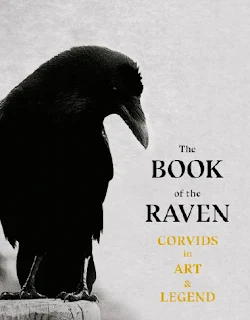
The Book of the Raven by Caroline Roberts and Angus Hyland book cover

The Book of the Raven - Corvids in Art & Legend
by Caroline Roberts and Angus Hyland is a beautiful collection of artwork, poetry and short chapters about corvids and ravens in art and legend.

Beginning with an introduction and first chapter written by Chris Skaife, Ravenmaster, HM Tower of London was a master stroke. You might remember I thoroughly enjoyed his memoir The Ravenmaster - My Life with the Ravens at the Tower of London.

If you're not terribly knowledgeable about birds, corvids include crows, ravens, rooks and magpies; although technically not Australian magpies, due to a lack of nasal bristles.
"When ravens get together it's an unkindness, but get a bunch of crows together and it's murder..." Page 109
I enjoyed learning more about corvids and their appearance in art and literature across time, with some memorable mentions including: Charles Dickens and his beloved raven Grip; The Lord of the Rings; Edgar Allan Poe and his famous poem The Raven; Alfred Hitchcock; the curse of The Crow movie; of course the Brothers Grimm; and A Game of Thrones.
"It may come as a surprise, especially given the often fairly dark myths that surround them, that ravens are very playful creatures, having fun with their fellow birds or sometimes just amusing themselves." Page 79
I mean, who hasn't seen the footage of a raven sliding down a rooftop on a piece of plastic over and over?

While enjoying the gothic graphics and moody artworks included, I was frustrated many times trying to locate the applicable captions, concluding that many of the pages lack adequate credits. This is a real shame for those artists lucky enough to have their artworks included in this collection.
"Ravens have a long association with both war and death - they are carrion birds, often picking over the remains after battles had taken place. The Vikings considered a croaking raven outside a house to be a warning of the imminent death of its occupant." Page 98
The author goes on to explain that Viking raiders used ravens to help find land, inspiring the raven banner flown by Viking warlords. These banners remained in use long after the Vikings had departed and can be seen in two panels of the Bayeux Tapestry. Fascinating!

My reading highlight enjoying The Book of the Raven was without a doubt reading The Raven poem by Edgar Allan Poe aloud at home for my husband. Having only read it to myself in the past, I have renewed respect and appreciation for the rhythm of the language and complexity of the lines, in the same way I enjoy the lyrics of The Phantom of the Opera.

Presented in an A5 sized softcover, I dearly wish Caroline Roberts and Angus Hyland were given more scope to expand this collection and delve deeper into the historical significance in the way author Michel Pastoureau was able to in Black - The History of a Color.

Conceived and designed by Angus Hyland and written by Caroline Roberts, The Book of the Raven - Corvids in Art & Legend was an enjoyable read and also the first book I've read from my 8 Books on my TBR with Birds on the Cover post, earlier this year.

If you'd like a sneak peak at the artwork inside, you can do so via the author's design studio website Pentagram. Enjoy!

My Rating:


28 June 2023

8 Books on my TBR with Birds on the Cover

I've recently noticed a trend in my to be read (TBR) pile, and it's the sheer number of books with birds on the cover. I don't know whether I have an unconscious bias towards books with birds on the cover, or whether the publishing industry and graphic designers have agreed that birds are used in cover designs for specific genres and I just happen to be attracted to those types of books. I'm not sure which came first, the chicken or the egg, but at last count I had 15 books with birds on the cover.

I thought it would be fun to share 8 of them with you, along with a summary of what I think they're about. Let's go!

A Shadow Above: The Fall and Rise of the Raven by Joe Shute book cover

A Shadow Above: The Fall and Rise of the Raven

Joe Shute

What better way to kick off this list than with a non fiction book all about the raven Corvus Corax. Ravens were once revered, and Viking and Norman warriors invaded England with ravens taking pride of place on their shields and banners. Centuries later, the birds were seen to represent evil and death, with ravens driven out of towns and cities as vermin. The last decade has seen a dramatic increase in raven numbers and I'm looking forward to learning just how intelligent ravens are and more about their ongoing relationship with humans.

Blackbirds

Chuck Wendig

Published in 2012, Blackbirds by Chuck Wendig is an urban fantasy novel and the first in a series that at the time of writing, was up to Book 6, Vultures. If the protagonist Miriam touches you, she is able to see the manner and time of your death. A GoodReads nominee for Best Horror 2012, this is the story of Miriam Black and how she deals with her unique gift. Not sure why it's called Blackbirds, but with an awesome cover design like this (your hair is a bird comes to mind) I'm keen to find out.
Blackbirds by Chuck Wendig book cover
Elsetime by Eve McDonnell book cover

Elsetime
Eve McDonnell

Elsetime by Eve McDonnell is a middle grade historical fiction novel set in the 1920s. I didn't know this, but in 1928 there was a terrible flood in London when the River Thames doubled in volume, killing fourteen people and leaving thousands homeless. The protagonist in Elsetime is Glory Bobbin, a 12yo orphan who works at the Frippery and Fandangle Emporium creating jewellery. Assisted by a peculiar crow, Glory meets Needle Luckett, a mudlark who has travelled through time, and the three of them together will try to save those endangered by the flood. I love stories about mudlarks, and you might remember my review of Mudlarking: Lost and Found on the River Thames by Lara Maiklem.

Hex

Jenni Fagan

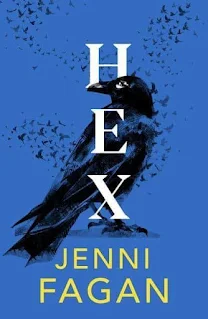
I love the cover design for Hex by Jenni Fagan. It's one of my favourite covers in this list, but Luckenbooth by Jenni Fagan was a DNF for me in January this year, so I'm worried I won't enjoy Hex. It sounds so good though! On 4th December 1591, Geillis Duncan is a convicted witch in a prison cell awaiting death when she receives a visitor. Iris has come from the future and offers her support and solace. Coming in at just 100 pages and inspired by the North Berwick witch trials in 1590, I should know very quickly if this is for me or not within the first few pages.
Hex by Jenni Fagan book cover
Magpie Murders by Anthony Horowitz book cover

Magpie Murders

Anthony Horowitz

There's a good chance you may have already read Magpie Murders by Anthony Horowitz or have it waiting for you on your own towering TBR piles. Published in 2016, Alan Conway is the successful crime writer behind his fictional English Detective Atticus Pund. With nods to vintage crime fiction including Agatha Christie and Dorothy Sayers, Conway's editor Susan Ryeland is concerned about his latest manuscript, which seems to reveal a hidden story. Horowitz went on to publish a sequel Moonflower Murders in 2020 and according to GoodReads, each "volume is two mysteries; one in Susan’s world and a book-within-book detective story set in the 1950s".

Meditations

Marcus Aurelius

Time for a classic! Marcus Aurelius was Roman Emperor from 161 to 180 AD and a Stoic philosopher and I've been looking forward to reading this since receiving a copy in 2021. The famous Emperor and Philosopher is known for quotes like: "You have power over your mind - not outside events. Realise this, and you will find strength" and “The happiness of your life depends upon the quality of your thoughts.” I'm hoping for some timeless wisdom in these pages but with time to reflect on key insights for greatest impact, it'll likely to be a slow and meaningful reading experience.
Meditations by Marcus Aurelius book cover
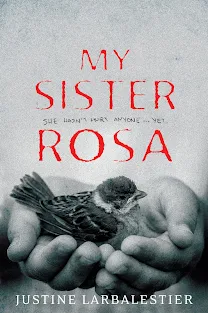
My Sister Rosa by Justine Larbalestier book cover

My Sister Rosa

Justine Larbalestier

This book captivated my attention instantly with a brilliant premise: "What if the most terrifying person you know is your ten-year-old sister?" It certainly puts the cute bird and black and white cover design into a new perspective doesn't it? I added this book to my TBR in 2017 but still haven't read it yet. What's it about? My Sister Rosa is a young adult thriller about Che Taylor who loves his younger sister Rosa despite fearing she's a psychopath. Nominated for a bunch of awards, Justine Larbalestier is an Australian author, so I'm pleased to include a homegrown author in this list.

The Book of the Raven: Corvids in Art & Legend

Angus Hyland

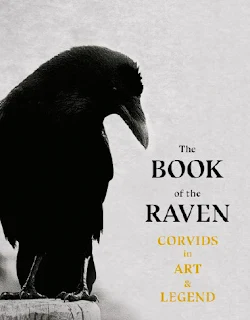
This book explores the behaviour of ravens as tricksters, thieves, problem-solvers and gift-givers through artwork and includes photographs, paintings, texts and poems. I'm hoping for a stunning coffee table book that includes artwork and literature from Shakespeare and Edgar Allan Poe right through to Game of Thrones - "there was a raven in the night" being one of my favourite quotes of the series.
In case you thought it couldn't get any better, Christopher Skaife, author of The Ravenmaster - My Life with the Ravens at the Tower of London has written the Introduction.
The Book of Raven: Corvids in Art and Legend by Angus Hyland book cover

That's it! I'm pleased to see an Aussie author and a variety of genres represented in this list: middle fiction, historical fiction, non fiction, crime, urban fantasy and even a classic! Have you read any of these books? Which one are you most drawn to read?


07 February 2022

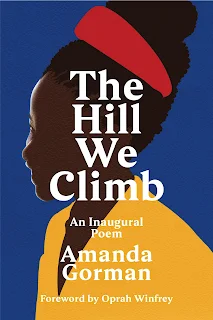
Review: The Hill We Climb by Amanda Gorman

The Hill We Climb by Amanda Gorman book cover

On 20 January 2021, I was incredibly moved by Amanda Gorman's address at President Biden's Inauguration. Gorman was the youngest presidential inaugural poet in US history and she definitely made an impression on those present that reverberated around the world. Watching her deliver her poem entitled The Hill We Climb, I was excited by this young mind and my admiration for her continues to grow.

Receiving a stunning hardback copy of The Hill We Climb for Christmas, I made sure to read this exactly a year to the day of the Inauguration event and was still moved by her words. They're just as relevant now as they were then and I doubt her message will ever date. Reading it every other day since then, (it's only 27 pages long), I decided to read her words while watching the video footage from that auspicious day in preparation for this review.

Gorman eloquently delivers a message of promise and hope, and in doing so, she has given every American a vision to aspire to:
"Because being American is more than a pride we inherit -
It's the past we step into, and how we repair it." Page 17
The Hill We Climb is inspiring to read, and watching Gorman's gestures, cadence, rhythm and delivery style elevates the experience to a whole new level.

If you haven't heard, watched or read The Hill We Climb by Amanda Gorman, I heartily recommend you do. It'll be the best 6 mins or 27 pages you'll ever experience. In the meantime, I'll leave you with my favourite section of the poem:
"In this truth, in this faith, we trust.
For while we have our eyes on the future,
History has its eyes on us." Page 19

My Rating:


16 March 2021

Review: Mrs Death Misses Death by Salena Godden

Mrs Death Misses Death by Salena Godden book cover
* Copy courtesy of Allen & Unwin *


Mrs Death Misses Death by Salena Godden is a literary feat exploring the grave topic of death. Mrs Death is portrayed as an old poor black woman overlooked by those who pass her by never knowing she holds their very lives in her hands.
"Only she that is invisible can do the work of Death. And there is no person more silenced than the woman, talked over, walked over and ignored than the woman, the poor woman, the poor old woman, the poor old black woman, your servant bent over a mop, cleaning the floor of a hospital. Did you see me today? Did you walk past?" Page 201
The portrayal of Death as anyone but a man in a dark robe with a scythe wasn't a shock to me and I was easily able to visualise Death as an old black woman. In the movie adaptation of The Shack by William P. Young, actress Octavia Spencer played the role of God and her performance was sublime. Mrs Death's character brought to life by Salena Godden with an expert hand was equally sublime.

However, when we meet Mrs Death she's exhausted by her work and seems to be seeking solace. Wolf Willeford is a struggling writer and when he purchases an antique desk, his connection to Mrs Death is strengthened. Mrs Death talks with Wolf and he begins to transcribe her stories.
"Mrs Death walks with me there. She tells me the river is one of her oldest friends. She says the Thames is filled with ghosts and old spirits. The floor of the River Thames is littered with engagement rings and the bones of dead babies. We stand together on the shore; we grow cold in the black shadow of the ghosts of slave ships, the clatter of the traders, the unloading of stolen goods and treasure, coffee, sugar and human cargo. Shadows of souls and the clatter of bones." Page 52
Wolf also transcribes stories of particular deaths that have stuck with Mrs Death over time. The Moors murders and the devastating fire at Grenfell Tower in 2017 are just two examples. On other occasions, Mrs Death attempts to impart her knowledge of the world in a direct appeal to Wolf and all of humanity in her advice on how to live life.
"To die is to have been alive, that is why you must live: live free, live wild, live true and live love alive. Let the fire burn you and the light blind you. Let your belly get full and fat and embarrass you. Let your words fall out and tumble carelessly and honestly. Let your passions be unlimited. And do your lifetime all in your own life time. And let all your shits stink and all your roses bloom. May your every success be a threat. Fuck being scared and infected with fear and doubt. Own your rejections and own your failures; they are an excellent wall to smash and to kick against. Every morning may you rise to fight and to create yet again, this time with both fists, and not with one hand behind your back." Page 64-65
This quote comes from an epic chapter narrated by Mrs Death and the entire chapter is full of quote-worthy moments I wanted to share here. Speaking to all of humanity and of course directly to the reader, Mrs Death says:
"I am Mrs Death and I am coming for you all. Accepting me is the first step, after that it gets easier, I promise you. Knowing me, knowing this, knowing that, that this all ends, is the best knowing you need to know." Page 65
We even get a chapter from the perspective of the Desk belonging to Mrs Death. You might harbour grave concerns this couldn't work but I can assure you it does. On reflection, it was one of the most enjoyable chapters of the entire book. Here's why.
"I have recorded every inky scratch of quill, the tap of her typewriter, the whisper of pencil and the slash of her fountain pen. Splashes of ink, wine and time. Now just put your ear here, Wolf, rest your head on my surface, you'll hear all the ghosts of scribbling pens of dreams from before. Stroke your fingertips gently across my red skin, as though it is braille, you'll be able to trace the hard-pressed writing from before." Page 86
The writing is sensual and full of life, love, death and meaning. The format contains many character perspectives and straddles multiple genres including fantasy, short stories, true crime and poetry in an overall presentation that felt unique to this reader. Beautifully presented in a hardback edition with black and gold dust jacket and complementary gold end papers, Mrs Death Misses Death is published today and I'm dying to discus it with other readers. (Sorry, couldn't resist).

Mrs Death Misses Death by Salena Godden addresses our mortality head on and doesn't shy away from the ugly nature of life, love, suffering and loss as we know it. It's definitely a wake up call for readers and a reminder of the misery and wonder of humankind while offering a life-affirming and hopeful message. 

Author Salena Godden took me with her on a literary exploration of the important themes in life including: love, loss, time and death and I know I'm the richer for it.

Highly recommended.

My Rating:


25 February 2021

Review: Fire Burn, Cauldron Bubble - Magical Poems chosen by Paul Cookson

* Copy courtesy of Bloomsbury *

Beautifully presented in an orange clothbound hardback edition, Fire Burn, Cauldron Bubble is a collection of magical poems by Paul Cookson and is a delight to hold in the hand. Containing a selection of over 70 poems by different authors, there's enough variety in these poems for children to suit all reading tastes. Here's an example from page 33.

Witch's Wishlist by B.J. Lee *

beetle toe
Fire Burn, Cauldron Bubble - Magical Poems chosen by Paul Cookson, and illustrated by Eilidh Muldoon book cover
Fire Burn, Cauldron Bubble - Magical
Poems
chosen by Paul Cookson
Published by Bloomsbury
henbane
first snow
plantain
pig's feet
toad flax
jacklebeet
beeswax
dragon teeth
fairy wing
winter heath
ginseng
wood ears
cypress oil
Job's tears
pennyroyal
burdock root
mustard seed
eye of newt
jimson weed
black mallow
stirring crook
goat sallow
spell book

Lovely black and white illustrations complement the poems in the book, but the real shining light of illustrator Eilidh Muldoon's work is her magically evocative cover design. Don't you just love it? Perfect for Halloween and winter reading.

My favourite poem from the collection by far is Somewhere in the Library from page 112.

Somewhere in the Library by Stewart Henderson *

Somewhere in the library
there are fierce and friendly beasts.
Dragons, cowardly lions
enjoying midnight feasts.
Somewhere in the library
there are whirlpools and lagoons,
coves and crags and picnics
with pop and macaroons.

Somewhere in the library
there are smugglers' hidden caves,
and voyages and shipwrecks,
where adventures come in waves.
Somewhere in the library
there looms a Gruffalo,
and Twits and Gangsta Grannies
and a wardrobe full of snow...

... Where the White Witch turns the pages,
her icy fingers vexed,
as Voldermort is reading
what happens to him next.
Somewhere in the library
down a whizzing country road -
an amphibian with driving gloves...
the hapless Mr Toad.

There's a Stig, and Railway Children
all present and correct,
whilst underneath the floorboards
the Borrowers collect.
But somewhere in the library
there is someone very wise.
Her title is librarian
which is really a disguise...

... For she's a gatherer of magic
and a confidante of elves,
whose legends she has catalogued
and filed on ship-shape shelves
And she knows a thousand sagas
and ten thousand thousand tales,
she's heard the yarns of hobbits,
and the ocean dreams of whales

So, let me share her mystery,
one secret so sublime -
her special prayer that starts each day... goes...
"Once upon a time..."


This is a quick read, and other favourites from the collection include: The Magic Kitchen Carpet by Paul Cookson, Hatastrophe by Dannielle Viera and Something Down the Plughole by Neal Zetter.

Fire Burn, Cauldron Bubble - Magical Poems chosen by Paul Cookson and illustrated by Eilidh Muldoon is recommended for children, teachers and parents looking for a magical and spooky read.

* These two poems have been reproduced here with the express permission of the publisher.

My Rating:


05 January 2021

Guest Review: Beowulf - A New Translation by Maria Dahvana Headley

Beowulf - A New Translation by Maria Dahvana Headley book cover
* Copy courtesy of Scribe Publications *

Intro

Beowulf is an epic poem that is approximately 1,000 years old. Written in Old English, it has been translated many times, with varying interpretations of the text a result of the condition and notations that have been made to this medieval manuscript across the centuries.

Scholars don't know the original title of the poem or the identity of the author, but the story is set in Scandinavia and there is only one copy, which is housed in the British Library.

Hundreds of translations of Beowulf have been made over the years, and today Scribe Publications is publishing a new feminist translation by Maria Dahvana Headley. Retired academic and Carpe Librum guest reviewer Neil Béchervaise decided to take on this classic, and shares his thoughts on the translation below.


Neil's Review

…a radical new verse interpretation … which brings to light elements never before translated into English”. So reads the cover blurb. But wait, there’s more. In the publisher’s words, Headley presents “A new, feminist translation”.

As you can see, before I have even cracked the covers, I am troubled. Deeply troubled. Having suffered the torment of a high school initiation into the wonders of this oldest surviving example of Olde English, I am suspicious. Am I embarking on a radical interpretation or a feminist translation? So, what is the difference between an interpretation and a translation? And “… elements never before translated into English”? Well! Really? This is surely a challenge enough for any reader.

So the radical interpretation begins:
“Bro! Tell me we still know how to speak of Kings? In the old days everyone knew what men were”. 
What?? A feminist translation begins with an address to “Bro”? About “what men were”? Now I will have to keep reading.

Headley’s new translation/interpretation of Beowulf does present some significant challenges. It’s address to “Bro” certainly flags the beginning of a story but it also screams that the audience is male – and all thoughts of what feminism has come to mean fly out the window. Nevertheless, as the story progresses, the author’s style begins to imprint itself on the narrative. The sheer poetry lifts the reader into a realm that is both familiar and even enlivening. The alliterations, some familiar, some strikingly original and some effectively translated help draw out the ironies, help intensify the agonies and underscore the ecstasies. Occasional couplets challenge the reader to remain conscious of the poetic rendering of the tale and amplify Headley’s pursuit of a style which was “meant to be shouted over a crowd of drunken celebrants” (p. xvi) because Beowulf is “not a quiet poem”. Rather, it is “a living text in a dead language”.

All of which would seem to suggest that the radical new, feminist Beowulf is a predictable successor to all of those which have come before. Not so, however. Headley has resurrected that ‘living text’ from its dead language to create an essentially gripping new tale. 

The rise of young Beowulf is an epic and familiar story. It is the story of many famous leaders who performed amazing feats in their earlier years, rose through rank and fortune to lead their nations and died in one last fight too far for the very same challenge that won their reputation in the first place.

Beowulf reports the killing of monsters, wanton, wicked creatures who destroy the fabric of peaceful society. Beowulf earns the mortal enmity of Grendel’s mother, a warrior woman as capable as Beowulf himself, by killing the young man. That he defeats her in her attempt to obtain revenge is a matter of good luck rather than good management. God is with him on the day.

The role of God in Beowulf offers evidence of the impact of Christianity in Norse/English lore, legend and mythology; as the role of fire-breathing dragons in starting life-destroying fires may remind us of how bushfires are started by lightning strikes (from evil spirits in the sky?). Managing fires, managing desperate politically and religiously inspired terrorism like 9/11 are not new stories, from the Sicarii Zealots of the first century AD to the Fenians then bin Laden and beyond, we are familiar with the fight to keep society safe. 

Headley has updated Beowulf, made the language accessible and, for this reader at least, revived an interest in the origins of mythological beasties. She may also have finally produced a version of Beowulf that is accessible to school students.

Neil's Rating: