Showing posts sorted by relevance for query Tracy Chevalier. Sort by date Show all posts
31 January 2020

Review: A Single Thread by Tracy Chevalier

A Single Thread by Tracy Chevalier (Photo Credit: Carpe Librum)
Photo Credit: Carpe Librum
Nothing much happens in A Single Thread by Tracy Chevalier, so why did I fall in love with it? It's not the first time this has happened either. Stoner by John Williams is the slow moving story of an ordinary man and it was such an exquisite portrait of his life that it instantly became an all-time favourite of mine.

Violet Speedwell is the protagonist in A Single Thread and in 1932 she is reeling following the painful loss of her brother and fiance in WWI. Violet decides to leave home and try to make it on her own in Winchester. Life is tough for surplus women and Violet does her best to get by and carve out a life of joy for herself.

While admiring the architecture of the local cathedral, she comes across the work of a group of broderers and decides she'd like to make a kneeler. It will be a permanent reminder of her life when she too is gone.

I've often shared Violet's thoughts that when I die, there will be no lasting evidence I was ever here. One of the reasons I love looking at architecture, paintings and needlework is that I can wonder about the hands that painstakingly created these precious objects from the past and imagine the lives their creators lived. I'm sure the desire to create something that might just outlive me was a small part of the reason I started stitching in the first place. Creating a tangible gift for a loved one with your own hands is something special and Violet wants to do this too.

This combination of historical fiction and stitching - along with the unexpected inclusion of bell ringing - was a sure sign I was going to enjoy this novel.

Adding to my reading experience was the fact I suggested this book for a monthly book club on GoodReads called A Stitcher's Book Club. A couple of us read A Single Thread at the same time and I'm sure this added to my overall reading enjoyment.

Containing themes of family, duty, responsibility, post-war culture, grief and expectations of women in society, A Single Thread by Tracy Chevalier was a real feel good read and I heartily enjoyed it.

For more, check out my review of The Lady and the Unicorn by Tracy Chevalier and Falling Angels by Tracy Chevalier.

Carpe Librum!

My Rating:

27 July 2010

Review: The Lady and the Unicorn by Tracy Chevalier

The Lady and the Unicorn by Tracy Chevalier book coverThe inspiration behind this historical fiction novel is the very real set of medieval tapestries depicting the seduction of a unicorn currently on display in a Paris museum. This is my first novel by Tracy Chevalier and I was instantly captivated by the subject matter and wanted to know how the author would approach the subject, given there is little known about the creation of the magnificent tapestries.

The Lady and the Unicorn is a quick read, and very rich in period detail. The story begins in Paris in 1490 and moves to Brussels, where the tapestries are woven in a family owned business.

I was completely engrossed by the weaving process, and was amazed to learn just how difficult and time consuming tapestries were to make in medieval times. For example, I didn't know they were woven face down. One of the tapestries took 2 years to weave, which meant that it was 2 years before the workers could see their final creation. When it was finished and cut from the loom, it was then quickly rolled and locked in a wooden trunk to protect it from thieves and insects. Imagine all that work, and barely 5 minutes to look at the end creation.

There is much sex and sexual tension in the book and I enjoyed reading about the fate of several women, although I wasn't too fond of the womanizing artist.

The story was rich with drama and historical detail and I especially enjoyed reading about the fate of the tapestries after they had been completed and long after all characters in the book had passed away. Fascinating!

I thoroughly enjoyed The Lady and the Unicorn, and would recommend it to anyone who has an interest in weaving or who enjoys European historical fiction.

My rating = ****

Carpe Librum!
12 May 2016

Review: Falling Angels by Tracy Chevalier

Set in Edwardian London, Falling Angels by Tracy Chevalier takes place from January 1901 to May 1910 and was a joy to read. 

This historical novel confidently covers themes of mourning, mourning etiquette, class and the suffragette movement with an engaging and natural writing style.

The chapters are narrated in the first person by several of the main characters, although each character picks up the thread of the story and continues with it, rather than re-living the same events from their point of view. 

Each of the voices are unique, making it impossible to confuse the characters. 

My favourite character by far was Simon Field, the gravedigger's son and the conversations that take place in the cemetery were some of my favourite parts of the book.

I recommend Falling Angels for those interested in the mourning etiquette of the Victorian and Edwardian periods and readers looking for something a little different.

My rating = ***

Carpe Librum!
19 May 2014

Review: Lady of Ashes by Christine Trent

Stunning cover design, 
don't you think?
For some reason, I've always been fascinated by the Victorian traditions of mourning: black crepe, hair brooches, mourning jewellery, funeral etiquette and the list goes on.  (Here's a great summary of Victorian mourning etiquette from author Tracy Chevalier).

When I heard about the lead character in Christine Trent's Lady of Ashes, I just knew I had to read this book.

Set in London in 1861, Violet Morgan is married to Graham Morgan, of Morgan Undertaking.  Contrary to the social expectations of the time, Violet performs all of the duties of an undertaker; a position usually performed by men alone.  

There was plenty of funeral and mourning etiquette sprinkled throughout Lady of Ashes, but unfortunately I always 'noticed' when Trent was dropping more of her research into the tale.  Having said that, I didn't mind so much because I couldn't get enough of it.

What I did mind was the storyline about the American Civil War.  When immersing myself in Trent's gripping world of undertaking in misty London, I couldn't raise any interest in the American Civil War, which unfortunately became an important part of the plot.  The Trent Affair is also significant to the plot regarding Graham Morgan, and I couldn't understand the relevance until it became clear that the author had personal ties to this event in history.  Ultimately it explained Graham's behaviour in the novel but there could have been so many other ways to accomplish the same outcome and keep the entire story set in London.

The unexpected appearance of Queen Victoria was a very welcome addition and I was often prompted to research aspects of her life with Prince Albert (Prince Albert of Saxe-Coburg and Gotha), so interesting was her portrayal in the novel.  The architecture was incredibly evocative and I was happy to lose myself in this time and place; researching the buildings and locations in my own time.

The scenes in Lady of Ashes featuring Violet preparing a corpse for funeral were tender and gripping at the same time, the highlight of the novel for me.  (Oh, and her friend with the messy dressmaker shop).

My rating = ***

Carpe Librum!

Click here to buy this book from Boomerang Books
07 January 2017

Historical Fiction Reading Challenge 2016 Incomplete

A year ago I signed up for the Historical Fiction Reading Challenge 2016 hosted by Passages to the Past. I committed to the Medieval level and had to read a minimum of 15 historical fiction novels by 31 December 2016.

Unfortunately I fell one book short of my goal, but here's what I read:


1. The Secret Heiress | Luke Devenish
2. The Golden Day | Ursula Dubosarsky
3. Precious Things | Kelly Doust
4. Falling Angels | Tracy Chevalier
5. The House Between Tides | Sarah Maine
6. Dark Aemilia | Sally O'Reilly
7. Three Sisters, Three Queens | Philippa Gregory
8. The Good People | Hannah Kent
9. The Wonder | Emma Donoghue
10. Beyond the Orchard | Anna Romer
11. Southern Ruby | Belinda Alexandra
12. The Better Son | Katherine Johnson
13. The Kingmaker's Daughter | Philippa Gregory
14. The Countess: A Novel of Elizabeth Bathory | Rebecca Johns

Despite failing to complete the challenge, I think I'm going to sign up again in 2017 as historical fiction remains my favourite genre.

Anyone want to join me?

Carpe Librum
!

28 December 2020

4 Reading Challenge Wrap Ups for 2020

I'm a little behind on my reading challenge wrap ups, but I've been reading up a storm this year. In this wrap up, I'm going to check back in on the following four reading challenges I participated in this year.

- Non Fiction November 2020
- Book Bingo 2020
- 2020 Non Fiction Reader Challenge
- 2020 Historical Fiction Reading Challenge


Non Fiction November Wrap Up

How was your Non Fiction November? Here are the non fiction titles I read during the month. Unfortunately A Life Discarded: 148 Diaries Found in a Skip by Alexander Masters was a DNF for me at 26% as it just wasn't holding my interest. It happens.

- Sh*t Moments In New Zealand Sport by Rick Furphy and Geoff Rissole
- Northside: a time and place by Warren Kirk
- The Ultimate Bucket List: 50 buckets you must see before you die by Dixe Wills
- Underland by Robert Macfarlane
- Nodding Off by Alice Gregory

I finished reading the last two books on this list in December which is why this wrap up is late.

Book Bingo 2020

This was my first time participating in the Book Bingo 2020 reading challenge hosted by my bookish friends Theresa Smith Writes, Mrs B’s Book Reviews and The Book Muse. To successfully complete the challenge, I had to read and review a book from each of the following 12 bingo squares: 

1. Themes of culture (And Fire Came Down by Emma Viskic)
Book Bingo 2020 reading challenge image
2. About the environment (The Rain Heron by Robbie Arnott)
3. Set in a time of war (To Sleep In A Sea of Stars by Christopher Paolini)
4. Themes of inequality (Gulliver's Wife by Lauren Chater)
5. Prize winning book (The Erratics by Vicki Laveau-Harvie)
6. Set in a place you dream of visiting (The Midnight Library by Matt Haig)
7. Themes of crime and justice (Reasonable Doubt by Dr Xanthe Mallett)
8. Friendship, family & love (A Month of Sundays by Liz Byrski)
9. Set in an era you'd love to travel back in time to (Spirited by Julie Cohen)
10. Themes of politics and power (Katheryn Howard - The Tainted Queen by Alison Weir)
11. Coming of age (The Austen Girls by Lucy Worsley)
12. A classic you've never read before (Pride and Prejudice by Jane Austen)

This challenge isn't being run in 2021, but it was really fun to take part in this year.

2020 Non Fiction Reader Challenge

As you know, I love reading the odd non fiction book and mid way through the year, I decided to jump on board and join the 2020 Non Fiction Reader Challenge hosted by Shelleyrae over at Book'd Out. In order to complete the Know-It-All level of the challenge, I had to read one book for each of the categories below.


2020 Non Fiction Reader Challenge

2020 Historical Fiction Reading Challenge

In order to complete the Renaissance Reader level of the 2020 Historical Fiction Reading Challenge hosted by Passages to the Past, I had to read 10 historical fiction novels. Here's what I read:

______________________________________________________________________________

It was a lot of fun participating in these four challenges throughout the year and I was very pleased to successfully complete all of them. Soon I'll be wrapping up the last two reading challenges I participated in this year: the 2020 Australian Women Writer's Challenge and 2020 Aussie Author Reading Challenge. 

In the meantime, let me know if you participated in any of these challenges or if any of the books mentioned above take your fancy. Are you thinking about reading challenges for 2021 or is it too soon?

Carpe Librum


07 April 2022

Blog Tour: The Winter Dress by Lauren Chater

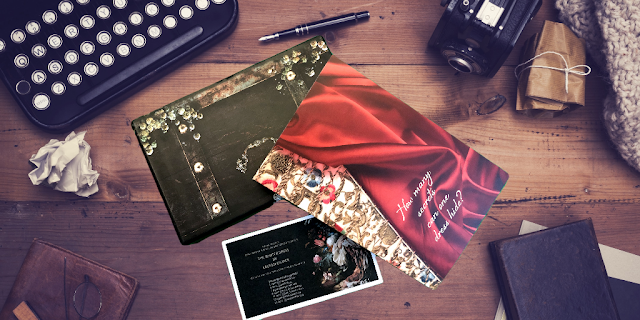
The Winter Dress by Lauren Chater blog tour schedule

* Copy courtesy of Simon & Schuster *


Intro

Lauren Chater is a talented Australian author and it's an absolute pleasure to be part of the digital blog tour celebrating the release of her latest historical fiction novel The Winter Dress.

Blurb

Jo Baaker, a textiles historian and Dutch ex-pat is drawn back to the island where she was born to investigate the provenance of a 17th century silk dress. Retrieved by local divers from a sunken shipwreck, the dress offers tantalising clues about the way people lived and died during Holland’s famous Golden Age.

Jo’s research leads her to Anna Tesseltje, a poor Amsterdam laundress turned ladies companion who served the artist Catharina van Shurman for one season at her property outside the Hague. The two women were said to be close, so why did Anna abandon Catharina at the height of her misfortune? And was the dress a gift or did Anna come by it through less honest means? Jo is determined to find out, but as she delves deeper into Anna’s history, troubling details about her own past begin to emerge, disrupting the personal narrative she has trusted for sixteen years.

On the small Dutch island of Texel where fortunes are lost and secrets lie buried for centuries, Jo will finally discover the truth about herself and her connection to the woman who wore The Winter Dress.

Review
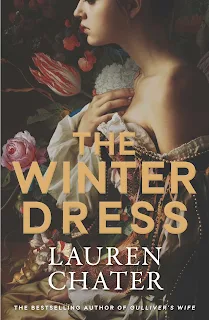
The Winter Dress by Lauren Chater book cover

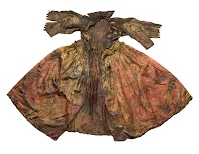
I love an historical fiction novel based on an element from history or a true story and we certainly have that here. In 2014, a big storm hit off the coast of Texel, clearing away layers upon layers of sand and mud from a known 17th century shipwreck. Texel is located off the coast of the Netherlands north of Amsterdam, and this natural event created an unexpected opportunity to explore the shipwreck known as the Palmwood wreck. Many items were recovered by divers, including a remarkably preserved 17th century silk dress.

Textiles are rarely recovered from shipwrecks and garments from this era rarely survive, so for this silk dress to survive on the bottom of the Wadden Sea for more than 350 years is quite extraordinary. 

The news of this incredible discovery travelled around the world and inspired Lauren Chater to imagine the woman who wore the dress. As a result, the seeds for The Winter Dress were well and truly sewn. (Sorry, couldn't resist).

Our main character Jo Baaker is a textiles historian and an interesting woman in her own right. In her words:
"One of the reasons I chose to pursue dress history was because I wanted to bear witness to the creation of textiles that simply won't be around in fifty years. The garments deserve better and so do the people who wore them." Page 155
Jo is astonished when she learns about the discovery of the dress in the book and I couldn't help but cringe alongside Jo when she hears how the dress was transported and hosed down by local divers trying to get the worst of the mud off. Eeeek!!! Jo is captivated by the dress and is honoured to be part of the curating process, desperately wondering about the life of the woman who once wore it.
17th century silk dress from the Palmwood wreck
The real silk dress
Source: www.archaeology.org
 

The Winter Dress is a dual narrative and the author takes us back in time to Amsterdam in 1651 where we meet Anna Tesseltje on the last day of her old life. Anna's family have fallen on hard times, and after starting work as a laundress, her brother secures her a position as a companion to artist Catharina van Shurman.

Meanwhile, Jo finds herself caught up in the excitement of the discovery in Texel and the lurking professional competition made me grind my teeth while my heart ached for the choices Anna faced in her timeline.

Expertly researched and beautifully told, this is a well woven and alluring story with a lustre between the pages you're not likely to forget.

A total of 100 signed boxed proofs of The Winter Dress were produced for Australia and New Zealand and as a member of this blog tour, I was lucky enough to receive one of these special editions! It's such a wonderful bookish touch that appeals to we booklovers and bibliophiles and is a pleasure to house on my bookshelves.

The Winter Dress by Lauren Chater is engaging and the author's enthusiasm to imagine and reveal the owner of the dress is contagious. This is a story about grief, love, loss and discovery and is highly recommended for fans of Kate Forsyth, Tracy Chevalier, Kayte Nunn, Philippa Gregory, Kate Morton; and of course if you enjoyed Gulliver's Wife by Lauren Chater, you'll love this!

My Rating:


Carpe Librum image of the signed and limited boxed edition of The Winter Dress by Lauren Chater
19 March 2013

Author interview with Kate Forsyth, author of The Wild Girl and Bitter Greens


It gives me great pleasure to introduce one of Australia's most successful and prolific authors, Kate Forsyth; author of Bitter Greens and her latest release The Wild Girl.

Kate, thanks for joining us on Carpe Librum.  Let me ask you, with over 25 published books to your name, what do you love most about being a writer?
Kate Forsyth
Everything! I love every stage of writing a new novel from buying myself a beautiful new notebook to building the story, step by slow step, to the actual rush of joy that comes when the writing is going well. I would never want to do anything else. 

Do you plan your novels in advance or does the story unfold as you go?
Both. I spend quite a long time doing my research, immersing myself in the period, daydreaming, pondering the story, scribbling down ideas, sticking photos and maps into my notebook, exploring possibilities, imagining my characters and the setting and so on. I write an outline, and then draw up a rough plan which normally takes up a page or two in my notebook. I play with ideas for the structure, and establish my keystones - the title, the opening and closing scenes, and a few vividly imagined scenes along the way. I cannot start writing until I have these things firmly in my head, as well as the first line. Once I start to write, the story will unfold in new and unexpected ways, and I really love that part of the process too. 

I've read that as part of your research for writing The Wild Girl, you read the personal diaries of Wilhelm Grimm, one of the Grimm brothers. What was that experience like and how does one even gain access to such historic papers?
It was quite amazing, I have to admit. I knew fairly early on that I needed someone in Germany to help with all the research and translations - so many books on the Grimms have never been translated into English. I knew that Dortchen had dictated a memoir to her daughter while on her deathbed, plus there were many other essays and books about the Grimms that I needed help with. I tried for months to find someone to help me but had no luck. One translator I hired was hit by a car, another simply vanished off the face of the earth (or perhaps he simply stopped responding to my emails). 

The Wild Girl
One day I was googling in German, looking for any information I could find on the Wild family, when I stumbled upon a blog written by a German artist and cartoonist called Irmgard Peters. She was recounting an old family story about a white cot that had been passed down through generations of her family. In that cot, she said, slept the Wild girls who told the Grimm brothers all their fairy tales. I wrote to her in my execrable German to see if it was at all possible that she meant the Wild girls as in Dortchen, Lisette and Gretchen Wild, and she wrote back (in perfect English) saying yes, she was the direct descendant of Rudolf Wild, their brother, and why did I want to know. When I told her about the novel I was writing, she was very pleased that Dortchen was at last been brought out of the shadows and asked what she could do to help me. 

She translated Dortchen's memoir (its only a few pages long), and sent me photos of family portraits, and then she corresponded with some of Germany's foremost Grimm scholars on my behalf. Wilhelm's diary had recently been unearthed and one of the scholars was planning to work on it with plans to publish. He told Irmgard and she asked if she might see it and translate it for me, and was given permission. It was so exciting! The diary is not very long and only covers a few years, and Irmgard only translated the pages in which Dortchen is mentioned, but it helped me enormously with the last section of the book. I was unbelievably lucky to have found it! 

How wonderful to have liaised so closely with a direct descendant of Dortchen's brother, Rudolf. It must have been such an unexpected joy!  That leads into the next question quite well.  I was going to ask if you knew if any descendants of Dortchen Wild have read The Wild Girl?
I have sent Irmgard a copy of The Wild Girl and am now very anxious in case she hates what I've done. I do hope she likes it!

I loved reading how Dortchen collected and harvested herbs and plants that she and her father used - in Germany in the early 1800s - to create herbal remedies for sale in the family shop.  How did you conduct the research for this aspect of the novel?
I have always been interested in herbs and natural healing have a large  library on the subject already. However, most of my books are about English herbs and remedies, and so I needed to find out about German beliefs and practices. A few things helped me. Firstly, I borrowed a book on German apothecaries from the university library and struggled my way through it - the book was incredibly arcane and difficult but taught me a lot about some of the stranger remedies like bezoar stones and the breathing in of mercury fumes to help asthma patients (no wonder Wilhelm was so ill!). It also gave me the recipe for laudanum which was fascinating - I had never realised that the apothecaries bought the opium in its raw state and made up the tincture themselves. 

Then, when I was in Germany, I visited an apothecary museum which was really illuminating too. Plus, of course, lots and lots of Google Book searches!

What was the hardest part of writing The Wild Girl?
The research was difficult and took me a long time. Discovering my story was also hard - so little was known about Dortchen's life and her inner world. I turned to her stories for inspiration and was troubled by the darkness and cruelty in many of the stories, particularly in 'All-Kinds-of-Fur' which is an incest tale. It seemed so strange for a young German woman of Dortchen's time to tell such a story to a young man - and it was so striking the way he later rewrote the story to transform it into a story of escape and healing, rather than imprisonment and pain. And then he called the girl in his version of the story a Wild creature ... like that, with a capital on the W. The more I read, and the more I thought, the clearer it seemed to me that there was darkness and cruelty in Dortchen's own life .... but then I really struggled with my right to imagine a tale like this based on a real woman's unknown life. I talked it over with a number of people I really trust, and decided that this is what we do as fiction writers - we spin stories out of fragments of other stories and other lives. 

Which part of the book did you write last?
The last scene. I always write in a linear fashion, from beginning to end, as much as I can.

One of Kate's fav books
The White Queen by
Philippa Gregory
I've heard that you love to read.  What are some of your favourite books/authors?
I do love to read! I have so many favourite authors its impossible to list them all, but I'll give it a go. I love: Georgette Heyer, Mary Stewart, Juliet Marillier, Robin McKinley, Philippa Gregory, Joanne Harris, Tracy Chevalier, Kim Wilkins, Kate Morton, Karen Maitland, C.J. Sansom, Geraldine Brooks, Christopher Gortner, Sarah Dunant, Ellis Peters ... check out my website for more.


Where does your love of history or historical fiction come from?
I think the books I loved to read as a child - Geoffrey Trease, Rosemary Sutcliff, Jean Plaidy plus many more.


Do you have any literary influences?
I think any book I have ever read which I have loved - and so we're talking thousands and thousands of books here! 

Do you have a favourite bookshop?
I love any bookshop! I especially love old bookshops with hidden treasures in dusty, cobwebby corners ... ooh, me too; love hidden treasures but hold the spiders!

What's next?  What are you researching or working on at the moment?
I'm working on a 5-book children's fantasy adventure, and then I'm planning another historical fairytale retelling - this one set in Nazi Germany.

What would you like to tell your readers?
I hope you love my books!

On that note, thanks so much for joining us today Kate!