Showing posts sorted by date for query kate forsyth. Sort by relevance Show all posts
28 May 2026

Review: Postscript - Life, Love and Loss in Australian Letters

Postscript - Life, Love and Loss in Australian Letters book cover

* Copy courtesy of National Library of Australia Publishing *

Intro

Postscript - Life, Love and Loss in Australian Letters contains a small collection of letters from the archives held by the National Library of Australia and is just a tiny sample of the millions of letters in their extensive collection.

A variety of letters have been chosen covering a breadth of topics and were given to contemporary writers who were asked to use them as an inspiration to respond. They each did so by writing their own letter to a recipient of their choice and these were then grouped together in chapters.

In a tribute to the book I've decided to write my review in the form of a letter.

Letter to NLA

Dear National Library of Australia,

I haven't visited any of your four sites, yet I greatly admire the important work you do to preserve Australia's culture and history. I've long been a lover of letters and snail mail since I wrote in to Dolly Magazine as a teenager asking for a pen pal. I enjoyed reading your latest publication Postscript - Life, Love and Loss in Australian Letters and wanted to share my thoughts.

My favourite letter in this collection was the one from 17 year old student John Ian Wing to the Chairman of the Games Committee in charge of the 1956 Melbourne Summer Olympics. In his letter, John praises the friendliness of Melbourne people and suggests a march during the closing ceremony that is completely different to the one that took place during the opening ceremony. He proposes the athletes march as one nation, walking freely and waving to the public. In that way, John observes that 'war, politics and nationality will be all forgotten' and the whole world could be made as one nation creating 'a great occasion for everybody and no one would forget it'.

The Chairman loved the idea and John's suggestion was immediately adopted, creating a new Olympic tradition that we continue to enjoy today. I especially loved John's endearing diagram of how it could work.

Shelley Ware is an author, media presenter, educator and Mum and she was paired with this letter, choosing to write a letter to her son. In it she draws on John's vision for unity in a divided time to her son's moral compass and search for truth beyond the headlines expressed in his artwork. This was a terrific pairing and I really enjoyed it.

Another stand out was the letter from Sir John Monash in 1906 to his 13 year old daughter, narrating almost every aspect of her upcoming journey by train and then boat from Spencer Street Station (now Southern Cross Station) to the property of Canally on the Murray River.

Today you might consider his approach evidence of overparenting, but it's clear he loves her dearly and I couldn't help smiling at his advice for when she boards the boat on the Murray River:
"On settling down on the boat, I should advise you to to go bed at once, because you will, no doubt, be very tired, and the scenery is not very interesting for the first few miles. So you had better go to bed comfortably before the boat starts and do not stop up yarning, but get to sleep and tell the Stewardess to wake you quite early - say 7 a.m. - so that you can enjoy the beautiful river scenery for an hour or two before reaching Windomal." Page 26
His letter runs for pages and it made me wonder how many times he'd taken that trip but I didn't see the relevance of the two letters that followed by the late Judith Wright. While detailing the birth of her child Meredith and her subsequent recovery in hospital, I wasn't entirely sure how that related to a parent separated from their child or preparing a child for a life changing journey. However the letter from Maggie Mackellar to her adult daughter certainly embraced the spirit of the letter from Monash in her well expressed anxiety around her daughter travelling far away and the memories of her childhood the absence created.

It must have been difficult for your staff to create a longlist of letters for this project from your extensive archives. Where to start? How long did it take? I've heard from reliable sources that your staff chose letters of interest based on the identity of the sender or the recipient, the story or the writing itself. Then a generous list of potential respondents was collated, drawn from those with an existing relationship to the library, visiting writers or those who might have an interesting angle on a response.

I was pleased to see one of my favourite Australian authors included, Kate Forsyth and enjoyed her response to Jane Austen's letter. I wonder, was she able to view the original in person or online? I bet she would have been thrilled to see it.

I had fun devising my own shortlist of modern authors I'd love to see in a letter writing project like this and the fact that Postscript comes in at <130 pages, surely means there was room for more? Perhaps some of the invitees were overwhelmed by the magnitude of the brief and suffered a touch of analysis paralysis. I did find myself wishing for contributions from more well known Australian authors, as you know, we certainly have a plethora of Australian talent in that regard. Or, I fancy you might be considering a second edition, although you'll have to come up with a better title than Post Postscript; I don't think that'll catch on.

Let me know if you want to see my shortlist of modern respondents, but in the meantime, congrats on an engaging collection.

Yours Affectionately,

Carpe Librum!


My Rating:


15 June 2025

Carpe Librum Celebrates 20 Years of Blogging

Carpe Librum logo celebrating 20 years of blogging

I have another major milestone to celebrate in 2025 because this month (drum roll)...

Carpe Librum turns 20 years old!


I'd love to share how it all started, what's changed over that time and offer a giveaway so that we can celebrate this accomplishment together.

I've come a long way since this blog started in 2005 under the name My Four Bucks. Often when people offer their opinion they call it their 2 cents but I always have more than 2 cents to contribute and in order to share it, My Four Bucks was born. At the time, I posted on topics that took my fancy however my first official book review was The Alchemist by Paulo Coelho. Since then, I have published an astonishing 1,126 book reviews, can you believe it?

In August 2012, My Four Bucks underwent a significant rebrand and was relaunched as Carpe Librum (Seize the Book). In May 2014, I joined the team of book bloggers writing for Boomerang Books and also became one of their affiliates. Over the next 12-18 months I included affiliate links with all of my reviews but it failed to generate any income.

In 2015 Carpe Librum turned 10 and in April 2016 I was excited to launch my current logo. In 2018 and 2019 I was asked to be a Digital Storyteller and Blogger for the Melbourne Writers Festival which was a highlight and I thoroughly enjoyed it. In September 2020 I became a Booktopia affiliate, but again, this wasn't successful in the long term.

In the early years, I began receiving requests from authors to review their books on Carpe Librum. I also began to send publishers my reviews of their new releases and after a number of months, started requesting advance reader copies (ARCs) for myself. I was thrilled when they said yes and they soon started asking me to review ARCs and sending books in the mail. This increased over time and lead to a lucrative few years receiving all kinds of unsolicited books in the post every week just in the hope of a review.

Let's check out some stats from the last two decades of blogging:
Number of posts published:
1,596
Number of reviews published: 1,126
Number of blog comments: 3,280
Number of giveaways: 89
Number of books given away: 133
Number of author interviews: 51
Number of email subscribers: 795
Number of reading challenges completed: 51
1 Million views achieved: December 2017
2 Million views achieved: September 2023
3 Million views achieved: May 2025
Most popular book review: Bitter Greens by Kate Forsyth (32,447 visits)

More recently, the number of unsolicited books in the mail from publishers has declined significantly over the past year or so and other Australian book bloggers agree it's the end of an era. I can request new releases on NetGalley (NG) however I still prefer to read print copies over e-books so I'm not an active NG reviewer. I've been enjoying the additional reading time to pursue the never ending list of back catalogue books and have still managed to enjoy some incredible new releases from publishers. The fact that I'm not reviewing as many ARCs and new releases as I used to could have had a detrimental effect on my traffic but that hasn't been the case at all.

What's next? I've stayed true to the books I like to read and haven't been tempted to dip my toe into the highly popular pool of romantasy novels that are dominating the catalogues at the moment. I don't spend much time on Instagram and don't feel any desire to join the BookTok community. Yet despite this, readers are still finding my reviews and continue visiting my little corner of the internet at Carpe Librum. Last month I achieved 3 Million hits and I don't know of any other Australian book blogger who has reached this milestone; but if you have, please let me know below, I'd love to congratulate you on your success!

It's been a thoroughly enjoyable 20 years and I've never considered slowing down or stepping away from my passion for a moment. Reading and reviewing books fills my cup, so thanks to all of my subscribers and readers. Some of you have been with me since the very beginning, while others have stuck around after entering a giveaway, or pop back in from time to time to see what I've been reading. If you're reading this, it means we share a love of books and the written word, and I appreciate that while you're reading my words here, you're taking precious time away from your book. Carpe Librum!

Giveaway

This giveaway has now closed. Enter below for your chance to win a $50AUD gift card from Dymocks. If you don't have access to a Dymocks store I'll arrange a gift card of the same value from your preferred bookseller to be emailed to you. Entries are open internationally and close at midnight AEST Monday 30 June 2025. Good luck!


11 April 2025

Review: The Book of Gothel by Mary McMyne

The Book of Gothel by Mary McMyne book cover

In the year 1219, Haelewise is 78 years old and sets down the story of her life and how she became known as Mother Gothel after the tower in which she lives. Famous for allegedly kidnapping Rapunzel, Haelewise tells us her story from childhood into adulthood and old age.

The book immediately gave me Kate Forsyth Bitter Greens vibes and was on track to be a five star read with descriptions like this setting the scene of 12th Century Germany:
"I noticed for the first time their brightly dyed kirtles, the stilted way they spoke diutsch. Their long, ribboned braids, which my mother called corpse-braids because they were extended with hair from the dead. They were courtiers' wives." Page 64
Reading like a fairytale, Haelewise is a compelling character who suffers from light sensitivity and fainting spells. Living with the fear she may be accused of being possessed by a demon if she has a fit in public, I particularly admired her grit and determination after the death of her mother despite an uncaring and barely-there father.

Having studied under her mother as a midwife, Haelewise travels to an ancient tower to seek out the wise woman who lives there and offer her skills as an apprentice. I would have been happy to follow Haelewise and every step of her apprenticeship as a healer (reminding me of The Binding in many ways) but the author cranks up the story and instead it becomes a quest novel of sorts.

Essentially a retelling of Rapunzel's story from the witch's perspective, The Book of Gothel has all of the elements of a fairytale; a young girl in trouble; an old wise woman and healer; loss of a parent; an ancient tower; creepy woods; a castle fit for a King; a special horse; spells; dark magic and an evil prince.

The Book of Gothel by Mary McMyne is recommended for historical fiction readers, Kate Forsyth fans and those who enjoy a good fairytale re-telling.

My Rating:


23 December 2024

Historical Fiction Challenge Completed 2024

At the beginning of the year I signed up for the Medieval Reader level of the 2024 Historical Fiction Challenge hosted by Marg at The Intrepid Reader. I was required to read 15 historical fiction novels and I managed to read a total of 19 to successfully complete the challenge.

Here's what I read throughout the year 2024:
Historical Fiction Challenge 2024 logo

1. The Bee and the Orange Tree by Melissa Ashley
2. The Beauties by Lauren Chater
3. The Library Thief by Kuchenga Shenjé
4. The Warm Hands of Ghosts by Katherine Arden
5. Black Silk & Sympathy by Deborah Challinor
6. The Tea Girl of Hummingbird Lane by Lisa See
7. Weyward by Emilia Hart
8. A Short Walk Through a Wide World by Douglas Westerbeke
9. The End and Everything Before It by Finegan Kruckemeyer
10. The President's Hat by Antoine Laurain
11. Hex by Jenni Fagan
12. The Attic Child by Lola Jaye
13. Cuddy by Benjamin Myers
14. The Hatmakers by Tamzin Merchant
15. The Silence Of Bonaventure Arrow by Rita Leganski
16. Psykhe by Kate Forsyth
17. Rapture by Emily Maguire
18. Black Rabbit Hall by Eve Chase
19. The Household by Stacey Halls

Have you read any of the books on the list? I'm currently reading and enjoying Dark Serpent by Paul Doherty at the moment and I'm hoping to finish it by the end of the year, bringing my total to 20 books.

Did you read any stand out historical fiction this year or have any recommendations?

Carpe Librum!


17 November 2024

Review: Psykhe by Kate Forsyth

Psykhe by Kate Forsyth book cover

Having a relatively poor knowledge of Greek and Roman mythology, I was a little concerned when I picked up Psykhe by Kate Forsyth. It's a fictional re-telling of the Greek Godess Psyche and Cupid and I was worried I might end up lost in the narrative or missing references I couldn't place due to my lack of background in the classics.

Kate Forsyth is a favourite Australian author of mine and I should have trusted she would make her tale accessible to those familiar with ancient mythology and those relatively new to it.

Set in Italy, our protagonist introduces herself on the first page by recounting her dramatic birth. Born with the umbilical cord wrapped around her neck and appearing blue and all but dead, her mother's midwife blew air into her lungs and brought her back to life:
"So I was named Psykhe, which means breath and soul and butterfly, words having many meanings. Only gods die and return to this world alive. So as I grew into girlhood, many people began to think I too must be divine." Page 3
It's clear by the second page that Psykhe has albinism and it was interesting to read an historical fiction novel featuring a main character with the physical traits of albinism; white hair, low vision and extremely sensitive skin which can burn and blister in the sun. It's a topic that has interested me for years and you can read my review of Beyond the Pale - Folklore, Family and the Mystery of Our Hidden Genes by Emily Urquhart for more on albinism in history although I suspect there are better books on the topic.

I can't comment on how Psykhe having albinism compares to the original myth, however I did find it a stretch to believe that an albino woman would be considered a great beauty at the time. Usually albinism is accompanied by fears of curses, dark forces or magic.

Psykhe learns the healing properties of herbs and plants and becomes a midwife, also drawing attention to herself as a potential witch. These early years are where the book excels and it's clear the author loves writing about potions and tonics and the many uses for plants known at the time.

Psykhe's relationship with a cruel and absent father highlighted the complete lack of agency she and her sisters experience as young girls and later young women. Psykhe falls in love with an immortal, referred to as Cupid or Eros in ancient mythology and a romance ensues.

When introducing the Vestal Virgins of Rome - which I just learned about watching Those About to Die with Anthony Hopkins - the author describes the Roman temple:
"The round temple to Vesta, where virgins dressed in white tended the everlasting flame of the goddess of the hearth. Taken when only children, they would never know the touch of a man's hand, the deep kiss of desire, the swelling of a child in their womb, the suck of a babe on their breast." Page 103
Readers familiar with Greek and Roman mythology may have issue with some of the author's choices in the novel but I don't know my history well enough to pass judgement. I did find several elements a bit of a stretch (a caesarian section, mouth to mouth resuscitation and the albinism) but largely enjoyed the narrative. While unconvinced by the romance element, I enjoyed the challenges presented by loving a mortal, the supernatural and fantasy elements and the lengths Psykhe goes to for love; including her quest to the underworld.

Psykhe
by Kate Forsyth is a feminist re-telling that will appeal to lovers of mythology, fantasy, romantasy and historical fiction.

My Rating:


05 April 2024

Review: The Beauties by Lauren Chater

The Beauties by Lauren Chater book cover

* Copy courtesy Simon & Schuster *

It's 1665 and Emilia Lennox heads to court to seek the favour of King Charles II after losing everything when her husband's lands and title were confiscated. Seeking to have them restored, Emilia begins a dangerous liaison where the lengths to which she'll go to have her status restored by the King will be tested. Meanwhile, Henry is a talented artist and assistant to the court painter commissioned to produce a series of portraits; the beauties from the title.

The Beauties by Lauren Chater contains multiple narrators with alternating chapters from both Emilia and Henry in the 'present' time period, and chapters from years earlier told by a younger Anne Hyde from the Hague.

Assuming The Hague was in France when in fact it's in the Netherlands and not noticing the Anne Hyde chapters were 6 years earlier than the primary timeline was a mistake on my part that generated some reader confusion and slight disconnect as a result.

Perhaps if I knew my history a little better, I'd have realised sooner that young Anne Hyde went on to become the first wife of James, Duke of York, making her the Duchess of York. The chapters that slip back in time a mere six or so years earlier to capture the Duchess of York commissioning the series of portraits was an odd choice to me. The narrative between Emilia and Henry was rich with compelling characters and there was plenty going on to hold the reader's interest without that.

That said, let's enjoy some of the descriptive writing that kept me engaged throughout:
"To distract myself, I poured all my energy into my new role as a lady-in-waiting. When the season changed, I travelled with the Princess to her home at Binnenhof Palace in The Hague. There I learned to dress the Princess's fine brown hair for stately occasions, pinning the curls tightly to her scalp so only the pearled tips of the pins peeked through. I learned how to sponge sweat out of a gown by daubing a mixture of vinegar and spit to lift the offending mark." Page 49
The setting at court was richly described and my feet ached along with Emilia's as she waited hours on end for a glimpse of the King. I thoroughly enjoyed the painterly setting at the artist's studio and the production goings on at the theatre.

It's somehow reassuring - although I'm not sure why or how - to see characters written today, yet placed in a novel set more than 350 years ago having the same struggles we do. The author convincingly captures the timeless nature of the worries that often plague us:
"At night, she lies awake staring at the roofbeams while the questions twist and twine, tying her in ever tighter knots of confusion. If only she could see the outcomes of her choices, then she could safely decide." Page 132-133
Emilia was trying to decide her future and I recently found myself wishing the same were true. Speaking of worries that often plague us, those who know their history well (which isn't me obviously) will recognise the year 1665 as being smack bang in the middle of the Great Plague of London and while only occupying a small section of the novel, I did enjoy the impact the plague had on the various characters. This was very well handled and I enjoyed the realistic portrayal of events and outcomes between characters as a result.

The Beauties by Lauren Chater is highly recommended for readers who enjoy a little art with their historical fiction, and if you enjoyed Beauty In Thorns by Kate Forsyth or The Doll Factory by Elizabeth MacNeal then this is for you!

My Rating:


15 February 2024

Review: The Bee and the Orange Tree by Melissa Ashley

The Bee and the Orange Tree by Melissa Ashley book cover

If you love fairytales and historical fiction set in France, then The Bee and the Orange Tree by Melissa Ashley will interest you. Set in the salons of Paris and commencing in 1699 during the reign of the Sun King Louis XIV, this story is based on the life of Baroness Marie Catherine D’Aulnoy and her friend, socialite and heiress Madame Nicola Tiquet.

Marie Catherine was a storyteller and author known for coining the term 'fairytale' and The Bee and the Orange Tree focusses on her life, in addition to that of her daughter Angelina and friend Nicola Tiquet. Those familiar with the fate of Madame Angelique-Nicole Tiquet may be interested in this fictionalised account of her life, while simultaneously finding the conditions of her circumstances hard to process.

Imagining the literary salons of Paris in the seventeenth century was intoxicating and the list of family and character names at the beginning of the novel was extremely useful. In this novel about female agency and the power of story, our characters struggle with overbearing males in their lives:
"She'd lost count of the conversations they had shared about brutish husbands. She repeated the advice she always delivered at their end: you are more capable - of creating meaning, of finding pleasure - than you allow yourself to believe." Page 22
While seeming more appropriate for today's characters than 300 years ago, this advice is freely given, yet has surprising and unintended consequences for our characters.

The writing in The Bee and the Orange Tree by Melissa Ashley is luscious and evocative and reading it felt like an indulgence. We're also treated to some striking moments like this one:
"As the only tree standing in the field of her mother's fury, she was preparing to be lashed by strong winds, vulnerable to a fiery lightning strike." Page 291
Written by an Australian author and published in 2019, the title of this book comes from a fairytale of the same name written by Marie Catherine D’Aulnoy and published in 1697 and it really works. My reading experience would have been enhanced if I'd known the book was based on real figures from history; that understanding only arrived afterwards with the Author's Note at the end.

If you've ever wondered what it would be like to visit one of the literary salons of France in the 1600s or enjoy the work of Kate Forsyth with regard to fairytales, The Bee and the Orange Tree by Melissa Ashley is for you.

My Rating:


11 April 2023

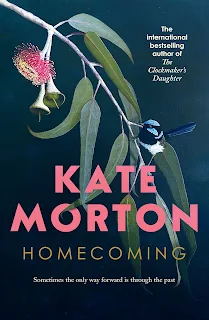
Review: Homecoming by Kate Morton

Homecoming by Kate Morton book cover

* Copy courtesy of Allen & Unwin *


Homecoming by Kate Morton is one of my most highly anticipated releases for 2023. This distinctly Australian historical fiction novel starts strong with a refreshingly different setting - for Morton - on Christmas Eve in 1959. It's here in the Adelaide Hills of South Australia that a terrible tragedy takes place that will reverberate through the Turner family for generations to come.

Meanwhile in the present, Jess returns to Darling House in Sydney after learning her grandmother Nora is in hospital. Jess is estranged from her mother Polly but finds a true crime book at Darling House that covers a family tragedy Jess has never heard of.

Familiar in all of Kate Morton's novels is a sense of connection between the past and present and the haunting of the present by tragic events and people from the past. The author's strength is also in creating homes, manors and mansions with character, and Homecoming had two homes to explore and enjoy.
"You'll see what I mean. It's a house that rewards the curious. Have you explored the nook under the east stairs yet? I used to love playing in there. I dare say it's been lonely all these years, just waiting for a child to claim it as her own." Page 90
Told in a dual narrative style, the nature writing was evocative. I enjoyed mentions of the little township of Hahndorf which reminded me of Devotion by fellow Australian author Hannah Kent set in the same region more than a century earlier. The Australian landscape is wild and beautiful yet also dangerous, as the next excerpt demonstrates:
"The story had given her chills, but of recognition rather than fear. Mythical though the creature might have been, inherent in her children's description was a recognizable truth about this place: the uncomfortable but certain sense that danger, the unknown, was always lurking in the dark spaces 'out there'. This continent was one where beauty and terror were inextricably linked. People died here from thirst if they took a wrong turn. A single spark of fire could grow to consume an entire town. Children who wandered beyond the back fence disappeared into thin air." Page 201
I was reading The Secret Garden by Frances Hodgson Burnett earlier this year, and almost mentioned in my review that I was sure the writing style and infectious appreciation of nature in this classic went on to inspire some of my favourite authors in Kate Forsyth and Kate Morton. This thought bubble didn't make the final edit of the review, however I was reminded of it when I saw this quote very early on in Homecoming by Kate Morton:
"Curious, Percy urged Prince onwards up the dense, wooded slope. He felt like a character in a book. He thought of Mary Lennox as she discovered her secret garden." Page 23
Speaking of curiosities, the very next paragraph had a reference to 'Sir Gawain on the lookout for the Green Knight', a direct reference to a late 14th-century chivalric romance in Middle English, that inspired The Buried Giant by Kazuo Ishiguro that I read just recently. I think it's remarkable how many books reference other works and how authors can inspire others - sometimes from the grave - to create new stories for eager readers.

If you've skipped ahead or noticed the three star rating I'm giving to this novel, you might be wondering why. My primary issue with Homecoming was the use of a book within a book to provide an insight into the 1959 family tragedy. I usually love this writing technique, however in this particular case, the true crime book 'As If They Were Asleep' by Daniel Miller was unconvincing. Excerpts from the book were included in the body of the novel, however the writing style was not that typically found in this genre of non fiction.
"As Nancy had foreshadowed, some of the scenes were written in close third person, as if Daniel Miller had listened to Nora speak about herself and then, rather than write down the interviews precisely as they'd occurred, with his questions followed by her answers, taken the next step of interpreting the memories, history and personal feelings she'd shared, showing the things she'd described. The resulting scenes spoke of many conversations, not just one or two; there were too many diverse details - some of which Jess recognised from Nora's stories, others that were new to her - to have been gleaned in the formal setting of an initial interview." Page 376
This just didn't work for me. The resulting excerpts from Daniel Miller's book read as pure fiction and not a new style of narrative non fiction.
"The scene also showed the intimate way in which Daniel Miller had come to know his 'characters'." Page 346
This writing technique is ineffective if you need to have the character ponder Daniel's writing style within the novel, and then need Daniel Miller's niece to explain how he composed the 'scenes' from his interviews. The resulting effect and mixed tense was confusing and often took me out of the story. The idea of including a true crime element was definitely on trend, but I wished the author had stuck to her tried and true method of revealing secrets and unveiling long held mysteries.

My other gripe was the length of Homecoming. I love a chunky novel and am not deterred by a hefty page count, but at 640 pages in length, this could have been edited down by at least 100 pages. There were moments of terrific writing like this:
"Her grandmother was being very kind to her, which had the effect, as kindness often does, of making Jess feel terribly sad and lonely." Page 90
Wow, so insightful! However, these reading highlights were diluted by the above concerns.

Before I close out this review, I'll leave you with another quote I enjoyed, that provides insight into two siblings arguing:
"Silence fell. A stalemate had seemingly been reached, and with no further shots fired, the room's thick ambience briefly settled. But there is nothing surer than that two siblings, each nursing a problem, will seek refuge in the familiar comforts of quarreling, and so it was with John and Matilda in that moment." Page 309
Homecoming by Kate Morton contains themes of home and belonging, and explores the often rocky relationships between mothers and daughters.

My Rating:


14 January 2023

Review: The Bear and the Nightingale by Katherine Arden

The Bear and the Nightingale by Katherine Arden book cover

Set in a bitterly cold winter in a small medieval village in Russia, The Bear and the Nightingale by Katherine Arden is full of Russian fairytales and folktales. The villagers have been making offerings to the household spirits for generations and are wary of what dwells in the dense forests.

However the arrival of a new priest from Moscow changes the household completely as magic is essentially outlawed and the Christian Priest Konstantin is intent on purging devils and witches from the town.

The villagers are forced to choose between their Christian beliefs and salvation or their mystic traditions of old and certain damnation.

Unfortunately for our protagonist Vasya, Konstantin is frighteningly effective:
"His voice was like thunder, yet he placed each syllable like Dunya setting stitches. Under his touch, the words came alive. His voice was deep as rivers in spring. He spoke to them of life and death, of God and of sin. He spoke of things they did not know, of devils and torments and temptation. He called it up before their eyes so that they saw themselves submitting to the judgment of God, and saw themselves damned and flung down.
As he chanted, Konstantin pulled the crowd to him until they echoed his words in a daze of fascinated terror. He drove them on and on with the supple lash of his voice until their answering voices broke and they listened like children frightened during a thunderstorm. Just as they were on the verge of panic - or rapture - his voice gentled." Page 149
Vasya knows the harm that will come if the old traditions aren't upheld and risks her life to save her family despite their distrust of her abilities. Vasya's connection with horses was one of my favourite elements of the book, and reminded me of Poison Study by Maria V Snyder.

According to her father Pyotr, Vasya is destined for either marriage or a convent and she vehemently wants neither. Convinced the villagers are in trouble, Vasya will do anything for agency over her life:
"I am told how I will live, and I am told how I must die. I must be a man's servant and a mare for his pleasure, or I must hide myself behind walls and surrender my flesh to a cold, silent god. I would walk into the jaws of hell itself, if it were a path of my own choosing. I would rather die tomorrow in the forest than live a hundred years of the life appointed me. Please." Page 367
The Bear and the Nightingale by Katherine Arden is a coming of age story and a tribute to storytelling and fairytale. I really enjoy a novel that blends historical fiction in a tale inspired by folkore so if you enjoy books by Kate Forsyth or Naomi Novik, you'll love this.

It's difficult to believe this is the author's debut with descriptions like this one:
"The winter half of the house boasted huge ovens and small, high windows. A perpetual smoke trickled from its chimneys, and at the first hard freeze, Pyotr fitted its window-frames with slabs of ice, to block the cold but let in the light. Now firelight from his wife's room threw a flickering bar of gold onto the snow." Page 13
The Bear and the Nightingale by Katherine Arden is the first in the Winternight trilogy, and I look forward to reading The Girl In The Tower next.

My Rating:


01 January 2023

Historical Fiction Challenge 2022 Completed

Happy New Year! Historical fiction remained one of my favourite genres last year and I enjoyed participating in the Historical Fiction Challenge 2022 hosted by Marg at The Intrepid Reader.

I had to read 10 historical fiction books to complete the Renaissance Reader level of the challenge.

Here's what I read: 
2022 Historical Fiction Challenge logo
10. The Brightest Star by Emma Harcourt

Additional books I read for the challenge:
11. The Marriage Portrait by Maggie O'Farrell
12. Dawnlands by Philippa Gregory
13. The Winter People by Jennifer McMahon
14. The Bear and the Nightingale by Katherine Arden (reviewing soon)

I read some splendid historical fiction novels last year and I'm looking forward to signing up again in 2023. 

Anyone planning to read some historical fiction in 2023? I'm hanging out to read The Whispering Muse by Laura Purcell and it may just be my first historical fiction read for 2023.

Carpe Librum!


30 December 2022

Aussie Author Reading Challenge 2022 Completed

This is my 11th year participating in the Aussie Author Reading Challenge hosted by Jo from Booklover Book Reviews and I'm proud to say I successfully completed the 2022 challenge. 

I was completing the Kangaroo level of the challenge and needed to read and review 12 books by Australian authors, of which at least 4 were female, 4 were male, 4 were new-to-me authors and a minimum of 3 genres were covered.

Here's what I read for the challenge:
2022 Aussie Author Reading Challenge logo
1. The Dictionary of Lost Words by Pip Williams
2. Vanished by James Delargy
3. Adrift in Melbourne by Robyn Annear
4. The Winter Dress by Lauren Chater
5. Greenlight by Benjamin Stevenson
6. The Attack by Catherine Jinks
7. The Tens by Vanessa Jones
8. Everyone In My Family Has Killed Someone by Benjamin Stevenson
9. What Makes Us Tick by Hugh Mackay
10. CSI Told You Lies by Meshel Laurie
11. Unforgiven by Sarah Barrie
12. Treasure & Dirt by Chris Hammer

Here are the additional books I read for the challenge:
13. Characters - Cultural Stories Revealed Through Typography by Stephen Banham
14. Missing, Presumed Dead by Mark Tedeschi QC
15. The Crimson Thread by Kate Forsyth
16. Once Upon A Camino by Matthew S. Wilson
17. Westography by Warren Kirk
18. The Brightest Star by Emma Harcourt
19. Hydra by Adriane Howell
20. Farmhouse by Sophie Blackall
21. A Lifetime of Impossible Days by Tabitha Bird
22. Runt by Craig Silvey
23. The Carnival is Over by Greg Woodland
24. Old Vintage Melbourne 1960 - 1990 by Chris Macheras
25. Limberlost by Robbie Arnott
26. The Way It Is Now by Garry Disher
27. Headcase by Jack Heath

I read 27 books by Australian authors in 2022, and next year I'm planning to participate in the challenge again. I'll be kicking it off by reading Copywrong to Copywriter by Tait Ischia and The Death of John Lacey by Ben Hobson first. Who else is joining in?


05 July 2022

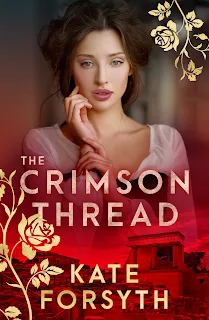
Review: The Crimson Thread by Kate Forsyth

The Crimson Thread by Kate Forsyth book cover

* Copy courtesy of Penguin Random House *

It feels like an abundance of historical fiction set in WWII has been published in the last 5 years and I'm close to reaching my saturation point, but made an immediate exception for one of my favourite Australian authors Kate Forsyth.

The Crimson Thread by Kate Forsyth is an historical fiction novel set during WWII in Crete, an island of Greece. Our protagonist Alenka Klothakis is a local and part of the fierce resistance mounted by the Cretans against the German invasion in 1941. The 11 day Battle of Crete (in which 11,000 soldiers and civilians were killed and injured) was expertly written and I cheered the locals as they attacked and killed as many of the German paratroopers as they could with whatever they had to hand. Alenka offers to help the Allied Forces in a makeshift hospital:
"Alenka soon understood why. She had never seen such pain and suffering before. On every side men held out pleading hands, some weeping. She carried buckets of water in and stinking bedpans out, rolled bandages till her hands ached, scrubbed blood off floors, boiled surgical instruments in one pot and soup in another, and held the hand of one poor young man till he died." Page 96
Australian soldiers Teddy and Jack were compelling characters and their relationship with Alenka and other members of the resistance drove the story forward in a unique way. I think readers will love Jack and while Teddy was much less likeable, his motivations throughout the war were - unfortunately - all too realistic.

This was a five star read but for two quibbles. The first was the way in which the novel began which is both a compliment and a minor quibble. The beginning was so magical and evocative I wanted to stay there. Forever. Instead I was wrenched unwillingly into Alenka's adolescent years and the seemingly sudden beginning of the war. The transition from Alenka's childhood memories straight into the war seemed way too quick for me and out of step with the pace set in the opening few pages. Perhaps I was so keen for another book like Bitter Greens (my all time favourite novel by Kate Forsyth) that my mind raced away in an unrelated direction and I resented leaving Alenka's Yia Yia behind after just meeting her.
"Yia-Yia knew many stories of gods and heroes, giants and nymphs, and the Three Fates who spun and measured and cut the thread of life. Many of Yia-Yia's tales were strange and terrible. A girl who was turned into a tree. A woman cursed with snakes for hair. Another whose tongue was cut out and who could only tell her story by embroidering it upon a cloth. The story Yia-Yia told most often, though, was that of the minotaur in the labyrinth, for it was the mythos of Alenka's home, the ruins of the palace of Knossos in the island of Crete." Page 3
Can you blame me for wanting to read a book of Yia-Yia's telling after that paragraph on the opening page? The second quibble comes towards the end of the novel and I can't mention much without potentially spoiling it for others. Suffice to say, a main character acts completely out of keeping with the circumstances and her choices seemed incredibly simplistic and uncharacteristic after what she had endured during the German occupation.

Now that's off my chest, let me tell you The Crimson Thread is the perfect title for this novel, and I loved the references to embroidery and the thread of fate stitched throughout the pages. The way in which embroidery was used to record and exchange messages, and as a respite from the Nazi occupation was inspiring. I know the author started to embroider in preparation for writing this book and it clearly shows. I love to cross-stitch and picking it up again after an unplanned but lengthy hiatus recently, my heart was warmed any time a stitch was sewn in the book.

The Crimson Thread by Kate Forsyth is highly recommended for fans of historical fiction; even those wary of 'another' WWII novel.

My Rating:


07 April 2022

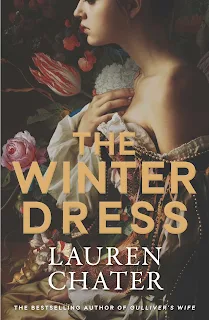
Blog Tour: The Winter Dress by Lauren Chater

The Winter Dress by Lauren Chater blog tour schedule

* Copy courtesy of Simon & Schuster *


Intro

Lauren Chater is a talented Australian author and it's an absolute pleasure to be part of the digital blog tour celebrating the release of her latest historical fiction novel The Winter Dress.

Blurb

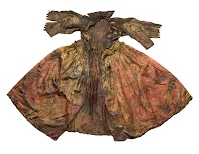
Jo Baaker, a textiles historian and Dutch ex-pat is drawn back to the island where she was born to investigate the provenance of a 17th century silk dress. Retrieved by local divers from a sunken shipwreck, the dress offers tantalising clues about the way people lived and died during Holland’s famous Golden Age.

Jo’s research leads her to Anna Tesseltje, a poor Amsterdam laundress turned ladies companion who served the artist Catharina van Shurman for one season at her property outside the Hague. The two women were said to be close, so why did Anna abandon Catharina at the height of her misfortune? And was the dress a gift or did Anna come by it through less honest means? Jo is determined to find out, but as she delves deeper into Anna’s history, troubling details about her own past begin to emerge, disrupting the personal narrative she has trusted for sixteen years.

On the small Dutch island of Texel where fortunes are lost and secrets lie buried for centuries, Jo will finally discover the truth about herself and her connection to the woman who wore The Winter Dress.

Review
The Winter Dress by Lauren Chater book cover

I love an historical fiction novel based on an element from history or a true story and we certainly have that here. In 2014, a big storm hit off the coast of Texel, clearing away layers upon layers of sand and mud from a known 17th century shipwreck. Texel is located off the coast of the Netherlands north of Amsterdam, and this natural event created an unexpected opportunity to explore the shipwreck known as the Palmwood wreck. Many items were recovered by divers, including a remarkably preserved 17th century silk dress.

Textiles are rarely recovered from shipwrecks and garments from this era rarely survive, so for this silk dress to survive on the bottom of the Wadden Sea for more than 350 years is quite extraordinary. 

The news of this incredible discovery travelled around the world and inspired Lauren Chater to imagine the woman who wore the dress. As a result, the seeds for The Winter Dress were well and truly sewn. (Sorry, couldn't resist).

Our main character Jo Baaker is a textiles historian and an interesting woman in her own right. In her words:
"One of the reasons I chose to pursue dress history was because I wanted to bear witness to the creation of textiles that simply won't be around in fifty years. The garments deserve better and so do the people who wore them." Page 155
Jo is astonished when she learns about the discovery of the dress in the book and I couldn't help but cringe alongside Jo when she hears how the dress was transported and hosed down by local divers trying to get the worst of the mud off. Eeeek!!! Jo is captivated by the dress and is honoured to be part of the curating process, desperately wondering about the life of the woman who once wore it.
17th century silk dress from the Palmwood wreck
The real silk dress
Source: www.archaeology.org
 

The Winter Dress is a dual narrative and the author takes us back in time to Amsterdam in 1651 where we meet Anna Tesseltje on the last day of her old life. Anna's family have fallen on hard times, and after starting work as a laundress, her brother secures her a position as a companion to artist Catharina van Shurman.

Meanwhile, Jo finds herself caught up in the excitement of the discovery in Texel and the lurking professional competition made me grind my teeth while my heart ached for the choices Anna faced in her timeline.

Expertly researched and beautifully told, this is a well woven and alluring story with a lustre between the pages you're not likely to forget.

A total of 100 signed boxed proofs of The Winter Dress were produced for Australia and New Zealand and as a member of this blog tour, I was lucky enough to receive one of these special editions! It's such a wonderful bookish touch that appeals to we booklovers and bibliophiles and is a pleasure to house on my bookshelves.

The Winter Dress by Lauren Chater is engaging and the author's enthusiasm to imagine and reveal the owner of the dress is contagious. This is a story about grief, love, loss and discovery and is highly recommended for fans of Kate Forsyth, Tracy Chevalier, Kayte Nunn, Philippa Gregory, Kate Morton; and of course if you enjoyed Gulliver's Wife by Lauren Chater, you'll love this!

My Rating:


Carpe Librum image of the signed and limited boxed edition of The Winter Dress by Lauren Chater
17 January 2020

My Top 10 Books of the Decade (2010 - 2019)

This list is my own personal top 10 favourite books of the decade. This list has been drawn from the books I've read during the last ten years, and isn't a list of the best published books of the decade. Each book chosen has stood the test of time in my own personal reading experience. Some were new releases, some were backlist and some were published decades (or in one case more than 100 years) ago.

Here are my Top 10 Books of the Decade (2010 - 2019) in the order I read them:

The Forgotten Garden by Kate Morton book cover

The Forgotten Garden by Kate Morton

A dual narrative historical fiction novel about a 4yo girl abandoned on a ship bound for Australia in 1913.

Three Men In A Boat by Jerome K Jerome

Published in 1889, this Penguin Classic is about a trip up the Thames river by three men and is an absolute hoot.

Bitter Greens by Kate Forsyth

An historical fiction fairytale retelling of Rapunzel full of passion, love, hardship, revenge and redemption.

Cloudstreet by Tim Winton

A uniquely Australian novel about two families. Incredibly memorable and moving.

The Martian by Andy Weir

I don't read much science fiction but this was MacGyver in space with an awesome sense of humour.

Stoner by John Williams

A deeply honest portrait of an average man told with such care and beauty that the ending brought a tear to my eye.

The Four Tendencies by Gretchen Rubin

The only non fiction book of the list, I learned a lot about myself and others in this book and still think about it every few days.

The Corset by Laura Purcell

A Victorian gothic thriller about secrets, friendship, needlework, gruesome hardship, betrayal, revenge, redemption, hope, poison and mystery with an ending that made me gasp.

The Binding by Bridget Collins book cover

The Binding by Bridget Collins

A combination of fantasy and historical fiction about the art of binding memories into a book.

Strange the Dreamer by Laini Taylor

A young adult fantasy novel about a boy who grows up in a library and is obsessed by the mysteries surrounding the lost city of Weep.

Thoughts?

Wow, what an eclectic list! What are your thoughts? It was great to see three Australian authors on the list and a good combination of genres represented. 

An honourable mention should go to one of my favourite authors Philippa Gregory. Two of her books were included on my Top 5 books of 2015 and 2016 respectively, but she just missed out on making it onto my Top 10 Books of the Decade. 

Have you read any of the books on my Top 10 list?

Carpe Librum!

30 December 2019

Australian Women Writer’s Challenge & Aussie Author Challenge Completed in 2019

Two reading challenges close to my heart (because they're both Australian and are run by some of my favourite bloggers) are the Australian Women Writer’s Challenge and Aussie Author Challenge. I successfully completed both challenges again this year and thought I'd wrap them up together.

2019 Australian Women Writer's Challenge

To complete the Franklin level of the 2019 Australian Women Writer's Challenge I had to read 10 books and review 6 of them. I improved on last year's tally of 15 books and read the following 21 books:
Australian Women Writer’s Challenge 2019 logo

1. The Easiest Slow Cooker Book Ever by Kim McCosker ✭✭✭1/2
2. The Scholar by Dervla McTiernan ✭✭✭
4. Under the Midnight Sky by Anna Romer ✭✭✭
5. The Dark Lake by Sarah Bailey ✭✭✭
6. Small Spaces by Sarah Epstein ✭✭✭✭
7. Into the Night by Sarah Bailey ✭✭✭
8. The Accusation by Wendy James ✭✭✭✭1/2
9. The Forgotten Letters of Esther Durrant by Kayte Nunn ✭✭✭✭
10. The Museum of Modern Love by Heather Rose ✭✭
11. Unsolved Australia: Lost Boys, Gone Girls by Justine Ford ✭✭✭
12. The Blue Rose by Kate Forsyth ✭✭✭✭
13. Cold Case Investigations by Xanthe Mallett ✭✭✭
14. Hide by S.J. Morgan ✭✭✭✭
15. The Van Apfel Girls are Gone by Felicity McLean ✭✭✭
16. Hive by A.J. Betts ✭✭✭
17. Rogue by A.J. Betts ✭✭✭
18. Dressing the Dearloves by Kelly Doust ✭✭✭✭
19. Death on the Derwent - Sue Neill-Fraser's Story by Robin Bowles ✭✭✭
20. The Choke by Sofie Laguna ✭✭
21. The Arsonist by Chloe Hooper ✭✭✭

Aussie Author 2019 Challenge

For the Aussie Author 2019 Challenge I had to read and review 12 titles by Australian authors across a minimum of 3 genres. 4 titles had to be by female authors, 4 titles by male authors and at least 4 had to be new (to me) authors. I improved on last year’s number of 26 and read the following 30 books:
Aussie Author Challenge 2019 logo

1. Dead Heat by Peter Cotton ✭
2. Hunter by Jack Heath ✭✭✭✭✭
3. Green Is The New Black by James Phelps ✭
4. The Easiest Slow Cooker Book Ever by Kim McCosker ✭✭✭1/2
5. The Scholar by Dervla McTiernan ✭✭✭
6. Under the Midnight Sky by Anna Romer ✭✭✭
7. My Book (Not Yours) by Ben Sanders ✭✭✭
8. The Dark Lake by Sarah Bailey ✭✭✭
9. Boxed by Richard Anderson ✭✭✭✭
10. A Lovely and Terrible Thing by Chris Womersley ✭✭✭
11. Small Spaces by Sarah Epstein ✭✭✭✭
12. Into the Night by Sarah Bailey ✭✭✭
13. The Accusation by Wendy James ✭✭✭✭1/2
14. The Forgotten Letters of Esther Durrant by Kayte Nunn ✭✭✭✭
15. The Museum of Modern Love by Heather Rose ✭✭
16. The Everlasting Sunday by Robert Lukins ✭✭✭
17. Unsolved Australia: Lost Boys, Gone Girls by Justine Ford ✭✭✭
18. The Blue Rose by Kate Forsyth ✭✭✭✭
19. Snake Island by Ben Hobson ✭✭✭✭✭
20. Cold Case Investigations by Xanthe Mallett ✭✭✭
21. Silver by Chris Hammer ✭✭✭
22. Hide by S.J. Morgan ✭✭✭✭
23. The Van Apfel Girls are Gone by Felicity McLean ✭✭✭
24. Sh*t Towns of Australia by Rick Furphy and Geoff Rissole ✭
25. Hive by A.J. Betts ✭✭✭
26. Rogue by A.J. Betts ✭✭✭
27. Dressing the Dearloves by Kelly Doust ✭✭✭✭
28. Death on the Derwent - Sue Neill-Fraser's Story by Robin Bowles ✭✭✭
29. The Choke by Sofie Laguna ✭✭
30. The Arsonist by Chloe Hooper ✭✭✭

As you can see, I had a prolific reading year in 2019 supporting Australian authors and publishers with some fantastic titles in the mix across a variety of genres.

I'll be signing up for both challenges again in 2020 and sign-up pages are already open so visit the 2020 Australian Women Writer's Challenge and 2020 Aussie Author Challenge pages for more info.

Carpe Librum!


21 December 2019

2019 Historical Fiction Reading Challenge Completed

It's been another successful reading year for me and historical fiction has constituted 20% of my overall reading. Thankfully I wasn't in any danger of failing to complete the 2019 Historical Fiction Reading Challenge this year, unlike other years.

Hosted as always by Amy at Passages to the Past, I had to read 10 historical fiction novels to complete the Renaissance Reader level of the challenge and did so with ease.

Here's what I read for the challenge:

1. The Familiars by Stacey Halls ⭑⭑⭑⭑⭑
2. Claude & Camille by Stephanie Cowell ⭑⭑
3. The Binding by Bridget Collins ⭑⭑⭑⭑⭑
4. Anna of Kleve - Queen of Secrets by Alison Weir ⭑⭑⭑⭑⭑
5. The Forgotten Letters of Esther Durrant by Kayte Nunn ⭑⭑⭑⭑
6. Wakenhyrst by Michelle Paver ⭑⭑⭑⭑⭑
7. The Butterfly Room by Lucinda Riley ⭑⭑⭑
8. The Blue Rose by Kate Forsyth ⭑⭑⭑⭑
9. Tidelands by Philippa Gregory ⭑⭑⭑⭑
10. The Warlow Experiment by Alix Nathan ⭑⭑⭑⭑
11. The Doll Factory by Elizabeth Macneal ⭑⭑⭑⭑⭑
12. Bone China by Laura Purcell ⭑⭑⭑⭑⭑
13. The Lost Ones by Anita Frank ⭑⭑⭑⭑
14. Dressing the Dearloves by Kelly Doust ⭑⭑⭑⭑
15. Things In Jars by Jess Kidd ⭑⭑⭑⭑

You can see from the star ratings that I had an enjoyable historical fiction reading year, which isn't too surprising given it's my favourite genre.

Have you read any of the books above?
2019 Historical Fiction Reading Challenge
Carpe Librum!


16 September 2019

Review: The Doll Factory by Elizabeth Macneal

The Doll Factory by Elizabeth Macneal book cover
Set in London in 1850, The Doll Factory by Elizabeth Macneal is a Victorian tale of art, aspiration and obsession. Twins Iris and Rose work in a shop selling handmade porcelain dolls, Iris painting their faces and hands and Rose making their fine detailed garments. Iris dreams of becoming an artist and a chance encounter with a Pre-Raphaelite painter changes her life forever.

Louis Frost is bewitched by Iris' unique beauty and asks her to model for him in exchange for drawing and painting lessons.

Meanwhile, a taxidermist by the name of Silas has also noticed Iris' beauty and begins to obsess about her. He is a collector and a sinister character that wants Iris for himself. His fixation drives the threat the entire way through the novel.

All of the characters are swept up in the excitement of the upcoming Great Exhibition of 1851, each of them seeking to have an item accepted for display.

Dickensian London really comes to life on the page in The Doll Factory. With mentions of turtle soup, street urchins and the vivid hustle and bustle, Macneal was able to transport me back in time so convincingly I could almost smell the street litter.

What caught me by surprise, was that the art sub-plot was reminiscent of Beauty in Thorns by Kate Forsyth. If I'd known how much the plot centred around art, the Pre-Raphaelites and the Great Exhibition, I might have postponed reading this for a year or two. Having read and enjoyed Beauty in Thorns in March last year, the overlap in setting and subject matter seemed to hinder my enjoyment of The Doll Factory. Definitely not the fault of the author, just a misstep in my own reading schedule.

The Doll Factory by Elizabeth Macneal is recommended reading for those who enjoy their historical fiction dark and Dickensian with a splash of art.

Carpe Librum!

My Rating: