Science Fiction
Showing posts with label Science Fiction. Show all posts
11 September 2026

Review: The Hollow Man by Dan Simmons

The Hollow Man by Dan Simmons book cover

The Hollow Man by Dan Simmons has been on my virtual TBR for an embarrassing 12 years. Published in 1992, I was unable to source it at my local library or via inter library loan so I purchased a copy in 2025 with a gift card but only picked it up when it was chosen for me in a recent book group buddy pick.

Main character Jeremy is a telepath and has the ability to read minds and it's this premise that motivated me to track down a copy. Jeremy's wife Gail is also a telepath and while they can erect mindshields, they share an entirely unique connection. Jeremy is a mathematics professor and there's a surprising amount of maths, science and quantum mechanics in this novel as the protagonist tries to figure out his telepathic ability and life itself.

However Gail is dying - not a spoiler, it's in the blurb - and when he is left alone, his life spirals in unimaginable ways. We're treated to a number of flashbacks to fill in their history together, but Jeremy calling Gail kiddo all the time was ridiculously annoying and didn't seem husband and wife appropriate at all. Here in Australia, kiddo is an endearing term for - you guessed it - a child!

Jeremy thinks about and discusses chaos theory and quantum mechanics throughout the book and I only managed the merest grasp on the theories being presented which detracted a little from my enjoyment. As did the ambiguous ending with the reader left to decide what happened based on whether they believed in the philosophical or scientific ending.

Elements of The Hollow Man reminded me of the writing style of Dean Koontz, and I think it's fair to say that if you enjoy his writing, you'll enjoy this science fiction offering from his compatriot Dan Simmons.

It was only when writing this review that I learned the author Dan Simmons passed away in February this year. He was a prolific writer - publishing more than 30 books - but The Hollow Man is a stand alone novel recommended for science fiction readers and if you have an interest in quantum mechanics, chaos theory or neuroscience you'll love this!

My Rating:

Carpe Librum!

19 July 2024

Review: A Short Walk Through a Wide World by Douglas Westerbeke

A Short Walk Through a Wide World by Douglas Westerbeke book cover

* Copy courtesy of Penguin Random House *

I'm calling it early, but there's a very good chance A Short Walk Through a Wide World by Douglas Westerbeke is going to make My Top 5 Books of 2024 list. Where to begin?

It's 1885 in Paris and our protagonist Aubry Tourvel is a precocious young girl of just nine years of age when she falls inexplicably ill. Suffering excruciating pain and bleeding from the nose and mouth, the only thing that soothes her seems to be movement.

In the first few pages the author convinces the reader of the seriousness of Aubry's condition with powerful descriptive writing that I'm not likely to forget. Here's a taste:
"And then the pain strikes - a terrible, venomous pain - a weeping pain, like an ice pick through a rotten tooth. It drives straight down her spine, from the base of her skull to the small of her back. She shudders as if electrified, then stiffens up, crushing all the slack out of her body. The old man stops his chattering, watches her face turn cold and pale, watches her lips form soundless words." Page 5
Forced to travel to keep her illness at bay from that point on, days and weeks pass but the narrative doesn't unfold in a strictly chronological sense. Given her circumstances change every 3-4 days, it would be impossible to include her journey and experiences throughout the course of her entire lifetime. Instead the reader experiences her travels in flashbacks and when sharing her encounters with people she meets along the way.

One such person is an old man in Chile who engages Aubry in conversation and explains why he detests travel. He tells Aubry he once fancied a trip to Santiago to see what the fuss was about but it didn't exactly go to plan.
"After an uncomfortable carriage ride to the station, where he discovered his train was running three hours late, he became hungry and ordered sweet potato empanadas. To his horror, he discovered these empanadas were not to his taste at all, far too sweet, and the cafe did not carry his favourite tea - in fact, no tea at all. He was forced to try a sweetened tonic water imported from America, which he'd heard of but never pursued. It was a disastrous meal. He thought if a mere trip to the train station had caused him so much unpleasantness, what horrors might a trip to Santiago inflict? He threw his ticket away and headed straight back home." Page 74
Perhaps you can relate to this sentiment, or - like others she meets on her travels - imagine Aubry's life of continual travel to be adventurous, spiritual or romantic. The old man continues to chat with Aubry, asking:
"And really, was there anything in Santiago or Havana or Madrid - any artwork or museum or towering mountain - he could not simply read about in a book?"
The author's vocation as a librarian in Ohio shines through this book in a huge way. I can only imagine the plethora of books which have inspired his writing style and fuelled his imagination because his own work was perfection on the page.

As well as containing engaging travel adventures that are often dangerous, sometimes desperate and occasionally warm and emotional, Westerbeke also manages to write some entertaining dialogue, particularly when it involves children or a language barrier.

Stories and doorways are important within the narrative and reading A Short Walk Through a Wide World by Douglas Westerbeke reminded me of The Ten Thousand Doors of January by Alix E. Harrow meets The Invisible Life of Addie LaRue by V.E. Schwab. It also reminded me of my idealised version of One Thousand and One Nights; idealised because I've never read them but this is how I imagine them to be, only in more detail.

For example, Aubry tells a woman from Heshou that she has "crewed with the cinnamon traders from Seychelles", "built a house in the Hawizeh marshes" and "slaughtered whales in the Faroe Islands." (Page 245)

A Short Walk Through a Wide World by Douglas Westerbeke could be categorised multiple ways, it's a travel story, historical fiction, action adventure, science fiction and urban fantasy. It contains a mystery puzzle ball and a secret library, I mean what more could you want? If anyone possessed the talent to bring Aubry's story to the big screen it would be epic.

Highly recommended!

My Rating:


17 April 2024

Review: The Miracles of the Namiya General Store by Keigo Higashino

The Miracles of the Namiya General Store by Keigo Higashino book cover

Translated by Sam Bett, The Miracles of the Namiya General Store by Japanese author Keigo Higashino has an enticing premise. Three youths seek a place to lay low after carrying out a robbery and they break into the Namiya General Store. Seemingly abandoned and run down, they're surprised when a letter asking the previous shopkeeper for advice drops through the mail slot.

The young men quickly realise this isn't an ordinary shop, but what advice could they possibly have to give? They're certainly not upstanding citizens leading a successful and rewarding life are they? What should they do? And if they choose to answer the letter, what advice should they give?

The narrative expands as new and old letters are referred to and advice is both sought and received. The plot does get a little timey wimey in that time stops inside the general store and a connection between past and present is established although never adequately explained. This reader hardly cared (see my review of Under The Dome to see how I can ignore the 'why' of the premise and just enjoy the fallout), instead delighting in the various interconnecting characters in a cleverly spun narrative web.

In fact, I'd love to see a character map representing the interconnecting characters and their various overlapping narrative arcs, I think it'd be a beautiful sight indeed. It certainly seemed as though the entire plot was connected with silvery gossamer thread and Higashino took the reader around the web pointing out different patterns and individual stories.

In assessing the advice requested and the advice provided, we're given a glimpse into how that advice was or wasn't followed and how it all turned out. In doing so, the author raises the notion that many people are experiencing challenges in their lives, facing choices they don't want to make or decisions they can't seem to reach or make their peace with.

Similarly, the author seems to suggest that even a lowly delinquent may have advice worth considering to offer a fellow human being in crisis. Every individual has value to contribute and the innate ability to make a positive difference in the life of a stranger.

Employing a combination of magical realism, urban fantasy and science fiction, The Miracles of the Namiya General Store is a heartwarming, uplifting, positive feel-good read and I highly recommend it!

My Rating:


09 April 2024

Review: The Institute by Stephen King

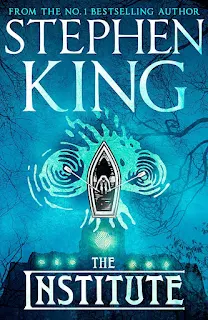
The Institute by Stephen King book cover

The Institute by Stephen King will be akin to coming home for readers familiar with SKs oeuvre. A band of kids working together. An injustice of sorts. A clear bad guy / bad guys situation. A secret government facility. Check check check. Now throw in a touch of supernatural ability in the form of kids with telekinesis or telepathy and you have the basic ingredients of another solid King outing.

The story kicks off when twelve year old Luke Ellis is kidnapped from his home and wakes up at the institute of the title. Luke joins other similarly gifted kids being held at the government sanctioned facility against their will, and they've all been fed the lie they'll be allowed to return home to their families - with their memories wiped of course - after they've served their country.

A familiar pecking order is established as the kids adjust to their surroundings and try to understand what's going on. Naturally there's a little bit of bullying but ultimately firm friendships are formed in true King style, which includes amusing dialogue like this between two of the young characters:
"What if I don't?"
Nicky smiled. "Then I'll fuck you up, fat boy." Page 135
As with any King novel, character development is often the highlight and in The Institute a significant character named Tim Jamieson was established early on that I wanted to explore further. I thought he was the primary protagonist but after disappearing for a large chunk of the book, the character later resurfaces but the care factor had diminished by the intervening pages. This left me feeling a little irritated for investing so heavily in his character arc in the early pages.

The purpose of the secret medical facility is to measure and enhance the abilities of the children in a series of medical exams and terribly invasive tests. This definitely gave me Stranger Things vibes and I was surprised to learn The Institute was published in 2019, three years after the release of season 1 of Stranger Things in 2016. Whether either project was influenced by the other, kids being experimented on in the pursuit of harnessing their gifts for the greater good isn't new.

Ultimately King asks the reader to consider whether the sacrifices of a few gifted children and their families outweighs the potential suffering of hundreds, thousands or perhaps in extreme circumstances, even millions of people.

The big showdown at the end of the novel requires the reader to ball up their disbelief and peg it at the nearest oversized telephone and hope for the best. A solid outing from Stephen King.

My Rating:


19 March 2024

Review: The Other Side of Night by Adam Hamdy

The Other Side of Night by Adam Hamdy book cover

I didn't plan on reading two time travel books back to back, yet found myself in this position when reading The Other Side of Night by Adam Hamdy straight after The Book of Doors by Gareth Brown. Given to me by a friend, The Other Side of Night is David Asha's story told from multiple viewpoints and a series of excerpts and extracts.

Harriet Kealty is a disgraced police officer trying to clear her name when she stumbles across a plea for help and a potential kidnapping. Deciding to investigate, she soon recognises a familiar name, Ben Elmys.

At times reminding me of the TV show Fringe, the layers build to create a story-within-a-story covering big life themes, like this character insight about our very existence:
"In a hundred years our suffering and tears and laughter and happiness will all be forgotten, replaced by another generation whose existences are equally transient and meaningless, and yet deeply meaningful and significant to them and those they love. Our ability to know we are nothing while perceiving we are everything has driven some mad, and it almost broke me during those dark days." Page 275
The story-within-a-story structure began to grow thin for me as I struggled a little with the time travel aspects of the novel. In fact, I chuckled in recognition when I read the following line:
"I'm not sure she ever fully understood how to think in four dimensions, the idea that what happens had to have happened, but she smiled sympathetically..." Page 323
In hindsight, I should have taken some time (pun intended) before punching my time travel ticket again, yet I enjoyed untangling the mystery to reveal the clever twist at the end. Hamdy makes the reader question what we think we know about the past, the present and of course the future:
"Time is an illusion our minds create to give us a sense of direction." Page 331
The Other Side of Night by Adam Hamdy is a stand alone science fiction novel about love, loss, sacrifice, fate, the passage of time and memories and is recommended for fans of The Midnight Library by Matt Haig.

My Rating:


25 July 2023

Review: Doomsday Book by Connie Willis

Doomsday Book by Connie Willis book cover

Published in 1992, Doomsday Book by Connie Willis is now considered a modern science fiction classic. I'm not usually a fan of time travel novels, however the premise for Doomsday Book is me to a T. This was a gift from a dear yet distant friend who knows my reading tastes and I trust her implicitly. I don't know why it took me 5 years to get to it, but some books rest patiently on our shelves waiting for the right moment, and that moment finally arrived.

In the not too distant future, historians can travel back in time as observers forming part of their field study. Unable to influence much or make any significant changes to history, we join a band of students and scholars at Oxford university where time travel for a few weeks at a stretch is not shocking.

Sounds amazing doesn't it? Kivrin wants to travel back in time to 1300s Oxford and is in a rush to do so, but the preparation usually takes years as Professor Dunworthy explains:
"And I want you to learn Church Latin, Norman French and Old German, in addition to Mr Latimer's Middle English. You'll need practical experience in farming - milking a cow, gathering eggs, vegetable gardening" he'd said, ticking them off on his fingers. "Your hair isn't long enough. You'll need to take cortixidils. You'll need to learn to spin, with a spindle, not a spinning wheel. The spinning wheel wasn't invented yet. And you'll need to learn to ride a horse." Page 9
Despite some detailed planning, Kivrin is still ill-prepared for what greets her when she arrives and this was the best part of the book. While Kivrin is trying to establish her whereabouts on arrival, the story splits into a dual narrative, with Kivrin in the 1300s and Professor Dunworthy in the 21st century.

Dunworthy's setting was dominated by a health crisis unfolding at the university in a seemingly unending number of phone messages, missed and unanswered calls. Many of the characters in this part of the story were hampered by an inability to talk to each other on the regular due to the phones being engaged. This was an incredibly frustrating plot device (if it indeed was that) and seemed so petty and small when compared to what Kivrin was encountering, and I longed to return to the action unfolding there, 700 years in the past.

This book has been out for more than 20 years now, so I don't think it's a spoiler to point out there is an unfolding influenza pandemic as part of the novel and it was a little close to home so soon after our own. In fact, I wonder if academics and scholars will write about the shocking similarities between fictional pandemics and the real deal some day. In Doomsday Book, Dunworthy and his colleagues and students in Oxford ran out of toilet paper, crazy when you think Willis wrote this 20 years ago and couldn't begin to imagine - yet she somehow did - how true to life her characters really were.

When villagers in the town start becoming sick, they will need to decide if Kivrin is an angel of hope or responsible for bringing the sickness to the village. Will she survive long enough to return to her own time?

Professor Dunworthy did his best to dissuade Kivrin from making the journey in the first place, being sure to tell her of the dangers:
"Life expectancy in 1300 was thirty-eight years," he had told her when she first said she wanted to go to the Middle Ages, "and you only lived that long if you survived cholera and smallpox and blood poisoning, and if you didn't eat rotten meat or drink polluted water or get trampled by a horse. Or get burned at the stake for witchcraft." Page 39
The title of the book is a reference to the Domesday Book - this is how they spelled 'Doomsday' in Middle English - a manuscript recording the results of a land survey conducted in England and Wales and completed in 1086. When Kivrin visits the 1300s, she has a recorder designed as a bone spur in her wrist and she can 'record' by bringing her hands together in prayer and talking into the concealed microphone. I loved the ingenuity of this! If Kivrin dies unexpectedly, the technology won't be exposed or look out of place. Not even if her body is skeletonised and discovered in the next few centuries.

Thankfully the novel didn't get too timey-wimey (if she doesn't make it back to the rendezvous, then should they start excavating the local cemetery looking for her remains and all important recorder?) and there was a satisfying conclusion, although I did want more.

This combination of science fiction and historical fiction is right up my alley, and I suspect that's why my friend chose this for me and the reason I enjoyed Eifelheim by Michael Flynn. Thanks Kel, I loved it!

Highly recommended.

My Rating:


31 May 2023

Review: Cold People by Tom Rob Smith

Cold People by Tom Rob Smith book cover

* Copy courtesy of Simon & Schuster *


I read The Farm by Tom Rob Smith in 2014 and I can still remember the gasp I made when I realised the predicament the main character was in. In 2014, I published my first ever Top 5 Books list and The Farm was proudly featured.

Next came Child 44, later made into a movie on the big screen starring Tom Hardy, Gary Oldman and Noomi Rapace. I gave this 4 stars in my review and went on to become the first Australian blogger to interview Tom Rob Smith.

So, when a copy of Cold People arrived in my mailbox, I knew the author could convincingly set a plot in the harshest climate in the world, as the freezing Russian conditions in Child 44 were expertly conveyed to the reader. I also knew that Tom Rob Smith could spin a terrific yarn - as he did in The Farm - so I rugged up and started reading.

By page 8, he was off to a cracking start with this description of a ship's captain living 150 years ago:
"...[Captain] Moray was an expert in choosing his crew from the variety of outcasts on offer, his preference being for the melancholic, the sexual deviants and the thieves. For the thieves there was nothing to steal, for the melancholic there was the ocean to meditate upon and for the deviants there were other deviants. Moray never shared the secrets of his own past, cultivating the appearance of a forceful but fair man, a bastion of order in this otherwise barbarous industry. There was room for only one murderer on this ship." Page 8
Wow! I was hooked right there and then! The premise of Cold People is that all of humanity has to relocate to Antarctica in 30 days in order to survive. The 'event' that kicks off the action was very well written and I enjoyed experiencing it from a few character's points of view, in the same way we did when the dome dramatically came down in Under the Dome by Stephen King.

The plotting style reminded me of Matthew Reilly, and I know you'll be thinking "that's probably because of Ice Station", but actually it's because of the action in The Great Zoo of China. Cold People felt cinematic in scale at times and if you enjoy Matthew Reilly, I think you'll enjoy this too.

It's probably relevant to acknowledge that I don't read many dystopian novels or books set in a post apocalyptic world. Just as I followed Maggie O'Farrell blindly into her memoir based purely on my love of her writing, Tom Rob Smith beckoned me into his glacially cold dystopian future and I'm glad I followed.

Cold People
 by Tom Rob Smith is inventive and optimistic about humanity while pointing out our flaws and I'm glad I stepped into this frightening futuristic portrayal. 

My Rating:


11 May 2023

Review: The Archive of Alternate Endings by Lindsey Drager

The Archive of Alternate Endings by Lindsey Drager book cover

The Archive of Alternate Endings by Lindsey Drager is quite unlike any book I've read before. The story of Hansel and Gretel is told at 75 year intervals between the years 1378 - 2365 to coincide with the visit of Halley's Comet. I had no idea how the author was going to achieve 14 different narratives, the juxtaposition of historical fiction and science fiction, and all in a non linear fashion without losing the reader's focus or attention. It sounded too ambitious but I was game.

At the time I chose to pick this up, I was reading The Brothers Grimm: 101 Fairy Tales by Jacob Grimm and Wilhelm Grimm and struggling to push through the style of writing. It was for this reason that the inclusion of the Grimm brothers in the 1835 timeline of The Archive of Alternate Endings was a welcome surprise.
"The task set before them is to solicit from the women the tales that have defined their country and culture, the tales that are going extinct. The women know the stories best, for they are the primary narrators. These are women for whom work means labor: tending garden, cooking dinner, raising children, cleaning house. Telling tales, the women inform Jacob and Wilhelm, helps to pass the time." Page 12
Jacob and Wilhelm Grimm listen to the story of Hansel and Gretel, and one particular version is different to the one we all know. From this point, we follow the various iterations of the fairytale in the subsequent narratives.
"Hansel and Gretel. The story is first told by tongues now long gone. It echoes through the countryside, travels great distances and across the ages. Families install it into the brains of their children and those children grow to become adults. The story is mapped into the mind like a digital blueprint. The brain computes that the story is about strife, abandonment, the possibilities of leaving bits of yourself behind in order to find your way home. Home is used here figuratively, meaning that which is familiar and comfortable and safe." Page 67
In the 1910 timeline, the narrator is an illustrator of the story providing a neat connection, and here she reflects on the difference between being a writer and reading:
"She is grateful she is not a writer, for writing is a ghostly, haunted thing. It permits one to enter different temporal dimensions. It allows one to enter different human psyches. It requires one to manipulate the feelings of another until one elicits a particular response. To read is to consume, to put the book on the tongue and push it down the throat. She reads the story again and again, silently. She catches herself in the glass of the window and for a moment, she does not know the lips that mouth the words." Page 50
You might be wondering how the reader could possibly navigate and keep track of 14 time lines, and I marvelled at this while reading too. The feat is achieved with ingenious chapter headings and sub-headings, aided by short punchy chapters and vignettes and held together with solid storytelling to connect the timelines and keep the story straight.
"It is easy to forget, but stories need not always have a purpose. We are quick to say that folktales have a moral or a lesson or a creed. But most of the stories that have survived the ages are told for one purpose only, and that purpose is to say this: 'Being human is difficult. Here is some evidence.' " Page 94-95
I think the same can be said when considering the purpose behind The Archive of Alternate Endings. There are morals and lessons along the way and the book is full of cosmic correlations and themes of sibling connections, parenthood, queerness, grief, climate change, AIDs epidemic and the power of stories coalesce into a literary offering quite unlike my usual reading fare.

Somehow the author has pulled off quite a feat bringing more than 14 dates and narratives together and the following quote seems a fitting description of the reader's experience on the page:
"Time feels like it is pleating, so that before and after seem somehow simultaneously now." Page 84
This characterises my own reading experience and I was impressed by the author's ability to pleat time and not lose me in the folds of her many intersecting and overlapping narratives in the process. The only reason this book isn't getting the full 5 star treatment, is that several future dated chapters didn't hit the mark for me.

The Archive of Alternate Endings by Lindsey Drager was published in 2019, and a quick check tells me the author hasn't released any novels since then but I bet she's penning another stellar literary experiment and I'm totally here for it.

My Rating:


08 October 2022

Review: Fairy Tale by Stephen King

Fairy Tale by Stephen King book cover

* Copy courtesy of Hachette Australia *

Charlie Reade is a terrific kid! Charlie's Mum died when he was ten and his Dad became an alcoholic, forcing Charlie to learn how to take care of himself. Years later, Charlie is in his teens and his Dad is newly sober, trying to adjust to their new normal when Charlie meets an old German shepherd called Radar and her owner, grumpy old recluse Howard Bowditch.

King has a knack for writing stories with wholesome and likeable young male characters meeting cantankerous old men and the relationships that develop between them. I particularly enjoyed the short story Mr Harrigan's Phone contained in the collection If It Bleeds from 2020, and if you enjoyed that, you'll love the first third of this book. 

Charlie is a well-read, upstanding high schooler when he meets the elusive and mysterious Mr Bowditch and as a consequence of their meeting, their lives begin to change. Charlie loves to watch old movies, read old books and generally feels like an old soul, with nothing to indicate he's a modern 17 year old teenager which may bother some readers. Here Charlie explores Mr Bowditch's house with Radar close behind:
"She followed me down the hall, which was dim and sort of amazing. One side was stacked with old magazines done up in bundles that were tied with hayrope. The other side was stacked with books, most of them old and with that smell that old books have. Probably not everyone likes that smell, but I do. It's musty, but good must." Page 24
Charlie begins to suspect Mr Bowditch has some pretty big secrets, and when he finds out what's in the garden shed, the real adventure starts.

The plot seemed like a meeting of The Neverending Story, The Wizard of Oz and Alice in Wonderland with a clear quest and adventure trope, replete with giant cockroaches, giants, curses, a talking horse and a sundial with magical properties. A kingdom ruled by a villain while the royal family cowers is too tempting for Charlie who wants to help. Is he the chosen one? The promised prince? My eyes started to roll a little at this point.

Thankfully, the novel is saved from devolving completely by moments of clarity like this one:
"You may say I have no reason to feel shame, that I did what I had to do to save my life and the shed's secret, but shame is like laughter. And inspiration. It doesn't knock." Page 574
These are the snippets I love uncovering in a Stephen King novel, the character insights that make me reflect on life, people and relationships, however they were few and far between in Fairy Tale.

King incorporates many myths, legends and fairytales in this novel, and readers will recognise characters inspired by their stories, such as The Little Old Woman Who Lived in a Shoe, Jack and the Beanstalk, The Goose Girl and Rumpelstiltskin. I'm sure there were more and devoted fans will no doubt produce a comprehensive list soon but they didn't really add any depth or layers to my reading enjoyment.

Fairy Tale feels like a fun carefree project for King of sheer indulgence; a creative exploration of stories and stories within stories with way too many tropes that written by any other author, probably wouldn't have made a splash on the new release calendar.

Notwithstanding, Stephen King is an internationally bestselling author and an auto-read for many of us, who happily read through books like Fairy Tale, in the hopes of discovering real gems like 11.22.63 and Billy Summers. Dog lovers will find much to love within these pages, and Radar is arguably the biggest and certainly the most important character in the novel.

Fairy Tale is recommended for hard core Stephen King fans, constant readers, dog lovers and the completionists of you out there. First timers are advised to start elsewhere in King's oeuvre.

My Rating: