Action
Showing posts with label Action. Show all posts
12 January 2026

Review: Innocence by Dean Koontz

Innocence by Dean Koontz book cover

The last book I read for 2025 was Innocence by Dean Koontz. Traditionally a fan of Koontz from way back, I've read 29 of his books and since 2006, I've reviewed 20 of them. Stephen King and Dean Koontz were a popular choice in my twenties and having a chunky new release from either author on my bedside table was a real thrill. Just for fun, I had a look at the star ratings for the Dean Koontz books I reviewed and they vary from 1 to 5 stars, with an overall average rating of 3 stars. With stats like that, I guess I should ask myself why I keep reading his books, but perhaps it's a nostalgia thing. Nevertheless, Innocence was the last Koontz book on my TBR - for now - and it was a terrific read!

Addison Goodheart is 26 years old and lives the life of a recluse, deep underneath the city. He has a kinship with nature and a passion for books and reading, but Addison avoids other people at all costs. On the rare occasions he does venture above ground he hides his features and we're not told what he looks like - until the end - which equally bothered and intrigued me:
"By the standards of humanity, we were exceedingly ugly in a way that excited in them abhorrence and the most terrible rage." Page 13
Addison learned from a young age that his appearance inspired repulsion, hatred and horror in anyone who looked at him. This quickly turned to violence and he retreated from society as a result. Utilising a series of drains and tunnels to navigate the city, Addison accesses the city library at night to enjoy the books and one night he comes across Gwyneth. A goth who doesn't like to be touched, Gwyneth has her own loner back story and we learn them both as they get to know each other.
"The fallow soil of loneliness is fertile ground for self-deception." Page 60
Published in 2013, the writing in Innocence is peak Koontz. I had to look up the definition of several words along the way and found myself bookmarking many quotes I wanted to revisit and remember.

Gwyneth can't bear to be touched and Addison doesn't want her to look at him so they make a pact. She won't look at him and he won't touch her. Addison cleverly summarises their predicament:
"If I touch you, you'll pull the hood off my head. Or if instead you make the first move and pull the hood off my head, then I'll touch you. We hold each other hostage to our eccentricities." Page 67
Don't worry, this isn't an urban fantasy version of Five Feet Apart. It's a supernatural thriller and Gwyneth swiftly pulls Addison in on her mission. As the tension increases, I really enjoyed this anecdote from Addison's father about the past, the present and the future.
"He said that because we live in time, we think that the past is baked and served and eaten, that the present is coming out of the oven in continuous courses, and that the future is not yet even in the mixing bowl." Page 328
The familiar Koontz battle between good and evil is here, and if this is the last book by Dean Koontz I ever read then I'm pleased to finish on a high. I almost considered giving this 5 stars and you can read the first 7 chapters here in a free extract from the publisher.

My Rating:
★ ★ ★ ★ ★


19 July 2024

Review: A Short Walk Through a Wide World by Douglas Westerbeke

A Short Walk Through a Wide World by Douglas Westerbeke book cover

* Copy courtesy of Penguin Random House *

I'm calling it early, but there's a very good chance A Short Walk Through a Wide World by Douglas Westerbeke is going to make My Top 5 Books of 2024 list. Where to begin?

It's 1885 in Paris and our protagonist Aubry Tourvel is a precocious young girl of just nine years of age when she falls inexplicably ill. Suffering excruciating pain and bleeding from the nose and mouth, the only thing that soothes her seems to be movement.

In the first few pages the author convinces the reader of the seriousness of Aubry's condition with powerful descriptive writing that I'm not likely to forget. Here's a taste:
"And then the pain strikes - a terrible, venomous pain - a weeping pain, like an ice pick through a rotten tooth. It drives straight down her spine, from the base of her skull to the small of her back. She shudders as if electrified, then stiffens up, crushing all the slack out of her body. The old man stops his chattering, watches her face turn cold and pale, watches her lips form soundless words." Page 5
Forced to travel to keep her illness at bay from that point on, days and weeks pass but the narrative doesn't unfold in a strictly chronological sense. Given her circumstances change every 3-4 days, it would be impossible to include her journey and experiences throughout the course of her entire lifetime. Instead the reader experiences her travels in flashbacks and when sharing her encounters with people she meets along the way.

One such person is an old man in Chile who engages Aubry in conversation and explains why he detests travel. He tells Aubry he once fancied a trip to Santiago to see what the fuss was about but it didn't exactly go to plan.
"After an uncomfortable carriage ride to the station, where he discovered his train was running three hours late, he became hungry and ordered sweet potato empanadas. To his horror, he discovered these empanadas were not to his taste at all, far too sweet, and the cafe did not carry his favourite tea - in fact, no tea at all. He was forced to try a sweetened tonic water imported from America, which he'd heard of but never pursued. It was a disastrous meal. He thought if a mere trip to the train station had caused him so much unpleasantness, what horrors might a trip to Santiago inflict? He threw his ticket away and headed straight back home." Page 74
Perhaps you can relate to this sentiment, or - like others she meets on her travels - imagine Aubry's life of continual travel to be adventurous, spiritual or romantic. The old man continues to chat with Aubry, asking:
"And really, was there anything in Santiago or Havana or Madrid - any artwork or museum or towering mountain - he could not simply read about in a book?"
The author's vocation as a librarian in Ohio shines through this book in a huge way. I can only imagine the plethora of books which have inspired his writing style and fuelled his imagination because his own work was perfection on the page.

As well as containing engaging travel adventures that are often dangerous, sometimes desperate and occasionally warm and emotional, Westerbeke also manages to write some entertaining dialogue, particularly when it involves children or a language barrier.

Stories and doorways are important within the narrative and reading A Short Walk Through a Wide World by Douglas Westerbeke reminded me of The Ten Thousand Doors of January by Alix E. Harrow meets The Invisible Life of Addie LaRue by V.E. Schwab. It also reminded me of my idealised version of One Thousand and One Nights; idealised because I've never read them but this is how I imagine them to be, only in more detail.

For example, Aubry tells a woman from Heshou that she has "crewed with the cinnamon traders from Seychelles", "built a house in the Hawizeh marshes" and "slaughtered whales in the Faroe Islands." (Page 245)

A Short Walk Through a Wide World by Douglas Westerbeke could be categorised multiple ways, it's a travel story, historical fiction, action adventure, science fiction and urban fantasy. It contains a mystery puzzle ball and a secret library, I mean what more could you want? If anyone possessed the talent to bring Aubry's story to the big screen it would be epic.

Highly recommended!

My Rating:
★ ★ ★ ★ ★


07 May 2024

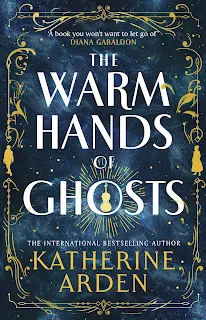
Review: The Warm Hands of Ghosts by Katherine Arden

The Warm Hands of Ghosts by Katherine Arden book cover

* Copy courtesy of Penguin Random House *

Intro

You're not seeing things, what follows is a review of an historical fiction novel set during WWI. I know I've said here on Carpe Librum that I'm - mostly - on a break from WWI and WWII historical fiction, however such is the power of Katherine Arden that I made an exception.

Last year I reviewed The Bear and the Nightingale by Katherine Arden and fell in love with the writing style of this YA urban fantasy / historical fiction series. The Bear and the Nightingale earned a glowing 5 star review and I'm still looking forward to reading the next book in the Winternight trilogy The Girl In The Tower. Therefore I was surprised to see the author pop up in a publisher's catalogue with an adult title The Warm Hands of Ghosts. Seeing it was an historical fiction novel set in WWI, I was keen to see how - or if - the author would bring her love of Russian myths and legends and sense of 'other' to a bloody war and now I have my answer.

Review

I shared this back story because I didn't know what to expect - other than great writing - reading The Warm Hands of Ghosts by Katherine Arden. It's quite possible that if I'd known just how dark the book was going to be, I might not have requested it for review. Having said that, going in blind was the best approach for me and I'm glad I read it.

Laura Iven is a Canadian nurse providing medical care to the soldiers on the Western Front during WWI when she is injured during the bombing of a hospital, discharged and sent back home to Halifax in Canada to recover.

The snappy writing and depth of character was immediately present in the author's writing. Here's one of my favourite observations by Laura:
"Laura tried not to look cynical. Pim appeared simultaneously flattered, delighted to make his acquaintance, and innocently unavailable. She'd probably practiced that expression in a mirror." Page 91
Laura's brother Wilfred (Freddie) is a soldier serving in Belgium and after receiving contradictory news and fearing he might be missing, she risks another deployment and travels back to Belgium in search of him. Volunteering at a private hospital in Flanders, Laura and her colleagues struggle to stay on their feet working for days without rest in the gruelling conditions. Laura speaks to the men as she tends to their wounds and starts to hear strange stories about the Fiddler.

The novel is set in alternate chapters with Laura in present day January 1918 and Freddie's point of view from several months earlier enabling the reader to discover what happens to him. Incorporating elements of the Halifax Harbour explosion from history was a refreshing angle I hadn't come across in WWI literature and it was interesting to learn more about this disaster from the character's perspective.

Laura's brother was named Wilfred in the novel and every time I saw his name on the page I reacted with 'oh, I thought that was going to read Wilfred Owen.' I studied the works of WWI poets Wilfred Owen, Siegfried Sassoon and Robert Graves in a War Literature course at University so I felt rewarded when I noted the following in the Afterword:
"Her brother's name, Wilfred, is a hat-tip both to Ivanhoe and to Wilfred Owen, whose poem "Strange Meeting" was the starting point for Freddie's story." Afterword, Page 378
What a terrific tribute to the poet and for those interested, you can read Wilfred's short poem Strange Meeting in full on the Poetry Foundation website.

The Warm Hands of Ghosts by Katherine Arden is difficult to read at times. It's brutal and graphic yet also tender and achingly beautiful while accurately conveying the destruction and hopelessness of war without flinching away from the horror. Reading this in the lead up to ANZAC Day enhanced my sense of gravitas while reading but the kiss at the end was one step too far for me.

Highly recommended for experienced readers of WWI historical fiction with a strong stomach looking for a new story that stands apart from the rest. Not sure? Read a free EXTRACT.

My Rating:
★ ★ ★ ★ ★


15 April 2024

Review: The Summer I Robbed a Bank by David O'Doherty

The Summer I Robbed a Bank by David O'Doherty book cover

I'm a huge fan of Irish comedian David O'Doherty, and on seeing he'd released a middle grade book for kids I was immediately reserving the print copy and audiobook from my library.

When The Summer I Robbed a Bank begins, 12 year old Rex is sent to stay with his Uncle Derm on remote Achill Island for the school holidays. Rex is expecting to have a boring time, what with all of the sheep, but things don't quite go exactly to plan. Rex meets Kitty and their adventures together were amusing and heartwarming at the same time.
"We laughed so hard we had to lean on things." Page 21
I really enjoy O'Doherty's view of the world and it's also why I enjoy his comedy so much. His sense of humour and imagination work well with his observations of people and relationships in a unique and very appealing way. I was happy to find this talent translated well to his middle grade fiction too:
"I didn't want to look round, but I couldn't help myself, in the same way you can't not watch a football heading towards a window." Page 61
Read in the author's distinctive accent and endearing storytelling style, The Summer I Robbed a Bank by David O'Doherty was an absolute pleasure to listen to and read. I did wonder about the target reading audience for middle grade books like these. I mean, if the protagonist Rex is 12 years old, is the target reading audience also 12 or a few years younger in an aspirational sense? 

Fortunately I had the pleasure of seeing David O'Doherty perform live here in Melbourne during the Melbourne International Comedy Festival 2024 just after I'd read this book. When the author spoke of relocating during the pandemic and living with his parents on Achill Island for six months I smiled in recognition.

I've since learned David O'Doherty has written a number of books for youngsters and while I haven't read any others, I can highly recommended this one for both kids and parents! I defy you to listen to this FREE sample on the publisher's website and not keep reading.

My Rating:
★ ★ ★ ★ ★


09 April 2024

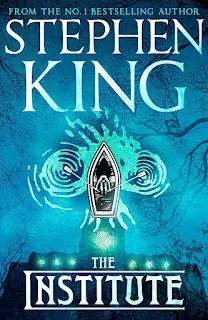
Review: The Institute by Stephen King

The Institute by Stephen King book cover

The Institute by Stephen King will be akin to coming home for readers familiar with SKs oeuvre. A band of kids working together. An injustice of sorts. A clear bad guy / bad guys situation. A secret government facility. Check check check. Now throw in a touch of supernatural ability in the form of kids with telekinesis or telepathy and you have the basic ingredients of another solid King outing.

The story kicks off when twelve year old Luke Ellis is kidnapped from his home and wakes up at the institute of the title. Luke joins other similarly gifted kids being held at the government sanctioned facility against their will, and they've all been fed the lie they'll be allowed to return home to their families - with their memories wiped of course - after they've served their country.

A familiar pecking order is established as the kids adjust to their surroundings and try to understand what's going on. Naturally there's a little bit of bullying but ultimately firm friendships are formed in true King style, which includes amusing dialogue like this between two of the young characters:
"What if I don't?"
Nicky smiled. "Then I'll fuck you up, fat boy." Page 135
As with any King novel, character development is often the highlight and in The Institute a significant character named Tim Jamieson was established early on that I wanted to explore further. I thought he was the primary protagonist but after disappearing for a large chunk of the book, the character later resurfaces but the care factor had diminished by the intervening pages. This left me feeling a little irritated for investing so heavily in his character arc in the early pages.

The purpose of the secret medical facility is to measure and enhance the abilities of the children in a series of medical exams and terribly invasive tests. This definitely gave me Stranger Things vibes and I was surprised to learn The Institute was published in 2019, three years after the release of season 1 of Stranger Things in 2016. Whether either project was influenced by the other, kids being experimented on in the pursuit of harnessing their gifts for the greater good isn't new.

Ultimately King asks the reader to consider whether the sacrifices of a few gifted children and their families outweighs the potential suffering of hundreds, thousands or perhaps in extreme circumstances, even millions of people.

The big showdown at the end of the novel requires the reader to ball up their disbelief and peg it at the nearest oversized telephone and hope for the best. A solid outing from Stephen King.

My Rating:
★ ★ ★ ★ ★


31 May 2023

Review: Cold People by Tom Rob Smith

Cold People by Tom Rob Smith book cover

* Copy courtesy of Simon & Schuster *


I read The Farm by Tom Rob Smith in 2014 and I can still remember the gasp I made when I realised the predicament the main character was in. In 2014, I published my first ever Top 5 Books list and The Farm was proudly featured.

Next came Child 44, later made into a movie on the big screen starring Tom Hardy, Gary Oldman and Noomi Rapace. I gave this 4 stars in my review and went on to become the first Australian blogger to interview Tom Rob Smith.

So, when a copy of Cold People arrived in my mailbox, I knew the author could convincingly set a plot in the harshest climate in the world, as the freezing Russian conditions in Child 44 were expertly conveyed to the reader. I also knew that Tom Rob Smith could spin a terrific yarn - as he did in The Farm - so I rugged up and started reading.

By page 8, he was off to a cracking start with this description of a ship's captain living 150 years ago:
"...[Captain] Moray was an expert in choosing his crew from the variety of outcasts on offer, his preference being for the melancholic, the sexual deviants and the thieves. For the thieves there was nothing to steal, for the melancholic there was the ocean to meditate upon and for the deviants there were other deviants. Moray never shared the secrets of his own past, cultivating the appearance of a forceful but fair man, a bastion of order in this otherwise barbarous industry. There was room for only one murderer on this ship." Page 8
Wow! I was hooked right there and then! The premise of Cold People is that all of humanity has to relocate to Antarctica in 30 days in order to survive. The 'event' that kicks off the action was very well written and I enjoyed experiencing it from a few character's points of view, in the same way we did when the dome dramatically came down in Under the Dome by Stephen King.

The plotting style reminded me of Matthew Reilly, and I know you'll be thinking "that's probably because of Ice Station", but actually it's because of the action in The Great Zoo of China. Cold People felt cinematic in scale at times and if you enjoy Matthew Reilly, I think you'll enjoy this too.

It's probably relevant to acknowledge that I don't read many dystopian novels or books set in a post apocalyptic world. Just as I followed Maggie O'Farrell blindly into her memoir based purely on my love of her writing, Tom Rob Smith beckoned me into his glacially cold dystopian future and I'm glad I followed.

Cold People
 by Tom Rob Smith is inventive and optimistic about humanity while pointing out our flaws and I'm glad I stepped into this frightening futuristic portrayal. 

My Rating:
★ ★ ★ ★ ★


03 October 2022

Review: The Day of the Triffids by John Wyndham

The Day of the Triffids by John Wyndham book cover

It's time for another classic, and this time... it was The Day of the Triffids by John Wyndham. Published 71 years ago in 1951, The Day of the Triffids is a science fiction novel set in England and I'm pleased to say I was pleasantly surprised by how well it has aged.

The story begins in London with Bill, who is in hospital after having treatment on his eyes. His eyes are bandaged up and he isn't able to watch the incredible meteor shower that is lighting up skies around the world. The next day, everyone who watched the meteor shower is blind.

The action begins very early on, and there's certainly no slow burn build up:
"From the street below rose a scream, wildly distraught and contagiously terrifying. It came three times, and when it had died away it seemed still to tingle in the air." Page 4
We then accompany Bill as he works out what has happened and what he does from there. As the reader, we can't help but wonder what we would do in Bill's situation, and it's clear early on that the effects of the disaster are going to have irreparable repercussions for the human race, with the vast majority of the world now blind. Bill laments early on:
"My way of life, my plans, ambitions, every expectation I had had, they were all wiped out at a stroke along with the conditions that had formed them." Page 47
This story is largely known for the killer plants or triffids of the title. The triffids were present prior to the meteor shower, and didn't arrive in the way Audrey II did in Little Shop of Horrors. I wasn't sure if these plants with their deadly stingers would seem comical to today's reader, but I can assure you they did not. At its heart, I believe The Day of the Triffids is an apocalyptic novel, with the tension focussed around battling the elements and survival, the triffids are just one of the many dangers.

The population is instantly divided into the sighted and the blind, and a new class system is born. The sighted are needed to find food and basics for survival, and Bill faces many dilemmas early on. What is his duty as a sighted person? How many people should he help? As thoughts extend to survival in the future and people begin to form new communities and plan to plant crops and protect themselves from the triffids, people are forced to face harsh realities, prompting many deep and meaningful conversations with the characters.

The following quote is from a lengthy discussion around sexism, and the realisation that human knowledge is going to dwindle from generation to generation and every person is going to have to chip in now to retain as much as possible.
"Times have changed rather radically. You can't any longer say: "Oh dear, I don't understand this kind of thing," and leave it to someone else to do for you. Nobody is going to be muddle-headed enough to confuse ignorance with innocence now - it's too important. Nor is ignorance going to be cute or funny any more. It is going to be dangerous, very dangerous. Unless all of us get around as soon as we can to understanding a lot of things in which we had no previous interest, neither we nor those who depend on us are going to get through this lot." Page 150
The events in the book spark many conversations and force the reader to consider what they would do given the same situation. One group planned to create new laws while another focussed on ensuring all fertile women became pregnant so that they could give birth to sighted babies as soon as possible; to aid in the building of a new world.

With many accidents and deaths along the way resulting from an array of new dangers, many of the characters have lost all of their family and loved ones and find themselves alone in this 'new world.'
"Until then I had always thought of loneliness as something negative - an absence of company, and, of course, something temporary... That day I learned that it was much more. It was something which could press and oppress, could distort the ordinary, and play tricks with the mind. Something which lurked inimically all around, stretching the nerves and twanging them with alarms, never letting one forget that there was no one to help, no one to care. It showed one as an atom adrift in vastness, and it waited all the time its chance to frighten and frighten horribly - that was what loneliness was really trying to do; and that was what one must never let it do." Page 177
While reading The Day of the Triffids, I couldn't help thinking about the TV series See, starring Jason Momoa. See is a brilliant tv show set in a post-apocalyptic world in the future where being blind is the norm. Two children are born who can see, and the story begins from there. Witnessing how the characters in this world have engineered their lives to cope with their communal blindness made me wonder if any of the writers have read The Day of the Triffids.

I think it's a shame that this novel was adapted for the screen in the 1960s and became part of a period of terrible C Grade horror films. The same thing happened in the 1980s when several novels by Stephen King were turned into terrible boring movies that didn't do justice to the original source material.

While short in length, this Penguin clothbound edition (I love these!) has small font, so reading this classic slowed my reading progress significantly. I usually read around 6 books per month, but only read 4 in September as I was plodding through this classic. I don't read classics often, but the rewarding experience is always worth the additional time and effort.

The Day of the Triffids is a modern classic, and now I see why. (Sorry, couldn't resist). The events in the novel raise some serious questions, highlight terrible human behaviour while showcasing brave and good natured people just trying to help their fellow human beings to survive.

Important topics like law, power, subjugation, suicide and polygamy are faced and discussed by the characters, with plenty to engage the active mind of a student, or tempt discussion at a book club.

Highly recommended!

My Rating:
★ ★ ★ ★ ★


04 January 2022

Review: Kill Your Brother by Jack Heath

Kill Your Brother by Jack Heath book cover

* Copy courtesy of Allen & Unwin *


Disgraced athlete Elise Glyk finds more than she bargains for when trying to locate her missing bother Callum by posing as a private investigator in Jack Heath's latest crime thriller, Kill Your Brother.

You know from the title going in that Elise is going to have to confront her loyalties head on at some point, but knowing this doesn't detract from the tension and the action that builds and explodes on the page. The reader also knows from the blurb that Elise is going to be caught by Callum's captor and imprisoned alongside him, but in no way is this a spoiler. Trust me, you won't be able to predict what happens next.

Having loved Heath's Timothy Blake series (Hangman, Hunter and Hideout), I'm pleased to report that the author is just as skilled at writing kick-ass female characters as he is penning kick-ass male ones. Elise is a brilliant and resourceful protagonist with a refreshing and unique background and I was rooting for her all the way.

The sibling dynamic between Elise and Callum was layered and entertaining and the setting in Warrigul in Victoria was a refreshing surprise and a stroke of genius from this Canberra based author.

Kill Your Brother is the latest high octane crime thriller from Jack Heath and it's a ripper of a stand alone novel. Highly recommended! (You can read a free excerpt of the first 24 pages of the book here).

My Rating:
★ ★ ★ ★ ★


20 December 2021

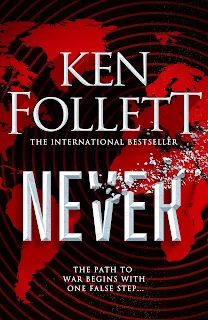
Review: Never by Ken Follett

Never by Ken Follett book cover

* Copy courtesy of Pan Macmillan *

Carpe Librum readers will know I'm a fan of Ken Follett's historical fiction Kingsbridge series which began with The Pillars of the Earth, but the author has also written many successful thrillers across his illustrious writing career. Never is his first contemporary novel in over a decade though, so naturally I was keen to check it out.

Never by Ken Follett is a political thriller about the beginning of World War III and a whopper of a book coming in at 815 pages. In a complex plot that doesn't blame any one country for the escalations, the narrative is populated by various characters located around the world. The actions of these characters inform the plot and the tension slowly builds as each person narrates their role in a much bigger series of events. Major powers are involved and the situation realistically begins to snowball out of control.

Never could be called an espionage thriller or a spy thriller, but it also serves as a timely warning that despite a leader's best intentions, international politics is a dangerous game. In typical Follett style, the author had me looking up new-to-me words throughout the novel, (bellicosity on page 5 and vituperation on page 145)* but not so often as to spoil the rhythm of the book.

I'm not a huge fan of political thrillers, but I always enjoy Ken Follett's deeply layered storytelling and detailed character arcs and put my complete trust in him from page one. Fortunately I was rewarded by the close of this expertly researched - yet very long book - with a surprisingly enjoyable ending. Highly recommended.

* Bellicosity is an inclination to fight or quarrel, a warlike or hostile manner or temperament.
* Vituperation is verbal abuse or language that is full of hate, or angry criticism.

My Rating:
★ ★ ★ ★ ★