Greece
Showing posts with label Greece. Show all posts
04 May 2026

Review: The Silence Factory by Bridget Collins

The Silence Factory by Bridget Collins book cover

The Silence Factory by Bridget Collins is a dark and mysterious dual narrative novel and I received it for Xmas in 2024.

Sophia Ashmore-Percy accompanies her husband to Kratos, a remote Greek Island in the 1820s and records her experiences in a journal. Her husband is seeking to capture a rare specimen to study and their relationship breaks down as his obsession intensifies.

Decades later in Victorian England, Henry Latimer is an Aurist working at Argyll's shop when he meets Sir Edward Ashmore-Percy, who invites him to Carthmute House to treat his deaf daughter. While there, Henry learns more about Sir Edward's factories and the production of Telverton silk.

Named for the town where his factory is located, Telverton silk is made from the silk of the mythical Pseudonephila spider. One side of the silk has the ability to block all sound, whilst the other side contains a mysterious warp and whisper. Those exposed to the wrong side of the silk can hear whispers, suffer headaches, or develop an ill queasy feeling with some even questioning their sanity.

Henry becomes obsessed with the potential applications of the silk, readily ignoring the side effects:
"Silence is not only silence, sir, it is attention - it is sanity. It is sleep for infants, medicine for invalids, rest for the working man - it is money for the man who must think or starve. We build walls to shelter our bodies from the world, but we leave our minds open to assault on every side. The Telverton silk, sir, is not a gimcrack. It is the greatest discovery of our age." Page 55
The factory buildings where the unique silk is harvested and woven is extraordinarily loud and sends their workers deaf due to the machinery deployed in the production. As I was reading about the brutal working conditions, it brought to mind the exploitation of child labour in the cotton mills during the industrial revolution.

Both Kratos and Telverton in Northern England are fictional, however this frees the author to create dark and gothic settings in both locations. Despite a real fear of spiders, thankfully I didn't have any nightmares about the mythical creatures at the heart of The Silence Factory but I did find myself wishing I could hold Henry's small square of Telverton silk for just a moment.

Bridget Collins has a knack for producing dark tales that straddle multiple genres and feel unique to her writing style. The Binding was brilliantly unique and made my Top 5 Books of 2019 list, and I thoroughly enjoyed The Betrayals in 2020, giving it 4 stars in my review. The Silence Factory is completely different again; it's historical fiction meets gothic fantasy and I highly enjoyed it.

My Rating:

Carpe Librum!

06 June 2025

Review: What to Expect When You're Dead by Robert Garland

What to Expect When You're Dead - An Ancient Tour of Death and the Afterlife by Robert Garland audiobook cover

When the Pope died in April 2025 and his body was put on display for members of the church and the public to pay their respects, I was reminded how jarring it is to today's sensibilities and thought it was a good time to listen to What to Expect When You're Dead - An Ancient Tour of Death and the Afterlife by Robert Garland.

Covering the time period in history 100,000 BC - 400 AD, this audiobook references ancient texts, artworks and archaeology at a level I was largely unfamiliar with. However I did enjoy some of the content, including this quote taken from Greek Playwright Aristophanes (446 BC - 386 BC):
"In Aristophanes Frogs, anyone who has harmed a guest, failed to pay a boy for his sexual favours, struck his mother, punched his father or sworn a false oath is consigned to a sewer full of turds." Chapter 5 Heaven and Hell
The beliefs of many ancient civilisations and religions were offered, in addition to their thoughts on the afterlife, how best to lay the dead to rest and how to honour their ancestors.

As a youngster I was interested in the history of Egypt, the pyramids and of course the discovery of Tutankhamun's tomb. I was simultaneously disturbed by the fact mummified remains were once desecrated by grave robbers and disturbed in the 'modern era' by archaeologists, with artefacts removed to be sold to private collectors or displayed in museums. It shouldn't come as a surprise then that I relished the legend of the curse of Tutankhamun and enjoyed hearing more about Egyptian curses here:
"Thieves certainly weren't deterred by the stiff penalties they incurred if apprehended, death by impaling being a common punishment. Nor by the curses that the deceased promised to rain down on those who broke into their tombs. A typical Egyptian curse reads as follows: As for anyone who shall violate my corpse in the necropolis or shall damage my image in my chamber, the ka (spirit or soul) of Ra (sun god) shall abhor him. He shall not bequeath his goods to his children nor shall he be restful in life, nor shall he receive water in the necropolis. His ba (personality and soul) shall be destroyed forever.' " Chapter 8, Where to Deposit the Remains
Scary stuff! The book includes beliefs and practices from a range of ancient cultures and traditions, including Early Christian, Egyptian, Etruscan, Greek, Hindu, Islamic, Jewish, Mesopotamian, Roman and Zoroastrian. I'll admit I was in very unfamiliar territory here, however this did help to clarify that my interest in death rituals is anchored in Western culture closer to my own time. I've shared my interest in the mourning etiquette of the Victorian era in other reviews and have the current books on my virtual TBR to read at some stage in the future:
      • Fashionable Mourning Jewellery, Clothing and Customs by Mary Brett
      • Mourning Art & Jewellery by Maureen Delorme
      • Death in the Victorian Family by Pat Gallant
      • Childhood & Death in Victorian England by Sarah Seaton
Narrated by Zeb Soanes, What to Expect When You're Dead - An Ancient Tour of Death and the Afterlife by Robert Garland is recommended for dedicated non fiction readers with an interest in ancient history and ancient civilisations from 100,000 BC - 400 AD. I thought that was me but it turns out that it isn't.

My Rating:


22 July 2023

Review: The Dirt on Clean by Katherine Ashenburg

The Dirt on Clean - An Unsanitized History by Katherine Ashenburg book cover

The Dirt on Clean - An Unsanitized History by Katherine Ashenburg takes us through our delightfully dirty and grubby past, as we meander through the ages taking stock of attitudes to dirt and cleanliness and examining the drivers for the vast changes along the way.

Ashenburg explores many aspects of dirtiness, cleanliness and bathing and makes this observation early in the book:
"The archetypal link between dirt and guilt, and cleanliness and innocence, is built into our language - perhaps into our psyches. We talk about dirty jokes and laundering money." Page 8
In the Roman Empire, cleanliness was an important part of life, work and leisure, with many Romans spending up to two hours at the public baths every day. The use of strigils - a curved blade used to scrape the skin - as part of the ancient greek bathing process wasn't new to me, but get this:
"Greek athletes, who exercised in the nude - gymnasium literally means 'the naked place' - first oiled their bodies and covered them with a thin layer of dust or sand to prevent chills. After [exercise] the men and boys removed their oil and dust, now mingled with sweat with a curved metal scraper called a strigil." Page 24
I knew athletes competed nude and oiled their bodies after bathing, but didn't know they applied dust or sand to prevent them getting cold; or the meaning of gymnasium for that matter! A little later in the book, we learn:
"The accumulated sweat, dirt and oil that a famous athlete or gladiator strigiled off himself was sold to his fans in small vials. Some Roman women reportedly used it as a face cream." Page 38
While this might make us recoil with disgust, it's really no different to social media influencers today selling their bath water or sending their socks to eager fans willing to pay big bucks.

It's fascinating to me that personal hygiene habits and attitudes to bathing have changed so dramatically over time. From the bathhouse traditions that date from the Middle Ages, Ashenburg gives us a broad overview of the relationship between cleanliness and religion. Muslims perform ritual ablutions and their cleanliness has been one of the culturally defining points of difference between Christians and Muslims. If the Muslims were meticulously clean, then the Christians were known for being dirty. When it comes to saints though, the dirtier the better.
"For ordinary Christians, cleanliness was a [sic] good, bringing comfort, a sense of well-being and a measure of healthfulness. Humility and charity demanded that the most scrupulously filthy saints help others to clean." Page 63
It's ironic that human suffering, poverty, abstinence and lack of washing demonstrated religious devotion with many only washing the parts of the body that could be seen, like the hands and face.

During many plagues, it was thought dirt blocked the pores of the skin which prevented the plague entering the human body. Washing or having a bath would strip a person of this protective layer and many were certain they'd die as a result. A shortage of firewood also contributed to the decline in popularity for bathing, as resources to heat water became scarcer.

Many will know the famous quote from Elizabeth I who bathed once a month, "whether I need it or not", but did you know:
"Elizabeth's successor, James I, reportedly washed only his fingers." Page 99
Ashenburg includes many familiar and well worn quotes about cleanliness, bathing and odours from history, and some of them never cease to shock, like this one:
"Shortly before Louis XIV died in 1715, a new ordinance decreed that feces left in the corridors of Versailles would be removed once a week." Page 116
Once a week! In addition to immersing the reader in the moral dangers of bathing and bathing in public, it was also interesting to read about the debate between cool and warm water bathing, with some of the opinion that warm baths made boys and men soft.
"But cool water had never been considered as dangerous as hot water. To immerse yourself in hot water, you had to be foolhardy, German - or ill. ... Because water could infiltrate a healthy body and disturb the balance of its humours, doctors and patients hoped that a carefully designed and monitored bath might also restore the humours' equilibrium in a diseased body." Page 114
It's unthinkable to us to wear the same singlet or underwear for a week without changing or even removing it, but in the 1700s, the Marquis d'Argens wore a flannel under-waistcoat to keep warm and wouldn't take it off for fear of catching cold. It was revealed he'd worn the waistcoat for four years, but when he finally agreed to take it off, it had "so fixed itself upon him that pieces of his skin came away with it." Page 127 Eeek!

Ashenburg examines how our notion of privacy has changed, the relationship between bathing and sex and she even makes the history of soap absorbing for the reader. Although I wouldn't want to try washing clothes with a mix of animal fats and ashes. Later, toilet soap was made with olive oil:
"...(where the soap made in Castile was so prized that eventually all fine white soap made with olive oil was called Castile soap), but it was a luxury and beyond the budgets of most people in the Middle Ages." Page 32
And did you know the brand name Palmolive came about because the soap they made contained a combination of palm oil and olive oil. Who knew!

The introduction of the rain bath, or shower as we know it today was a little dry - sorry, couldn't resist. Rain baths took off in America, however older dwellings in Europe took much longer to embrace the technology, as it had to be adapted to existing conditions. The rich were loath to change their habits, preferring to bathe in their rooms, and with servants to bring the water the impetus for change wasn't pressing. The poorer classes didn't have time to carry the volume of water, the fuel required to heat it in their homes or even a tub to sit in, and so the class divide remained, demarcated by cleanliness.

If you lived in Paris in 1819, you could have ordered a service called a bain a domicile:
"....bain a domicile, delivered to the client's house or apartment, even on the top floor, all the necessities of a bath - a tub, a robe and sheet, and hot, cold or tepid water as ordered. When the bath was over, everything was whisked away, including the water, which was usually removed by a hose..." Page 187
How's that? You could basically 'uber' a bath in 1819! Ashenburg covers a lot of ground, and the number of times I've recalled facts from this book since finishing it, has persuaded me to increase my star rating from 4 stars to a full five stars.

Let me leave you with Seneca describing the cacophony of noise he has to tolerate living above a bathhouse:
"Now imagine to yourself every type of sound which can make you sick of your ears: when hearty types are exercising by swinging dumbbells around - either working hard at it or pretending to - I hear their grunts, and then a sharp hissing whenever they let out the breath they've been holding. Or again, my attention is caught by someone who is content to relax under an ordinary massage and I hear the smack of a hand whacking his shoulders, the sound changing as the hand comes down flat or curved. If on top of all that there is a game-scorer beginning to call out the score, I've had it! Then there's the brawler, the thief caught in the act, the man who likes the sound of his voice in the bath, the folk who leap into the pool with an enormous splash. Besides those whose voices are, if nothing else, natural, think of the depilator constantly uttering his shrill and piercing cry to advertise his services: He is never silent except when plucking someone's armpits' and forcing him to yell instead. Then there are the various cries of the drink-seller; there's the sausage seller and the pastry-cook and all the eating-house pedlars, each marketing his wares with his own distinctive cry." Pages 41-42
Highly recommended!

My Rating:


05 July 2022

Review: The Crimson Thread by Kate Forsyth

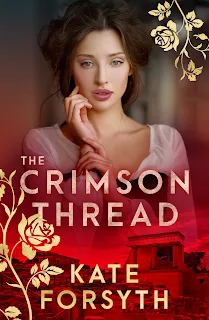
The Crimson Thread by Kate Forsyth book cover

* Copy courtesy of Penguin Random House *

It feels like an abundance of historical fiction set in WWII has been published in the last 5 years and I'm close to reaching my saturation point, but made an immediate exception for one of my favourite Australian authors Kate Forsyth.

The Crimson Thread by Kate Forsyth is an historical fiction novel set during WWII in Crete, an island of Greece. Our protagonist Alenka Klothakis is a local and part of the fierce resistance mounted by the Cretans against the German invasion in 1941. The 11 day Battle of Crete (in which 11,000 soldiers and civilians were killed and injured) was expertly written and I cheered the locals as they attacked and killed as many of the German paratroopers as they could with whatever they had to hand. Alenka offers to help the Allied Forces in a makeshift hospital:
"Alenka soon understood why. She had never seen such pain and suffering before. On every side men held out pleading hands, some weeping. She carried buckets of water in and stinking bedpans out, rolled bandages till her hands ached, scrubbed blood off floors, boiled surgical instruments in one pot and soup in another, and held the hand of one poor young man till he died." Page 96
Australian soldiers Teddy and Jack were compelling characters and their relationship with Alenka and other members of the resistance drove the story forward in a unique way. I think readers will love Jack and while Teddy was much less likeable, his motivations throughout the war were - unfortunately - all too realistic.

This was a five star read but for two quibbles. The first was the way in which the novel began which is both a compliment and a minor quibble. The beginning was so magical and evocative I wanted to stay there. Forever. Instead I was wrenched unwillingly into Alenka's adolescent years and the seemingly sudden beginning of the war. The transition from Alenka's childhood memories straight into the war seemed way too quick for me and out of step with the pace set in the opening few pages. Perhaps I was so keen for another book like Bitter Greens (my all time favourite novel by Kate Forsyth) that my mind raced away in an unrelated direction and I resented leaving Alenka's Yia Yia behind after just meeting her.
"Yia-Yia knew many stories of gods and heroes, giants and nymphs, and the Three Fates who spun and measured and cut the thread of life. Many of Yia-Yia's tales were strange and terrible. A girl who was turned into a tree. A woman cursed with snakes for hair. Another whose tongue was cut out and who could only tell her story by embroidering it upon a cloth. The story Yia-Yia told most often, though, was that of the minotaur in the labyrinth, for it was the mythos of Alenka's home, the ruins of the palace of Knossos in the island of Crete." Page 3
Can you blame me for wanting to read a book of Yia-Yia's telling after that paragraph on the opening page? The second quibble comes towards the end of the novel and I can't mention much without potentially spoiling it for others. Suffice to say, a main character acts completely out of keeping with the circumstances and her choices seemed incredibly simplistic and uncharacteristic after what she had endured during the German occupation.

Now that's off my chest, let me tell you The Crimson Thread is the perfect title for this novel, and I loved the references to embroidery and the thread of fate stitched throughout the pages. The way in which embroidery was used to record and exchange messages, and as a respite from the Nazi occupation was inspiring. I know the author started to embroider in preparation for writing this book and it clearly shows. I love to cross-stitch and picking it up again after an unplanned but lengthy hiatus recently, my heart was warmed any time a stitch was sewn in the book.

The Crimson Thread by Kate Forsyth is highly recommended for fans of historical fiction; even those wary of 'another' WWII novel.

My Rating:


05 February 2018

Review: The Secret History by Donna Tartt

The Secret History by Donna Tartt has been on my radar for years so I was happy to borrow a copy from a friend and find out for myself why it's on so many Top 100 lists.

Published in the 1990s and set in Hampden College in Vermont, the story is narrated by college student Richard Papen and is essentially the story of what happens to him and his five fellow classics students. On the first page of the Prologue we learn one of them has been murdered.

Richard is on a scholarship but his fellow students have wealthy backgrounds and they're all studying Ancient Greek under the exclusive tutelage of a Professor who will only take a limited number of students on at any one time. The novel is peppered with quotes in Greek, and the students are intelligent, rich and somewhat entitled which gives the book an altogether snobbish undertone.

The narrator was irritatingly elusive and I wasn't quite sure if this was the point. The novel provided a penetrating character analysis of the friends without ever giving us a clear picture of the narrator and I'm still not sure why. Each of the characters was flawed and unlikeable in their own way and their behaviour was sometimes detestable. I'm just talking about their everyday behaviour here, not the fact that they murdered one of their friends.

Given I had little to zero understanding of the classics references contained within the book, I was relieved to discover I could easily follow the mystery through to a satisfactory ending. Although I was left wanting to know more about Henry's past and what happened in the woods.

Ultimately, this was a grudging read and a slow-burn. There's much to admire in the writing and the research is impressive, but it just didn't ring my bell. If I wanted a college setting with inspiring references to classic literature and a tragic death I'd turn to Dead Poets Society.

My rating = **

Carpe Librum!
12 May 2015

Review: The Embroiderer by Australian author Kathryn Gauci

* Copy courtesy of the author * 

It's 1972, and Eleni is summoned to her dying aunt's bedside in Athens. Her aunt wants to come clean about Eleni's family history and recounts a shocking life, full of secrets, loss, war, betrayal, death, love and espionage.

The tale takes us as far back as 1822, during the The Greek War of Independence, and essentially follows one particular family and their efforts to survive the conflicts, keep their business going and stay alive in turbulent times.

My understanding of these conflicts is not as comprehensive as it should be, and reading The Embroiderer was a great way to learn about the battles, invasions and wars in Greece from the Greek War of Independence (1821-1832) through to the Balkan Wars (1912-1913).

Readers who enjoy reading historical fiction based around real historical conflicts will enjoy reading The Embroiderer, and will definitely learn more about Greece (and WWI) in the process.

The contents of a senior family member's journal at the end of the novel took the number of characters I could follow just a little too far, and I longed for a briefer method of learning what lay in her journal. I also wished for more time to linger on the details of the family business of embroidery and couture fashion during the period, my main attraction for this novel.

Having said that, if you have an interest in Greece, or are of Greek lineage yourself, you are bound to fall in love with The Embroiderer.

In conclusion, here's an excerpt from the blurb that sums up the novel really well: Set against the mosques and minarets of Asia Minor and the ruins of ancient Athens, The Embroiderer is a gripping saga of love and loss, hope and despair, and of the extraordinary courage of women in the face of adversity.

My rating = ***1/2

Carpe Librum!

About the Author
Kathryn Gauci was born in England, and studied textile design, carpet design and technology. After graduation, Kathryn spent a year in Vienna before working as a carpet designer in Athens for six years.

Before turning to writing full-time, Kathryn ran her own textile design studio in Melbourne for over fifteen years and The Embroiderer is her first novel; a culmination of her love of design and travel, and her years living and working in Greece – a place she is proud to call her spiritual home.