Showing posts sorted by date for query Philippa Gregory. Sort by relevance Show all posts
17 December 2025

Historical Fiction Challenge 2025 Completed

At the beginning of 2025 I signed up for the Medieval Reader level of the Historical Fiction Reading Challenge 2025 hosted by Marg at The Intrepid Reader. I was required to read 15 historical fiction novels and I managed to read a total of 17 to successfully complete the challenge.

Some of my favourite reads of the year were historical fiction and here's what I read:
1. The Boleyn Inheritance by Philippa Gregory ⭐️⭐️⭐️⭐️
2. Dunstan by Conn Iggulden ⭐️⭐️⭐️⭐️⭐️
3. The Good Wife of Bath by Karen Brooks ⭐️⭐️⭐️⭐️⭐️
4. Emily's House by Amy Belding Brown ⭐️⭐️⭐️
5. The Book of Gothel by Mary McMyne ⭐️⭐️⭐️⭐️
6. The Narrow Road to the Deep North by Richard Flanagan ⭐️⭐️⭐️⭐️
7. Blackbird House by Alice Hoffman ⭐️⭐️⭐️⭐️
8. The Mad Women's Ball by Victoria Mas ⭐️⭐️⭐️⭐️
9. The Pretender by Jo Harkin ⭐️⭐️⭐️⭐️⭐️
10. The Lost Bookshop by Evie Woods ⭐️⭐️⭐️
11. The Haunting of Mr and Mrs Stevenson by Belinda Lyons-Lee ⭐️⭐️⭐️⭐️
12. A Magic Deep and Drowning by Hester Fox ⭐️⭐️
13. Buckeye by Patrick Ryan ⭐️⭐️⭐️⭐️⭐️
14. The Woman in the Mirror by Rebecca James ⭐️⭐️⭐️⭐️
15. By Her Hand by Marion Taffe ⭐️⭐️⭐️⭐️⭐️

Additional books read for the challenge:
16. Boleyn Traitor by Philippa Gregory ⭐️⭐️⭐️⭐️
17. The Cottingley Secret by Hazel Gaynor

Have you read any of the books from this list? I'm planning on reading Cape Fever by Nadia Davids soon and if I finish it before NYE it'll bring my total to 18 books for the challenge.

I'm signing up for the challenge again next year so if you want to join me, visit Marg at The Intrepid Reader for details. In the meantime, feel free to share any standout historical fiction you've been reading this year.

Carpe Librum!


28 November 2025

Review: Boleyn Traitor by Philippa Gregory

Boleyn Traitor by Philippa Gregory book cover

* Copy courtesy of Harper Collins *

Boleyn Traitor by Philippa Gregory tells the story of Jane Boleyn in a first person narrative and is easy to slide into. Married to George Boleyn - Anne Boleyn's brother - Jane holds the title of Lady Rochford and we pick up her story in the year 1534. At almost thirty years old, Jane is the first lady at King Henry VIII's court serving her sister-in-law Anne Boleyn; who is mother to Princess Elizabeth and 5 months pregnant.

Jane is in love with George and the entire Boleyn family and has been married to George for almost half her life. Jane reflects on her service to the old Queen, Katherine of Aragon but relishes her prestigious place at court.

King Henry's court is full of rising and falling fortunes and Jane is banished from court following her attempt to remove one of the King's mistresses on Anne's behalf. Later brought back to court by Thomas Cromwell, Jane is grateful to return and agrees to be one of Cromwell's many informants.

Scandal rocks the court when Anne Boleyn is accused of adultery and incest with her brother George and they're both executed for treason. Many accounts portray Jane as betraying her husband George by giving Cromwell evidence against the pair but in Boleyn Traitor, Gregory offers a different perspective.

The King marries Jane Seymour very soon after while our protagonist is grieving the loss of her husband and beloved sister-in-law, feeling lost without them:
"Jane Seymour sails downriver from Chelsea in Anne's barge, wearing Anne's clothes, and sleeps in Anne's bed, in Anne's sheets. The monograms on the sheets and towels and linen are picked out, and the A under the coronet is replaced with a newly embroidered J. In the evenings, we light the candles that Anne ordered; they have not even burned down. Everything is the same; only the queen is different, and the newly joyous mood of the court." Page 174
Much of the plot of this book felt familiar and not only because I've read so many books set in the Tudor court, but I happened to read The Boleyn Inheritance by Philippa Gregory in January 2025. Published in 2006, it contains first person narratives from Jane Boleyn, Anne of Cleves and Katherine Howard up until Jane and Katherine's death. Given Boleyn Traitor also follows Jane Boleyn until her death in 1542, much of the content was familiar, and I soon realised reading The Boleyn Inheritance just 9 months before Boleyn Traitor was bad timing on my part.

What sets these two books apart though is that Gregory portrays Jane Boleyn and Katherine Howard in a completely different way and there is greater emphasis on King Henry VIII as an out of control tyrant.

When it's clear Jane fears the worst for Katherine Howard (Kitty in this novel) she reflects:
"I think that those in service to a tyrant are called to strange and dark work. I want to think that I am a master courtier, steering her through a crisis in her marriage, and this will all blow over. But right now, I don't feel like a master courtier at all; I feel like her gaoler, and I think that when you enter the service of a tyrant, you never know what work you will sink to." Page 431
As an historian and bestselling author, I believe the author is using her platform to comment here on tyrants in history as a warning to the modern reader about what happens when a narcissistic tyrant is continually flattered and placated and no longer bound by the constraints of law and government.

Boleyn Traitor by Philippa Gregory is recommended to fans of Tudor history open to a refreshingly different take on Jane Boleyn, previously portrayed as a villain and divisive figure in history.

For those interested, Jane Boleyn also features in the following books I've reviewed:
The Boleyn Inheritance by Philippa Gregory
Anne Boleyn - A King's Obsession by Alison Weir
Jane Seymour - The Haunted Queen by Alison Weir
Anna of Kleve - Queen of Secrets by Alison Weir
Katheryn Howard - The Tainted Queen by Alison Weir

My Rating:


24 January 2025

Review: The Boleyn Inheritance by Philippa Gregory

The Boleyn Inheritance by Philippa Gregory book cover

It's been years since I read an ebook and The Boleyn Inheritance by Philippa Gregory has been on my Kindle App since 2016. This year I'm planning to read some bigger books from my backlist and coming in at 530 pages and waiting nine years, it was definitely time to read The Boleyn Inheritance.

Set in England during the reign of King Henry VIII, we're given first person narratives from Jane Boleyn (Lady Rochford, wife of George Boleyn and sister-in-law to Anne Boleyn), Anne of Cleves and Katherine Howard.

Beginning in 1539, we meet Anne when she's the Duchess of Cleves. She's keen to escape her domineering brother and make the biggest match possible to become Queen of England. I really enjoyed this different perspective on Anne's life, her mindset and the way in which she navigated the challenges of coming to a land without knowing the language. Navigating the tricky court of Henry VIII was a real culture shock:
"Clearly, I will never be alone again for another moment in all my life." Page 59 Anne, Calais, December 1539
Anne's first meeting with the King was a disaster - as we know - but I enjoyed Gregory's interpretation of the events which have since become legendary.

Meanwhile, Jane Boleyn has been away from court following the execution of her husband and sister-in-law for treason in 1536. Jane is ambitious and a social climber, as becomes clear early on in the book:
"Once again I shall be at court. Once again I shall be the closest friend of the queen, a constant companion in her chamber. I shall see everything, know everything. I shall be at the very centre of life again, I shall be the new Queen Anne's lady in waiting, serving her as loyally and well as I have served the other three of King Henry's queens. If he can rise up and marry again without fear of ghosts, then so can I." Page 15, Jane Boleyn, Blickling Hall, Norfolk November 1539
Jane struggles with her role in the demise of her husband and sister-in-law and again the author offers a refreshing perspective on her motives. Jane strives to be Anne's confidant, all the while recognising the precarious nature of her union with the King:
"She will have to learn to obey him. Not in the grand things, any woman can put on a bit of a show. But in the thousand petty compromises that come to a wife every day. The thousand times a day when one has to bite the lip and bow the head and not argue in public, nor in private, nor even in the quiet recesses of one's own mind. If your husband is a king, this is even more important. If your husband is King Henry, it is a life or death decision." Page 124 Jane Boleyn, Greenwich Palace, 6 January 1540
Serving Anne of Cleves in court is Katherine Howard who is portrayed as a young, foolish, sexually active and extremely flirtatious young lady. Anne had been the subject of unkind gossip from the court when young Kitty Howard came to her defence:
"I was so grateful to her for that. She is a foolish, frivolous little thing but she has the cleverness of a stupid girl, since, like any stupid girl, she only thinks about one thing, and so she has become very expert in that." Page 189 Anne, Hampton Court, March 1540
Despite the age gap, Katherine is encouraged to flirt with King Henry and is naive about what might follow. Seeking the King's favour and her time in the limelight, she convinces herself:
"The other wives did as they had to do, their lives ended as God and the king willed; it is really nothing to me. Even my cousin Anne Boleyn shall be nothing to me. I shall not think of her, nor of our uncle pushing her on to the throne and then pushing her on to the scaffold." Page 257 Katherine, Norfolk House, Lambeth, June 1540
Meanwhile, King Henry takes his time setting aside Anne of Cleves and making her his sister in order to annul their loveless marriage. At the age of twenty-five, Anne is frustrated that she's done nothing wrong, yet by agreeing to the terms and saving her neck, the cost of staying alive is great:
"I will have to face a single life, without lover, or husband, or companion. I will have to face a lonely life, without family. I will never have a child of my own, I will never have a son to come after me, I will never have my own daughter to love. I will have to be a nun without a convent, a widow with no memories, a wife of six months and a virgin. I will have to face life in exile. I will never see Cleves again. I will never see my mother again." Page 288 Anne, Richmond Palace, 12 July 1540
Despite knowing the history and seeing it portrayed in multiple documentaries, drama series, movies and historical fiction novels over the years, Philippa Gregory managed to make me care for all three characters. The novel takes us right up to the point of Katherine's and Jane's deaths at the Tower of London in February 1542, with a jump in time of five years to 1547 and the death of King Henry, setting Anne free from his reach at last.

This book is part of 'The Plantagenet and Tudor Novels' series, previously known as the 'Cousins War' and 'Tudor Court' series and each of the books can be read as a stand alone.

Here are all the books in the series in order, with reviews linked:

The Lady of the Rivers (Book 1) ⭐️⭐️⭐️⭐️⭐️
The White Queen (Book 2) ⭐️⭐️⭐️⭐️
The Red Queen (Book 3) ⭐️⭐️⭐️⭐️
The Kingmaker's Daughter (Book 4) ⭐️⭐️⭐️⭐️⭐️
The White Princess (Book 5) on my TBR
The Constant Princess (Book 6)
The King's Curse (Book 7)
Three Sisters, Three Queens (Book 8) ⭐️⭐️⭐️⭐️⭐️
The Other Boleyn Girl (Book 9)
The Boleyn Inheritance (Book 10)
The Taming of the Queen (Book 11) ⭐️⭐️⭐️⭐️⭐️
The Queen's Fool (Book 12)
The Virgin's Lover (Book 13)
The Last Tudor (Book 14) ⭐️⭐️⭐️⭐️⭐️
The Other Queen (Book 15) ⭐️⭐️⭐️

The Boleyn Inheritance is Book 10 and I can highly recommend it. The White Princess is next on my radar for the series and I've had a physical copy on my shelves since 2014. Have you read any of these?

My Rating:


14 January 2025

2025 Reading Challenge Sign Ups

It's a new year and a fresh start for annual reading challenges. I'm reducing my goal to 65 books this year so I can tackle some chunky and challenging books that have been on my TBR for ages. I'm also signing up for the following two reading challenges in 2025.

Non Fiction Reader Challenge 2025

Hosted by fellow Aussie book blogger Shelleyrae at Book'd Out, I'm signing up to complete the Nonfiction Nibbler level of the challenge. For this, I'll need to read and review 6 books from any 6 of the categories listed below.
Non Fiction Reader Challenge 2025 logo

1. History
2. Memoir/Biography
3. True Crime
4. Science
5. Health
6. Food
7. Travel
8. Garden
9. Myth, Legend and Folklore
10. Islands
11. How-To
12. Published in 2025

Historical Fiction Reading Challenge 2025

Historical Fiction Reading Challenge 2025 logo
Hosted by Marg at The Intrepid Reader, I'm signing up to complete the Medieval Reader level this year and will need to read and review 15 historical fiction books in order to successfully complete the challenge. I'm currently reading The Boleyn Inheritance by Philippa Gregory so that'll be my first book for the challenge.

Are you participating in any reading challenges this year? Do you have any reading goals for 2025? I'd love to know and you can track my progress throughout the year over on the Challenges 2025 page.


08 July 2024

Review: Weyward by Emilia Hart

Weyward by Emilia Hart book cover

Weyward by Emilia Hart is a tale of three women from three different time periods covering a span of five centuries. In 1619 Altha is on trial for witchcraft, in 1942 Violet is fascinated by nature and insects and in 2019 Kate flees an abusive partner in London to seek refuge in her newly inherited Weyward cottage of the title.

Each of the three women face hardship and challenges to their agency. They each demonstrate resilience and struggle to harness their own inner power and strength stemming from the Weyward line of women before them.

All three characters have an affinity with nature and insects in particular, which gives rise to an accusation of witchcraft for Altha in the seventeenth century:
"Witch. The word slithers from the mouth like a serpent, drips from the tongue as thick and black as tar. We never thought of ourselves as witches, my mother and I. For this was a word invented by men, a word that brings power to those who speak it, not those it describes. A word that builds gallows and pyres, turns breathing women into corpses. No. It was not a word we ever used." Page 157
As you can see the writing is confident, the research seamless and the reading experience as enjoyable as any historical fiction novel by the likes of Philippa Gregory or Stacey Halls.
"She looked happy, hand in hand with her husband. Perhaps she was, then. Or perhaps I was standing too far away. A great many things look different from a distance. Truth is like ugliness: you need to be close to see it." Page 186
I was desperate for a makeover of the run down Weyward Cottage which sadly didn't come (I'm a sucker for a property makeover or fictional renovation of any kind) but each of the narratives were compelling and I enjoyed how they eventually fit together.

Born in Sydney and now residing in London, Emilia Hart is definitely an author to watch. Weyward by Emilia Hart is highly recommended for fans of historical fiction and strong female characters.

My Rating:


06 December 2023

Review: The Frozen River by Ariel Lawhon

The Frozen River by Ariel Lawhon book cover

* Copy courtesy of Simon & Schuster *


The Frozen River by Ariel Lawhon is an historical fiction novel set in Maine in 1789 inspired by the life of Martha Ballard. Martha was an 18th century midwife who left a diary of her work with patients, much in the way Tan Yunxian did in Lady Tan's Circle of Women by Lisa See.

If you've noticed I read another historical fiction novel set in Maine recently (The Widow of Pale Harbour by Hester Fox set in 1846) you'd be right, but these were very different books in subject matter, plot, writing style and character arcs.

Martha Ballard is a very likeable character and an excellent midwife and healer. Called on to assess the body of a man pulled from the icy Kennebec River - the frozen river of the title - Martha believes the man has been murdered.

The writing was incredibly visceral and evocative, which was offset by tender moments in the chaos like this:
"Only when the hangman cut the rope and let [character name removed for spoilers]'s body drop to the ground with a heavy thud did Ephraim turn me in to the wide shelter of his chest." Page 79
There's something in those five words that still moves me; the 'wide shelter of his chest.' Martha's work means she knows the villagers well and her medical expertise is readily called upon. The narrative focuses on the investigation of the man's death which leads to speculation it may be connected to a rape case in the town.

The character arcs and village goings on reminded me of Ken Follett's ability to launch into village life, establish characters and draw us in until we find ourselves deeply invested in their choices and decisions. Martha's relationship with her husband Ephraim was moving and I found myself caring about all of the characters and wanting them to safely navigate their problems, succeed in their endeavours and in other cases, see justice carried out.

This is my first time reading any of Ariel Lawhon's books, but I'm so glad I was sent this unsolicited copy, because now I'm a new fan. If you enjoyed Gulliver's Wife by Lauren Chater, Tidelands by Philippa Gregory or more recently, Lady Tan's Circle of Women by Lisa See, you'll love this. (I just realised these three books are also published by Simon & Schuster, looks like S&S is becoming my 'go to' for historical fiction).

Highly recommended!

My Rating:


27 November 2023

Review: The Turn of Midnight by Minette Walters

The Turn of Midnight by Minette Walters book cover

The Turn of Midnight by Minette Walters was published in 2019 and follows straight on from the events in The Last Hours, published in 2017. I received this book from a generous bookish friend in 2019 and it's languished on my TBR until now. Together these two historical fiction titles form the Black Death duology, which is set in 1300s Develish, Dorsetshire.

I read The Last Hours in October 2017 and despite reading The Turn of Midnight six years later, I didn't find myself lost at all. The Last Hours ended on such a memorable cliffhanger that left me out of sorts at the time, yet the author does an excellent job reminding us about the precise state of play when we last caught up with the various characters. My favourite historical fiction authors - Philippa Gregory, Alison Weir and Ken Follett - also manage to strike this balance between boring and repetitive recaps and helpful pointers that enhance the narrative without distracting from it.

To further drive home this point, halfway through The Turn of Midnight, the review copy of The Armour of Light by Ken Follett arrived in my mailbox. I'd requested it from the publisher and it was 730+ pages long so I reluctantly set aside this book in favour of ensuring I met my reviewing commitments. Picking this back up again 2 weeks later, I needn't have worried that a further interruption would diminish my reading enjoyment.

Again Lady Anne is the hero of her demesne, and together with Thaddeus, they have a plan to secure their futures after the black plague has swept through the countryside. The pestilence exposed the worst in some people and the best in others, some cowered in fear while others responded with kindness, unwilling to believe God was punishing them for their sins.

If you've been reading my reviews for any length of time, you'll have noticed that I love a good quote. I take a note as I'm reading and later transcribe all of the quotes when drafting my review. Many of these quotes end up on the cutting room floor (oh geez, that's an old analogy, but I'm sticking with it) but I didn't record any while reading The Turn of Midnight. I checked my review of The Last Hours and I didn't note any quotes while reading that one either. Perhaps it's a relief to read a quote-free review from me for a change, but I can assure you this wasn't due to a lack of great writing.

Lady Anne is a compelling character, a widow navigating a man's world and constantly challenged at every turn, she must be clever to dodge their accusations, negotiate safety and a future for her people. The dialogue was tight and amusing and the ending was immensely satisfying.

The Turn of Midnight by Minette Walters is highly recommended for historical fiction readers, but it won't really work as a standalone, so for maximum understanding and enjoyment, I recommended starting with The Last Hours.

For more, check out my review of The Swift and the Harrier by Minette Walters.

My Rating:


12 July 2023

Review: Lady Tan's Circle of Women by Lisa See

Lady Tan's Circle of Women by Lisa See book cover

* Copy courtesy of Simon & Schuster *

I've never read a book set in China during the Ming Dynasty (1368-1644) and I'm not into women's literature, so when this book arrived in my mailbox, I took one look at the title and cover design and assumed I probably wouldn't enjoy it. I do love historical fiction though, so I decided to give the first 10 pages a chance, remaining convinced I wouldn't connect. How wrong I was!

I was instantly engaged by the young character's plight as she receives instruction from her mother - Respectful Lady - about the pains of foot binding.

Yes, foot binding! The author seized my attention so quickly I felt dizzy, and Lady Tan's Circle of Women by Lisa See went on to become a stellar read.

Set in 15th century China, this is the fictional account of the life of Tan Yunxian, a woman who became a practicing doctor in China at a time it was extremely rare and severely frowned upon. Yunxian was so successful looking after her female patients, she published a book of medical cases in 1511 and to date, it's the oldest known medical book written by a woman in China.

In the beginning of Lady Tan's Circle of Women, young Yunxian learns how to treat women from her Grandmother and the medicine prescribed is not what we'd recognise today. Firstly, to diagnose an illness, Yunxian is instructed to use the Four Examinations of looking; asking and listening; smelling and pulse taking. Treating only women and encountering a range of medical problems, Grandmother teaches:
"We are also governed by the Seven Emotions of elation, anger, sadness, grief, worry, fear, and fright. Of the Five Fatigues, three specifically target women: fatigue from grief brought on by losing a child or husband, fatigue from worry about finances, a wayward husband, or an ailing child, and fatigue from trying to lift her family to a higher status. If women are prone to the Five Fatigues, then men are apt to fall victim to the Four Vices of drink, lust, desire for riches, and anger." Page 50
Centuries later, and I can still relate to these insights, however some of the methodologies were astounding. Here's an example, how many pulses do you think you can detect? Yunxian learns multiple layers of pulse taking from her Grandmother, who advises:
"In time, you will learn to identify twenty-eight separate and distinct types of pulses." Page 51
These pulses can be floating, slippery, knotted, scattered, hidden and more. Fascinating isn't it?

We follow Yunxian from 1469, through her Milk Days, Hair-Pinning Days, Rice and Salt Days right through to her Sitting Quietly days, which formed a wonderful structure for her story and life progression. The relationships Yunxian has with her mother Respectful Lady, mother-in-law Lady Kuo, her father's concubine Miss Zhao, and her friend Meiling drive the character development and plot forward in an interesting and engaging way.

The differences between the sexes were stark, and Yunxian rarely sees her husband, instead spending most of her days with the other women also living in the family compound.
"Men have physical cravings for food and bedchamber affairs, but we women ooze affection and desire, love and hatred, envy and jealousy, nervousness and vindictiveness, bitterness and revenge." Page 101
While much of the medical assistance Yunxian provides relates to women's health problems, fertility and childbirth, it was the foot binding tradition that held my attention.

In this next scene, Yunxian is in bed with her husband. He takes one of her feet into the palm of his hand, noting that with each step she takes, her golden lilies bloom beneath her.
"He brings my slippered foot to his nose so he can appreciate its aroma. But mostly it's as I've always been told. My feet are physical proof of the pain I suffered to give him this treasure so dear to him. He'll never see them naked, but he knows from the books that taught him about bedroom affairs that hidden beneath the binding cloth is the deep cleft formed where my toes meet my heel." Page 113
It's hard for us to imagine any beauty in the cruel and disfiguring practice of foot binding, but I didn't know that a husband never saw his wife's (bound) naked foot. Instead he only viewed or touched his wife's bound feet while she was wearing delicately designed hand-embroidered slippers.
"As men, we admire the sacrifice and pain our women endure to give us this beauty to enjoy, but it leaves them unstable." Page 144
Some of the foot binding scenes may be a little gruesome for some readers, but not this one. I leant heavily into these sections, and keenly soaked up any and every crumb of information about the practice.

During the novel, Yunxian travels to the capital, known as the Forbidden City, where she encounters the presence of eunuchs for the first time. Boy eunuchs undertake intimate work for women within the empress's inner circle and their inclusion here goes to show how little I know of Chinese history:
"The boy eunuchs change the cloths the women wear during their monthly moon water, wipe their mistresses' behinds over chamber pots, and see to perfuming a woman's feet when she knows her husband will be seeking her company." Page 228
This is my first time reading any of Lisa See's work, and early on I realised I was in the hands of an author capable of conducting a tonne of research and writing a novel that immerses the reader in the era without the research 'showing' so to speak. Some of my favourite historical fiction writers also achieve this feat, including: Ken Follett, Philippa Gregory, Maggie O'Farrell and Alison Weir. Despite having little to no knowledge of the historical setting of their novels, these talented authors are able to immerse readers deep into the time period of their choice with - what seems like - relative ease, and I can now comfortably include Lisa See in this category.

Lady Tan's Circle of Women by Lisa See was a complete surprise and a timely reminder not to judge a book by its cover. This could very well end up in my Top 10 books of 2023, and may even deserve a place in the Top 5, so lesson well and truly learned.

Highly recommended! (Read a FREE extract here).

My Rating:


28 April 2023

Review: One Illumined Thread by Sally Colin-James

One Illumined Thread by Sally Colin-James book cover

* Copy courtesy of Harper Collins *

One Illumined Thread by Sally Colin-James is an historical fiction novel about the lives of three women linked across three very different timelines. In Hebron, 41 BCE Elisheva is a married woman ostracised by her community because she's been unable to bear a child. Antonia is the wife of an artist in Renaissance Florence and we pick up her thread (pun intended) in 1497. Our contemporary narrator is Doctor Reed, a textile conservator living in Adelaide in 2018 and all three characters were compelling.

Establishing the unique identity of each of the three main characters was a little tough at first, but I was helped along by the talented writing of Colin-James and her ability to keep re-introducing characters to the reader in a helpful manner reminiscent of Philippa Gregory.

Fertility, motherhood and womanhood are key themes in each of the narrative arcs:
"That's us women. Often invisible. But strong like the wind. And most men, if asked for the truth, would say that when it comes to the household they sail to conditions." I didn't understand what she meant until many years later. Page 226
Connecting the lives of these women across the centuries are artisan crafts, primarily glassblowing and painting. In the Judean timeline, Elisheva shakes off the disapproval of the women in her village to become a talented glassblower, with her work based on the history of Hebron glass.

The narrative set in Florence is based heavily around the painting La Visitazione by Mariotto Albertinelli (1503) which features the visitation of the Virgin Mary to Elizabeth. Antonia is married to Albertinelli and friends with Michel (Michelangelo) and is passionate about her pursuit of the perfect white.
"Without white there is no moon," he declaimed. "No stars in our night sky, no flour for our bread, no lilies for our vases. No clouds, no mists, no sudden snowstorms, no mountains of marble." ... "White is where a painter begins and where his brush ends, on the gleam of an eye: a touch of white on that black pupil is what brings the portrait to life. Without white there is no art!" Page 271
Flitting between chapters about artists in Florence grinding pigments in the time of Savonarola, and the threats of violence by King Herod's Army, it was a relief to rejoin our conservator in the somewhat safer space at the Adelaide International Gallery.

Each of the women is striving to reach their inner potential, and the reader will identify with the struggles they face, even if they're of another time and place. There is plenty of character growth and development here with character insights along the way. I particularly related to this one:
"Sometimes, as children, we make too much of the people who pass through our lives. They seem grand and beautiful in the context of our world, but really they're just like every other human. Preposterous and vain." Page 193
Those familiar with their history will be rewarded when reading the narrative set in Judea under King Herod's rule, and it's clear - although not obvious - how much time and effort has been invested in the research for this novel. 

One Illumined Thread by Sally Colin-James is a solid debut and I agree with the publisher's recommendation that it will appeal to readers of Maggie O'Farrell and Pip Williams. Here's a phrase I particularly enjoyed that immediately put me in mind of Hamnet or The Marriage Portrait by Maggie O'Farrell.
"My mother casts me a glance sharp enough to slice onions." Page 18
When I see sharp (pun intended) writing like this by a debut author - and an Australian author no less - I'm excited to imagine the pages she will write in the future. Sally Colin-James expertly weaves (sorry, couldn't help it) all three narratives of One Illumined Thread together in a meaningful and satisfying conclusion that I can highly recommend to fans of historical fiction.

My Rating:


01 January 2023

Historical Fiction Challenge 2022 Completed

Happy New Year! Historical fiction remained one of my favourite genres last year and I enjoyed participating in the Historical Fiction Challenge 2022 hosted by Marg at The Intrepid Reader.

I had to read 10 historical fiction books to complete the Renaissance Reader level of the challenge.

Here's what I read: 
2022 Historical Fiction Challenge logo
10. The Brightest Star by Emma Harcourt

Additional books I read for the challenge:
11. The Marriage Portrait by Maggie O'Farrell
12. Dawnlands by Philippa Gregory
13. The Winter People by Jennifer McMahon
14. The Bear and the Nightingale by Katherine Arden (reviewing soon)

I read some splendid historical fiction novels last year and I'm looking forward to signing up again in 2023. 

Anyone planning to read some historical fiction in 2023? I'm hanging out to read The Whispering Muse by Laura Purcell and it may just be my first historical fiction read for 2023.

Carpe Librum!


25 November 2022

Review: Dawnlands by Philippa Gregory

Dawnlands by Philippa Gregory book cover

* Copy courtesy of Simon & Schuster *

Dawnlands by Philippa Gregory is the third book in the Fairmile series that began in 2019 with Tidelands (Book 1) and follows straight on after the events in Dark Tides (Book 2). This instalment in the historical fiction series begins in spring 1685 and takes us through to summer in 1689. So much happens in this generational family saga that it's hard to believe the plot takes place in just 4 years, but this encompasses the disquiet around the religious beliefs and practices of King James II, the unrest around monarchy and parliament and of course, the divide between Catholics and Protestants.

Philippa Gregory has a talent for showing how the politics and living conditions of the day affected everyone from the Queen right down to the every man, or ferryman as the case may be. A sub plot in the book took a few characters to Barbados this time and introduced the reader to the atrocious conditions of the slave trade and sugar harvesting industry. In Dark Tides we followed Ned to New England and the two contrasting settings didn't strike the right chord for me. This time however, I was equally entertained by the goings on in Barbados as I was for the happenings back in England, and largely, I think that was down to the character of Rowan.

In Dawnlands we catch up with the same main characters in the family, and continue to follow them through their work lives, personal lives, loves, losses and changes in favour. This allows for deep character development and I enjoyed the introduction of a different sort of love one character has for another:
"No! Never. He loves her as a man loves a woman, as a young man loves a young woman, and that's good and right for him. But I love her as if she were a star in the sky. I love her as if she were the wind blowing over the water. I don't need to own her, I just want her to be in the sky, moving over the deep, I just want her to shine." Page 377
Lady Livia Avery is still a force in their lives and a thorn in their side. A manipulative woman and a terrific villain in the series, here a character tries to deliver a warning about her:
"I promised myself I'd never look back. I advised you to do the same. She's like laudanum: at first it's wholly beneficial, then you can't imagine your health without it's support, and you want more and more." Page 92
I enjoyed Gregory's take on the warming pan incident surrounding the birth of James Edward Francis Stuart to Queen Mary in 1688, although it could prove controversial for some readers. What was certain, is that the Royal couple needed a male heir, and it's clear in the following passage that the Court was equally desperate for her to conceive:
"There'd better be nothing in this that is dangerous," Livia warned her bluntly. "If she gets ill then I will be in terrible trouble, but you're a dead woman." "Nothing but thyme to boil in sweet wine. She should take honey and pepper every day, and she should eat hare and venison, male meat, the pizzle and the parts. Can you order that for her?" "Of course I can," Livia said. "She's the Queen of England. I can get almost anything in the world but a son in the cradle!" Page 261
Dawnlands is just as entertaining as Tidelands and the machinations of Lady Avery are increasingly manipulative and self-serving and just as hard to deal with for the characters as they are for the reader. The author has created a terrific villain in the series and I can't wait to see what plans she has in store for this social climbing, conniving woman.

While I haven't heard of a fourth book in the Fairmile series, I have no reason to believe there won't be one. The characters are continuing to eke out their various livings as best they can, with some striving to improve their station in life while others remain motivated to pursue political justice or concentrate on their individual or family legacy. 

Dawnlands by Philippa Gregory is highly recommended for fans of historical fiction and best read as part of a series.

My Rating:


26 May 2022

Review: Elizabeth of York - The Last White Rose by Alison Weir

Elizabeth of York - The Last White Rose by Alison Weir book cover

* Copy courtesy of Hachette Australia *

Elizabeth of York - The Last White Rose is my sixth book by Alison Weir, and astonishingly (or not) they've all been five star reads.... including this one!

Elizabeth of York was the first Tudor queen and was born in 1466. Thanks to reading a number of books by Philippa Gregory over the years - namely The White Queen, The Red Queen and The Lady of the Rivers - I was reasonably familiar with the Houses of Lancaster and York and of course the War of the Roses. Given the number of Richards, Elizabeths and Henrys of the period, I was grateful for this foundational knowledge and able to relax immediately into the story.

The novel begins in 1470, when Elizabeth is just 4 years old and takes the reader through to her death from childbed fever (or post partum infection) in 1503. It should be noted that Elizabeth of York - The Last White Rose is a standalone historical fiction novel, and unconnected to her Six Tudor Queens series. In following her life, the novel does seem to take the same chronological structure as her Tudor Queens novels, and could easily be read alongside any of the novels I've linked in this review.

The reader gets a great sense of Elizabeth, and her portrayal by Jodie Comer in the historical drama miniseries The White Princess, in addition to Michelle Fairley's portrayal of Lady Margaret Beaufort, were both firmly in my mind as I was reading.
"I will be Queen of England! I care not whether I hang, burn or drown in the attempt, for otherwise my life is not worth living." Page 220
The novel covers the disappearance and potential murder of the two Princes in the Tower in 1483, a case from history that still fascinates historians today. The Princes were Elizabeth of York's younger brothers and I enjoyed exploring this topic in To The Tower Born by Robin Maxwell back in 2011. Alison Weir has her own take on Richard III and what transpired in the Tower of London, which is very different to Philippa Gregory's version of events. However, it should be said that a centuries old unsolved disappearance lends itself to multiple interpretations and I enjoyed Alison Weir's here.

The future King Henry VIII is one of many children born (yes, Elizabeth of York is the mother of Henry VIII) and we see him grow as a charming young boy at the periphery of this novel, only to lose his brother Arthur to the sweating sickness in 1502. When Elizabeth dies Henry is just 12 years old, so it was comforting to know what happens to him and his siblings long after the book concludes. No cliffhangers here!

As in her previous books, Weir's writing in Elizabeth of York was evocative and I managed to keep up with the various betrothals, alliances, rebellions, pretenders, usurpers, treasonous plots, royal progresses, betrayals and executions.

Researching in preparation for this review, I just learned that Elizabeth of York - The Last White Rose is the first in a new series by Alison Weir called Tudor Rose. As I write this, there are a further two books planned and the series will be about a mother (Elizabeth of York), a son (Henry VIII) and a daughter (Mary I); a series spanning three generations. I can tell this is going to be an epic series and I'm eager to keep reading. Will the next one continue the 5 star streak? Let's see.

My Rating:


06 May 2022

Review: The Swift and the Harrier by Minette Walters

The Swift and the Harrier by Minette Walters book cover

* Copy courtesy of Allen & Unwin *

The Swift and the Harrier by Minette Walters was such a joy to read. Expertly researched and wonderfully written, the book opens in Dorset in 1642 and finishes there seven years later in 1649. Those who know their history will recognise this period as the English Civil War that raged in England from 1642 - 1651 between the Royalists (who were for the King having absolute rule) and the Parliamentarians.

Jayne Swift of the title is an unmarried woman who uses her many skills as a physician to provide medical treatment to the wounded on both sides of the conflict. Remaining neutral throughout, despite coming from a seemingly Royalist family, it's impossible not to love Jayne. Her skill in providing medical treatment for all kinds of maladies, including battlefield surgery was remarkable.

In fact, Jayne reminded me of Lady Anne of Develish from The Last Hours by Minette Walters. I can't believe I read that almost 5 years ago in November 2017! Notwithstanding, that was set 300 years earlier and The Swift and the Harrier is a stand alone novel.

The Harrier referred to in the title is a person who crosses paths with Jayne a number of times over the years, but don't worry, this isn't a romance driven novel. There are other characters I warmed to throughout the book and I was rooting for their safety amongst the ever changing politics surrounding the civil war.

A personal reading highlight I'll take with me after reading The Swift and the Harrier by Minette Walters was the absolute pleasure in seeing praise from Theresa Smith (Theresa Smith Writes) and Ashleigh Meikle (The Book Muse) featured in the first few pages. They're both fantastic Australian book bloggers and I know how much of a thrill it is, so I hope they're both proud to be included in this fine book.

The Swift and the Harrier by Minette Walters is highly recommended for fans of Philippa Gregory, Kate Mosse, C.J. Sansom or Ken Follett and you can read the first 19 pages for free on the publisher's website

My Rating:


07 April 2022

Blog Tour: The Winter Dress by Lauren Chater

The Winter Dress by Lauren Chater blog tour schedule

* Copy courtesy of Simon & Schuster *


Intro

Lauren Chater is a talented Australian author and it's an absolute pleasure to be part of the digital blog tour celebrating the release of her latest historical fiction novel The Winter Dress.

Blurb

Jo Baaker, a textiles historian and Dutch ex-pat is drawn back to the island where she was born to investigate the provenance of a 17th century silk dress. Retrieved by local divers from a sunken shipwreck, the dress offers tantalising clues about the way people lived and died during Holland’s famous Golden Age.

Jo’s research leads her to Anna Tesseltje, a poor Amsterdam laundress turned ladies companion who served the artist Catharina van Shurman for one season at her property outside the Hague. The two women were said to be close, so why did Anna abandon Catharina at the height of her misfortune? And was the dress a gift or did Anna come by it through less honest means? Jo is determined to find out, but as she delves deeper into Anna’s history, troubling details about her own past begin to emerge, disrupting the personal narrative she has trusted for sixteen years.

On the small Dutch island of Texel where fortunes are lost and secrets lie buried for centuries, Jo will finally discover the truth about herself and her connection to the woman who wore The Winter Dress.

Review
The Winter Dress by Lauren Chater book cover

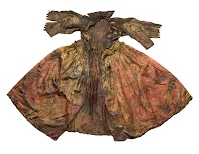
I love an historical fiction novel based on an element from history or a true story and we certainly have that here. In 2014, a big storm hit off the coast of Texel, clearing away layers upon layers of sand and mud from a known 17th century shipwreck. Texel is located off the coast of the Netherlands north of Amsterdam, and this natural event created an unexpected opportunity to explore the shipwreck known as the Palmwood wreck. Many items were recovered by divers, including a remarkably preserved 17th century silk dress.

Textiles are rarely recovered from shipwrecks and garments from this era rarely survive, so for this silk dress to survive on the bottom of the Wadden Sea for more than 350 years is quite extraordinary. 

The news of this incredible discovery travelled around the world and inspired Lauren Chater to imagine the woman who wore the dress. As a result, the seeds for The Winter Dress were well and truly sewn. (Sorry, couldn't resist).

Our main character Jo Baaker is a textiles historian and an interesting woman in her own right. In her words:
"One of the reasons I chose to pursue dress history was because I wanted to bear witness to the creation of textiles that simply won't be around in fifty years. The garments deserve better and so do the people who wore them." Page 155
Jo is astonished when she learns about the discovery of the dress in the book and I couldn't help but cringe alongside Jo when she hears how the dress was transported and hosed down by local divers trying to get the worst of the mud off. Eeeek!!! Jo is captivated by the dress and is honoured to be part of the curating process, desperately wondering about the life of the woman who once wore it.
17th century silk dress from the Palmwood wreck
The real silk dress
Source: www.archaeology.org
 

The Winter Dress is a dual narrative and the author takes us back in time to Amsterdam in 1651 where we meet Anna Tesseltje on the last day of her old life. Anna's family have fallen on hard times, and after starting work as a laundress, her brother secures her a position as a companion to artist Catharina van Shurman.

Meanwhile, Jo finds herself caught up in the excitement of the discovery in Texel and the lurking professional competition made me grind my teeth while my heart ached for the choices Anna faced in her timeline.

Expertly researched and beautifully told, this is a well woven and alluring story with a lustre between the pages you're not likely to forget.

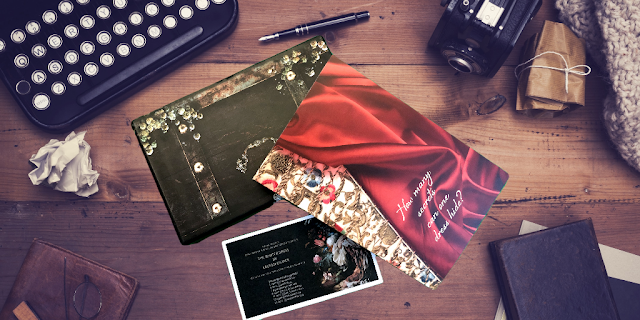
A total of 100 signed boxed proofs of The Winter Dress were produced for Australia and New Zealand and as a member of this blog tour, I was lucky enough to receive one of these special editions! It's such a wonderful bookish touch that appeals to we booklovers and bibliophiles and is a pleasure to house on my bookshelves.

The Winter Dress by Lauren Chater is engaging and the author's enthusiasm to imagine and reveal the owner of the dress is contagious. This is a story about grief, love, loss and discovery and is highly recommended for fans of Kate Forsyth, Tracy Chevalier, Kayte Nunn, Philippa Gregory, Kate Morton; and of course if you enjoyed Gulliver's Wife by Lauren Chater, you'll love this!

My Rating:


Carpe Librum image of the signed and limited boxed edition of The Winter Dress by Lauren Chater
17 June 2021

Review: Katharine Parr - The Sixth Wife (Six Tudor Queens VI) by Alison Weir

Katharine Parr - The Sixth Wife by Alison Weir book cover

* Copy courtesy of Hachette Australia *

The Six Tudor Queens series by Alison Weir has finally come to an end with the release of Katharine Parr - The Sixth Wife. I've been following this historical fiction series since book two (Anne Boleyn: A King's Obsession) and they've all been 5 star reading experiences.

Each book is about the life of the queen in the title, and I was looking forward to Weir's representation of twice widowed Katharine Parr. The novel starts in 1517 when Katharine is just 5 years of age, and the excellent writing, research and storytelling in evidence throughout the series is definitely on show here. These historical figures are expertly brought to life, and I don't recall where I first heard it (it could have been from one of many Tudor inspired documentaries, movies, TV shows or books) but I enjoyed seeing this quote from King Henry VIII in the book:
"He has no idea what I really think of him. That's my method, Kate. Play off one against the other. Divide and rule, and keep your hand close. Believe me, if I thought my cap knew what I was thinking, I would throw it in the fire!" Page 346
I enjoyed learning more about Katharine Parr, especially since the novel covers many of the same events as The Taming of the Queen by Philippa Gregory. Another favourite historical fiction author, In The Taming of the Queen, Gregory tells Kateryn (note different spelling) Parr's story in the first person. The fact that I read it when it was released back in 2015 provided enough distance to appreciate the similarities but also space to notice the differences between the two books. The painting that featured so prominently in Philippa Gregory's novel doesn't take up much time in this story and I can't help feeling a little disappointed by that; given how much I adore the portrait and the story behind it.

The slightly different take on Katharine's religious leanings, her achievement in bringing King Henry VIII's children Prince Edward, Mary and Elizabeth to court and convincing the King to change the Act of Succession made for fascinating reading. The deplorable behaviour by Prince Edward's uncle after the death of Henry VIII was just as frustrating to read here as it must have been to endure, but I could relate to Katharine's internal struggle about whether to fight the fact that the King wanted her to be Regent or let it go and focus on her own happiness instead.

Reading Katharine Parr - The Sixth Wife was a refresher on the scandals of the Tudor court, the political influences and of course the Reformation and changes in religious doctrine at the time. Weir takes us right up to Katharine Parr's death in 1548 from childbed fever at Sudely Castle. She was only 38 at the time of her death, and passed away just 1 year and 8 months after Henry VIII.

As with the rest of the series, the passing of the main character at the end of the book was a very moving scene. I found myself doing a lot of Googling after the last page to remind myself how things ended for the other characters and to get a better sense of Sudeley Castle. It's an amazing castle and I'd love to visit there one day, but it was a shock to find out that historians disagree about what eventually became of Katharine's daughter with Thomas Seymour.

Katharine Parr - The Sixth Wife by Alison Weir can easily be read as a stand alone and is recommended for historical fiction fans with an interest in the Tudor period. I'm sorry to have reached the end of this magnificent series, and the only thing left for me to do now is go back and read the first book, Katherine of Aragón: The True Queen.

Please enjoy my reviews of the previous novels in the Six Tudor Queens series by Alison Weir below:
Anne Boleyn: A King's Obsession (Book II)
Jane Seymour: The Haunted Queen (Book III)
Anna of Kleve: Queen of Secrets (Book IV)
Katheryn Howard: The Tainted Wife (Book V)

My Rating:


28 December 2020

4 Reading Challenge Wrap Ups for 2020

I'm a little behind on my reading challenge wrap ups, but I've been reading up a storm this year. In this wrap up, I'm going to check back in on the following four reading challenges I participated in this year.

- Non Fiction November 2020
- Book Bingo 2020
- 2020 Non Fiction Reader Challenge
- 2020 Historical Fiction Reading Challenge


Non Fiction November Wrap Up

How was your Non Fiction November? Here are the non fiction titles I read during the month. Unfortunately A Life Discarded: 148 Diaries Found in a Skip by Alexander Masters was a DNF for me at 26% as it just wasn't holding my interest. It happens.

- Sh*t Moments In New Zealand Sport by Rick Furphy and Geoff Rissole
- Northside: a time and place by Warren Kirk
- The Ultimate Bucket List: 50 buckets you must see before you die by Dixe Wills
- Underland by Robert Macfarlane
- Nodding Off by Alice Gregory

I finished reading the last two books on this list in December which is why this wrap up is late.

Book Bingo 2020

This was my first time participating in the Book Bingo 2020 reading challenge hosted by my bookish friends Theresa Smith Writes, Mrs B’s Book Reviews and The Book Muse. To successfully complete the challenge, I had to read and review a book from each of the following 12 bingo squares: 

1. Themes of culture (And Fire Came Down by Emma Viskic)
Book Bingo 2020 reading challenge image
2. About the environment (The Rain Heron by Robbie Arnott)
3. Set in a time of war (To Sleep In A Sea of Stars by Christopher Paolini)
4. Themes of inequality (Gulliver's Wife by Lauren Chater)
5. Prize winning book (The Erratics by Vicki Laveau-Harvie)
6. Set in a place you dream of visiting (The Midnight Library by Matt Haig)
7. Themes of crime and justice (Reasonable Doubt by Dr Xanthe Mallett)
8. Friendship, family & love (A Month of Sundays by Liz Byrski)
9. Set in an era you'd love to travel back in time to (Spirited by Julie Cohen)
10. Themes of politics and power (Katheryn Howard - The Tainted Queen by Alison Weir)
11. Coming of age (The Austen Girls by Lucy Worsley)
12. A classic you've never read before (Pride and Prejudice by Jane Austen)

This challenge isn't being run in 2021, but it was really fun to take part in this year.

2020 Non Fiction Reader Challenge

As you know, I love reading the odd non fiction book and mid way through the year, I decided to jump on board and join the 2020 Non Fiction Reader Challenge hosted by Shelleyrae over at Book'd Out. In order to complete the Know-It-All level of the challenge, I had to read one book for each of the categories below.


2020 Non Fiction Reader Challenge

2020 Historical Fiction Reading Challenge

In order to complete the Renaissance Reader level of the 2020 Historical Fiction Reading Challenge hosted by Passages to the Past, I had to read 10 historical fiction novels. Here's what I read:

______________________________________________________________________________

It was a lot of fun participating in these four challenges throughout the year and I was very pleased to successfully complete all of them. Soon I'll be wrapping up the last two reading challenges I participated in this year: the 2020 Australian Women Writer's Challenge and 2020 Aussie Author Reading Challenge. 

In the meantime, let me know if you participated in any of these challenges or if any of the books mentioned above take your fancy. Are you thinking about reading challenges for 2021 or is it too soon?

Carpe Librum


03 December 2020

Review: Dark Tides by Philippa Gregory

Dark Tides by Philippa Gregory book cover
* Copy courtesy of Simon & Schuster *


Dark Tides by Philippa Gregory is the second book in the historical fiction Fairmile series and picks up 21 years after the end of Tidelands. I was eagerly awaiting this release, but the huge time gap between books was a complete surprise. I was really looking forward to following Alinor and Alys as they left the mire with their cart and faced the dangers and challenges ahead.

Unfortunately, the reader picks up their story after these struggles and we find them with an established household working as poor wharfingers in a small warehouse on the south side of the Thames. Alinor has aged and while still very much the matriarch of the family, she is no longer the main character of the novel. Rob's widow arrives on their doorstep from Venice with her newborn baby and the devastating news he has drowned.

Alys and her daughter Sarah dominate the story along with the widow Livia, with intervening chapters from Alinor's brother Ned's point of view.

Ned has moved to New England and is quietly trying to eke out a living as a ferryman. There he finds himself caught between the settlers and the American Indians and his storyline is full of foreboding and dread about what is to come.

Ned's chapters were a complete contrast to the goings on in London and Venice and to be honest, I could have done without them. I typically don't enjoy reading about early settlement in the USA, so I didn't enjoy Ned's story in New England.

Back in London, wealthy widow Livia is turning the Reekie family on its head and I could tell it wasn't going to end well. Rob's widow is a well-written antagonist with some biting dialogue, but her storyline had an overbearing sense of a family betrayal brewing that made this reader feel uneasy.

The sense of foreboding evident in Tidelands is also present in Dark Tides, however the fact that all storylines were heading towards seemingly unavoidable disaster made this a worrisome read.

While there was ample foreshadowing throughout the novel, Gregory's signature writing talent was on full display. Here's a quote I enjoyed from very early on in the book:
"He thought the world was not whole anymore; but sundered into country and court, winners and the lost, protestants and heretics, royalists and roundheads, the unfairly blessed and the unjustly damned." Page 6
Themes of class and the divide between the poor and the wealthy were again brought into focus with the seemingly wealthy widow's disappointment and shock at the Reekie family's position and living conditions and her desire to improve her station in life for the benefit of her son.

Dark Tides by Philippa Gregory is recommended for historical fiction fans with an interest in 1670s London, Venice or New England, and those who enjoy investing in a good generational family saga. I look forward to the next installation of the Fairmile series.

My Rating: