27 February 2023

Review: Bartleby, the Scrivener by Herman Melville

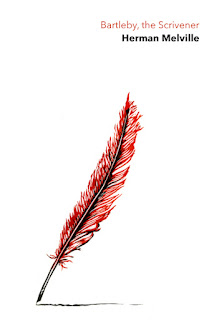
Bartleby, the Scrivener by Herman Melville book cover

I didn't get on with Moby Dick at University. I was far more interested in reading The Pillars of the Earth by Ken Follett at the time and found Herman Melville's writing to be inaccessible and a tiresome bore. Melville is a classic American writer though, and 20 years on I thought I'd give him a second chance by reading Bartleby, the Scrivener.

This is a short story narrated by an elderly lawyer about the office politics where he works. Here's a little about him in his own words:
"I am one of those unambitious lawyers who never addresses a jury, or in any way draws down public applause; but in the cool tranquility of a snug retreat, do a snug business among rich men's bonds and mortgagees and title deeds. All who know me consider me an eminently safe man." Page 6
Our narrator has a legal firm in an office on Wall Street in New York, and the novella begins with an overview of his two employees. These character studies of Turkey and Nippers were insightful and Bartleby of the title is a new hire and addition to the team that doesn't pan out well.

We learn that Bartleby is very good at his job as a Clerk, but when asked to do a specific task or run a particular errand he doesn't want to do, he responds with "I prefer not to".

The modern reader can immediately relate and no doubt knows someone in their own circle of friends, family or work colleagues just like Bartleby. Bartleby's attitude of passive resistance and the fact that he'd 'prefer not to' do as he is instructed wound me up immediately and was instantly relatable.

Published in 1853, it was surprisingly reassuring to know that people haven't changed that much over the intervening decades and century. The staffing problems faced in the workplace 170 years ago resonate immediately with the modern reader today.

Bartleby soon causes our narrator great tribulation, and while the narrator remains unnamed throughout the novella, his plight is compelling. There are chuckle worthy moments of dialogue and inner reflection as our lawyer attempts to navigate his way out of his problem with varying degrees of success. I wanted to shout out suggestions to him which is a sure sign of evocative writing, however I did wish for a different ending.

Bartleby, the Scrivener by Herman Melville is a timeless novella about office politics and in 2019 it featured on the BBC News list of the 100 Most Inspiring Novels. I'm not sure I'd agree it's inspiring, but it's certainly an accessible entry point for readers of Herman Melville.

You can access the novella for free on Project Gutenberg. 

Of course you might 'prefer not to' and that's okay too.
My Rating:
★ ★ ★ ★ ★


23 February 2023

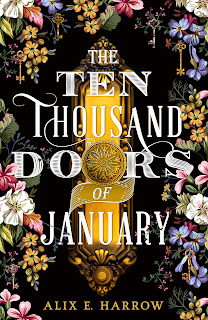
Review: The Ten Thousand Doors of January by Alix E. Harrow

The Ten Thousand Doors of January by Alix E. Harrow book cover

The Ten Thousand Doors of January by Alix E. Harrow is a young adult urban fantasy novel about adventure, stories, portals, travel and change. I knew I was going to be in safe hands very early on when our narrator quotes her father on Page 2:
"If we address stories as archaeological sites, and dust through their layers with meticulous care, we find at some level there is always a doorway. A dividing point between here and there, us and them, mundane and magical. It is at the moments when the doors open, when things flow between worlds, that stories happen." Page 2
And that's precisely what happens here. Our narrator is young January Scaller and her life changes forever when she finds a door at the age of seven. January is a difficult child with an absent father, and was given a number of nursemaids, who soon quit their position. Here's a robust character description of a new nursemaid from our narrator:
"The newest one [nursemaid] was a German immigrant named Miss Wilda, who wore heavy black woolen gowns and an expression that said she hadn't seen much of the twentieth century yet but heartily disapproved of it thus far. She liked hymns and freshly folded laundry, and detested fuss, mess, and cheek. We were natural enemies." Page 16-17
Don't you just love that? I can picture Miss Wilda perfectly, and even more, I want to read about all the ways they disagreed. Growing up as the ward of Mr William Cornelius Locke - a self-made almost-billionaire and chairman of the New England Archaeological Society - January lives in a mansion full of antiques and rare collectibles, yet is restless. She doesn't interact with anyone her own age, with the occasional exception of Sam, the son of the local grocer.
"I used my most grown-up voice, as if I had never once chased him across the lawn howling for his surrender or fed him magic potions made of pine needles and lake water." Page 33
This is an historical fiction adventure story, and like many great adventure stories before it, there's a book and on finding it, the reader - along with January - is plunged into the story of young Adelaide:
"Standing beside her grandmother's deathbed, woolen dress still smelling of black logwood dye, Ade had felt the way a sapling might as it watched one of the old forest giants come crashing magnificently to rest: awed, and perhaps a little frightened. But when Mama Larson's final breath rattled from her ribs, Ade discovered the same thing the young sapling would have: in the absence of the old tree, there was a hole in the canopy above her." Pages 97-98
Early on it was difficult to separate the stories of Ade (Adelaide) and January in my mind, and the third person narration was briefly confusing, but thankfully it improved as the novel progressed. Harrow's exquisite writing more than compensated for the flow, and I marvelled at her ability to convey so much in just one sentence:
"She took another gulp from the brown glass bottle and muttered herself into silence, complaining about rich folk, young folk, nosy folk, Yankees, and foreigners." Page 338
The Ten Thousand Doors of January reminded me of Strange the Dreamer by Laini Taylor a little, in the shared coming of age quest of sorts that leads to danger, adventure and eventually self discovery. The existence of portals that lead to other worlds isn't new in fiction, and I've enjoyed The Chronicles of Narnia by CS Lewis, The Starless Sea by Erin Morgenstern and more recently Fairy Tale by Stephen King.

In this particular portal fantasy novel, the doors represent change and characters very quickly decide whether that change is good or not. The doors create an inevitable 'leakage between worlds' (the author's words, not mine) which includes people and objects travelling between them. My mind was racing at this point, imagining how this theory could apply to some of the mysteries in our own world as we know it. Perhaps the Voynich manuscript came from one of these worlds, who knows?

Naturally, this gives rise to themes of ethnicity and multiculturalism, as does the idea of preserving each world in its current state and slowing or preventing the use of doorways to freely travel. Younger readers will take this at face value, while mature readers will see how these attitudes and prejudices are reflected in our history and in our present.

I'll leave you with one last quote I hope you might like:
"Those of you who are more than casually familiar with books - those of you who spend your free afternoons in fusty bookshops, who offer furtive, kindly strokes along the spines of familiar titles - understand that page riffling is an essential element in the process of introducing oneself to a new book. .. It might smell expensive and well bound, or it might smell of tissue-thin paper and blurred two-color prints, or of fifty years unread in the home of a tobacco-smoking old man. Books can smell of cheap thrills or painstaking scholarship, of literary weight or unsolved mysteries. 
This one smelled unlike any book I'd ever held. Cinnamon and coal smoke, catacombs and loam. Damp seaside evenings and sweat-slick noontimes beneath palm fronds. It smelled as if it had been in the mail for longer than any one parcel could be, circling the world for years and accumulating layers of smells like a tramp wearing too many clothes." Pages 22-23
I just love that quote! I recently learned that bildungsroman is a term used to describe a coming of age story; thanks to Sam for that little pearl. This book was a gift for Christmas and The Ten Thousand Doors of January by Alix E. Harrow is a bildungsroman for those who prefer their reading material to be full of adventure and fantasy with a touch of historical fiction. 

Highly recommended. 

My Rating:
★ ★ ★ ★ ★


08 February 2023

Review: The Buried Giant by Kazuo Ishiguro

The Buried Giant by Kazuo Ishiguro book cover

I enjoyed The Remains of the Day, the story of an ageing butler reminiscing about serving Lord Darlington between WWI and WWII, while Klara and the Sun was an interesting science fiction novel about artificial intelligence. The Buried Giant by Kazuo Ishiguro was published in 2015, however it was a disappointing read for me. Australian author Ben Hobson recently shared his love for this book but wondered why so many readers didn't enjoy it. Here's why.

This is the story of Axl and Beatrice, an elderly couple in a fictional post-Arthurian Britain where people across the land suffer from forgetfulness and a type of collective amnesia. The pair set off on a quest to find their son and discuss the mist causing the memory loss with others they meet along the way. What I found instantly irritating and relentlessly repetitive was the overkill with regard to the characters using each other's names ALL the time. Axl calls Beatrice princess and it drove me up the wall. I've flipped to a random page to share an example with you:
"It can wait till the morning, Axl. It's not even a pain I notice till we're speaking of it." "Even so, princess, now we're here, why not go and see the wise woman?" Page 55
Stilted dialogue aside, The Buried Giant is a post-Roman fantasy with touches of Tolkien complete with pixies, ogres and even a dragon. Intergenerational conflict is an important topic in the novel with the hatred and distrust between the Saxons and the Britons sure to resurface if the memory dampening mist is dispersed. Axl and Beatrice contemplate whether it's better not to remember at all if there's a risk the traumatic memories of war and genocide could come tumbling back with the years of separation, love and loss.

I might have cared for all of this - the vicious cycle of hate and violence and the hopelessness of war - but the overarching narrative was unclear. I was unable to decipher the meaning of the ogres or the purpose of the pixies; if indeed there was any. Did they represent foreign powers? The mixed tense was often confusing and what was that about the black birdlike hags/women? Is the boatman death? Or does the island represent death? Or am I wrong on both counts? The mysteriously omniscient narrator who revealed themselves at the end (I think?) as part of a frustratingly ambiguous ending only served to increase my ire.

It would seem I don't belong to the literary 'in crowd' for whom this was written, but in my opinion, there was too much expectation on the reader to pick up on the hidden meanings, subtext and literary devices that must be holding this up. If I have to work hard in order to figure a book out, then it needs to deliver, otherwise the reading joy ebbs away and that's what happened here.

If you've been following Carpe Librum for any length of time, you'll know I'm not a fan of an ambiguous ending, and boy do we have a doozy here. Published in 2015, and with many of you having no doubt read this before me, I think I can safely ask... What do you think happened at the very end? After being questioned, did they stay together or not? Did Axl? Or didn't he? Someone put me out of my misery, quick!

After reading The Buried Giant, I think Ishiguro and I are done for now.

My Rating:
★ ★ ★ ★ ★


06 February 2023

Confluence Giveaway Winners Announced

Thanks to everyone who entered my giveaway last week to win 1 of 2 signed copies of Confluence by Gemma Chilton. It's true, Gemma is from Southern Tasmania and everyone answered correctly. Entries closed at midnight last night and the lucky winners were drawn today. Congratulations to:

Lindsay & Pam Swain


You've both won a signed copy of Confluence valued at $24.99AUD thanks to the author. You will receive an email from me shortly and will have 7 days to provide your postal address and preferred inscription from Gemma. You'll then receive your prize direct from the author so I hope you enjoy! 

02 February 2023

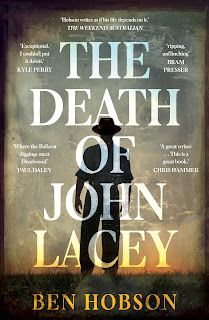
Review: The Death of John Lacey by Ben Hobson

The Death of John Lacey by Ben Hobson book cover

* Copy courtesy of Allen & Unwin *

Snake Island by Ben Hobson was a ripper read in August 2019 and it made it onto my Top 5 Books of 2019 list. I had the pleasure of interviewing the author as well, which you can check out here.

Ben Hobson is back with his new book called The Death of John Lacey which will always be special to me, because guess what? I'm mentioned in the praise section with an excerpt from my Snake Island review! It's so exciting when this happens and I predict I'll never tire of the thrill. What an honour! Now, onto the book.

The Death of John Lacey is set in the Ballarat goldfields of colonial Australia and Hobson cleverly avoids any flack for the inherent racism some of his characters possess. The author is clear at the beginning that his writing is true to the period but understands readers might find the views of his characters abhorrent and unacceptable by our contemporary standards. It's a shame authors need to stipulate that they don't share the views of their characters, but better safe than sorry.

The book is set in 1847, 1853 and 1870 but begins in 1847 with Ernst James Montague and later his brother Joe Montague. These early pages reminded me of the last half of Devotion by Hannah Kent, although on reflection, I guess that shouldn't come as a shock. Both books were written by Australian authors and set in 1800s Australia for a start. Furthermore, the interactions between the new settlers and the indigenous population were interesting, engaging and sensitively handled and the landscape was incredibly evocative in both novels.

I would happily have dwelt here in Ernst's entire life story and I was deeply invested in the life he was living with his father as they tried to eke out a living from the land. Meanwhile, Ernst's mother was bitterly homesick and longed to return to her homeland. Unfortunately things don't go to plan but that's where we leave them. 
We're then introduced to the Lacey brothers in 1853, but I couldn't make space for them as I was left wondering what happened to Ernst and Joe. We join them again later, but having been robbed of the aftermath of their earlier circumstances the connection to them as characters was lost.

When we meet him, John Lacey - of the title - is a formidable man on a power trip and not a character the reader is likely to care too much about. John has a brother Gray and while we spend some time in their story, I was indifferent to their plight.

The Death of John Lacey is divided into seven parts, during which time we get a glimpse of the lives of brothers Ernst and Joe Montague, brothers Gray and John Lacey and Father Gilbert Delaney. While Hobson brings all of the plot threads together in the conclusion, I found myself not caring too much about any of the characters; their demise or their salvation. But perhaps that was the point. It was a deplorable time in history and Hobson has given us some pretty heartless characters to despise.

John Lacey isn't an important or compelling character in the novel and his death didn't seem to be the focus of the book. As a result, I found myself puzzling over the title and wondering at its significance other than providing a logical starting and finish point for the overall narrative.

Historical fiction is my favourite genre, although I'll admit reading very few books set in colonial Australia. This is just a personal reading preference and I wouldn't have picked this up if it wasn't for the fact that Hobson absolutely blew me away with Snake Island. The Death of John Lacey is completely different and props to the author for his ability to write two completely different books and deploy a different writing style for each. I know it's a minor point, but I don't enjoy it when authors, editors or publishers decide to do away with punctuation for dialogue, but such is the case here and it definitely diminished my reading pleasure.

Covering themes of race, faith, greed, violence, ambition, law and order and the value of human life, there is much here to get stuck into. The writing is distinctly Australian, the landscape evocative and there were some great character insights, like this one from Father Gilbert:
"Gilbert understood that all death was like this, having presided over so many. There was always great wailing and sorrow, but in the end, after the dying had been done, there was pragmatism, and great relief in the work it required. Even so, he could not help but picture Joe's face as each nail was struck and the thought of Christ crucified on the cross and how those nails might sink into flesh." Page 242
The Death of John Lacey by Ben Hobson is recommended for those who enjoy historical fiction set in the goldfields of Australia, fans of Ned Kelly or bushranger fiction and readers who love a good western but won't get snooty when there is no dialogue punctuation. Ben Hobson is clearly an Aussie talent to watch and I can't wait to see what he turns his pen to next. Guaranteed I'll be there to be an early reader.

My Rating:
★ ★ ★ ★ ★


30 January 2023

Review: The Phantom of the Opera Companion

Andrew Lloyd Webber's The Phantom of the Opera Companion book cover

I absolutely love everything about the musical production The Phantom of the Opera: the gothic setting; the music; the operas within an opera and of course the cleverly constructed and often overlapping lyrics are just sublime. Andrew Lloyd Webber's The Phantom of the Opera Companion contains the original screenplay and reading it enhanced my already existing appreciation of the musical.
“Some of you may recall the strange affair of the Phantom of the Opera: a mystery never fully explained.” Page 62
I recently attended Opera Australia’s production of The Phantom of the Opera at the State Theatre in Melbourne four times and it continues to raise the hair on the back of my neck and give me goosebumps every, single, time.

I've always struggled to describe the sheer majesty of the title song and the "duuuuuun, dun dun dun dun dunnnnnn!" that reverberates into your chest. In this companion edition I'm pleased to have finally found a description from the screenplay that sums it up in just three words:
"The porters whip off the canvas. The auctioneer switches on the chandelier by igniting a huge battery. There is an enormous flash and the thunderous organ overture begins." Page 62
It's the thunderous organ overture which never fails to move me or ignite my senses. Reading the screenplay in full for the first time provided a new angle from which to appreciate Andrew Lloyd Webber's brilliance. The clever word play and poetic rhythm of the lyrics deliver tongue twisters one moment while other times the lines seem to trip off your tongue in sheer delight. Take the following example from Christine. Even if you don't know the circumstances or accompanying tune, the words are lyrical and seem to dance together in a way that makes my brain feel like warm, sticky caramel:
"Twisted every way, what answer can I give? Am I to risk my life, to win the chance to live? Can I betray the man who once inspired my voice? Do I become his prey? Do I have any choice? He kills without a thought, he murders all that's good... I know I can't refuse, and yet, I wish I could. Oh God - if I agree, what horrors wait for me in this - the Phantom's Opera...?" Page 125
I'm well aware that my enjoyment of this book is inexplicably connected to my love of the opera itself, but it's as though my mind enjoys picking over the lyrics and melodies and revisiting their uniqueness over and over. It then seeks to deliver snippets to me throughout the day in 100 little ear worms and sudden and tuneful outbursts without provocation. Perhaps the Angel of Music haunts me just as it does Christine...

Often the characters' lines will overlap and I was able to read all of the lyrics in the screenplay for the first time here. Sung and read together, they create a swirling sphere of linguistic pleasure that seems to envelope my brain in a sweet fog of words and music that ignites my soul and won't let go.

The musical is multi layered (like the movie Inception) with plays within the play and even makes fun of industry cliches and stereotypes in the caricature of Carlotta and the swooning lovesick and overly protective leading man Raol. There's also a clear sense of humour throughout, one of my favourites being "and what is it that I've meant to have wrote, written?" The stage production in Melbourne was exquisite and the scenery was mesmerisingly clever with performers and the set continuously transforming and defying any attempt to understand how it all works. The interactions between Andre and Firmin are absolute highlights for me, and I loved reading their 'notes sequence'.

Andrew Lloyd Webber's The Phantom of the Opera Companion is a book I'll never part with and I'm so glad I now have my own ready reference to all of the lyrics. The lyric I'm trying to learn by heart at the moment is the following from Masquerade:
"Flash of mauve ... Splash of puce... Fool and king ... Ghoul and goose ... Green and black ... Queen and priest ... Trace of rouge ... Face of beast ... Faces ........ Eye of gold ... Thigh of blue ... True is false ... Who is who? ... Curl of lip ... Swirl of gown ... Ace of hearts ... Face of Clown." Page 111
Were you able to read it through without stumbling? Are you also a Phantom tragic? I'd love to know. It could be another decade before I have the chance to “close my eyes and let my spirit start to soar” once again, but now that I have the screenplay - in addition to the Original London Cast recording from 1987 - I'll be able to re-visit the Music of the Night any time.

Highly recommended!

My Rating:
★ ★ ★ ★ ★


27 January 2023

WIN 1 of 2 Signed Copies of Confluence by Gemma Chilton

Carpe Librum Confluence giveaway image

Intro

Gemma Chilton is an Australian journalist and editor based in southern Tasmania and she's giving Carpe Librum readers the chance to win 1 of 2 signed copies of her debut novel Confluence. Each winner will receive a print copy of Confluence valued at $24.99AUD signed by the author along with a personal inscription of their choice.

Gemma's writing has appeared in numerous publications including Australian Geographic and Tracks magazines. Confluence is a gritty and raw contemporary mystery and the giveaway is open to AUS & NZ entrants only. Enter below before midnight AEST Sunday 5 February 2023 and good luck!

Blurb

Twenty years ago, 10-year-old Liam's father left to go fishing in the early morning dark and never came home. Now Liam is living an unhappy life in Sydney, having an affair with the married woman upstairs, haunted by the ghosts of his childhood. When he gets a call about his mother's health, he quits his dead-end job and returns to his childhood home near the ocean - ostensibly to help her, but really to wrestle with his own memories and his demons. Weaving between the past and present, Confluence is a gritty and raw contemporary mystery about time, memory, love, loss and intergenerational trauma, through the lens of one family’s tragedy.

Giveaway

This giveaway has now closed.


20 January 2023

Review: The Whispering Muse by Laura Purcell

The Whispering Muse by Laura Purcell book cover

* Copy courtesy of Bloomsbury *

I know it's early days yet, but it's just possible that The Whispering Muse by Laura Purcell has gone straight from being one of my most highly anticipated reads of 2023, to being one of my favourite reads of the entire year. I absolutely adored this!

Set at the Mercury Theatre in Victorian London, Miss Jennifer Wilcox accepts a job offer from Mrs Dyer, the wife of the Mercury's owner. Fallen on hard times - the cause of which is revealed later - Jennifer must provide for her family and despite being brought low by her circumstances, eagerly accepts the position of dresser. Jennifer will need to make and mend all of the costumes, style hair and organise the accessories for the leading actress at the Mercury.

Unable to refuse and eternally grateful for the position of dresser to Lilith Erikson, Jennifer soon learns there's more to the situation. Mrs Dyer explains that her husband has been bewitched by the woman, and Jennifer is to keep a close eye on her. The reader is thrust straight into the social politics of the theatre, and additional meaning and nuance is communicated in the different plays the characters stage throughout this historical fiction masterpiece.

Reading The Whispering Muse put me in mind of City of Girls by Elizabeth Gilbert but I suspect that's only because I haven't read too many novels set in a theatre. The books are set in different countries and eras - 1940s New York and Victorian London - however the leading lady there (Celia) was just as awful as Lilith. In fact, my favourite quote from City of Girls works perfectly for Jennifer and Lilith too!

You see, Lilith Erikson is a vain, ambitious and arrogant woman, intent on attaining recognition for her prowess on the stage at any cost. And I really mean ANY cost and our protagonist is soon fed up with her behaviour and seeming obsession with a cursed pocket watch.

Looking over at Lilith at a gathering, Jennifer observes:
"She would have been arresting in her fashionable black evening gown, were it not for her sour expression. She looked like she'd sucked on a lemon. Her discomfort cheered me more than the champagne." Page 64
The Whispering Muse is being promoted as a gripping tale of obsession, superstition and ambition, set against the atmospheric backdrop of Victorian London and the description is spot on!

Enriching my reading experience was the fact that I was also reading Andrew Lloyd Webber's The Phantom of the Opera Companion. At the time of writing, I've attended the show in the State Theatre in Melbourne a total of 4 times, with my final attendance last night! This allowed me to enter a theatre environment and watch the cast and goings on with fresh eyes. What must it be like back stage, what are the relationships between the actors, what really happens in the dressing rooms and costume wardrobes?

I'll be reviewing it soon, but the Companion also describes the set design, history of the show and the creation of the music, making it a perfect yet unintended and equally gothic companion to The Whispering Muse.

This is an atmospheric novel about class, ambition, loyalty, envy, power and obsession and I was truly gripped as I flipped the pages to witness the slow destruction of certain characters. Jennifer experiences conflicting loyalties between Mrs Dyer and Lilith and her determination to avoid becoming collateral damage in their war made for compelling reading.

In addition to the drama unfolding between the characters, the theatre setting, the backstory of the pocket watch and suspicious and deadly accidents at the Mercury, the little nods to the era (young Bertie with a bad foot pasting together matchboxes to earn his keep and his older brother working in a hat factory) were the icing on this creepy Victorian cake.

The Whispering Muse by Laura Purcell is a gothic triumph!

My Rating:
★ ★ ★ ★ ★


16 January 2023

2023 Reading Challenge Sign Ups

I was sorry to learn that the Aussie Author Reading Challenge came to a close at the end of 2022 after 13 years. I'd like to thank Jo from Booklover Book Reviews for her time and generosity in managing this challenge year after year. It has been a consistent touch point for many Australian bloggers and authors and we're definitely going to miss it Jo!

This year is going to be light on for reading challenges. I'm aiming to read 75 books again in 2023 and will be actively participating in the following challenges throughout the year, so wish me luck!

2023 Non Fiction Reader Challenge

I'm signing up for the Non Fiction 2023 Challenge hosted by Shelleyrae at Book'd Out. I'm going for the Nonfiction Nibbler level and will need to read and review 6 books from any 6 listed categories. 
Non Fiction 2023 Challenge logo

The categories are:
1. History
2. Memoir/Biography
3. Crime & punishment
4. Science 
5. Health
6. Travel
7. Food
8. Social Media
9. Sport
10. Relationships
11. The Arts
12. Published in 2023

2023 Historical Fiction Reading Challenge

Historical Fiction 2023 Challenge logo
Hosted by Marg at The Intrepid Reader, I've signed up to complete the Renaissance Reader level again this year. For this I'll need to read 10 historical fiction books to complete the challenge.

Have you set any reading goals for 2023? Do you enjoy reading challenges or do they create too much pressure? I'd love to know.


14 January 2023

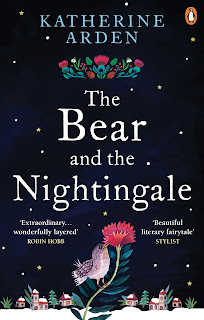
Review: The Bear and the Nightingale by Katherine Arden

The Bear and the Nightingale by Katherine Arden book cover

Set in a bitterly cold winter in a small medieval village in Russia, The Bear and the Nightingale by Katherine Arden is full of Russian fairytales and folktales. The villagers have been making offerings to the household spirits for generations and are wary of what dwells in the dense forests.

However the arrival of a new priest from Moscow changes the household completely as magic is essentially outlawed and the Christian Priest Konstantin is intent on purging devils and witches from the town.

The villagers are forced to choose between their Christian beliefs and salvation or their mystic traditions of old and certain damnation.

Unfortunately for our protagonist Vasya, Konstantin is frighteningly effective:
"His voice was like thunder, yet he placed each syllable like Dunya setting stitches. Under his touch, the words came alive. His voice was deep as rivers in spring. He spoke to them of life and death, of God and of sin. He spoke of things they did not know, of devils and torments and temptation. He called it up before their eyes so that they saw themselves submitting to the judgment of God, and saw themselves damned and flung down.
As he chanted, Konstantin pulled the crowd to him until they echoed his words in a daze of fascinated terror. He drove them on and on with the supple lash of his voice until their answering voices broke and they listened like children frightened during a thunderstorm. Just as they were on the verge of panic - or rapture - his voice gentled." Page 149
Vasya knows the harm that will come if the old traditions aren't upheld and risks her life to save her family despite their distrust of her abilities. Vasya's connection with horses was one of my favourite elements of the book, and reminded me of Poison Study by Maria V Snyder.

According to her father Pyotr, Vasya is destined for either marriage or a convent and she vehemently wants neither. Convinced the villagers are in trouble, Vasya will do anything for agency over her life:
"I am told how I will live, and I am told how I must die. I must be a man's servant and a mare for his pleasure, or I must hide myself behind walls and surrender my flesh to a cold, silent god. I would walk into the jaws of hell itself, if it were a path of my own choosing. I would rather die tomorrow in the forest than live a hundred years of the life appointed me. Please." Page 367
The Bear and the Nightingale by Katherine Arden is a coming of age story and a tribute to storytelling and fairytale. I really enjoy a novel that blends historical fiction in a tale inspired by folkore so if you enjoy books by Kate Forsyth or Naomi Novik, you'll love this.

It's difficult to believe this is the author's debut with descriptions like this one:
"The winter half of the house boasted huge ovens and small, high windows. A perpetual smoke trickled from its chimneys, and at the first hard freeze, Pyotr fitted its window-frames with slabs of ice, to block the cold but let in the light. Now firelight from his wife's room threw a flickering bar of gold onto the snow." Page 13
The Bear and the Nightingale by Katherine Arden is the first in the Winternight trilogy, and I look forward to reading The Girl In The Tower next.

My Rating:
★ ★ ★ ★ ★


11 January 2023

Review: Copywrong to Copywriter by Tait Ischia

Copywrong to Copywriter by Tait Ischia book cover

* Copy courtesy of Scribe Publications *

I'm a blogger, reviewer, editor, proofreader, sole trader and sometimes lone ranger, so you could say I'm the target audience for Copywrong to Copywriter - A Practical Guide to Copywriting for Small Businesses, Small Organisations, Sole Traders, and Lone Rangers by Tait Ischia.

My success over the years has been directly proportional to the work I put in and the standards I set for myself. Like most, I'm always striving to learn more and improve my work and in reading Copywrong to Copywriter I was hoping to learn some new tricks, re-visit old ideas and see if content writing has changed much over the years.
"When someone first realises they need a copywriter, they might have any number of services in mind. They may be looking for web writing, journalism, scriptwriting, product naming, headlines, ad campaigns, concept development, user personas, information architecture, content audits, copy editing, proofreading or complex content strategies.
They might also require intricate knowledge about esoteric subjects, a sophisticated understanding of highly technical industries or years of experience in marketing, advertising, brand strategy or public relations." Page 13
The author goes on to say: "while the foundations of copywriting are simple, they quickly give rise to many complexities." Page 13

If you're expecting or hoping this book will delve into the above services and explain what they are and how they vary, you won't find it in this slim offering. At less than 100 pages, this is a very brief look at copywriting and instead offers an insight into setting a strategy, finding the right voice, identifying your audience and some basic grammar rules. I'm certain that the author could have written a 500 page manual on copywriting that explored each of the services mentioned above in addition to the complexities they give rise to which would no doubt make a thoroughly informative read. (Which I'm totally down for by the way).

Having completed a Bachelor of Arts in Literature, Associate Diploma in Management, Diploma of Business and Certificate in Professional Writing, this overview was old territory for me. I've been reviewing and blogging here at Carpe Librum for almost 18 years now and while I've moved beyond the basics, this short refresher was still worth my time.

Copywrong to Copywriter by Tait Ischia is best suited to those embarking on a career or hobby that involves communicating information to an audience. It might be a blog, an Instagram or Etsy account, intranet or company website. At the very least, this is an easy to follow introduction to copywriting by an accomplished Australian author that will provide a solid foundation that may lead to a deeper exploration down the track.

My Rating:
★ ★ ★ ★ ★


10 January 2023

Top 5 Books of 2022

In 2022 I read a total of 75 books and as always, it's difficult to curate a Top 5 list. Over the course of the year, a total of 19 books were 5 star reads for me in a nice healthy mix of genres. I'm proud to announce there are three Australian authors in my Top 5 list which covers a range of genres, including poetry, crime and crime thriller, science fiction and middle grade.

Here are my Top 5 Books of 2022 in the order I read them:

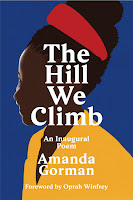
1. The Hill We Climb: An Inaugural Poem by Amanda Gorman

The Hill We Climb by Amanda Gorman book cover
I was incredibly moved by Amanda Gorman's address at President Biden's Inauguration on 20 January 2021. Gorman was the youngest presidential inaugural poet in US history and she made an impression that reverberated around the world.

I read a stunning hardback copy of The Hill We Climb exactly a year to the day of the Inauguration event and was still moved by her words. Gorman eloquently delivers a message of promise and hope and The Hill We Climb is an inspiring read.

If you haven't heard, watched or read The Hill We Climb by Amanda Gorman, I heartily recommend you do. It'll be the best 6 mins or 27 pages you'll ever experience.

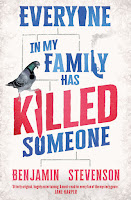
2. Everyone In My Family Has Killed Someone by Benjamin Stevenson

Everyone in My Family Has Killed Someone by Benjamin Stevenson book cover
This was an immediate favourite! In a surprising opening, our narrator - aptly named Earnest - breaks the fourth wall to inform us he's a truth teller. He promises to tell the truth about what happened at his family reunion and insists he won't be an unreliable narrator; encouraging the reader to hold him to account.

Ernie is a self-published writer who publishes how-to books for readers learning to write a crime novel. Naturally he reads a lot of crime novels himself, and when the book opens Ernie is on his way to a family reunion in the Australian high country where things are tense and he's on the outer.

Everyone in My Family Has Killed Someone by Benjamin Stevenson is refreshingly unique meta fiction of the very best kind, with brilliant plotting that left this reader impressed and recommending this widely.

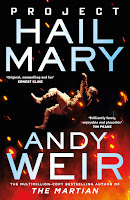
3. Project Hail Mary by Andy Weir

Project Hail Mary by Andy Weir book cover
Project Hail Mary
is a science fiction space thriller and turned out to be a triumphant return to form for Andy Weir and I loved it! With elements similar to those in The Martian, our main character Ryland Grace finds himself alone on a spaceship and part of an impossible mission.

Further enhancing my reading enjoyment of this stellar novel was the fact my husband read this before me, enabling us to share the plot developments and favourite dialogue moments which we're still doing many months later! (Sad, amaze!)

I'll always think of Project Hail Mary as Rocky's book and he's now one of my favourite characters of all time.

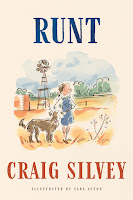
4. Runt by Craig Silvey

Runt by Craig Silvey book cover
This was a sheer delight to read and is aimed at his youngest reading audience yet. Annie Shearer is eleven years old and lives in a small country town called Upson Downs. Her parents run a sheep farm and Annie is never without her leather tool belt, causing some kids to think she's a little odd. I warmed to Annie instantly and cheered when she made a friend in the stray dog of undetermined pedigree, Runt.

Scavenging from bins, Runt was all alone in the world until he met Annie. Together they share a unique bond and Annie enters them both into an agility course at the local show.

Every chapter book needs a villain and Silvey gives us two: the Collector who lives on the hill and buys up properties and a fellow competitor in the world of canine agility courses, Fergus Fink.

With illustrations by Sara Acton, Runt by Australian author Craig Silvey is brimming with little life lessons and subtle morals along the way creating an uplifting, heartwarming and comforting read for all ages. I'm especially looking forward to hearing how my young nephew enjoys it later this year.

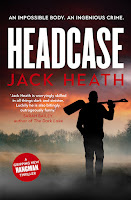
5. Headcase by Jack Heath

Headcase by Jack Heath book cover
Headcase
by Jack Heath is a crime thriller with a refreshing difference and it delivered on all of my bloody hopes and dark expectations. Starring my favourite fictional cannibal Timothy Blake, this is the fourth instalment of the series which shows no sign of slowing down.

Blake has teamed up with CIA handler Zara who is a force to be reckoned with. Blake finds himself in therapy (hence the Headcase reference), yet he remains a charismatic anti-hero.

Headcase is an entertaining and finely crafted bloody mess with kick arse female characters, clever plots, skilful subterfuge, electrifying tension and tantalising riddles at the beginning of each chapter.

Recommended for fans of crime thrillers, I eagerly gave the first two books in the series to my nephew for Christmas and can't wait to hear how he gets on with Blake and Thistle. (Also super proud of the mention in the praise section for Hunter).
________________________________________________________________________________

Special mention to The Day of the Triffids by John Wyndham. The number of references that have come up since I finished reading this have made it the classic that keeps on giving and I'm so glad I finally made time to read it. I wonder which classic will be the stand out in 2023...

What was your favourite book in 2022? Have you read any of these or plan to?

Carpe Librum!


06 January 2023

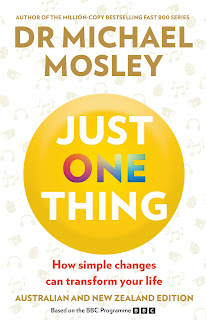
Review: Just One Thing by Dr Michael Mosley

Just One Thing - How Simple Changes Can Transform Your Life by Dr Michael Mosley book cover

Dr Michael Mosley is very easy to listen to and I've watched quite a few of his documentaries, however surprisingly, this is my first time reading any of his - many - books. Just One Thing - How Simple Changes Can Transform Your Life presents simple and easy changes you can make daily that will have significantly positive impacts on your overall health and wellbeing.

Each 'thing' is grouped according to the time of day Dr Mosley recommends you try the activity, although naturally they can be done at any time. The categories are: Early Morning, Breakfast, Mid-Morning, Lunchtime, Afternoon and Evening.

There are 30 'things', and some of my favourites were: Sing, Stand on One Leg, Exercise Less But More Often, Eccentric Exercise, Take a Nap, Stand Up, Dance, Learn A New Skill and of course Read!

I was surprised to read about the benefits of eating beetroot (who knew) and enjoyed learning that the temperature decrease that happens after a warm bath mimics the body's natural drop in core temperature prior to sleep. This is why Doctors always recommend a hot bath 90 minutes before bed to aid sleep.

I've decided the just one thing I'll try and do more of this year is Stand Up. When we sit for prolonged periods, many of our body's functions go into sleep mode, including our metabolism! I think we all recognise that a sedentary lifestyle and sitting for prolonged periods is terrible for our health.
"Emerging evidence suggests that unless you are doing 40 minutes of moderately vigorous exercise every single day, you cannot undo the damage that sitting causes. And even worse, if you sit for long periods each day, you could be decreasing the benefits of any exercise you do." Chapter entitled Stand Up
Instead of harping on the negatives, Dr Mosley highlights the benefits of standing for a few minutes at least once every hour. I find it quite easy at night time to watch two episodes of a favourite show back to back without moving on the couch, but since I started standing more often and interrupting this period of slothing and relaxing, I have noticed an improvement. The author points out that standing up helps us maintain muscle strength, bone density and blood sugar levels and while I'll never go so far as to work at a standing desk, I am able to make small improvements and changes.

Just One Thing contains 30 bite sized topics which are very easy to consume. I recommend listening to this in small doses and coming back later to revisit any specific chapters that take your fancy or require a quick refresher.

Any time is a good time to begin a new habit or learn more about the body, but December / January seems - to me at least - to be the ultimate time of year for this type of book. One of my favourite quotes at the moment is "Your outcomes are a lagging measure of your habits" from Atomic Habits by James Cleary, and trying any of these 'things' from Just One Thing by Dr Michael Mosley will improve your health and wellbeing. 

My Rating:
★ ★ ★ ★ ★


04 January 2023

Review: I Will Always Write Back by Caitlin Alifirenka

I Will Always Write Back - How One Letter Changed Two Lives by Caitlin Alifirenka, Martin Ganda and Liz Welch book cover

I still remember the joy of having pen pals as a teenager, and the premise of I Will Always Write Back - How One Letter Changed Two Lives by Caitlin Alifirenka, Martin Ganda and Liz Welch appealed immediately.

In 1997, Caitlin Alifirenka was in her seventh-grade English class when she was asked to choose a place from a list of countries for a pen pal program the school was embarking on. Whilst other class mates chose countries like Germany and France, Caitlin wanted something different. Living in Hatfield, Pennsylvania, 12 year old Caitlin decided to choose the last country on the list, Zimbabwe. Although she had travelled outside the USA, Caitlin didn't know much about Africa and took great care when deciding how to begin her letter.

A few months later, Martin Ganda was a top student in a very poor part of Zimbabwe when his teacher entered the room, excitedly announcing the class had received pen pal letters from America. There were 10 letters and 50 students and it was immediately apparent many students would miss out. Luckily for Martin, his high scores in a recent test meant he was in Group One, and each high achieving student in the group received a pen pal letter.

In I Will Always Write Back, we learn about Caitlin and Martin in alternate first person POV as well as through the letters they exchange and I enjoyed seeing their friendship blossom. While other pen pal friendships soon petered out after a few letters, Caitlin and Martin remained pen pals for years, despite the oftentimes prohibitive cost of postage for Martin.

Their relationship begins to change both of their lives for the better and I enjoyed following each of their accounts through the years. I did have to take a break for a few weeks as I found myself struggling with the humungous economic and demographic gap between them and growing nervous about what would happen to Martin.

I Will Always Write Back by Caitlin Alifirenka is a real feel good book that will hopefully inspire you to be more generous with your time - and money - and be aware of your own unique privilege.

Caitlin's family deserve a standing ovation for their support of Martin and his family, and I found myself in deep admiration for Caitlin's Mum's ceaseless efforts to seek a scholarship for Martin. Talk about above and beyond, wow!

If you need a story to inspire you or lift your spirits - don't they call that Up Lit now? - then this is for you. Special thanks to my friend closer to home, Diana, for lending me this book. She and I enjoy exchanging snail mail and she knew I'd love this as much as she did.

My Rating:
★ ★ ★ ★ ★


01 January 2023

Historical Fiction Challenge 2022 Completed

Happy New Year! Historical fiction remained one of my favourite genres last year and I enjoyed participating in the Historical Fiction Challenge 2022 hosted by Marg at The Intrepid Reader.

I had to read 10 historical fiction books to complete the Renaissance Reader level of the challenge.

Here's what I read: 
2022 Historical Fiction Challenge logo
10. The Brightest Star by Emma Harcourt

Additional books I read for the challenge:
11. The Marriage Portrait by Maggie O'Farrell
12. Dawnlands by Philippa Gregory
13. The Winter People by Jennifer McMahon
14. The Bear and the Nightingale by Katherine Arden (reviewing soon)

I read some splendid historical fiction novels last year and I'm looking forward to signing up again in 2023. 

Anyone planning to read some historical fiction in 2023? I'm hanging out to read The Whispering Muse by Laura Purcell and it may just be my first historical fiction read for 2023.

Carpe Librum!


31 December 2022

Review: Collecting Cooper by Paul Cleave

Collecting Cooper by Paul Cleave book cover

Paul Cleave is a bestselling kiwi author from New Zealand and Collecting Cooper is my first time reading any of his books. In 2012, Paul Cleave hit my radar and at the time, the blurb for Collecting Cooper was the most enticing of his books so I added it to my TBR. I then purchased a copy in July 2018 and I don't know why I waited 4 more years to read it, but if you're a book lover you can probably relate.

Published in 2011, I was told by a fellow reader that Collecting Cooper can be read as a standalone, but on reflection, I think it would have been better to begin at the start of the Theodore Tate series, which at the time of writing, is now at 4 books.

Collecting Cooper is a crime novel set in Christchurch New Zealand with the lot: a mental institution, Psychology Professor, disgraced cop and overlapping plot lines that eventually come together in a clever piece of writing. Cleave has a direct and cutting writing style and here's a taste from early on in the novel.

In this scene, a character is reflecting on the fact that he doesn't have a driver's licence and if he attempted to sit the test he'd totally freak out.
"He knows he'd only manage a few hundred meters before throwing up all over himself. No, he doesn't need a license as long as nobody ever pulls him over, and there's no reason anybody should. He's a careful driver, and the body in the trunk isn't making any noise." Page 27
Collecting Cooper is a dark read, and there were quite a few references to the first book which I really should have read before reaching for this one. This no doubt detracted from my overall enjoyment level, but was entirely my own doing.

Collecting Cooper by Paul Cleave will appeal to readers of Stuart MacBride and Jack Heath and those who enjoy crime novels set across the ditch in New Zealand.

My Rating:
★ ★ ★ ★ ★


30 December 2022

Aussie Author Reading Challenge 2022 Completed

This is my 11th year participating in the Aussie Author Reading Challenge hosted by Jo from Booklover Book Reviews and I'm proud to say I successfully completed the 2022 challenge. 

I was completing the Kangaroo level of the challenge and needed to read and review 12 books by Australian authors, of which at least 4 were female, 4 were male, 4 were new-to-me authors and a minimum of 3 genres were covered.

Here's what I read for the challenge:
2022 Aussie Author Reading Challenge logo
1. The Dictionary of Lost Words by Pip Williams
2. Vanished by James Delargy
3. Adrift in Melbourne by Robyn Annear
4. The Winter Dress by Lauren Chater
5. Greenlight by Benjamin Stevenson
6. The Attack by Catherine Jinks
7. The Tens by Vanessa Jones
8. Everyone In My Family Has Killed Someone by Benjamin Stevenson
9. What Makes Us Tick by Hugh Mackay
10. CSI Told You Lies by Meshel Laurie
11. Unforgiven by Sarah Barrie
12. Treasure & Dirt by Chris Hammer

Here are the additional books I read for the challenge:
13. Characters - Cultural Stories Revealed Through Typography by Stephen Banham
14. Missing, Presumed Dead by Mark Tedeschi QC
15. The Crimson Thread by Kate Forsyth
16. Once Upon A Camino by Matthew S. Wilson
17. Westography by Warren Kirk
18. The Brightest Star by Emma Harcourt
19. Hydra by Adriane Howell
20. Farmhouse by Sophie Blackall
21. A Lifetime of Impossible Days by Tabitha Bird
22. Runt by Craig Silvey
23. The Carnival is Over by Greg Woodland
24. Old Vintage Melbourne 1960 - 1990 by Chris Macheras
25. Limberlost by Robbie Arnott
26. The Way It Is Now by Garry Disher
27. Headcase by Jack Heath

I read 27 books by Australian authors in 2022, and next year I'm planning to participate in the challenge again. I'll be kicking it off by reading Copywrong to Copywriter by Tait Ischia and The Death of John Lacey by Ben Hobson first. Who else is joining in?


17 December 2022

Review: Dark Skies by Lonely Planet

I've always loved stargazing, and Dark Skies - A Practical Guide to Astrotourism by Valerie Stimac and Lonely Planet was given to me by my husband for Christmas in 2020. Given some of the celestial events have dates attached (lunar and solar eclipses for example), I thought I'd better read this before another Christmas passes me by and it's still on the shelf.

Dark Skies is very much a Lonely Planet guide to astrotourism; a new term for me.
Dark Skies - A Practical Guide to Astrotourism by Valerie Stimac and Lonely Planet book cover

It's broken down into the following chapters:
Stargazing
Dark Places
Astronomy in Action
Meteor Showers
Aurora
Eclipses
Launches
Space Tourism

I was most interested in the Dark Places, Meteor Showers and Eclipses chapters, but they're all very interesting and comprehensive given what's on offer.

Another new-to-me word is archaeoastronomy and I enjoyed learning about it in the chapter on Dark Places:
"Archaeoastronomy, the so-called 'science of stars and stones,' is the interdisciplinary study of how ancient cultures used the night sky as part of culture and society - including in construction. Sites like Stonehenge in England and Chichen Itza in Mexico are among the locations of interest to archaeoastronomers, since they seem to be aligned with celestial events such as equinoxes and solstices. Archaeoastronomers use material remains to examine how ancient cultures related to phenomena in the sky." Page 95
What a fascinating area of science!

It was also interesting to read that the next total solar eclipse visible from Australia and New Zealand takes place on 22 July 2028, with Sydney being in the path of totality. The entire eclipse will take 2.5 hours and totality in Sydney will last a maximum of 3 minutes and 58 seconds. To enjoy the maximum 5 minutes and 10 seconds, enthusiasts will need to travel to rural Australia.

Light pollution - and seeking locations free of it - was a continual theme in Dark Skies, and that's to be expected. I also noticed an optimism that an increase in astrotourism will inevitably result in a greater appreciation and respect for the environment and a subsequent shift in thinking towards how we treat the planet. There's much we can do to reduce night time light pollution (for which our native habitats will be grateful), and I enjoyed that the book closed with:
"If astrotourism helps more people protect our amazing home planet, the future will be bright.... and the night skies will be dark and full of stars." Page 283
It definitely reminded me of the alternate phrase from Game of Thrones, "The night is dark and full of terrors."

Dark Skies very much feels like a Lonely Planet guide, and while I've only read two (Kenya and Hawaii) this was a familiar format. As in those two books, you need to break up the reading of a Lonely Planet guide within your regular reading schedule. Some of the content is dry and after a while, the consistent format can become repetitive and dull. Thankfully some amazing photographs remind the reader of the power and wonder of the night sky and the universe beyond.

Dark Skies is a valuable resource that will quickly date; as with all Lonely Planet books.

My Rating:
★ ★ ★ ★ ★


15 December 2022

2022 Nonfiction Reader Challenge Completed

I read 25 non fiction books in 2022 and it was the third year in a row participating in the Nonfiction Reader Challenge. The challenge is hosted by fellow Aussie book blogger Shelleyrae at Book'd Out and I successfully completed the Nonfiction Nibbler level of the challenge this year by reading and reviewing at least 6 books.

Here's what I read, and you can follow the link to check out my reviews:
1. Social History (The Time Traveller's Guide to Elizabethan England by Ian Mortimer)
2. Popular Science (Revelations in Air: by Jude Stewart)
3. Language 
Book'd Out 2022 Nonfiction Reader Challenge Completed logo
4. Medical Memoir (All the Living and the Dead: A Personal Investigation Into the Death Trade by Hayley Campbell)
5. Climate/Weather
6. Celebrity (The Killer Across the Table by John E. Douglas)
7. Reference (Bibliophile by Jane Mount)
8. Geography (Adrift in Melbourne by Robyn Annear)
9. Companion to a podcast
10. Wild Animals
11. Economics
12. Published in 2022 (Missing, Presumed Dead by Mark Tedeschi QC)

While I did manage to read 25 non fiction books this year, only 7 of them qualified for the challenge as the others didn't meet the criteria for any of the remaining prompts. Some years I actively participate in Non Fiction November however I gave it a miss this year. Participating in a year long challenge holds more appeal to me and I consume non fiction all the time, not needing a specific month to motivate me.

Now to start planning for next year! Sign ups are already open for 2023 over on Book'd Out, although I prefer to sign up to all of my reading challenges in January. Will you be joining in? What was your favourite non fiction book for 2022?

Carpe Librum!


13 December 2022

Review: Why We Sleep by Matthew Walker

Why We Sleep: The New Science of Sleep and Dreams by Matthew Walker book cover

Am I putting you to sleep with the number of books and audiobooks I review on the topic of sleep? I sincerely hope not, but I might need to acknowledge that this has become a comfort topic, something that I'm always interested in, am already largely familiar with, but keep wanting to consume or re-visit from time to time. 

Why We Sleep: The New Science of Sleep and Dreams by Matthew Walker is my latest audiobook endeavour to understand more about sleep. Providing a new-to-me angle, Walker focusses on what happens within the body when we sleep, and then what happens in the body if sleep is inadequate. The short-term and long-term physical repercussions of that were made terribly clear and none of the news was good.

The reverse was also highlighted, meaning a lack of sleep or poor quality sleep over time can cause detrimental damage to vital systems and processes in the body leading to a multitude of health problems. Some of these can then add to the pressure of not getting enough sleep or inability to sleep, creating an unhealthy spiral that is difficult to escape.

I believe this quote from the author in Chapter 7 encompasses the main thrust of this book:
"No facet of the human body is spared the crippling noxious harm of sleep loss." Chapter 7
Familiar topics including: school start times, concentration levels and workplace culture that values early starters and late finishers were all explored. However, as I was listening to the audiobook, the author's frequent reference to a PDF that I didn't have access to was frustrating and significantly detracted from the content.

Why We Sleep by Matthew Walker was an interesting book on the road to sleep but I don't think I've reached saturation point on the topic, so stay tuned for more in the new year. Three titles at the top of the pile are Sleep in Early Modern England by Sasha Handley, When Brains Dream by Antonio Zadra and Hello Sleep: The Science and Art of Overcoming Insomnia Without Medications by Jade Wu. 

Have you read any of these or have any recommendations?

Sweet Dreams!

My Rating:
★ ★ ★ ★ ★