Horror
Showing posts with label Horror. Show all posts
01 March 2026

Review: Morbidly Curious by Coltan Scrivner

Morbidly Curious - A Scientist Explains Why We Can't Look Away audiobook cover

Coltan Scrivner, PhD is a pioneer on the subject of morbid curiosity and in Morbidly Curious - A Scientist Explains Why We Can't Look Away, he endeavours to explain what it is. In the prologue Scrivner firstly explains what it isn't; it's not a pathological, abnormal or unhealthy curiosity. Instead, morbid curiosity is a curiosity about things that are threatening or potentially dangerous and usually falls into the following four categories:
- minds of dangerous people
- physical violence
- bodily injuries
- paranormal dangers

This might present as a fascination with true crime, watching gory medical procedures or playing violent computer games. It's also what drives that irresistible urge to look at a car accident and try to determine what happened from the carnage left behind on the road.

Scrivner is the leading expert on the science behind morbid curiosity and the creator of the Morbid Curiosity Scale. Scientists now use this scale to assess how morbidly curious a person is and where they fall with respect to these four categories. I completed the free Morbid Curiosity Test on the author's website after reading the book and scored an overall score of 4.63 out of 6.0, where the population average is 3.41. As for the four categories mentioned above, I scored highest in the 'Minds of Dangerous People' category which correlates with my interest in true crime and wanting to understand why people commit such terrible crimes.

While I wasn't surprised to learn that morbid curiosity has helped humans across history learn more about the dangers of daily life in order to avoid or survive them, I didn't expect to find that it can positively influence our psychological wellbeing as well.

The author explains how watching a horror movie can actually help someone when they're feeling anxious:
"Horror movies can provide a way for you to hack and redirect your vigilance system. They act as a lure for an anxious mind using a threat centric plot to capture and hold the viewer's attention." Chapter 10, Terrifying Therapy
Who knew watching a horror movie can provide a new and salient threat for your mind to latch on to and which in turn, can out compete other existing sources of anxiety. The author states that those who watch horror movies tend to have more - not less - empathy than the rest of the population. I know two people in particular who regularly watch horror movies and have tonnes of empathy as well as service related PTSD, and I think I better understand now what they're getting out of the experience.

Much of the content in this book is centred around horror movies, computer gaming and haunted houses of the entertainment nature as these were the perfect settings for Scrivner's scientific research. However, this did become a little dull as these aren't the areas of my own morbid curiosity. Along the way, the author sheds light on the fact there is no link between those who play first person shooter games and those who commit mass shootings in the way we've been led to believe. Computer games don't make murderers, but so many boys and men play them that it's likely that those guilty of these crimes also played them.

Ultimately, Scrivner believes:
"Morbid curiosity is an adaptive behaviour that is central to the success of our species."
Sounds to me like a solid reason to embrace our morbid curiosity. Morbidly Curious by Coltan Scrivner is narrated by the author and I'd love to know if you complete his Morbid Curiosity Test.

My Rating:

Carpe Librum!
13 May 2025

Review: The Narrow Road to the Deep North by Richard Flanagan

The Narrow Road to the Deep North by Richard Flanagan book cover

The Narrow Road to the Deep North by Richard Flanagan is the most harrowing novel I've ever read. It's the story of Australian surgeon Dorrigo Evans who grew up in rural Tasmania and after a passionate love affair during his Army training, signed up to fight in WWII. Captured and forced to work in a Japanese labour camp along the Thai-Burma Railway, the living conditions and violence Dorrigo and his fellow POWs experienced was nothing short of horrific.
"They were men like other young men, unknown to themselves. So much that lay within them they were now travelling to meet." Page 41
Before the war Dorrigo had an ardent love affair - despite being engaged to another woman - and he draws on those memories during his captivity. However, the narrative moves back and forth in time (before/during/after the war) without any obvious structure or chapter indications of timeframes and I found it quite disorienting. Adding to the confusion was the lack of punctuation for dialogue which very few authors manage to accomplish without upsetting the flow on the page.

Having said all of that, the writing and lyrical prose was absolutely sublime and often intensely intimate and emotive. Dorrigo loves reading and poetry and I enjoyed his reverence for books in this excerpt:
"He had placed it on the darkwood bedside table next to his pillow, aligning it carefully with his head. He believed books had an aura that protected him, that without one beside him he would die. He happily slept without women. He never slept without a book." Page 29
Slowly the narrative expands to include the first person perspective of other characters in Dorrigo's life, including love interest Amy and several Japanese soldiers from the camp which was surprising. These first person perspectives of the Japanese soldiers was deeply disturbing, as were their innermost thoughts about their mission, conduct, the lack of supplies and their individual contributions to the war effort. Reading their 'side of the story' so to speak felt like a significant betrayal, and I believe this demonstrated real courage from the author.
"It's not just about the railway, Colonel Kota said, though the railway must be built. Or even the war, though the war must be won. It's about the Europeans learning that they are not the superior race, Nakamura said. And us learning that we are, Colonel Kota said." Page 129
Having spent so much time with the Australian prisoners of war tasked with building the Burma Death Railway and reading in detail about the tropical diseases, malnutrition, starvation, beatings, exhaustion and despair they endured - in addition to the countless deaths - I was deeply disappointed that the author chose not to include their release and recovery. Flanagan highlights some of the struggles faced by those returning home - Australian and Japanese - even going so far as taking the reader to the point of their deaths and the manner in which they recalled their experiences. The inner reflections of the Japanese soldiers sickened me, including the fact that for one character, time eroded his memory of his crimes and nurtured stories of his goodness and extenuating circumstances:
"As the years passed, he found he was haunted only by the way he was haunted by so little of it." Page 375
Having suffered through these viewpoints and acknowledged Flanagan's attempt to highlight both sides of the conflict, I wanted to glimpse the moment Dorrigo realised he'd survived the war and was going home. This would have gone some way to offsetting the misery they endured, is that why it was excluded? What was it like for Dorrigo to taste real food again? How did he feel seeing himself in a mirror for the first time? Putting on fresh clothing? I wanted to know every detail of the treatment the Australians received, how they were rehabilitated and the ongoing problems they suffered afterwards.

Also completely missing from the book was an Author's Note or Acknowledgments section. I had to go elsewhere to find out that Richard Flanagan's father was a Japanese prisoner of war and that the main character of Dorrigo Evans was inspired by the life of Weary Dunlop. This would have been useful to know in the beginning or at the very least in an Author's Note at the end.

There were so many heartbreaking moments during this novel. The gruesome beating of Darky Gardiner that his comrades were forced to watch - and his later death - only to discover his connection to Dorrigo after the war was devastating. Reading the perspectives of some of the Japanese soldiers right up until their deaths was disturbing and I wanted to cry or vomit when I read Jimmy Bigelow's bugle was later sold by his daughter in a garage sale. Whilst only characters in a book, this was so well written and researched that their experiences and personalities seemed as close to real as you can get. I don't think I could recommend this novel to any reader in good conscience knowing just how distressing the content is, but I acknowledge it is a profound and important Australian novel.

The Narrow Road to the Deep North by Richard Flanagan won the Man Booker Prize in 2014 and is a haunting novel about the savagery of war, camaraderie of men, national identity, legacy and the depths of love.

My Rating:


04 February 2025

Review: Starling House by Alix E. Harrow

Starling House by Alix E. Harrow book cover

Starling House by Alix E. Harrow is set in a small mining town in Eden, Kentucky where Opal lives in a motel room with her younger brother Jasper. Their parents are both dead and Opal struggles to make enough money for the basics while saving for Jasper's education.

Opal is tough and scrappy and resorts to petty crime to make ends meet.
"People like me have to make two lists: what they need and what they want. You keep the first list short, if you're smart, and you burn the second one. Mom never got the trick of it - she was always wanting and striving, longing and lusting and craving right up until she wasn't - but I'm a quick learner. I have one list, with one thing on it, and it keeps me plenty busy." Page 4
Eden is an unlucky town and has its own gothic mansion of the title, complete with imposing iron gates that fuel fears among the locals the property is haunted or cursed. Starling House is the home of a sole reclusive inhabitant by the name of Arthur who never leaves. Arthur's ancestor Eleanor Starling is the author of Opal's favourite childhood book The Underland which includes tales about mythical creatures from another world.

Opal is drawn to the mansion for reasons she can't explain and accepts a job there as a cleaner. Arthur seems aloof and resistant to company and I just loved this description of him:
"Arthur has a thick yellow pad of paper balanced on his knee. His left pinky is silvery gray with graphite, and his sleeves are rolled to the elbow. His wrists look stronger than I would expect from someone whose main hobbies are skulking and frowning, the bones wrapped in stringy muscle and scarred flesh." Page 55
Starling House is a Southern gothic story about home and running away and is part fantasy, part romance with a dash of spooky paranormal. It's certainly different to my usual reading fare and felt like it was best suited to a young adult audience. The writing was engaging but while some readers might find the inclusion of footnotes in a fictional story quirky, I found them unnecessary and distracting.

The house of the title was a character in its own right, and in particular its ability to communicate feelings about its inhabitants which I loved. Completely run down and neglected when Opal arrives, I particularly enjoyed all of the scenes where she was cleaning room by room, bleaching curtains, removing dead insects and animals and cleaning the walls to bring the house back into shape.

Opal even makes mention of the cliche cleaning montage in the book:
"In the movie version of my life the scene would collapse here into a cleaning montage. You would see me rolling up my sleeves and hauling wet laundry out of the washer, dragging the motel cleaning cart across the parking lot, discovering half a granola bar stuck to the carpet and shoving it furtively in a trash bag. The soundtrack would turn peppy, indicating the heroine's renewed resolve. But reality never skips the boring parts, and I'm not sure I have renewed resolve so much as a real stubborn streak, just like Mom. Survival is a hard habit to break." Page 176
I thoroughly enjoyed The Ten Thousand Doors of January by Alix E. Harrow in 2023 and am looking forward to the publication of The Everlasting later this year.

My Rating:


07 May 2024

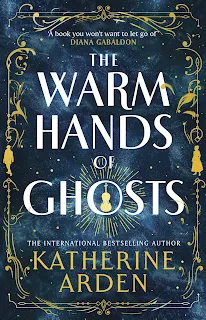
Review: The Warm Hands of Ghosts by Katherine Arden

The Warm Hands of Ghosts by Katherine Arden book cover

* Copy courtesy of Penguin Random House *

Intro

You're not seeing things, what follows is a review of an historical fiction novel set during WWI. I know I've said here on Carpe Librum that I'm - mostly - on a break from WWI and WWII historical fiction, however such is the power of Katherine Arden that I made an exception.

Last year I reviewed The Bear and the Nightingale by Katherine Arden and fell in love with the writing style of this YA urban fantasy / historical fiction series. The Bear and the Nightingale earned a glowing 5 star review and I'm still looking forward to reading the next book in the Winternight trilogy The Girl In The Tower. Therefore I was surprised to see the author pop up in a publisher's catalogue with an adult title The Warm Hands of Ghosts. Seeing it was an historical fiction novel set in WWI, I was keen to see how - or if - the author would bring her love of Russian myths and legends and sense of 'other' to a bloody war and now I have my answer.

Review

I shared this back story because I didn't know what to expect - other than great writing - reading The Warm Hands of Ghosts by Katherine Arden. It's quite possible that if I'd known just how dark the book was going to be, I might not have requested it for review. Having said that, going in blind was the best approach for me and I'm glad I read it.

Laura Iven is a Canadian nurse providing medical care to the soldiers on the Western Front during WWI when she is injured during the bombing of a hospital, discharged and sent back home to Halifax in Canada to recover.

The snappy writing and depth of character was immediately present in the author's writing. Here's one of my favourite observations by Laura:
"Laura tried not to look cynical. Pim appeared simultaneously flattered, delighted to make his acquaintance, and innocently unavailable. She'd probably practiced that expression in a mirror." Page 91
Laura's brother Wilfred (Freddie) is a soldier serving in Belgium and after receiving contradictory news and fearing he might be missing, she risks another deployment and travels back to Belgium in search of him. Volunteering at a private hospital in Flanders, Laura and her colleagues struggle to stay on their feet working for days without rest in the gruelling conditions. Laura speaks to the men as she tends to their wounds and starts to hear strange stories about the Fiddler.

The novel is set in alternate chapters with Laura in present day January 1918 and Freddie's point of view from several months earlier enabling the reader to discover what happens to him. Incorporating elements of the Halifax Harbour explosion from history was a refreshing angle I hadn't come across in WWI literature and it was interesting to learn more about this disaster from the character's perspective.

Laura's brother was named Wilfred in the novel and every time I saw his name on the page I reacted with 'oh, I thought that was going to read Wilfred Owen.' I studied the works of WWI poets Wilfred Owen, Siegfried Sassoon and Robert Graves in a War Literature course at University so I felt rewarded when I noted the following in the Afterword:
"Her brother's name, Wilfred, is a hat-tip both to Ivanhoe and to Wilfred Owen, whose poem "Strange Meeting" was the starting point for Freddie's story." Afterword, Page 378
What a terrific tribute to the poet and for those interested, you can read Wilfred's short poem Strange Meeting in full on the Poetry Foundation website.

The Warm Hands of Ghosts by Katherine Arden is difficult to read at times. It's brutal and graphic yet also tender and achingly beautiful while accurately conveying the destruction and hopelessness of war without flinching away from the horror. Reading this in the lead up to ANZAC Day enhanced my sense of gravitas while reading but the kiss at the end was one step too far for me.

Highly recommended for experienced readers of WWI historical fiction with a strong stomach looking for a new story that stands apart from the rest. Not sure? Read a free EXTRACT.

My Rating:


09 September 2022

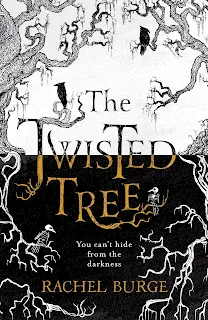
Review: The Twisted Tree by Rachel Burge

The Twisted Tree by Rachel Burge book cover

Reading the blurb for The Twisted Tree by Rachel Burge and finding out the main character Martha can tell things about a person just by touching their clothes, I was immediately sold. 

Discovering this is a young adult debut and part ghost story set in Norway based on ancient Norse mythology was a bonus.

Regular Carpe Librum followers will no doubt have noticed that I don't read much YA at all, but The Twisted Tree reminded me that I still enjoy the odd title every now and again.

Martha is partially blinded in an accident and has run away from home. She travels to Norway seeking answers from her grandmother, desperately hoping she can explain her strange ability to discern memories and emotions just from touching a person's clothes.
"Mum had bought the blouse a few days ago, and it was the first time I'd touched silk. I know from going through her wardrobe that different types of fabric reveal their secrets differently - cashmere holds a person's emotions and makes you feel them like your own; cotton shows images and facts without feeling - but silk is like nothing else. It speaks of deceit." Page 19
Complete with a creepy gothic cover design and easy to read YA thriller building from the opening pages, The Twisted Tree by Rachel Burge was a pleasure to read.

Martha is struggling to come to terms with her changed appearance since the incident that left her blind in one eye, and there is a subtle budding hint of romance that takes place during all of the spooky thrilling action.

The Twisted Tree is the first in a series to feature Martha, and the next one is called The Crooked Mask and was published in 2020. The Crooked Mask continues the story of the two main characters, but I think I'm happy to leave them here, fully satisfied that I finally read this book, after adding it my list back in November 2018.

The Twisted Tree by Rachel Burge is a great choice for October reading, providing some scary and spooktacular moments and a super creepy tree.

My Rating:


13 July 2022

Review: Reasons She Goes to the Woods by Deborah Kay Davies

Reasons She Goes to the Woods by Deborah Kay Davies book cover

I don't know what I just read. Reasons She Goes to the Woods by Deborah Kay Davies is presented in a series of vignettes and is about a girl called Pearl. Each right hand page (in my copy) is a vignette from Pearl's young life, headlined by a brief chapter heading or title on the opposite page. This makes for a quick read, but the vignettes are heavy and force you to consider what's really going on.

Pearl is a troubled girl and I found myself wondering if she's a sociopath, psychopath or suffering from antisocial personality disorder. Perhaps she's just evil? The author's lyrical writing style put me immediately in mind of Sundial by Catriona Ward, in her ability to create an incredibly creepy young girl. When reviewing Sundial earlier this year, I wrote that it was a 'slow burn, disturbing and unsettling read with a hostile undercurrent' which readily applies here.

The prose in Reasons She Goes to the Woods is spellbinding, and Pearl's visits to the woods are full of evocative nature writing which did well to offset some of the tougher scenes. Meanwhile, there is a constant underlying feeling of menace and mounting dread about what Pearl will do next.

Some of Pearl's childhood antics are relatable, and I especially enjoyed the eating competition:
"I will choose two items of food for each of you, she explains, you have to eat them without throwing up. They all think this is a great idea, and start boasting to each other about how they are never, ever sick." Page 133
Pearl chooses a 'blob of corned beef and a teaspoon of cough medicine for Fee', while the kids load up the spoon for Pearl:
"Soon the big spoon is towering with, among other things, a soft sprout, peanut butter, a slick of Vick's rub, a prune and a crumbled stock cube." Page 133
I could totally relate to this game, although in my day it was a tablespoon of soy sauce, a tablespoon of Vegemite or a full glass of water. What fun!

Published in 2014 and going on to win various awards, Reasons She Goes to the Woods by Deborah Kay Davies is literary horror and while the writing is spectacular, I can't say I enjoyed reading it. The lack of dialogue punctuation and page-long paragraphs certainly irritated and Pearl is a sensual and disturbing character. Those who remember watching The Good Son (starring Macaulay Culkin) will be shocked to find Pearl is even worse.

I borrowed Reasons She Goes to the Woods by Deborah Kay Davies from the library and I'll be glad to send it down the return chute and on to the next reader intrigued by the sinister yet alluring blurb.

My Rating:


11 May 2022

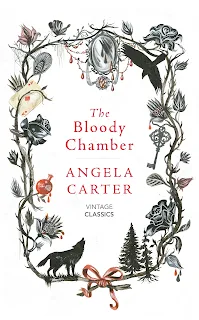
Review: The Bloody Chamber and Other Stories by Angela Carter

The Bloody Chamber and Other Stories by Angela Carter book cover

The Bloody Chamber and Other Stories by Angela Carter sounds right up my alley. Dark and subversive versions of fairy tales and legends told in the gothic tradition? Sign me up! I was so confident I would fall in love with this collection of short stories, I used a Christmas gift voucher to source a stunning little hardback edition back in January 2019. Since then, it's been sitting on my shelves while I enjoyed the anticipation of an automatic 5 star read within my reach. Recently I decided I was in the mood for some short stories - which doesn't happen often - and it was finally time to enjoy the collection. Sadly, I was quite disappointed.

The writing is superb, there's no doubt about that. And I'll never look at a cat or a ham bone in the same way again after this description from the Puss-In-Boots story:
"I went about my ablutions, tonguing my arsehole with the impeccable hygienic integrity of cats, one leg stuck in the air like a ham bone; I choose to remain silent. Love? What has my rakish master, for whom I've jumped through the window of every brothel in the city, besides haunting the virginal back garden of the convent and god knows what other goatish errands, to do with the tender passion?" Page 114 Puss-In-Boots
Saving this quote to include in my review and re-reading it again now, I'm once again stunned that this wasn't a great reading experience. I'm going to be giving this collection 3 stars, but how is that even possible with writing like this?
"It is winter and cold weather. In this region of mountain and forest, there is now nothing for the wolves to eat. Goats and sheep are locked up in the byre, the deer departed for the remaining pasturage on the southern slopes - wolves grow lean and famished. There is so little flesh on them that you could count the starveling ribs through their pelts, if they gave you time before they pounced. Those slavering jaws; the lolling tongue; the rime of saliva on the grizzled chops - of all the teeming perils of the night and the forest, ghosts, hobgoblins, ogres that grill babies upon gridirons, witches that fatten their captives in cages for cannibal tables, the wolf is worst for he cannot listen to reason." Page 186 The Company of Wolves
As you can see, Carter's writing is thought provoking and often made me stop to reflect. That was certainly the case when reading the last story in the collection about a girl raised by wolves:
"Like the wild beasts, she lives without a future. She inhabits only the present tense, a fugue of the continuous, a world of sensual immediacy as without hope as it is without despair." Page 202 Wolf-Alice
There's much to dissect in this relatively short collection, but I'm certain that many of the fairytale references went way over my head. Angela Carter died in 1992, so thankfully I don't have to worry that she'll ever see this review and disapprove of my meagre criticisms, but geez, how many hyphens and semi colons do you need? At one point I put the book down to Google 'angela carter semi colons' and was reassured to find I'm not the only reader who finds it a tad excessive.

I loved the writing style in The Bloody Chamber and even relished having to put the book down to expand my vocabulary by looking up a new-to-me word. However, I found the stories to be a little too obscure for my overall enjoyment. While reading this, I made a note that if I'd been studying it in a university setting, breaking it down and analysing the literary references cleverly contained within, I'd be writing a completely different review.

Read in isolation though, I enjoyed the language and the gothic undertones on every page, but overall, this collection never took me to the dizzying literary classic heights I had expected to reach.

My Rating:


27 April 2022

Review: Sundial by Catriona Ward

Sundial by Catriona Ward book cover

* Copy courtesy of Allen & Unwin *


It's almost a year ago since I read The Last House on Needless Street by Catriona Ward and gave it 3 stars in my review, so I was a little surprised to receive her latest release, Sundial. With its stunningly menacing and striking cover design, how could I refuse? Sundial is completely different however somehow just as messed up as The Last House on Needless Street. Both novels are literary horror with a gothic touch, however Sundial introduces a level of science fiction to the mix.

Set deep in an isolated area of the Mojave desert, mother of two girls Rob is worried about the safety of both of her daughters. Callie is afraid of her mother and acting strangely by collecting tiny animal bones. Rob's relationship with her husband is strained and in an effort to sort out their family problems, Rob takes her eldest daughter back to her childhood home for some one-on-one time together.
"Everyone has one story that explains them completely. You are very special, because you have two. They used to be mine, and I passed them down to you." Page 276
Here the reader learns about Rob's childhood which begins to inform the behaviour of the other family members. This is a slow burn, disturbing and unsettling read with a hostile undercurrent. You might expect a high body count in a literary horror novel, but this isn't a bloody read. Sundial is psychologically troubling and will force you to consider what you might do if faced with some of the character's choices.

There are some clever moments in passing, however my favourite moment was on page 162 when Rob entered the code 112263 to open a lock. Did you pick it too? (Sorry, couldn't resist). This is the title of a Stephen King book 11.22.63 and the date JFK was assassinated. I'm not sure if Ward is a JFK or King fan, but it was definitely a fun easter egg to find.

Sundial by Catriona Ward is a gothic literary horror novel about motherhood, sisters, and nature versus nurture and isn't for the faint at heart.

My Rating:


26 May 2021

Review: The Last House on Needless Street by Catriona Ward

The Last House on Needless Street by Catriona Ward book cover
* Copy courtesy of Allen & Unwin *

Literary horror anyone? Until this month, I was unfamiliar with the literary horror genre, but it's fair to say The Last House on Needless Street by Catriona Ward fits squarely within this sub-genre.

Since then, I've discovered that several titles I've read and reviewed actually fall into the literary horror genre, including:

Sour Candy by Kealan Patrick Burke ⭐⭐⭐⭐
The Turn of the Screw by Henry James ⭐⭐⭐
The Historian by Elizabeth Kostova ⭐⭐⭐⭐⭐
* Countless novels by Stephen King
Let the Right One In by John Ajvide Lindqvist ⭐⭐
The Road by Cormac McCarthy ⭐⭐⭐
Melmoth by Sarah Perry ⭐⭐⭐
The Silent Companions by Laura Purcell ⭐⭐⭐⭐
Dracula by Bram Stoker ⭐⭐⭐⭐⭐
The Little Stranger by Sarah Waters ⭐⭐⭐

Now that we're all suitably oriented, what can you expect inside this hauntingly enticing cover of The Last House on Needless Street? A mysterious mind f*** of a novel, that's what you can expect. In fact, the blurb tells us as much.
This is the story of a murderer. A stolen child. Revenge. This is the story of Ted, who lives with his daughter Lauren and his cat Olivia in an ordinary house at the end of an ordinary street.

All these things are true. And yet some of them are lies.
The unreliable narrator is a well-worn trope now and I thought that's what I was going to encounter here, but I was swiftly forced to think again.

The Last House on Needless Street is a dark novel that begins as an unassuming mystery luring you in chapter by chapter until all of a sudden, the light has gone, a shiver crawls across your back and you're immersed in the murky depths of the plot.

The reader will need to accept the dynamic between the multiple narrators, Ted, Olivia, Lauren and Dee, including the fact that one of them is a cat. I don't mind an unusual narrator, and I actually enjoyed the chapters narrated by the cat.

Being a middle aged reader, I was familiar with the literary plot device towards the end (both in fiction and in real life) so it didn't catch me completely off guard, however younger readers (or those less engaged with certain topics) will have their minds blown when they get to the 'cut and thrust' of what's happening in the story. But don't worry, no spoilers here.

The Last House on Needless Street by Catriona Ward is for readers with the stomach to plow ahead regardless of content warnings and those who enjoy a dark psychological thriller with literary leanings.

My Rating:


12 March 2021

Review: Elsewhere by Dean Koontz

Elsewhere by Dean Koontz book cover
* Copy courtesy of Harper Collins *

Elsewhere by Dean Koontz is a father and daughter novel starring Jeffrey Coltrane and his daughter Amity. A homeless man by the name of Ed gives Amity's Dad a device for safekeeping. Ed tells him it's the key to everything but warns him never to use it, promising it will only bring misery and terror.

Naturally this wouldn't be a Koontz novel if the device wasn't used, and the action kicks off from there.

The key to everything is actually a device that ports the holder to an alternate world, or parallel universe. As expected, there is a cashed up black ops group who will do anything to obtain the key and a chase ensues. Will Amity and her Dad survive?

The plot is 'nothing new' but eleven-year-old Amity is undoubtably the star here. She is courageous and smart, with most of her learning coming from books which gained instant appeal with this reader. As a result of Amity's shared love of reading with her father, much of the book is very meta when they refer to stories and what happens to the heroes and the villains. Like this example from Amity:
"People in stories were always preparing themselves for the worst, which rarely happened. When the plucky girl or the stalwart hero died, then either the book sucked or it had deep meaning. Nobody wanted to read sucky novels, and those people who wanted deep meaning didn't want it in every damn story." Page 223
I enjoyed this shared love of stories, however the fact that Jeffrey was called Jeffy throughout the novel quickly got on my nerves. It would seem I have very little tolerance for names like this for an adult character.

Having said that, Elsewhere was an action packed palate cleanser and something a little different to my usual reading fare. Here's Ed's perspective:
"Understand, many timelines are as hospitable as this one, some even better. But across an infinite multiverse of worlds, you can find all the evil realms that humanity has imagined - and some beyond imagining. I'm burnt out on travel. I haven't the nerve for it anymore. My heart can't take it. I was a pacifist once. A pacifist! I'm not anymore. I am armed. I can kill. The things I've seen...they've changed me. I don't want to be changed more than I've already been. I don't want the multiverse. All I want is a home, books, and the peace to read them." Page 174
In reading Elsewhere, I could just as easily have been reading a Stephen King novel with an examination of fate, destiny and love forming the overarching themes. Of course, the characters encounter more than their fair share of danger and horror in some of the multiverses they visit and the threats they face, bringing the overall lessons learned into sharper focus.
"Life was an infinite library of stories, and in every story, a girl such as Amity learned an important lesson, sometimes more than one, whether she was a highborn child of royalty or a milkmaid." Page 352
Elsewhere by Dean Koontz is an action packed science fiction novel about parallel universes and it was a good read.

My Rating:


13 August 2020

Review: Flyaway by Kathleen Jennings

Flyaway by Kathleen Jennings book cover
* Copy courtesy of Pan Macmillan *


Written by Australian Kathleen Jennings, Flyaway is a novella full of stories within stories, delivered in a shroud of myth, legend, folklore and superstition that kept me guessing.

Our protagonist Bettina has a mysterious past and she's determined to find out what happened to her brothers - and herself - several years ago.

Set in outback Australia, the beautiful writing, evocative descriptions and imagery brought the once familiar landscape to life in a new and eerie light. The rural area was both peaceful and menacing, the town a haven for a close knit community as well as a place seething under the surface with fear and mistrust.

A combination of urban fantasy and magical realism, Flyaway is full of mysterious disappearances, creatures that lurk in the shadows and a slight otherness that you can never quite put your finger on.

The structure, lyrical prose and fairytale elements reminded me a great deal of The Starless Sea by Erin Morgenstern. And just like that book, I enjoyed the writing, the world building and stories within stories, but I was never confident of maintaining a full and clear picture of what was actually happening at any given time.

Presented with an exquisite cover design and french flaps, Flyaway is a gothic Australian fairytale that might just penetrate the pages into your subconscious.

After letting this book settle in my mind, I realised I feel the same way about this as I do The Starless Sea. I loved it but there were definitely elements of reader confusion and matters unresolved. For instance, I wanted to learn more about Bettina's mother and her own transformation during the intervening years.

Nevertheless, Flyaway is a smashing literary debut by Kathleen Jennings and I'm sure awards will follow.

Carpe Librum!
 
My Rating:

19 December 2019

Review: The Dumb House by John Burnside

The Dumb House by John Burnside book cover
I wanted to read another classic before the year ends and this time I picked up The Dumb House by John Burnside. A Vintage Classic published in 1997, this is a very dark poetic novel I've been looking forward to reading for years.

Told in the first person by our reclusive and strange bachelor Luke, this is a short novel about his search for proof of the living soul. Luke has concluded that communication is the basis for the soul, and wonders whether children raised without language will have the means to develop thoughts. Furthermore, if a person has no language to form coherent thoughts, do they have a soul?

The premise of the book is an experiment whereby Luke raises children without ever exposing them to language. Keeping them in isolation and constantly observing their behaviour, our protagonist is on alert for any evidence of a newly developed language or means of communication.

I thought the book would focus on the experiment and the results, but just as in The Warlow Experiment by Alix Nathan, the storyline deviated from the experiment. We learn about Luke's unusual upbringing and his odd relationship with his mother in addition to his depraved activities with women he is attracted to.

Luke is a despicable and deranged man and while I've always been interested in reading from the perspective of the 'bad guy' so I can find out what makes them tick (e.g. You by Caroline Kepnes and Hangman by Jack Heath), on this occasion I felt like I needed to wash my hands each time I set this book down.

It really is a grubby little book full of beautiful poetic writing with a very dark and twisted core at its centre. I really don't know how it became a Vintage Classic, other than the fact it explores the ideals of what makes us human, the makeup and location of the soul and the importance of language and communication within society.

There's no doubt these philosophical ideas are worthy of examination, I just wish I'd explored them from a better vantage point. There was no redeeming conclusion to the novel either, just the hinted continuance evident in The Choke by Sofie Laguna. Life goes on.

My apologies to anyone who has heard me rave about this book or seen it on my TBR and added it to theirs. Not recommended.

Carpe Librum!


My Rating:
★ ★ ★ ★

03 July 2019

Review: Pan's Labyrinth - The Labyrinth of the Faun by Guillermo del Toro & Cornelia Funke

Pan's Labyrinth - The Labyrinth of the Faun by Guillermo del Toro & Cornelia Funke book cover
* Copy courtesy of Bloomsbury *

We're all familiar with book to movie adaptations (and each have our favourites) however we rarely see the reverse, the movie to book adaptation. Yet that's what we have here.

The 2006 film Pan's Labyrinth was written and directed by Guillermo del Toro and won 3 Academy Awards. Now he's teamed up with bestselling author and illustrator Cornelia Funke (Inkheart trilogy) to produce this dark fantasy novel Pan's Labyrinth - The Labyrinth of the Faun.

Set in 1940s Spain, Ofelia and her pregnant mother are forced to move in with her new husband Vidal, an evil man serving as a Captain in the Spanish Army. Vidal and his soldiers are charged with capturing the rebels in the forest intent on disrupting and undermining the Francoist dictatorship.

Ofelia is unhappy in her new surroundings and clings to her books for solace. She is obsessed with fairytales and the story takes off when she sees a real fairy in the forest and is given a set of tasks to do as part of a quest.

This is a dark fairytale for adults that is overflowing with fable, folklore and fairytale, including the following familiar tropes: the evil stepfather, the lost princess, a magical book, an enchanted forest, a quest, magical animals, a maze, good versus evil and more.

I immediately fell in love with Ofelia and really felt for her plight. My reading experience was further enhanced by the haunting illustrations that brought the magical realism of the story to life. And don't you just love that cover?

There is real violence here, although viewers of the movie and readers of the original Grimms' Fairy Tales won't be surprised. Despite this, Ofelia's bravery and heart shine through and the side stories of witches and curses were well placed and added further layers to the story.

I haven't seen the movie, but after enjoying the novel so much it's definitely going on my list.

Pan's Labyrinth - The Labyrinth of the Faun by Guillermo del Toro and Cornelia Funke is a spellbinding read and highly recommended!

My rating = *****

Carpe Librum!
27 November 2017

Review: Sleeping Beauties by Stephen King & Owen King

* Copy courtesy of Hachette Australia *

Sleeping Beauties is a collaboration between father and son, and is written seamlessly. Stephen King and his son Owen have teamed up to explore what happens when the women in the world succumb to a sleeping sickness. But there's always one exception to the rule and Eve doesn't fall victim to the illness. Is she the devil or their saviour?

Women fight to stay awake, but when they eventually fall asleep they're quickly covered in a cocoon of gauzy web-like substance. The book eventually explains this, but as in Under The Dome, the novel is more about what happens to the people left behind and how they react. There were many unanswered questions by the end, but I think you just need to 'go with it' - as in Cell and UR - and give yourself over to the premise.

Told in multiple points of view from many many characters in the town of Dooling in West Virginia, the plot unfolds quite rapidly over a relatively short period of time. Much of the story takes place at a women's prison which King writes very well and some readers will enjoy the parallels to other novels in the King canon.

Sleeping Beauties unashamedly and unapologetically raises and explores the issue of gender politics, clearly - in my opinion - siding with the women. Some feminists are likely to find themselves nodding along, while it wouldn't surprise me if this irked a few readers; me included.

The climax of the book for me took place at the prison, and this scene is begging to be played out on the big screen. The multiple points of view and rolling action does make for a massive tome though, and Sleeping Beauties comes in at 700+ pages. At the end of the day, it's a hefty read and I think it would work better as a movie or TV mini series. With the recent success of Stephen King adaptations, this has a good chance of happening.

My rating = ***

Carpe Librum!
09 December 2016

Review: Suicide Forest by Jeremy Bates

Aokigahara is a real forest located in Japan (often called the demon forest) where a large number of people go to commit suicide each year. Jeremy Bates has chosen this location as his setting for the aptly named Suicide Forest, part psychological thriller part horror novel.

I've always been fascinated by this place, and some of you might remember Aokigahara was mentioned in my review of Atlas of Improbable Places - A Journey to the World's Most Unusual Corners by Travis Elborough and Alan Horsfield last month.


Well, reading about the place in the Atlas is what prompted me to bump this book up the list in my TBR pile and I'm so glad I did.


From the blurb alone, you might be expecting a B grade thriller without substance, but you'd be dead wrong. I was on the edge of my seat the entire time, and the sense of foreboding was as palpable as if it were written by the pen of Stephen King.

The forest and the geography of the landscape is the most haunting element of Suicide Forest, and what happens to the young tourists who visit to check it out gives the reader definite cause for concern. There are also many light moments to offset the grim and frightening surrounds and the dialogue between the tourists often had me chuckling aloud.

Suicide Forest is the first novel in the World's Scariest Places series by Bates and is a ripping read. I encourage those who may not read from this genre to ignore the cover and plunge right in.

My rating = *****

Carpe Librum!
18 May 2016

Review: Nyctophobia by Christopher Fowler

Nyctophobia is a fear of the dark (or darkness) and is the perfect title for a novel, don't you think? Paired with an appropriately dark and spooky cover, Nyctophobia by Christopher Fowler ticks the box in a number of genres, including: science fiction, urban fantasy, supernatural and mystery of the highest order.

I'm still reeling from this book. I adored it, it was a five star read..... right up until the ending. This book had me in its grip, but it ended one sentence too soon, argh!!

I haven't stopped thinking about it, and the premise was brilliant. The new owner of Hyperion House in Spain moves in with her husband and agrees to keep on the old housekeeper and gardner. The housekeeper tells her the servants quarters of the grand house never see sunshine and are always locked, refusing to give her the keys. 

Callie won't let it go and wants to know more. Having suffered from nyctophobia as a child, Callie's old fears threaten to resurface when she finally learns what - or who - is occupying the servants quarters.

I won't say anything more, you really need to experience this book for yourself. I wanted a particular ending and my reading experience was scarred when I didn't get it, but Nyctophobia will be up there as one of my favourite reads of the year, I'm sure of it.

My rating = ****

Carpe Librum!
20 April 2016

Review: Sour Candy by Kealan Patrick Burke

Sour Candy is contemporary horror, and at only 67 pages, this novella is a quick and easy read. Don't be fooled though, author Kealan Patrick Burke manages to pack a punch from the very first page.

How's this for an opening sentence:
Four months to the day he first encountered the boy at Walmart, the last of Phil Pendleton's teeth fell out.
I was hooked from the start, and the concept is brilliant: Phil sees a strange boy in a grocery store who later turns up at his house calling him Daddy. Phil has no idea where the boy came from, but everyone around him believes Adam is his son. The other-worldly child wears odd clothes and will only eat sour candy, hence the title of the book.

If you like the feeling when the hairs on the back of your neck start marching towards the top of your skull, then Sour Candy is definitely for you. Also recommended for fans of Stephen King and Dean Koontz.

My rating = ****


Carpe Librum!
26 February 2016

Review: Revival by Stephen King

Stephen King's novel Revival is what I'd call a slow burn. Covering themes of family, addiction and faith, Revival spans 50 years in the life of Jamie Morton and his priest, Reverend Jacobs.

Reverend Jacobs is obsessed with the power of electricity and he discovers he has the power to heal people. But does he heal with faith or science or is the whole thing just a con?

Although not a standout bestseller when compared to other novels in Stephen King's vast body of work, Revival contains an interesting plot exploring some big issues and showcasing some great writing along the way. Here's my favourite quote from page 60:

"Her blond hair was underground now, growing brittle on a satin pillow in the dark." 
Oh my gosh, that still gives me the creeps! The best part of Revival was Jamie Morton's childhood growing up in New England. Stephen King has an unbeatable talent for writing young characters and the first quarter of the book had me chuckling and smiling, and the remainder of the book had me (and Jamie) yearning for the innocence of those early years.

Promotional material claims Revival is a 'masterpiece from King, in the great American tradition of Frank Norris, Nathaniel Hawthorne, and Edgar Allan Poe' although I'd have to disagree. Revival was an enjoyable story and a great page turner with a few flashes of brilliant writing, but it wasn't a knock-out for me.

My rating = ***


Carpe Librum!


This month it was announced that Revival has been adapted for the big screen by Josh Boone and is being reviewed by Universal Pictures, so let's hope we see it on the big screen.
05 April 2015

Review: Naomi's Room by Jonathan Aycliffe

Naomi's Room by Jonathan Aycliffe book cover
Naomi's Room by Jonathan Aycliffe is the best 'ghost story' I've read in a long time.

Four year old Naomi goes missing from a toy store on Christmas Eve when shopping with her father and is later found murdered.

A photographer watching the house during the case captures Naomi's image on his camera and Naomi's father is disturbed by strange sounds in the house. Investigating the history of the family home, he also discovers some horrific secrets.


Naomi's Room is a classic ghost story, however I was thrilled when it took an unexpected turn. I believe this change took courage from the author but I want to be clear that it's not a twist (e.g. the narrator is not a ghost or anything). 

The plot was so refreshing that it took this novel from a solid three stars to an easy four stars for me. I highly recommend Naomi's Room for those who enjoy a quick and easy ghost story with a touch of horror.

My rating = ****

Carpe Librum!
18 March 2015

Review: The Shining by Stephen King

The Shining by Stephen King book cover
The Shining by Stephen King hardly needs an introduction at all. Most readers have either read the book, seen the movie or at least know the premise behind this thriller from the storytelling master of the page, Stephen King.

Being such a fan of Stephen King's works, I thought it was about time I read his 1977 classic and I wasn't disappointed. I won't bother re-hashing the well-known plot, except to say that young Danny and the chef-come-mentor Hallorann were my favourite characters.

The decline of Danny's father in the Overlook Hotel was convincing and creepy, although my favourite scene from the movie - where it is revealed that instead of writing his play, Jack has been writing the phrase 'all work and no play makes Jack a dull boy' over and over again on his typewriter - is not in the original novel. 

Reading The Shining has renewed my interest in the movie and I hope to watch it again soon. I have a copy of the sequel released in 2013, Doctor Sleep and look forward to finding out what became of Danny and his psychic gifts or the ability to shine.

So, have you read The Shining, and/or watched Stanley Kubrick's movie The Shining? Which did you prefer?

My rating = ****

Carpe Librum!

N.B. This book counts towards my participation in the Mount TBR Reading Challenge 2015.