07 August 2023

Review: The Puzzler by A.J. Jacobs

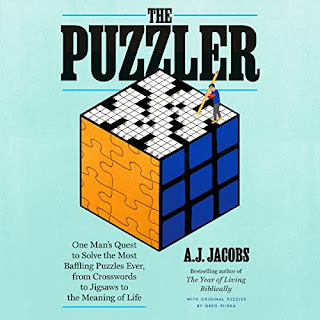
The Puzzler - One Man's Quest to Solve the Most Baffling Puzzles Ever, from Crosswords to Jigsaws to the Meaning of Life by A.J. Jacobs audiobook cover

This audiobook was a sheer delight! With a smooth and uniquely distinctive voice, author and puzzler A.J. Jacobs takes us on a tour of puzzles and the people who love them in The Puzzler - One Man's Quest to Solve the Most Baffling Puzzles Ever, from Crosswords to Jigsaws to the Meaning of Life. The author's first love is crosswords, but he succeeds in taking us on a balanced and thoroughly satisfying tour through the world of puzzles.

A solver is a person who does puzzles, and in the book Jacobs interviews many who dedicate their lives to creating or solving a variety of puzzles. He covers a broad range of puzzles, including: anagrams; ciphers and codes; crosswords and cryptic crosswords; chess; jigsaw puzzles; riddles; Rubik's cube; logic problems, sudoku and more.

Jacobs shares his experiences with each of the puzzle types and I especially enjoyed his story about entering an international jigsaw puzzle competition with his family. This led me down a jigsaw rabbit hole, watching a short documentary about the mind blowing jigsaw competition that sees solvers given a series of brand new previously unreleased puzzles from Ravensburger as they compete to solve them. There are solo events, pairs and team events and it's a fascinating sub-culture.

When defining what a puzzle is, Jacobs declares a puzzle will almost always:
"... cause the solver to experience a period of difficulty and struggle, followed by relief. They provide an a-ha moment, tension leading to, an almost, well, orgasmic ending." Chapter 2: The Puzzle of Puzzles.
Jacobs involves the reader at every opportunity, creating a bonus puzzle time for audio listeners, and providing a PDF with 100+ pages of puzzle examples and supporting material for the book. Some of the puzzles mentioned sent me on a nostalgic trip down memory lane, or inspired me to seek out more info. Did you know the world's largest puzzle is from Ravensburger and contains 40,320 pieces? It's estimated that if a solver spends 2 hours per day working on the puzzle, it will take an entire year to complete it!

The author is serious about his puzzling, checking every night without fail for the online release of his favourite puzzles, and volunteering to tackle some of the hardest puzzles in the world. The Japanese puzzle box desk sounded incredible and I longed to see it in person.

Jacobs explores why so many of us love puzzles, concluding that the art of puzzling is 'bafflement, wrestling and solution'. Some of us become bored or frustrated and give up at the bafflement or wrestling stage, but Jacobs discusses the pleasure to be had from the mental and intellectual effort and the sense of accomplishment that follows when a puzzle has been solved. His enthusiasm for the topic is infectious and I enjoyed this tantalising look into the puzzle world.

I enjoy a puzzle myself, and am still doing the daily Wordle and - thanks to this book - occasionally taking on the Spelling Bee by The New York Times. I've asked myself how I can give an audiobook about puzzles my top rating of 5 stars, because that's what I'm about to do.

All I can say is that I had such a great time reading this. I was inspired to share some of the riddles and puzzles with my husband and we had a good laugh solving them (or not) together. As I said, The Puzzler by A.J. Jacobs was an absolute delight. I looked forward to listening to a chapter or so each day and was sorry when I 'solved' the last one.

Highly recommended!

(For more like this, check out my review of It's All A Game - A Short History of Board Games by Tristan Donovan).
My Rating:
★ ★ ★ ★ ★


02 August 2023

Review: The Night Circus by Erin Morgenstern

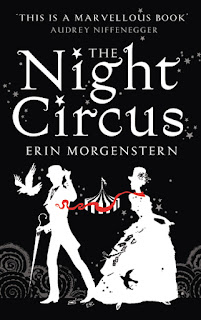
The Night Circus by Erin Morgenstern book cover

"The circus arrives without warning."
The opening lines of The Night Circus by Erin Morgenstern draw the reader into a whole new world, where magic is real and those with the gift disguise their talent as illusionists or magicians. Two magicians are pitted against each other as youngsters in a challenge that lasts their lifetime, eventually converging at the circus.

Beginning in 1873, the travelling circus of the title is known as Le Cirque des Rêves (The Circus of Dreams) and is only open at night. The magic deployed by performers at the circus is to delight, entertain and astonish those who visit, and the circus is a wonderland more than the centre of any magic battle.

Elite circus personalities regularly attend an exclusive midnight dinner party when they're not working, and my mouth was watering at the tasty morsels and decadent cuisine described, but check out the desserts:
"The desserts are always astonishing. Confections deliriously executed in chocolate and butterscotch, berries bursting with creams and liqueurs. Cakes layered to impossible heights, pastries lighter than air. Figs that drip with honey, sugar blown into curls and flowers. Often diners remark that they are too pretty, too impressive to eat, but they always find a way to manage." Page 69
It was here in the book that I noticed the prose reminded me of the descriptive writing style I enjoyed in The Starless Sea; momentarily forgetting that it's by the same author!! While at the same time patting myself on the back for noticing the similar descriptive style, should I be concerned that I failed to remember the same author penned both urban fantasy novels?

The circus performers are talented and Padva was a terrific character, impeccably described here:
"On this evening, Mme. Padva wears a dress of black silk, hand embroidered with intricate patterns of cherry blossoms, something like a kimono reincarnated as a gown. Her silver hair is piled atop her head and held in place with a small jeweled black cage. A choker of perfectly cut scarlet rubies circles her neck, putting forth a vague impression of her throat having been slit. The overall effect is slightly morbid and incredibly elegant." Page 70
Wouldn't you give anything to see her? The Night Circus is begging to be adapted for the big screen, and a quick search confirms the TV and film rights were optioned years ago. The alluring black and white striped tents, the incredible illusions and the otherworldly clock are ripe for cinematic interpretation, all that's missing is the smell of caramel and popcorn.

The power of The Night Circus is the circus itself, held together with evocative writing and the power of description. Not a lot happens between the characters, with an overarching theme driving the plot but without much action. I was expecting a dramatic showdown, denouement or climax that never arrived, thinking perhaps this would happen in the next book. Not so.

I've punched my ticket to The Night Circus later than most, with the success of the book at its peak in 2011. I remember deciding whether or not to request a copy for review, however I'm not really into circus settings or young adult romance, so decided not to. After enjoying The Starless Sea, I'm glad I decided to give this urban fantasy meets historical fiction novel a chance.

A word about editions. I love seeing hardbacks with a sprayed edge, and The Night Circus has produced some of the most stunning editions of any book I've ever seen and I still drool over the deluxe editions and fan art readers have come up with.

Previous visits to the circus on my reading calendar include:
If you want to read about magic showdowns, battles and duels, you won't find it here. If you want to have your imagination stretched and your senses stimulated in a light young adult romance set in the Victorian era with magic, then you will be entranced by The Night Circus by Erin Morgenstern. Just don't forget to wear a red scarf. 

My Rating:
★ ★ ★ ★ ★


31 July 2023

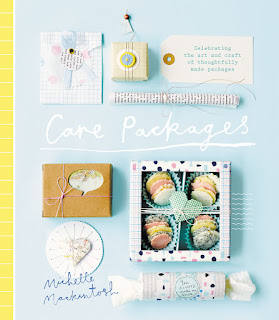
Review: Care Packages by Michelle Mackintosh

Care Packages by Michelle Mackintosh book cover

A few years ago, I adored reading Snail Mail: Rediscovering the Art and Craft of Handmade Correspondence by Michelle Mackintosh so much that it made my Top 5 Books of 2015 list. Snail Mail is all about re-discovering the art of sending cards and letters in the post and is chock full of inspirational ways to beautify your mail. It really is a love letter to snail mail and my review struck a chord with other readers.

A year later, the author published Care Packages - Celebrating the Art and Craft of Thoughtfully Made Packages by Michelle Mackintosh and I've been happy in the knowledge this book has been out there in the world waiting for me. Do you ever feel like that?

The recent overhaul of the inter library system at my local library has reinvigorated my determination to make better use of the resources and finally get to some of the books lingering on my virtual TBR list. Surprisingly, a total of 85 of the 186 books on my TBR list are available via an inter library loan which is terrific news. However, the nature of inter library loans means books can take a few weeks/months to arrive and with a limit of 3 at any one time, it's going to take quite a while to get through this list, but what fun!

Do you read books from the library? Do you have a system or preference for which books to borrow and when? Okay, back to the task at hand.

Care Packages is beautifully presented in a delightful hardback cover, and the content is enticing for lovers of snail mail, mail art and gifts in general. I did find the ideas presented started to sound a little 'samey' and those photographed all demonstrated a very similar aesthetic with a clear Japanese influence. If you're a stationery lover like me, you'll know that the Japanese love their stationery, specialty paper, stickers, washi tape, mini printed paper bags and cute stuff. If I ever get back to Japan, stationery stores and an owl cafe will be top of my list, but must everything be wrapped with string?

The author has lived in Japan and as well as being a writer, she's an illustrator and designer with her own range of wrapping paper, how about that! I understand Michelle Mackintosh lives in my home town of Melbourne, yet her Japanese influences are clearly evident in this book.

Care Packages by Michelle Mackintosh is bursting with attractive colour themes and plenty of care packages on show, but it didn't inspire me in the same way as Snail Mail. The layouts and designs included were appealing with plenty of vintage paper and creativity on show, but the unifying design aesthetic didn't lend itself to plenty of variety in colour palette or ideas.

If you are new to the topic, I highly encourage you to check out Snail Mail: Rediscovering the Art and Craft of Handmade Correspondence by Michelle Mackintosh first. My copy still sits proudly on my shelf having survived multiple bookshelf culls and I'll never part with it.

My Rating:
★ ★ ★ ★ ★


27 July 2023

Review: Bizarre by Marc Dingman

Bizarre - The Most Peculiar Cases of Human Behavior and What They Tell Us about How the Brain Works by Marc Dingman book cover

I was in the mood for another engaging audiobook experience like Gory Details by Erika Engelhaupt recently, when I picked up Bizarre - The Most Peculiar Cases of Human Behavior and What They Tell Us about How the Brain Works by Marc Dingman.

The best chapter of the book by far was the chapter on Obsessions and the prevalence of pica, an eating disorder that makes patients eat things that most people would find unpalatable. Dingman includes cases where patients have eaten cigarette ashes, raw potatoes, burnt matchsticks, toothpaste and hair. It reminds me of the TV show Strange Addiction I once watched where an American woman was eating 'cushion' (foam from the inside of cushions and mattresses) and another was eating cigarette ashes.

Chapter 10 Out of Time included an interesting case of time agnosia, and Chapter 10 No Imagination reminded me of a case in my own family of a person unable to visualise in their mind's eye. The inability to produce mental imagery is known as aphantasia and it's estimated only 1-3% of the population have it.

Many different forms of agnosia and neurological disorders were covered, but none seemed bizarre or peculiar at all. Perhaps the title was too sensational, or I've been desensitised over the years having already learned about these conditions elsewhere and they're no longer strange and engrossing to learn about.

An annoying overuse of the word 'thus' at the start of sentences and 'such as' throughout the audiobook were draining and I felt for the narrator, who must have been hanging for the author to change up their opening lines.

Bizarre - The Most Peculiar Cases of Human Behavior and What They Tell Us about How the Brain Works by Marc Dingman was an informative listen and is recommended for those with an interest in neuroscience and/or brain science.

My Rating:
★ ★ ★ ★ ★


25 July 2023

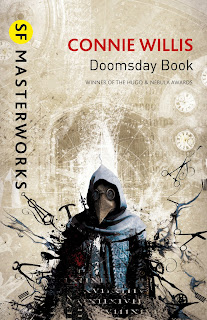
Review: Doomsday Book by Connie Willis

Doomsday Book by Connie Willis book cover

Published in 1992, Doomsday Book by Connie Willis is now considered a modern science fiction classic. I'm not usually a fan of time travel novels, however the premise for Doomsday Book is me to a T. This was a gift from a dear yet distant friend who knows my reading tastes and I trust her implicitly. I don't know why it took me 5 years to get to it, but some books rest patiently on our shelves waiting for the right moment, and that moment finally arrived.

In the not too distant future, historians can travel back in time as observers forming part of their field study. Unable to influence much or make any significant changes to history, we join a band of students and scholars at Oxford university where time travel for a few weeks at a stretch is not shocking.

Sounds amazing doesn't it? Kivrin wants to travel back in time to 1300s Oxford and is in a rush to do so, but the preparation usually takes years as Professor Dunworthy explains:
"And I want you to learn Church Latin, Norman French and Old German, in addition to Mr Latimer's Middle English. You'll need practical experience in farming - milking a cow, gathering eggs, vegetable gardening" he'd said, ticking them off on his fingers. "Your hair isn't long enough. You'll need to take cortixidils. You'll need to learn to spin, with a spindle, not a spinning wheel. The spinning wheel wasn't invented yet. And you'll need to learn to ride a horse." Page 9
Despite some detailed planning, Kivrin is still ill-prepared for what greets her when she arrives and this was the best part of the book. While Kivrin is trying to establish her whereabouts on arrival, the story splits into a dual narrative, with Kivrin in the 1300s and Professor Dunworthy in the 21st century.

Dunworthy's setting was dominated by a health crisis unfolding at the university in a seemingly unending number of phone messages, missed and unanswered calls. Many of the characters in this part of the story were hampered by an inability to talk to each other on the regular due to the phones being engaged. This was an incredibly frustrating plot device (if it indeed was that) and seemed so petty and small when compared to what Kivrin was encountering, and I longed to return to the action unfolding there, 700 years in the past.

This book has been out for more than 20 years now, so I don't think it's a spoiler to point out there is an unfolding influenza pandemic as part of the novel and it was a little close to home so soon after our own. In fact, I wonder if academics and scholars will write about the shocking similarities between fictional pandemics and the real deal some day. In Doomsday Book, Dunworthy and his colleagues and students in Oxford ran out of toilet paper, crazy when you think Willis wrote this 20 years ago and couldn't begin to imagine - yet she somehow did - how true to life her characters really were.

When villagers in the town start becoming sick, they will need to decide if Kivrin is an angel of hope or responsible for bringing the sickness to the village. Will she survive long enough to return to her own time?

Professor Dunworthy did his best to dissuade Kivrin from making the journey in the first place, being sure to tell her of the dangers:
"Life expectancy in 1300 was thirty-eight years," he had told her when she first said she wanted to go to the Middle Ages, "and you only lived that long if you survived cholera and smallpox and blood poisoning, and if you didn't eat rotten meat or drink polluted water or get trampled by a horse. Or get burned at the stake for witchcraft." Page 39
The title of the book is a reference to the Domesday Book - this is how they spelled 'Doomsday' in Middle English - a manuscript recording the results of a land survey conducted in England and Wales and completed in 1086. When Kivrin visits the 1300s, she has a recorder designed as a bone spur in her wrist and she can 'record' by bringing her hands together in prayer and talking into the concealed microphone. I loved the ingenuity of this! If Kivrin dies unexpectedly, the technology won't be exposed or look out of place. Not even if her body is skeletonised and discovered in the next few centuries.

Thankfully the novel didn't get too timey-wimey (if she doesn't make it back to the rendezvous, then should they start excavating the local cemetery looking for her remains and all important recorder?) and there was a satisfying conclusion, although I did want more.

This combination of science fiction and historical fiction is right up my alley, and I suspect that's why my friend chose this for me and the reason I enjoyed Eifelheim by Michael Flynn. Thanks Kel, I loved it!

Highly recommended.

My Rating:
★ ★ ★ ★ ★


22 July 2023

Review: The Dirt on Clean by Katherine Ashenburg

The Dirt on Clean - An Unsanitized History by Katherine Ashenburg book cover

The Dirt on Clean - An Unsanitized History by Katherine Ashenburg takes us through our delightfully dirty and grubby past, as we meander through the ages taking stock of attitudes to dirt and cleanliness and examining the drivers for the vast changes along the way.

Ashenburg explores many aspects of dirtiness, cleanliness and bathing and makes this observation early in the book:
"The archetypal link between dirt and guilt, and cleanliness and innocence, is built into our language - perhaps into our psyches. We talk about dirty jokes and laundering money." Page 8
In the Roman Empire, cleanliness was an important part of life, work and leisure, with many Romans spending up to two hours at the public baths every day. The use of strigils - a curved blade used to scrape the skin - as part of the ancient greek bathing process wasn't new to me, but get this:
"Greek athletes, who exercised in the nude - gymnasium literally means 'the naked place' - first oiled their bodies and covered them with a thin layer of dust or sand to prevent chills. After [exercise] the men and boys removed their oil and dust, now mingled with sweat with a curved metal scraper called a strigil." Page 24
I knew athletes competed nude and oiled their bodies after bathing, but didn't know they applied dust or sand to prevent them getting cold; or the meaning of gymnasium for that matter! A little later in the book, we learn:
"The accumulated sweat, dirt and oil that a famous athlete or gladiator strigiled off himself was sold to his fans in small vials. Some Roman women reportedly used it as a face cream." Page 38
While this might make us recoil with disgust, it's really no different to social media influencers today selling their bath water or sending their socks to eager fans willing to pay big bucks.

It's fascinating to me that personal hygiene habits and attitudes to bathing have changed so dramatically over time. From the bathhouse traditions that date from the Middle Ages, Ashenburg gives us a broad overview of the relationship between cleanliness and religion. Muslims perform ritual ablutions and their cleanliness has been one of the culturally defining points of difference between Christians and Muslims. If the Muslims were meticulously clean, then the Christians were known for being dirty. When it comes to saints though, the dirtier the better.
"For ordinary Christians, cleanliness was a [sic] good, bringing comfort, a sense of well-being and a measure of healthfulness. Humility and charity demanded that the most scrupulously filthy saints help others to clean." Page 63
It's ironic that human suffering, poverty, abstinence and lack of washing demonstrated religious devotion with many only washing the parts of the body that could be seen, like the hands and face.

During many plagues, it was thought dirt blocked the pores of the skin which prevented the plague entering the human body. Washing or having a bath would strip a person of this protective layer and many were certain they'd die as a result. A shortage of firewood also contributed to the decline in popularity for bathing, as resources to heat water became scarcer.

Many will know the famous quote from Elizabeth I who bathed once a month, "whether I need it or not", but did you know:
"Elizabeth's successor, James I, reportedly washed only his fingers." Page 99
Ashenburg includes many familiar and well worn quotes about cleanliness, bathing and odours from history, and some of them never cease to shock, like this one:
"Shortly before Louis XIV died in 1715, a new ordinance decreed that feces left in the corridors of Versailles would be removed once a week." Page 116
Once a week! In addition to immersing the reader in the moral dangers of bathing and bathing in public, it was also interesting to read about the debate between cool and warm water bathing, with some of the opinion that warm baths made boys and men soft.
"But cool water had never been considered as dangerous as hot water. To immerse yourself in hot water, you had to be foolhardy, German - or ill. ... Because water could infiltrate a healthy body and disturb the balance of its humours, doctors and patients hoped that a carefully designed and monitored bath might also restore the humours' equilibrium in a diseased body." Page 114
It's unthinkable to us to wear the same singlet or underwear for a week without changing or even removing it, but in the 1700s, the Marquis d'Argens wore a flannel under-waistcoat to keep warm and wouldn't take it off for fear of catching cold. It was revealed he'd worn the waistcoat for four years, but when he finally agreed to take it off, it had "so fixed itself upon him that pieces of his skin came away with it." Page 127 Eeek!

Ashenburg examines how our notion of privacy has changed, the relationship between bathing and sex and she even makes the history of soap absorbing for the reader. Although I wouldn't want to try washing clothes with a mix of animal fats and ashes. Later, toilet soap was made with olive oil:
"...(where the soap made in Castile was so prized that eventually all fine white soap made with olive oil was called Castile soap), but it was a luxury and beyond the budgets of most people in the Middle Ages." Page 32
And did you know the brand name Palmolive came about because the soap they made contained a combination of palm oil and olive oil. Who knew!

The introduction of the rain bath, or shower as we know it today was a little dry - sorry, couldn't resist. Rain baths took off in America, however older dwellings in Europe took much longer to embrace the technology, as it had to be adapted to existing conditions. The rich were loath to change their habits, preferring to bathe in their rooms, and with servants to bring the water the impetus for change wasn't pressing. The poorer classes didn't have time to carry the volume of water, the fuel required to heat it in their homes or even a tub to sit in, and so the class divide remained, demarcated by cleanliness.

If you lived in Paris in 1819, you could have ordered a service called a bain a domicile:
"....bain a domicile, delivered to the client's house or apartment, even on the top floor, all the necessities of a bath - a tub, a robe and sheet, and hot, cold or tepid water as ordered. When the bath was over, everything was whisked away, including the water, which was usually removed by a hose..." Page 187
How's that? You could basically 'uber' a bath in 1819! Ashenburg covers a lot of ground, and the number of times I've recalled facts from this book since finishing it, has persuaded me to increase my star rating from 4 stars to a full five stars.

Let me leave you with Seneca describing the cacophony of noise he has to tolerate living above a bathhouse:
"Now imagine to yourself every type of sound which can make you sick of your ears: when hearty types are exercising by swinging dumbbells around - either working hard at it or pretending to - I hear their grunts, and then a sharp hissing whenever they let out the breath they've been holding. Or again, my attention is caught by someone who is content to relax under an ordinary massage and I hear the smack of a hand whacking his shoulders, the sound changing as the hand comes down flat or curved. If on top of all that there is a game-scorer beginning to call out the score, I've had it! Then there's the brawler, the thief caught in the act, the man who likes the sound of his voice in the bath, the folk who leap into the pool with an enormous splash. Besides those whose voices are, if nothing else, natural, think of the depilator constantly uttering his shrill and piercing cry to advertise his services: He is never silent except when plucking someone's armpits' and forcing him to yell instead. Then there are the various cries of the drink-seller; there's the sausage seller and the pastry-cook and all the eating-house pedlars, each marketing his wares with his own distinctive cry." Pages 41-42
Highly recommended!

My Rating:
★ ★ ★ ★ ★


17 July 2023

The Skull Winner Announced

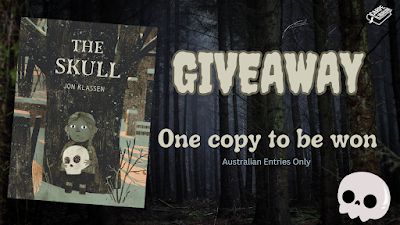
Thanks to everyone who entered my giveaway last week to win a copy of children's book The Skull - A Tyrolean Folktale by Jon Klassen. All but one entrant correctly identified the brave girls's name in the book is Otilla and entries closed at midnight last night.

The lucky winner about to engage on a deliciously macabre adventure is......(drum roll):

Selwyn!!


Congratulations! You've won a copy of The Skull by Jon Klassen valued at $32.99AUD thanks to Walker Books Australia. You'll receive an email from me shortly and will have 7 days to provide your Australian postal address. The publisher will then send your prize out to you, so I hope you enjoy!
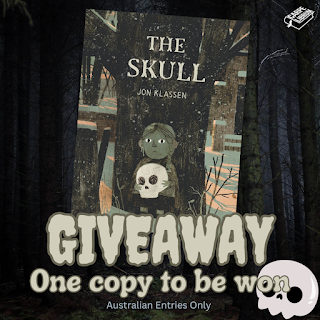
Carpe Librum giveaway image for The Skull - A Tyrolean Folktale by Jon Klassen

15 July 2023

Review: Almost Lost Arts by Emily Freidenrich

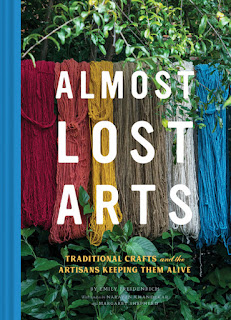
Almost Lost Arts - Traditional Crafts and the Artisans Keeping Them Alive by Emily Freidenrich book cover

I came across this book, Almost Lost Arts - Traditional Crafts and the Artisans Keeping Them Alive by Emily Freidenrich by chance when looking through my library's catalogue for something completely different. Don't you love it when a book finds you, instead of the other way around?

Almost Lost Arts showcases 20 traditional arts, crafts and vocations through the work of individual artisans passionate about their work and dedicated to keeping these skills and practices alive.

Highlights for me included the globemakers, bookmender, antiquarian horologist, wood type printers, sign painters, woodcut printers, mapmaker and hatmakers. There was also a cassette tape manufacturer, the last of its kind in the world which was interesting.

Very few of the profiles gave the reader an indication of the skill or training required, which was a real shame. On the chapter about woodcut prints, Meguri Nakayama tells us:
"Carvers and printers train for five to seven years to reach the minimum level of skill required of artisans, and it takes more years of 'concentration, patience, and strong passion," says Nakayama, "before they are considered masters." Page 180
This is clearly impressive, and I would have appreciated more examples of the time and effort taken to attain the level of knowledge, skill and experience these artisans have achieved in each of their very specialised careers.

Stuff like this. According to Simon Vernon, World's End Mapmaking Company in the UK:
"Less than point one of one percent of people are still making maps the way I do," Vernon estimates." Page 187
Impressively, Vernon is one of only a few people in the world creating maps using the same skills cartographers used three hundred years ago.

Many of the artisans featured don't have apprentices or anybody to pass their skills on to which makes you worry they could die out if future generations don't embrace them. Many of the artisans seemed keen and sometimes desperate to pass on their lifetime of knowledge and experience to keep their chosen art form alive. This book is an ode to the past and has successfully captured skills that could disappear in the future if younger generations don't see their charm or value.

However, if the book was expressly written and published to entice the reader to pursue any of the vocations presented in the profiles, then I don't believe it succeeds. The choice to include 20 profiles and go into a little detail was better than choosing 10 profiles in greater detail, but still, there was much missing. I would have been happy to have seen smaller or fewer photographs if it resulted in more information being included. Some of the photographs were too stylistic or artistic and weren't able to offer much sense of the tactile processes involved.

Almost Lost Arts - Traditional Crafts and the Artisans Keeping Them Alive by Emily Freidenrich is an interesting read and could serve as a jumping off point for some readers, however I'm glad I borrowed my copy from the library.

My Rating:
★ ★ ★ ★ ★


12 July 2023

Review: Lady Tan's Circle of Women by Lisa See

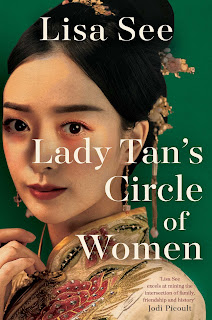
Lady Tan's Circle of Women by Lisa See book cover

* Copy courtesy of Simon & Schuster *

I've never read a book set in China during the Ming Dynasty (1368-1644) and I'm not into women's literature, so when this book arrived in my mailbox, I took one look at the title and cover design and assumed I probably wouldn't enjoy it. I do love historical fiction though, so I decided to give the first 10 pages a chance, remaining convinced I wouldn't connect. How wrong I was!

I was instantly engaged by the young character's plight as she receives instruction from her mother - Respectful Lady - about the pains of foot binding.

Yes, foot binding! The author seized my attention so quickly I felt dizzy, and Lady Tan's Circle of Women by Lisa See went on to become a stellar read.

Set in 15th century China, this is the fictional account of the life of Tan Yunxian, a woman who became a practicing doctor in China at a time it was extremely rare and severely frowned upon. Yunxian was so successful looking after her female patients, she published a book of medical cases in 1511 and to date, it's the oldest known medical book written by a woman in China.

In the beginning of Lady Tan's Circle of Women, young Yunxian learns how to treat women from her Grandmother and the medicine prescribed is not what we'd recognise today. Firstly, to diagnose an illness, Yunxian is instructed to use the Four Examinations of looking; asking and listening; smelling and pulse taking. Treating only women and encountering a range of medical problems, Grandmother teaches:
"We are also governed by the Seven Emotions of elation, anger, sadness, grief, worry, fear, and fright. Of the Five Fatigues, three specifically target women: fatigue from grief brought on by losing a child or husband, fatigue from worry about finances, a wayward husband, or an ailing child, and fatigue from trying to lift her family to a higher status. If women are prone to the Five Fatigues, then men are apt to fall victim to the Four Vices of drink, lust, desire for riches, and anger." Page 50
Centuries later, and I can still relate to these insights, however some of the methodologies were astounding. Here's an example, how many pulses do you think you can detect? Yunxian learns multiple layers of pulse taking from her Grandmother, who advises:
"In time, you will learn to identify twenty-eight separate and distinct types of pulses." Page 51
These pulses can be floating, slippery, knotted, scattered, hidden and more. Fascinating isn't it?

We follow Yunxian from 1469, through her Milk Days, Hair-Pinning Days, Rice and Salt Days right through to her Sitting Quietly days, which formed a wonderful structure for her story and life progression. The relationships Yunxian has with her mother Respectful Lady, mother-in-law Lady Kuo, her father's concubine Miss Zhao, and her friend Meiling drive the character development and plot forward in an interesting and engaging way.

The differences between the sexes were stark, and Yunxian rarely sees her husband, instead spending most of her days with the other women also living in the family compound.
"Men have physical cravings for food and bedchamber affairs, but we women ooze affection and desire, love and hatred, envy and jealousy, nervousness and vindictiveness, bitterness and revenge." Page 101
While much of the medical assistance Yunxian provides relates to women's health problems, fertility and childbirth, it was the foot binding tradition that held my attention.

In this next scene, Yunxian is in bed with her husband. He takes one of her feet into the palm of his hand, noting that with each step she takes, her golden lilies bloom beneath her.
"He brings my slippered foot to his nose so he can appreciate its aroma. But mostly it's as I've always been told. My feet are physical proof of the pain I suffered to give him this treasure so dear to him. He'll never see them naked, but he knows from the books that taught him about bedroom affairs that hidden beneath the binding cloth is the deep cleft formed where my toes meet my heel." Page 113
It's hard for us to imagine any beauty in the cruel and disfiguring practice of foot binding, but I didn't know that a husband never saw his wife's (bound) naked foot. Instead he only viewed or touched his wife's bound feet while she was wearing delicately designed hand-embroidered slippers.
"As men, we admire the sacrifice and pain our women endure to give us this beauty to enjoy, but it leaves them unstable." Page 144
Some of the foot binding scenes may be a little gruesome for some readers, but not this one. I leant heavily into these sections, and keenly soaked up any and every crumb of information about the practice.

During the novel, Yunxian travels to the capital, known as the Forbidden City, where she encounters the presence of eunuchs for the first time. Boy eunuchs undertake intimate work for women within the empress's inner circle and their inclusion here goes to show how little I know of Chinese history:
"The boy eunuchs change the cloths the women wear during their monthly moon water, wipe their mistresses' behinds over chamber pots, and see to perfuming a woman's feet when she knows her husband will be seeking her company." Page 228
This is my first time reading any of Lisa See's work, and early on I realised I was in the hands of an author capable of conducting a tonne of research and writing a novel that immerses the reader in the era without the research 'showing' so to speak. Some of my favourite historical fiction writers also achieve this feat, including: Ken Follett, Philippa Gregory, Maggie O'Farrell and Alison Weir. Despite having little to no knowledge of the historical setting of their novels, these talented authors are able to immerse readers deep into the time period of their choice with - what seems like - relative ease, and I can now comfortably include Lisa See in this category.

Lady Tan's Circle of Women by Lisa See was a complete surprise and a timely reminder not to judge a book by its cover. This could very well end up in my Top 10 books of 2023, and may even deserve a place in the Top 5, so lesson well and truly learned.

Highly recommended! (Read a FREE extract here).

My Rating:
★ ★ ★ ★ ★


07 July 2023

WIN a copy of The Skull by Jon Klassen

Carpe Librum giveaway image for The Skull - A Tyrolean Folktale by Jon Klassen

Intro

It's winter here in Australia and the perfect time to snuggle in with a good book to read, or win free stuff! For those who want to do both, I'm warming my hands by the heater as I bring you a 'deliciously macabre treat for folktale fans' in the form of a children's book giveaway.

Jon Klassen (I Want My Hat Back, and The Rock from the Sky) has a new children's book, and Walker Books Australia are offering readers in Australia the chance to win a copy.

The Skull - A Tyrolean Folktale by Jon Klassen is recommended for readers aged 6+, so feel free to enter below by midnight AEST Sunday 16 July 2023 and good luck!

Blurb

In a big abandoned house, on a barren hill, lives a skull. A brave girl named Otilla has escaped from terrible danger and run away, and when she finds herself lost in the dark forest, the lonely house beckons. Her host, the skull, is afraid of something too, something that comes every night. Can brave Otilla save them both? Steeped in shadows and threaded with subtle wit – with rich, monochromatic artwork and an illuminating author’s note – The Skull is as empowering as it is mysterious and foreboding.

Giveaway

This giveaway has now closed.


06 July 2023

Review: Rental Person Who Does Nothing by Shoji Morimoto

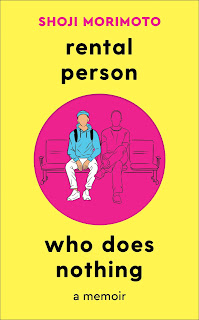
Rental Person Who Does Nothing by Shoji Morimoto book cover

* Copy courtesy of Pan Macmillan *

I first came across the Do Nothing Man from Japan in a BBC documentary called The Japanese man who gets paid to 'do nothing'. I was fascinated by the short doco and intrigued to find out more, eagerly awaiting his new book, Rental Person Who Does Nothing: A Memoir by Shoji Morimoto.

For those new to the concept of renting a person, Morimoto gives his time freely to those who need it but he does nothing. He doesn't charge a daily or hourly rate for his time, and clients pay for any food, drinks and travel expenses incurred. Clients submit their requests for his help online, and Morimoto selects those he can - and wants - to do.

Requests from clients vary, from accompanying them to a concert; visiting a restaurant they've always wanted to go to; attending a temple to say a prayer; or listening to a client share cherished memories of a loved one. The listening requests are common, and the author is clear that he can only provide simple responses.

Morimoto doesn't talk to the client unless they speak to him, he doesn't offer advice and generally only meets a client once. Some of the listening requests were fascinating, with loneliness and social anxiety seemingly forming the basis of many client requests.
"People tend to think that personal matters should be spoken about with those who are close friends, lovers or family members. But since starting this do-nothing service, I've learned that there are a lot of important things that can be talked about with people you don't know very well or even at all. Depth of discussion and depth of relationship don't always go hand in hand." Page 13
I've noticed the variations that can sometimes exist between depth of discussion and depth of relationship where there are no strings attached or expectations to fall short of. I enjoyed seeing some of the requests the author receives, and in doing so I was able to gain smaller unexpected insights into culture and society as a whole.
"Things can be different simply because someone is there. They don't have to be there, but if they are, something changes." Page 6
That's so true for a multitude of reasons! Morimoto notices that requests to visit a client in their home often has an unintentional benefit to the client by motivating them to tidy up prior to his arrival. He also notices that some of his clients need his help to hold themselves accountable. One client wanted him to come and watch them study while reading manga, another wanted him to watch them work. One request was to accompany a woman while she filed her divorce papers. Large or small, the sheer variety of requests is fascinating.
"Since I started this do-nothing service, I've been surprised to discover that there are so many things people want to talk about but can't. At least, they can't talk to people they know. They talk to me, though." Page 59
One example from the book was a woman who wanted to talk about her new girlfriend, but her friends weren't accepting of her choice of lover. She wanted Rental Person to listen to her talk about her new girlfriend and say things like 'she sounds nice' from time to time. Wow! Being able to talk without any fear of judgement clearly helped the client, despite the forced nature of the conversation.

Some clients need to give a loved one bad news or discuss a difficult topic but don't have the confidence or know where to start. After trying out their spiel with Rental Person, the client is able to summon the courage required to have the conversation for real with their loved one.

This was one of my favourite client requests from the book, and it's a little long but I think you'll love it:
"Request: To bump into my dog on a walk and make a fuss of him. Reason: My dog loves people. He goes up to people without dogs and wags his tail, but most of them ignore him, so he gets disappointed. People with dogs often make a fuss of him, but they're busy walking their own dogs and don't have much time, so I try to walk him away, but then my dog gives a little whine and sometimes tries to follow the other person. I don't want him to be thought too irritating so I cajole him into leaving them be, but he always looks upset. He is very positive and gets over it quickly, but it hurts me a bit every time his boundless love comes to nothing, so I always think how nice it would be if a complete stranger would give him some attention.
So I was wondering if you could make a fuss of him, pretending (?) to be a complete stranger who happens to be walking in the opposite direction." Page 130
What a beautiful person and such a lovely request! If you want to know what happened, you'll have to read the book.

Morimoto writes briefly about the Japanese culture of reciprocity and social pressures within friendships and workplaces and understands that many of his clients seek out his services because they feel constrained by their own cultural expectations and community pressures.

For a seemingly introverted and reserved person uneasy about money and not wanting to influence a person's future by having an opinion or making a decision, Shoji Morimoto has created the perfect role in society for himself. As Rental Person, Morimoto is able to help countless people in his unique way, while not shying away from the lack of an income. The author has a wife and child at home and they're living off his savings at the moment, so Morimoto accepts money from clients and wants to ensure nobody mistakes him for a volunteer. 

My only criticism of the book - other than it's too short - is that Morimoto didn't write this memoir. Instead he answered questions with simple responses and an editor and writer wrote the book. It's completely fitting with Morimoto's 'do nothing' persona but this early disclosure at the beginning was disappointing and ultimately lost him a star in this review.

Always introducing himself as Rental Person and wearing his cap so as to seem unassuming while also hiding behind his anonymity when feeling anxious, Shoji Morimoto has helped 4,000 clients since starting in 2018. The demand for services like his tells us something about ourselves and I enjoyed thinking about it. 

Rental Person Who Does Nothing
by Shoji Morimoto is a unique memoir perfect for discussion and I highly recommend it.

My Rating:
★ ★ ★ ★ ★


30 June 2023

Review: The Terrible Event by David Cohen

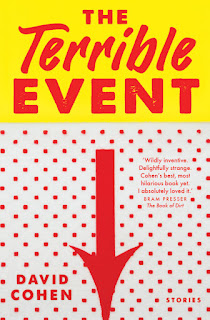
The Terrible Event by David Cohen book cover

* Copy courtesy of Transit Lounge *

Sporting one of the best cover designs of the year so far, The Terrible Event by David Cohen is a collection of short stories promising 'death, destruction, disappearance, decline and defeat' and sounded right up my alley. 

A brief word on the cover first. Designed by Josh Durham from Design by Committee, this cover design is immediately eye catching and I keep seeing it popping up everywhere. It really taps into my love of stationery and will no doubt be one of my favourite cover designs for 2023. The mention of parallels between this collection and the work of David Sedaris further stoked my anticipation for this Australian collection.

Containing eight stories in total, I enjoyed the sense of nostalgia that started to build.
"The toy was as addictive as it had been in bygone days. Pulling the string triggered memories of backyard cricket, Choc Wedges and Saturday morning cartoons - the very cartoons that had introduced him to Bugs Bunny in the first place. Those were the days." Page 44-45
The Australian setting and mention of Choc Wedges, Holden Commodores and rippled soled desert boots was ripped right from my own childhood and the sweary dialogue in the story entitled Bugs, was great. Here's our main character in Bugs reminiscing about inheriting his dad's old Olivetti typewriter.
"And when you pressed a key, you could see the type bar strike the paper, leaving behind a black letter or number. Nothing made interesting noises anymore. Nothing had any weight or resistance. Mark recalled the hole punches of his youth, the staplers. Where were they now?" Page 65
Yes, the hole punches!! I think back to how much our desk accessories have changed in my time, with liquid paper in bottles to hole punches, fax machines and staplers. I still have a mini red stapler purchased in 2000 that's so small it takes No. 25 staples and it's stapled thousands of bank statements, travel itineraries and meeting agendas over the years. If you love stationery as much as I do, see my review of Adventures in Stationery: A Journey Through Your Pencil Case by James Ward.

Back to the collection, hole punches feature in the aptly named short story Holes, and it was here that I started to notice a few common threads or easter eggs that connect through the collection. I won't include them in my review in case they're spoilers - I'm looking at you Nathan! - but not being a regular reader of short stories, I thought this was cool.

While there's limited time to connect with a character in a short story, character descriptions like this provided a neat shortcut to personality, and I could readily relate:
"Zoran's conversations were limited to two main subjects: cycling and craft beer. I didn't have a problem with that, but he seemed to assume that I was as interested in them as he was. If I tried to steer the conversation in another direction, he'd steer it back, before too long, to one or the other. He showed no particular curiosity about me: I think I was really just a receiver for whatever he wanted to talk about. He might ask me what I'd done on the weekend... but only as an entry point for him to tell me all about the cycling and beer drinking he'd done." Page 99
I have a person JUST LIKE THIS in my life too!

My favourite story in the collection was The Enigma of Keith: Another Memorial, which contained an interesting story about the erection of a fictitious roadside memorial, installed to determine whether the presence of a memorial (white cross, flowers) has any impact on driver speed. Do drivers slow down when they notice a memorial on the side of the road? You'll have to read The Terrible Event to find out!

My Rating:
★ ★ ★ ★ ★


28 June 2023

8 Books on my TBR with Birds on the Cover

I've recently noticed a trend in my to be read (TBR) pile, and it's the sheer number of books with birds on the cover. I don't know whether I have an unconscious bias towards books with birds on the cover, or whether the publishing industry and graphic designers have agreed that birds are used in cover designs for specific genres and I just happen to be attracted to those types of books. I'm not sure which came first, the chicken or the egg, but at last count I had 15 books with birds on the cover.

I thought it would be fun to share 8 of them with you, along with a summary of what I think they're about. Let's go!

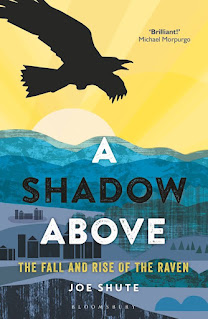
A Shadow Above: The Fall and Rise of the Raven by Joe Shute book cover

A Shadow Above: The Fall and Rise of the Raven

Joe Shute

What better way to kick off this list than with a non fiction book all about the raven Corvus Corax. Ravens were once revered, and Viking and Norman warriors invaded England with ravens taking pride of place on their shields and banners. Centuries later, the birds were seen to represent evil and death, with ravens driven out of towns and cities as vermin. The last decade has seen a dramatic increase in raven numbers and I'm looking forward to learning just how intelligent ravens are and more about their ongoing relationship with humans.

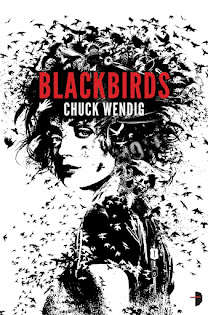
Blackbirds

Chuck Wendig

Published in 2012, Blackbirds by Chuck Wendig is an urban fantasy novel and the first in a series that at the time of writing, was up to Book 6, Vultures. If the protagonist Miriam touches you, she is able to see the manner and time of your death. A GoodReads nominee for Best Horror 2012, this is the story of Miriam Black and how she deals with her unique gift. Not sure why it's called Blackbirds, but with an awesome cover design like this (your hair is a bird comes to mind) I'm keen to find out.
Blackbirds by Chuck Wendig book cover
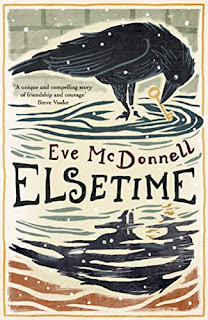
Elsetime by Eve McDonnell book cover

Elsetime
Eve McDonnell

Elsetime by Eve McDonnell is a middle grade historical fiction novel set in the 1920s. I didn't know this, but in 1928 there was a terrible flood in London when the River Thames doubled in volume, killing fourteen people and leaving thousands homeless. The protagonist in Elsetime is Glory Bobbin, a 12yo orphan who works at the Frippery and Fandangle Emporium creating jewellery. Assisted by a peculiar crow, Glory meets Needle Luckett, a mudlark who has travelled through time, and the three of them together will try to save those endangered by the flood. I love stories about mudlarks, and you might remember my review of Mudlarking: Lost and Found on the River Thames by Lara Maiklem.

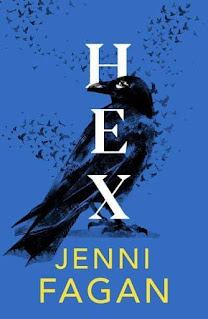
Hex

Jenni Fagan

I love the cover design for Hex by Jenni Fagan. It's one of my favourite covers in this list, but Luckenbooth by Jenni Fagan was a DNF for me in January this year, so I'm worried I won't enjoy Hex. It sounds so good though! On 4th December 1591, Geillis Duncan is a convicted witch in a prison cell awaiting death when she receives a visitor. Iris has come from the future and offers her support and solace. Coming in at just 100 pages and inspired by the North Berwick witch trials in 1590, I should know very quickly if this is for me or not within the first few pages.
Hex by Jenni Fagan book cover
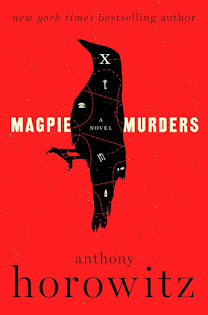
Magpie Murders by Anthony Horowitz book cover

Magpie Murders

Anthony Horowitz

There's a good chance you may have already read Magpie Murders by Anthony Horowitz or have it waiting for you on your own towering TBR piles. Published in 2016, Alan Conway is the successful crime writer behind his fictional English Detective Atticus Pund. With nods to vintage crime fiction including Agatha Christie and Dorothy Sayers, Conway's editor Susan Ryeland is concerned about his latest manuscript, which seems to reveal a hidden story. Horowitz went on to publish a sequel Moonflower Murders in 2020 and according to GoodReads, each "volume is two mysteries; one in Susan’s world and a book-within-book detective story set in the 1950s".

Meditations

Marcus Aurelius

Time for a classic! Marcus Aurelius was Roman Emperor from 161 to 180 AD and a Stoic philosopher and I've been looking forward to reading this since receiving a copy in 2021. The famous Emperor and Philosopher is known for quotes like: "You have power over your mind - not outside events. Realise this, and you will find strength" and “The happiness of your life depends upon the quality of your thoughts.” I'm hoping for some timeless wisdom in these pages but with time to reflect on key insights for greatest impact, it'll likely to be a slow and meaningful reading experience.
Meditations by Marcus Aurelius book cover
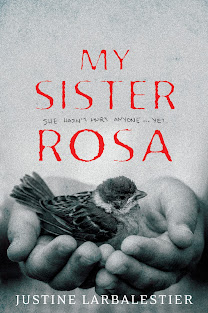
My Sister Rosa by Justine Larbalestier book cover

My Sister Rosa

Justine Larbalestier

This book captivated my attention instantly with a brilliant premise: "What if the most terrifying person you know is your ten-year-old sister?" It certainly puts the cute bird and black and white cover design into a new perspective doesn't it? I added this book to my TBR in 2017 but still haven't read it yet. What's it about? My Sister Rosa is a young adult thriller about Che Taylor who loves his younger sister Rosa despite fearing she's a psychopath. Nominated for a bunch of awards, Justine Larbalestier is an Australian author, so I'm pleased to include a homegrown author in this list.

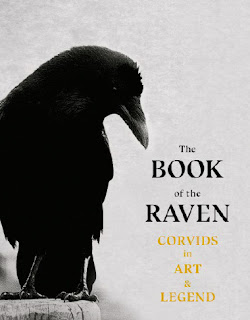
The Book of the Raven: Corvids in Art & Legend

Angus Hyland

This book explores the behaviour of ravens as tricksters, thieves, problem-solvers and gift-givers through artwork and includes photographs, paintings, texts and poems. I'm hoping for a stunning coffee table book that includes artwork and literature from Shakespeare and Edgar Allan Poe right through to Game of Thrones - "there was a raven in the night" being one of my favourite quotes of the series.
In case you thought it couldn't get any better, Christopher Skaife, author of The Ravenmaster - My Life with the Ravens at the Tower of London has written the Introduction.
The Book of Raven: Corvids in Art and Legend by Angus Hyland book cover

That's it! I'm pleased to see an Aussie author and a variety of genres represented in this list: middle fiction, historical fiction, non fiction, crime, urban fantasy and even a classic! Have you read any of these books? Which one are you most drawn to read?


20 June 2023

Review: Becoming Mrs Mulberry by Jackie French

Becoming Mrs Mulberry by Jackie French book cover

* Copy courtesy of Harper Collins *

In Becoming Mrs Mulberry by Jackie French, the reader meets Agnes in 1924 at the Mulberry estate known as Wombat Hills, in the Blue Mountains of New South Wales. Agnes Glock is a medical student who gave up her chance to become a doctor to establish a haven for shellshocked soldiers and those left permanently injured or horribly disfigured by WWI. When Agnes meets her best friend's brother Douglas Mulberry, their lives are irrevocably changed.

Largely unfolding in a flashback or dual timeline, the first half of the book contained significant character makeovers and partial recoveries in the case of Agnes and Douglas. Agnes is a staunch believer in the restorative power of nature, and the ability of wildlife and the Australian bush to heal those still suffering the horrors of war, abuse, trauma and shell shock. As Mrs Mulberry, Agnes insists on hiring staff injured or incapacitated in the war and sets up a respite for returned and injured soldiers otherwise locked away in hospitals, insane asylums, back bedrooms or attics.

The second half of the narrative was the unexpected discovery of an ill little girl being displayed in a travelling circus freak show visiting the nearby town. Allegedly raised by dingoes, Agnes is drawn to the little girl who howls like a dingo, walks on all fours and laps up her water like a dog. Convinced she can treat the girl's illness and give her a better quality of life, Agnes insists the child accompanies her to Wombat Hills for treatment.

I love a character makeover and the first half of the book was a five star read for me, with several makeovers and recoveries unfolding in what seemed like quick succession given the length of the book. My favourite part of the novel - other than Trout's exit - was the overseas flashback to Agnes meeting Douglas and their immediate struggle to return to health, safety, sanity and eventually, the Australian bush.

Meanwhile, the second half of the book slowed down to a three star read for me, leaving my overall rating somewhere in between. The medical treatment of the girl and the mystery surrounding her birth and place of origin didn't engage me nearly as much as the early establishment of our main characters.

Becoming Mrs Mulberry by Jackie French is recommended for fans of Australian historical fiction, however don't read the blurb - or this review - prior to starting it. Almost all of the key points of the plot are revealed in the blurb and I think you'll enjoy it more if you know less going into this one.

My Rating:
★ ★ ★ ★ ★


13 June 2023

Review: Back Story by David Mitchell

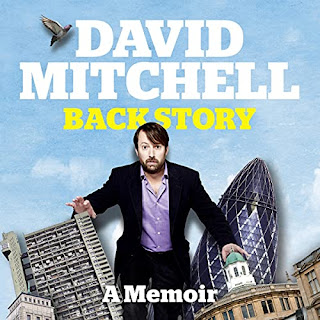
Back Story by David Mitchell audiobook cover

I've only recently discovered the work of David Mitchell, and I don't mean the novelist who wrote Cloud Atlas. In fact, the author comments on just how often the two are confused, well not by each other obviously. I discovered British comedian David Mitchell's work a few months ago when deciding to read The Satsuma Complex by Bob Mortimer. I watched a few segments of Would I Lie To You? and David Mitchell made me laugh just as much - if not more - than Bob Mortimer. I had to check this guy out.

The audiobook sample for Back Story is a segment about the author's back pain and the fact that he's suffered from sciatica for years. He had my attention. After taking up walking, Mitchell's back pain improved and the additional exercise resulted in some unintentional weight loss. Back Story couldn't be a more apt title.

The writing and vocabulary made me chuckle and giggle, and the skeptical eyebrow in the introduction (along with a stellar delivery, as the author reads his own work) set the scene and prepared me for the laughs to come:
"You've probably guessed that all things new age tend to make me raise a skeptical eyebrow, and a skeptical fist, which I bang skeptically on the table while wryly starting a skeptical chant of fuck off, fuck off, fuck off, before starting skeptically to throw stuff and scream 'you can shove your trendy scientifically unsubstantiated bullshit up your uncynical anuses'. For me, sitting on a ball feels a bit wind chimes. It's got a touch of the homeopathic about it." Introduction
The skeptical eyebrow and skeptical fist still make me chuckle. This memoir is structured around a walk he is taking, and Mitchell regularly uses his surroundings to kick off a new thought or recount a memory in an entertaining way. There's much here about his time at university, sketch shows, pilots, panel shows, TV gigs and his acting career. 

When Mitchell is ranting on a topic, or discussing a particular encounter or behaviour, he had me in the palm of his hand. This anticipation of another chuckle is what sustained me through the content surrounding his work and the number of readings, auditions and meetings he attended in order to kick off, establish and then maintain his career.

I picked this up because I find David Mitchell funny, but I'm learning that doesn't mean I'll automatically love the respective comedian's memoir. In Back Story, there was way too much content about Robert Webb (Rob). I guess it's not too surprising given their career collaborations, and the fact they both served as best man at each other's respective weddings, but it was too much for this reader who didn't follow Mitchell and Webb or Peep Show.

David Mitchell is a likeable and funny guy, so learning he's self conscious and also admits to being vain was a complete surprise. Here's an example of what I mean:
"All I ever want is for my clothing, weight, haircut and smell to go unremarked on. I don't think I'm particularly handsome or particularly ugly. If I'm to be deemed acceptable or even likeable, it won't be because of my appearance. So my aim is that my appearance should in no way be noteworthy. But then again, not so un-noteworthy as to be in itself noteworthy. That's how I ended up with this haircut." Chapter 32
Back Story by David Mitchell was a laugh, but I think I'll wait awhile before reading And Away by Bob Mortimer in case it's more about the ins and outs of the comedian's career, rather than their thoughts and observations about life in the manner of authors like David Sedaris.

Published in 2012, Mitchell ends the memoir with his relationship and wedding to Victoria Coren in that same year. Back Story is about David's school, university and career progression, and choosing to end it when he meets his life partner and soul mate was an inspired decision. I understand this demarcation of life experience, and if the author ever pens another memoir, I suspect he'll start with the establishment of his family and all that followed.

Fans who have followed David Mitchell on TV and radio for years will no doubt thoroughly enjoy this. The author reminisces about shows he's worked on and people he's met and worked with, all of which were new to me. The chapter on Michael Palin was hilarious and an unforgettable highlight.

My Rating:
★ ★ ★ ★ ★


08 June 2023

Review: The Brothers Grimm 101 Fairy Tales by Jacob and Wilhelm Grimm

The Brothers Grimm 101 Fairy Tales by Jacob and Wilhelm Grimm book cover

I did it! It took me 10 weeks, but I finally read The Brothers Grimm 101 Fairy Tales by Jacob and Wilhelm Grimm. I read the original Snow White and Sleeping Beauty tales and more besides. How do I feel about it? I feel proud of my reading achievement, but the writing style was unfamiliar and it was a somewhat draining reading experience. I was only able to read a few fairytales at a time before needing a break from all of the kings, princesses, curses and forests.

I was shocked to discover just how short some of the fairytales were, namely Rapunzel, Hansel and Gretel and Little Red Cap; or as we now know it, Little Red Riding Hood. The brevity of these tales and the way in which they've gone on to inspire untold spin offs and interpretations - one of which, The Archive of Alternate Endings by Lindsey Drager, I just read - is quite remarkable.

As expected, there were some terrific opening lines, like this one from The Hare's Bride:
"There was once a woman and her daughter who lived in a pretty garden with cabbages; and a little hare came into it, and during the wintertime ate all the cabbages." Page 282 The Hare's Bride
I'm instantly 'into' the story with this kind of opening line, and an intro like this reminds me of the stellar fable at the beginning of The Rain Heron by Robbie Arnott.

Blessed with some stellar opening lines, some of the fairytales had quite sudden, dreadful or unexpected endings. How's this one from The Mouse, The Bird, and the Sausage:
"Owing to his carelessness the wood caught fire, so that a conflagration ensued, the bird hastened to fetch water, and then the bucket dropped from his claws into the well, and he fell down with it, and could not recover himself, but had to drown there." Page 104 The Mouse, The Bird, and the Sausage
Some of the tales end with a sentiment like 'and they haven't been heard from since" or "where they live to this day." How about these though:
"And the mouth of the man who last told this story is still warm." Page 116 The Bremen Town-Musicians
"Then the children went home together, and were heartily delighted, and if they are not dead, they are living still." Page 204 Fledgling
Isn't that charming? This happy ending describes a wedding party:
"I wish you and I had been there too." Page 208 King Thrushbeard
This isn't the only time the authors break the fourth wall and address the reader directly either. When describing a scene whereby everyone present is collecting as many gold pieces as they can physically carry, comes a comment in brackets direct to the reader:
"(I can see in your face that you also would like to be there.)" Page 151 The Wishing Table, The Gold Ass, and the Cudgel in the Sack
I wonder if the brothers could have imagined readers enjoying their stories 200 years after publication. Reading The Devil with the Three Golden Hairs was a highlight of this collection, along with the classic Hansel and Gretel.

Now that I've read them, would I recommend Grimm's Fairytales to other readers? I actually don't think I would. Viewed through today's lenses, the lessons from these fairytales feel simplistic and out of touch: beauty and virtue is good, greed and envy is bad, being ugly is bad and good will always triumph. The fairytales aren't suitable for young children, and there's a lot of violence for children over the age of ten as well, with drownings, curses, amputations, poisonings, beheadings, hangings and all sorts of terrible endings. I actually think storytellers and children's authors from the last 50 years do an excellent job of providing educational and entertaining stories for young children and adults alike.

This collection has been worth reading and while I'm satisfied to have now read the original source material, the experience was enriched by reading it alongside three other book reviewers. Ashleigh (The Book Muse), Veronica (The Burgeoning Bookshelf) and Claire (Claire's Reads and Reviews) joined me for this Grimm's buddy read and Ashleigh lead our conversation based on her study of the subject matter at university. What a great buddy read!

What's your favourite fairytale? I think mine is Hansel and Gretel.

My Rating:
★ ★ ★ ★ ★


06 June 2023

Review: The Book of Eve by Meg Clothier

The Book of Eve by Meg Clothier book cover

* Copy courtesy of Hachette *


An historical fiction novel inspired by the Voynich manuscript? Yes please! For those needing a refresher, the Voynich manuscript is a handwritten book on vellum in an unknown script dated to the early 15th century. The book has some botanical illustrations - including some fictitious plants - but the contents have never been successfully de-coded, despite some of the best minds and scholars all over the world doing their best to uncover the mystery. The Voynich manuscript is now available in full and is free online, making it available to the public to view and solve at their leisure. 

The Book of Eve by Meg Clothier is set in Renaissance Florence, where Sister Beatrice is the librarian in a convent. Beatrice feels safe in her library with her prayerbooks and scrolls until the arrival of two women desperately seeking sanctuary one night changes things at the convent irreparably. One of the women hands Beatrice a book, and Beatrice realises this is no ordinary book when men come looking for the women.

After falling in love with the cover design of this book - it might even end up being one of my favourite covers of the year - next to impress me was the writing skill of this new-to-me author.
"'Did you hear that, Beatrice? What do you say to that?' There are many things I should like to say, but none that will do me credit. I swallow a mouthful of pie, and find that my thoughts are in danger of spoiling its flavour." Page 31
I just love that double-barrelled quote, don't you? The convent was a terrific setting, and I greatly enjoyed meeting some of the other sisters and learning the rhythms of life within the veritable safety of the convent walls. The political climate of the time in Italy was relatively familiar, having recently read other books set in Renaissance Florence, largely One Illumined Thread by Sally Colin-James (April 2023); The Brightest Star by Emma Harcourt (2022); and The Marriage Portrait by Maggie O'Farrell (2022).

As the pressure rises and Beatrice finds herself in danger, the author was able to capture unique character insights, like this gem:
"And so, compelled by fear, not buoyed by courage, I fling myself clumsily forwards," Page 270
Having said that, I had to begin to suspend my belief when it came to the powers of the book. I should say that this isn't a dual narrative, and there's no part of the plot set in contemporary times where the book is being decoded. The Book of Eve is inspired by the Voynich manuscript, but isn't about decoding the book. It's an origin story of sorts and I was firmly in a four star frame of mind within the closing pages - one star being lost along the way to the influence of ancient powers. Putting it another way, the creep of urban fantasy into this tale went a little too far for my liking.

However, it was the use of the word 'meaningless' just three pages from the end that saw a further star slip away. The denouement regarding the origin story of the book was a little ambiguous and while I often dislike ambiguity, this one was rather fitting until that one word threw one of my interpretations under the convent's cart wheels, splashing me right in the face.

The Book of Eve by Meg Clothier is a well written feminist tale set in Italy during the Renaissance period and readers without any knowledge of the Voynich manuscript will enjoy this immensely. If you're on the fence, check out a FREE sample of the book.

My Rating:
★ ★ ★ ★ ★