20 October 2022

Review: Old Vintage Melbourne 1960-1990 by Chris Macheras

Old Vintage Melbourne 1960-1990 by Chris Macheras book cover

* Copy courtesy of Scribe Publications *

Old Vintage Melbourne 1960-1990 by Chris Macheras is the sequel to Old Vintage Melbourne and is for all those who enjoy studying urban photographs of this wonderful capital city. Melbourne was voted the world's most liveable city for 7 years in a row from 2011 and I'm proud to call the city home.

While Old Vintage Melbourne included photographs taken between the mid 1880s and the mid 1990s, this collection - as the title suggests - focuses on the three decades between 1960 - 1990 which makes for a well thought out sequel. Being a child of the 1970s, seeing this collection of colour photographs taken before my birth, at the time of my birth and into my own living memory was quite something and met a level of curiosity that wasn't satisfied in the first book.

I enjoyed the snippets of history that were unknown to me prior to reading this book, like the fact that a 12yo boy vanished in 1982 when he was playing in the reflecting pool and fountain in the City Square; now the Metro tunnel work site on the corner of Swanston Street and Collins Street. The temperature on that day was in the 40s and the water would have been tempting, however the boy was sucked into the circulation system of the fountain and disappeared from view. Despite frantic and heroic efforts from his friend, he was presumed drowned until he was miraculously found alive, 1.5 hours later! Apparently he found an air pocket in the main cavern and was rescued when the water was pumped out by the fire brigade. Wow, how terrifying for him and his parents! If you want to read about this tale of survival and learn more about the incredible bravery of the boy's friend, you can read the entire story here for free.

All of that said, I had to deduct a star in my rating due to the editing of this collection. The author's name is misspelled in one of the photo credits (page 33) and on page 106, the content for two photographs have been reversed, presumably due to a layout change at some point in the process. The content accompanying the photographs is critical to the overall enjoyment of the collection and in this case, the book would have benefitted from a tighter editing process.

On a more positive note, Macheras has touchingly included a photograph of his grandparents in this collection, which was a lovely personal touch and an indulgence the reader will surely allow.

Reading Old Vintage Melbourne 1960-1990 by Chris Macheras made me nostalgic about the past, but I find it fascinating that I don't feel the same way looking around at today's streetscapes. I always notice when a building disappears or a storefront changes, but I don't feel their loss in the same way as businesses which closed decades ago. Why is that?

In studying the images in this collection, signage is just as interesting as the architecture and equally as compelling as the subjects who happen to have been present at the precise moment the photo was taken. I enjoyed imagining myself in those settings (how fun would it be to browse the aisles at Coles New World in the 1970s) and wondering about the lives of those captured unawares. Where are they now?

I know we're living in changeable times, and when I walk around the CBD now, I'm reminded that the Metro tunnel is going to significantly change the city landscape and new train stations are being constructed as we speak. It's clear that there's so much more greenery in this collection than in the past, and it doesn't seem to be related to the time it takes to grow a tree. It seems to me that as Australian culture has shifted and evolved over time, urban planners, developers and councils have embraced the advantages of greenery in the city to cool the towers of concrete and glass on every block as well as improve the aesthetics and air quality of the urban landscape. This continues even now with council grants encouraging green walls, rooftop and community gardens and rooftop beehives.

My favourite images in this collection were by far the aerial shots of Southbank and South Melbourne, and I could look at these for hours comparing what I can see in the images to what I know of the landscape as it is right now. The Then/Now comparisons are wonderful for that purpose and the author has included several throughout the collection.

I can't help but wonder - and hope - that Chris Macheras' love for Melbourne continues, his Instagram account continues to thrive (his motivation for the books) and that he might soon start planning another sequel that could take us closer to the present date. Retro Melbourne would make a terrific title, don't you think?

Highly recommended!

My Rating:


16 October 2022

Review: Yours In Books by Julie Falatko

Yours In Books by Julie Falatko book cover

Children's books that celebrate a love of reading will get me every time, and I couldn't resist purchasing a copy of Yours In Books by Julie Falatko. Our main character is Owl T. Fencepost and all he wants is to be left alone in his tree house to read his books in peace.

Owl lives at the top of an old oak tree and is bothered by noisy animals. Frustrated, he writes a letter to a bookshop after perusing their marvellous catalog and a friendship slowly develops. The entire book is told in a series of letters and book recommendations (two of my favourite things), and Owl begins to make a new friend in the owner of the bookshop, Bessie Squirrel.

Illustrated by Gabriel Alborozo, the book is full of cheerful and charming illustrations and I heartily enjoyed reading the letters and observing the relationship growing between the two characters with each letter they wrote, sent and received. The book recommendations were amusing too and I think older readers will enjoy the titles.

It was immediately clear - to me anyway - that Yours In Books is a different take on 84 Charing Cross Road by Helene Hanff. For those who haven't had the pleasure, 84 Charing Cross Road is a non fiction collection of letters initiated by Helene Hanff living in New York to a second hand bookshop in London called Messrs Marks and Co. The letters were part of a 20 year correspondence between Hanff and Frank Doel and while it was published in 1970, I thoroughly enjoyed it in 2012.

Perhaps it's a coincidence that ten years later I'm reading a children's book that seems to be inspired by 84 Charing Cross Road or the 1987 movie starring Judi Dench and Anthony Hopkins.

The choice to present this delightful read for a new generation of little readers in a dust jacket is once again an interesting choice for a children's book. When reviewing The Farmhouse I observed that this was an odd choice for a children's book, but you tell me. Is this the trend in children's books? Do parents, librarians and teachers think it's a good idea?

Yours In Books by Julie Falatko and illustrated by Gabriel Alborozo is an engaging little story and I look forward to sharing it with my niece and nephew.

My Rating:


12 October 2022

Review: Runt by Craig Silvey

Runt by Craig Silvey book cover

* Copy courtesy of Allen & Unwin *

Runt by Craig Silvey was a sheer delight to read, it felt like 'coming home.' Forget his earlier books Honeybee and Jasper Jones, Runt is completely different and aimed at his youngest reading audience yet.

Annie Shearer is eleven years old and lives in a small country town called Upson Downs. Her parents run a sheep farm and Annie never goes anywhere without her leather tool belt, causing some kids to think she's a little odd.
"Fixing things is Annie's hidden talent. If something is wrong, she wants to make it right. But some problems are so tricky that it's not clear how to solve them, or they're so large that the solution doesn't fit in her tool belt. Like the drought, for example." Page 5
I warmed to Annie instantly and cheered when she made a friend in the stray dog of undetermined pedigree, Runt. Scavenging from bins and being chased by the local constabulary, Runt was all alone in the world, until he met Annie and they became fast friends.

The unique relationship between Annie and Runt is special and together they're capable of achieving great feats. Annie enters them both into an agility course at the local show in an attempt to win the grand prize of $500 to help her parents pay the mortgage on the mortgage. Naturally we want them to win, but Runt has a fear of being watched and won't do any tricks if someone else is watching. How are they going to be able to run the agility course at the show with so many people looking on?

Every chapter book needs a villain and Silvey gives us two: the Collector who lives on the hill and buys up properties whose owners have fallen victim to the hardships of drought, and a fellow competitor in the world of canine agility courses, Fergus Fink.

The story is further enhanced by charming illustrations by Sara Acton. Born in England but now living in Australia, Sara was kind enough to reach out on Instagram after enjoying my Bookmark Monday post so naturally I think we should permanently adopt her.

Brimming with little life lessons and subtle morals along the way, Runt is full of heart. If you loved Matilda by Roald Dahl, this is the book for you. There's even a 14 page teacher's resource available for download. 

Runt by Australian author Craig Silvey is an uplifting, heartwarming and comforting read for all ages and I'm looking forward to passing this on to family.

My Rating:


08 October 2022

Review: Fairy Tale by Stephen King

Fairy Tale by Stephen King book cover

* Copy courtesy of Hachette Australia *

Charlie Reade is a terrific kid! Charlie's Mum died when he was ten and his Dad became an alcoholic, forcing Charlie to learn how to take care of himself. Years later, Charlie is in his teens and his Dad is newly sober, trying to adjust to their new normal when Charlie meets an old German shepherd called Radar and her owner, grumpy old recluse Howard Bowditch.

King has a knack for writing stories with wholesome and likeable young male characters meeting cantankerous old men and the relationships that develop between them. I particularly enjoyed the short story Mr Harrigan's Phone contained in the collection If It Bleeds from 2020, and if you enjoyed that, you'll love the first third of this book. 

Charlie is a well-read, upstanding high schooler when he meets the elusive and mysterious Mr Bowditch and as a consequence of their meeting, their lives begin to change. Charlie loves to watch old movies, read old books and generally feels like an old soul, with nothing to indicate he's a modern 17 year old teenager which may bother some readers. Here Charlie explores Mr Bowditch's house with Radar close behind:
"She followed me down the hall, which was dim and sort of amazing. One side was stacked with old magazines done up in bundles that were tied with hayrope. The other side was stacked with books, most of them old and with that smell that old books have. Probably not everyone likes that smell, but I do. It's musty, but good must." Page 24
Charlie begins to suspect Mr Bowditch has some pretty big secrets, and when he finds out what's in the garden shed, the real adventure starts.

The plot seemed like a meeting of The Neverending Story, The Wizard of Oz and Alice in Wonderland with a clear quest and adventure trope, replete with giant cockroaches, giants, curses, a talking horse and a sundial with magical properties. A kingdom ruled by a villain while the royal family cowers is too tempting for Charlie who wants to help. Is he the chosen one? The promised prince? My eyes started to roll a little at this point.

Thankfully, the novel is saved from devolving completely by moments of clarity like this one:
"You may say I have no reason to feel shame, that I did what I had to do to save my life and the shed's secret, but shame is like laughter. And inspiration. It doesn't knock." Page 574
These are the snippets I love uncovering in a Stephen King novel, the character insights that make me reflect on life, people and relationships, however they were few and far between in Fairy Tale.

King incorporates many myths, legends and fairytales in this novel, and readers will recognise characters inspired by their stories, such as The Little Old Woman Who Lived in a Shoe, Jack and the Beanstalk, The Goose Girl and Rumpelstiltskin. I'm sure there were more and devoted fans will no doubt produce a comprehensive list soon but they didn't really add any depth or layers to my reading enjoyment.

Fairy Tale feels like a fun carefree project for King of sheer indulgence; a creative exploration of stories and stories within stories with way too many tropes that written by any other author, probably wouldn't have made a splash on the new release calendar.

Notwithstanding, Stephen King is an internationally bestselling author and an auto-read for many of us, who happily read through books like Fairy Tale, in the hopes of discovering real gems like 11.22.63 and Billy Summers. Dog lovers will find much to love within these pages, and Radar is arguably the biggest and certainly the most important character in the novel.

Fairy Tale is recommended for hard core Stephen King fans, constant readers, dog lovers and the completionists of you out there. First timers are advised to start elsewhere in King's oeuvre.

My Rating:


03 October 2022

Review: The Day of the Triffids by John Wyndham

The Day of the Triffids by John Wyndham book cover

It's time for another classic, and this time... it was The Day of the Triffids by John Wyndham. Published 71 years ago in 1951, The Day of the Triffids is a science fiction novel set in England and I'm pleased to say I was pleasantly surprised by how well it has aged.

The story begins in London with Bill, who is in hospital after having treatment on his eyes. His eyes are bandaged up and he isn't able to watch the incredible meteor shower that is lighting up skies around the world. The next day, everyone who watched the meteor shower is blind.

The action begins very early on, and there's certainly no slow burn build up:
"From the street below rose a scream, wildly distraught and contagiously terrifying. It came three times, and when it had died away it seemed still to tingle in the air." Page 4
We then accompany Bill as he works out what has happened and what he does from there. As the reader, we can't help but wonder what we would do in Bill's situation, and it's clear early on that the effects of the disaster are going to have irreparable repercussions for the human race, with the vast majority of the world now blind. Bill laments early on:
"My way of life, my plans, ambitions, every expectation I had had, they were all wiped out at a stroke along with the conditions that had formed them." Page 47
This story is largely known for the killer plants or triffids of the title. The triffids were present prior to the meteor shower, and didn't arrive in the way Audrey II did in Little Shop of Horrors. I wasn't sure if these plants with their deadly stingers would seem comical to today's reader, but I can assure you they did not. At its heart, I believe The Day of the Triffids is an apocalyptic novel, with the tension focussed around battling the elements and survival, the triffids are just one of the many dangers.

The population is instantly divided into the sighted and the blind, and a new class system is born. The sighted are needed to find food and basics for survival, and Bill faces many dilemmas early on. What is his duty as a sighted person? How many people should he help? As thoughts extend to survival in the future and people begin to form new communities and plan to plant crops and protect themselves from the triffids, people are forced to face harsh realities, prompting many deep and meaningful conversations with the characters.

The following quote is from a lengthy discussion around sexism, and the realisation that human knowledge is going to dwindle from generation to generation and every person is going to have to chip in now to retain as much as possible.
"Times have changed rather radically. You can't any longer say: "Oh dear, I don't understand this kind of thing," and leave it to someone else to do for you. Nobody is going to be muddle-headed enough to confuse ignorance with innocence now - it's too important. Nor is ignorance going to be cute or funny any more. It is going to be dangerous, very dangerous. Unless all of us get around as soon as we can to understanding a lot of things in which we had no previous interest, neither we nor those who depend on us are going to get through this lot." Page 150
The events in the book spark many conversations and force the reader to consider what they would do given the same situation. One group planned to create new laws while another focussed on ensuring all fertile women became pregnant so that they could give birth to sighted babies as soon as possible; to aid in the building of a new world.

With many accidents and deaths along the way resulting from an array of new dangers, many of the characters have lost all of their family and loved ones and find themselves alone in this 'new world.'
"Until then I had always thought of loneliness as something negative - an absence of company, and, of course, something temporary... That day I learned that it was much more. It was something which could press and oppress, could distort the ordinary, and play tricks with the mind. Something which lurked inimically all around, stretching the nerves and twanging them with alarms, never letting one forget that there was no one to help, no one to care. It showed one as an atom adrift in vastness, and it waited all the time its chance to frighten and frighten horribly - that was what loneliness was really trying to do; and that was what one must never let it do." Page 177
While reading The Day of the Triffids, I couldn't help thinking about the TV series See, starring Jason Momoa. See is a brilliant tv show set in a post-apocalyptic world in the future where being blind is the norm. Two children are born who can see, and the story begins from there. Witnessing how the characters in this world have engineered their lives to cope with their communal blindness made me wonder if any of the writers have read The Day of the Triffids.

I think it's a shame that this novel was adapted for the screen in the 1960s and became part of a period of terrible C Grade horror films. The same thing happened in the 1980s when several novels by Stephen King were turned into terrible boring movies that didn't do justice to the original source material.

While short in length, this Penguin clothbound edition (I love these!) has small font, so reading this classic slowed my reading progress significantly. I usually read around 6 books per month, but only read 4 in September as I was plodding through this classic. I don't read classics often, but the rewarding experience is always worth the additional time and effort.

The Day of the Triffids is a modern classic, and now I see why. (Sorry, couldn't resist). The events in the novel raise some serious questions, highlight terrible human behaviour while showcasing brave and good natured people just trying to help their fellow human beings to survive.

Important topics like law, power, subjugation, suicide and polygamy are faced and discussed by the characters, with plenty to engage the active mind of a student, or tempt discussion at a book club.

Highly recommended!
My Rating:


26 September 2022

Review: A Lifetime of Impossible Days by Tabitha Bird

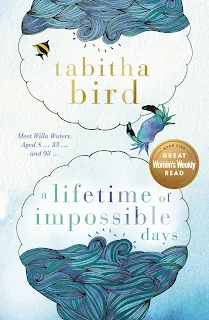
A Lifetime of Impossible Days by Tabitha Bird book cover

Amaze-a-loo! A Lifetime of Impossible Days by Tabitha Bird is my second novel from this talented Australian author, but it was published two years before The Emporium of Imagination rocked my world and made it straight onto my Top 5 Books of 2021 list. I was keen to pick up her debut and with a matching signed bookmark in hand, I began reading with high expectations.

In A Lifetime of Impossible Days, Willa Waters is our main character and we meet her at age 8 (Super Gumboots Willa), age 33 (Middle Willa) and age 93 (Silver Willa). Thanks to a mysterious box with strange instructions, Willa is able to visit her future selves, and her future selves can also visit with her. At one point in Willa's life there's a tragedy and the three Willas need to work together in order to stop it from happening.

Once again, Tabitha Bird's writing is immersive and young Willa was such a likeable character you could even say she was amaze-a-loo! (One of her favourite sayings). 

Willa's Grammy is a warm, wise, loving and memorable character and the midnight tea parties sounded magical and wondrous. The author is able to tap into family love and emotion in such a raw and moving way, I was spellbound.
" 'Oh, don't worry dear. I have that problem, too.' I want to say things that are blankets around this little girl's shoulders." Page 208
For those worried about getting lost in the perspectives of each of the Willas, the author has thoughtfully named each chapter, constantly reminding the reader of who we are 'with' so to speak. Having said that, by the end of the novel I did find the time travel aspect a little timey-wimey and wasn't able to keep up with all of the mechanics. Thankfully it didn't hamper my ability to follow the overarching narrative, but it did interrupt my thoughts while reading, costing it one star in my review.

A Lifetime of Impossible Days by Tabitha Bird is an exploration of memory, time, ageing, trauma, abuse, grief and ultimately the power of love. It's also about changing the future and dealing with the past with many life lessons in between.

Here, Grammy gives Willa some advice on regret.
"'Regret is expensive in ways you can't imagine.' My voice is choked. 'What if remembering also costs too much?' Grammy [says] 'Ah, Willa. That's always the question when we're faced with a challenge. What will it all cost? Remembering your past and dealing with it will no doubt be expensive. But I'm telling you, forgetting costs more.' There's such a deepness in Grammy's eyes, a loss or hurt from so long ago that it seems outside of time itself." Page 163
Make sure to have some jam drops nearby when reading this uniquely Australian magical realism novel that is bound to warm your heart.

My Rating:


16 September 2022

Review: The Marriage Portrait by Maggie O'Farrell

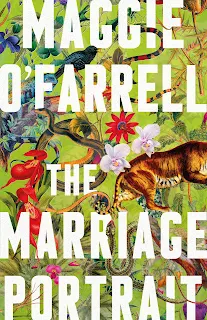
The Marriage Portrait by Maggie O'Farrell book cover

* Copy courtesy of Hachette *

Sublime, just sublime! The Marriage Portrait by Maggie O'Farrell is one of my most highly anticipated releases for 2022, especially after her previous novel Hamnet made it on to my Top 5 Books of 2021 list last year.

The Marriage Portrait is an historical fiction novel about the life of Lucrezia di Cosimo de' Medici set in Renaissance Florence in the 16th century. The author shares an historical note at the front of the book telling us that in 1560, newly married Lucrezia di Cosimo de' Medici left Florence at the age of fifteen to begin her life with husband Alfonso II d'Este, Duke of Ferrara. Less than a year later, Lucrezia would be dead, surrounded by the rumour she was murdered by her husband for failing to produce an heir.

This author's note made for an incredibly unexpected beginning, and ensured that every reader - regardless of their knowledge of Italian history - embarked on the novel on equal terms.

In doing so, we follow Lucrezia's narrative in dual timelines in pre-marriage years (1550s) and post marriage years of 1560, right up until her death in 1561. Lucrezia was a troubled child and her mother blamed herself for the girl's odd behaviour.
"It has been drummed into her by physicians and priests alike, that the character of a child is determined by the mother's thoughts at the moment of conception. Too late, however. Eleanora's mind, here in the map room, is unsettled, untamed, wandering at will. She is looking at maps, at landscapes, at wildernesses." Page 10
How is it even possible to shake our heads at the mistaken belief a woman's thoughts during sex and conception would affect a child's temperament, while simultaneously hopeful that the child born of such a union will be wild and adventurous. Reading this, I couldn't wait to find out what kind of girl Lucrezia would turn out to be.

The writing in The Marriage Portrait is simply divine. Each time I picked up this gorgeous book with stunning cover design, beautiful end papers and fabulous french flaps I had to stop and take note of page numbers I wanted to come back to and descriptions that took my breath away.

Here's a sample of the author's humour first:
"'Indeed,' Vitelli remarked, inclining his head, then he pulled an odd face, his eyes creased, his lips retreating from his teeth. It took Lucrezia a moment to realise that Vitelli was attempting a smile." Page 87
Later the author describe's the cause of Lucrezia's insomnia so clearly that every reader can relate to her plight:
"But sleep will not come for Lucrezia, refuses to hear her call. Her mind, made restless by the journey, by the new rooms, has too much to do, too many impressions to review and polish and store away, too many questions to pose and ponder." Quote page 303
How many readers can immediately relate to Lucrezia's insomnia? I'd go so far as to say all of us, yet somehow O'Farrell makes her protagonist's insomnia feel otherworldly, and so weighted down by history yet instantly relatable at the same time.

Sometimes the author was able to move me with just two words, in this case 'apologetic' and 'creep', have you ever seen them together? How's this:
"She is used to the Tuscan climate, where there is a slow tapering-off of warmth and light, a gradual tip into autumn, winter arriving in an apologetic creep." Page 353
This gave me a little shiver, and I instantly visualised the frosty winter creeping across the land. In some cases, the writing is free and other times - like this one - the writing is claustrophobic. When donning her wedding dress, Lucrezia notes the following:
"The gown rustles and slides around her, speaking a glossolalia all of its own, the silk moving against the rougher nap of the underskirts, the bone supports of the bodice straining and squealing against their coverings, the cuffs scuffing and chafing the skin of her wrists, the stiffened collar hooking and nibbling at her nape, the hip supports creaking like the rigging of a ship. It is a symphony, an orchestra of fabrics, and Lucrezia would like to cover her ears, to stop them with her palms, but she cannot. She must continue like this to the door; she must walk through it, out into the corridor, where there are people - her father's officials, her mother's retinue - waiting for her." Page 123
The author made me feel the oppressive weight of the fabric, itch with discomfort and bend under the pressure of the stifling expectations. Ugh, heavy stuff!

Lucrezia reluctantly fulfils her duty by marrying her dead sister's fiance, but her husband Alfonso is a real piece of work. Simultaneously charming and manipulative, he soon emerges as a fully developed monster. Lucrezia is a young woman without any agency, but thankfully she is still full of spirit:
"Only she knows that within, just under her chilled skin, something quite other is taking place: flames, vibrant and consoling, lick at her insides, a fire kindles, cracks and smoulders, throwing out smoke that infiltrates every corner of her, every fingernail, every inch of her limbs. Her hair surrounds her - all he can see of her is the top of her head. He must believe she is listening to his lecture, to his chiding, but no. She is stoking this conflagration, letting it blaze, encouraging it to sear every inside space. He will never know, will never reach this part of her, no matter how violently he grips her arm or seizes her wrists." Pages 277 - 278
When Lucrezia begins to fear her life is in danger, she is desperate to escape her plight. She ruminates:
"Her brothers, by contrast, were trained as rulers: they have been taught to fight, to argue, to debate, to negotiate, to outwit, to outmanoeuvre, to wait, to spot an advantage, to scheme and manipulate and consolidate their influence. They have been schooled in rhetoric, in narrative, in persuasion, both written and verbal. Every morning they are drilled in running, jumping, boxing, weight-lifting, fencing. They have learnt to handle a sword, a dagger, a bow, a lance, a spear; they are taught how to fight on a battlefield: they have studied military tactics. They have been instructed in hand-to-hand combat, with their fists and their feet, in the event of their needing to defend themselves on a street or in a room or on a staircase. They have been taught the fastest and most efficient ways to end the life of another person - an enemy or an assailant or an undesirable." Page 282
Just as Lucrezia is reflecting on all of this, the reader shares her absolute horror that her husband Alfonso will have undergone the same training. How can she refuse to yield herself to a man like that? How can she ever fight back or stand up to him? She is his inferior in every way.

Occasionally, due to the Florentine setting and the inclusion of the Medici family, I was reminded of Luna in The Brightest Star by Emma Harcourt. Set in 1479, that novel is also a young coming of age story set in renaissance Italy with a spirited and inspiring female protagonist chafing against the cultural constraints against women. If you enjoyed one, you'll love the other but I do recommend reading them more than three months apart.

The ending of The Marriage Portrait was a complete and utter shock, and it shouldn't have been. I'll say no more, but readers will either love the surprise, or they won't. I wasn't a fan, but the novel moved me so much that The Marriage Portrait is still a solid 5 star read for me and a definite contender for this year's Top 5 Books of 2022 list.

Sublime and highly recommended!
My Rating:


09 September 2022

Review: The Twisted Tree by Rachel Burge

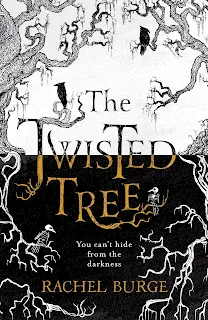
The Twisted Tree by Rachel Burge book cover

Reading the blurb for The Twisted Tree by Rachel Burge and finding out the main character Martha can tell things about a person just by touching their clothes, I was immediately sold. 

Discovering this is a young adult debut and part ghost story set in Norway based on ancient Norse mythology was a bonus.

Regular Carpe Librum followers will no doubt have noticed that I don't read much YA at all, but The Twisted Tree reminded me that I still enjoy the odd title every now and again.

Martha is partially blinded in an accident and has run away from home. She travels to Norway seeking answers from her grandmother, desperately hoping she can explain her strange ability to discern memories and emotions just from touching a person's clothes.
"Mum had bought the blouse a few days ago, and it was the first time I'd touched silk. I know from going through her wardrobe that different types of fabric reveal their secrets differently - cashmere holds a person's emotions and makes you feel them like your own; cotton shows images and facts without feeling - but silk is like nothing else. It speaks of deceit." Page 19
Complete with a creepy gothic cover design and easy to read YA thriller building from the opening pages, The Twisted Tree by Rachel Burge was a pleasure to read.

Martha is struggling to come to terms with her changed appearance since the incident that left her blind in one eye, and there is a subtle budding hint of romance that takes place during all of the spooky thrilling action.

The Twisted Tree is the first in a series to feature Martha, and the next one is called The Crooked Mask and was published in 2020. The Crooked Mask continues the story of the two main characters, but I think I'm happy to leave them here, fully satisfied that I finally read this book, after adding it my list back in November 2018.

The Twisted Tree by Rachel Burge is a great choice for October reading, providing some scary and spooktacular moments and a super creepy tree.

My Rating:


31 August 2022

Review: Farmhouse by Sophie Blackall

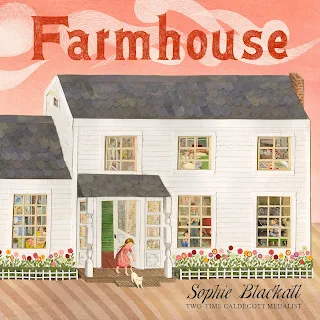
Farmhouse by Sophie Blackall book cover

* Copy courtesy of Hachette Australia *


The impact time has on people, buildings and the environment is a constant theme in my reading, and Farmhouse by Sophie Blackall is based on the true story of a house the author discovered when she purchased an old farm. The house was falling down and neglected, yet a family of twelve children had once been raised and lived within those walls. Sophie Blackall was hooked and loved exploring the items and sorting the objects left behind to piece together their stories.

Together with the fact that this children's picture book includes a 'dollhouse-like interior', I was eager to step inside Blackall's Farmhouse to learn about those who once lived there.

Farmhouse is a tribute to this house and other unnamed and unknown homes and residences which have been abandoned or outlived their purpose and which have eventually been reduced to dust in the name of progress.

Firstly, my favourite thing about this picture book are the end papers. A montage of artwork and photographs of items and materials from the house that inspired the book, it's absolutely captivating. It's like looking at a digital scrapbook of creativity, memories and the passage of time. Look closer and the curtains around the windows are scraps of fabric, look again and you'll notice newspaper clippings, photographs and scraps of wallpaper.

I was spending such a long time admiring the mixed media illustrations that when I turned a page and the text started mid sentence, it was disorienting. The entire story is told without a single full stop and while I found this bothersome, perhaps it wouldn't have been so noticeable if I'd been reading it with a child at the intended pace.

Also, I treasure and look after my books, however the dust jacket on my copy of Farmhouse is looking a little tired around the edges from minimal and careful handling, so I can't imagine how quickly this would begin to look tatty in the eager hands of little readers. (I do wonder about the wisdom of dust jackets for children's picture books, so if you have an opinion on this let me know in the comments section below).

Illustrated by the author herself, Sophie Blackall was born and raised in Australia and was appointed a Member of the Order of Australia (AM) for her significant service to children's literature.

I enjoyed the story behind the story and finding out the content in Farmhouse was inspired by those who actually lived there - in the author's note at the back of the book - gave greater meaning to this charming little storybook.

My Rating:


29 August 2022

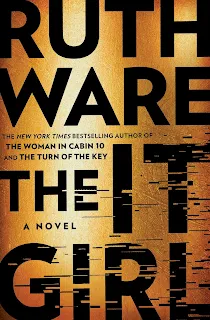
Review: The It Girl by Ruth Ware

The It Girl by Ruth Ware book cover

* Copy courtesy of Simon & Schuster *


I absolutely adored the rich setting of The It Girl by Ruth Ware in the fictional campus college of Pelham College at Oxford University. 

Having visited Oxford in 2012 and 2018, I easily fell into the academic student vibe and wished I was among the characters fortunate enough to study there. Put it this way, I was definitely conjuring Dead Poets Society vibes as I was reading.

Our protagonist Hannah Jones is an impressive character and we pick up her story on her first day at Oxford. Later on, we find out more about her humble upbringing:
"I was the only person in my year at school to apply for Oxford. I'm the first person in my family to come here too. In fact, my dad doesn't even have a degree - he's a builder who left education when he was sixteen. I didn't volunteer to feed underprivileged kids in my gap year or spend my summer digging wells - I spent my summer working in a supermarket. As you may have guessed, I don't always feel like I fit in here. But I'm determined to prove I belong." Page 55-56
When Hannah moves into her accommodation on campus in Pelham College, she's surprised to be sharing a common room with April Clarke-Cliveden. April is charismatic, rich, confident, intelligent, beautiful and manipulative. April is the classic 'it girl' with a gaggle of loyal friends, Hannah, Will, Hugh, Ryan and Emily but by the end of the second term, April has been murdered.

The story unfolds in two timeframes, Before and After and both were compelling. At 420 pages in length though, I thought it was probably 50 pages too long. The After section takes place 10 years after the murder and we learn from the blurb that the man convicted of April's murder has died in prison. Hannah is married to Will and expecting their first child when this death occurs which sets off a chain of events.

Both time frames contained an element of mystery and suspense, although the ending was unexpected which is exactly what you want in a domestic thriller from Ruth Ware.

I do wonder though, if I've been spoiled forever after reading and loving my first Ruth Ware novel in The Turn of the Key back in 2019. That book went on to make my Top 5 Books of 2019 list and the ending was so amazing, it made me gasp out loud. Every time I've picked up a Ruth Ware novel since then (see my review for One by One by Ruth Ware) I'm hoping to have a similar mind blowing reading experience. The It Girl fell short of blowing my mind or making me gasp, and it won't be a contender on my Top 5 list for this year, but it was a thoroughly enjoyable 'whodunnit', that's for sure.

I recommend The It Girl by Ruth Ware to crime and thriller readers, campus novel enthusiasts and those with a special place in their heart for Oxford.

My Rating:


24 August 2022

Review: How to Win Friends & Influence People in the Digital Age

How to Win Friends & Influence People in the Digital Age by Dale Carnegie & Associates audiobook cover

This was dreadful. Originally published in 1936, How to Win Friends & Influence People by Dale Carnegie remains one of the most popular self help books in print and one of the best-selling books of all time. Despite being decades old when I got around to reading it many moons ago, the core principles were still relevant and I continue to be mindful of these lessons years later.

When I saw that Dale Carnegie & Associates published an audiobook with an update for the digital age in How to Win Friends & Influence People in the Digital Age, I thought it might be worth a listen. Perhaps with the advent of social media and online presences, there'd be a lot of new ground to cover, despite being released more than 10 years ago.

Unfortunately not. This was a disappointing listen with nothing earth shatteringly new or even mildly interesting to add to the Carnegie repertoire of human connection. I just retrieved my foxed and yellowed copy of How to Win Friends & Influence People from my bookshelf to compare chapter headings and what do you know, they're very similar. In this audiobook, Part Three, Chapter 2 is called 'Never Say, You're Wrong'. In the original, Part Three, Chapter 3 is 'If You're Wrong, Admit it'. Hmmm.

With the success of the original I guess it's logical for opportunists to want to cash in on the enterprise but I really wish they wouldn't. Even if I'd read this on the day it was released in 2011 I wouldn't have been impressed. Reading it 11 years after publication left me feeling irritated by how the digital references are noticeably dated. How to Win Friends & Influence People in the Digital Age is a book that has dated very quickly without adding much of consequence to the original, so I couldn't recommend this as having any value for readers today.

Read the original and move on.

My Rating:


18 August 2022

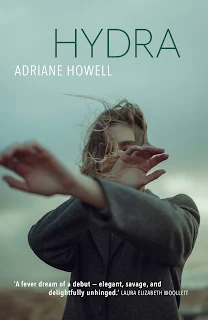
Review: Hydra by Adriane Howell

Hydra by Adriane Howell book cover

* Copy courtesy of Transit Lounge *


Hydra by Melbourne based author Adriane Howell is set on the Victorian peninsula in an area I was once quite familiar with. Our main character Anja is an antiques dealer working in the Mid Century Modern Department for Geoffrey Browne Auction House. 

I was intrigued by the goings on in the auction world of antiques and in particular Anja's desire to classify objects based on their emotional responses.

The author had me on page 3 with Anja's description of her work:
"It was a thrill finding an object hidden for generations and unearthing its narrative. Who had dusted it, lounged in it, held on to it with a false sense of duty? And for how many decades had it sat in the one room, absorbing years of cheer and anguish that left stains even the most skilled carpenter couldn't sand away?" Page 3
This period in Anja's life is short lived though as she unexpectedly blows up her career in a gesture that actually made me gasp out loud. This isn't a spoiler, and when I read about it in the blurb I assumed there was going to be a theft or fraud or something of that nature, but no. You'll NEVER guess how she actually ends up losing her job and it's probably my favourite moment of the book.

Moving on, Anja flees the city and uses the last of her mother's inheritance to enter into a 100 year lease on an isolated cottage located in a reserve belonging to the Department of Defence. If you're thinking this peninsula setting sounds a lot like HMAS Cerberus, you'd be right. I actually spent a month living on base during my training as an Officer in the Navy and I really enjoyed the setting as a result. The inclusion of Navy reports interspersed throughout the novel were interesting but did provide additional context.

The author's prose and descriptions of the nature reserve and the wildlife were evocative and occasionally gave me pause:
"The bush was like a rococo relief: scrolling and curvaceous, dramatic and untamed." Page 165
We learn the cottage has been vacant for some time and requires a clean out and makeover; one of my favourite story arcs. I was rooting for Anja to begin to get her life back on track in the new rural surrounding but things don't quite go to plan. Snatches of Anja's backstory are drip fed into the narrative, leaving the reader to decide for themselves if the protagonist is becoming unhinged or not.

Strange things start to happen around the cottage, and on the whole, I didn't like many of Anja's choices and actions. This reminded me of The Girl on The Train by Paula Hawkins when the protagonist acted against my advice despite my shouting at the page. Don't you hate it when characters refuse to listen?

This debut novel is full of suspense and slowly reels you in. The sheer isolation and slow unravelling of Anja's career and personal life made for a tense and suspenseful read.

Fortunately these moments were broken up by a few lighter moments like this:
"If Beth were a Wegner chair she would be a PP250 Valet - practical to a fault. That's why I didn't tell her about the porch poo." Page 83
If you're rushing off to Google the Wegner chair to see what it looks like, you're in good company. I did the same.

Hydra definitely straddles a few genres, and I'm not sure if I would call this literary horror, as there isn't much blood/gore. However, it certainly has a dark undertone and sense of spiralling dread about what's going to happen, putting me in mind of some literary horror novels I've read in the last 12-18 months. The ending wasn't what I was hoping for, but it was in keeping with the genre and true to the character, so there is that.

Nevertheless, Hydra is a solid debut by Melbourne based author Adriane Howell, and I can't wait to see what she writes next. I suspect this is just the beginning of a promising career.

My Rating:


15 August 2022

Framed Giveaway Winner Announced

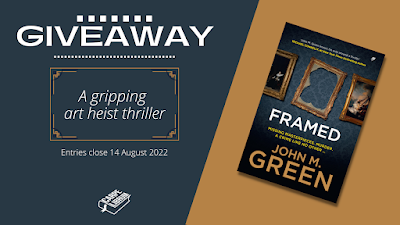
Thanks to all of those who entered my giveaway last week to win a print copy of Framed by Australian author John M. Green. You all answered correctly, that JJ spied what she believes to be a priceless painting by Van Gogh.

Entries closed at midnight last night and the winner was drawn today. Congratulations to:

Denise Ackers!!


Congratulations Denise! You've won a print copy of Framed by John M. Green valued at $29.99AUD thanks to Pantera Press. You'll receive an email from me shortly, and will have 7 days to provide your Australian postal address. You'll then receive your prize direct from the publisher so I hope you enjoy!

(Kirsten, if you're reading this and wondered why I didn't email you after you 'opted in', the email address you gave was 'yes' so I couldn't contact you).

Carpe Librum!
Carpe Librum image promoting the giveaway for Framed by John M. Green.

14 August 2022

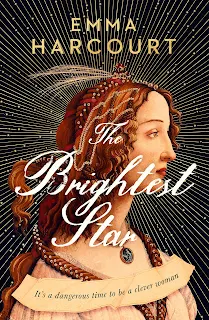
Review: The Brightest Star by Emma Harcourt

The Brightest Star by Emma Harcourt book cover

* Copy courtesy of Harper Collins *

Set in Florence, The Brightest Star by Emma Harcourt starts in 1479 with the birth of Leonarda Lunetta (Luna) Fusili. Luna is born with a misshapen leg and is immediately rejected by her mother. The eldest daughter of Signore Vincenzio Fusili, Luna is brought up with reading, debate, science and astronomy, usually the preserve of male heirs.

Twenty odd years later and Luna's father is supporting the Medici family in secret after Piero di Lorenzo de’ Medici's banishment from the city. Renaissance Florence is beset by fundamentalist preacher Friar Girolamo Savonarola who reminded me a little of the High Sparrow in Game of Thrones. Luna finds herself taken in by him at one of his sermons:
"Luna heard tenderness in his entreaties to the congregation and there was a murmur of agreement from the floor. The people swayed and gasped as one as the preacher grew ever more impassioned. Luna swayed just as the strangers around her did, and there was a warm fealty in doing so." Page 127
When piles of precious books are burned and neighbours thrown out into the street for heresy, a feeling of dread pervades the family. Luna has a passion for learning and longs to continue her studies but her step mother's insistence she be wed or attend a nunnery on account of her leg is thwarting her plans for the future. Luna has received an education usually reserved for boys and she fights the inequality between the sexes, her lack of agency and the ignominy of her disability. Luna is a terrific protagonist and I really felt for her as she strived for what she wanted and fiercely resisted having her future decided for her.

Despite the political tensions and the danger of incurring Savonarola's wrath, there are moments of light dialogue and sensational writing. I particularly liked this phrase:
"Now, wash your hands and find your sister for me. She frolics somewhere outdoors and ignores my calls to come inside. Her antics age me ten moons in a day." Page 57
Ten moons in a day, I think we can all relate to how that must feel!

The Brightest Star is well researched by this Australian author, the Florentine setting felt authentic and I enjoyed the period details. I particularly enjoyed the two references to the period of the evening where the 'second sleep' of the night takes place on pages 77 and 167. Regular Carpe Librum readers will know this is one of my favourite nuggets of history surrounding sleep.

The introduction of Nicolaus Copernicus as a minor character in the second half of the novel was a nice surprise and I enjoyed following Luna as she grew and matured into a young lady.

Reading The Brightest Star by Emma Harcourt put me in mind of TV series The Borgias and I'm listening to that soundtrack right now as I compose this review. 

The Brightest Star by Emma Harcourt is highly recommended for historical fiction readers and those interested in Renaissance Florence, the power of a classic education, a disabled protagonist and a love of astronomy.

Read a FREE extract here.

My Rating:


09 August 2022

AViVA Winners Announced

Thanks to all of the Outsiders (AViVA fans) who entered my giveaway last week to win 1 of 2 signed double packs of Self/Less and Relentless by Australian author and artist AViVA. Relentless is out today and it's time to announce the winners.

Entries closed at midnight last night and the winners were drawn today. Congratulations to (drum roll):

LeeW and Dr Aurion!!


Congratulations! You've both won a signed double book pack valued at $39.98AUD thanks to Pan Macmillan. You will receive an email from me shortly, and will have 7 days to provide your postal address and preferred inscription. You'll then receive your prize direct from the publisher so I hope you enjoy! 

For those who missed out, I'm currently running a giveaway for Framed by John M. Green, so feel free to enter if you're in the mood for a 'gripping art heist thriller'.

Carpe Librum!


08 August 2022

Review: Saved by the Siesta by Brice Faraut

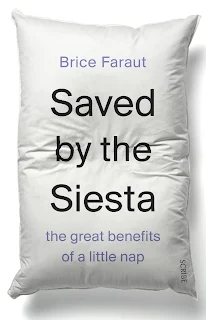
Saved by the Siesta - The Great Benefits of a Little Nap by Brice Faraut book cover

* Copy courtesy of Scribe Publications *


I'm fascinated by the topic of sleep and never tire of talking about sleep, sleep habits, dreams and the science of sleep. Saved by the Siesta - The Great Benefits of a Little Nap by Brice Faraut and translated by Eric Rosencrantz is a compact read and promises to be an 'expert guide on the art and science of napping', something I haven't explored before.

Faraut is a neuroscientist and spends much of the book establishing the benefits of night time sleep in order to highlight the problems when a patient doesn't attain a full night's rest; or worse, begins to accrue a sleep debt. He also outlines the different sleep needs we have from the cradle to the grave, so the reader's age will be a factor to consider when reading this book.

I enjoyed the reminder about the nasal cycle (learned when reading Breath - The New Science of a Lost Art by James Nestor):
"One such clock controls the alternation of our nasal cycle and, much to the detriment of the quality of our sleep and for reasons long unknown to us, makes us roll over every 60-90 minutes from one side of our bodies to the other, namely the side with the currently congested nostril." Page 16
I had a head cold this week, and it's these periods when we become more aware of the nasal cycle. I've read before that during sleep our brains cleanse toxic substances away, however I didn't know that
"the space between our billions of brain cells increases by 60 per cent during sleep." Page 43 Apparently our brain is contracted and curled in upon itself when at full capacity, but when we sleep it relaxes and dilates to its full volume, enabling the cerebrospinal fluid to drain the toxic metabolites away from the brain twice as fast. No wonder we can feel groggy when we wake up or stumble to the bathroom in the middle of the night.

The section describing how a lack of sleep causes increased sensitivity to pain rang true for me as someone with a chronic pain condition. The less sleep or rest I have, the worse the pain levels. The author acknowledges that those with chronic pain find it harder to sleep in the first place, which in turn makes their pain more difficult to endure, creating sleep debt and reinforcing a negative spiral. That's where naps come in. According to the author:
"Napping might also turn out to be useful in relieving pain caused by fibromyalgia." Page 132
While this wasn't news to me, it may be enlightening and helpful to readers new to the topic.

The author provides a brief overview of many sleep studies conducted around the world, some of which he was involved in, however much of the content will be too scientific for many readers. Faraut points out the numerous ways in which not getting enough sleep - or working night shift - takes its toll on the body in terms of reaction times, memory, mood and general health to the longer term effects and even cancer.

Faraut then goes on to recommend different nap durations at different times of day that will directly address a patient's concern, e.g. to improve memory performance, have a long nap with 'deep stage-three slow wave sleep to eliminate parasitic information and REM sleep.' However given the variables already presented, the reader almost needs a slide rule, calculator and health questionnaire to figure out precisely how to apply the advice to their unique set of circumstances. When I take a nap, I'm usually recovering or recuperating, not preparing for something, but how normal is this? What about you? Do you nap in advance?

I was interested to learn about the 'correct body positions' for napping but lying on your back or sitting at a reclined angle was deemed best, without mention of side or stomach sleeping which was disappointing. The 'ideal time of day' to nap varies greatly on your existing sleep habits, health status, work practices, sleep patterns and circadian clock. If I am older and rise later than you, then the best time for each of us to take a nap will vary. See what I mean about the slide rule?

I agree with the author in his conclusion that it's more important to get a proper night's sleep in the first place, but as we know, life isn't perfect. I also agree with the author that:
"We need to change our view of sleep and put paid to the misconception that sleeping's a waste of time, opportunities, and money." Page 141
More and more patients experiencing sleep problems and insomnia are glued to their devices, too razzed up to sleep and with a FOMO preventing them from disconnecting or being able to relax and let it all go. I'm a strong proponent of the curative and healing benefits of sleep and appreciate the benefits of a nap first hand. It's often my preferred method of recovery however I wasn't able to learn anything new here to supplement previous reading.

I'll leave you with some closing words from the author:
"What is certain, on the other hand, is that taking a nap every day to offset our sleep debt is a natural and beneficial medication. From morning to mid-afternoon, the variety of possible nap durations, from 10-90 minutes, depending on our availability, age, and needs, makes it a judicious and formidable weapon for reinforcing not only our metabolic, hormonal, immune, somesthetic, and cardiovascular functions, but also our alertness, cognitive performance, memory, mood, empathy, and creativity." Page 144
Saved by the Siesta - The Great Benefits of a Little Nap by Brice Faraut is recommended for readers new to the science of sleep looking to unlock one of the body's most basic yet crucial functions.

My Rating:


05 August 2022

Giveaway: Framed by John M. Green

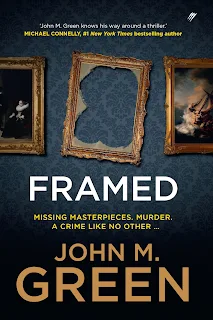
Framed by John M. Green book cover

* Copy courtesy of Pantera Press *


Intro

Australian author John M. Green is no stranger to Carpe Librum. I interviewed John back in 2012 after reading and reviewing The Nowhere Man and Born to Run. I attended the book launch for The Trusted in 2013 and also ran a giveaway when I reviewed The Tao Deception in 2016. Back then, Anne Hutton was the lucky winner, but who will be our winner this time around?

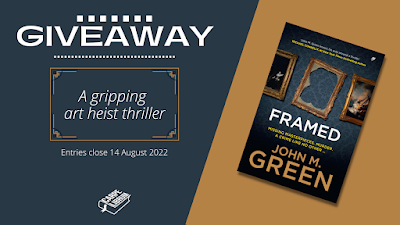
John's latest thriller Framed is out this month and I've teamed up with Pantera Press to run a giveaway to celebrate. Framed is a 'gripping art heist thriller', so enter below for your chance to win a copy. Entries are open to those with an address in AUS and close at midnight AEST Sunday 14 August 2022. Good luck!


Blurb

When art conservator JJ Jego spots a long-lost masterpiece through the window of a luxury apartment, she’s drawn into a dark web of intrigue, deception and murder.

JJ spies what she believes is a priceless Van Gogh. Except it can’t be … that painting, Six Sunflowers, was destroyed during World War II. She also glimpses what looks like a Rembrandt, one stolen in the infamous 1990 robbery at the Isabella Stewart Gardener Museum in Boston.

JJ sets out on a mission to discover if these works are fakes or genuine. But when she gets in too deep, she is forced to seek help from her estranged father, a Sydney detective.

From the pubs of Belfast to the boardrooms of Monte Carlo and the shores of Sydney Harbour, this gripping art heist thriller exposes a shadowy underworld where JJ crosses paths with a global organised crime empire in her pursuit to solve some of art history’s biggest mysteries.
Carpe Librum giveaway image for Framed by John M. Green

Giveaway

This giveaway has now closed and the winner will be announced soon.


04 August 2022

Review: The Lady Di Look Book by Eloise Moran

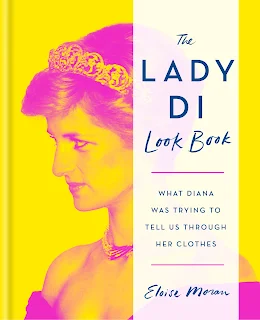
The Lady Di Look Book - What Diana Was Trying to Tell Us Through Her Clothes by Eloise Moran book cover

* Copy courtesy of Hachette Australia *


Princess Diana is one of the most famous women in my living memory and her legacy continues today, more than a quarter of a century after her death. There is a revival in Lady Diana inspired fashion choices and I find it interesting that many of the women following the trend were born after she died in 1997. Perhaps Princess Diana is to this generation what Marilyn Monroe is to me, a captivating icon of a not too distant era. Princess Diana's public and private life were scrutinised in life and continue to be analysed after death and yet a fresh perspective via her wardrobe choices and fashion statements was too appealing to resist.

Eloise Moran is a fashion journalist and her Instagram account @ladydirevengelooks is so successful, we are now lucky enough to view her work in this collection, The Lady Di Look Book - What Diana Was Trying to Tell Us Through Her Clothes.

Beautifully presented in a wonderful hardcover, this collection showcases many styles and fashion choices as Moran documents Diana's life with her accompanying essays. As the author admits, Moran was only 5 years old when Princess Diana died in 1997 and came to look up to her as a fashion icon much later, after experiencing her own breakup. I think there's a lot of theorising and projecting going on by the author - and the rest of the world - when it comes to imagining what Lady Diana was thinking or feeling in these photographs but aren't we all guilty of that? I know I am.

This book has been described as a 'smart visual psychobiography' and I'm not embarrassed to admit I didn't know what this was. Apparently a psychobiography is a biography that aims to understand an historically significant individual through the use of psychological theory and research. I wonder if The Lady Di Look Book is my first psychobiography. I think it'd be fun to find out so I'll need to go back through my reading list. In the meantime, if you know any you think I might like, please recommend them in the comments section.

If you enjoyed this review, you might also enjoy my review of Our Rainbow Queen - A Tribute to Queen Elizabeth II and Her Colourful Wardrobe by Sali Hughes. It seems I have developed an interest in the fashion of the Royal family and I'd love Eloise Moran - or Sali Hughes for that matter - to produce a book about the Duchess of Cambridge, Catherine Middleton.

If you're an anglophile, photographer, fashion guru, influencer or history lover (wow, this book appeals to many different audiences) then I highly recommend this.

Thanks to the publisher, you can also Look Inside before deciding to read this for yourself.

My Rating:


01 August 2022

Giveaway & Interview with AViVA

Australian author AViVA

Intro

It gives me great pleasure to welcome AViVA to Carpe Librum today! An internationally successful YA author, musician and fellow Australian, AViVA joins me today to celebrate the upcoming release of Relentless on 9 August with a giveaway and Q&A!

Pan Macmillan is providing two signed double packs of Self/Less and Relentless for 2 lucky Carpe Librum winners, enter below.

Interview

Thanks for joining us AViVA! Let’s start with an easy question first. Young fan Bridgette loves your music and would like to know if AViVA is your real name?
Yes it is!

Being an internationally successful musician with more than 3 billion global streams of your music at last count, how do you balance the competing demands on your creativity for music and writing?
I find the only way to get everything I need to get done is by having routine, rituals, and structure. I get up early every morning (around six AM) and go to bed early, when I can. On tour it is hard to get to bed early but getting up early is almost essential because that is when I get my best work done, while my brain is fresh and not being filled with all the other tasks of the day.

Can you tell us a little about your YA book Self/less and the new sequel Relentless?
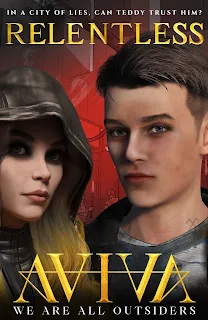
Relentless by AViVA book cover
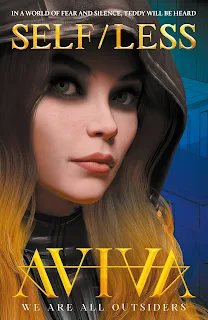
SELF/LESS is about a girl named Teddy who has grown up in a city where everything is tightly controlled and maintained by the governing body – the Metropolis City Council. She is on the cusp of becoming an adult in the society. She learns some secrets about her families past and discovers some lies from her city. The world she grew up in is devoid of self-expression or creativity and she soon discovers that that isn’t the case for everybody when she discovers the Underground.

In RELENTLESS we continue following on with Teddy as she makes new friends and ends up back in the city, and learns that the cities lies run further and deeper than she could have ever imagined.

Do you need to be in a different environment or headspace to compose and write music or work on a manuscript? Do you immerse yourself in writing and then turn to music, or do you like to do both interchangeably?
I write books very differently to how I write music. When writing melodies and lyrics, I like to go in completely free of mind and with very little ‘pre work’ other than a stimulus word, or an idea of what I want the song to be about. Once I’m in the studio I just go with my intuition and where the song takes me.
 
When I’m writing books, I like to spend time writing an outline first, it’s impossible to achieve such a large body of work if you don’t know where you’re going. That isn’t to say that I never change what I thought originally, or completely go on a tangent, but before I start writing I like to have an outline so at any point, if I feel lost or overwhelmed, at least I have a ‘map’ that I can check in on — so no excuses to have writers block and ‘not know’ what to do next!

Is there much overlap between the fans of your books and fans of your music?
My fans are very enthusiastic about all my creative works, which is something I am so grateful for. I’m not sure how many fans have read the book, it would be impossible to know, and I don’t know how many new people have found my music through the writing, but the two mediums inform each other, and the world of the story has always been threaded through visually as well as sonically and of course with the themes of self-expression and creativity!!
Self/Less by AViVA book cover

Your community of fans are known as outsiders. When did you start feeling like an outsider and why are books and YA series about outsiders so popular?
I think we all feel like Outsiders at different times in our lives, there are always those occasions when we don’t feel like we fit in. It is a universal experience yet when we're in the thick of it, it feels like no one else might understand. Anything that helps us understand difficult feelings and emotions makes us feel better, seen, understood or even less alone. I have felt those feelings at times throughout my life because often as an artist and creative person you can think differently to other people — you have to, that is what makes artists dreamers, and it is what makes the art possible. So yeah, I think it’s because we all crave being understood, and the idea that other people feel like outsiders too, makes us feel less alone.

Has the pandemic changed your reading or writing habits in any way?
I am a voracious reader — I like to read a lot and fast, when I’m in a groove I can read a book or two a week, but that changes depending on what I’m working on. If I’m writing a first draft, I try not to read so much because I don’t want to pollute my ideas — I try to get the draft out without reading anything, which is hard because I LOVE TO READ. Once a first draft is done, I go back to my reading schedule which is whatever I like whenever. I will only ever read three books at the same time (if that.) One on paper or my kindle, one audio book and one non-fiction.
 
Like I said before I get up early and start work early, this means writing or editing (never both at the same time, one or the other depending on deadlines) then business and admin. Once all that’s done I’m free to read (YAY), keep writing/ editing or doing something else creative like sewing and other crafts I enjoy while listening to an audio book. I’m a creature of habits and comfort and keeping this as my general routine (even when away) helps keep me sane and keep my creative well full.

Can you tell us about your other creative pursuits and how you nurture your creativity?
Everything I do is to try and feed my creativity. I read a lot and write my music and books, but I also enjoy a variety of other creative pursuits. I enjoy filling my mind with things that inspire me — it’s a difficult word ‘inspire’ because people often assume that what inspires me will automatically inspire them and that is rarely the case. I look to art, music, nature and from there think about how I’m moved emotionally. Then I pour those feelings into art making in all its forms. I sew clothing, quilts and dolls. I love taking photos and spending time in my garden as much as possible (when I’m at home). I knit and crochet too — my favourite crafts to take when I travel! I go through waves of watching tv or films. When I do watch, it’s only an hour or so a day and that usually bores me after a week or two, so I go back to my art studio and tinker making miniatures, sewing or making mixed media art while I listen to an audio book — that is my favourite way for me to nurture my creativity. Letting my mind wander and just playing!

Do you have a favourite book or series; other than LOTR? I heard you're a big fan of The Lord of the Rings and learned how to speak Elvish. That's so cool!
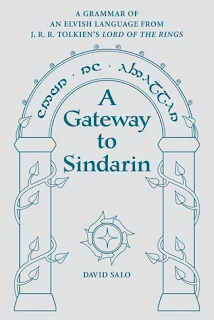
A Gateway to Sandarin by David Salo book cover
I have forgotten most of what I knew, but when I was fourteen (I think) there was a book on Tolkien’s Sindarin language (A Gateway to Sindarin by David Salo) at my local library and it was ‘reference’ only so I went every day in the school holidays and would pour over it for a couple of hours hand writing notes. This was before phone cameras could easily take photos, or I might have snapped a few pics and not had to go in.
 
Luckily one of the library ladies noticed I was the same person who had been requesting the book, so she made an exception and let me borrow it for a while.

That was her mistake, because I have a terrible problem where once I take the library book home, it’s nigh impossible for me to get it back (on time … they do get back eventually!) Luckily no one else had requested the book so when it finally got back all was well and my mind was full of inspiration and my heart was full of joy!! Too bad the returning problems didn’t and now I am self-banned from library cards.

That's quite the ban! So, what are you reading at the moment?
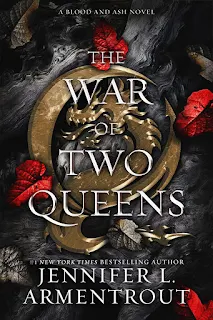
I am just about to start The War of Two Queens which is the last in the series From Blood and Ash by Jennifer L Armentrout.

The cover designs for that series are stunning! I understand you enjoy fantasy and science fiction and loved your interview with bestselling author Jay Kristoff. Is there an Australian book or series you believe deserves more attention or you wish was more widely read?
The War of Two Queens by Jennifer L. Armentrout book cover
I LOVE fantasy and science fiction. They and all their sub genres are my favourites but not the only genres to read in.
 
One author I have been reading and who has inspired me is Isobel Carmody. Her works are so vivid, and I think that she is recognised as one of Australia’s best fantasy authors so maybe it isn’t the right pick for the questions, but I think if you haven’t read any of her works, that should be remedied. The Obernewtyn Chronicles is the series that I think I first read of Isobel’s.

What’s next? Are you working on a book to follow Relentless?
I have written the first draft for the next book in the series, but currently my attention is all on the first draft for a new series I am working on. It’s a secret project with a whole new world, new characters, and new adventures. I’ve shared a little with my Patrons and they’re going to be first to find out the details of what’s next with this secret project!

Sounds fun, anything else you’d like your fans and readers to know?
Only that they can reach me on socials @thisisaviva pretty much everywhere. I’m always talking about what I’m up to, and I love hearing from readers and fans, so tag me!

Thanks so much for your time AViVA! Enter below for your chance to win a signed AViVA double back containing Self/Less and Relentless.
Carpe Librum AViVA Giveaway

Giveaway

This giveaway has now closed and the winners will be announced soon.