Spiritual
Showing posts with label Spiritual. Show all posts
31 July 2026

Review: Chasing Evil by Robert Hilland and John Edward

Chasing Evil - Shocking Crimes, Supernatural Forces, and an FBI Agent's Search for Hope and Justice by Robert Hilland, John Edward and Natasha Stoynoff book coverChasing Evil - Shocking Crimes, Supernatural Forces, and an FBI Agent's Search for Hope and Justice by Robert Hilland, John Edward and Natasha Stoynoff

Chasing Evil - Shocking Crimes, Supernatural Forces, and an FBI Agent's Search for Hope and Justice by Robert Hilland, John Edward and Natasha Stoynoff might end up being my favourite audiobook of 2026, although we still have a few months before the end of the year.

Written from the first-person perspective of Robert (Bob) Hilland, Chasing Evil is largely about his career as an FBI Agent. In the late 1990s, Hilland was working on the cold case of serial killer John Smith when he noticed the rise of John Edward's popularity as a psychic on the radio.

A resolute skeptic convinced of Smith's guilt but desperate for new leads on the case, Hilland reached out and made an appointment to see psychic medium John Edward. The year was 1998, and he took along a number of items belonging to a missing woman from the case and threw in some control items from female colleagues as a test of sorts. At the end of the meeting, Hilland's entire world view had shifted. John Edward identified the control items immediately and communicated information that he couldn't possibly have known, making Bob a believer in the spirit world in a matter of hours.

John agreed to work with Bob on the condition that his involvement was off the books and completely off the record. This surprised Hilland - thinking John would want to capitalise on the involvement to boost his reputation and profile - but readily agreed. We're told that this reluctance of Edward's came from a fear of disappointing or embarrassing his father who worked in the NYPD and who had asked him not to work with Police.

Reading a book about their collaboration naturally made me wonder how they went from keeping John's involvement secret to his agreement to be the subject and co-author of this book, but unfortunately this change was never explained. In the face of this glaring omission I can only assume John felt more comfortable for his work with the FBI to become public following his father's death, but this is pure supposition.

Hilland worked on a number of cases in his career but it's fair to say John Smith was his white whale, and was responsible for multiple deaths and disappearances. Chasing Evil was published in 2025, and I had to exercise a huge amount of self discipline and restraint not to look up the cases he was investigating to find out what happened. Instead, I waited for Hilland to tell me as the book unfolded and ended up listening at additional times during the day in order to hasten the process.

The audiobook is narrated by Hilland and Edward and early on there seemed to be a lot of sound effects added - creepy music, the sound of writing on a whiteboard - but thankfully these featured less and less as the audiobook went on. Co-author and collaborator Natasha Stoynoff helped to bring both of their experiences together in the book which felt cohesive and flowed exceptionally well.

Throughout his career, John's psychic ability helped Bob find bodies, make arrests and close cases. They worked so closely together that after 25 years they became as close as brothers. It was a touching relationship developed over a shared interest in fighting against evil and I got the sense they chased evil together; making the title entirely appropriate.

I read and enjoyed Crossing Over by John Edward in 2011 and have seen him perform live in Melbourne several times. I eventually stopped going or reading any more of his books because I found his delivery style a little arrogant. He's so confident in his gift, and he receives and delivers his information so quickly that he often comes across to me as insensitive. With so many people wanting readings and so many spirits hounding him to be heard, I imagine the pressure to be something akin to being an author in a signing line with a massive queue and a tonne of fans on his side of the desk pushing and shoving for his attention. In an environment like this he's unlikely to stop and pause and have meaningful interactions with a select few people, but prioritise quantity over quality but the end result can seem a little uncaring. Not long after finishing this book I saw that John Edward is returning to Melbourne in December and after reading this book and admiring his work again, it felt like the perfect time to go and see him. I can't wait.

Chasing Evil by Robert Hilland and John Edward is highly recommended for fans of true crime, skeptics and believers alike and I loved it!

My Rating:

Carpe Librum!

06 July 2026

Review: Atlas of Paranormal Places by Evelyn Hollow

Atlas of Paranormal Places - A Journey to the World's Most Supernatural Places by Evelyn Hollow book cover

Atlas of Paranormal Places - A Journey to the World's Most Supernatural Places by Evelyn Hollow is broken down into the following chapters: Haunted Places, Witchcraft, Sacred Sites, Myths & Legends, Strange Nature, and finally Cryptids & Creatures.

There's only one place listed for Australia, and I thought it would be the Devil's Pool, Babinda Boulders in Queensland but it's not. I'd never heard of Wycliffe Well in the Northern Territory but it's included in this atlas for its connection to UFO sightings, spies and ancient spiritual worship.

The atlas includes several locations familiar to this reader like the Catacombs in Paris, the Winchester Mystery House in California USA, Pendle Hill in Lancashire England, the Hanging Coffins of Sagada in the Philippines, Aokigahara Forest in Japan and the Door to Hell in Turkmenistan.

It was also nice to see the inclusion of Scotland's Bannockburn House in this collection as it was featured in the filming of the fantastic Outlander series.

However my favourite discovery of the book was that of Burg Eltz in Germany. Describing this twelfth century medieval German castle as a fairytale castle is an understatement. The home of the Eltz family for more than 800 years, it contains the ghost of a young woman who defended her home from an unwanted suitor and paid for her bravery with her life. Burg Eltz is one of the most wondrous castles I've ever seen and the photos on their website showcases the stunning grandeur of its architecture.

True to its name, the Atlas of Paranormal Places includes a world map at at the beginning of the book with each of the locations marked. Then each separate entry features a map page indicating the specific location of the place being described. My hardback edition borrowed from the library contained suitably themed end papers although I wish there were more photos included.

The Atlas of Paranormal Places - A Journey to the World's Most Supernatural Places by Evelyn Hollow enables the inquisitive reader to journey to paranormal places and explore geographic curiosities around the world, all from the safety of home.

And if you like the sound of this, you might also enjoy reading the Atlas of Improbable Places - A Journey to the World's Most Unusual Corners by Travis Elborough.

My Rating:

Carpe Librum!

06 June 2025

Review: What to Expect When You're Dead by Robert Garland

What to Expect When You're Dead - An Ancient Tour of Death and the Afterlife by Robert Garland audiobook cover

When the Pope died in April 2025 and his body was put on display for members of the church and the public to pay their respects, I was reminded how jarring it is to today's sensibilities and thought it was a good time to listen to What to Expect When You're Dead - An Ancient Tour of Death and the Afterlife by Robert Garland.

Covering the time period in history 100,000 BC - 400 AD, this audiobook references ancient texts, artworks and archaeology at a level I was largely unfamiliar with. However I did enjoy some of the content, including this quote taken from Greek Playwright Aristophanes (446 BC - 386 BC):
"In Aristophanes Frogs, anyone who has harmed a guest, failed to pay a boy for his sexual favours, struck his mother, punched his father or sworn a false oath is consigned to a sewer full of turds." Chapter 5 Heaven and Hell
The beliefs of many ancient civilisations and religions were offered, in addition to their thoughts on the afterlife, how best to lay the dead to rest and how to honour their ancestors.

As a youngster I was interested in the history of Egypt, the pyramids and of course the discovery of Tutankhamun's tomb. I was simultaneously disturbed by the fact mummified remains were once desecrated by grave robbers and disturbed in the 'modern era' by archaeologists, with artefacts removed to be sold to private collectors or displayed in museums. It shouldn't come as a surprise then that I relished the legend of the curse of Tutankhamun and enjoyed hearing more about Egyptian curses here:
"Thieves certainly weren't deterred by the stiff penalties they incurred if apprehended, death by impaling being a common punishment. Nor by the curses that the deceased promised to rain down on those who broke into their tombs. A typical Egyptian curse reads as follows: As for anyone who shall violate my corpse in the necropolis or shall damage my image in my chamber, the ka (spirit or soul) of Ra (sun god) shall abhor him. He shall not bequeath his goods to his children nor shall he be restful in life, nor shall he receive water in the necropolis. His ba (personality and soul) shall be destroyed forever.' " Chapter 8, Where to Deposit the Remains
Scary stuff! The book includes beliefs and practices from a range of ancient cultures and traditions, including Early Christian, Egyptian, Etruscan, Greek, Hindu, Islamic, Jewish, Mesopotamian, Roman and Zoroastrian. I'll admit I was in very unfamiliar territory here, however this did help to clarify that my interest in death rituals is anchored in Western culture closer to my own time. I've shared my interest in the mourning etiquette of the Victorian era in other reviews and have the current books on my virtual TBR to read at some stage in the future:
      • Fashionable Mourning Jewellery, Clothing and Customs by Mary Brett
      • Mourning Art & Jewellery by Maureen Delorme
      • Death in the Victorian Family by Pat Gallant
      • Childhood & Death in Victorian England by Sarah Seaton
Narrated by Zeb Soanes, What to Expect When You're Dead - An Ancient Tour of Death and the Afterlife by Robert Garland is recommended for dedicated non fiction readers with an interest in ancient history and ancient civilisations from 100,000 BC - 400 AD. I thought that was me but it turns out that it isn't.

My Rating:


18 October 2024

Review: Robinson Crusoe by Daniel Defoe

Robinson Crusoe by Daniel Defoe book cover

There are so many classics I still haven't read and thankfully my bookish buddy Veronica from The Burgeoning Bookshelf bravely agreed to tackle Robinson Crusoe by Daniel Defoe with me recently. We were both reading the Penguin clothbound edition and when I encountered a sentence 21 lines long within the first six pages - and looking further ahead saw zero chapter breaks - I knew I was in for a challenging read.

Published more than 300 years ago in 1719, this review is going to contain plot developments so if you're precious about having the plot of Robinson Crusoe spoiled you should give this review a miss. This book is about Robinson Crusoe and his adventures after being shipwrecked on an island. We get a surprising amount of backstory before the eventual shipwrecking but we're told on the title page that Crusoe spends 28 years alone on an un-inhabited island so how's that for a 300 year old spoiler from the author?

As a character, I wasn't a fan of Crusoe at all and I found him selfish and self-serving. The novel contains much internal reflection and thoughts about God and purpose and you could argue it was a spiritual story of sorts, although lacking a conclusion.
"Upon the whole, here was an undoubted testimony, that there was scarce any condition in the world so miserable, but there was something negative or something positive to be thankful for in it; and let this stand as a direction from the experience of the most miserable of all conditions in this world, that we may always find in it something to comfort our selves from, and to set in the description of good and evil, on the credit side of the accompt." Page 54
Crusoe has a good attitude in this regard and the ability to see the silver lining is an important life lesson still being learned today. There's also a heavy focus on gratitude, as this quote attests:
"It put me upon reflecting, how little repining there would be among mankind, at any condition of life, if people would rather compare their condition with those that are worse, in order to be thankful, than be always comparing them with those which are better, to assist their murmurings and complainings." Page 132
Naturally we have many sayings to this effect (the grass is always greener, there's always someone worse off than you, a bird in the hand etc.) but 300 years ago, I wonder if this sentiment was as well known as it is today.

However, I was most entertained when Crusoe was being industrious on the island. Scavenging everything he could from the shipwreck, he sets up a camp with defences, plans out his rations, ingeniously cultivates food sources and builds and makes almost anything. In the time he was alone, he dries grapes for raisins each season, builds pens for wild goats, sows corn and barley, weaves baskets and makes clothes, furniture and more.

The scariest part of the book by far was when Crusoe saw a footprint in the sand that wasn't his own. He was terrified and for the next two years worked to increase his defences while continuing to monitor his surroundings in fear.

Eventually we learn the footprint belongs to visiting 'savages' as Crusoe calls them - and again the reader needs to remember this was written 300 years ago - and he witnesses them killing and eating human prisoners. Embarking on a plan to rescue a prisoner was a grand idea, until Crusoe shares his ultimate purpose is not for a companion but to make one his slave.
"Besides, I fancied myself able to manage one, nay, two or three savages, if I had them so as to make them entirely slaves to me, to do whatever I should direct them, and to prevent their being able at any time to do me any hurt." Page 158
I found this abhorrent and was grinding my teeth in anger when Crusoe succeeds. He calls his freed captive Friday - for the day he was rescued - which I found terribly insulting. With all of that religious reflection, why didn't he choose to call the man Providence, Faith or Adam? He teaches Friday english and tells him his name is Master (eye roll). Friday is grateful to Crusoe for saving his life and swears fealty - in effect - for life.

Other similar rescues occur after this point, including Friday's father. Their reunion was an emotional moment, but he and a Spaniard return to the mainland in a canoe to rescue fellow Spaniards and plan to return to Crusoe's island and share in the plentiful provisions. In that time, a mutinied ship arrives, a battle of weapons and wits takes place, and Crusoe becomes the captain of sorts.

Without any hesitation, Crusoe decides to leave the island for good, completely setting aside his previous plan with Friday's father. I was infuriated that Crusoe has no qualms abandoning his previous agreement, instead believing a letter will suffice. He also doesn't acknowledge any reluctance by Friday to leave the island before his father has returned, knowing they may never see each other again.

When Crusoe reaches society, there was plenty about his business dealings but I was interested to hear how Friday was adjusting to the culture shock. Crusoe goes on to have a family, but did Friday want to return home or have a family of his own?

Alas we never find out because the protagonist is too selfish to care, taking pains to provide for a loyal old woman from his earlier life as a young man yet completely dismissive of his year's long companion. There's also no reflecting on God after his 'salvation' either. He just goes back to business and his affairs, ugh!

Having finished it, I'm shocked Robinson Crusoe by Daniel Defoe has been recommended reading for children and students over the years. The internal reflections are dull and the cannibalism and murders make it way too violent for young readers. If the book started with his shipwreck and focussed purely on his labours, then it would be one hell of an adventure. Alas, we have this story instead and I didn't enjoy it.

Thanks to Veronica for the buddy read and the encouragement to get through this. It's now off my list, woohoo! (I'm publishing this review on a Friday in tribute to an exploited and overlooked character).

My Rating:


23 September 2024

Review: Cuddy by Benjamin Myers

Cuddy by Benjamin Myers

Cuddy by Benjamin Myers is an historical fiction novel told in a blend of writing styles, including: narrative prose, quotes from historical reference books, poetry, diary entries and even a play. Anticipating a novel about the life of Saint Cuthbert of Lindisfarne told in a fictional first person point of view, Cuddy was an unexpected story.

Born in 634 AD in Northumbria (modern day Scotland), Cuthbert had been a monk, a prior and a bishop and was a hermit at the time of his death in 687 AD. Beloved in life, many came to pray at his grave at Lindisfarne and were healed. Deciding to elevate his remains as relics on the anniversary of his death, his body was found intact - hadn't decomposed - and he was declared a saint. Pilgrims visited the shrine for decades until Viking raids threatened the area.

Cuthbert's body was transferred to a coffin and transported by a dedicated group of worshippers seeking a safe resting place for their beloved saint. On the move until the year 995, a site was finally chosen and a series of churches were built to house St Cuthbert's remains. Construction of Durham Cathedral commenced in 1093 and still houses the Shrine of St Cuthbert today.

Pieced together from the non fiction quotes in the book, I share all of this because it's a fascinating slice of history and if you're still reading, it means you agree. Myers has created characters from each of these periods of Cuthbert's history in the wildly different formats mentioned above.

We hear from Cuthbert (affectionately known as Cuddy) early in the book but he's already close to death:
"Well now. You should have been here a candle or two ago. The scenes of despair amongst the monks at my final days of retreat to this bluff in the foaming ocean was quite the picture." Page 7
I love that phrase, 'a candle or two ago.' In Book I we join the religious folk in 995 AD carrying Cuthbert's remains and an orphan girl who has visions regarding his final resting place.

In Book II we jump to the year 1346 and through the eyes of the fletcher's wife, meet a stonemason engaged in building the great Durham Cathedral. The work of the mason and the history of the stone - then and now centuries later - was beautifully written:
"In the stone is yesterday's sun and the stories it has seen, not only of wandering holy folk and the fiery Norse, not only old white churches and milkmaids, galloping Frenchmen and the green men that took to the trees but other details not always pressed to the page by monks. Everything the stone has borne silent witness to is held within it now...... Rainstorms and quarrymen, Picts, plague pits and paupers, hawkers and jesters, skirling new life and coughing old death, archers and anglers, devils and angels, sunrises and sunsets, courting couples sitting on stone walls watching snowfall, villeins and franklin and wandering freemen, nets of cuttlefish and pails of crabs, sores and scabs, bed-bound mothers and gaoled fathers, babies - a thousand wailing babies - and church bells, cabbage soup and nettles and worms and sacks and jam and garlic and knives and deer and murder and toll gates and caravans and soothsayers and plums and coffin-makers and lepers and laughter and ice and logs and oats and sex and sin and Cuddy and Jesus and God." Page 237
I know that was a long quote, but it perfectly captures the awe and wonder I feel when gazing at a Cathedral built more than 1000 years ago and I want to be able to revisit these words again, even if I no longer have the book.

Leaving those characters behind to leap forward a few centuries, the Interlude was based on a haunting and shocking account of history. In 1650, Durham Cathedral was used as a prison by Oliver Cromwell to house 3,000 Scottish prisoners of war. Suffering in the cold without food or water, the prisoners destroyed the pews and burned the timber in order to keep warm. Devastatingly, 1,700 soldiers died from battle injuries, dehydration and starvation and were buried in mass graves nearby.

This is a disturbing chapter of history I knew nothing about but certainly won't forget, as the author has created a macabre play for the Interlude, whereby several soldiers being held captive engage in dialogue with eachother and the cathedral. Yes, you read that right.

It was a relief to reach Book III covering the period in 1827 when an arrogant Professor from Oxford travels to the Cathedral to oversee the disinterment of the saint in order to verify his remains are uncorrupted. Diary entries tell this tale and the character is haunted by his complicity and fears for his sanity. I felt the author's outrage at the desecration and believe the character met a satisfying fate. 

Book IV brings us to 2019 and it was perhaps an unnecessarily long tale to deliver the reader to Durham Cathedral and the tomb of St Cuthbert.

Cuddy by Benjamin Myers seemed to me to be the story behind the building of Durham Cathedral over time told through the lives of a handful of individuals:
"My story, and that of Fletcher Bullard, just one story in a thousand million stories that combine to define a place, concludes thusly:" Page 263
While brief, each serves as a complete story and while the reader may be reluctant to leave a character or point in time, their stories reach a natural conclusion of sorts.

A word on the layout as there were several techniques that were used - presumably - to impress but which I found slightly irritating. In one case, a character's visions were presented in one continuous paragraph with font that slowly reduced in size until it was barely readable by the end. Elsewhere, poetry was presented with varying alignment choices that left me cold, with just one word or sometimes even one letter per line. I guess you could say that while I enjoyed the mashup of writing styles within Cuddy, the unconventional layout choices fell short of the mark.

The descriptions of the cathedral from characters across time were incredible, with the 2019 character of Michael describing the vast edifice before him as enrapturing. It certainly had me pausing at certain times in the novel to research a fact or take a virtual tour of the cathedral and I'd love to visit in person one day, even just to see the sanctuary knocker.
"The face of the Sanctuary Knocker then, is that of the lonely miscreant, the damned, the doomed, the cursed, the blasted, the blighted, the bedevilled, the fated; he who shall live their life seeking God's eternal forgiveness alone." Page 197
Now that I've finished reading Cuddy, I believe it to be the complex history of Durham Cathedral rather than the story of a saint. This unique blend of fact and fiction and multiple writing styles felt original and is recommended for fans of Ken Follett and his series beginning with The Pillars of the Earth.

Prologue AD 687
Book I Saint Cuddy AD 995
Book II The Mason's Mark AD 1346
Interlude The Stone Speaks AD 1650
Book III The Corpse in the Cathedral AD 1827
Book IV Daft Lad AD 2019

My Rating:


04 August 2024

Review: 12 Rules for Life - An Antidote to Chaos by Jordan B. Peterson

12 Rules for Life - An Antidote to Chaos by Jordan B. Peterson audiobook cover

Incorporating psychology; psychoanalysis; neuroscience; philosophy; ancient and modern literature; history; mythology; religious texts; poetry; current affairs; cases from his work as a clinical psychologist and stories of his life growing up, 12 Rules For Life - An Antidote to Chaos by Jordan B. Peterson is a difficult book to define.

Listening on audiobook to his distinctly Canadian voice, I was educated and inspired. I had some existing thoughts reaffirmed and challenged from a new viewpoint, and my mind opened to new ideas and concepts. Peterson is quick to explain:
"I'm not for a moment claiming, however, that I am entirely correct or complete in my thinking. Being is far more complicated than one person can know and I don't have the whole story. I'm simply offering the best I can manage." Overture
The best he can manage is a whole lot more than I have been managing and I enjoyed his perspectives immensely. You might assume the 12 rules of the title could be distilled into bullet points to save the reader some 15+ hours of reading time. Perhaps you're even hoping I'll do that here, but unfortunately you'd be wrong. Peterson's content isn't so easily summarised, Rule 12 is entitled Pet A Cat When You Encounter One on the Street for example.

Beginning with the behaviour of lobsters to introduce natural hierarchy and relate it back to humans was fascinating. The first two rules (Rule 1: Stand up Straight with Your Shoulders Back and Rule 2: Treat Yourself Like Someone You Are Responsible for Helping) were immediately inspiring and motivated me to take a chance on applying for something.
"You need to consider the future and think, what might my life look like if I were caring for myself properly? What career would challenge me and render me productive and helpful so that I could shoulder my share of the load and enjoy the consequences. What should I be doing when I have some freedom to improve my health, expand my knowledge and strengthen my body. You need to know where you are so you can start to chart your course." Rule 2 Treat Yourself Like Someone You Are Responsible for Helping
The author touches on all fields of study mentioned above, but the key quote I want to remember and come back to again because it inspired me to tackle a long neglected issue arrived in Rule 4: Compare Yourself to Who You Were Yesterday, Not to Who Someone Else is Today and it goes like this:
"Ask yourself: is there one thing that exists in disarray in your life or your situation that you could, and would, set straight? Could you, and would you, fix that one thing that announces itself humbly in need of repair? Could you do it now? Imagine that you are someone with whom you must negotiate. Imagine further that you are lazy, touchy, resentful and hard to get along with. With that attitude, it’s not going to be easy to get you moving. You might have to use a little charm and playfulness. “Excuse me,” you might say to yourself, without irony or sarcasm. “I’m trying to reduce some of the unnecessary suffering around here. I could use some help.” Keep the derision at bay. “I’m wondering if there is anything that you would be willing to do? I’d be very grateful for your service.” Ask honestly and with humility. That’s no simple matter." Rule 4: Compare Yourself to Who You Were Yesterday, Not to Who Someone Else is Today
As well as being educational, Peterson also makes me laugh. His story about taking the spoon back from his son and babysitting a neighbour's child had me chuckling. It's not often that I have two five star reading experiences back to back, but 12 Rules For Life - An Antidote to Chaos is the third five star book I read in a row last month.

Jordan B. Peterson is engaging and I always come away from reading his work having learned something new. He also practices what he preaches - Rule 8 is Tell the Truth or At Least Don't Lie - and causes a sensation online when discussing hot topics from time to time. Acknowledging his sometimes polarising nature, I recently enjoyed his in depth interview with Elon Musk which you can watch in full for free here.

It's likely 12 Rules for Life - An Antidote to Chaos by Jordan B. Peterson is now one of my favourite self help books of all time and I'm still letting it percolate in my mind, but already have plans to read his next book Beyond Order - 12 More Rules For Life.

The author's overall message is to encourage and inspire all of mankind to strive and improve themselves and continue to evolve. While plenty of people in the world don't want to do that, or believe they don't need to do that, I don't know anyone - Peterson included - who wouldn't benefit from doing precisely that.

Highly recommended!

My Rating:


10 November 2022

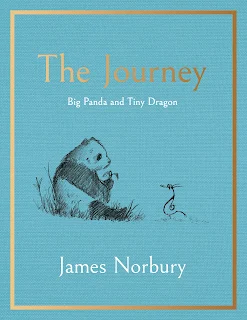
Review: The Journey by James Norbury

The Journey: Big Panda and Tiny Dragon by James Norbury book cover

* Copy courtesy of Penguin Random House *

The Journey: Big Panda and Tiny Dragon is a charming book written and illustrated by the talented artist James Norbury. It's the sequel to the international bestseller Big Panda and Tiny Dragon published in 2021, and while I've only read a sample from that book (freely available on the publisher's website), I was easily able to slide in with the characters as they embarked on their journey without the feeling I'd missed an important backstory.

A seemingly simple tale, our two protagonists, Big Panda and Tiny Dragon - delightfully depicted on the cover - embark on an adventure together, but things don't go to plan. As they encounter set backs and face difficult and challenging situations, Big Panda shares his wisdom with Tiny Dragon and the attentive reader:
'Problems should not stop us,' said Big Panda. 'They are simply nature's way of letting us know we need to explore a different path.' Page 22
The Journey is about so many things, including overcoming obstacles, generating hope and seeking happiness wherever we are. Achieving spiritual fulfilment, facing fear and adversity, seeing opportunities in setbacks, and having the courage to embrace change are also key elements of the tale. Other themes included gratitude, acceptance, resilience, mindfulness and above all, friendship.

At times, I did find myself wondering whether the author was trying to cram too many reflections and lessons into the book, with Big Panda seeming to espouse elements of Buddhist philosophy on one page and Hallmark sentiments on another.

While the book overall is a warm, feel-good read, sometimes the dialogue or mini life lessons felt contrived:
'But if making the change was easy, it probably wouldn't make very much difference. Great change requires great effort.' Pages 52-53
Big Panda is the Mr Miyagi of the book, full of wisdom, with Tiny Dragon eager to learn from his experience. Perhaps it's just me, but characters like Big Panda or Aslan from The Chronicles of Narnia by C.S. Lewis, are very appealing. Maybe it's something to do with their size and majesty and the effectiveness of the writing, but it makes me want to sit at the feet of Aslan or Big Panda and ask my own questions off script. I wonder what they would say...
'This raft is a little like us,' said Big Panda. 'Where it's been doesn't have to determine where it's going.' Page 60
It's not just Big Panda who always knows what to do, Tiny Dragon also has some revelations to share towards the end of their journey:
'I still feel some sadness at the loss of my friends, my home and, of course, my tea set, but I think maybe I am learning to be more accepting of things.' Page 141
I think you'll agree we can all try harder to be more accepting of things. I know I can, and it's a constant battle of self improvement for most of us as we try to 'do better' each day.

The Journey: Big Panda and Tiny Dragon by James Norbury will appeal to readers of all ages and backgrounds who will each find something different to celebrate within the pages. Young readers who have faced recent adversity in the floods, will especially relate to the plight of Tiny Dragon; who reminded me a little of Pickett, Newt Scamander's little pet in Fantastic Beasts and Where to Find Them.

Beautifully presented in a hardback edition with gold foiling and silk bookmark ribbon, The Journey: Big Panda and Tiny Dragon by James Norbury will make a heartwarming gift at Christmas.

My Rating:


07 November 2022

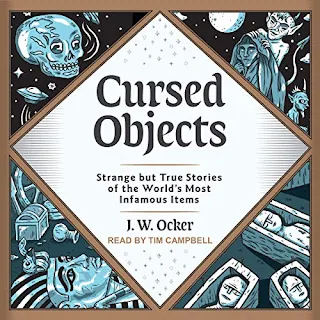
Review: Cursed Objects by J.W. Ocker

Cursed Objects: Strange but True Stories of the World's Most Infamous Items by J.W. Ocker book cover

Cursed Objects: Strange but True Stories of the World's Most Infamous Items by J.W. Ocker was a mildly entertaining and interesting book, the kind of which is soon forgotten, but enjoyed while it lasted. The author is clear at the start of the book that he doesn't intend to cover hauntings, whether they be haunted locations or haunted objects, which I thought was fair enough.

The book is perfect for the audiobook format and is divided into categories, with each object given its own chapter. Each object is covered in a brief 5-8 minutes on audiobook, or a few pages in print format.

In the chapter entitled Cursed Under Glass, we learn about the infamous Hope Diamond and Otzi the Iceman, whose mummified remains were discovered more than 5,000 years after his death.

I enjoyed learning about rune stones in Cursed in the Graveyard, which only served to reinforce my thoughts on disturbing tombs or burial sites for purposes of research or grave-robbing.

Cursed in the Attic introduced me to the case of The Crying Boy Paintings - which I'd somehow never read about - The Baleroy Chair of Death and The Basano Vase.

In the chapter entitled Cursed in Stone, one of the topics was The Amber Room and I recall interviewing author William F. Brown about it back in 2012 as well as doing a few hours of Googling on the topic. In fact, this entire book elicits frequent Googling as the reader is inspired to look at the physical object being described and read a little further than Ocker's offerings.

The Business of Cursed Objects chapter included Annabelle the Doll and the Warren Collection, and all manner of haunted and travelling museums. The Curse in the Machine included James Dean's Porsche 550 Spyder and The Prague Orloj (a magnificent medieval astronomical clock in Prague) among other items of interest including chain emails, which I thought was a bit of a stretch.

In his chapter Why Aren't These Objects Cursed, the author makes a good point when wondering why objects like the Mitchell-Hedges Crystal Skull and the Skin Book of James Allen don't have a reputation for being cursed.

Cursed Objects by J.W. Ocker was easy to digest with each cursed artefact covered in a short chapter, including information on where the item is (if the location is known) and how many deaths have been attributed to it.

Cursed Objects by J.W. Ocker was akin to stumbling upon a random documentary while channel surfing and being sucked right in. It's only when I surfaced at the end of the book that I felt as though that might have been a waste of time, given I'd done most of the research myself in all that Googling. At the time however, I was happy for the bite size curse snacks delivered up by Ocker.

Published in 2020, Cursed Objects by J.W. Ocker is a light read recommended for those interested in history, social history, archaeology, the paranormal and of course curses. Even if you're a skeptic, there are plenty of facts, geography and history to sink your teeth into and some ripper stories.

I'm interested to know if you believe in curses, bad juju or karmic consequences, so let me know in the comments below.

My Rating:


09 January 2022

Review: John Safran Vs The Occult by John Safran

John Safran Vs The Occult by John Safran cover

The last book for 2021 helped me achieve my reading goals, given that I needed one more book by an Australian male author in order to complete my Aussie Author reading challenge. (See what else I read here).

In John Safran Vs The Occult, Australian satirist John Safran explores his interest in religion, expanding his research to include witchcraft, black magic, satanism and the occult.

If you're expecting to learn more about what these practices are and their brief history, this isn't that book. Rather, Safran researches and then investigates current cases and crimes specifically attributed to witchcraft, black magic, satanism and the occult and takes the reader along for the experience. This makes for an individual case perspective rather than an analysis of these practices as a whole.

Written before the pandemic and published in 2019, Safran travels to Los Angeles, Texas and Vanuatu, and even meets a Muslim woman seeking an Islamic exorcism in his hometown of Melbourne.

Originally published as an Audible Original, Safran's unassuming personality and genuine interest in people and their beliefs enables him to get locals to open up and talk to him. I'll admit I got lost in the sea of people in Vanuatu and the myriad ways in which they were connected to the case, but hearing directly from the people being interviewed via excerpts was definitely a highlight. Safran's interview techniques build trust and rapport and listening to the stories it's clear the interviewees trust Safran to represent them honestly and with respect.

John Safran Vs The Occult is a solid introduction to the author's research style, varied fields of interest and unique delivery. As always, Safran manages to find the lighter moments and there are many chuckles along the way.

For more, you can check out my review of Murder In Mississippi by John Safran or check out my Google Hangout with him in 2013.

My Rating:


05 November 2021

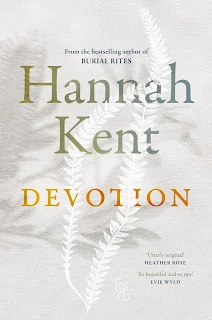
Review: Devotion by Hannah Kent

Devotion by Hannah Kent book cover
* Copy courtesy of Pan Macmillan Australia *

Devotion by Australian author Hannah Kent tells the story of a Lutheran family in Prussia who flee religious persecution in the early 1800s and set sail for the colony of South Australia. Our narrator Hanne is a nature lover and different from other girls her age. She's an oddball in her village who doesn't really fit in, until she meets Thea.

Several families from the town leave Prussia together and a large portion of the novel takes place on their hazardous and trying journey by sea to Australia. The writing is sublime and the conditions on board the ship felt so real that I began to feel a little claustrophobic just reading about their cramped living quarters and harsh conditions.

The foreign beauty of the landscape when they arrive in South Australia is powerful and moving, and I enjoyed reading this fictionalised settlement of what we now recognise as Hahndorf in the Adelaide Hills. The treatment of the original custodians of this land was respectful and well handled and the author provides more information in her Author's Note at the end.

Devotion is a slow moving character study about love and grief and I saw many parallels with Hamnet by Maggie O'Farrell. The writing is incredibly evocative and I often had to pause to enjoy the prose on the page. The title of this historical fiction novel is apt, as it's about an individual's right to worship, pray and embrace their own beliefs free from judgement and harm. But it's also about Hanne's devotion to nature, her twin brother and her friend Thea.

I adored Burial Rites and thoroughly enjoyed The Good People, but here in Devotion, Hannah Kent does something a little different. While The Good People contained Gaelic superstitions and folklore, Devotion dips more than a toe into the supernatural realm around halfway through the book. This unexpected shift will be met with surprise by many readers and I suspect some won't enjoy the change in direction. I willingly went with it, however my favourite part of the novel by far was the beginning, prior to the journey to Australia. The daily lives of those in the village of Kay put me in mind of several novels I've enjoyed recently.

Beautifully written, Devotion is about love and yearning, the uncertainty of youth and the hardships of the period. Overall, it was an emotionally heavy book to read, but so intricately lyrical at times I felt as though I was intruding on Hanne's private and inner most thoughts. It also made me wonder whether Kent drew on her own love story in order to create this fictional relationship so convincingly and so heartbreakingly.

Devotion is the third novel by Hannah Kent and this talented Australian writer has now become an 'auto read' author for me, which is rare. Highly recommended for historical fiction readers who have the time and patience to slow down and enjoy a character study about love and devotion.

My Rating:


18 May 2021

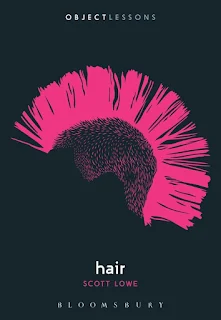
Review: Hair by Scott Lowe

Hair by Scott Lowe book cover
Hair and hairstyles are endlessly fascinating. The cultural differences, the meaning behind particular styles, the changing fashion trends over time, and the assumptions we make about people with particular hairstyles are limitless. If you find yourself wondering how the Ned Kelly beard made a comeback, or why a young person today would choose to rock a mullet, then you're interested in hair too.

Hair by Scott Lowe is from the Object Lessons series of books by Bloomsbury Academic, and I borrowed this copy from the library.
"So, the way hair is dyed, shaped, managed, neglected, restrained, or set free always has meaning. Hair is vexing and it is complex. Everyone has opinions about hair, so naturally the world's religious traditions have a great deal to say about it." Pages 12-13
Lowe goes on to say:
"Hair may be social or private, trendy or deliberately uncool, serious or ironic; hair is geographical, ethnic, and biological, but above all, I think it's religious." Page 14
Having taught religious studies for 30 years, Scott Lowe informs the reader early on that he is going to narrow his focus and present the religious aspects of hair in this book. Was I disappointed on learning this? You bet! Did I feel as though I wasn't going to get the full picture? Absolutely! However, the author still managed to hold my attention and teach me something new, like the fact that Muslim men remove their armpit and pubic hair.
"Modern Muslim men continue to practice a limited form of body depilation, removing only armpit and pubic hair. Torso, arm, and leg hair is usually left undisturbed. Head hair is neatly trimmed and kept short, beards are also trimmed but usually long." Page 46
Lowe points out that some religions use hair and dress to differentiate themselves from Muslims and other religions. Sikhs wear 'full moustaches, extravagant beards and often enormous turbans' and Hindus have short hair, heavy moustaches and no beards. Other religions and hairstyles were presented, including a topic of interest, the tonsure. A variety of interpretations for the shaven head were also revealed.
"A shaven head indicates disgrace or shame when used as a punishment, yet a similar hairless head might signify controlled rage on a White supremacist, self-confident power on a CEO, dedication to a life of celibacy on a Buddhist monk, a recent life transition on a Hindu, and mourning on a Lakota. It's complex." Page 122
The covering of women's hair for religious purposes is included, and wimples, hijabs, veils and wigs are touched on briefly, along with the history of blonde and red hair in men and women.

In an introduction to styling, Lowe piqued my interest with the following:
"In every epoch for which we have evidence, humans have employed enormous creative energy to devise new and distinctive hairstyles. From braiding to perming to tying hair onto massive wire and wood superstructures, powdering, flouring - before the French revolution put an end to that wasteful practice, French aristocrats purportedly used enough flour on their wigs every month to make thousands of loaves of bread - shaving, sculpting, lacquering, coloring, curling, gilding, waxing, primping, ratting, the list goes on and on." Page 69
Unfortunately for this reader, Lowe doesn't expand on any of these tantalising hairstyles, and much is left unexplored in favour of the focus on religion.

Ironically, Lowe had time in the book to touch on the strange custom of eighteenth-century British lovers who 'give each other clippings of their pubic hair' and the Victorian custom of mourning jewellery containing a lock of hair from a deceased loved one. With only three pages given to African-American hair and hairstyles, these were all topics I was eager to explore but will need to do so elsewhere.

My Rating:


16 March 2021

Review: Mrs Death Misses Death by Salena Godden

Mrs Death Misses Death by Salena Godden book cover
* Copy courtesy of Allen & Unwin *


Mrs Death Misses Death by Salena Godden is a literary feat exploring the grave topic of death. Mrs Death is portrayed as an old poor black woman overlooked by those who pass her by never knowing she holds their very lives in her hands.
"Only she that is invisible can do the work of Death. And there is no person more silenced than the woman, talked over, walked over and ignored than the woman, the poor woman, the poor old woman, the poor old black woman, your servant bent over a mop, cleaning the floor of a hospital. Did you see me today? Did you walk past?" Page 201
The portrayal of Death as anyone but a man in a dark robe with a scythe wasn't a shock to me and I was easily able to visualise Death as an old black woman. In the movie adaptation of The Shack by William P. Young, actress Octavia Spencer played the role of God and her performance was sublime. Mrs Death's character brought to life by Salena Godden with an expert hand was equally sublime.

However, when we meet Mrs Death she's exhausted by her work and seems to be seeking solace. Wolf Willeford is a struggling writer and when he purchases an antique desk, his connection to Mrs Death is strengthened. Mrs Death talks with Wolf and he begins to transcribe her stories.
"Mrs Death walks with me there. She tells me the river is one of her oldest friends. She says the Thames is filled with ghosts and old spirits. The floor of the River Thames is littered with engagement rings and the bones of dead babies. We stand together on the shore; we grow cold in the black shadow of the ghosts of slave ships, the clatter of the traders, the unloading of stolen goods and treasure, coffee, sugar and human cargo. Shadows of souls and the clatter of bones." Page 52
Wolf also transcribes stories of particular deaths that have stuck with Mrs Death over time. The Moors murders and the devastating fire at Grenfell Tower in 2017 are just two examples. On other occasions, Mrs Death attempts to impart her knowledge of the world in a direct appeal to Wolf and all of humanity in her advice on how to live life.
"To die is to have been alive, that is why you must live: live free, live wild, live true and live love alive. Let the fire burn you and the light blind you. Let your belly get full and fat and embarrass you. Let your words fall out and tumble carelessly and honestly. Let your passions be unlimited. And do your lifetime all in your own life time. And let all your shits stink and all your roses bloom. May your every success be a threat. Fuck being scared and infected with fear and doubt. Own your rejections and own your failures; they are an excellent wall to smash and to kick against. Every morning may you rise to fight and to create yet again, this time with both fists, and not with one hand behind your back." Page 64-65
This quote comes from an epic chapter narrated by Mrs Death and the entire chapter is full of quote-worthy moments I wanted to share here. Speaking to all of humanity and of course directly to the reader, Mrs Death says:
"I am Mrs Death and I am coming for you all. Accepting me is the first step, after that it gets easier, I promise you. Knowing me, knowing this, knowing that, that this all ends, is the best knowing you need to know." Page 65
We even get a chapter from the perspective of the Desk belonging to Mrs Death. You might harbour grave concerns this couldn't work but I can assure you it does. On reflection, it was one of the most enjoyable chapters of the entire book. Here's why.
"I have recorded every inky scratch of quill, the tap of her typewriter, the whisper of pencil and the slash of her fountain pen. Splashes of ink, wine and time. Now just put your ear here, Wolf, rest your head on my surface, you'll hear all the ghosts of scribbling pens of dreams from before. Stroke your fingertips gently across my red skin, as though it is braille, you'll be able to trace the hard-pressed writing from before." Page 86
The writing is sensual and full of life, love, death and meaning. The format contains many character perspectives and straddles multiple genres including fantasy, short stories, true crime and poetry in an overall presentation that felt unique to this reader. Beautifully presented in a hardback edition with black and gold dust jacket and complementary gold end papers, Mrs Death Misses Death is published today and I'm dying to discus it with other readers. (Sorry, couldn't resist).

Mrs Death Misses Death by Salena Godden addresses our mortality head on and doesn't shy away from the ugly nature of life, love, suffering and loss as we know it. It's definitely a wake up call for readers and a reminder of the misery and wonder of humankind while offering a life-affirming and hopeful message. 

Author Salena Godden took me with her on a literary exploration of the important themes in life including: love, loss, time and death and I know I'm the richer for it.

Highly recommended.

My Rating:


22 February 2021

Review: The Shape of Darkness by Laura Purcell

The Shape of Darkness by Laura Purcell book cover
* Copy courtesy of Bloomsbury *


In my years spent enjoying books, tv shows and movies set in the Victorian era (1837-1901) I can't believe I've never come across the art of shadow portraits and silhouette artists before. Popular from the mid 1700s, profiles of a person were painted or cut by hand from black cardboard in order to retain their likeness and often worn in lockets or mounted as gifts. They were a cheaper alternative to painted miniature portraits but began to fall out of fashion with the introduction of photography.

The fact that Laura Purcell was the author to introduce me to a silhouette artist was more than I could hope for. Her novel The Corset was one of my favourite books in 2018, so naturally I had high hopes for The Shape of Darkness.

Agnes Darken is a silhouette artist living in Victorian Bath struggling to make ends meet. Left to provide for her mother and orphaned nephew, she works hard to make enough money from her trade of cutting shades to support her family. When a sitter of hers dies, soon followed by another, Agnes worries she has somehow unwittingly caused their deaths.

Pearl is an eleven year old albino girl and spirit medium, and along with her half-sister Miss West, they hold seances to commune with spirits. Their sickly father is dying from Phossy jaw (phosphorus necrosis of the jaw) as a result of working in a match factory and the girls are left to run the household as best they can.

In an attempt to get to the bottom of the murders, Agnes consults Pearl but together they are frightened by what they discover.

The Shape of Darkness is a gothic tale full of references that let me know immediately I was in Victorian England. Seances, ear trumpets, reticules and plenty of mourning etiquette was on display within the pages, making this a real pleasure to read. Here's an example from early on in the novel.
"Agnes finds the Boyles' residence almost at once. There is the telltale straw laid out before it to deaden the sound of wheels and the windows are shuttered fast. She adjusts her grip on the package. Perhaps this was not a wise notion, after all.
Black material swaddles the brass knocker. It makes a muted, pathetic sound as she lets it fall. Some moments later, the door opens like a tender wound. Behind it is a squat woman dressed in mourning, but the expression upon her face is one of harassment, not grief." Page 32-33
And another from later on in the novel:
"The glass hearse displays a coffin suffocating in lilies. It travels feet first so that its occupant cannot look back and beckon others to follow.
Yet they do follow: mourners trail wearily behind on foot and the family creep along in their own elaborate carriage. They have not pulled the curtains for privacy. Each stricken and contorted countenance is on view.
Agnes knows she should lower her eyes in consideration of the family's pain, but she does not; no one does. Everyone peers into the carriage, eager to see the mark death has left on those it passed so closely by." Page 248
Laura Purcell has a gift for setting the scene in her novels and she does it so well. Author of The Silent Companions, The Corset and Bone China, I continue to enjoy the manner in which she conjures the hustle and bustle of her chosen setting. Here's another example if you haven't yet had the pleasure of her books.
"Everyone hurries: to the dyers, to the locksmith, to the grocers, to the chophouses that issue a malodour of hot beef fat. She cannot keep pace. And none of the men emerging from their work at the brewery possess enough gallantry to grant a lady a wide berth on the pavement." Page 96
This gothic delight of a novel is presented with a gorgeous cover design showing a character's silhouette on a visually stunning background of Victorian era scissors spotted with blood. A silhouette adorns the back of the book too and I believe this to be Pearl, with either Agnes or her sister on the front cover. If you've read the book, who do you think graces the cover?

Miss Darken must have one of the best character names of the year and she experiences her fair share of problems in the novel. Grieving the loss of her sister in a mysterious accident and recently recovering from ill health, her physician and brother-in-law Simon attempts to thwart her efforts to solve the case. Is she as emotionally frail as he suggests or is there more to it?

All is revealed in a surprising conclusion although I'm still chasing the absolute perfect ending that was The Corset and this fell a whisker short. Highly recommended for fans of Victorian era historical fiction and all things gothic.

My Rating:


24 December 2020

Review: Underland by Robert Macfarlane

Underland by Robert Macfarlane book cover
Last Christmas I was lucky enough to receive a glorious hardcover of Underland by Robert Macfarlane from a family member for Christmas. I picked it up for Non Fiction November this year and it didn't disappoint.

I was struck immediately by just how physical Macfarlane's exploration of the landscape has been over the years. A skilled and experienced mountaineer, in Underland Macfarlane pays homage to the underground mountains and crevices below the surface of the earth that have equal attraction for those wanting to conquer and explore.

Early in the book, Macfarlane sets the scene for what is to follow, pointing out that the underland has been feared and revered for thousands of years.
"...The same three tasks recur across cultures and epochs: to shelter what is precious, to yield what is valuable, and to dispose of what is harmful.....Into the underland we have long placed that which we fear and wish to lose, and that which we love and wish to save." Page 8
Underland is broken down into three parts: Britain, Europe and the North, with individual chapters flowing from there covering different sites; each of which can be read as a self-contained essay.

Reading Underland, I'm not ashamed to say I was frequently freaked out, encountering hidden cave systems, maelstroms and whirlpools, glacier moulins (down which our author descended!!) and more. Sinkhole anyone?
"The mouth of the sinkhole is twenty feet across at its widest point. To look into it is to feel the beckoning lurch of an unguarded edge." Page 214
I wasn't aware of many of the geological features the author visits, and often put the book down to research a particular site or phenomenon. Have you heard about Hell's Gate in Turkmenistan for instance?

The creation of the 'Door to Hell' or 'Hell's Gate' occurred in 1971 after a drilling rig punctured a natural-gas cavern in Turkmenistan. The powers that be decided to ignite the gas and burn it off and it was expected to take a few weeks, but the fire is still burning today!

As well as learning more about geology and the environment, I was also angered by the damage done by humans to the earth that is out of sight to the public. We know about the storage of nuclear waste deep underground, but I didn't know that in the mining of potash for example, million dollar machinery that is too expensive to retrieve when it has broken down is abandoned within the mine in dead end tunnels. It is then left to the passage of time for the halite (or salt) to reclaim the tunnel and bury the equipment. What on earth will future generations make of these strange fossils? It left me grinding my teeth and is definitely 'up there' with the horrors of space junk and the Great Pacific Garbage Patch.

Underland includes quite a lot of nature writing and environmental observations and is a book to be enjoyed at a slow and meandering pace. I read a chapter every few days as I made my way through the book, following Macfarlane all around the world, from glaciers to cave systems and forests. 

Here's an example of his nature writing from Chapter 4 entitled The Understorey where he writes about the woodland in Epping forest in London.
"I realise I can trace patterns of space running along the edges of each tree's canopy: the beautiful phenomenon known as 'crown shyness', whereby individual forest trees respect each other's space, leaving slender running gaps between the end of one tree's outermost leaves and the start of another's." Page 99
Such beautiful writing that leaves the reader with a renewed respect for nature. On the other hand, the chapter on the catacombs of Paris actually gave me nightmares. 

I've always been fascinated by the catacombs and the re-location of millions of remains from the Les Innocents cemetery in 1786 to the abandoned limestone mines beneath Paris in a process that took many years. Macfarlane explores the catacombs with an 'off book' guide and their journey through spaces so tight he had to turn his head and crawl along on his belly dragging his backpack with his foot, gave me the absolute creeps. Readers with claustrophobia be warned.

What did come as a surprise, was the knowledge that in the 1820s, the quarry voids in the catacombs were used to grow mushrooms, and "by 1940 there were some 2,000 mushroom farmers working underneath Paris." Page 141.

Underland is full of remarkable insights into myths and legends, science and history and despite wishing the publisher had included some colour photos throughout the text, it was an engaging read. I even discovered a new genre of fiction along the way which was unexpected. Subterranean fiction, go figure!
"A subgenre of subterranean fiction flourished in the 1800s, in which the Earth's crust and mantle were frequently imagined as riddled with tunnels, often leading down to a habitable core." Page 308
Underland by Robert Macfarlane is non fiction, nature writing meets travelogue. It is a book that forces the reader to slow down and consider the passage of deep-time and is highly recommended.

My Rating:


08 September 2020

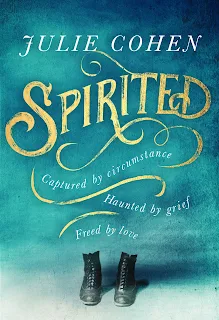
Review: Spirited by Julie Cohen

Spirited by Julie Cohen book cover
* Copy courtesy of Hachette Australia *

Post-mortem photography has always fascinated me. Popular in the Victorian era, grieving family members sometimes had photos taken of their loved ones after death to preserve their memory. You might have seen photos like this of the dearly departed resting in their coffins. However, families also posed the deceased in seated and sometimes even standing positions (with the aid of broomsticks and ropes) in order to have individual and family portraits taken. These photographs became treasured keepsakes and formed part of the fascinating mourning process during the Victorian period 1837-1901.*

After the recent disappointment of a TV program set in 1880s Dublin called Dead Still which centres on a mortuary photographer - it was the comedy angle that killed any hopes of this becoming a new favourite - I was all the more primed to read Spirited by Julie Cohen which promised to deliver on this intriguing subject matter.**

Spirited is an historical fiction novel featuring two women set in 1850s Victorian England during the time of spiritualism. Viola is an amateur photographer in a complicated marriage and grieving the loss of her father, and Henriette is a spirit medium with a mysterious past.

I was engrossed by Henriette's story and could easily have dwelled in a book solely focussed on her character. However the reader is also privileged to learn about Viola's husband Jonah and the reasons he remains haunted by his experiences in the Siege of Delhi in 1857.

Each of these characters is struggling with some form of grief when we meet them, and their separate search for meaning seems to unite them. Photography was a great way to illuminate the relationship between Viola and Henriette while unintentionally highlighting the line between science and religion.

Spirited by Julie Cohen is an atmospheric novel with some beautifully tender moments. It touches on the spiritualism movement of the time, contains multiple love stories and explores the different ways in which people process trauma and grief, perceive cultural differences and struggle for female agency.

Highly recommended.

Carpe Librum!

My Rating:


* For more on mourning etiquette in this period, you might want to check out my review of Necropolis - London and Its Dead by Catharine Arnold.
** Feel free to recommend any books on post-mortem photography you think I might like in the comments section below.

Available from Booktopia 
02 September 2020

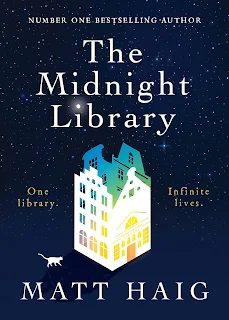
Review: The Midnight Library by Matt Haig

The Midnight Library by Matt Haig book cover
* Copy courtesy of Allen & Unwin *

After deciding she doesn't want to live anymore, Nora Seed finds herself in the midnight library of the title. Here, she meets a librarian who explains that the library is the place between life and death. The vast bookshelves extend as far as the eye can see and each book represents a different life she's led.

Nora has many regrets in her present (or root) life and she now has the freedom to choose from the infinite number of books before her. By exploring the different books/lives, Nora has the opportunity to discover what her life would be like (at this present age) had she made different choices.

Throughout this process, Nora arrives at certain realisations about life, relationships, choices, regrets, happiness, love, success, ambition and more. I particularly enjoyed Nora's love (and sometimes study) of philosophy that pops up throughout the book in some form or another.

Matt Haig does a wonderful job explaining parallel lives in an easy to understand manner and I believe this book would be a great choice for book clubs who enjoy engaging in existential discussions.

These ideas have already been explored in books and movies before, however I believe Haig takes it a few steps further and is uniquely qualified to do so. In his memoir Reasons To Stay Alive, Matt Haig openly shared his struggles with severe depression and panic disorders. I believe The Midnight Library is a manifestation of his personal journey and an attempt to help others as well as provide much for readers to contemplate.

Reading The Midnight Library also reminded me a little of The Alchemist by Paulo Coelho in that both characters are searching for a meaningful and fulfilling life with the assistance of a guide/librarian and the reader benefits from their exploration and subsequent realisations.

Just as in How To Stop Time, The Midnight Library is a combination of genres and could easily be defined as fantasy or science fiction while remaining rooted in the contemporary world we all know.

I thoroughly enjoyed this heartwarming book.

Carpe Librum!
 
My Rating:

22 May 2020

Review: Death Is But a Dream - Finding Hope and Meaning at Life's End by Christopher Kerr

Death Is But a Dream - Finding Hope and Meaning at Life's End by Christopher Kerr audiobook cover
A fellow reviewer recently pointed out that I read a lot of books on death and I suppose I do. Sleep and death - the eternal sleep - are two topics I've always been interested in but exploring them in audiobooks is a relatively new experience. It has nothing to do with the current pandemic sweeping the world; death happens every day.

In Death Is But a Dream - Finding Hope and Meaning at Life's End by Christopher Kerr, the author takes us through the experiences of patients in palliative and hospice care. Dr. Kerr interviewed more than 1,400 patients for this study and shares individual patient experiences with the reader, some of which were moving.

What might seem to family members as delusions, visions or signs of a patient losing their grip on reality, Kerr believes is proof of a process of dying his patients share and which brings them enormous comfort and relief at the end of their life.

Each patient is different but they often see loved ones long gone from this world who appear to encourage them to pass on into the next. Themes of forgiveness and grace are common, as is a reluctance to leave loved ones behind.

If you're a skeptic or you don't believe in life after death, this book won't change your mind; nor does it set out to. It's not that kind of book. It's for those who may have some experience with the passing of a loved one, or a general curiosity about the dying process and the often unexplained experiences that go along with it.

Will Death Is But a Dream bring comfort to those with a terminal illness, or facing the decision to admit a loved one to a hospice? I'm not sure. What is clear after listening to these various stories is that love unites us all. No matter what kind of life we have lived, our departure may vary, but love in all its forms remains the primary concern until - and beyond - the last breath.

Carpe Librum!

My Rating:
★ ★

07 April 2020

Review: Any Ordinary Day by Leigh Sales

Any Ordinary Day by Leigh Sales audiobook cover
Leigh Sales is a well-known journalist here in Australia and she's received many awards for her contributions to journalism and her work on the ABC. Having spent years reporting on all manner of breaking news stories, Sales began to wonder how people coped with the life altering experiences and traumatic events and losses she was reporting on. She recognised her role as a journalist was to report often tragic and heartbreaking news, whilst acknowledging that the people she was interviewing were often in the midst of their own private nightmare and sometimes even the worst day of their lives.

Sales draws on events ripped straight from Australian headlines that more often than not, began as an ordinary day, informing her title of choice.

Sales interviews Walter Mikac about the Port Arthur Massacre, Stuart Diver about his rescue in Thredbo and subsequent losses and fellow author Hannah Richell about the drowning death of her husband Matt. She speaks to victims and survivors from all walks of life who have faced all manner of traumatic situations from accidents to natural disasters and acts of terrorism. She asks the tough questions about fear, fate, loss, trauma, death, grief, resilience, recovery, healing and hope in an effort to understand how we can better support those going through these events and perhaps even how to prepare ourselves for that one in a million moment.

Leigh Sales has no problem admitting her own shortcomings as a journalist and her fears about delving into the deep and meaningful with those in our community who have had the misfortune of suffering a great loss in some of the most unexpected and newsworthy of ways.

In listening to the audiobook from the library, my only complaint was that I wanted more depth in her research on the topic and I could hear her swallow throughout the entire recording which was very distracting.

Her insights are interesting and informative and while I was already very familiar with the stories of her interviewees, I did find the author's exploration of them moving. The interview with former Prime Minister John Howard was inspiring and I found myself wondering how he would lead us in our current COVID-19 crisis.

Any Ordinary Day by Leigh Sales is full of empathy and is a successful attempt by the author to delve deeper into human nature and our resilience to the unthinkable. In 2019, Leigh Sales received the Walkley Book Award for Any Ordinary Day but for me it was a three star read. Recommended.

Carpe Librum!

My Rating:
★ ★

04 February 2019

Review: An Orchestra of Minorities by Chigozie Obioma

An Orchestra of Minorities by Chigozie Obioma book cover
* Copy courtesy of Hachette Australia *

Many of you will remember that The Fishermen by Chigozie Obioma was one of my favourite books in 2015 and I couldn't stop talking about it. It was shortlisted for the Man Booker Prize and I was disappointed when it didn't win. Since then, Chigozie Obioma has been busy writing An Orchestra of Minorities and you can imagine how excited I was to read this; just holding it filled me with giddy anticipation.

Our main character Chinonso is a young poultry farmer living in Nigeria and his story is narrated by his chi or guardian spirit. The novel is bursting with Igbo cosmology and Chinonso's chi has come to plead the case of his host before 
Chukwu, Creator of All at the magnificent court of Bechukwu, in Eluigwe. In telling his host's story to the court, we learn about Chinonso and the foreshadowing that his life is about to undertake a tragic turn.

Chinonso is a poor farmer and after thwarting Ndali's suicide attempt, they fall in love. Ndali is educated and from the upper classes and her family vehemently oppose the match. This is a powerful story of love, heartache, misfortune and tragedy and covers a multitude of topics, including the westernisation of Nigeria, the disparity between classes, the notions of revenge and forgiveness and the complexities of love.

The entire book is narrated by Chinonso’s chi, who is testifying to the ‘elders/spirits’ on behalf of his host because of a crime he may have committed. The chi goes into great detail to paint the picture leading up to the event, however by the end of the book we’re left completely hanging. We learn about the event that was foreshadowed early in the book, however we never learn the outcome for Ndali or Chinonso.

What I found even more baffling is that we never hear a response from the court of elder spirits to the testimony provided by Chinonso's chi. There is no judgement - or response - provided at all. Given the chi’s testimony (the book) goes into so much detail about Chinonso’s life, to have the entire situation completely unresolved at the end of 500+ pages was quite a shock.

In fact, I was so rattled that I asked the publisher if I was missing something, or if there was going to be a sequel. I received the following info which I think is worth sharing here: It is purposefully ambiguous and intended to play upon the reader’s mind. Fiction, much like life, has no easy, neat and tidy, resolution.

I understand messy and ambiguous endings, but this story was cut short before we found out where it was going to end up. I was looking forward to the wisdom of the elder spirits and Chukwu, but sadly this never came.


Ultimately, An Orchestra of Minorities was just too open-ended for me and the lack of a conclusion greatly affected what had been a 4 or 5 star read until that point.

My rating = ***

Carpe Librum!