Myth
Showing posts with label Myth. Show all posts
06 July 2026

Review: Atlas of Paranormal Places by Evelyn Hollow

Atlas of Paranormal Places - A Journey to the World's Most Supernatural Places by Evelyn Hollow book cover

Atlas of Paranormal Places - A Journey to the World's Most Supernatural Places by Evelyn Hollow is broken down into the following chapters: Haunted Places, Witchcraft, Sacred Sites, Myths & Legends, Strange Nature, and finally Cryptids & Creatures.

There's only one place listed for Australia, and I thought it would be the Devil's Pool, Babinda Boulders in Queensland but it's not. I'd never heard of Wycliffe Well in the Northern Territory but it's included in this atlas for its connection to UFO sightings, spies and ancient spiritual worship.

The atlas includes several locations familiar to this reader like the Catacombs in Paris, the Winchester Mystery House in California USA, Pendle Hill in Lancashire England, the Hanging Coffins of Sagada in the Philippines, Aokigahara Forest in Japan and the Door to Hell in Turkmenistan.

It was also nice to see the inclusion of Scotland's Bannockburn House in this collection as it was featured in the filming of the fantastic Outlander series.

However my favourite discovery of the book was that of Burg Eltz in Germany. Describing this twelfth century medieval German castle as a fairytale castle is an understatement. The home of the Eltz family for more than 800 years, it contains the ghost of a young woman who defended her home from an unwanted suitor and paid for her bravery with her life. Burg Eltz is one of the most wondrous castles I've ever seen and the photos on their website showcases the stunning grandeur of its architecture.

True to its name, the Atlas of Paranormal Places includes a world map at at the beginning of the book with each of the locations marked. Then each separate entry features a map page indicating the specific location of the place being described. My hardback edition borrowed from the library contained suitably themed end papers although I wish there were more photos included.

The Atlas of Paranormal Places - A Journey to the World's Most Supernatural Places by Evelyn Hollow enables the inquisitive reader to journey to paranormal places and explore geographic curiosities around the world, all from the safety of home.

And if you like the sound of this, you might also enjoy reading the Atlas of Improbable Places - A Journey to the World's Most Unusual Corners by Travis Elborough.

My Rating:

Carpe Librum!

13 April 2026

Review: The Woman in the Seal Skin by Lauren Keegan

The Woman in the Seal Skin by Lauren Keegan book cover

* Copy courtesy of Simon & Schuster *


Orkney is made up of approximately 70 islands and is located off the north coast of Scotland. It's an isolated part of the world and with an average yearly temperature of 8 degrees celsius I can only imagine how inhospitable it must have been in the 17th century. The Woman in the Seal Skin by Lauren Keegan is set in Orkney in 1695 and is a dual narrative told by our main character Malie and her friend Henrye.

Malie's father is a fisherman and after her mother slipped into the sea and was never seen again, he raised Malie and her brothers alone. Brought up listening to tales of selkies, Malie has always been told her mother was a shape-shifting woman who shed her seal skin to seduce her father.
"Selkies slip from their seal skins and seduce lonely fishermen, but a Finnman takes the form of man and seduces lonely wives. Men, women and the sea, all at their mercy." Page 46
Living on the coast, Malie has an affinity with the sea and now that she's married and expecting her first child, she finds it difficult to resist the pull of the water. With little to no female agency in a male dominated family, Malie is also in an oppressive marriage with few real friends to confide in or lean on.
"My elder brothers circle us like a shiver of sharks." Page 295
The weather is harsh, the living conditions are rough and Malie's life feels stifled and unendurable at times. In fact the harsh environment and desperate conditions reminded me of The Mercies by Kiran Millwood Hargrave, set in Norway in 1617.

I read this atmospheric book while on a cruise and being on the ocean certainly enhanced my reading experience. Admittedly, the temperature was warm and humid and I wasn't suffering any of the deprivations Malie was facing on a daily basis, but the author was still able to make me feel cold, hungry and fearful just the same.
"While there was once only fear bubbling beneath my skin, there is something else rising to the surface. Something fierce and uncontrollable. Something wild. Something that simmered in my mother's body too. I believe it's rage." Page 150
The Woman in the Seal Skin by Australian author Lauren Keegan is an historical fiction novel set in Scotland about nature, folklore, motherhood, loss, resilience and domestic violence and will appeal to fans of Hannah Kent and Kiran Millwood Hargrave.

My Rating:

Carpe Librum!

11 April 2025

Review: The Book of Gothel by Mary McMyne

The Book of Gothel by Mary McMyne book cover

In the year 1219, Haelewise is 78 years old and sets down the story of her life and how she became known as Mother Gothel after the tower in which she lives. Famous for allegedly kidnapping Rapunzel, Haelewise tells us her story from childhood into adulthood and old age.

The book immediately gave me Kate Forsyth Bitter Greens vibes and was on track to be a five star read with descriptions like this setting the scene of 12th Century Germany:
"I noticed for the first time their brightly dyed kirtles, the stilted way they spoke diutsch. Their long, ribboned braids, which my mother called corpse-braids because they were extended with hair from the dead. They were courtiers' wives." Page 64
Reading like a fairytale, Haelewise is a compelling character who suffers from light sensitivity and fainting spells. Living with the fear she may be accused of being possessed by a demon if she has a fit in public, I particularly admired her grit and determination after the death of her mother despite an uncaring and barely-there father.

Having studied under her mother as a midwife, Haelewise travels to an ancient tower to seek out the wise woman who lives there and offer her skills as an apprentice. I would have been happy to follow Haelewise and every step of her apprenticeship as a healer (reminding me of The Binding in many ways) but the author cranks up the story and instead it becomes a quest novel of sorts.

Essentially a retelling of Rapunzel's story from the witch's perspective, The Book of Gothel has all of the elements of a fairytale; a young girl in trouble; an old wise woman and healer; loss of a parent; an ancient tower; creepy woods; a castle fit for a King; a special horse; spells; dark magic and an evil prince.

The Book of Gothel by Mary McMyne is recommended for historical fiction readers, Kate Forsyth fans and those who enjoy a good fairytale re-telling.

My Rating:


17 November 2024

Review: Psykhe by Kate Forsyth

Psykhe by Kate Forsyth book cover

Having a relatively poor knowledge of Greek and Roman mythology, I was a little concerned when I picked up Psykhe by Kate Forsyth. It's a fictional re-telling of the Greek Godess Psyche and Cupid and I was worried I might end up lost in the narrative or missing references I couldn't place due to my lack of background in the classics.

Kate Forsyth is a favourite Australian author of mine and I should have trusted she would make her tale accessible to those familiar with ancient mythology and those relatively new to it.

Set in Italy, our protagonist introduces herself on the first page by recounting her dramatic birth. Born with the umbilical cord wrapped around her neck and appearing blue and all but dead, her mother's midwife blew air into her lungs and brought her back to life:
"So I was named Psykhe, which means breath and soul and butterfly, words having many meanings. Only gods die and return to this world alive. So as I grew into girlhood, many people began to think I too must be divine." Page 3
It's clear by the second page that Psykhe has albinism and it was interesting to read an historical fiction novel featuring a main character with the physical traits of albinism; white hair, low vision and extremely sensitive skin which can burn and blister in the sun. It's a topic that has interested me for years and you can read my review of Beyond the Pale - Folklore, Family and the Mystery of Our Hidden Genes by Emily Urquhart for more on albinism in history although I suspect there are better books on the topic.

I can't comment on how Psykhe having albinism compares to the original myth, however I did find it a stretch to believe that an albino woman would be considered a great beauty at the time. Usually albinism is accompanied by fears of curses, dark forces or magic.

Psykhe learns the healing properties of herbs and plants and becomes a midwife, also drawing attention to herself as a potential witch. These early years are where the book excels and it's clear the author loves writing about potions and tonics and the many uses for plants known at the time.

Psykhe's relationship with a cruel and absent father highlighted the complete lack of agency she and her sisters experience as young girls and later young women. Psykhe falls in love with an immortal, referred to as Cupid or Eros in ancient mythology and a romance ensues.

When introducing the Vestal Virgins of Rome - which I just learned about watching Those About to Die with Anthony Hopkins - the author describes the Roman temple:
"The round temple to Vesta, where virgins dressed in white tended the everlasting flame of the goddess of the hearth. Taken when only children, they would never know the touch of a man's hand, the deep kiss of desire, the swelling of a child in their womb, the suck of a babe on their breast." Page 103
Readers familiar with Greek and Roman mythology may have issue with some of the author's choices in the novel but I don't know my history well enough to pass judgement. I did find several elements a bit of a stretch (a caesarian section, mouth to mouth resuscitation and the albinism) but largely enjoyed the narrative. While unconvinced by the romance element, I enjoyed the challenges presented by loving a mortal, the supernatural and fantasy elements and the lengths Psykhe goes to for love; including her quest to the underworld.

Psykhe
by Kate Forsyth is a feminist re-telling that will appeal to lovers of mythology, fantasy, romantasy and historical fiction.

My Rating:


07 May 2024

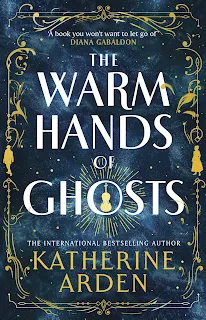
Review: The Warm Hands of Ghosts by Katherine Arden

The Warm Hands of Ghosts by Katherine Arden book cover

* Copy courtesy of Penguin Random House *

Intro

You're not seeing things, what follows is a review of an historical fiction novel set during WWI. I know I've said here on Carpe Librum that I'm - mostly - on a break from WWI and WWII historical fiction, however such is the power of Katherine Arden that I made an exception.

Last year I reviewed The Bear and the Nightingale by Katherine Arden and fell in love with the writing style of this YA urban fantasy / historical fiction series. The Bear and the Nightingale earned a glowing 5 star review and I'm still looking forward to reading the next book in the Winternight trilogy The Girl In The Tower. Therefore I was surprised to see the author pop up in a publisher's catalogue with an adult title The Warm Hands of Ghosts. Seeing it was an historical fiction novel set in WWI, I was keen to see how - or if - the author would bring her love of Russian myths and legends and sense of 'other' to a bloody war and now I have my answer.

Review

I shared this back story because I didn't know what to expect - other than great writing - reading The Warm Hands of Ghosts by Katherine Arden. It's quite possible that if I'd known just how dark the book was going to be, I might not have requested it for review. Having said that, going in blind was the best approach for me and I'm glad I read it.

Laura Iven is a Canadian nurse providing medical care to the soldiers on the Western Front during WWI when she is injured during the bombing of a hospital, discharged and sent back home to Halifax in Canada to recover.

The snappy writing and depth of character was immediately present in the author's writing. Here's one of my favourite observations by Laura:
"Laura tried not to look cynical. Pim appeared simultaneously flattered, delighted to make his acquaintance, and innocently unavailable. She'd probably practiced that expression in a mirror." Page 91
Laura's brother Wilfred (Freddie) is a soldier serving in Belgium and after receiving contradictory news and fearing he might be missing, she risks another deployment and travels back to Belgium in search of him. Volunteering at a private hospital in Flanders, Laura and her colleagues struggle to stay on their feet working for days without rest in the gruelling conditions. Laura speaks to the men as she tends to their wounds and starts to hear strange stories about the Fiddler.

The novel is set in alternate chapters with Laura in present day January 1918 and Freddie's point of view from several months earlier enabling the reader to discover what happens to him. Incorporating elements of the Halifax Harbour explosion from history was a refreshing angle I hadn't come across in WWI literature and it was interesting to learn more about this disaster from the character's perspective.

Laura's brother was named Wilfred in the novel and every time I saw his name on the page I reacted with 'oh, I thought that was going to read Wilfred Owen.' I studied the works of WWI poets Wilfred Owen, Siegfried Sassoon and Robert Graves in a War Literature course at University so I felt rewarded when I noted the following in the Afterword:
"Her brother's name, Wilfred, is a hat-tip both to Ivanhoe and to Wilfred Owen, whose poem "Strange Meeting" was the starting point for Freddie's story." Afterword, Page 378
What a terrific tribute to the poet and for those interested, you can read Wilfred's short poem Strange Meeting in full on the Poetry Foundation website.

The Warm Hands of Ghosts by Katherine Arden is difficult to read at times. It's brutal and graphic yet also tender and achingly beautiful while accurately conveying the destruction and hopelessness of war without flinching away from the horror. Reading this in the lead up to ANZAC Day enhanced my sense of gravitas while reading but the kiss at the end was one step too far for me.

Highly recommended for experienced readers of WWI historical fiction with a strong stomach looking for a new story that stands apart from the rest. Not sure? Read a free EXTRACT.

My Rating:


28 June 2023

8 Books on my TBR with Birds on the Cover

I've recently noticed a trend in my to be read (TBR) pile, and it's the sheer number of books with birds on the cover. I don't know whether I have an unconscious bias towards books with birds on the cover, or whether the publishing industry and graphic designers have agreed that birds are used in cover designs for specific genres and I just happen to be attracted to those types of books. I'm not sure which came first, the chicken or the egg, but at last count I had 15 books with birds on the cover.

I thought it would be fun to share 8 of them with you, along with a summary of what I think they're about. Let's go!

A Shadow Above: The Fall and Rise of the Raven by Joe Shute book cover

A Shadow Above: The Fall and Rise of the Raven

Joe Shute

What better way to kick off this list than with a non fiction book all about the raven Corvus Corax. Ravens were once revered, and Viking and Norman warriors invaded England with ravens taking pride of place on their shields and banners. Centuries later, the birds were seen to represent evil and death, with ravens driven out of towns and cities as vermin. The last decade has seen a dramatic increase in raven numbers and I'm looking forward to learning just how intelligent ravens are and more about their ongoing relationship with humans.

Blackbirds

Chuck Wendig

Published in 2012, Blackbirds by Chuck Wendig is an urban fantasy novel and the first in a series that at the time of writing, was up to Book 6, Vultures. If the protagonist Miriam touches you, she is able to see the manner and time of your death. A GoodReads nominee for Best Horror 2012, this is the story of Miriam Black and how she deals with her unique gift. Not sure why it's called Blackbirds, but with an awesome cover design like this (your hair is a bird comes to mind) I'm keen to find out.
Blackbirds by Chuck Wendig book cover
Elsetime by Eve McDonnell book cover

Elsetime
Eve McDonnell

Elsetime by Eve McDonnell is a middle grade historical fiction novel set in the 1920s. I didn't know this, but in 1928 there was a terrible flood in London when the River Thames doubled in volume, killing fourteen people and leaving thousands homeless. The protagonist in Elsetime is Glory Bobbin, a 12yo orphan who works at the Frippery and Fandangle Emporium creating jewellery. Assisted by a peculiar crow, Glory meets Needle Luckett, a mudlark who has travelled through time, and the three of them together will try to save those endangered by the flood. I love stories about mudlarks, and you might remember my review of Mudlarking: Lost and Found on the River Thames by Lara Maiklem.

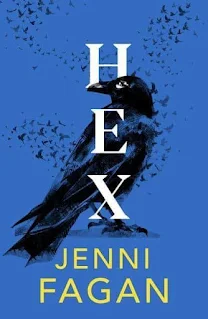
Hex

Jenni Fagan

I love the cover design for Hex by Jenni Fagan. It's one of my favourite covers in this list, but Luckenbooth by Jenni Fagan was a DNF for me in January this year, so I'm worried I won't enjoy Hex. It sounds so good though! On 4th December 1591, Geillis Duncan is a convicted witch in a prison cell awaiting death when she receives a visitor. Iris has come from the future and offers her support and solace. Coming in at just 100 pages and inspired by the North Berwick witch trials in 1590, I should know very quickly if this is for me or not within the first few pages.
Hex by Jenni Fagan book cover
Magpie Murders by Anthony Horowitz book cover

Magpie Murders

Anthony Horowitz

There's a good chance you may have already read Magpie Murders by Anthony Horowitz or have it waiting for you on your own towering TBR piles. Published in 2016, Alan Conway is the successful crime writer behind his fictional English Detective Atticus Pund. With nods to vintage crime fiction including Agatha Christie and Dorothy Sayers, Conway's editor Susan Ryeland is concerned about his latest manuscript, which seems to reveal a hidden story. Horowitz went on to publish a sequel Moonflower Murders in 2020 and according to GoodReads, each "volume is two mysteries; one in Susan’s world and a book-within-book detective story set in the 1950s".

Meditations

Marcus Aurelius

Time for a classic! Marcus Aurelius was Roman Emperor from 161 to 180 AD and a Stoic philosopher and I've been looking forward to reading this since receiving a copy in 2021. The famous Emperor and Philosopher is known for quotes like: "You have power over your mind - not outside events. Realise this, and you will find strength" and “The happiness of your life depends upon the quality of your thoughts.” I'm hoping for some timeless wisdom in these pages but with time to reflect on key insights for greatest impact, it'll likely to be a slow and meaningful reading experience.
Meditations by Marcus Aurelius book cover
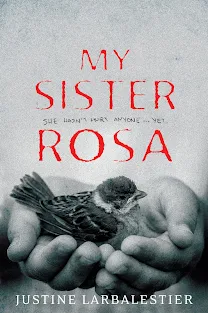
My Sister Rosa by Justine Larbalestier book cover

My Sister Rosa

Justine Larbalestier

This book captivated my attention instantly with a brilliant premise: "What if the most terrifying person you know is your ten-year-old sister?" It certainly puts the cute bird and black and white cover design into a new perspective doesn't it? I added this book to my TBR in 2017 but still haven't read it yet. What's it about? My Sister Rosa is a young adult thriller about Che Taylor who loves his younger sister Rosa despite fearing she's a psychopath. Nominated for a bunch of awards, Justine Larbalestier is an Australian author, so I'm pleased to include a homegrown author in this list.

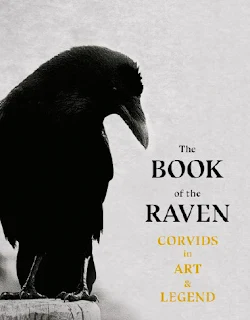
The Book of the Raven: Corvids in Art & Legend

Angus Hyland

This book explores the behaviour of ravens as tricksters, thieves, problem-solvers and gift-givers through artwork and includes photographs, paintings, texts and poems. I'm hoping for a stunning coffee table book that includes artwork and literature from Shakespeare and Edgar Allan Poe right through to Game of Thrones - "there was a raven in the night" being one of my favourite quotes of the series.
In case you thought it couldn't get any better, Christopher Skaife, author of The Ravenmaster - My Life with the Ravens at the Tower of London has written the Introduction.
The Book of Raven: Corvids in Art and Legend by Angus Hyland book cover

That's it! I'm pleased to see an Aussie author and a variety of genres represented in this list: middle fiction, historical fiction, non fiction, crime, urban fantasy and even a classic! Have you read any of these books? Which one are you most drawn to read?


14 January 2023

Review: The Bear and the Nightingale by Katherine Arden

The Bear and the Nightingale by Katherine Arden book cover

Set in a bitterly cold winter in a small medieval village in Russia, The Bear and the Nightingale by Katherine Arden is full of Russian fairytales and folktales. The villagers have been making offerings to the household spirits for generations and are wary of what dwells in the dense forests.

However the arrival of a new priest from Moscow changes the household completely as magic is essentially outlawed and the Christian Priest Konstantin is intent on purging devils and witches from the town.

The villagers are forced to choose between their Christian beliefs and salvation or their mystic traditions of old and certain damnation.

Unfortunately for our protagonist Vasya, Konstantin is frighteningly effective:
"His voice was like thunder, yet he placed each syllable like Dunya setting stitches. Under his touch, the words came alive. His voice was deep as rivers in spring. He spoke to them of life and death, of God and of sin. He spoke of things they did not know, of devils and torments and temptation. He called it up before their eyes so that they saw themselves submitting to the judgment of God, and saw themselves damned and flung down.
As he chanted, Konstantin pulled the crowd to him until they echoed his words in a daze of fascinated terror. He drove them on and on with the supple lash of his voice until their answering voices broke and they listened like children frightened during a thunderstorm. Just as they were on the verge of panic - or rapture - his voice gentled." Page 149
Vasya knows the harm that will come if the old traditions aren't upheld and risks her life to save her family despite their distrust of her abilities. Vasya's connection with horses was one of my favourite elements of the book, and reminded me of Poison Study by Maria V Snyder.

According to her father Pyotr, Vasya is destined for either marriage or a convent and she vehemently wants neither. Convinced the villagers are in trouble, Vasya will do anything for agency over her life:
"I am told how I will live, and I am told how I must die. I must be a man's servant and a mare for his pleasure, or I must hide myself behind walls and surrender my flesh to a cold, silent god. I would walk into the jaws of hell itself, if it were a path of my own choosing. I would rather die tomorrow in the forest than live a hundred years of the life appointed me. Please." Page 367
The Bear and the Nightingale by Katherine Arden is a coming of age story and a tribute to storytelling and fairytale. I really enjoy a novel that blends historical fiction in a tale inspired by folkore so if you enjoy books by Kate Forsyth or Naomi Novik, you'll love this.

It's difficult to believe this is the author's debut with descriptions like this one:
"The winter half of the house boasted huge ovens and small, high windows. A perpetual smoke trickled from its chimneys, and at the first hard freeze, Pyotr fitted its window-frames with slabs of ice, to block the cold but let in the light. Now firelight from his wife's room threw a flickering bar of gold onto the snow." Page 13
The Bear and the Nightingale by Katherine Arden is the first in the Winternight trilogy, and I look forward to reading The Girl In The Tower next.

My Rating:


30 November 2022

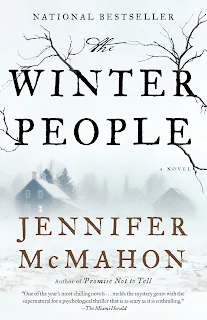
Review: The Winter People by Jennifer McMahon

The Winter People by Jennifer McMahon book cover

Published in 2014, The Winter People by Jennifer McMahon has been on my virtual 'maybe' list for several years; okay I'll admit it, 8 years. During this time, the author has published several new novels the blurbs of which have also piqued my interest; I'm looking at you The Drowning Kind and more recently The Children on the Hill. I'm the kind of reader who sometimes prefers to try an older title before deciding if an author is worth continuing on with, so thanks to my library for making that possible.

The Winter People is a paranormal mystery set in West Hall, Vermont, replete with strange disappearances, ghost sitings, myths and legends surrounding a circle of stones called the Devil's Hand and a ring made of bone.
"They think that there's something out there, in the woods at the edge of town, something evil, something that can't be explained. There have been a lot of stories over the years, folks who've gone missing, people who say they see strange lights or hear crying sounds, tales of a pale figure roaming the woods. When I was a boy, I thought I saw something myself one time: a face peering out at me from a crack between the rocks. But I moved closer and it was gone." He made his eyes dramatically wide and gave a little chuckle. "Have I scared you yet?" Page 132
The story alternates between time periods - 1908 and the present day - and different character perspectives (Ruthie, Katherine, Martin) and also includes diary entries from The Secret Diary of Sara Harrison Shea that add to the layers of suspense. Eventually the author skilfully brings all of the stories together and in doing so, solves the mystery.

The clever plotting reminded me of the likes of Ruth Ware or Laura Purcell, although I already read quite a few accomplished authors in this particular niche.

The Winter People has been classified by many readers as horror, however I found it only mildly creepy, if that. I believe it belongs more fittingly in the category of YA historical fiction and domestic noir with a touch of the paranormal and supernatural and it was a good choice for the October / Halloween reading schedule.

The Drowning Kind was published in 2021, so based on previous trends, I'll probably get to it in 2029! Have you read any books by this prolific author?

My Rating:


07 November 2022

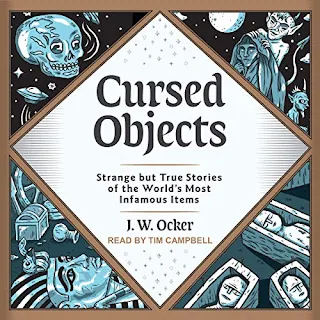
Review: Cursed Objects by J.W. Ocker

Cursed Objects: Strange but True Stories of the World's Most Infamous Items by J.W. Ocker book cover

Cursed Objects: Strange but True Stories of the World's Most Infamous Items by J.W. Ocker was a mildly entertaining and interesting book, the kind of which is soon forgotten, but enjoyed while it lasted. The author is clear at the start of the book that he doesn't intend to cover hauntings, whether they be haunted locations or haunted objects, which I thought was fair enough.

The book is perfect for the audiobook format and is divided into categories, with each object given its own chapter. Each object is covered in a brief 5-8 minutes on audiobook, or a few pages in print format.

In the chapter entitled Cursed Under Glass, we learn about the infamous Hope Diamond and Otzi the Iceman, whose mummified remains were discovered more than 5,000 years after his death.

I enjoyed learning about rune stones in Cursed in the Graveyard, which only served to reinforce my thoughts on disturbing tombs or burial sites for purposes of research or grave-robbing.

Cursed in the Attic introduced me to the case of The Crying Boy Paintings - which I'd somehow never read about - The Baleroy Chair of Death and The Basano Vase.

In the chapter entitled Cursed in Stone, one of the topics was The Amber Room and I recall interviewing author William F. Brown about it back in 2012 as well as doing a few hours of Googling on the topic. In fact, this entire book elicits frequent Googling as the reader is inspired to look at the physical object being described and read a little further than Ocker's offerings.

The Business of Cursed Objects chapter included Annabelle the Doll and the Warren Collection, and all manner of haunted and travelling museums. The Curse in the Machine included James Dean's Porsche 550 Spyder and The Prague Orloj (a magnificent medieval astronomical clock in Prague) among other items of interest including chain emails, which I thought was a bit of a stretch.

In his chapter Why Aren't These Objects Cursed, the author makes a good point when wondering why objects like the Mitchell-Hedges Crystal Skull and the Skin Book of James Allen don't have a reputation for being cursed.

Cursed Objects by J.W. Ocker was easy to digest with each cursed artefact covered in a short chapter, including information on where the item is (if the location is known) and how many deaths have been attributed to it.

Cursed Objects by J.W. Ocker was akin to stumbling upon a random documentary while channel surfing and being sucked right in. It's only when I surfaced at the end of the book that I felt as though that might have been a waste of time, given I'd done most of the research myself in all that Googling. At the time however, I was happy for the bite size curse snacks delivered up by Ocker.

Published in 2020, Cursed Objects by J.W. Ocker is a light read recommended for those interested in history, social history, archaeology, the paranormal and of course curses. Even if you're a skeptic, there are plenty of facts, geography and history to sink your teeth into and some ripper stories.

I'm interested to know if you believe in curses, bad juju or karmic consequences, so let me know in the comments below.

My Rating:


08 October 2022

Review: Fairy Tale by Stephen King

Fairy Tale by Stephen King book cover

* Copy courtesy of Hachette Australia *

Charlie Reade is a terrific kid! Charlie's Mum died when he was ten and his Dad became an alcoholic, forcing Charlie to learn how to take care of himself. Years later, Charlie is in his teens and his Dad is newly sober, trying to adjust to their new normal when Charlie meets an old German shepherd called Radar and her owner, grumpy old recluse Howard Bowditch.

King has a knack for writing stories with wholesome and likeable young male characters meeting cantankerous old men and the relationships that develop between them. I particularly enjoyed the short story Mr Harrigan's Phone contained in the collection If It Bleeds from 2020, and if you enjoyed that, you'll love the first third of this book. 

Charlie is a well-read, upstanding high schooler when he meets the elusive and mysterious Mr Bowditch and as a consequence of their meeting, their lives begin to change. Charlie loves to watch old movies, read old books and generally feels like an old soul, with nothing to indicate he's a modern 17 year old teenager which may bother some readers. Here Charlie explores Mr Bowditch's house with Radar close behind:
"She followed me down the hall, which was dim and sort of amazing. One side was stacked with old magazines done up in bundles that were tied with hayrope. The other side was stacked with books, most of them old and with that smell that old books have. Probably not everyone likes that smell, but I do. It's musty, but good must." Page 24
Charlie begins to suspect Mr Bowditch has some pretty big secrets, and when he finds out what's in the garden shed, the real adventure starts.

The plot seemed like a meeting of The Neverending Story, The Wizard of Oz and Alice in Wonderland with a clear quest and adventure trope, replete with giant cockroaches, giants, curses, a talking horse and a sundial with magical properties. A kingdom ruled by a villain while the royal family cowers is too tempting for Charlie who wants to help. Is he the chosen one? The promised prince? My eyes started to roll a little at this point.

Thankfully, the novel is saved from devolving completely by moments of clarity like this one:
"You may say I have no reason to feel shame, that I did what I had to do to save my life and the shed's secret, but shame is like laughter. And inspiration. It doesn't knock." Page 574
These are the snippets I love uncovering in a Stephen King novel, the character insights that make me reflect on life, people and relationships, however they were few and far between in Fairy Tale.

King incorporates many myths, legends and fairytales in this novel, and readers will recognise characters inspired by their stories, such as The Little Old Woman Who Lived in a Shoe, Jack and the Beanstalk, The Goose Girl and Rumpelstiltskin. I'm sure there were more and devoted fans will no doubt produce a comprehensive list soon but they didn't really add any depth or layers to my reading enjoyment.

Fairy Tale feels like a fun carefree project for King of sheer indulgence; a creative exploration of stories and stories within stories with way too many tropes that written by any other author, probably wouldn't have made a splash on the new release calendar.

Notwithstanding, Stephen King is an internationally bestselling author and an auto-read for many of us, who happily read through books like Fairy Tale, in the hopes of discovering real gems like 11.22.63 and Billy Summers. Dog lovers will find much to love within these pages, and Radar is arguably the biggest and certainly the most important character in the novel.

Fairy Tale is recommended for hard core Stephen King fans, constant readers, dog lovers and the completionists of you out there. First timers are advised to start elsewhere in King's oeuvre.

My Rating:


09 September 2022

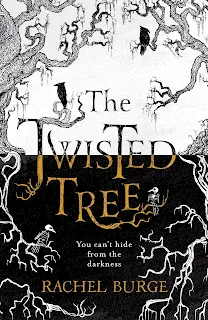
Review: The Twisted Tree by Rachel Burge

The Twisted Tree by Rachel Burge book cover

Reading the blurb for The Twisted Tree by Rachel Burge and finding out the main character Martha can tell things about a person just by touching their clothes, I was immediately sold. 

Discovering this is a young adult debut and part ghost story set in Norway based on ancient Norse mythology was a bonus.

Regular Carpe Librum followers will no doubt have noticed that I don't read much YA at all, but The Twisted Tree reminded me that I still enjoy the odd title every now and again.

Martha is partially blinded in an accident and has run away from home. She travels to Norway seeking answers from her grandmother, desperately hoping she can explain her strange ability to discern memories and emotions just from touching a person's clothes.
"Mum had bought the blouse a few days ago, and it was the first time I'd touched silk. I know from going through her wardrobe that different types of fabric reveal their secrets differently - cashmere holds a person's emotions and makes you feel them like your own; cotton shows images and facts without feeling - but silk is like nothing else. It speaks of deceit." Page 19
Complete with a creepy gothic cover design and easy to read YA thriller building from the opening pages, The Twisted Tree by Rachel Burge was a pleasure to read.

Martha is struggling to come to terms with her changed appearance since the incident that left her blind in one eye, and there is a subtle budding hint of romance that takes place during all of the spooky thrilling action.

The Twisted Tree is the first in a series to feature Martha, and the next one is called The Crooked Mask and was published in 2020. The Crooked Mask continues the story of the two main characters, but I think I'm happy to leave them here, fully satisfied that I finally read this book, after adding it my list back in November 2018.

The Twisted Tree by Rachel Burge is a great choice for October reading, providing some scary and spooktacular moments and a super creepy tree.

My Rating:


27 July 2022

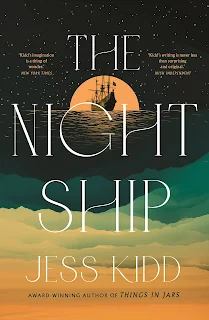
Review: The Night Ship by Jess Kidd

The Night Ship by Jess Kidd book cover

* Copy courtesy of Penguin Random House Australia *


The Night Ship by Jess Kidd is an historical fiction novel about the Batavia. Nine year old girl Mayken is aboard the flagship Batavia, built by the Dutch East India Company in Amsterdam in 1628. The ship is on her maiden voyage to Batavia, the capital of the Dutch East Indies in what we now call Jakarta, Indonesia.

The Batavia was an impressive ship carrying three hundred passengers and in a 10 year project starting in 1985, a full size replica of the ship was built using the same materials and methods employed in the early 17th century. Similar to the Titanic, it's heartbreaking to know that the Batavia sunk on her first voyage.

Steward Jan Pelgrom (a character based on a real person on the voyage) tells our protagonist Mayken more about the ship and about what happens in the belly of the ship or 'The Below World':
"First of all there's the gun deck. Where sailors bicker and curse, eat and sleep and the ship's barber lops off legs. Where the cook's galley gets hotter than Hell and the rats the cats can't catch grow big enough to steal babies. The orlop deck below that is for cows and soldiers. And below that, there's the hold." Page 13
Meanwhile, in 1989 we meet nine year old Gil, sent to stay with his Grandfather on a remote fishing village off the coast of Western Australia. Gil is struggling to fit in and understand his place in the world, while surrounded by fishermen and scientists searching for remains of the Batavia wreckage and fragments from the survivor's settlement that followed.

The island is remote and hostile and Gil is haunted by stories of a ghost girl.
"Gil has a watched sort of feeling. He reassures himself that his room is too small for any quantity of ghosts, unless they can overlap. But then the dead can't harm you; it's the living you should fear. The ghosts ought to make themselves useful and go out and haunt the veranda in case Roper returns." Page 93
I love Gil's sense of humour and applaud the writing style. Mayken is curious and friendly and makes many friends on the voyage. She likes to explore the ship when she can and here she is asking her favourite old sailor (Holdfast) if he has any stories:
"The old sailor obliges. He tells the sleepy child stories of cursed ports and blood-red roses, of the gunner's beautiful daughter, of love knots and promises. His words are snatched up and hauled away by the wind, which picks up as the ship ploughs on through the night." Page 157
While brief, this particular relationship between Mayken and Holdfast was incredibly touching and I also enjoyed the interactions between Mayken and the kitchen boy. However the journey continues on for months and the crew and passengers become restless as their health begins to suffer without fresh food.
"As is the way with souls confined, tempers fray and flare, ill-spoken words fester, coincidences become intrigues. Minds seethe with resentment and revenge like the worms in the water barrels.
As the ship spoils, so does the air between the people." Page 163
At one point, Mayken becomes justifiably emotional and the writer's expertise in making the reader feel every part of her anguish was clear on the page:
"She doesn't want to be calm. She wants to tear the ship apart, rivet by rivet, bolt by bolt, drag the caulking out with her teeth, lever up the boards with her fingernails. She wants to swing off the shrouds screaming and rend the main sail. Instead, she sleeps." Page 196
If you know your history - and even if you don't - you soon discover that the Batavia is going to come to grief off the coast of Australia and I REALLY didn't want to read about what happened afterwards. Approximately 40 people drowned in the wreck, but the rest were able to swim, float or paddle ashore. Worried a rescue wouldn't arrive in time, a savage fight over rations and scrabble for power amongst the survivors led to the cold blooded murder of many men, women and children in a series of atrocities. This made for hard reading, but these scenes were interspersed with some lighter moments with Gil which carried me through.

Gil isn't shipwrecked but he's facing his own hardship as he comes of age with a Grandfather who seems emotionally unavailable but trying to do his best. In fact it reminded me of Sam and Vic's relationship in Honeybee by Craig Silvey.

I loved Gil's thoughts on karma:
"Good things happen to good people and bad things happen to bad people; that is the law of karma. Good deeds get rewarded and bad acts get punished. Help someone out, you'll win the lottery. Steal from a shop, a bird will shit on your head. Sometimes you'll get bad karma for something you don't do, like not helping an old lady who falls down in the road. In a few days, a month, or a year, a hole will appear in your pocket and your wallet will fall through it. That's karma." Page 259
Love it! Gil is so endearing and his thoughts and observations often made me smile. I especially loved the scenes featuring his pet tortoise and the link that connected Gil to Mayken was a nice touch.

The Night Ship by Jess Kidd reminded me of Devotion by Hannah Kent and The Leviathan by Rosie Andrews, so if you enjoyed either of those historical fiction novels, you'll enjoy this one too. The writing for both narratives and time periods in The Night Ship was seamless and moving. In the past I reviewed The Hoarder and Things in Jars by Jess Kidd, but didn't quite reach the lofty heights of a five star review. I think this time she has earned that additional star. Highly recommended!

My Rating:


03 March 2022

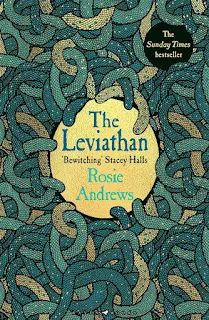
Review: The Leviathan by Rosie Andrews

The Leviathan by Rosie Andrews book cover

* Copy courtesy of Bloomsbury *


The first page of this book completely blew me away and I'm convinced it was written purely and exclusively with me in mind! I loved it so much I insisted on reading it aloud (dramatically of course) to my husband, who agreed this sounded like the perfect book for me. Here's a taste:
"She is awake. And I must remind myself of how it began. The end of all things. It was a time of witches, it was a time of saints. A time when rabbits hunted foxes, when children came into the world without their heads, and kings lost theirs on the scaffold. The world was turned upside down, or so some said. Weep, England, weep, the broadsheets cried, and the poets and philosophers, fearing for their own necks, delayed their poems and philosophies, or incarcerated them in Latin and impenetrable Greek, to be exhumed at a more enlightened date." Page 3
How could that not give you shivers down your spine? I was immediately captivated and compelled to read further and find out what could possibly have happened to warrant such an extraordinary introduction.

Set in Norfolk England and alternating between 1643 and 1703, Thomas Treadwater is a soldier in the civil war and is summoned home by his sister with word of trouble in the household. When Thomas arrives home, things take a sour turn with accusations of witchcraft thick in the air.

The Leviathan is a dark gothic mystery full of myth and superstition and I just love this kind of historical fiction. I agree that The Leviathan by Rosie Andrews will appeal to fans of The Binding by Bridget Collins and The Essex Serpent, but I honestly think this debut is much better than the equally atmospheric The Essex Serpent by Sarah Perry.

If you like your historical fiction dark and gothic, with terrific character development and superb storytelling, this is for you.

(If you'd like to read the prologue I quoted from above in full, the first 36 pages of the novel are available in a free extract on the publisher's website).

My Rating:


09 January 2022

Review: John Safran Vs The Occult by John Safran

John Safran Vs The Occult by John Safran cover

The last book for 2021 helped me achieve my reading goals, given that I needed one more book by an Australian male author in order to complete my Aussie Author reading challenge. (See what else I read here).

In John Safran Vs The Occult, Australian satirist John Safran explores his interest in religion, expanding his research to include witchcraft, black magic, satanism and the occult.

If you're expecting to learn more about what these practices are and their brief history, this isn't that book. Rather, Safran researches and then investigates current cases and crimes specifically attributed to witchcraft, black magic, satanism and the occult and takes the reader along for the experience. This makes for an individual case perspective rather than an analysis of these practices as a whole.

Written before the pandemic and published in 2019, Safran travels to Los Angeles, Texas and Vanuatu, and even meets a Muslim woman seeking an Islamic exorcism in his hometown of Melbourne.

Originally published as an Audible Original, Safran's unassuming personality and genuine interest in people and their beliefs enables him to get locals to open up and talk to him. I'll admit I got lost in the sea of people in Vanuatu and the myriad ways in which they were connected to the case, but hearing directly from the people being interviewed via excerpts was definitely a highlight. Safran's interview techniques build trust and rapport and listening to the stories it's clear the interviewees trust Safran to represent them honestly and with respect.

John Safran Vs The Occult is a solid introduction to the author's research style, varied fields of interest and unique delivery. As always, Safran manages to find the lighter moments and there are many chuckles along the way.

For more, you can check out my review of Murder In Mississippi by John Safran or check out my Google Hangout with him in 2013.

My Rating:


11 January 2021

Top 5 Books of 2020

I had a little difficulty coming up with this list of my favourite books for 2020. In the past I've been proud of the fact that my Top 5 lists have included a combination of review titles, classics and backlist books. This year my shortlist contained only review books. It's not that I didn't read any great 5 star books from my backlist TBR (I'm looking at you Inheritance by Christopher Paolini) but they just didn't make the cut.

Here are my Top 5 Books of 2020 in the order I read them:

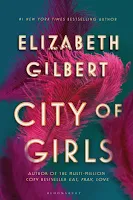
1. City of Girls by Elizabeth Gilbert

City of Girls by Elizabeth Gilbert book cover
I've been sharing my Top 5 Books since 2014, but if I'd started a year earlier then The Signature of All Things by Elizabeth Gilbert would definitely have made that list.

City of Girls by Elizabeth Gilbert is about a young woman in 1940s New York who works in a theatre and socialises with glamorous showgirls. I made the assumption this wouldn't be anywhere near as good as The Signature of All Things and went into it expecting an overtly feminine story unlikely to hold my attention. I was so wrong!

In my review, I explain this isn't a romance novel or chick lit. It's not a war novel either. It's a deep exploration of one woman's life, her sexual desire and the inner and outer expectations of those around her. It's a coming-of-age novel about choosing a different path and I enjoyed witnessing Vivian's personal growth and internal realisations and found it incredibly moving in parts.

2. The Foundling by Stacey Halls

The Foundling by Stacey Halls book cover
After the success of The Familiars, the premise and stunning cover design of The Foundling by Stacey Halls drew me in immediately.

Set in London in 1754, Bess Bright makes the heartbreaking decision to leave her illegitimate newborn baby at the Foundling Hospital in London, promising herself she will come back to claim her daughter as soon as she can. Years later, Bess returns only to find her daughter has already been claimed, by her.

This intriguing premise and the unique storytelling style let me know I was in expert hands once again from the very first page. Stacey Halls was able to bring every aspect of Georgian London to life and I greatly enjoyed it.

3. The Rain Heron by Robbie Arnott

The Rain Heron by Robbie Arnott book cover
The opening few chapters of The Rain Heron by Australian author Robbie Arnott were absolutely sublime. I fell in love with the seamless blend of fable and fairytale as I was introduced to the mythical rain heron.

What follows from there is a literary eco-fable, with elements of magical realism in a dystopian setting. There's plenty of tension and some terrific character growth and I felt a real love of nature in both the mountainous and coastal settings featured in the book. There's a clear concern about our environment bubbling along in the background of the story, adding climate-fiction to the number of genres this slim novel falls into.

My reading enjoyment was enhanced even further when my sister read the book and we were able to discuss it. What joy!

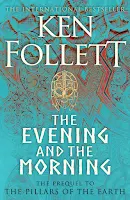
4. The Evening and the Morning by Ken Follett

The Evening and the Morning by Ken Follett book cover
This prequel to The Pillars of the Earth was one of my most anticipated releases of 2020 and it didn't disappoint. It came in at a whopping 817 pages and begins in the year 997AD with an introduction to our main character Edgar the Boatbuilder.

Themes of good and evil feature throughout the book and the everyday harsh conditions of farmers, bakers, merchants and priests were expertly written.

Once again my reading enjoyment was enhanced when my Dad began reading his own copy and we were able to discuss the goings on and enjoy the great reveal close to the end of the book.

5. Hideout by Jack Heath

Hideout by Jack Heath book cover
This gritty and bloody crime series featuring a cannibal consultant by the name of Timothy Blake is my favourite Australian crime series, and Hideout was a highly anticipated release in 2020.

Blake is an intelligent, clever and oddly funny anti-hero, and the reader can't help but hope he succeeds in his endeavours, despite knowing about his gruesome proclivities. Blake thinks quick on his feet and is only too aware of his flaws. However, he continues to struggle with his inner demons in the series; wanting to be a better person yet readily identifying with the bad guys.

The unexpected plot developments make this dark and grisly series uniquely refreshing and I can't wait until the next bloody instalment.

Hangman just missed out on my Top 5 list back in 2018, so the inclusion of Hideout on this list does redress that a little.
_________________________________________________________________________________

That's it! What do you think of my list? What was your favourite read in 2020? 


05 January 2021

Guest Review: Beowulf - A New Translation by Maria Dahvana Headley

Beowulf - A New Translation by Maria Dahvana Headley book cover
* Copy courtesy of Scribe Publications *

Intro

Beowulf is an epic poem that is approximately 1,000 years old. Written in Old English, it has been translated many times, with varying interpretations of the text a result of the condition and notations that have been made to this medieval manuscript across the centuries.

Scholars don't know the original title of the poem or the identity of the author, but the story is set in Scandinavia and there is only one copy, which is housed in the British Library.

Hundreds of translations of Beowulf have been made over the years, and today Scribe Publications is publishing a new feminist translation by Maria Dahvana Headley. Retired academic and Carpe Librum guest reviewer Neil Béchervaise decided to take on this classic, and shares his thoughts on the translation below.


Neil's Review

…a radical new verse interpretation … which brings to light elements never before translated into English”. So reads the cover blurb. But wait, there’s more. In the publisher’s words, Headley presents “A new, feminist translation”.

As you can see, before I have even cracked the covers, I am troubled. Deeply troubled. Having suffered the torment of a high school initiation into the wonders of this oldest surviving example of Olde English, I am suspicious. Am I embarking on a radical interpretation or a feminist translation? So, what is the difference between an interpretation and a translation? And “… elements never before translated into English”? Well! Really? This is surely a challenge enough for any reader.

So the radical interpretation begins:
“Bro! Tell me we still know how to speak of Kings? In the old days everyone knew what men were”. 
What?? A feminist translation begins with an address to “Bro”? About “what men were”? Now I will have to keep reading.

Headley’s new translation/interpretation of Beowulf does present some significant challenges. It’s address to “Bro” certainly flags the beginning of a story but it also screams that the audience is male – and all thoughts of what feminism has come to mean fly out the window. Nevertheless, as the story progresses, the author’s style begins to imprint itself on the narrative. The sheer poetry lifts the reader into a realm that is both familiar and even enlivening. The alliterations, some familiar, some strikingly original and some effectively translated help draw out the ironies, help intensify the agonies and underscore the ecstasies. Occasional couplets challenge the reader to remain conscious of the poetic rendering of the tale and amplify Headley’s pursuit of a style which was “meant to be shouted over a crowd of drunken celebrants” (p. xvi) because Beowulf is “not a quiet poem”. Rather, it is “a living text in a dead language”.

All of which would seem to suggest that the radical new, feminist Beowulf is a predictable successor to all of those which have come before. Not so, however. Headley has resurrected that ‘living text’ from its dead language to create an essentially gripping new tale. 

The rise of young Beowulf is an epic and familiar story. It is the story of many famous leaders who performed amazing feats in their earlier years, rose through rank and fortune to lead their nations and died in one last fight too far for the very same challenge that won their reputation in the first place.

Beowulf reports the killing of monsters, wanton, wicked creatures who destroy the fabric of peaceful society. Beowulf earns the mortal enmity of Grendel’s mother, a warrior woman as capable as Beowulf himself, by killing the young man. That he defeats her in her attempt to obtain revenge is a matter of good luck rather than good management. God is with him on the day.

The role of God in Beowulf offers evidence of the impact of Christianity in Norse/English lore, legend and mythology; as the role of fire-breathing dragons in starting life-destroying fires may remind us of how bushfires are started by lightning strikes (from evil spirits in the sky?). Managing fires, managing desperate politically and religiously inspired terrorism like 9/11 are not new stories, from the Sicarii Zealots of the first century AD to the Fenians then bin Laden and beyond, we are familiar with the fight to keep society safe. 

Headley has updated Beowulf, made the language accessible and, for this reader at least, revived an interest in the origins of mythological beasties. She may also have finally produced a version of Beowulf that is accessible to school students.

Neil's Rating:


24 December 2020

Review: Underland by Robert Macfarlane

Underland by Robert Macfarlane book cover
Last Christmas I was lucky enough to receive a glorious hardcover of Underland by Robert Macfarlane from a family member for Christmas. I picked it up for Non Fiction November this year and it didn't disappoint.

I was struck immediately by just how physical Macfarlane's exploration of the landscape has been over the years. A skilled and experienced mountaineer, in Underland Macfarlane pays homage to the underground mountains and crevices below the surface of the earth that have equal attraction for those wanting to conquer and explore.

Early in the book, Macfarlane sets the scene for what is to follow, pointing out that the underland has been feared and revered for thousands of years.
"...The same three tasks recur across cultures and epochs: to shelter what is precious, to yield what is valuable, and to dispose of what is harmful.....Into the underland we have long placed that which we fear and wish to lose, and that which we love and wish to save." Page 8
Underland is broken down into three parts: Britain, Europe and the North, with individual chapters flowing from there covering different sites; each of which can be read as a self-contained essay.

Reading Underland, I'm not ashamed to say I was frequently freaked out, encountering hidden cave systems, maelstroms and whirlpools, glacier moulins (down which our author descended!!) and more. Sinkhole anyone?
"The mouth of the sinkhole is twenty feet across at its widest point. To look into it is to feel the beckoning lurch of an unguarded edge." Page 214
I wasn't aware of many of the geological features the author visits, and often put the book down to research a particular site or phenomenon. Have you heard about Hell's Gate in Turkmenistan for instance?

The creation of the 'Door to Hell' or 'Hell's Gate' occurred in 1971 after a drilling rig punctured a natural-gas cavern in Turkmenistan. The powers that be decided to ignite the gas and burn it off and it was expected to take a few weeks, but the fire is still burning today!

As well as learning more about geology and the environment, I was also angered by the damage done by humans to the earth that is out of sight to the public. We know about the storage of nuclear waste deep underground, but I didn't know that in the mining of potash for example, million dollar machinery that is too expensive to retrieve when it has broken down is abandoned within the mine in dead end tunnels. It is then left to the passage of time for the halite (or salt) to reclaim the tunnel and bury the equipment. What on earth will future generations make of these strange fossils? It left me grinding my teeth and is definitely 'up there' with the horrors of space junk and the Great Pacific Garbage Patch.

Underland includes quite a lot of nature writing and environmental observations and is a book to be enjoyed at a slow and meandering pace. I read a chapter every few days as I made my way through the book, following Macfarlane all around the world, from glaciers to cave systems and forests. 

Here's an example of his nature writing from Chapter 4 entitled The Understorey where he writes about the woodland in Epping forest in London.
"I realise I can trace patterns of space running along the edges of each tree's canopy: the beautiful phenomenon known as 'crown shyness', whereby individual forest trees respect each other's space, leaving slender running gaps between the end of one tree's outermost leaves and the start of another's." Page 99
Such beautiful writing that leaves the reader with a renewed respect for nature. On the other hand, the chapter on the catacombs of Paris actually gave me nightmares. 

I've always been fascinated by the catacombs and the re-location of millions of remains from the Les Innocents cemetery in 1786 to the abandoned limestone mines beneath Paris in a process that took many years. Macfarlane explores the catacombs with an 'off book' guide and their journey through spaces so tight he had to turn his head and crawl along on his belly dragging his backpack with his foot, gave me the absolute creeps. Readers with claustrophobia be warned.

What did come as a surprise, was the knowledge that in the 1820s, the quarry voids in the catacombs were used to grow mushrooms, and "by 1940 there were some 2,000 mushroom farmers working underneath Paris." Page 141.

Underland is full of remarkable insights into myths and legends, science and history and despite wishing the publisher had included some colour photos throughout the text, it was an engaging read. I even discovered a new genre of fiction along the way which was unexpected. Subterranean fiction, go figure!
"A subgenre of subterranean fiction flourished in the 1800s, in which the Earth's crust and mantle were frequently imagined as riddled with tunnels, often leading down to a habitable core." Page 308
Underland by Robert Macfarlane is non fiction, nature writing meets travelogue. It is a book that forces the reader to slow down and consider the passage of deep-time and is highly recommended.

My Rating:


11 November 2020

Review: A Girl Made of Air by Nydia Hetherington

A Girl Made of Air by Nydia Hetherington book cover
* Copy courtesy of Hachette Australia *

With one of the most attractive cover designs of the year, A Girl Made of Air is the debut novel by Nydia Hetherington. 

Beginning as an interview for the New York Times, our narrator slowly begins to share her life story. The reader learns upfront she was the The Greatest Funambulist Who Ever Lived and now finds herself searching for a lost child. (Fun fact: A funambulist is a tightrope walker).

Mouse was born into a circus family but remained an outcast within the unusual circus community. Her mother and father didn't take an interest in her upbringing and Mouse was left to her own devices and withdrew into herself. When Serendipity Wilson came along, Mouse's entire world changed.

This story is told by Mouse in her later years as she reflects on her life and shares details that build towards her search for a person lost in time. In order to piece together her history, Mouse shares her memories, letters and journal entries in an attempt to pull together the story of her life. She also includes stories within stories that were felt like fables, myths and folklore. The style put me in mind of The Starless Sea by Erin Morgenstern and Flyaway by Kathleen Jennings; both read earlier this year.

The narrator gives us the impression of a table covered with snippets that she is crafting into a cohesive story but I found it was too piecemeal for me. I didn't find this method particularly effective and it felt a little disjointed for my liking. It'd be interesting to know if the story was 'carved up' into this style to suit the narrative or whether it was written in this style and the narrative grew up around the content to explain the various 'entries' and insertion of different material.

Adding to the disrupted flow was the lack of dialogue punctuation and the use of italics to indicate when certain characters were speaking. I know this is a popular literary device, however I'm one of those readers who struggles without punctuation for speech.

Given the circus setting, I'm sure comparisons will be made between A Girl Made of Air and The Night Circus by Erin Morgenstern, but I haven't read The Night Circus so it didn't influence my reading experience of this novel in any way; positive or negative.

A Girl Made of Air is an historical fiction fantasy novel touched by magical realism with characters you will remember. The narrator often addresses the reader (or interviewer for whom this text is intended) directly, and I'll leave you with an example from page 318:
'Are you wondering if there's to be a happy ending? I wish I could tell you. We must find the answer together.' Page 318
If you enjoyed The Starless Sea by Erin Morgenstern, I think you'll love this.

My Rating: