03 January 2014

Interview with Ken Duncan, author of Life's A Journey - The Adventure Continues

Australian photographer and author Ken Duncan took time out from his busy schedule recently to join me on the phone from his home north of Sydney.

Author & Photographer, Ken Duncan
Thanks so much for your time today Ken, it’s an honour to chat with you and I thoroughly enjoyed your new book Life's a Journey - The Adventure Continues.
Did you read it or just look at the pictures? (laughs all round).

I read every word.
Oh, (laughs) you must be the first one! 

How has it been received?
Really great.  It’s a sequel to an earlier book called Life’s a Journey.  I received a letter from a farmer who lost crops on the Murray River and the bank foreclosed on him.  He intended to commit suicide but picked up that earlier book from his coffee table and started to read it.  He told me ‘if Ken can make it, I can make it.’ He got another chance at life and hearing that makes the hard work all worthwhile.

Your work is instantly recognisable and is displayed everywhere from corporate offices to private homes.  Did you ever believe you would become a household name in Australian photography?
No, I never thought of it.  It still amazes me to this day that anyone would even have a clue what I’m doing.  My mission has been to bring the beauty of creation to people’s homes and workplaces.  There’s so much stress, (with work and social pressures) and I think it’s important to sit back and reflect on the bigger picture from time to time.

For those who may not have read your book yet, how did you get into the art of photography?
At 16 I went on a camp and learned about black and white photography.  I took some photos, came back, processed the film and watched - mesmerised - as my first image magically appeared in the tray.  I suddenly realised: wow, you can tell a story!  This was soon to the detriment of everything around me and from then on you couldn’t separate me from my camera. 

I then left school, and began working in commercial photography. I was chasing the dream, you know: money, house, wife and children. I learned that money didn’t make me happy and I felt there must be more to life than what was happening.

It was then that I found out about a panoramic camera and decided to find the meaning to life.  My camera was my diary and I thought it would only take about 3 months (laughs).  Some of those stories are in the first book: Life's an Adventure: The First Twenty-Five Years, including the story of a friend who died in my arms.  When his spirit left his body, I really felt that moment.  I didn’t believe in a creator at that time so that was a real turning point in my life.  I found meaning, realising we’re only here on earth for a minimal time.  Our bodies are just fertiliser for earth and the only thing that is eternal is your spirit.

That’s why I love hanging out with indigenous people because they would find it mystifying that a person doesn’t believe in the spiritual realm. They expect that.

I really loved the story in your book where you set up on a beach early in the morning to photograph the sunrise and a woman started doing Yoga right in the middle of the shot.  You were frustrated and annoyed and decided to move, and then captured the most amazing photograph of spray from the ocean in which you can see the image of an angel.  That story really spoke to me because it’s a personal lesson I need to learn, about patience and control.
Yes, it’s kind of a parable (laughs).  God has a sense of humour and I’m an idiot sometimes.  We all allow this anger thing to rise up when things aren’t the way we want them.  God has a much bigger picture than we have, and often if we’re willing to let go, and be out of control, then life becomes very exciting.  I have a lot of encounters in life, and don’t even know why I’m having them.

It’s the same for me in photography; I’m constantly humbled.  Sometimes I might be somewhere thinking: ‘oh, this is boring’, but then I let go and find out what sort of shot I’m there for.  All of a sudden, this picture - bigger than you could ever imagine - emerges.  We only have small pieces of the jigsaw and you don’t get the pieces until you’re ready to get them. 

I have a question from a Carpe Librum follower and photographer: do you see the final image in your head before you snap?  Sometimes I see the picture, before I’ve taken it.  One day I’ll just find it there in front of me; as if I’ve foreseen it.  There’s a certain picture that I still haven’t found, it’s a willow tree in a valley with a beautiful stream running by. I haven’t seen it yet, but I know I will.

You need to learn patience.  If you don’t learn patience you’ll end up a patient (jokes).  Photos are gifts given to those people prepared to spend time in a place, and relate and connect to a place.  Sometimes I might go somewhere and be talking to people and not bothering with photos, then all of a sudden I see something.  Other times I might be there to help someone, a greater purpose than taking photographs.

I’m glad I have the job I have, forced to spend time in God’s nature.  I have conversations with God, with time to talk and file things.  It’s a time to reflect. 

Don’t try to force it to grow.  It will grow in its own time if it’s meant to. 

Here Ken related a story that is in his new book: Life's a Journey - The Adventure Continues.  He wrote a letter to a well-known and wealthy Australian after he died, went to the other side and said there was nothing there.  Read his book for the complete story, it’s quite an eye-opener.

Ken, it’s clear that your faith has been a very important part of your life, is this the first time you’ve shared this publicly?  How have readers and fans of your work responded to this?
No it’s not the first time, I mentioned it in Life's an Adventure: The First Twenty-Five Years, and many people have been on the journey with me for a while. It would be very easy for me to put out another book of ‘pretty pictures,’ but there are people out there who are hurting and need hope and there are also things we need to deal with in our nation.  I believe I’m there to serve people, not myself, so I have a bit of a go at politicians etc as well as giving an account of my life. 

We all have our own troubles, but it’s about what can we do with what we’ve been given (our gift) to help others.

You certainly tackle the big topics: indigenous Australians, the environment, global warming…
Yes, I enjoy spending more time with indigenous people, working with kids and giving them access to technology we take for granted. Photography is storytelling, showing people how they can tell their story – and everyone has a story.

I’m not a natural writer though, I need to sit myself in a room and I’m not allowed to leave until I’ve done one story (laughs). When I was told that I needed to write the sequel to the first book, I thought ‘oh, no’ but I really enjoyed it in the end.

It’s good to have a faith. My job is closely linked to weather and the environment, and what they’re talking about now is politics; it’s all out of control. While the debate is going on, people need to look at the documentation that attaches to global warming or climate change.  Bureaucrats have reams and reams of documentation to read, so they only read the executive brief. 

As photographers we lost rights in the Environment Protection and Biodiversity Conservation Act 1999.  It was 360 pgs long, and in the small print was ‘no commercial activities in National Parks’ so we lost our rights to take photos. When people use the word ‘environment’ it’s often used to disguise other things. There is clear felling going on in forests in Tasmania, plastic in the oceans; deal with it now!

If you breathe the air in Beijing it’s the equivalent of smoking 20 packets of smokes a day! We know there are alternative energy supplies out there.  I’m just trying to stir things up, which might make me a target.  When it’s easier to take photographs in China than in Australia - the country of the free - that’s a major warning bell.  I believe the new generation should have same freedom I had.

I didn’t realise that you were the artist behind Midnight Oil’s iconic album cover from Diesel or Dust.  How did that happen, did they approach you for that particular photograph, or did they ask you to create something for their cover?
Oh, I just caught up with Peter Garrett other day.  Their manager, Gary, is a friend of mine so I knew about the Oils when I was living in Mona Vale.  At age 30 I went walkabout and didn’t keep in touch with anybody, I just went bush.  I came back 4 years later, and Gary asked what I’d been up to.  I’d been learning about panoramic shots and he said he was doing an album for Midnight Oil called Diesel & Dust and could he look at some of my shots.  He saw that one and immediately wanted it.
Midnight Oil's album cover
Diesel & Dust, featuring
Ken Duncan's photograph
of Burra Homestead

The building from that photograph (Burra Homestead) is an icon of SA, and we’re raising funds to support its restoration (the roof needs shoring up and the walls need repair).  We put out a new print of the cottage to raise funds and we’ve raised over $3,000 so far.

The reason I love [tumbled down or abandoned buildings] is that they beckon; they are full of forgotten dreams.  It makes you wonder: ‘what were the hopes and dreams of the people who lived there, who were they?  

Midnight Oil also asked me to do some band shots, and to be honest, I didn’t really know what I was doing at the time.  As a result, the work was very different, and won a lot of awards.

Where else have your images been used?
They’ve been used for the Sydney Olympics, by Tourism Australia, QANTAS and others. Movie makers even use my books for finding locations (laughs).  I avoid the obvious and I always look for hidden treasures.  I love shooting in other parts of the world, but I’m really enjoying Australia, and unfolding the layers within our own nature.

I don’t permit the use of my images for anything related to alcohol or cigarettes, or anything that might be detrimental to people.

Digital or film?
Both.  I still shoot film; I shoot digital like I shoot film.  The new generation think my photos are Photoshopped, but if you get the shot right, you won’t need Photoshop.  I come from a film background where exposure is critical, so I approach digital the same way. You need the histogram in the right place to give you the best amount of dynamic range.  If people learn how to read a histogram correctly and change their exposure accordingly, then there is very little Photoshop required. 

I think there should be a separation in photography between photo realism, and photo illustration. Neither is better than the other and I really admire some people who are doing photo illustration to create some beautiful pictures. But personally, I want to wait for the magical moment.

To me, the photograph Sunbaker (1937 black-and-white) by Max Dupain is a timeless representation of Australia.
I love that shot too, and I loved Max.  He had a great body of work.  However, if I did now what Max did then, I’d be arrested.  Everything is so commercialised (like the Olympic Games), everything is ‘owned’ and you need different permits for different places.  As a result, there won’t be a lot of shots in the future showing what life was really like.

Sunbaker (1937)
by Max Dupain
I love collecting photography, here are some of the photographers I admire:

Peter Jarver who has done a lot of work with thunder and lightning,

Richard Woldendorp who does amazing aerial photography

Peter Dombrovskis who did some great work documenting nature and life.

Members of the general public are taking more photographs than ever now with the use of smart phones. Do you think this clutters up the ‘sphere’ with low-grade shots or are you happy about this new trend?
Yes, people are taking lots more photos, but we need to slow down sometimes and stop the waterfall, as very little done is being done with them [the photos].  I love Facebook and all these different things but people need to leave a long-term record. 

You need to sort through your photos, then put some into a book or album so that when you pass on, you can share the little wisdom that you’ve learned.  If you don’t, and you just leave behind a hard drive full of photos, how will anyone know who you were, or who the other people are?

I don’t understand why people don’t have hanging tracks in their house; why stick holes in your wall?  My house has hanging track all through it, and lighting.  I hang my mate’s work and different people I love and admire.  I love putting their pics around, and then think: ‘I wish I’d taken that’. 

You teach as well don’t you?
Yes, I love teaching photography.  When I’m teaching I don’t want to change a person’s ‘eye’, but give them the craft and the skills to capture what they see.

New generations see what’s been done before and then set out to replicate it.  I say: ‘find your own story, your own style’, and stop copying others. 

What are you reading at the moment?
I love reading and I read different things for different purposes.  Naturally I love to read the Bible, but I read many other books as well.  I even read legislation to see what the politicians are up to.  Mostly I read for relaxation and love all genres.  I also like all types of music; you should see my iPod!

After discussing Pillars of the Earth by Ken Follett, I then ask Ken what's next?  Are you working on anything else at the moment?
I’m helping my indigenous friends build an enormous cross in the middle of Australia. We’ve got permission from the Central Lands Council to do it and the community are doing some paintings to help raise funds.  If anyone would like to make a donation, they can go to 
walkawhile.org.au. It is going to cost $1.2M to create a road up Memory Mountain to erect this cross. The view from the top is absolutely breathtaking; you’re completely surrounded by the beauty of nature and you can’t see any signs of humanity.

Reconciliation is not a policy: it is people learning to walk together, and creative arts is the best way to go about it.

Anything else you’d like to mention?
Thanks for allowing me to be who I am, travelling on the journey with me.  Be comfortable with who you are, then nothing anyone says will be able to shake it, if it is real.  I’m always connecting with all sorts of different people (you’re my style of person) and that’s what makes the world so beautiful - the differences.

Thank you so much to the talented and wonderful Ken Duncan for your time here today.
31 December 2013

Completed Aussie Author Challenge 2013

I had such fun participating in the Aussie Author Challenge 2013 and completed it, exceeding my challenge by 8 books!

Here's what I read throughout the challenge:


1.  The Secret Keeper | Kate Morton
2.  The Internet is a Playground | David Thorne
3.  Exit Wounds | John Cantwell
4.  The Devil's in the Detail | Matthew S. Wilson
5.  Chasing Odysseus | S.D. Gentill
6.  The Wild Girl | Kate Forsyth
7.  The Trusted | John M. Green
8.  The Complete Book of Stumpwork Embroidery | Jane Nicholas
9.  Get Well Soon! My (Un) Brilliant Career as a Nurse | Kristy Chambers
10. Betrothed | Wanda Wiltshire
11. Dragonclaw - The Witches of Eileanan | Kate Forsyth


Additional books I read for the challenge:
13. King of the Cross | Mark Dapin
14. Sweet Damage | Rebecca James
15. Cloudstreet | Tim Winton
16. The Melbourne Book - A History Of Now | Maree Coote
17. Life's A Journey - The Adventure Continues | Ken Duncan
18. Beauty's Sister | James Bradley
19. Murder in Mississippi | John Safran
20. Written On The Skin: An Australian Forensic Casebook | Liz Porter


I love to support Aussie authors wherever I can, and this is the perfect reading challenge for discovering new and exciting authors, and re-visiting old books as well.

I've accepted the 2014 Aussie Author Challenge and signed up for another 12 books.  If you want to find out more or join in the fun, just click here.

Carpe Librum!

Completed Mount TBR Reading Challenge 2013

It was a close call, but I've successfully completed the Mount TBR Reading Challenge 2013. The challenge was hosted by My Reader's Block and the aim was to read only books purchased prior to 1 Jan 2013.

I successfully climbed Pike's Peak by reading the following 12 books:
1.  The Secret Keeper | Kate Morton
2.  The Internet is a Playground | David Thorne
3.  Exit Wounds | John Cantwell
4.  Chasing Odysseus | S.D. Gentill
5.  Alex Cross's Trial | James Patterson
6.  The Drawing of the Three | Stephen King
7.  Prophecy | S.J. Parris
8.  O, Juliet | Robin Maxwell
9.  Cloudstreet | Tim Winton
10. Oliver Twist | Charles Dickens
11. 11.22.63 | Stephen King
12. Written On The Skin: An Australian Forensic Casebook | Liz Porter

This challenge was so successful that my to-be-read (TBR) pile is now nicely under control.  The minimum challenge for 2014 is 12 books, and given I don't have that many on my shelf right now, I won't be participating in this challenge again next year.

It certainly doesn't mean you can't though, just click here for the details, and I may re-join everyone in 2015.

Carpe Librum!
30 December 2013

Review: Written on the Skin - An Australian Forensic Casebook by Liz Porter

Written on the Skin - An Australian Forensic Casebook by Liz Porter book cover
Written on the Skin - an Australian Forensic Casebook was a gift from a family member, and I was lucky enough to receive a copy personally autographed by the author (pictured below).

Australian journalist and writer Liz Porter has written a forensic non-fiction book full of Australian crime cases; some of which are well-known (e.g. Bali bombings and the Jaidyn Leskie case) and others readers won't be familiar with.  

Porter has broken down the cases into subject headings including: Reading the Blood, Reading the Bones, Reading the Crime Scene, Reading the Teeth and so on, for a total of 10 chapters.

Signed copy of Written on the Skin by Liz Porter
Signed copy of
Written on the Skin
This was an intuitive way to learn more about forensic science and how specialists in each field (entomologists, odontologists, DNA specialists, pathologists, chemists, document examiners and handwriting experts) conduct their work.

Porter selected cases from different time periods in Australia to enable a better understanding of how forensic science has changed and improved over the years.

I didn't realise until now just how vital the state of Victoria was in solving Australian crime.  "Victoria is home to two nationally pre-eminent forensic establishments: the Victorian Institute of Forensic Medicine (VIFM) and the Victoria Police Forensic Services Centre (VPFSC)." Pages xiii and xiv.

"Both the VIFM and VPFSC are leading teaching institutions... and the VIFM is widely considered to be the leading institute of its kind in Australasia and, with its state-of-the-art facilities, among the best in the world." Pages xiii and xiv.

There are some confronting topics and real-life crimes described in Written on the Skin, so the reader will need to have the mental fortitude to get through some of this material.  (I broke up the content by reading another book alongside this one).

I highly recommend Written on the Skin to fans of true crime and those with an interest in the sciences.  Viewers who enjoy TV shows like CSI will learn how crime scenes are really investigated and processed.  Younger readers deciding on a future in forensic science may also find Written on the Skin an informative and educational read. 

My rating = ****

Carpe Librum!
29 December 2013

Interview with Jen Campbell, author of Weird Things Customers Say In Bookshops

Author, Jen Campbell
Jen Campbell is the author of Weird Things Customers Say in Bookshops and works in an antiquarian bookshop called Ripping Yarns in London.  Jen managed to find time amongst the Christmas rush to answer a few questions for Carpe Librum.

Thanks so much for your time Jen.  Are you ever surprised by the success of your book: Weird Things Customers Say In Bookshops?
Absolutely! 'Weird Things...' actually became a series of books by accident. They were initially blog posts, that then went viral, so it still makes me smile when I see 'Weird Things...' sitting at a counter in a bookshop.

When did you fall in love with books?  Did you grow up in a bookish home?
I loved reading when I was a child (I still do, obviously). I remember my dad reading Roald Dahl books to me every night before bed. I spent a lot of time in hospital when I was young, so books were my escape-route. Particular favourites were Ballet Shoes, When Hitler Stole Pink Rabbit, Green Smoke, The Indian in the Cupboard, The Doomspell Trilogy. I'd best stop myself, otherwise we'll be here for a while...

Working at Ripping Yarns antiquarian bookshop in London, what are some of the most exciting or memorable books to have passed through your hands?
Oh, so many. My favourites aren't necessarily the really old ones, but books with wonderful inscriptions in the front. Books with histories, and souls.

What would you like the general public to know about antiquarian bookshops? 
Antiquarian bookshops help reunite people with their childhood. We help track down half-remembered stories; books where the customer can only remember the colour of the cover and the name of the main character. It can be a very personal business, and I love it.

What's the most valuable book you have in the store at the moment?
We keep our most expensive books off-site, but we have a particularly interesting set of books from the 1700s, on etiquette.  Wow, I'd love to see those!

Tell us about your love of poetry.
I started writing poetry before I wrote anything else, and I feel a strong connection with it. I think of poems as strange objects in jars. You can capture whatever you like, and everyone who examines it sees something slightly different.

Do you write your poetry on a computer/laptop or by hand in a journal or notebook?
I tend to write poetry on a computer; poetry is about constant editing so I find it an easier to work that way.

What would you tell readers to encourage them to read more poetry?
Don't be scared of it. Don't think of poetry as something you were forced to read at school. There's no right way to read it. There are no wrong answers. Have a go.

Jen is currently reading
Vow by Rebecca Hazelton
What are you reading at the moment?
Right now I'm reading Two Boys Kissing by David Levithan, Vow by Rebecca Hazelton, and Awake In the Dream World by Audrey Niffenegger.

What are some of your favourite books/authors?
I love Jeanette Winterson, Ali Smith, Margaret Atwood, Murakami... I adore Philip Pullman's His Dark Materials trilogy... and I fell in love with Eleanor & Park by Rainbow Rowell. 

Poetry-wise I like Liz Berry, Emily Berry, Melissa-Lee Houghton, Katharine Kilalea... again, I could go on.

I understand you have a non-fiction book coming out in 2014 called The Bookshop Book; can you tell us what it's about?
The Bookshop Book is a history of books and bookselling, a look at interesting bookshops around the world, and thoughts from authors and customers about what bookshops mean to them. 

Authors on board include Audrey Niffenegger, Ian Rankin and Jacqueline Wilson, and I'm looking at bookshops underground, in forests, in houses, on cattle farms... all over. The unusual, historical, beautiful, and simply weird. I'm excited about it.

Are you working on a novel as well? How's that coming along and what can you tell us about it?
The novel is on the back-burner at the moment, as I have a tight deadline for the non-fiction book above. I can say that it's dystopian, and for grown-ups. But that's all I can let slip right now.

Sounds really interesting.  Anything else you'd like to add?
Readers can find me on my Website, on Twitter or on Facebook.

Thanks so much for your time Jen, and best wishes for the release of The Bookshop Book!

Completed 2013 Historical Fiction Reading Challenge

I'm happy to announce I've completed the Historical Fiction Reading Challenge 2013 hosted by Historical Tapestry blog.

This year I signed up for the Renaissance Reader level to read 10 historical fiction books and ended up reading 14, details of each below:

1.  The Secret Keeper | Kate Morton
2.  Redemption on the River | Loren DeShon
3.  Chasing Odysseus | S.D. Gentill
4.  The Wild Girl | Kate Forsyth
5.  Alex Cross's Trial | James Patterson
6.  Prophecy | S.J. Parris
7.  Seduction | M. J. Rose
8.  A Great and Terrible Beauty | Libba Bray
9.  The Confessions of Catherine de Medici | C.W. Gortner
10. John Saturnall's Feast | Lawrence Norfolk

Additional books I read for the challenge:
11. Watermark: A Novel of the Middle Ages | Vanitha Sankaran
12. O, Juliet | Robin Maxwell
13. The Signature of All Things | Elizabeth Gilbert
14. The Daylight Gate | Jeanette Winterson

I've signed up again to participate in 2014 by reading 15 historical novels this time.  You don't have to read that many though, you can read as little as 2 books; anyone want to join me?

Carpe Librum!
27 December 2013

Review: The List Of My Desires by Grégoire Delacourt

The List Of My Desires by Grégoire Delacourt book cover
I'll admit I was influenced by this book cover, anyone else love it too?  The eye-catching button design prompted me to check out the blurb and I was glad I did.

The List of My Desires by Grégoire Delacourt is translated from French and is set in a provincial town in France.  It's the story of Jocelyne, middle-aged and married with two adult children who runs her own dressmaking shop.  Jocelyne faces a turning point in her life though when she unexpectedly wins $18M in the lottery.

Should she tell anyone she won the millions?  Should she cash in the cheque? The win forces Jocelyne to reflect on what she really wants in life, and she writes a list of her desires.  She re-writes the list at the end and it's quite interesting to see what's changed.

I won't give any of the story away, you'll just have to read it to find out.  The List of My Desires is a wonderful little hardback book, and I was grateful for the chance to imagine it was me who'd won the lottery.

My rating = ***1/2

Carpe Librum!
21 December 2013

Historical Fiction Reading Challenge 2014

I had a great time taking part in the Historical Fiction Reading Challenge in 2013, and even managed to exceed the number of books I signed up for!

Historical Tapestry is hosting the challenge again next year and it'll be running from 1 January - 31 December 2014.


I've decided to challenge myself a little further, and have signed up for the Medieval level.  This level requires the participant to read 15 historical fiction books throughout the year.

Anyone can participate, so if you want to join me, just click here to find out more.

Carpe Librum!

Aussie Author Challenge 2014

I had a great time participating in the Aussie Author Challenge this year, and have decided to participate again in 2014.

The reading challenge is hosted by Jo at Booklover Book Reviews and runs from 1 January 2014 – 31 December 2014.

Anyone can participate in the challenge and there are a number of levels you can choose from (1, 3, 6 or 12 titles).  I've chosen the Kangaroo level, details below:

KANGAROO
- Read and review 12 titles written by Australian Authors
- At least 4 authors to be female
- At least 4 authors to be male
- At least 4 authors are to be new to me;
- At least 6 fiction and at least 2 non-fiction
- And at least 3 titles first published in 2013 or 2014

You'll be able to follow my progress from next year on my Challenges page.

Anyone want to join me?

Carpe Librum!
18 December 2013

Review: Beauty's Sister by James Bradley

Beauty's Sister by James Bradley book cover
Beauty's Sister by James Bradley is a Penguin Special, an e-book developed for commuters to read on a long trip or readers to enjoy in one evening.

Did you know that Penguin have different colours for their front covers depending on the genres?  

Here's a breakdown of the Penguin Livery: 
  • Orange - Fiction
  • Dark blue - Memoir
  • Yellow - History
  • Pink - Cookery
  • Turquoise - Contemporary nonfiction
There you have it! Now, back to the story.

Beauty's Sister is a re-telling of the well-known fairytale Rapunzel.  Fairytales have been popular for the last couple of years, however this tale is told from the point of view of Rapunzel's lesser known sister, Juniper.  

There is a witch and a tower in this tale of jealousy and relationships, and Beauty's Sister is a very quick and easy read. I'd love to have seen James Bradley write this as a full-length novel, but as a Penguin Special it's tantalisingly compact and entertaining.

My rating = ***

Carpe Librum!

For another fabulous Australian re-telling of Rapunzel, you must check out Bitter Greens by Kate Forsyth; one of my absolute favourite reads of 2012.

15 December 2013

Review: 11.22.63 by Stephen King

If you can suspend your belief about time travel then you will enjoy this offering from Stephen King, 11.22.63.

Essentially it's about Jake, an American teacher in 2011 who discovers he can travel back in time to 1958 and after some careful consideration, sets out to prevent the assassination of JFK in 1963.

11.22.63 is part historical fiction and part science fiction in a unique combination of genres that only Stephen King can successfully achieve.

I have to admit that 11.22.63 is the most enjoyable novel set in the late '50s and early '60s I've ever read and the meticulous research King undertook in order to write this novel makes for a convincing and realistic atmosphere.

Jake's observations of the time period and the differences are very amusing and educational at the same time.  The consequences of time travel and changing the future are addressed through the characters and the ending was extremely satisfying although perhaps not the 'happily ever after' some readers might be seeking.

A thought provoking novel and highly entertaining, King fans will love 11.22.63 and those who don't enjoy his supernatural and paranormal themes, should definitely pick this one up.  An interest in the assassination of JFK will add to your enjoyment.

My rating = ****

Carpe Librum!
12 December 2013

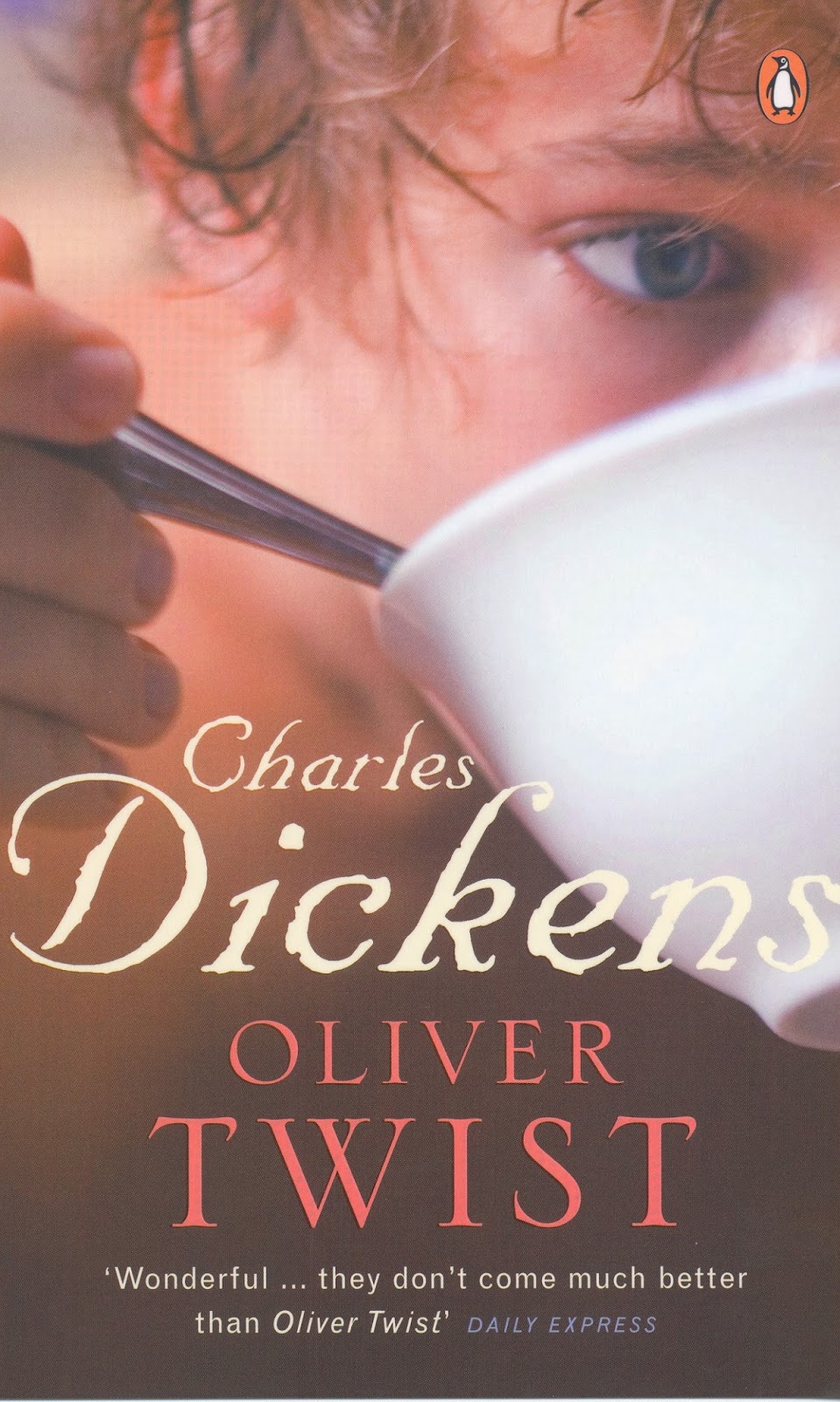
Review: Oliver Twist by Charles Dickens

Oliver Twist by Charles Dickens was published 175 years ago in 1838 and there's no doubt it's an enduring classic.  Most people know Oliver Twist is an orphan and of course his well-known request for "more".

I don't know why it's taken so long for me to read Oliver Twist, perhaps because I didn't really enjoy Great Expectations.  Having said that, I fell in love with Oliver Twist and am now a true Dickens fan.

Rather than share some of the plot (which most people know one way or another), allow me to share some of my favourite quotes/excerpts.

On considering sending young Oliver to sea on page 20: "the probability being, that the skipper would flog him to death, in a playful mood, someday after dinner, or would knock his brains out with an iron bar, both pastimes being, as is pretty generally known, very favourite and common recreations among gentlemen of that class."

Page 52, regarding Oliver's drowsy state: "There is a drowsy state, between sleeping and waking, when you dream more in five minutes with your eyes half open, and yourself half conscious of everything that is passing around you, than you would in five nights with your eyes fast closed, and your senses wrapped in perfect unconsciousness.  At such times, a mortal knows just enough of what his mind is doing, to form some glimmering conception of its might powers, its bounding from earth and spurning time and space, when freed from the restraint of its corporeal associate."

Page 176, this had me laughing for ages: "Unembellished by any violence of gesticulation, this might have seemed no very high compliment to the lady's charms; but, as Mr Bumble accompanied the threat with many warlike gestures, she was much touched with this proof of his devotion, and protested, with great admiration, that he was indeed a dove."

I could go on, but I hope that's enough to influence you to give Oliver Twist by Charles Dickens a try if you haven't before. The language was such a delight, I couldn't do it justice by reading it at my normal pace, and really had to slow right down to savour his words and his writing.

I savoured being amongst the pages and recommend Oliver Twist to all who appreciate the English language.

My rating = *****

Carpe Librum!
11 December 2013

Carpe Librum Surpasses 100,000 Hits

Carpe Librum has now surpassed 

100,000 hits!!

I'm so excited, this is a major milestone!  I'd like to thank all regular Carpe Librum readers and followers; without your support this couldn't have been possible.  

I'd like to take this opportunity to ask what you'd like to see here on Carpe Librum in the future.  Would you like more giveaways or do you have a particular book you'd like reviewed.  Feel free to leave your suggestions and feedback below and I'll do my very best to accommodate your input.

In the meantime, I look forward to bringing you more book reviews, author interviews and bookish news in the months and years ahead!

Happy Reading to you all!!


09 December 2013

Review: The Art of Clean Up - Life Made Neat and Tidy by Ursus Wehrli

The Art of Clean Up - Life Made Neat and Tidy by Ursus Wehrli book cover
I loved the work of Ursus Wehrli as soon as I saw it.  He takes every day settings and objects, and breaks them down, grouping the items in columns according to a new order.

The order could be determined by size, colour or any number of factors, but it's very amusing to see what he does with objects in a bowl of fruit salad (demonstrated on the cover, left) or a car park full of cars.

I love the way this artist thinks, and by looking at his work I really appreciate his way of seeing the world and the effort he sometimes goes to in order to achieve his re-ordering of the world.  

Here's an example of his work:
Bunch of flowers, before Ursus Wehrli

Same bunch of flowers 'tidied up' by Ursus Wehrli
I won't spoil the book by including any more examples, but you I'm sure you get the gist.  A fabulous, funny and clever book I recommend for all ages.  I think kids in particular will enjoy emulating the Wehrli style.

My rating = *****

Carpe Librum!
06 December 2013

Review: Murder In Mississippi by John Safran

* From The Reading Room for review *

John Safran is a household name in Australia, known for stirring the pot, tackling awkward and controversial subjects, causing strife and making us laugh.

My favourite John Safran creation would have to be the Not The Sunscreen Song, a parody of Everybody's Free (To Wear Sunscreen) by Baz Luhrman.

So, after being a fan of his documentaries and funny antics (such as getting a fatwa put out on Rove) I was very interested to learn John Safran had turned his hand to writing.  Murder In Mississippi is Safran's first book and it's a true crime story.

Safran was lured to Mississippi after the murder of a white supremacist in the deep South by a young black man.  A year earlier, Safran had spent a couple of days with the white supremacist in a prank for his series Race Relations.  Shocked that he'd been murdered, Safran (a fan of true crime and Truman Capote's In Cold Blood) went to the US to find out more.

Safran meets many white supremacists, the killer's family, lawyers and various other people connected to the murder case.  He finds himself in some unusual situations and even develops a relationship with the killer.  John is fair in his approach to what he thought would be a race motivated case, finding instead something altogether different.

Murder In Mississippi is very readable, even if this is your first true crime book.  Safran raises some ideas and points of view for examination and reflection and is clearly a deep thinker.  He is not afraid to say what he thinks and has the courage to go where few of us would dare venture.  Perfect for book clubs and those looking to sink their teeth into something meaty over Christmas; you can't go wrong!

My rating = *****


Carpe Librum!

After reading Murder In Mississippi, I had the opportunity to participate in a Google Hangout hosted by The Reading Room this week.  Along with 3 others, I was able to chat with John Safran about his book amongst other things.  The interview was watched live and is recorded below.  I hope you enjoy it; I had a blast!