11 June 2021

Review: The Last Garden in England by Julia Kelly

The Last Garden in England by Julia Kelly book cover
* Copy courtesy of Simon & Schuster *

I enjoy an historical fiction novel that follows a house through time and I've reviewed quite a few of them favourably here on Carpe Librum over the years. However, The Last Garden in England by Julia Kelly doesn't just follow a manor house through time, more specifically, it follows a garden.

Julia Kelly has taken the structure of the dual narrative and split it even further to create three narratives spanning five female characters.

Present day: Emma is the owner of a small business engaged to restore the overgrown and neglected gardens at Highbury House, originally designed in 1907 by Venetia Smith.

1944: The owner of Highbury House Diana is dealing with the recent transformation of her late husband's house into a convalescent hospital for soldiers injured in the war. Stella is a cook at Highbury House desperate to escape and her friend Beth is a land girl working on a nearby farm.

1907: Venetia Smith has been hired to plan and design the gardens for the family at Highbury House and her groundbreaking (sorry, couldn't help it) designs will leave an impression for generations to come.

The Last Garden in England is the story of all five women (Emma, Diana, Stella, Beth and Venetia) and even though the chapter headings clearly inform the reader about whose chapter is about to follow, I'll admit, it did get a little muddy at times trying to keep their goings on straight in my mind.

Having said that, the author does a good job of reminding the reader where they are in time with clever references. For example, after a chapter set during the food rationing of the war, the reader is shocked back into the present day when a character in the next chapter has a cube of sugar in their tea.

The writing was evocative, and the individual struggles, secrets, desires and ambitions of the women mentioned above made for an engaging read.
"It felt as though all of these years she'd been watching her memories from behind glass, and Cynthia had just swung a hammer." Page 267
Julia Kelly's passion for plants and knowledge about gardens and gardening clearly shines through, and even though I'm not a gardener myself (or even a green thumb), I didn't need any background in order to enjoy this element of the story. My favourite character in the book was Emma, probably because she takes on the job of restoring the overgrown gardens and I do love a good 'makeover'. Also, I couldn't go past the name of the company Turning Back Thyme and her best friend Charlie. They were such a great combo, I loved their chapters.

I wondered how the author was going to effectively 'wrap up' the narratives for each of the characters, and I was pleased with the ending. Ultimately, I recommend The Last Garden in England by Julia Kelly to historical fiction fans familiar with a multiple narrative structure who have no problem keeping a large cast of characters clear in their minds. There will definitely be some rewards on the page for those who do so.

My Rating:


09 June 2021

WIN 1 of 2 signed copies of Widow's Island by L.A. Larkin

Widow's Island by L.A. Larkin book cover
Australian author L.A. Larkin is back with a crime thriller to chill you to the bone this winter. Check out the blurb and enter below for your chance to win one of two signed print copies of Widow's Island valued at $30.00AUD for yourself or a loved one. Entries close midnight Friday 18th June 2021. Good luck!

BLURB

Someone knows your secret. And they’re coming to find you…

It’s already dark when Stephanie Miller returns to her remote lakeside home on Whisper Island. It’s only been a few months since her husband died, and her bond with her daughter is stronger than ever. Calling Amy’s name, Stephanie hears her phone buzz inside her purse. She doesn’t have to look to know that it’s another anonymous threat, she’s had them all day. But now she sees that this one is different. Someone knows she’s just walked through the door. Someone is watching her every move…

Stephanie’s skin prickles. Whoever is behind the messages is close to her family. They know her secret and she will do anything to stop Amy finding out. As she nervously looks out across the pitch-black water something moves. Is that a dark figure watching her from the shadows? One minute he’s
there, the next he’s gone.

Days later, the police still have no leads. Stephanie knows she can’t risk being trapped on the island again. Then, her best friend is murdered in her own home and Stephanie’s only thought is for Amy. But little does she know, the killer has already made contact with her daughter and he’s about to make his biggest move yet.

When a huge storm cuts off the island from the mainland, Stephanie feels like a sitting duck, waiting for the killer to come knocking. Although she will do anything to protect her precious family, she’s totally unprepared for what the killer does next…

GIVEAWAY

This giveaway has now closed and the two winners will be announced soon.


04 June 2021

Interview with Jacqueline Bublitz, author of Before You Knew My Name

Jacqueline Bublitz author photo, credit The Virtue
Jacqueline Bublitz
Credit: The Virtue
Before You Knew My Name
is the 'it' book of the moment, setting aside the perpetrator-led style of narrative in favour of a crime novel that gives agency back to the victim. Australian author Jacqueline Bublitz joins me to answer some questions from New Zealand, where she's been since the pandemic began.


Welcome to Carpe Librum and congratulations on your debut crime novel Before You Knew My Name.
Thank you for your support! It’s been an amazing ride so far, though I still sometimes struggle to believe this is real life.

Is it true your manuscript was the subject of a bidding war?
Before I was on submission, I’d heard terms like ‘auction’ and ‘bidding war’ and it all sounded very serious (and exciting). I love the business side of things, and it was exciting when multiple publishers showed interest in the manuscript, though thankfully it doesn’t get very war-like, ha. Everyone was so generous with their vision for the book, and I feel incredibly fortunate to have this as my first experience of the industry. It does help to have an incredible agent on your side, and mine is the best of the best.

How do you think you'd react if you found the remains of a victim of crime?
When she finds Alice’s body, Ruby’s reaction is one of frantic desperation, and I never wrote those scenes any other way – which makes me think that is how I might react in a similar situation. I imagine you’d go into shock at first, and there would be this grasping for what you’ve seen in all those TV shows, a kind of scrambling around for what to do, how to help. My instinct is that you really would feel a connection to the case, and to the victim. What little research I could find on people who have discovered the bodies of murder victims does seem to suggest that.

I read that you visited morgues in New York when researching your book. How is this kind of visit arranged? What impact did it have on you?
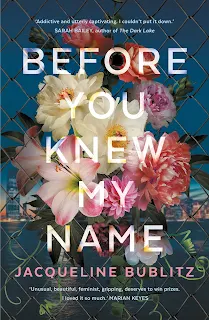
Before You Knew My Name by Jacqueline Bublitz book cover
A more accurate description would be that I totally lurked around a morgue in New York. A police officer I’d met told me to go down to 1st Avenue, to OCME (Office of Chief Medical Examiner), where he said they take unidentified bodies. I had no credentials or any legitimate reason to be there, so I mostly spent a lot of time in the area, checking out the neighbourhood. There used to be a psychiatric hospital, Bellevue, next door and the buildings have that kind of creepy, historic beauty that makes you half-expect to see a face pressed up against one of the barred windows, you know? The morgue itself is fairly ordinary, though I only ever made it to the lobby. I knew no one was going to let me go downstairs, so I just people-watched and soaked up the atmosphere, and then got asked to leave when I wanted to take some photographs!

I did make friends with a mortuary embalmer from Brisbane, however. So, I had lots of wonderful, detailed notes from her to help describe Lennie’s work, while my own experiences were better suited to Ruby’s awkward encounter when she goes looking for Alice at the morgue.

I really enjoyed the inclusion of the online sleuth community in your book and would love to know more. Are you a member of any true crime forums? Do you think you would make a great online sleuth? Do you believe web sleuths help or harm investigations?
I can see how addictive it would be! I never joined any, but a co-worker who was involved in some of these communities introduced me to the most active forums, and I loved lurking about (so much lurking with this book!), reading all of the theories and analysis put forward. I’m not sure I’d make for a good online sleuth because you probably need a little more patience than I have. I did always want to be a private investigator though, like Laura Holt from Remington Steele, so the desire is there. But I’d have to do stakeouts on foot, because I don’t drive.

As to whether I think web sleuths help or harm, I think bringing attention to cold cases in particular might help, even if it’s in tangential ways. The idea that someone knows the truth is what fascinates (and frustrates) me with these cases, so keeping the conversation going around crimes that might otherwise be forgotten can only be a positive thing. And just look at the work Michelle McNamara did with helping draw attention to the so-called Golden State Killer through I’ll Be Gone in the Dark. That book was such an inspiration to me.

I was late to the party, but I enjoyed I'll Be Gone in the Dark too. You mention in your bio that you're an arachnophobe and I'm dying to ask you about that. I fear spiders too and after experiencing nightmares for years, I found hypnotherapy helpful in managing the phobia. How does your phobia affect you?
Arghhh! It’s so bad I can’t even imagine getting help. Because I just know it would involve direct contact at some point. So, bravo to you for what I’m too scared to do! It’s a bit easier here in New Zealand, where the spiders still have all the legs, but they don’t tend to be the size of my hand. I have even managed to capture a few Kiwi spiders and put them outside, which is a massive step forward for me. I don’t hate spiders, and I get annoyed at myself, but the reaction is just so visceral. When I’m in Australia, it means I refuse to go camping, and I am always on high alert in places like Byron Bay. And I always flick down the visor in cars before I get in. Little things like that, and thankfully very few nightmares, which tend to be populated by roving lions instead. Which is a whole other story.

Thankfully I didn't need to do any direct contact, and was only exposed to drawings and images, but it was enough to make a difference so definitely well worth it. Before the pandemic, you were living between Melbourne Australia and the North Island of New Zealand. How has the inability to travel back to Australia impacted your writing career and your life?
I moved to Melbourne when I was 18 and stayed for over twenty years, so I always say it’s the place that grew me up. I used to travel back to New Zealand to see family every year, and only moved home when my dad got sick. I assumed it was temporary – and then it wasn’t. My last trip to Melbourne was February 2020. I’d just signed with my agent in the UK, and I remember telling my friends I’d be back within three months. Covid had other plans, and still does – I was meant to come back to Melbourne the first week of June, some sixteen months after I left. I’m conscious that I have little to complain about; I’ve been very lucky to be in regional New Zealand during a pandemic, and the publishing industry has adapted extraordinarily well to how remote we all are these days. That said, I miss my friends desperately. They were with me through so many of the ups and downs of my writing career, and I can’t wait to throw them all a big party to say thank you for their belief in me, even when I wasn’t so sure of myself. Soon … soon!

Has the pandemic changed your reading or writing habits in any way?
Honestly, most of the big changes in my life happened the year before, in coming back to New Zealand, and helping to nurse my dad. The pandemic, at a personal level, has often felt like an extension of that time. Back then, I was drawn to books and TV shows that were all about connection, and perhaps unsurprisingly, life being upended in some way. Schitt’s Creek and Younger are perfect examples of what I think of as my ‘grief genre’, and they both got me through some tough times, because for a while there, I struggled to write, and it was hard for any book to hold my attention. But when I did start writing again, I couldn’t stop. I guess everything had been bottled up, and then it just poured out.

When it comes to the pandemic – or any kind of trauma – and creativity, I hope people are being kind to themselves. If you have periods where you’re not creating anything at all, that’s okay. Do something to nourish yourself, instead. Until you’re ready. Because what’s for you will never go by you, I really believe that (and I really should learn who that’s attributed to, because it’s one of my favourite sayings).


Is there a book by a Kiwi writer you believe deserves more attention?
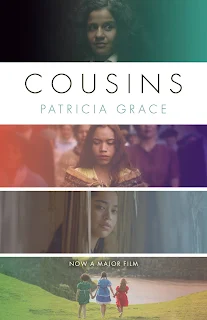
Cousins by Patricia Grace book cover
Oooooh, good question! In terms of current releases, I would say that everyone should pick up a copy of Michelle Langstone’s beautiful book of essays, Times Like These. The writing is just so elegant, and honest. I also love that a book like Cousins, by one of our most celebrated writers, Patricia Grace, has just been turned into a gorgeous film, nearly 30 years after it was first published.

What's on your bedside table right now?
A book of essays by Audre Lorde, a late-blooming flower from my parent’s garden, and an old race book of my dad’s, from the 1960 Melbourne Cup.

What can you tell us about your next novel?
I’m editing at the moment, which is fun, because I love seeing everything come together, and finding all the little gifts past-me left for current-me to find! Thematically, this new story has quite a lot in common with Before You Knew My Name, although it’s set in small-town New Zealand, not big city New York. It deals with life, and death, and ghosts (maybe!), and there’s a really nice love story in there. I genuinely like these new characters, which feels like a good start.

Oooh, I love a book with ghosts, sounds great! Anything else you'd like to add?
Just a big thank you to readers and bloggers, and this incredibly welcoming community. I feel very, very lucky that Before You Knew My Name has been embraced by so many people, and I love all the insightful responses and reactions to Alice’s story (I still try to read all the reviews). It’s a book I poured my heart into, and this has been the most gratifying experience. When it’s not terrifying, ha!

Thanks so much for joining me Jacqueline and good luck for the next book! To find out more, visit www.jacquelinebublitz.com 
03 June 2021

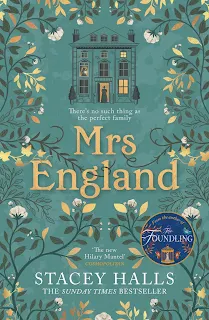
Review: Mrs England by Stacey Halls

Mrs England by Stacey Halls book cover
* Copy courtesy of Allen & Unwin *

Mrs England by Stacey Halls is one of my most highly anticipated releases for 2021 and I was thrilled when it delivered on all of my hopes and expectations. From the stunning cover design, the enticing premise, the Edwardian era setting and location at Hardcastle House in West Yorkshire, Mrs England is everything I love in historical fiction.

Ruby May is a qualified nurse from the Norland Institute in London and after her employers move to America, Nurse May finds herself frantically looking for work so she can continue to support her ailing sister. Accepting a position at the isolated Hardcastle House, Ruby eagerly agrees to look after three children from the family of wealthy mill owners Charles and Lilian England. The previous nurse had cared for Charles as a boy and died of natural causes and Nurse May finds her new surroundings lacking. She immediately embarks on a drastic 'makeover' of the nursery, cleans and dusts, mends the children's clothes and takes the children outdoors to play every day. This kind of 'manor makeover' is total bookish catnip to me. I love when a governess or nursemaid shakes things up for the better, and I was in heaven during these pages.

Mrs Lilian England keeps strange hours, doesn't interact much with the children and doesn't involve herself in the running of the household. Mr England is friendly, relaxed and approachable and it's soon clear who really runs the house. This is a slow moving gothic tale, with Ruby's past carefully revealed and the relationships between the characters slowly evolving.

Reading Mrs England felt like being immersed in the world of Downtown Abbey. Not much happens but I just loved being there, the interactions and back stories of the characters being enough to keep me transfixed. It is for this reason that the denouement came as quite a surprise and everything I thought I knew was turned slightly on its head. Oh, and the last line of dialogue between the characters made me exclaim out loud and impatient to discuss it with another reader.

I've read all of Stacey Halls' books, beginning with The Familiars in 2019 and The Foundling in 2020, both of which were 5 star reads. You can understand why Mrs England was high on my watch list, and I'm thrilled to report it was also a 5 star reading experience. This makes Stacey Halls an automatic must-read author for me and I can't wait to find out what what she's working on next.

Highly recommended for historical fiction fans.

My Rating:


30 May 2021

Review: Grave Tales - Melbourne Vol.1 by Helen Goltz & Chris Adams

Grave Tales: Melbourne Vol.1 by Helen Goltz & Chris Adams book cover
* Copy courtesy of Atlas Productions *


Cemeteries are beautiful and haunting places, a reminder of our collective grief, the passage of time and of course our own mortality. Several years ago, I went on a walking tour of the St Kilda Cemetery on Dandenong Road in Melbourne run by volunteers from Friends of St Kilda Cemetery. I noted the warnings about uneven ground, however I rolled my ankle and had to hop back to the car just 10 minutes after the tour had started.

Years later I became a regular listener of the Grave Tales Australia podcast by Helen Goltz and Chris Adams, and I enjoyed the stories of those laid to rest in cemeteries around Australia. However podcasts aren't able to provide any visuals and I wanted to view photos of the gravesites being described and the people being discussed. Grave Tales: Melbourne Vol.1 by Helen Goltz & Chris Adams is the seventh book derived from the podcast series and contains photos and stories inspired by the resting places of those buried in this great city and it was an interesting read.

In particular, it opened my eyes to at least two events in my suburb that I knew nothing about. In April 1927, the RAAF was involved in celebrating the royal visit of the Duke and Duchess of York as part of their national tour. At least 40 aircraft were involved in aerial manoeuvres and flybys, but disaster struck when two of the aircraft were involved in a mid-air collision. One of the aircraft crashed into the Postmaster General's garage in Sturt Street and the other crashed in nearby Dodds Street. A total of 5 RAAF men lost their lives in an air disaster witnessed by thousands.

Another incident close to where I live was the Botanic Gardens murders. In January 1924, a WWI veteran entered the gardens at Park Street near the Domain and began shooting members of the public with his rifle. In just 4 minutes, he shot 5 people, killing 3 and changing the lives of many before he fled the gardens and later committed suicide. In each chapter, Goltz and Adams go on to inform the reader about what happened to those involved in a 'where are they now' style which adds to the reading experience.

Early in the book, Goltz and Adams provide an overview of the establishment of cemeteries in Melbourne, and several interesting facts, including Burial Hill, which we now know as Flagstaff Gardens and of course the Old Melbourne Cemetery (as its now known) at the site of the Queen Victoria Markets. In the 1880s, the government passed a law requiring the removal of all bodies from the cemetery which unfortunately didn't commence until the 1920s. There were significant problems identifying the plots due to a missing burial register of 1866, the lack of adequate headstones, and the fact that many of the timber markers hadn't survived the weather. Only 914 remains were relocated to other cemeteries, which means the QVM still contains the remains of 9,000 early settlers. The cemetery was officially closed in 1922 and the land was given over to the Melbourne City Council for the market.

After learning that Springvale Cemetery opened in 1902 and Fawkner Cemetery opened shortly after in 1906, the authors had me rushing off to Google Maps after reading that:
"If you could see Springvale from the air it has a 'Union Jack' design and Fawkner is designed as a half spider's web." Page 5
Did you know Melbourne had mortuary trains, "that had special hearse carriages to carry coffins to Springvale and Fawkner cemeteries while mourners took the regular carriages." I was fascinated to learn that a "mortuary train ran once daily from a special mortuary station near Princes Bridge in the city" before services ceased in 1943.

Fascinating stuff, and readers with a similar interest in cemeteries might be interested in my review of Necropolis - London and Its Dead by Catharine Arnold.

Reading Grave Tales: Melbourne Vol.1 took me on an interesting trip through the streets of Melbourne with fresh eyes and I recommend it for taphophiles and non fiction readers interested in social history. 

My Rating:


26 May 2021

Review: The Last House on Needless Street by Catriona Ward

The Last House on Needless Street by Catriona Ward book cover
* Copy courtesy of Allen & Unwin *

Literary horror anyone? Until this month, I was unfamiliar with the literary horror genre, but it's fair to say The Last House on Needless Street by Catriona Ward fits squarely within this sub-genre.

Since then, I've discovered that several titles I've read and reviewed actually fall into the literary horror genre, including:

Sour Candy by Kealan Patrick Burke ⭐⭐⭐⭐
The Turn of the Screw by Henry James ⭐⭐⭐
The Historian by Elizabeth Kostova ⭐⭐⭐⭐⭐
* Countless novels by Stephen King
Let the Right One In by John Ajvide Lindqvist ⭐⭐
The Road by Cormac McCarthy ⭐⭐⭐
Melmoth by Sarah Perry ⭐⭐⭐
The Silent Companions by Laura Purcell ⭐⭐⭐⭐
Dracula by Bram Stoker ⭐⭐⭐⭐⭐
The Little Stranger by Sarah Waters ⭐⭐⭐

Now that we're all suitably oriented, what can you expect inside this hauntingly enticing cover of The Last House on Needless Street? A mysterious mind f*** of a novel, that's what you can expect. In fact, the blurb tells us as much.
This is the story of a murderer. A stolen child. Revenge. This is the story of Ted, who lives with his daughter Lauren and his cat Olivia in an ordinary house at the end of an ordinary street.

All these things are true. And yet some of them are lies.
The unreliable narrator is a well-worn trope now and I thought that's what I was going to encounter here, but I was swiftly forced to think again.

The Last House on Needless Street is a dark novel that begins as an unassuming mystery luring you in chapter by chapter until all of a sudden, the light has gone, a shiver crawls across your back and you're immersed in the murky depths of the plot.

The reader will need to accept the dynamic between the multiple narrators, Ted, Olivia, Lauren and Dee, including the fact that one of them is a cat. I don't mind an unusual narrator, and I actually enjoyed the chapters narrated by the cat.

Being a middle aged reader, I was familiar with the literary plot device towards the end (both in fiction and in real life) so it didn't catch me completely off guard, however younger readers (or those less engaged with certain topics) will have their minds blown when they get to the 'cut and thrust' of what's happening in the story. But don't worry, no spoilers here.

The Last House on Needless Street by Catriona Ward is for readers with the stomach to plow ahead regardless of content warnings and those who enjoy a dark psychological thriller with literary leanings.

My Rating:


24 May 2021

Spotlight: Survivor - Life in the SAS by Mark Wales

Survivor: Life in the SAS by Mark Wales book cover
Intro

Long before I became a book reviewer, I served in the Royal Australian Navy. I've reviewed several military memoirs at Carpe Librum over the years, but today I wanted to shine a spotlight on a powerful memoir coming out this week.

Survivor: Life in the SAS by Mark Wales is published by Pan Macmillan tomorrow and you might remember the veteran - and now published author - from the TV show Australian Survivor in 2017. I enjoyed the season immensely and was happy for Wales when he married his on-screen sweetheart Samantha Gash later in 2019.

In 2013, I had the honour of interviewing Major General John Cantwell AO, DSC and in his words, Survivor: Life in the SAS is 'searing, humbling and uplifting... Mark Wales is a true inspiration.'

If you're looking for a moving and inspiring memoir about courage, redemption, transformation and purpose by an honest Australian, look no further.

Blurb

How do you rebuild your life when you've hit rock bottom?

Mark Wales thought his life would end in a cornfield in Afghanistan.

Mark and his SAS troops emerged from that scorched battlefield twelve hours later, his mentor gunned down, his dream career now a nightmare. Over four deployments of intense warfighting, Mark watched the line between right and wrong become blurred. When he left the SAS he was adrift, crippled by guilt.

On a mission to rebuild himself, Mark turned his life around. He fought his way into the gates of a US Ivy League business school and into the boardrooms of top-tier international corporations. He spent years navigating failure in a quest to find new meaning in life. With every setback Mark counterattacked, discovering the tactics and tools needed to become more resilient, and to find happiness, belonging and purpose.

Told with gripping suspense, humour and touching warmth,
Survivor is Mark's extraordinary life in and out of the SAS, a story of resilience and a testament to the power of transformation.
Author Mark Wales

Bio

As a teenager growing up in the mining towns of Western Australia, Mark Wales had a zealous ambition; to join Australia's most revered military unit, the Special Air Service Regiment (SAS). He achieved his goal, embarking on a professional career that would eventually lead him to Afghanistan. There, as a troop commander in charge of 30 elite soldiers, Mark led combat missions deep behind enemy lines.
 
Today, he is an accomplished corporate speaker, an apparel business founder and owner, and proud family man. Mark lives with his wife Samantha, and young son in the Dandenong Ranges, Victoria. Visit Mark's website for more info www.markwales.com.au 


21 May 2021

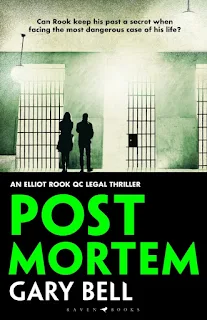
Guest Review: Post Mortem by Gary Bell

Post Mortem by Gary Bell book cover
* Copy courtesy of Bloomsbury *


INTRO

Post Mortem is the second in the series by Gary Bell featuring Barrister Elliot Rook QC, a character with a secret criminal past. Guest reviewer Neil Béchervaise shares his review below.

NEIL'S REVIEW

The central character in Gary Bell’s second novel has apparently moved from convicted fraudster through homeless student sleeping rough to barrister and QC in the inner court chambers of a respected London legal firm. The publisher’s blurb suggests that knowledge of this background would destroy his career. As a lay reader, I would have thought so too; I would have thought he could never get so far. In fact, while this may provide an interesting backstory to an otherwise fairly plausible tale of corruption, drug-peddling and murder within the prison system and Wormwood Scrubs in particular, it does push the limits.

In equally dubious fashion, ‘pupil’ lawyer Zara’s desperate quest for recognition and acceptance into the same legal firm ahead of apparently numerous similarly qualified and ambitious young ‘pupils’ suggests that the author may be trying too hard. In the only real elaboration of her character, Zara is described on Page 20 as “a gay woman of mixed race with a council-estate background and thick Nottinghamshire accent” – an unlikely recruit to a leading London law firm? Fortunately, the real story lies in the solution of ‘the crime’.

Rook’s early encounter with a kennel-full of killer dogs being trained for illegal dog-fights leads to his saving a particularly cruelly treated ‘bait dog’ and encountering an especially large, white, rare and savage breed, dogo argentinos, illegal in the UK but being trained, here, for ‘special customers’.

When the image of a large white dog appears behind the front door of Rook’s latest client, Charli, charged with smuggling illegal drugs into the prison where she works, the basis for the plot is established. Before she has even been arrested, however, 13 prison inmates have been murdered. But how are the offences connected?

As Rook and Zara collaborate to bring related cases to court, Bell’s capacity to inter-relate complex legal points with a compelling storyline offers fascinating insights into the evolution of the criminal gang in Britain. From the territorial protection of inner-city slums to the evolution of racially based criminal gangs promoted through massive housing projects, Post Mortem offers insights into the manipulation of the poorer classes. At the same time, it identifies the legal and humanitarian issues arising from overcrowding and unemployment among those groups who have been ‘left behind’ across a shift in social and economic needs since the industrial revolution.

The ultimate overlap between criminal and judicial power presented in Bell’s denouement, while perhaps a little too convenient, presents his readers with a fascinating picture of the entrenched issues of class, race and social necessity in Britain in the twenty-first century. Public housing may reduce homelessness but it does not, it seems, address the fundamental issue of purpose in life, regardless of the country it is focused within.

Bell’s Post Mortem has its problems with character and plot plausibility but the thematic issues it raises and the range of action it presents between crime and justice make it an interesting read.

Neil's Rating:


18 May 2021

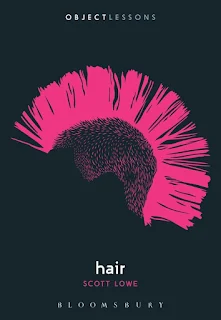
Review: Hair by Scott Lowe

Hair by Scott Lowe book cover
Hair and hairstyles are endlessly fascinating. The cultural differences, the meaning behind particular styles, the changing fashion trends over time, and the assumptions we make about people with particular hairstyles are limitless. If you find yourself wondering how the Ned Kelly beard made a comeback, or why a young person today would choose to rock a mullet, then you're interested in hair too.

Hair by Scott Lowe is from the Object Lessons series of books by Bloomsbury Academic, and I borrowed this copy from the library.
"So, the way hair is dyed, shaped, managed, neglected, restrained, or set free always has meaning. Hair is vexing and it is complex. Everyone has opinions about hair, so naturally the world's religious traditions have a great deal to say about it." Pages 12-13
Lowe goes on to say:
"Hair may be social or private, trendy or deliberately uncool, serious or ironic; hair is geographical, ethnic, and biological, but above all, I think it's religious." Page 14
Having taught religious studies for 30 years, Scott Lowe informs the reader early on that he is going to narrow his focus and present the religious aspects of hair in this book. Was I disappointed on learning this? You bet! Did I feel as though I wasn't going to get the full picture? Absolutely! However, the author still managed to hold my attention and teach me something new, like the fact that Muslim men remove their armpit and pubic hair.
"Modern Muslim men continue to practice a limited form of body depilation, removing only armpit and pubic hair. Torso, arm, and leg hair is usually left undisturbed. Head hair is neatly trimmed and kept short, beards are also trimmed but usually long." Page 46
Lowe points out that some religions use hair and dress to differentiate themselves from Muslims and other religions. Sikhs wear 'full moustaches, extravagant beards and often enormous turbans' and Hindus have short hair, heavy moustaches and no beards. Other religions and hairstyles were presented, including a topic of interest, the tonsure. A variety of interpretations for the shaven head were also revealed.
"A shaven head indicates disgrace or shame when used as a punishment, yet a similar hairless head might signify controlled rage on a White supremacist, self-confident power on a CEO, dedication to a life of celibacy on a Buddhist monk, a recent life transition on a Hindu, and mourning on a Lakota. It's complex." Page 122
The covering of women's hair for religious purposes is included, and wimples, hijabs, veils and wigs are touched on briefly, along with the history of blonde and red hair in men and women.

In an introduction to styling, Lowe piqued my interest with the following:
"In every epoch for which we have evidence, humans have employed enormous creative energy to devise new and distinctive hairstyles. From braiding to perming to tying hair onto massive wire and wood superstructures, powdering, flouring - before the French revolution put an end to that wasteful practice, French aristocrats purportedly used enough flour on their wigs every month to make thousands of loaves of bread - shaving, sculpting, lacquering, coloring, curling, gilding, waxing, primping, ratting, the list goes on and on." Page 69
Unfortunately for this reader, Lowe doesn't expand on any of these tantalising hairstyles, and much is left unexplored in favour of the focus on religion.

Ironically, Lowe had time in the book to touch on the strange custom of eighteenth-century British lovers who 'give each other clippings of their pubic hair' and the Victorian custom of mourning jewellery containing a lock of hair from a deceased loved one. With only three pages given to African-American hair and hairstyles, these were all topics I was eager to explore but will need to do so elsewhere.

My Rating:


14 May 2021

Celebrating 1.5M Page Views!

Today I'm celebrating my biggest Carpe Librum milestone yet! (Drum roll)

I've just reached 1.5 Million Page Views!

Starting in 2005, I've achieved some great milestones along the way, and the site has undergone many improvements over the years. It took me 12 years to reach 1M page views and just under another 3.5 years to reach 1.5 million. I have a current average of 15,000 views per month, I've published 1,223 blog posts and given away more than $2,000 in books and prizes here at Carpe Librum.

During that time, my passion for books and reading continues to grow regardless of the numbers but it's great to celebrate the milestones as they happen.
Carpe Librum celebrates 1.5 million page views

A massive shout out and thank you to those of you who have been sharing my love of books and reading since the early days and a hearty and bookish welcome to the newbies who have subscribed more recently. If you've enjoyed a book after reading one of my reviews, I'd love to hear about it in the comments section. Maybe you won one of my giveaways and the book is still on your shelf.

Share your favourite highlight of the last 16 years and your contribution towards the 1.5 million page views. 

Thanks for your support and happy reading.

Carpe Librum!


11 May 2021

Review: Before You Knew My Name by Jacqueline Bublitz

Before You Knew My Name by Jacqueline Bublitz book cover
* Copy courtesy of Allen & Unwin *


This is the story of a person who discovers a female victim of crime. If you watch the news, listen to true crime podcasts, watch true crime documentaries or read any crime or true crime books (tick, tick, tick, tick and tick) then you'll be familiar with the fact that human remains are most often found by members of the public. People like you or me. Joggers, dog walkers, bushwalkers, beachcombers and those just enjoying the outdoors, can end up discovering a person by sheer accident. In this novel, Ruby is one such person. 

Author Jacqueline Bublitz takes a unique approach in this novel by focussing on what happens after a member of the public discovers a victim of crime. Presumably their lives are turned upside down, but how do they process the randomness of their discovery and deal with the aftermath? In Before You Knew My Name, Bublitz seeks to find out when Ruby finds the remains of a Jane Doe by the Hudson River in New York. The connection between Ruby and the unidentified murder victim known as Riverside Jane is strengthened and in a unique narrative style, we slowly learn more about Jane's life leading up to the point it was snatched away.

Violence against women and public safety is an important theme in this book, as is the public's obsession with female victims of crime. But don't worry, it doesn't suggest all men are evil and certainly doesn't pretend to have all the answers. This is a story about finding connections in a big city and the generosity of others and I particularly enjoyed the inclusion of the online sleuths who attempt to solve cases like these; both in the book and in real life.
"These are the men and women who dedicate themselves to solving cold cases, who learn the names of the official investigators assigned to these cases, and don't hesitate to share their theories with both the police and each other. These self-taught criminologists share concerns about under-resourced police departments and clues potentially missed; they are a small army advancing through the nation of the dead. Points are scored if they can pair a recently discovered Jane or John with a known missing person." Page 195
Before You Knew My Name is not a whodunnit or a whydunnit and doesn't focus on the perpetrator at all. Instead, Jacqueline Bublitz offers a refreshingly unique premise that kept me engaged and is recommended for crime and thriller readers - both new and seasoned - looking for a new perspective.

My Rating:


10 May 2021

Winner of The Hope Flower by Joy Dettman announced

Thanks to everyone who entered my giveaway last week to win a copy of The Hope Flower by Australian author Joy Dettman. Entrants correctly identified that Lori had eleven brothers and one sharp-eyed reader noticed the cheeky checkbox "I have eleven brothers, so I deserve to win this giveaway" and earned an additional entry.

The giveaway closed at midnight on Mother's Day, and the winner was drawn today. Congratulations to:

Janelle

Congratulations Janelle! You've won a print copy of The Hope Flower by Joy Dettman valued at
The Hope Flower by Joy Dettman book cover
$34.99AUD thanks to Pan Macmillan. You'll receive an email from me shortly with the details of your win and your prize will be sent out to you by the publisher.

Enjoy and stay tuned for more giveaway opportunities coming soon. For more details, check out my giveaways page.

Carpe Librum


05 May 2021

Review: The Pun Also Rises by John Pollack

The Pun Also Rises by John Pollack book cover
The Pun Also Rises - How the Humble Pun Revolutionized Language, Changed History, and Made Wordplay More than Some Antics
by John Pollack kicks off with a bang! Recalling his attendance at the eighteenth annual world pun championships, the author had me chuckling early on and it continued throughout the book.

Pollack explains many different types and styles of puns, why they're clever, why we find them funny and naturally how they've been decried by some circles throughout history. In basic terms, a pun is a phrase or word that contains layers or multiple meanings. Sometimes it can be a word that has multiple meanings, such as: "An architect in prison complained that the walls were not built to scale." Other times it can be a play on words or the sound of words, such as: "The excitement at the circus is in tents."
"So what's the alchemy at work here? How do the best puns manage to layer so much meaning, humor, even irony into just a few words? And why in the world is punning so intrinsic to human expression that it sparks such mischievous delight?" Page xxiv
There are many different types of puns and early on in the book Pollack also takes pains to say:
"And while linguists have defined the pun's principal forms, its many variations actually defy easy categorization." Page xxiv
Pollack outlines the many ways we can manipulate language for our own amusement and the entertainment and enjoyment of others. The author explains that puns fall into two principal categories, homophonic puns and homographic puns. Homophonic puns are those using words that sound alike (such as 'in tents' and 'intense') and homographic puns involve a word that is spelled the same but contains more than one meaning. There are also paradigmatic puns requiring the listener to grasp a greater context in order to get the joke, and syntagmatic puns where a sequence of similar or identical words are used. A great example of a syntagmatic pun is provided:
"The wedding was beautiful. The bride was in tears, and the cake was in tiers, too." Page 12
It was fun to visit spoonerisms in the book, which is when a person speaking transposes letters or words in a sentence that still manages to makes sense, but in a new and funny way. A well known example from the Oxford don after which spoonerisms are named, occurred when he met Queen Victoria and thanks to a slip of the tongue, said "a half-warmed fish" instead of "a half-formed wish". Whoops!

Pollack gives the reader two definitions of puns from a 1719 essay by Thomas Sheridan the first of which was an absolute highlight of the book. Sheridan described the physical definition of punning as the:
"art of harmonious jingling upon words, which, passing in at the ears, and falling upon the diaphragma, excites a titillary motion in those parts; and this, being conveyed by the animal spirits into the muscles of the face, raises the cockles of the heart." Page 81
Brilliant! I just love this description!

As soon as I started reading this book, I began to notice puns everywhere. I've noticed copious puns showing up in news headlines and articles and they're definitely a firm favourite of the TV host of Lego Masters. 

John Pollack clearly loves puns and provides a detailed history in The Pun Also Rises. I'll admit much of the content was a little dry, however Pollack keeps whetting our appetite by weaving in clever little puns throughout the content. I chuckled at the 'harmonious jingling upon words' reading this, and finished the book with a newfound appreciation for this linguistic talent.

So, where do you sit when it comes to puns? Chuckleworthy or groan inducing?

My Rating:


03 May 2021

Review: Gory Details - Adventures from the Dark Side of Science by Erika Engelhaupt

Gory Details - Adventures from the Dark Side of Science by Erika Engelhaupt audiobook cover
Erika Engelhaupt is a science journalist and in Gory Details: Adventures from the Dark Side of Science, she shines a light on the gross, the bizarre, the taboo and morbidly fascinating elements of science.

Engelhaupt divides her book into the following six parts, each containing multiple chapters:
  1. Morbid Curiosity
  2. That's Disgusting
  3. Breaking Taboos
  4. Creepy Crawlies
  5. Gross Anatomy
  6. Mysterious Minds

Writing the column Gory Details for National Geographic, Engelhaupt covers a broad range of subjects in the book, including a few of my favourite topics of interest:
  • Frances Glessner Lee's dollhouse crime scene dioramas (or nutshells) used to train detectives and forensic investigators
  • Super recognisers and their ability to fight crime
  • Floating feet in British Columbia
  • Fatbergs
  • The Mandela Effect

She also introduced me to fascinating new topics, like:
  • The smell of sickness
  • Necrophilia in the animal kingdom
  • Misophonia, a strong reaction to particular sounds and noises
  • Insects inside the body

Many of these topics had me heading to Google for more information, my interest having been well and truly piqued. I listened to the audiobook of Gory Details, and the short chapters made for excellent reading, often covering a topic in 10-15 mins.

Gory Details by Erika Engelhaupt is highly recommended for trivia buffs and if you enjoy the non fiction writing of Mary Roach or Caitlin Doughty, this is definitely for you. Also recommended for those with an interest in the world of science, biology, anatomy and nature. 

My Rating:


30 April 2021

WIN a copy of The Hope Flower by Joy Dettman

The Hope Flower by Joy Dettman book cover
* Copy courtesy of Pan Macmillan *


The Hope Flower by Australian author Joy Dettman is a story of love and survival. Check out the blurb and enter below for your chance to win a copy of The Hope Flower for yourself or a loved one. Entries close midnight on Mother's Day in Australia on Sunday 9th May 2021. Good luck!

BLURB

Lori has eleven brothers, a father dead from suicide, and a mother locked in a room. This is no rural romance, but there is love.

Lori Smyth-Owen isn't your average teenager - as you'd expect from the only girl in a family of twelve. Or they were a family, until their father took his own life to escape his bed-bound wife, too obese to leave her room.

But for Lori and the remaining brothers, there is no escape from their volatile, mentally unstable mother. They raise themselves away from the gaze of the authorities, realising that though abandoned, they are now in charge. They can control everything, including their mother's food intake.

In time, their mother emerges, after losing two-thirds of her body weight. But does she bring with her the seed of hope for a better future, or will all hell break loose?


BIO

Joy Dettman was born in country Victoria and spent her early years in towns on either side of the Murray River. She is an award-winning writer of short stories as well as the highly acclaimed novels ​Mallawindy, ​Jacaranda Blue​, ​Goose Girl​, ​Yesterday's Dust​, ​The Seventh Day,​ ​Henry's Daughter​, ​One Sunday​, ​Pearl in a Cage,​ ​Thorn on the Rose,​ ​Moth to the Flame​, ​Wind in the Wires​, ​Ripples on a Pond​, ​The Tying of Threads,​ ​The Silent Inheritance ​and ​Trails in the Dust.

GIVEAWAY

This giveaway has now closed.


28 April 2021

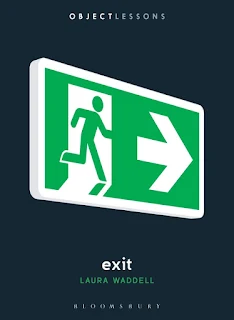
Guest Review: Exit by Laura Waddell

Exit by Laura Waddell book cover
* Copy courtesy of Bloomsbury Australia *


Intro

The second instalment in my series of reviews from the Object Lessons series of books by Bloomsbury Academic is Exit by Laura Waddell. I'll leave you with Neil Béchervaise for his thoughts on this one.

Neil's Review

As a prescient reminder that lament, rage, reflection and even trivial recall never really leave us, Laura Waddell’s Exit is, indeed, an Object Lesson; a lesson in the fine line between ‘coming’ and ‘going’; between ‘in’ and ‘out’, between ‘now you see it’ and ‘now you don’t’.

While definition is always important, the signs and signifiers for ‘exit’ connote ‘place’ rather than ‘presence’, ‘presence’ rather than ‘existence’. Reviewing her own sense of self – particularly in terms of her Scots origins and the language she can never really use because it probably no longer exists, Waddell extends her readers’ sense of location from ‘place’ to ‘identity’; her anger at being excluded, maybe excluding herself, from an ideal which she knows herself to be. From ‘emigrant’ to ‘immigrant’ we may transition into ‘aliens’ – not necessarily ‘little green people’ but different nevertheless, while still ‘the same’. Upon exit, we are cast into that episode of The Twilight Zone in which, she recalls:
“Aliens were frightening because they mirrored our worst human tendencies”      Page 2
Within its brief 130 pages of information, anecdote, recollection and personal reflection, Laura Waddell’s Exit shifts from substantial to existential before closing with a rush that is reminiscent of the closing door which reminds us that while we, as readers, may still be here, the author has gone. What remains is our responsibility – we found our way in so now we must decide what is out.

Neil's Rating:


26 April 2021

Winner of One of Us Buried by Johanna Craven announced

Thanks to everyone who entered last week's giveaway to win a copy of One of Us Buried by Australian author Johanna Craven. Every entrant correctly identified that in One of Us Buried, Eleanor is on a prison ship bound for New South Wales.

The giveaway closed at midnight last night, and the winner was drawn today. Congratulations go to:

Renee

One of Us Buried by Johanna Craven book cover

Congratulations Renee! You've won a print copy of One of Us Buried by Johanna Craven valued at $24.99AUD. You'll receive an email from me shortly with the details of your win and the author will send your prize out to you directly.

Enjoy and stay tuned for another giveaway opportunity coming on Friday. For more details, check out my giveaways page.

Carpe Librum!


25 April 2021

Review: Tussaud by Belinda Lyons-Lee

Tussaud by Belinda Lyons-Lee book cover
* Copy courtesy of Transit Lounge *


Other than being French, I didn't know anything about the life of Madame Tussaud prior to reading this book other than the legacy of her wax museums. Australian author Belinda Lyons-Lee has changed all of that with the release of her historical fiction debut novel Tussaud.

Marie Tussaud barely managed to escape the French Revolution with her life, during which thousands were incarcerated and executed. Marie herself was accused of being a royal sympathiser, arrested and her head was shaved in preparation for execution by guillotine. Marie's release came as a shock, although it also came at a cost. In exchange for her life, Marie was forced to make death masks and wax recreations of the heads belonging to those famously executed, including Marie Antoinette.

This work would stay with Marie for life and Lyons-Lee does an amazing job of drawing from known facts to imagine her life from that point forward. Marie teams up with a famous magician by the name of Philidor and together they create a show called the Phantasmagoria. It's this show that attracts the attention of the eccentric 5th Duke of Portland, William Cavendish who will go on to make an interesting business proposal.

Tussaud is a gothic story that takes place first in Paris before shifting to London and the rambling and isolated estate of Welbeck Abbey. Peopled with characters yearning to fill a void and each with their own agenda, Tussaud is full of secrets, deception, greed, desire and exploitation with plenty of characters keen to take advantage of Marie and her creations for their own purposes. Tussaud also has a sense of 'other' that reminded me a little of the subtle supernatural elements running through The Silent Companions by Laura Purcell. If you loved that, I think you'll also love this.

The writing effectively evoked the time period and here's an example of a scene featuring Philidor in early 1800s London:
"He stood in the middle of the alleyway and lit a cigar, content to let the unseen eyes watch him further, his exposed back like a challenge. But he knew the wretches who haunted these spots were not pickpockets or murderers: they were living skeletons who crawled into the gloom of doorways and corners to curl up and waste away in soft grey clouds of rags and sighs." Page 217
Presented in a stunning green cover design, I enjoyed an interview recently in which the author shared her fascination with the toxic green wallpaper of the era and how she wanted the book cover to capture the deadly association. This is one of my favourite facts from history (covered several times here on Carpe Librum) so I was overjoyed to learn she was fascinated by it too.

Tussaud has opened my eyes to the amazing and troubling life of this household name and while the life portrayed was fictional, it was certainly entertaining. Highly recommended.

My Rating:


20 April 2021

Review: The Paris Affair by Pip Drysdale

The Paris Affair by Pip Drysdale book cover
* Copy courtesy of Simon & Schuster *


Harper Brown is an arts and culture journalist for The Paris Observer who dreams of advancing to become an investigative journalist so that she can write about what really matters. A huge fan of true crime podcasts, Harper is independent, savvy, self-absorbed, street-smart, driven and desperate to write about the string of crimes in Paris concerning missing women.

Soon after researching and interviewing a local artist for a news story with an edge, the artist's model disappears and Harper is drawn to investigate. Previously the writer of a micro-column called How Not To Get Murdered, Harper knows how to pick a lock and escape from duct tape, and she's going to need all of her skills.

The Paris Affair is a contemporary crime novel, with Harper at the centre trying to solve a murder while using the opportunity to further her career. Harper reminded me a little of a female version of the Martin Scarsden character from the Chris Hammer series of books set in Australia. While Harper is a young, single and ambitious woman with an admittedly different background, both Drysdale and Hammer offer readers the chance to explore a 'whodunnit' through the eyes of a journalist, making a nice change from the regular lineup of detectives, FBI, coroners and pathologists that regularly frequent my shelves.

Being a non-French speaker, the French chapter headings were a little distracting, and unnecessary in my opinion. The author did a convincing job of setting the scene firmly in Paris with references to art galleries and the unique geography of lesser known Paris, along with all of the stairs and door codes.

Harper lives her life according to her rule of 'do no harm', and believes that love can only end in one of three ways: disillusionment, death or divorce. As a result, she doesn't let anyone get too close, and severs relationships before they can fully form. Her friendship with her best friend Camilla was endearing but the ending of the book was unexpected. Each time I thought the book had finished, I was rewarded with another chapter that felt like an additional prologue or bonus post-credits scene firmly wrapping up Harper's situation.

The Paris Affair by Australian author Pip Drysdale is an entertaining crime thriller recommended for fans of savvy characters, art, journalism and all things Parisian.

My Rating:


19 April 2021

Review: High Heel by Summer Brennan

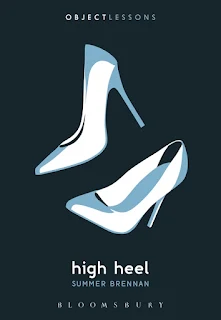
High Heel by Summer Brennan book cover

* Copy courtesy of Bloomsbury Australia *


High Heel by Summer Brennan is the first book in the Object Lessons series by Bloomsbury Academic that I've chosen to review here on Carpe Librum.

I've always been fascinated by shoes and while I can no longer wear high heels myself (long story) I'm interested in the ways in which they can liberate, empower and hobble their wearer.
"So, are high heels good? Are they bad? What do they mean? Are they feminist or anti-feminist? Do they communicate authority? Independence? Oppression? Professionalism? Confidence? Frivolity? Subservience? Sex? No one group can seem to agree. If you ask me, the answer to all of those questions is, yes." Page 25

Summer Brennan examines the history of the high heel and the fact they can be empowering while simultaneously immobilising and painful. Femininity, fashion, consent and sex is explored and the author does an admirable job of letting the reader decide. 

"For better or worse, the high heel is now womankind's most public footwear. It is a shoe for events, display, performance, authority, and urbanity. In some settings and on some occasions, usually the most formal, it is even required. High heels are something like neckties for women, in that it can be harder to look both formal and femme without them. It's a shoe for when we're on, for ambition; for magazine covers, red carpets, award shows, boardrooms, courtrooms, parliament buildings, and debate lecterns. Along with being our most public shoe, it is also considered the most feminine." Pages 15 & 16
High heels change a woman's posture and gait, and often this is what makes a woman wearing them more attractive. However they also slow us down, weaken our mobility and make running difficult, forcing this reader to question whether making women physically vulnerable is part of the attraction in addition to lengthening the leg and arching the back.

High heels aren't the first - or only - item of clothing that forces women to contort their bodies into uncomfortable and unnatural shapes, and Brennan covers one of the most extreme in the practice of foot binding in Imperial China.
"But it is women's bodies that have been most often manipulated, legislated, controlled, and contorted. A number of those cultural practices have been aimed at the feet." Page 64
Brennan goes on to step us through an examination of shoes in fairytales which was interesting however I didn't quite understand why the content was broken down into 150 separate 'vignettes' as I've noticed other books in the series don't follow this format.

I was looking forward to discovering the long term physical effects of wearing high heels, but the author sidestepped the subject which was a little disappointing. I could have done with less content around female objectification, rape culture and the relationship between what a woman is wearing and consent in favour of her thoughts on the future.

What do you think? Are high heels oppressive or empowering? Do they convey professionalism and confidence or vulnerability and sexuality? Just like any item of clothing, I think they can do all of these things and the reasons for wearing them are as individual as the wearer.

My Rating:


16 April 2021

WIN a copy of One of Us Buried by Johanna Craven

One of Us Buried by Johanna Craven book cover
* Copy courtesy of the author *


One of Us Buried by Australian author Johanna Craven is an historical fiction novel set in 1806 when Eleanor Marling finds herself leaving London on a prison ship bound for NSW. Check out the blurb and enter below for your chance to win a copy for yourself or a loved one. Good luck!

BLURB

In 1806, a fateful decision sends Eleanor Marling from the salons of London to a prison ship bound for New South Wales. She is put to work at the female factory of Parramatta; a place where the women’s only hope of food and lodgings is to offer their bodies to the settlement’s men.

Nell is given shelter by Lieutenant Blackwell, a brooding soldier to whom she is inexplicably drawn. Despite warnings from the other women, Blackwell’s motives seem decent, and beneath the roof of a military officer, Nell sees a chance to become more than just a convict woman sent to the factory to be forgotten.

But tensions are high in New South Wales, with the young colony teetering on the edge of a convict rebellion. And as Nell treads a dangerous line between obedience and power, she learns the role of a factory lass is to remain silent – or face a walk to the gallows.


BIO

Johanna Craven is an historical fiction writer, pianist and composer. After living in Melbourne and Los Angeles, she now divides her time between London and Australia. When not writing historical fiction, Johanna works as a freelance editor and piano teacher, and taught classes via Zoom before it was fashionable… She loves ghost-hunting, cooking (and eating) and plays the folk fiddle very badly. One of Us Buried is Johanna's seventh novel and she loves to hear from readers via her website.

GIVEAWAY

This giveaway has now closed.


12 April 2021

Launching Object Lessons series of reviews

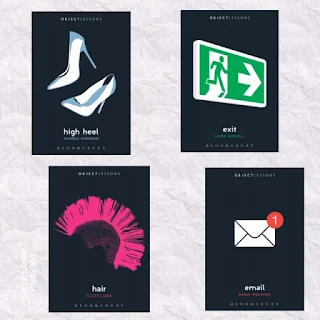
Object Lessons series of books
Launch

Welcome to a new series of reviews here on Carpe Librum. I've recently become interested in the non-fiction series by Bloomsbury Academic called Object Lessons which aims to take average items from our everyday lives and explore them in brief for the reader's enjoyment.

The first book I stumbled across in the series was Hair by Scott Lowe, and after reaching out to Bloomsbury Australia, they were excited for me to review a number of titles from the series.

I've enlisted some help from my guest reviewer Neil Béchervaise and we'll be reviewing a sampling of titles on a variety of topics. But first, here's a little more about the series.

Series Info

Object Lessons is a series of concise, collectable, beautifully designed books about the hidden lives of ordinary things. Each book starts from a specific inspiration: an historical event, a literary passage, a personal narrative, a technological innovation - and from that starting point explores the object of the title, gleaning a singular lesson or multiple lessons along the way. Featuring contributions from writers, artists, scholars, journalists, and others, the emphasis throughout is lucid writing, imagination, and brevity. Object Lessons paints a picture of the world around us, and tells the story of how we got here, one object at a time.

The Books

First to be reviewed will be High Heel by Summer Brennan, followed by Exit by Laura Waddell, Hair by Scott Lowe, Email by Randy Malamud and more. I hope you'll come on this non-fiction adventure with us and savour these micro histories. Which book from the series would you most like to read?

05 April 2021

Guest Review: Elizabeth & Elizabeth by Sue Williams

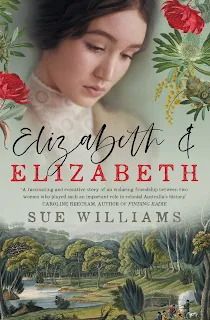
Elizabeth & Elizabeth by Sue Williams book cover
* Copy courtesy of Allen & Unwin *


INTRO

While I was reading The Last Reunion by Kayte Nunn set in the 1940s, guest reviewer Neil Béchervaise stepped back in time to colonial Australia and shares his review of Elizabeth & Elizabeth by Australian author Sue Williams.

NEIL'S REVIEW

Many readers, I am sure, will be attracted to the stories of friendship and tension between two pioneering women in the early 1800s colony of New South Wales. Their tenuous initial contact, their starkly contrasting levels of privation, their losses of children and their developing recognition of common interests make for a powerful reading experience.

The timeliness of Elizabeth & Elizabeth, however, makes it a compelling reminder of how little has actually changed in the former British colonies now called Australia.

2021 marks the 213th anniversary of William Bligh’s appointment as governor of the colony with the support of Sir Joseph Banks, who had accompanied James Cook into Botany Bay several years before and declared it the perfect place to ship convicts. Coincidentally, it also marks the 150th anniversary of the publication of The Origin of Species in which Charles Darwin submitted his highly controversial theory that humans had evolved from apes. Sadly, there are still those who deny the social rights of anyone with a criminal record, regardless of their having ‘served their time’ and seeking to return to a respectable place in society.

Little, it seems has changed in Australia in the past 200 years. Refugees are still held in separated facilities, even on offshore islands; the streets of large cities (and small) still home the homelessness as others seek to provide public health and housing for them. Elizabeth Macquarie’s pursuit of civil treatment for the colony’s early settlers – whether freed convicts or poor migrants – remains a political football still largely resisted by those who might afford to resolve the problem. Farm work is still seen as a lowly occupation, best undertaken by migrant back-packers and students through deals which leave them tenuously employed and underpaid.

In contrast, Elizabeth MacArthur’s farming life, spent largely in isolation from her husband, offers a resilient woman raising a family while developing the wool export market which resulted in the claim that Australia lived ‘on the sheep’s back’. That it now probably lives more on the miner’s back is ironic when we regard the equally pioneering efforts of some of our more famous mining women – still largely in the reputational shadows of their husbands and the companies they now manage.

Certainly, Elizabeth & Elizabeth provides a wonderful celebration of the lives of two Australian pioneers who fought for, and achieved, many of the goals we take for granted; two women who brought imagination, tenacity and creative ability to a male-dominated, militarily administered outland where human rights were controlled by the rich and privileged; two women who, in starkly different ways, sought to re-vision Australia for an unimaginable but socially and economically sustainable future.

With Elizabeth & Elizabeth, Sue Williams presents an historical background for a country which may now have one of the most diverse ethnic backgrounds in the modern world, one of the most complex socio-cultural structures in the world, but which retains too many of the progress-resistant political structures that were identified by the time of the landing of the second fleet of convicts in the colony of New South Wales. A colony which had already rebelled against bullying, land grabbing and corrupt, manipulative structures which still largely deny the very rights that Sue Williams' heroic women were struggling for.

With Elizabeth & Elizabeth, Sue Williams offers a highly entertaining introduction to the early development of the British penal colony which has become Australia. For readers with an interest in the country’s early history, Williams' historical novel provides a compelling basis for discussion of our prevailing attitudes to our indigenous ancestors, to our current values and social attitudes and to our right to claim a respectable place in the modern world that is the 21st century.

Neil's Rating: