30 August 2023

Review: Badness by Gary Jubelin

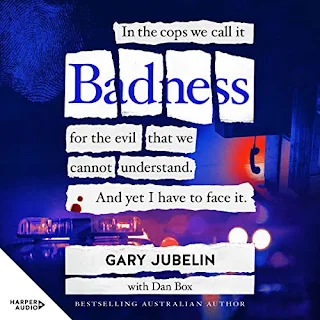
Badness by Gary Jubelin audiobook cover

After dipping my toe back into the true crime pool again recently, I've roused an old curiosity regarding how people can become capable of hurting others emotionally, psychologically and in some cases physically. I was hoping a retired Homicide Detective might have some answers, and decided to listen to Badness by Gary Jubelin with Dan Box.

Retired NSW Homicide Detective Gary Jubelin was charged with recording conversations with a suspect in the disappearance of William Tyrrell. I've got a lot of time and respect for the author after enjoying his podcast I Catch Killers, which is up to 300+ episodes now. Those familiar with the podcast or the book I Catch Killers will easily slide into his latest offering.

Jubelin takes a look at badness, what it is, what causes it and what separates the guilty from the innocent. Along the way, I think he finds that it's not all black and white.

There's quite a bit in here about Jubelin's responses to developments in the William Tyrrell case, and I guess I shouldn't have been shocked to hear the sheer number of people who reach out to Jubelin every time there's a shift in the case. This has included the search of the home and bushland in Kendall and charges against the foster parents, and I did enjoy hearing Jubelin's perspectives. I'll admit, every time there's a new development, I wonder whether Jubelin might have been able to secure a result by now if he had been left in charge of the investigation.

Working now as an investigative journalist, it was interesting to find the author describes himself as having a foot in both worlds. He still sees himself as a cop deep down, but he's also a criminal and he seems to really struggle with this dichotomy. This reader will never consider Jubelin a criminal, quite the opposite, we need more homicide detectives like him.

But don't worry, this isn't a misery memoir and Jubelin doesn't scream at the skies like I would. While admitting being full of rage, he directs his energy into commencing a new career as a journalist with a passion for helping victims of crime.

Jubelin takes up boxing to release his pent up anger and frustration, and quite a bit of time is spent exploring the different people he's met in the early morning sessions, and what they've each taught him. The most memorable for me was the discussion with bank robber and serial prison escapee Bernie Matthews.

Jubelin seems to have found a kind of affinity with Matthews, who - after his days of law breaking were over - also became a journalist. I'll never forget the story of Bernie and the button he found in the darkness.

Unable to see or hear anything in solitary confinement, one day Bernie was down on his hands and knees feeling around his cell when he found a button. By touch he could tell it was plastic, and:
"To him it was a treasure, more valuable than anything that he possessed, which wasn't much, because it could save him from the mind numbing ordeal of solitary confinement. I'd flick the button in the dark and I started searching for it." 6hrs 46 mins
Bernie said sometimes it took minutes to find the button and other times it would take him hours, but the button gave him purpose and he did this for days at a time. It's easy to understand how Jubelin formed a friendship with this convicted bank robber turned journalist, his story moved me too.

In Badness, Jubelin includes the stories of many people as he reflects on the nature and nurture of badness and how we can learn from the past. Narrated by Rob Carlton, Badness by Gary Jubelin is recommended for fans of I Catch Killers and readers interested in true crime.
My Rating:


22 August 2023

Review: The Murder of Harriet Monckton by Elizabeth Haynes

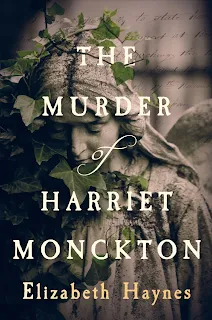
The Murder of Harriet Monckton by Elizabeth Haynes book cover

This Victorian historical crime novel is based on the true story of young Harriet Monckton, who was murdered in Kent in 1843. Harriet was 23 years old and was found poisoned in the privy behind the chapel she regularly attended in Bromley, Kent. Sadly, Harriet's murder remains unsolved, however Elizabeth Haynes has attempted to show us who Harriet was, why she may have come to harm and who might have been responsible for her untimely death.

Elizabeth Haynes is better known for writing psychological thrillers, and you might recall my reviews of Into the Darkest Corner (5 stars) and Human Remains (4 stars). With many more crime novels under her belt, writing historical fiction is a first, and I think she nailed it! Drawing on historical records and archives, including the content of two inquests, coroner's report and witness testimonies, The Murder of Harriet Monckton by Elizabeth Haynes is a convincing historical fiction novel by an author who has clearly done their Victorian era research.

The novel is presented in alternate chapters from several character points of view, and it took me a number of chapters to adjust to the regular shift in narration as a relatively large cast of characters began cycling through. One of the characters appeared guilty from the get go, but some of them aren't telling the truth:
"Trouble is, the truth is plain and easy to remember. Lies, though, that's different. You lie once, you have to remember the lie, the truth doesn't fade when time passes, but a lie does." Page 242
Harriet seems charismatic and is loved by many and envied by some, with characters seeing different sides to her personality:
"I felt my heart twist a little, at that. It reminded me of something Harriet had said to me once. That she should not meet anyone she loved as well as me. But that was the old Harriet, of course. The good, kind Harriet. Not the hypocrite, the harlot, the betrayer." Page 301
In the novel, we learn Harriet was pregnant, despite being single and unwed. Identifying the father of the child is a mystery just as compelling as the guilty party behind her murder. Are they one and the same?
"If I am spared, of course. It is at this time of night that I feel the most afraid; it feels that death and damnation lurk all around us, in the darkness, waiting to claim us. In the morning I shall feel foolish for these thoughts, of course, but now it seems that nothing good lies ahead for me." Page 405
Coming in at just over 500 pages, it was a little long, and Harriet's chapters did start to become a little tiresome as she fretted about her situation. A suspect is revealed by the end of the book, although of course we have no way of knowing if this is truly what happened.

If you'd like to give The Murder of Harriet Monckton by Elizabeth Haynes a try, you can read a free excerpt of the first 21 pages on the publisher's website here. You might also like to check out my 2014 interview with the author.

The Murder of Harriet Monckton by Elizabeth Haynes is a slow burn, historical whodunnit based on a true story. Recommended!

My Rating:


16 August 2023

Review: The Widow of Walcha by Emma Partridge

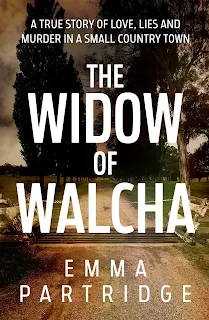
The Widow of Walcha by Emma Partridge book cover

Walcha (pronounced like polka) is a small town in NSW, located half way between Sydney and Brisbane with a population of approximately 2,475 people. In 2017, Natasha Darcy murdered her partner Mathew Dunbar and tried to make it look like suicide. Australian journalist Emma Partridge is the Senior Crime Editor for Nine News, and has won several awards for her court reporting.

In The Widow of Walcha, Emma Partridge tells Mathew Dunbar's story, and in doing so, exposes the greedy and despicable behaviour of one of the most cold and calculating females in Australia.

By all accounts, Mathew Dunbar was a kind, quiet, generous and successful sheep grazier who owned a multi-million dollar farm called Pandora. Actively involved in the community, Mathew was looking for love and wanted to have a family, making him the perfect target for Natasha Darcy.

After drugging her ex-husband Colin Crossman and burning down their house with him still in it, Natasha Darcy was charged with attempted murder in 2009. Serving time in jail, Natasha was later released, yet bizarrely remained in close contact with Crossman. They were unable to claim the insurance money for the house and were in serious debt when Natasha Darcy shifted her sights to Mathew.

With a ruse to meet the wealthy grazier and instigate a speedy romance, Natasha was soon spending Dunbar's money freely, while spending months online obsessively researching the best ways to kill him.

There were hundreds and hundreds of damning search terms, but here's a sample:
'how to commit murder', 'poisonous spiders', 'murder by injection,' 'can Police see search history?' and 'does helium show up in autopsy?' Other searches included: 'lethal dose of oxycodone', 'can Police see deleted messages' and '11 toxic wild plants that look like food'.
Thoroughly investigated by Emma Partridge, the case, arrest and subsequent trial showed Natasha Darcy to be a compulsive liar, and an evil and manipulative woman. At the time of the victim's death, the entire town believed Natasha had murdered Mathew, and locals couldn't understand why she was walking around free. Darcy was eventually arrested 4 months after Dunbar's death.

There was so much damning evidence in this case it was quite mind-blowing. Most shocking (to me) was why in hell ex-husband Colin Crossman - a Paramedic, no less - who had been drugged by Darcy and nearly died when she set his house on fire, was still actively involved in the children's lives. Darcy even took out a life insurance policy on Colin, this woman was bad news.

In an odd twist of fate, Crossman was the first Paramedic on the scene when Natasha 'discovered' Mathew unresponsive and frantically phoned for an ambulance. Partridge doesn't allege they were 'in on it' together, but this reader certainly wondered. Especially when you consider that when the author first sees Natasha, she and Colin are transporting a fridge from Pandora to his house. She was even interviewed by Police at Crossman's house. What is Crossman thinking? 

Worth millions, Darcy repeatedly asked Mathew to change his will to leave Pandora to her and her children if anything happened to him. Denying it later, Police were able to retrieve deleted text messages and evidence of her repeated nagging about the will.

Darcy had been in and out of jail for various charges including theft, and even had the nerve to ask another inmate if she'd lie to Police and inform them Mathew had been contemplating suicide days before his death. Darcy promised to pay her friend $20,000 for the lie when she 'automatically' inherited Pandora on her release. Fortunately the friend was already wise to the toxic manipulation and cut all ties, later coming forward during the trial with her information.

Narrated by Jo Van Es, this case was a shocking glimpse into the sordid mind of a self-serving, unfeeling, greedy and manipulative woman, prepared to do anything to further her financial position in life at the expense of all others.

Darcy finally settled on her method to dispatch Mathew, despite previous unsuccessful attempts which left him on crutches just days before his death. Mixing a cocktail of different drugs (including her son's medication and ram sedatives purchased under an assumed name), Natasha blended them in a Nutribullet to sedate Mathew. She then put a bag over his head and pumped helium gas into it, which eventually killed him.

I was gripped the entire time I was listening to The Widow of Walcha by Emma Partridge and found it hard to fathom the fact a woman could be so cold and evil. Recently finished, this book was very much in mind when I learned of the recent mushroom poisoning by Erin Patterson in the town of Leongatha where my parents live. Originally an intervention / mediation lunch, Erin's ex in-laws and family relative passed away after eating lunch at Erin's house containing fatal death cap mushrooms.

In this new case, the ex-husband Simon Patterson was supposed to attend the lunch and pulled out at the last minute, and just as well. Last year, he was in ICU for 16 days and underwent multiple operations to treat an undiagnosed gut illness. What's the bet this was Patterson's first attempt?

I see similarities in the early days of the mushroom poisoning case and the hideous behaviour of Natasha Darcy. If guilty, I hope Police find enough evidence to convict her and that she is brought to justice for killing three people with another still clinging to life at the time of writing. I hope the investigative journalists on this case are as dedicated to their jobs as Emma Partridge, and choose to put the truth and justice ahead of sensationalism and click bait.

No-one expects to live alongside a female murderer in their small town, and the family and friends of Mathew Dunbar in Walcha still mourn his loss. Taking advantage of a wealthy middle aged man with the promise of providing an instant loving family is the lowest of blows, and I only wonder why she couldn't be content living that life. Sentenced to 40 years in prison with a non-parole period of 30 years, Natasha Darcy's black widow days are well and truly over.

The fate of Pandora hadn't been legally settled when The Widow of Walcha was published in May 2022, but thankfully the author gave me peace of mind when she pointed out that regardless of the outcome, Darcy's children cannot legally inherit Pandora. Thank goodness for that!

The Widow of Walcha by Emma Partridge is one of the best Australian true crime accounts I've ever read!

My Rating:


14 August 2023

Review: The Woman in the Library by Sulari Gentill

The Woman in the Library by Sulari Gentill book cover

The Woman in the Library by Sulari Gentill has many layers, some of which I'm still untangling while trying to write this review. This mystery novel contains a book within a book and so many layers I had trouble counting them.

Hannah is writing a novel. In it, her protagonist Freddie is sitting in the Reading Room of the Boston Public Library trying to write a novel when The Woman in the Library by Sulari Gentill opens. Freddie decides to take inspiration from the people seated around her, and when a woman screams, and is later found dead, the strangeness of the situation brings about the meeting of Winifred Kincaid (Hannah's protagonist Freddie) with Cain McLeod, Marigold Anastas and Whit Metters. Bonded by trauma these four characters become fast friends, although one of them is a killer and we don't know who.

The character of Freddie is written in the first person, so my first mistake (I think) was assuming Hannah heard the scream, met the others at the library, and decided to write a novel inspired by these new friends. I later realised this all must be happening in Hannah's Freddie's manuscript, as Hannah is living in Australia, not in Boston.

Chapters from Hannah's book feature alongside letters from a correspondent called Leo although we never see her replies. Based in the USA, Leo is a beta reader providing feedback on each of the chapters and it starts to get complicated when Hannah writes him into the book as a friend to Freddie.

Australian author Sulari Gentill has convincingly set her tale in Boston and I loved Leo's comments and advice regarding the differences between Australian and US readers and the terms they know and recognise. It was amusingly meta!

The Woman in the Library contains clever literary mechanisms that seemingly moved up, down and behind me and I got a sore neck trying to keep track of everything. Reading this stand alone was a little like watching Inception and I'll admit being confused by the two Leo characters. The ending wasn't clear cut for me and I'm not quite sure if it was one last little twist or an exclamation point on the plot.

To unearth the gems in this deeply layered mystery I needed to concentrate harder, so perhaps this was a case of the wrong time for me and this book. Don't be fooled by its brevity as I was, The Woman in the Library by Sulari Gentill definitely packs a punch.

For more from this author, check out my review of Chasing Odysseus by S.D. Gentill.

My Rating:


11 August 2023

Review: Zero Days by Ruth Ware

Zero Days by Ruth Ware book cover

* Copy courtesy of Simon & Schuster *

Discovering The Turn of the Key by Ruth Ware was a reading highlight of 2019 and the book made it onto my Top 5 Books of 2019 list. I've been chasing that high ever since, so when Ruth Ware's latest Zero Days arrived from the publishers, I dove right in with the hope this would be a return to previous top form.

Our protagonist, Jack and husband Gabe expose the security risks and weaknesses of companies who pay them to break in to their premises or hack their systems online. They're penetration testers or 'pen testers' and Jack is one of the best. Early on in the novel - it's on the cover, so not a spoiler - Jack comes home from a job to find her husband has been murdered and she's the primary suspect.

The trope of the wrongly accused fighting to prove their innocence or clear their name is a familiar one and I think I'm beginning to tire of it.

Jack goes on the run to try and work out what happened to her husband, who killed him and why. I love a kick-arse main character, but I did have to roll my eyes at Jack's extraordinary ability to soldier on in the face of injury and illness to the extreme that she did. 

Zero Days
by Ruth Ware was an enjoyable standalone crime thriller with good pace, but didn't give me the high I experienced at the end of The Turn of the Key. As I said, I loved that book so much that it made it into my Top 5 list that year. Since then, I followed up by reading One by One (4 stars in 2020) and The It Girl (3 stars in 2022) but Zero Days hasn't captured my heart, or snatched the breath from my throat.

Have you experienced this phenomenon? I feel like a novel junkie (yep, I did just say that) chasing that first gasp of surprise and elation Ruth Ware gave me and I think I'm still chasing. Luckily for me, I have plenty from the author's back catalogue to discover, and in the meantime, I hope Ruth Ware is given carte blanche to write her heart's desire, free from pressure so that she can steal our hearts once more.

My Rating:


07 August 2023

Review: The Puzzler by A.J. Jacobs

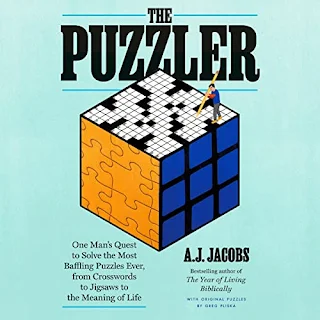
The Puzzler - One Man's Quest to Solve the Most Baffling Puzzles Ever, from Crosswords to Jigsaws to the Meaning of Life by A.J. Jacobs audiobook cover

This audiobook was a sheer delight! With a smooth and uniquely distinctive voice, author and puzzler A.J. Jacobs takes us on a tour of puzzles and the people who love them in The Puzzler - One Man's Quest to Solve the Most Baffling Puzzles Ever, from Crosswords to Jigsaws to the Meaning of Life. The author's first love is crosswords, but he succeeds in taking us on a balanced and thoroughly satisfying tour through the world of puzzles.

A solver is a person who does puzzles, and in the book Jacobs interviews many who dedicate their lives to creating or solving a variety of puzzles. He covers a broad range of puzzles, including: anagrams; ciphers and codes; crosswords and cryptic crosswords; chess; jigsaw puzzles; riddles; Rubik's cube; logic problems, sudoku and more.

Jacobs shares his experiences with each of the puzzle types and I especially enjoyed his story about entering an international jigsaw puzzle competition with his family. This led me down a jigsaw rabbit hole, watching a short documentary about the mind blowing jigsaw competition that sees solvers given a series of brand new previously unreleased puzzles from Ravensburger as they compete to solve them. There are solo events, pairs and team events and it's a fascinating sub-culture.

When defining what a puzzle is, Jacobs declares a puzzle will almost always:
"... cause the solver to experience a period of difficulty and struggle, followed by relief. They provide an a-ha moment, tension leading to, an almost, well, orgasmic ending." Chapter 2: The Puzzle of Puzzles.
Jacobs involves the reader at every opportunity, creating a bonus puzzle time for audio listeners, and providing a PDF with 100+ pages of puzzle examples and supporting material for the book. Some of the puzzles mentioned sent me on a nostalgic trip down memory lane, or inspired me to seek out more info. Did you know the world's largest puzzle is from Ravensburger and contains 40,320 pieces? It's estimated that if a solver spends 2 hours per day working on the puzzle, it will take an entire year to complete it!

The author is serious about his puzzling, checking every night without fail for the online release of his favourite puzzles, and volunteering to tackle some of the hardest puzzles in the world. The Japanese puzzle box desk sounded incredible and I longed to see it in person.

Jacobs explores why so many of us love puzzles, concluding that the art of puzzling is 'bafflement, wrestling and solution'. Some of us become bored or frustrated and give up at the bafflement or wrestling stage, but Jacobs discusses the pleasure to be had from the mental and intellectual effort and the sense of accomplishment that follows when a puzzle has been solved. His enthusiasm for the topic is infectious and I enjoyed this tantalising look into the puzzle world.

I enjoy a puzzle myself, and am still doing the daily Wordle and - thanks to this book - occasionally taking on the Spelling Bee by The New York Times. I've asked myself how I can give an audiobook about puzzles my top rating of 5 stars, because that's what I'm about to do.

All I can say is that I had such a great time reading this. I was inspired to share some of the riddles and puzzles with my husband and we had a good laugh solving them (or not) together. As I said, The Puzzler by A.J. Jacobs was an absolute delight. I looked forward to listening to a chapter or so each day and was sorry when I 'solved' the last one.

Highly recommended!

(For more like this, check out my review of It's All A Game - A Short History of Board Games by Tristan Donovan).

My Rating:


02 August 2023

Review: The Night Circus by Erin Morgenstern

The Night Circus by Erin Morgenstern book cover

"The circus arrives without warning."
The opening lines of The Night Circus by Erin Morgenstern draw the reader into a whole new world, where magic is real and those with the gift disguise their talent as illusionists or magicians. Two magicians are pitted against each other as youngsters in a challenge that lasts their lifetime, eventually converging at the circus.

Beginning in 1873, the travelling circus of the title is known as Le Cirque des Rêves (The Circus of Dreams) and is only open at night. The magic deployed by performers at the circus is to delight, entertain and astonish those who visit, and the circus is a wonderland more than the centre of any magic battle.

Elite circus personalities regularly attend an exclusive midnight dinner party when they're not working, and my mouth was watering at the tasty morsels and decadent cuisine described, but check out the desserts:
"The desserts are always astonishing. Confections deliriously executed in chocolate and butterscotch, berries bursting with creams and liqueurs. Cakes layered to impossible heights, pastries lighter than air. Figs that drip with honey, sugar blown into curls and flowers. Often diners remark that they are too pretty, too impressive to eat, but they always find a way to manage." Page 69
It was here in the book that I noticed the prose reminded me of the descriptive writing style I enjoyed in The Starless Sea; momentarily forgetting that it's by the same author!! While at the same time patting myself on the back for noticing the similar descriptive style, should I be concerned that I failed to remember the same author penned both urban fantasy novels?

The circus performers are talented and Padva was a terrific character, impeccably described here:
"On this evening, Mme. Padva wears a dress of black silk, hand embroidered with intricate patterns of cherry blossoms, something like a kimono reincarnated as a gown. Her silver hair is piled atop her head and held in place with a small jeweled black cage. A choker of perfectly cut scarlet rubies circles her neck, putting forth a vague impression of her throat having been slit. The overall effect is slightly morbid and incredibly elegant." Page 70
Wouldn't you give anything to see her? The Night Circus is begging to be adapted for the big screen, and a quick search confirms the TV and film rights were optioned years ago. The alluring black and white striped tents, the incredible illusions and the otherworldly clock are ripe for cinematic interpretation, all that's missing is the smell of caramel and popcorn.

The power of The Night Circus is the circus itself, held together with evocative writing and the power of description. Not a lot happens between the characters, with an overarching theme driving the plot but without much action. I was expecting a dramatic showdown, denouement or climax that never arrived, thinking perhaps this would happen in the next book. Not so.

I've punched my ticket to The Night Circus later than most, with the success of the book at its peak in 2011. I remember deciding whether or not to request a copy for review, however I'm not really into circus settings or young adult romance, so decided not to. After enjoying The Starless Sea, I'm glad I decided to give this urban fantasy meets historical fiction novel a chance.

A word about editions. I love seeing hardbacks with a sprayed edge, and The Night Circus has produced some of the most stunning editions of any book I've ever seen and I still drool over the deluxe editions and fan art readers have come up with.

Previous visits to the circus on my reading calendar include:
If you want to read about magic showdowns, battles and duels, you won't find it here. If you want to have your imagination stretched and your senses stimulated in a light young adult romance set in the Victorian era with magic, then you will be entranced by The Night Circus by Erin Morgenstern. Just don't forget to wear a red scarf. 

My Rating:


31 July 2023

Review: Care Packages by Michelle Mackintosh

Care Packages by Michelle Mackintosh book cover

A few years ago, I adored reading Snail Mail: Rediscovering the Art and Craft of Handmade Correspondence by Michelle Mackintosh so much that it made my Top 5 Books of 2015 list. Snail Mail is all about re-discovering the art of sending cards and letters in the post and is chock full of inspirational ways to beautify your mail. It really is a love letter to snail mail and my review struck a chord with other readers.

A year later, the author published Care Packages - Celebrating the Art and Craft of Thoughtfully Made Packages by Michelle Mackintosh and I've been happy in the knowledge this book has been out there in the world waiting for me. Do you ever feel like that?

The recent overhaul of the inter library system at my local library has reinvigorated my determination to make better use of the resources and finally get to some of the books lingering on my virtual TBR list. Surprisingly, a total of 85 of the 186 books on my TBR list are available via an inter library loan which is terrific news. However, the nature of inter library loans means books can take a few weeks/months to arrive and with a limit of 3 at any one time, it's going to take quite a while to get through this list, but what fun!

Do you read books from the library? Do you have a system or preference for which books to borrow and when? Okay, back to the task at hand.

Care Packages is beautifully presented in a delightful hardback cover, and the content is enticing for lovers of snail mail, mail art and gifts in general. I did find the ideas presented started to sound a little 'samey' and those photographed all demonstrated a very similar aesthetic with a clear Japanese influence. If you're a stationery lover like me, you'll know that the Japanese love their stationery, specialty paper, stickers, washi tape, mini printed paper bags and cute stuff. If I ever get back to Japan, stationery stores and an owl cafe will be top of my list, but must everything be wrapped with string?

The author has lived in Japan and as well as being a writer, she's an illustrator and designer with her own range of wrapping paper, how about that! I understand Michelle Mackintosh lives in my home town of Melbourne, yet her Japanese influences are clearly evident in this book.

Care Packages by Michelle Mackintosh is bursting with attractive colour themes and plenty of care packages on show, but it didn't inspire me in the same way as Snail Mail. The layouts and designs included were appealing with plenty of vintage paper and creativity on show, but the unifying design aesthetic didn't lend itself to plenty of variety in colour palette or ideas.

If you are new to the topic, I highly encourage you to check out Snail Mail: Rediscovering the Art and Craft of Handmade Correspondence by Michelle Mackintosh first. My copy still sits proudly on my shelf having survived multiple bookshelf culls and I'll never part with it.

My Rating:


27 July 2023

Review: Bizarre by Marc Dingman

Bizarre - The Most Peculiar Cases of Human Behavior and What They Tell Us about How the Brain Works by Marc Dingman book cover

I was in the mood for another engaging audiobook experience like Gory Details by Erika Engelhaupt recently, when I picked up Bizarre - The Most Peculiar Cases of Human Behavior and What They Tell Us about How the Brain Works by Marc Dingman.

The best chapter of the book by far was the chapter on Obsessions and the prevalence of pica, an eating disorder that makes patients eat things that most people would find unpalatable. Dingman includes cases where patients have eaten cigarette ashes, raw potatoes, burnt matchsticks, toothpaste and hair. It reminds me of the TV show Strange Addiction I once watched where an American woman was eating 'cushion' (foam from the inside of cushions and mattresses) and another was eating cigarette ashes.

Chapter 10 Out of Time included an interesting case of time agnosia, and Chapter 10 No Imagination reminded me of a case in my own family of a person unable to visualise in their mind's eye. The inability to produce mental imagery is known as aphantasia and it's estimated only 1-3% of the population have it.

Many different forms of agnosia and neurological disorders were covered, but none seemed bizarre or peculiar at all. Perhaps the title was too sensational, or I've been desensitised over the years having already learned about these conditions elsewhere and they're no longer strange and engrossing to learn about.

An annoying overuse of the word 'thus' at the start of sentences and 'such as' throughout the audiobook were draining and I felt for the narrator, who must have been hanging for the author to change up their opening lines.

Bizarre - The Most Peculiar Cases of Human Behavior and What They Tell Us about How the Brain Works by Marc Dingman was an informative listen and is recommended for those with an interest in neuroscience and/or brain science.

My Rating:


25 July 2023

Review: Doomsday Book by Connie Willis

Doomsday Book by Connie Willis book cover

Published in 1992, Doomsday Book by Connie Willis is now considered a modern science fiction classic. I'm not usually a fan of time travel novels, however the premise for Doomsday Book is me to a T. This was a gift from a dear yet distant friend who knows my reading tastes and I trust her implicitly. I don't know why it took me 5 years to get to it, but some books rest patiently on our shelves waiting for the right moment, and that moment finally arrived.

In the not too distant future, historians can travel back in time as observers forming part of their field study. Unable to influence much or make any significant changes to history, we join a band of students and scholars at Oxford university where time travel for a few weeks at a stretch is not shocking.

Sounds amazing doesn't it? Kivrin wants to travel back in time to 1300s Oxford and is in a rush to do so, but the preparation usually takes years as Professor Dunworthy explains:
"And I want you to learn Church Latin, Norman French and Old German, in addition to Mr Latimer's Middle English. You'll need practical experience in farming - milking a cow, gathering eggs, vegetable gardening" he'd said, ticking them off on his fingers. "Your hair isn't long enough. You'll need to take cortixidils. You'll need to learn to spin, with a spindle, not a spinning wheel. The spinning wheel wasn't invented yet. And you'll need to learn to ride a horse." Page 9
Despite some detailed planning, Kivrin is still ill-prepared for what greets her when she arrives and this was the best part of the book. While Kivrin is trying to establish her whereabouts on arrival, the story splits into a dual narrative, with Kivrin in the 1300s and Professor Dunworthy in the 21st century.

Dunworthy's setting was dominated by a health crisis unfolding at the university in a seemingly unending number of phone messages, missed and unanswered calls. Many of the characters in this part of the story were hampered by an inability to talk to each other on the regular due to the phones being engaged. This was an incredibly frustrating plot device (if it indeed was that) and seemed so petty and small when compared to what Kivrin was encountering, and I longed to return to the action unfolding there, 700 years in the past.

This book has been out for more than 20 years now, so I don't think it's a spoiler to point out there is an unfolding influenza pandemic as part of the novel and it was a little close to home so soon after our own. In fact, I wonder if academics and scholars will write about the shocking similarities between fictional pandemics and the real deal some day. In Doomsday Book, Dunworthy and his colleagues and students in Oxford ran out of toilet paper, crazy when you think Willis wrote this 20 years ago and couldn't begin to imagine - yet she somehow did - how true to life her characters really were.

When villagers in the town start becoming sick, they will need to decide if Kivrin is an angel of hope or responsible for bringing the sickness to the village. Will she survive long enough to return to her own time?

Professor Dunworthy did his best to dissuade Kivrin from making the journey in the first place, being sure to tell her of the dangers:
"Life expectancy in 1300 was thirty-eight years," he had told her when she first said she wanted to go to the Middle Ages, "and you only lived that long if you survived cholera and smallpox and blood poisoning, and if you didn't eat rotten meat or drink polluted water or get trampled by a horse. Or get burned at the stake for witchcraft." Page 39
The title of the book is a reference to the Domesday Book - this is how they spelled 'Doomsday' in Middle English - a manuscript recording the results of a land survey conducted in England and Wales and completed in 1086. When Kivrin visits the 1300s, she has a recorder designed as a bone spur in her wrist and she can 'record' by bringing her hands together in prayer and talking into the concealed microphone. I loved the ingenuity of this! If Kivrin dies unexpectedly, the technology won't be exposed or look out of place. Not even if her body is skeletonised and discovered in the next few centuries.

Thankfully the novel didn't get too timey-wimey (if she doesn't make it back to the rendezvous, then should they start excavating the local cemetery looking for her remains and all important recorder?) and there was a satisfying conclusion, although I did want more.

This combination of science fiction and historical fiction is right up my alley, and I suspect that's why my friend chose this for me and the reason I enjoyed Eifelheim by Michael Flynn. Thanks Kel, I loved it!

Highly recommended.

My Rating:


22 July 2023

Review: The Dirt on Clean by Katherine Ashenburg

The Dirt on Clean - An Unsanitized History by Katherine Ashenburg book cover

The Dirt on Clean - An Unsanitized History by Katherine Ashenburg takes us through our delightfully dirty and grubby past, as we meander through the ages taking stock of attitudes to dirt and cleanliness and examining the drivers for the vast changes along the way.

Ashenburg explores many aspects of dirtiness, cleanliness and bathing and makes this observation early in the book:
"The archetypal link between dirt and guilt, and cleanliness and innocence, is built into our language - perhaps into our psyches. We talk about dirty jokes and laundering money." Page 8
In the Roman Empire, cleanliness was an important part of life, work and leisure, with many Romans spending up to two hours at the public baths every day. The use of strigils - a curved blade used to scrape the skin - as part of the ancient greek bathing process wasn't new to me, but get this:
"Greek athletes, who exercised in the nude - gymnasium literally means 'the naked place' - first oiled their bodies and covered them with a thin layer of dust or sand to prevent chills. After [exercise] the men and boys removed their oil and dust, now mingled with sweat with a curved metal scraper called a strigil." Page 24
I knew athletes competed nude and oiled their bodies after bathing, but didn't know they applied dust or sand to prevent them getting cold; or the meaning of gymnasium for that matter! A little later in the book, we learn:
"The accumulated sweat, dirt and oil that a famous athlete or gladiator strigiled off himself was sold to his fans in small vials. Some Roman women reportedly used it as a face cream." Page 38
While this might make us recoil with disgust, it's really no different to social media influencers today selling their bath water or sending their socks to eager fans willing to pay big bucks.

It's fascinating to me that personal hygiene habits and attitudes to bathing have changed so dramatically over time. From the bathhouse traditions that date from the Middle Ages, Ashenburg gives us a broad overview of the relationship between cleanliness and religion. Muslims perform ritual ablutions and their cleanliness has been one of the culturally defining points of difference between Christians and Muslims. If the Muslims were meticulously clean, then the Christians were known for being dirty. When it comes to saints though, the dirtier the better.
"For ordinary Christians, cleanliness was a [sic] good, bringing comfort, a sense of well-being and a measure of healthfulness. Humility and charity demanded that the most scrupulously filthy saints help others to clean." Page 63
It's ironic that human suffering, poverty, abstinence and lack of washing demonstrated religious devotion with many only washing the parts of the body that could be seen, like the hands and face.

During many plagues, it was thought dirt blocked the pores of the skin which prevented the plague entering the human body. Washing or having a bath would strip a person of this protective layer and many were certain they'd die as a result. A shortage of firewood also contributed to the decline in popularity for bathing, as resources to heat water became scarcer.

Many will know the famous quote from Elizabeth I who bathed once a month, "whether I need it or not", but did you know:
"Elizabeth's successor, James I, reportedly washed only his fingers." Page 99
Ashenburg includes many familiar and well worn quotes about cleanliness, bathing and odours from history, and some of them never cease to shock, like this one:
"Shortly before Louis XIV died in 1715, a new ordinance decreed that feces left in the corridors of Versailles would be removed once a week." Page 116
Once a week! In addition to immersing the reader in the moral dangers of bathing and bathing in public, it was also interesting to read about the debate between cool and warm water bathing, with some of the opinion that warm baths made boys and men soft.
"But cool water had never been considered as dangerous as hot water. To immerse yourself in hot water, you had to be foolhardy, German - or ill. ... Because water could infiltrate a healthy body and disturb the balance of its humours, doctors and patients hoped that a carefully designed and monitored bath might also restore the humours' equilibrium in a diseased body." Page 114
It's unthinkable to us to wear the same singlet or underwear for a week without changing or even removing it, but in the 1700s, the Marquis d'Argens wore a flannel under-waistcoat to keep warm and wouldn't take it off for fear of catching cold. It was revealed he'd worn the waistcoat for four years, but when he finally agreed to take it off, it had "so fixed itself upon him that pieces of his skin came away with it." Page 127 Eeek!

Ashenburg examines how our notion of privacy has changed, the relationship between bathing and sex and she even makes the history of soap absorbing for the reader. Although I wouldn't want to try washing clothes with a mix of animal fats and ashes. Later, toilet soap was made with olive oil:
"...(where the soap made in Castile was so prized that eventually all fine white soap made with olive oil was called Castile soap), but it was a luxury and beyond the budgets of most people in the Middle Ages." Page 32
And did you know the brand name Palmolive came about because the soap they made contained a combination of palm oil and olive oil. Who knew!

The introduction of the rain bath, or shower as we know it today was a little dry - sorry, couldn't resist. Rain baths took off in America, however older dwellings in Europe took much longer to embrace the technology, as it had to be adapted to existing conditions. The rich were loath to change their habits, preferring to bathe in their rooms, and with servants to bring the water the impetus for change wasn't pressing. The poorer classes didn't have time to carry the volume of water, the fuel required to heat it in their homes or even a tub to sit in, and so the class divide remained, demarcated by cleanliness.

If you lived in Paris in 1819, you could have ordered a service called a bain a domicile:
"....bain a domicile, delivered to the client's house or apartment, even on the top floor, all the necessities of a bath - a tub, a robe and sheet, and hot, cold or tepid water as ordered. When the bath was over, everything was whisked away, including the water, which was usually removed by a hose..." Page 187
How's that? You could basically 'uber' a bath in 1819! Ashenburg covers a lot of ground, and the number of times I've recalled facts from this book since finishing it, has persuaded me to increase my star rating from 4 stars to a full five stars.

Let me leave you with Seneca describing the cacophony of noise he has to tolerate living above a bathhouse:
"Now imagine to yourself every type of sound which can make you sick of your ears: when hearty types are exercising by swinging dumbbells around - either working hard at it or pretending to - I hear their grunts, and then a sharp hissing whenever they let out the breath they've been holding. Or again, my attention is caught by someone who is content to relax under an ordinary massage and I hear the smack of a hand whacking his shoulders, the sound changing as the hand comes down flat or curved. If on top of all that there is a game-scorer beginning to call out the score, I've had it! Then there's the brawler, the thief caught in the act, the man who likes the sound of his voice in the bath, the folk who leap into the pool with an enormous splash. Besides those whose voices are, if nothing else, natural, think of the depilator constantly uttering his shrill and piercing cry to advertise his services: He is never silent except when plucking someone's armpits' and forcing him to yell instead. Then there are the various cries of the drink-seller; there's the sausage seller and the pastry-cook and all the eating-house pedlars, each marketing his wares with his own distinctive cry." Pages 41-42
Highly recommended!

My Rating:


17 July 2023

The Skull Winner Announced

Thanks to everyone who entered my giveaway last week to win a copy of children's book The Skull - A Tyrolean Folktale by Jon Klassen. All but one entrant correctly identified the brave girls's name in the book is Otilla and entries closed at midnight last night.

The lucky winner about to engage on a deliciously macabre adventure is......(drum roll):

Selwyn!!


Congratulations! You've won a copy of The Skull by Jon Klassen valued at $32.99AUD thanks to Walker Books Australia. You'll receive an email from me shortly and will have 7 days to provide your Australian postal address. The publisher will then send your prize out to you, so I hope you enjoy!
Carpe Librum giveaway image for The Skull - A Tyrolean Folktale by Jon Klassen

15 July 2023

Review: Almost Lost Arts by Emily Freidenrich

Almost Lost Arts - Traditional Crafts and the Artisans Keeping Them Alive by Emily Freidenrich book cover

I came across this book, Almost Lost Arts - Traditional Crafts and the Artisans Keeping Them Alive by Emily Freidenrich by chance when looking through my library's catalogue for something completely different. Don't you love it when a book finds you, instead of the other way around?

Almost Lost Arts showcases 20 traditional arts, crafts and vocations through the work of individual artisans passionate about their work and dedicated to keeping these skills and practices alive.

Highlights for me included the globemakers, bookmender, antiquarian horologist, wood type printers, sign painters, woodcut printers, mapmaker and hatmakers. There was also a cassette tape manufacturer, the last of its kind in the world which was interesting.

Very few of the profiles gave the reader an indication of the skill or training required, which was a real shame. On the chapter about woodcut prints, Meguri Nakayama tells us:
"Carvers and printers train for five to seven years to reach the minimum level of skill required of artisans, and it takes more years of 'concentration, patience, and strong passion," says Nakayama, "before they are considered masters." Page 180
This is clearly impressive, and I would have appreciated more examples of the time and effort taken to attain the level of knowledge, skill and experience these artisans have achieved in each of their very specialised careers.

Stuff like this. According to Simon Vernon, World's End Mapmaking Company in the UK:
"Less than point one of one percent of people are still making maps the way I do," Vernon estimates." Page 187
Impressively, Vernon is one of only a few people in the world creating maps using the same skills cartographers used three hundred years ago.

Many of the artisans featured don't have apprentices or anybody to pass their skills on to which makes you worry they could die out if future generations don't embrace them. Many of the artisans seemed keen and sometimes desperate to pass on their lifetime of knowledge and experience to keep their chosen art form alive. This book is an ode to the past and has successfully captured skills that could disappear in the future if younger generations don't see their charm or value.

However, if the book was expressly written and published to entice the reader to pursue any of the vocations presented in the profiles, then I don't believe it succeeds. The choice to include 20 profiles and go into a little detail was better than choosing 10 profiles in greater detail, but still, there was much missing. I would have been happy to have seen smaller or fewer photographs if it resulted in more information being included. Some of the photographs were too stylistic or artistic and weren't able to offer much sense of the tactile processes involved.

Almost Lost Arts - Traditional Crafts and the Artisans Keeping Them Alive by Emily Freidenrich is an interesting read and could serve as a jumping off point for some readers, however I'm glad I borrowed my copy from the library.

My Rating:


12 July 2023

Review: Lady Tan's Circle of Women by Lisa See

Lady Tan's Circle of Women by Lisa See book cover

* Copy courtesy of Simon & Schuster *

I've never read a book set in China during the Ming Dynasty (1368-1644) and I'm not into women's literature, so when this book arrived in my mailbox, I took one look at the title and cover design and assumed I probably wouldn't enjoy it. I do love historical fiction though, so I decided to give the first 10 pages a chance, remaining convinced I wouldn't connect. How wrong I was!

I was instantly engaged by the young character's plight as she receives instruction from her mother - Respectful Lady - about the pains of foot binding.

Yes, foot binding! The author seized my attention so quickly I felt dizzy, and Lady Tan's Circle of Women by Lisa See went on to become a stellar read.

Set in 15th century China, this is the fictional account of the life of Tan Yunxian, a woman who became a practicing doctor in China at a time it was extremely rare and severely frowned upon. Yunxian was so successful looking after her female patients, she published a book of medical cases in 1511 and to date, it's the oldest known medical book written by a woman in China.

In the beginning of Lady Tan's Circle of Women, young Yunxian learns how to treat women from her Grandmother and the medicine prescribed is not what we'd recognise today. Firstly, to diagnose an illness, Yunxian is instructed to use the Four Examinations of looking; asking and listening; smelling and pulse taking. Treating only women and encountering a range of medical problems, Grandmother teaches:
"We are also governed by the Seven Emotions of elation, anger, sadness, grief, worry, fear, and fright. Of the Five Fatigues, three specifically target women: fatigue from grief brought on by losing a child or husband, fatigue from worry about finances, a wayward husband, or an ailing child, and fatigue from trying to lift her family to a higher status. If women are prone to the Five Fatigues, then men are apt to fall victim to the Four Vices of drink, lust, desire for riches, and anger." Page 50
Centuries later, and I can still relate to these insights, however some of the methodologies were astounding. Here's an example, how many pulses do you think you can detect? Yunxian learns multiple layers of pulse taking from her Grandmother, who advises:
"In time, you will learn to identify twenty-eight separate and distinct types of pulses." Page 51
These pulses can be floating, slippery, knotted, scattered, hidden and more. Fascinating isn't it?

We follow Yunxian from 1469, through her Milk Days, Hair-Pinning Days, Rice and Salt Days right through to her Sitting Quietly days, which formed a wonderful structure for her story and life progression. The relationships Yunxian has with her mother Respectful Lady, mother-in-law Lady Kuo, her father's concubine Miss Zhao, and her friend Meiling drive the character development and plot forward in an interesting and engaging way.

The differences between the sexes were stark, and Yunxian rarely sees her husband, instead spending most of her days with the other women also living in the family compound.
"Men have physical cravings for food and bedchamber affairs, but we women ooze affection and desire, love and hatred, envy and jealousy, nervousness and vindictiveness, bitterness and revenge." Page 101
While much of the medical assistance Yunxian provides relates to women's health problems, fertility and childbirth, it was the foot binding tradition that held my attention.

In this next scene, Yunxian is in bed with her husband. He takes one of her feet into the palm of his hand, noting that with each step she takes, her golden lilies bloom beneath her.
"He brings my slippered foot to his nose so he can appreciate its aroma. But mostly it's as I've always been told. My feet are physical proof of the pain I suffered to give him this treasure so dear to him. He'll never see them naked, but he knows from the books that taught him about bedroom affairs that hidden beneath the binding cloth is the deep cleft formed where my toes meet my heel." Page 113
It's hard for us to imagine any beauty in the cruel and disfiguring practice of foot binding, but I didn't know that a husband never saw his wife's (bound) naked foot. Instead he only viewed or touched his wife's bound feet while she was wearing delicately designed hand-embroidered slippers.
"As men, we admire the sacrifice and pain our women endure to give us this beauty to enjoy, but it leaves them unstable." Page 144
Some of the foot binding scenes may be a little gruesome for some readers, but not this one. I leant heavily into these sections, and keenly soaked up any and every crumb of information about the practice.

During the novel, Yunxian travels to the capital, known as the Forbidden City, where she encounters the presence of eunuchs for the first time. Boy eunuchs undertake intimate work for women within the empress's inner circle and their inclusion here goes to show how little I know of Chinese history:
"The boy eunuchs change the cloths the women wear during their monthly moon water, wipe their mistresses' behinds over chamber pots, and see to perfuming a woman's feet when she knows her husband will be seeking her company." Page 228
This is my first time reading any of Lisa See's work, and early on I realised I was in the hands of an author capable of conducting a tonne of research and writing a novel that immerses the reader in the era without the research 'showing' so to speak. Some of my favourite historical fiction writers also achieve this feat, including: Ken Follett, Philippa Gregory, Maggie O'Farrell and Alison Weir. Despite having little to no knowledge of the historical setting of their novels, these talented authors are able to immerse readers deep into the time period of their choice with - what seems like - relative ease, and I can now comfortably include Lisa See in this category.

Lady Tan's Circle of Women by Lisa See was a complete surprise and a timely reminder not to judge a book by its cover. This could very well end up in my Top 10 books of 2023, and may even deserve a place in the Top 5, so lesson well and truly learned.

Highly recommended! (Read a FREE extract here).

My Rating:


07 July 2023

WIN a copy of The Skull by Jon Klassen

Carpe Librum giveaway image for The Skull - A Tyrolean Folktale by Jon Klassen

Intro

It's winter here in Australia and the perfect time to snuggle in with a good book to read, or win free stuff! For those who want to do both, I'm warming my hands by the heater as I bring you a 'deliciously macabre treat for folktale fans' in the form of a children's book giveaway.

Jon Klassen (I Want My Hat Back, and The Rock from the Sky) has a new children's book, and Walker Books Australia are offering readers in Australia the chance to win a copy.

The Skull - A Tyrolean Folktale by Jon Klassen is recommended for readers aged 6+, so feel free to enter below by midnight AEST Sunday 16 July 2023 and good luck!

Blurb

In a big abandoned house, on a barren hill, lives a skull. A brave girl named Otilla has escaped from terrible danger and run away, and when she finds herself lost in the dark forest, the lonely house beckons. Her host, the skull, is afraid of something too, something that comes every night. Can brave Otilla save them both? Steeped in shadows and threaded with subtle wit – with rich, monochromatic artwork and an illuminating author’s note – The Skull is as empowering as it is mysterious and foreboding.

Giveaway

This giveaway has now closed.


06 July 2023

Review: Rental Person Who Does Nothing by Shoji Morimoto

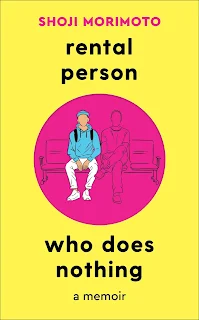
Rental Person Who Does Nothing by Shoji Morimoto book cover

* Copy courtesy of Pan Macmillan *

I first came across the Do Nothing Man from Japan in a BBC documentary called The Japanese man who gets paid to 'do nothing'. I was fascinated by the short doco and intrigued to find out more, eagerly awaiting his new book, Rental Person Who Does Nothing: A Memoir by Shoji Morimoto.

For those new to the concept of renting a person, Morimoto gives his time freely to those who need it but he does nothing. He doesn't charge a daily or hourly rate for his time, and clients pay for any food, drinks and travel expenses incurred. Clients submit their requests for his help online, and Morimoto selects those he can - and wants - to do.

Requests from clients vary, from accompanying them to a concert; visiting a restaurant they've always wanted to go to; attending a temple to say a prayer; or listening to a client share cherished memories of a loved one. The listening requests are common, and the author is clear that he can only provide simple responses.

Morimoto doesn't talk to the client unless they speak to him, he doesn't offer advice and generally only meets a client once. Some of the listening requests were fascinating, with loneliness and social anxiety seemingly forming the basis of many client requests.
"People tend to think that personal matters should be spoken about with those who are close friends, lovers or family members. But since starting this do-nothing service, I've learned that there are a lot of important things that can be talked about with people you don't know very well or even at all. Depth of discussion and depth of relationship don't always go hand in hand." Page 13
I've noticed the variations that can sometimes exist between depth of discussion and depth of relationship where there are no strings attached or expectations to fall short of. I enjoyed seeing some of the requests the author receives, and in doing so I was able to gain smaller unexpected insights into culture and society as a whole.
"Things can be different simply because someone is there. They don't have to be there, but if they are, something changes." Page 6
That's so true for a multitude of reasons! Morimoto notices that requests to visit a client in their home often has an unintentional benefit to the client by motivating them to tidy up prior to his arrival. He also notices that some of his clients need his help to hold themselves accountable. One client wanted him to come and watch them study while reading manga, another wanted him to watch them work. One request was to accompany a woman while she filed her divorce papers. Large or small, the sheer variety of requests is fascinating.
"Since I started this do-nothing service, I've been surprised to discover that there are so many things people want to talk about but can't. At least, they can't talk to people they know. They talk to me, though." Page 59
One example from the book was a woman who wanted to talk about her new girlfriend, but her friends weren't accepting of her choice of lover. She wanted Rental Person to listen to her talk about her new girlfriend and say things like 'she sounds nice' from time to time. Wow! Being able to talk without any fear of judgement clearly helped the client, despite the forced nature of the conversation.

Some clients need to give a loved one bad news or discuss a difficult topic but don't have the confidence or know where to start. After trying out their spiel with Rental Person, the client is able to summon the courage required to have the conversation for real with their loved one.

This was one of my favourite client requests from the book, and it's a little long but I think you'll love it:
"Request: To bump into my dog on a walk and make a fuss of him. Reason: My dog loves people. He goes up to people without dogs and wags his tail, but most of them ignore him, so he gets disappointed. People with dogs often make a fuss of him, but they're busy walking their own dogs and don't have much time, so I try to walk him away, but then my dog gives a little whine and sometimes tries to follow the other person. I don't want him to be thought too irritating so I cajole him into leaving them be, but he always looks upset. He is very positive and gets over it quickly, but it hurts me a bit every time his boundless love comes to nothing, so I always think how nice it would be if a complete stranger would give him some attention.
So I was wondering if you could make a fuss of him, pretending (?) to be a complete stranger who happens to be walking in the opposite direction." Page 130
What a beautiful person and such a lovely request! If you want to know what happened, you'll have to read the book.

Morimoto writes briefly about the Japanese culture of reciprocity and social pressures within friendships and workplaces and understands that many of his clients seek out his services because they feel constrained by their own cultural expectations and community pressures.

For a seemingly introverted and reserved person uneasy about money and not wanting to influence a person's future by having an opinion or making a decision, Shoji Morimoto has created the perfect role in society for himself. As Rental Person, Morimoto is able to help countless people in his unique way, while not shying away from the lack of an income. The author has a wife and child at home and they're living off his savings at the moment, so Morimoto accepts money from clients and wants to ensure nobody mistakes him for a volunteer. 

My only criticism of the book - other than it's too short - is that Morimoto didn't write this memoir. Instead he answered questions with simple responses and an editor and writer wrote the book. It's completely fitting with Morimoto's 'do nothing' persona but this early disclosure at the beginning was disappointing and ultimately lost him a star in this review.

Always introducing himself as Rental Person and wearing his cap so as to seem unassuming while also hiding behind his anonymity when feeling anxious, Shoji Morimoto has helped 4,000 clients since starting in 2018. The demand for services like his tells us something about ourselves and I enjoyed thinking about it. 

Rental Person Who Does Nothing
by Shoji Morimoto is a unique memoir perfect for discussion and I highly recommend it.

My Rating:


30 June 2023

Review: The Terrible Event by David Cohen

The Terrible Event by David Cohen book cover

* Copy courtesy of Transit Lounge *

Sporting one of the best cover designs of the year so far, The Terrible Event by David Cohen is a collection of short stories promising 'death, destruction, disappearance, decline and defeat' and sounded right up my alley. 

A brief word on the cover first. Designed by Josh Durham from Design by Committee, this cover design is immediately eye catching and I keep seeing it popping up everywhere. It really taps into my love of stationery and will no doubt be one of my favourite cover designs for 2023. The mention of parallels between this collection and the work of David Sedaris further stoked my anticipation for this Australian collection.

Containing eight stories in total, I enjoyed the sense of nostalgia that started to build.
"The toy was as addictive as it had been in bygone days. Pulling the string triggered memories of backyard cricket, Choc Wedges and Saturday morning cartoons - the very cartoons that had introduced him to Bugs Bunny in the first place. Those were the days." Page 44-45
The Australian setting and mention of Choc Wedges, Holden Commodores and rippled soled desert boots was ripped right from my own childhood and the sweary dialogue in the story entitled Bugs, was great. Here's our main character in Bugs reminiscing about inheriting his dad's old Olivetti typewriter.
"And when you pressed a key, you could see the type bar strike the paper, leaving behind a black letter or number. Nothing made interesting noises anymore. Nothing had any weight or resistance. Mark recalled the hole punches of his youth, the staplers. Where were they now?" Page 65
Yes, the hole punches!! I think back to how much our desk accessories have changed in my time, with liquid paper in bottles to hole punches, fax machines and staplers. I still have a mini red stapler purchased in 2000 that's so small it takes No. 25 staples and it's stapled thousands of bank statements, travel itineraries and meeting agendas over the years. If you love stationery as much as I do, see my review of Adventures in Stationery: A Journey Through Your Pencil Case by James Ward.

Back to the collection, hole punches feature in the aptly named short story Holes, and it was here that I started to notice a few common threads or easter eggs that connect through the collection. I won't include them in my review in case they're spoilers - I'm looking at you Nathan! - but not being a regular reader of short stories, I thought this was cool.

While there's limited time to connect with a character in a short story, character descriptions like this provided a neat shortcut to personality, and I could readily relate:
"Zoran's conversations were limited to two main subjects: cycling and craft beer. I didn't have a problem with that, but he seemed to assume that I was as interested in them as he was. If I tried to steer the conversation in another direction, he'd steer it back, before too long, to one or the other. He showed no particular curiosity about me: I think I was really just a receiver for whatever he wanted to talk about. He might ask me what I'd done on the weekend... but only as an entry point for him to tell me all about the cycling and beer drinking he'd done." Page 99
I have a person JUST LIKE THIS in my life too!

My favourite story in the collection was The Enigma of Keith: Another Memorial, which contained an interesting story about the erection of a fictitious roadside memorial, installed to determine whether the presence of a memorial (white cross, flowers) has any impact on driver speed. Do drivers slow down when they notice a memorial on the side of the road? You'll have to read The Terrible Event to find out!

My Rating:


28 June 2023

8 Books on my TBR with Birds on the Cover

I've recently noticed a trend in my to be read (TBR) pile, and it's the sheer number of books with birds on the cover. I don't know whether I have an unconscious bias towards books with birds on the cover, or whether the publishing industry and graphic designers have agreed that birds are used in cover designs for specific genres and I just happen to be attracted to those types of books. I'm not sure which came first, the chicken or the egg, but at last count I had 15 books with birds on the cover.

I thought it would be fun to share 8 of them with you, along with a summary of what I think they're about. Let's go!

A Shadow Above: The Fall and Rise of the Raven by Joe Shute book cover

A Shadow Above: The Fall and Rise of the Raven

Joe Shute

What better way to kick off this list than with a non fiction book all about the raven Corvus Corax. Ravens were once revered, and Viking and Norman warriors invaded England with ravens taking pride of place on their shields and banners. Centuries later, the birds were seen to represent evil and death, with ravens driven out of towns and cities as vermin. The last decade has seen a dramatic increase in raven numbers and I'm looking forward to learning just how intelligent ravens are and more about their ongoing relationship with humans.

Blackbirds

Chuck Wendig

Published in 2012, Blackbirds by Chuck Wendig is an urban fantasy novel and the first in a series that at the time of writing, was up to Book 6, Vultures. If the protagonist Miriam touches you, she is able to see the manner and time of your death. A GoodReads nominee for Best Horror 2012, this is the story of Miriam Black and how she deals with her unique gift. Not sure why it's called Blackbirds, but with an awesome cover design like this (your hair is a bird comes to mind) I'm keen to find out.
Blackbirds by Chuck Wendig book cover
Elsetime by Eve McDonnell book cover

Elsetime
Eve McDonnell

Elsetime by Eve McDonnell is a middle grade historical fiction novel set in the 1920s. I didn't know this, but in 1928 there was a terrible flood in London when the River Thames doubled in volume, killing fourteen people and leaving thousands homeless. The protagonist in Elsetime is Glory Bobbin, a 12yo orphan who works at the Frippery and Fandangle Emporium creating jewellery. Assisted by a peculiar crow, Glory meets Needle Luckett, a mudlark who has travelled through time, and the three of them together will try to save those endangered by the flood. I love stories about mudlarks, and you might remember my review of Mudlarking: Lost and Found on the River Thames by Lara Maiklem.

Hex

Jenni Fagan

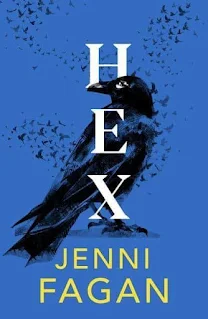
I love the cover design for Hex by Jenni Fagan. It's one of my favourite covers in this list, but Luckenbooth by Jenni Fagan was a DNF for me in January this year, so I'm worried I won't enjoy Hex. It sounds so good though! On 4th December 1591, Geillis Duncan is a convicted witch in a prison cell awaiting death when she receives a visitor. Iris has come from the future and offers her support and solace. Coming in at just 100 pages and inspired by the North Berwick witch trials in 1590, I should know very quickly if this is for me or not within the first few pages.
Hex by Jenni Fagan book cover
Magpie Murders by Anthony Horowitz book cover

Magpie Murders

Anthony Horowitz

There's a good chance you may have already read Magpie Murders by Anthony Horowitz or have it waiting for you on your own towering TBR piles. Published in 2016, Alan Conway is the successful crime writer behind his fictional English Detective Atticus Pund. With nods to vintage crime fiction including Agatha Christie and Dorothy Sayers, Conway's editor Susan Ryeland is concerned about his latest manuscript, which seems to reveal a hidden story. Horowitz went on to publish a sequel Moonflower Murders in 2020 and according to GoodReads, each "volume is two mysteries; one in Susan’s world and a book-within-book detective story set in the 1950s".

Meditations

Marcus Aurelius

Time for a classic! Marcus Aurelius was Roman Emperor from 161 to 180 AD and a Stoic philosopher and I've been looking forward to reading this since receiving a copy in 2021. The famous Emperor and Philosopher is known for quotes like: "You have power over your mind - not outside events. Realise this, and you will find strength" and “The happiness of your life depends upon the quality of your thoughts.” I'm hoping for some timeless wisdom in these pages but with time to reflect on key insights for greatest impact, it'll likely to be a slow and meaningful reading experience.
Meditations by Marcus Aurelius book cover
My Sister Rosa by Justine Larbalestier book cover

My Sister Rosa

Justine Larbalestier

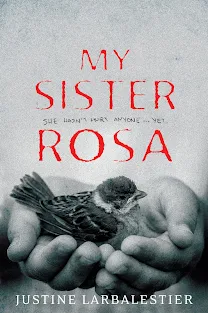
This book captivated my attention instantly with a brilliant premise: "What if the most terrifying person you know is your ten-year-old sister?" It certainly puts the cute bird and black and white cover design into a new perspective doesn't it? I added this book to my TBR in 2017 but still haven't read it yet. What's it about? My Sister Rosa is a young adult thriller about Che Taylor who loves his younger sister Rosa despite fearing she's a psychopath. Nominated for a bunch of awards, Justine Larbalestier is an Australian author, so I'm pleased to include a homegrown author in this list.

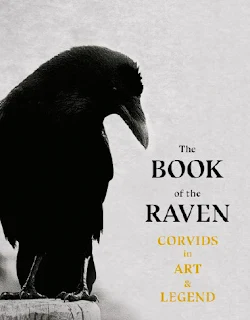
The Book of the Raven: Corvids in Art & Legend

Angus Hyland

This book explores the behaviour of ravens as tricksters, thieves, problem-solvers and gift-givers through artwork and includes photographs, paintings, texts and poems. I'm hoping for a stunning coffee table book that includes artwork and literature from Shakespeare and Edgar Allan Poe right through to Game of Thrones - "there was a raven in the night" being one of my favourite quotes of the series.
In case you thought it couldn't get any better, Christopher Skaife, author of The Ravenmaster - My Life with the Ravens at the Tower of London has written the Introduction.
The Book of Raven: Corvids in Art and Legend by Angus Hyland book cover

That's it! I'm pleased to see an Aussie author and a variety of genres represented in this list: middle fiction, historical fiction, non fiction, crime, urban fantasy and even a classic! Have you read any of these books? Which one are you most drawn to read?