30 April 2021

WIN a copy of The Hope Flower by Joy Dettman

The Hope Flower by Joy Dettman book cover
* Copy courtesy of Pan Macmillan *


The Hope Flower by Australian author Joy Dettman is a story of love and survival. Check out the blurb and enter below for your chance to win a copy of The Hope Flower for yourself or a loved one. Entries close midnight on Mother's Day in Australia on Sunday 9th May 2021. Good luck!

BLURB

Lori has eleven brothers, a father dead from suicide, and a mother locked in a room. This is no rural romance, but there is love.

Lori Smyth-Owen isn't your average teenager - as you'd expect from the only girl in a family of twelve. Or they were a family, until their father took his own life to escape his bed-bound wife, too obese to leave her room.

But for Lori and the remaining brothers, there is no escape from their volatile, mentally unstable mother. They raise themselves away from the gaze of the authorities, realising that though abandoned, they are now in charge. They can control everything, including their mother's food intake.

In time, their mother emerges, after losing two-thirds of her body weight. But does she bring with her the seed of hope for a better future, or will all hell break loose?
BIO

Joy Dettman was born in country Victoria and spent her early years in towns on either side of the Murray River. She is an award-winning writer of short stories as well as the highly acclaimed novels ​Mallawindy, ​Jacaranda Blue​, ​Goose Girl​, ​Yesterday's Dust​, ​The Seventh Day,​ ​Henry's Daughter​, ​One Sunday​, ​Pearl in a Cage,​ ​Thorn on the Rose,​ ​Moth to the Flame​, ​Wind in the Wires​, ​Ripples on a Pond​, ​The Tying of Threads,​ ​The Silent Inheritance ​and ​Trails in the Dust.

GIVEAWAY

This giveaway has now closed.


28 April 2021

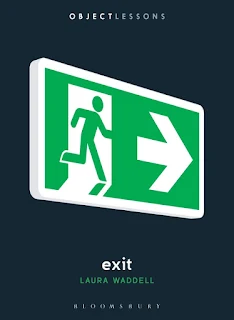
Guest Review: Exit by Laura Waddell

Exit by Laura Waddell book cover
* Copy courtesy of Bloomsbury Australia *


Intro

The second instalment in my series of reviews from the Object Lessons series of books by Bloomsbury Academic is Exit by Laura Waddell. I'll leave you with Neil Béchervaise for his thoughts on this one.

Neil's Review

As a prescient reminder that lament, rage, reflection and even trivial recall never really leave us, Laura Waddell’s Exit is, indeed, an Object Lesson; a lesson in the fine line between ‘coming’ and ‘going’; between ‘in’ and ‘out’, between ‘now you see it’ and ‘now you don’t’.

While definition is always important, the signs and signifiers for ‘exit’ connote ‘place’ rather than ‘presence’, ‘presence’ rather than ‘existence’. Reviewing her own sense of self – particularly in terms of her Scots origins and the language she can never really use because it probably no longer exists, Waddell extends her readers’ sense of location from ‘place’ to ‘identity’; her anger at being excluded, maybe excluding herself, from an ideal which she knows herself to be. From ‘emigrant’ to ‘immigrant’ we may transition into ‘aliens’ – not necessarily ‘little green people’ but different nevertheless, while still ‘the same’. Upon exit, we are cast into that episode of The Twilight Zone in which, she recalls:
“Aliens were frightening because they mirrored our worst human tendencies”      Page 2
Within its brief 130 pages of information, anecdote, recollection and personal reflection, Laura Waddell’s Exit shifts from substantial to existential before closing with a rush that is reminiscent of the closing door which reminds us that while we, as readers, may still be here, the author has gone. What remains is our responsibility – we found our way in so now we must decide what is out.

Neil's Rating:


26 April 2021

Winner of One of Us Buried by Johanna Craven announced

Thanks to everyone who entered last week's giveaway to win a copy of One of Us Buried by Australian author Johanna Craven. Every entrant correctly identified that in One of Us Buried, Eleanor is on a prison ship bound for New South Wales.

The giveaway closed at midnight last night, and the winner was drawn today. Congratulations go to:

Renee

One of Us Buried by Johanna Craven book cover

Congratulations Renee! You've won a print copy of One of Us Buried by Johanna Craven valued at $24.99AUD. You'll receive an email from me shortly with the details of your win and the author will send your prize out to you directly.

Enjoy and stay tuned for another giveaway opportunity coming on Friday. For more details, check out my giveaways page.

Carpe Librum!


25 April 2021

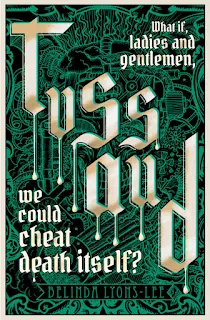
Review: Tussaud by Belinda Lyons-Lee

Tussaud by Belinda Lyons-Lee book cover
* Copy courtesy of Transit Lounge *


Other than being French, I didn't know anything about the life of Madame Tussaud prior to reading this book other than the legacy of her wax museums. Australian author Belinda Lyons-Lee has changed all of that with the release of her historical fiction debut novel Tussaud.

Marie Tussaud barely managed to escape the French Revolution with her life, during which thousands were incarcerated and executed. Marie herself was accused of being a royal sympathiser, arrested and her head was shaved in preparation for execution by guillotine. Marie's release came as a shock, although it also came at a cost. In exchange for her life, Marie was forced to make death masks and wax recreations of the heads belonging to those famously executed, including Marie Antoinette.

This work would stay with Marie for life and Lyons-Lee does an amazing job of drawing from known facts to imagine her life from that point forward. Marie teams up with a famous magician by the name of Philidor and together they create a show called the Phantasmagoria. It's this show that attracts the attention of the eccentric 5th Duke of Portland, William Cavendish who will go on to make an interesting business proposal.

Tussaud is a gothic story that takes place first in Paris before shifting to London and the rambling and isolated estate of Welbeck Abbey. Peopled with characters yearning to fill a void and each with their own agenda, Tussaud is full of secrets, deception, greed, desire and exploitation with plenty of characters keen to take advantage of Marie and her creations for their own purposes. Tussaud also has a sense of 'other' that reminded me a little of the subtle supernatural elements running through The Silent Companions by Laura Purcell. If you loved that, I think you'll also love this.

The writing effectively evoked the time period and here's an example of a scene featuring Philidor in early 1800s London:
"He stood in the middle of the alleyway and lit a cigar, content to let the unseen eyes watch him further, his exposed back like a challenge. But he knew the wretches who haunted these spots were not pickpockets or murderers: they were living skeletons who crawled into the gloom of doorways and corners to curl up and waste away in soft grey clouds of rags and sighs." Page 217
Presented in a stunning green cover design, I enjoyed an interview recently in which the author shared her fascination with the toxic green wallpaper of the era and how she wanted the book cover to capture the deadly association. This is one of my favourite facts from history (covered several times here on Carpe Librum) so I was overjoyed to learn she was fascinated by it too.

Tussaud has opened my eyes to the amazing and troubling life of this household name and while the life portrayed was fictional, it was certainly entertaining. Highly recommended.

My Rating:


20 April 2021

Review: The Paris Affair by Pip Drysdale

The Paris Affair by Pip Drysdale book cover
* Copy courtesy of Simon & Schuster *


Harper Brown is an arts and culture journalist for The Paris Observer who dreams of advancing to become an investigative journalist so that she can write about what really matters. A huge fan of true crime podcasts, Harper is independent, savvy, self-absorbed, street-smart, driven and desperate to write about the string of crimes in Paris concerning missing women.

Soon after researching and interviewing a local artist for a news story with an edge, the artist's model disappears and Harper is drawn to investigate. Previously the writer of a micro-column called How Not To Get Murdered, Harper knows how to pick a lock and escape from duct tape, and she's going to need all of her skills.

The Paris Affair is a contemporary crime novel, with Harper at the centre trying to solve a murder while using the opportunity to further her career. Harper reminded me a little of a female version of the Martin Scarsden character from the Chris Hammer series of books set in Australia. While Harper is a young, single and ambitious woman with an admittedly different background, both Drysdale and Hammer offer readers the chance to explore a 'whodunnit' through the eyes of a journalist, making a nice change from the regular lineup of detectives, FBI, coroners and pathologists that regularly frequent my shelves.

Being a non-French speaker, the French chapter headings were a little distracting, and unnecessary in my opinion. The author did a convincing job of setting the scene firmly in Paris with references to art galleries and the unique geography of lesser known Paris, along with all of the stairs and door codes.

Harper lives her life according to her rule of 'do no harm', and believes that love can only end in one of three ways: disillusionment, death or divorce. As a result, she doesn't let anyone get too close, and severs relationships before they can fully form. Her friendship with her best friend Camilla was endearing but the ending of the book was unexpected. Each time I thought the book had finished, I was rewarded with another chapter that felt like an additional prologue or bonus post-credits scene firmly wrapping up Harper's situation.

The Paris Affair by Australian author Pip Drysdale is an entertaining crime thriller recommended for fans of savvy characters, art, journalism and all things Parisian.

My Rating:


19 April 2021

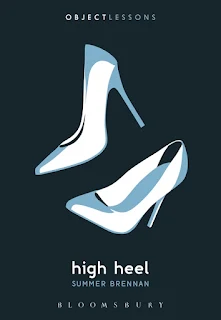
Review: High Heel by Summer Brennan

High Heel by Summer Brennan book cover

* Copy courtesy of Bloomsbury Australia *


High Heel by Summer Brennan is the first book in the Object Lessons series by Bloomsbury Academic that I've chosen to review here on Carpe Librum.

I've always been fascinated by shoes and while I can no longer wear high heels myself (long story) I'm interested in the ways in which they can liberate, empower and hobble their wearer.
"So, are high heels good? Are they bad? What do they mean? Are they feminist or anti-feminist? Do they communicate authority? Independence? Oppression? Professionalism? Confidence? Frivolity? Subservience? Sex? No one group can seem to agree. If you ask me, the answer to all of those questions is, yes." Page 25

Summer Brennan examines the history of the high heel and the fact they can be empowering while simultaneously immobilising and painful. Femininity, fashion, consent and sex is explored and the author does an admirable job of letting the reader decide. 

"For better or worse, the high heel is now womankind's most public footwear. It is a shoe for events, display, performance, authority, and urbanity. In some settings and on some occasions, usually the most formal, it is even required. High heels are something like neckties for women, in that it can be harder to look both formal and femme without them. It's a shoe for when we're on, for ambition; for magazine covers, red carpets, award shows, boardrooms, courtrooms, parliament buildings, and debate lecterns. Along with being our most public shoe, it is also considered the most feminine." Pages 15 & 16
High heels change a woman's posture and gait, and often this is what makes a woman wearing them more attractive. However they also slow us down, weaken our mobility and make running difficult, forcing this reader to question whether making women physically vulnerable is part of the attraction in addition to lengthening the leg and arching the back.

High heels aren't the first - or only - item of clothing that forces women to contort their bodies into uncomfortable and unnatural shapes, and Brennan covers one of the most extreme in the practice of foot binding in Imperial China.
"But it is women's bodies that have been most often manipulated, legislated, controlled, and contorted. A number of those cultural practices have been aimed at the feet." Page 64
Brennan goes on to step us through an examination of shoes in fairytales which was interesting however I didn't quite understand why the content was broken down into 150 separate 'vignettes' as I've noticed other books in the series don't follow this format.

I was looking forward to discovering the long term physical effects of wearing high heels, but the author sidestepped the subject which was a little disappointing. I could have done with less content around female objectification, rape culture and the relationship between what a woman is wearing and consent in favour of her thoughts on the future.

What do you think? Are high heels oppressive or empowering? Do they convey professionalism and confidence or vulnerability and sexuality? Just like any item of clothing, I think they can do all of these things and the reasons for wearing them are as individual as the wearer.

My Rating:


16 April 2021

WIN a copy of One of Us Buried by Johanna Craven

One of Us Buried by Johanna Craven book cover
* Copy courtesy of the author *


One of Us Buried by Australian author Johanna Craven is an historical fiction novel set in 1806 when Eleanor Marling finds herself leaving London on a prison ship bound for NSW. Check out the blurb and enter below for your chance to win a copy for yourself or a loved one. Good luck!

BLURB

In 1806, a fateful decision sends Eleanor Marling from the salons of London to a prison ship bound for New South Wales. She is put to work at the female factory of Parramatta; a place where the women’s only hope of food and lodgings is to offer their bodies to the settlement’s men.

Nell is given shelter by Lieutenant Blackwell, a brooding soldier to whom she is inexplicably drawn. Despite warnings from the other women, Blackwell’s motives seem decent, and beneath the roof of a military officer, Nell sees a chance to become more than just a convict woman sent to the factory to be forgotten.

But tensions are high in New South Wales, with the young colony teetering on the edge of a convict rebellion. And as Nell treads a dangerous line between obedience and power, she learns the role of a factory lass is to remain silent – or face a walk to the gallows.


BIO

Johanna Craven is an historical fiction writer, pianist and composer. After living in Melbourne and Los Angeles, she now divides her time between London and Australia. When not writing historical fiction, Johanna works as a freelance editor and piano teacher, and taught classes via Zoom before it was fashionable… She loves ghost-hunting, cooking (and eating) and plays the folk fiddle very badly. One of Us Buried is Johanna's seventh novel and she loves to hear from readers via her website.

GIVEAWAY

This giveaway has now closed.


12 April 2021

Launching Object Lessons series of reviews

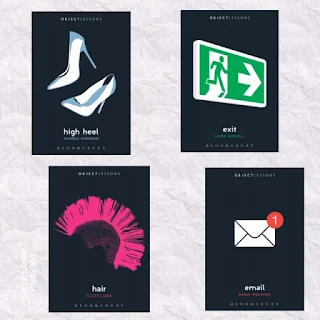
Object Lessons series of books
Launch

Welcome to a new series of reviews here on Carpe Librum. I've recently become interested in the non-fiction series by Bloomsbury Academic called Object Lessons which aims to take average items from our everyday lives and explore them in brief for the reader's enjoyment.

The first book I stumbled across in the series was Hair by Scott Lowe, and after reaching out to Bloomsbury Australia, they were excited for me to review a number of titles from the series.

I've enlisted some help from my guest reviewer Neil Béchervaise and we'll be reviewing a sampling of titles on a variety of topics. But first, here's a little more about the series.

Series Info

Object Lessons is a series of concise, collectable, beautifully designed books about the hidden lives of ordinary things. Each book starts from a specific inspiration: an historical event, a literary passage, a personal narrative, a technological innovation - and from that starting point explores the object of the title, gleaning a singular lesson or multiple lessons along the way. Featuring contributions from writers, artists, scholars, journalists, and others, the emphasis throughout is lucid writing, imagination, and brevity. Object Lessons paints a picture of the world around us, and tells the story of how we got here, one object at a time.

The Books

First to be reviewed will be High Heel by Summer Brennan, followed by Exit by Laura Waddell, Hair by Scott Lowe, Email by Randy Malamud and more. I hope you'll come on this non-fiction adventure with us and savour these micro histories. Which book from the series would you most like to read?

05 April 2021

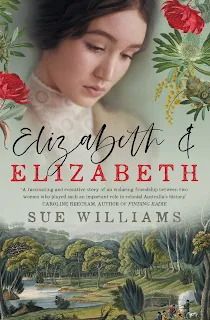
Guest Review: Elizabeth & Elizabeth by Sue Williams

Elizabeth & Elizabeth by Sue Williams book cover
* Copy courtesy of Allen & Unwin *


INTRO

While I was reading The Last Reunion by Kayte Nunn set in the 1940s, guest reviewer Neil Béchervaise stepped back in time to colonial Australia and shares his review of Elizabeth & Elizabeth by Australian author Sue Williams.

NEIL'S REVIEW

Many readers, I am sure, will be attracted to the stories of friendship and tension between two pioneering women in the early 1800s colony of New South Wales. Their tenuous initial contact, their starkly contrasting levels of privation, their losses of children and their developing recognition of common interests make for a powerful reading experience.

The timeliness of Elizabeth & Elizabeth, however, makes it a compelling reminder of how little has actually changed in the former British colonies now called Australia.

2021 marks the 213th anniversary of William Bligh’s appointment as governor of the colony with the support of Sir Joseph Banks, who had accompanied James Cook into Botany Bay several years before and declared it the perfect place to ship convicts. Coincidentally, it also marks the 150th anniversary of the publication of The Origin of Species in which Charles Darwin submitted his highly controversial theory that humans had evolved from apes. Sadly, there are still those who deny the social rights of anyone with a criminal record, regardless of their having ‘served their time’ and seeking to return to a respectable place in society.

Little, it seems has changed in Australia in the past 200 years. Refugees are still held in separated facilities, even on offshore islands; the streets of large cities (and small) still home the homelessness as others seek to provide public health and housing for them. Elizabeth Macquarie’s pursuit of civil treatment for the colony’s early settlers – whether freed convicts or poor migrants – remains a political football still largely resisted by those who might afford to resolve the problem. Farm work is still seen as a lowly occupation, best undertaken by migrant back-packers and students through deals which leave them tenuously employed and underpaid.

In contrast, Elizabeth MacArthur’s farming life, spent largely in isolation from her husband, offers a resilient woman raising a family while developing the wool export market which resulted in the claim that Australia lived ‘on the sheep’s back’. That it now probably lives more on the miner’s back is ironic when we regard the equally pioneering efforts of some of our more famous mining women – still largely in the reputational shadows of their husbands and the companies they now manage.

Certainly, Elizabeth & Elizabeth provides a wonderful celebration of the lives of two Australian pioneers who fought for, and achieved, many of the goals we take for granted; two women who brought imagination, tenacity and creative ability to a male-dominated, militarily administered outland where human rights were controlled by the rich and privileged; two women who, in starkly different ways, sought to re-vision Australia for an unimaginable but socially and economically sustainable future.

With Elizabeth & Elizabeth, Sue Williams presents an historical background for a country which may now have one of the most diverse ethnic backgrounds in the modern world, one of the most complex socio-cultural structures in the world, but which retains too many of the progress-resistant political structures that were identified by the time of the landing of the second fleet of convicts in the colony of New South Wales. A colony which had already rebelled against bullying, land grabbing and corrupt, manipulative structures which still largely deny the very rights that Sue Williams' heroic women were struggling for.

With Elizabeth & Elizabeth, Sue Williams offers a highly entertaining introduction to the early development of the British penal colony which has become Australia. For readers with an interest in the country’s early history, Williams' historical novel provides a compelling basis for discussion of our prevailing attitudes to our indigenous ancestors, to our current values and social attitudes and to our right to claim a respectable place in the modern world that is the 21st century.

Neil's Rating:


31 March 2021

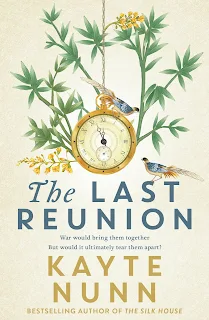
Review: The Last Reunion by Kayte Nunn

The Last Reunion by Kayte Nunn book cover
* Copy courtesy of Hachette Australia *


The Last Reunion by Kayte Nunn is the story of a group of women who volunteered to serve in the Women's Auxiliary Service (Burma) or WAS(B) in 1945. Known to the troops as the Wasbies, these hard-working women ran mobile canteens for the 14th Army in the Burma campaign during WWII and operated in the same tough conditions in dense jungle as the allied forces.

Beatrix was one of the Wasbies and many decades later in 1999, she is forced to reflect on her experiences when she has to sell her beloved Japanese fox-girl netsuke to fund the repairs to her crumbling estate. A netsuke is a small hand-carved sculpture worn with a kimono and acted as a toggle to suspend personal items in lieu of pockets.

Olivia is a young intern to a renowned art dealer and is instructed to meet Beatrix and establish whether she truly does have the infamous netsuke known as the fox-girl. This and several other Japanese netsuke were stolen from an exhibition in Oxford in 1976, so does Beatrix really have it? If so, how did she acquire it? Where has it been all of these years?

Unfolding in dual timelines in 1999 and 1945, the mystery of the netsuke drives the narrative forward and I'd have loved the title to reflect this. More than that though, The Last Reunion is a story of the bonds of friendship, mateship, love and loss and of course trauma.

The growing friendship between Olivia and Beatrix was a real pleasure to read and Kayte Nunn conveys some of the horrors of the Burma campaign and the conditions of war without giving the reader nightmares. I have enjoyed other historical fiction novels from this author, including The Forgotten Letters of Esther Durrant and The Silk House and I knew I was in safe hands here.

I know there has been a plethora of new releases set in WWII lately, but The Last Reunion is highly recommended for fans of historical fiction who are interested in character development more than the politics or strategies of war.

My Rating:


26 March 2021

Review: The Nothing Man by Catherine Ryan Howard

The Nothing Man by Catherine Ryan Howard book cover
* Copy courtesy of Allen & Unwin *


Catherine Ryan Howard was inspired to write The Nothing Man after reading the bestselling true crime book entitled I'll Be Gone In the Dark by the late Michelle McNamara. Having read that book last year, the inspiration is clear and the 'nothing man' bears a striking resemblance to former Police Officer Joseph James DeAngelo.

Having said that, Howard definitely holds her own. I was hooked by the very first page of this crime thriller, and her writing had me looking forward to the book each night and tearing through the pages.

Eve Black survived the 'nothing man' when at just 12 years of age, he entered their house and murdered her parents and younger sister. Having survived by hiding, Eve is whisked away after the murders to escape the public interest and changes her name. 

Eve is now an adult still coming to terms with her past and when she submits an essay for a writing course, it quickly turns into a true crime account of her survival and the crimes attributed to the nothing man. Jim Doyle is a supermarket security guard and we learn immediately that he's the subject of Eve's book. He's the 'nothing man' and he's livid about the book.

The writing was compelling and the combination of Eve Black's 'true crime' memoir (inspired by a real case) interspersed with Eve's point of view as well as Jim's made for a gripping read. The chapter transitions left me hanging and the 'book within a book' format was executed perfectly.

The Nothing Man by Catherine Ryan Howard is a gripping thriller with a genuine surprise towards the back half of the book that I definitely did NOT see coming. Highly recommended for fans of crime, true crime and thrillers.

My Rating:


22 March 2021

Review: Chromatopia - An Illustrated History of Colour by David Coles

Chromatopia - An Illustrated History of Colour by David Coles book cover
I've always been interested in the origin of colours and pigments and I'm still fascinated by the topic, nine years after reading and reviewing Color - A Natural History of the Palette by author Victoria Finlay back in 2012. Here in Chromatopia - An Illustrated History of Colour, Australian paint maker David Coles invites us into his world of colour and paint making.

Living in Melbourne, David is the owner of Australia's leading paint making company and Langridge paints are sold all around the world.

His choice to divide the book into the following chapters was inspired: The First Colours; Colour in the Time of the Ancients; Colour + The Classical World; Medieval Colours, Writing Inks; Dyes, Lakes + Pinkes; Mysterious Colours; The Explosion of Colours; A Brave New World of Colour and The Science of Modern Colour. Separating the colours by time and type was very helpful to this reader and the opposite approach to Victoria Finlay who divided her book by colour. 

In Chromatopia, I was re-introduced to known favourites like cochineal, which requires 14,000 insects to produce just 100 grams of carmine lake pigment. However I went on to learn that cochineal production was one of the best-kept trade secrets of all time and became the third-greatest product from the New World, after gold and silver. Surprisingly, cochineal is making a comeback in cosmetics and food production given the increasing concern over artificial food additives. In this case what's old is new again.

I was interested to discover the process involved in making peach black was important in WWI when activated charcoal from peach stones was used inside gas masks to protect soldiers from deadly chlorine gas attacks. According to Coles: "The Red Cross organised the collection of millions of peach stones that were turned into charcoal, and consequently saved countless lives." Page 67

I enjoyed reading about the production of gall ink and the trivia fact that it's still used in the UK for all official certificates of birth, marriage and death was interesting. I shook my head when reading the section on mummy brown and struggled to understand how it ever became a 'thing'. Who came up with that idea? Honestly!

Another favourite, Tyrian purple was made from sea snails more than 3,000 years ago, with one snail yielding just one drop of dye. With 250,000 snails required to make just one ounce of dye, Tyrian purple was so expensive, that eventually it was only allowed to be worn by the Emperor of Rome.

If you've ever watched an episode of artist Bob Ross in action you'll know he loved his titanium white, but I didn't know 'it is the most widely used pigment of all time." Page 145

One of my favourite colours is the poisonous and deadly emerald green which contains arsenic and was extremely toxic and deadly in the right circumstances. I also remember it being one of the primary reasons for reading and reviewing Victims - The Dangers of Dress Past and Present by Alison Matthews David in 2016 so it was great to get a refresher here.

Another colour of interest is Prussian blue:
"Outside its artistic application [Prussian blue] has been used as a colourant to make blueprint paper, as a laundry blue, and in plastics, paper and cosmetics. There is even a pharmaceutical grade that is ingested to counteract radiation poisoning." Page 121
I love learning new things, and in this book David Coles introduced me to vantablack
"Incredibly, it is the darkest material on the planet. Vantablack is an acronym of Vertically Aligned NanoTube Arrays. Made by a process of chemical vapour deposition, it absorbs up to 99.96 per cent of all visible light." Page 171
It's hard to imagine, but the accompanying photo of the colour vantablack applied to a three-dimensional object left me convinced this was an incredibly impressive - and slightly creepy - product. A quick Google left me gobsmacked as the details of bronze masks covered in vantablack completely disappeared. Looking at the colour has been likened to staring into a black hole and I completely agree. It's unnerving to say the least.

I'll admit struggling with some of the scientific processes in the book around colour and pigment creation although the glossary was a handy reference. While I'm sure the recipes at the end of the book were provided for paint makers and artists - of which I'm neither - I was at least able to marvel at the effort involved in producing the perfect pigment.

After reading Chromatopia - An Illustrated History of Colour by David Coles I'm left with a renewed appreciation for the effort and industry surrounding the production and trade of colour in the past and can't help but feel a little nostalgic about just how much has changed. That said, when I compare this to the excitement surrounding new developments like vantablack, I'm optimistic for future discoveries in the world of colour and art and I'm sure the author will be there for it.

My Rating:


18 March 2021

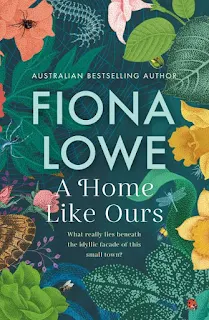
Guest Review: A Home Like Ours by Fiona Lowe

A Home Like Ours by Fiona Lowe book cover
* Copy courtesy of Harper Collins *


Intro

I love it when a book surprises you, and that was the case when guest reviewer Neil Béchervaise offered to read and review A Home Like Ours by Australian author Fiona Lowe. He wasn't expecting a five star reading experience but books can do that, they can surprise us in so many wonderful ways. Enjoy Neil's review below.

Neil's Review

Homeless women and domestic violence, council corruption and apparently caring community members in conflict with each other, Fiona Lowe’s latest novel has it all, in spades.

I have to confess, I began reading this book with some trepidation. Recent experience suggested that I would probably, once again, be confronted by too many ill-developed characters trampling confusedly through 500 odd pages of poorly developed plot with a plethora of description to fill out the space. I decided to read the first 20 pages and the Acknowledgements (often a clue to how the novel was realised, and by whom).

In fact, I was engaged from the first paragraph, a woman sleeping rough in her car; too cold, too cramped and too poor to use up petrol running the car for its heating. Forced to move on in panic when suddenly surrounded by a hooligan mob, she drives to a country town coffee shop and, for a few hours at least, she finds some peace. And that’s just the Prologue.

But then it comes. Just as I thought. Chapter 1 finds a woman power-dressing to wow her husband. (It doesn’t work). And now we are in Boolanga, a country town on the Murray River – somewhere near Cobram, Numurkah and ‘Wang’. We get the picture but we are spared the details because the plot is moving on. Great relief.

New characters will be introduced in the coming chapters. New scenarios will be sketched out in sufficient detail for us to empathise with the inhabitants, the victims perhaps.

Here we go”, I might have said. "A multitude of characters and …”. But these people were, somehow, more real. Tara, with her two young children was having trouble arousing her husband – was he having an affair? And how did she really feel about Zac, her personal trainer? Nineteen year old Jade with her baby was suffering emotional abuse from the baby’s father. He was occasionally present, usually drunk and completely unsupportive. Helen, the homeless woman, had found shelter in a disused heritage house in exchange for managing the town’s community garden. She was out of the car. She had a foot on the ground in Boolanga. But it was still uncertain.

The introduction of a refugee community on the edge of town provides that level of tension that we like to deny. The reality of the racism affects each of the women in different ways and, together with the management and development of the garden, generates serious conflict between former ‘besties’. More importantly, it opens the way for a series of plot developments that are both heart-wrenching, joyous, and all too familiar.

Fiona Lowe’s fifth novel A Home Like Ours might make a movie but it is more useful in challenging us to review our personal values, attitudes and approaches to the central issues of homelessness, domestic violence and racism. Is every robbery really committed by gangs of African youths? Every drug deal? Hey, didn’t we used to blame those on gangs of Vietnamese youths? And. And…

A Home Like Ours is a well crafted novel, a genuine page-turner, a compelling read for anyone who is willing to take the risk of changing how they believe ‘the other half’ actually live.

Neil's Rating:


16 March 2021

Review: Mrs Death Misses Death by Salena Godden

Mrs Death Misses Death by Salena Godden book cover
* Copy courtesy of Allen & Unwin *


Mrs Death Misses Death by Salena Godden is a literary feat exploring the grave topic of death. Mrs Death is portrayed as an old poor black woman overlooked by those who pass her by never knowing she holds their very lives in her hands.
"Only she that is invisible can do the work of Death. And there is no person more silenced than the woman, talked over, walked over and ignored than the woman, the poor woman, the poor old woman, the poor old black woman, your servant bent over a mop, cleaning the floor of a hospital. Did you see me today? Did you walk past?" Page 201
The portrayal of Death as anyone but a man in a dark robe with a scythe wasn't a shock to me and I was easily able to visualise Death as an old black woman. In the movie adaptation of The Shack by William P. Young, actress Octavia Spencer played the role of God and her performance was sublime. Mrs Death's character brought to life by Salena Godden with an expert hand was equally sublime.

However, when we meet Mrs Death she's exhausted by her work and seems to be seeking solace. Wolf Willeford is a struggling writer and when he purchases an antique desk, his connection to Mrs Death is strengthened. Mrs Death talks with Wolf and he begins to transcribe her stories.
"Mrs Death walks with me there. She tells me the river is one of her oldest friends. She says the Thames is filled with ghosts and old spirits. The floor of the River Thames is littered with engagement rings and the bones of dead babies. We stand together on the shore; we grow cold in the black shadow of the ghosts of slave ships, the clatter of the traders, the unloading of stolen goods and treasure, coffee, sugar and human cargo. Shadows of souls and the clatter of bones." Page 52
Wolf also transcribes stories of particular deaths that have stuck with Mrs Death over time. The Moors murders and the devastating fire at Grenfell Tower in 2017 are just two examples. On other occasions, Mrs Death attempts to impart her knowledge of the world in a direct appeal to Wolf and all of humanity in her advice on how to live life.
"To die is to have been alive, that is why you must live: live free, live wild, live true and live love alive. Let the fire burn you and the light blind you. Let your belly get full and fat and embarrass you. Let your words fall out and tumble carelessly and honestly. Let your passions be unlimited. And do your lifetime all in your own life time. And let all your shits stink and all your roses bloom. May your every success be a threat. Fuck being scared and infected with fear and doubt. Own your rejections and own your failures; they are an excellent wall to smash and to kick against. Every morning may you rise to fight and to create yet again, this time with both fists, and not with one hand behind your back." Page 64-65
This quote comes from an epic chapter narrated by Mrs Death and the entire chapter is full of quote-worthy moments I wanted to share here. Speaking to all of humanity and of course directly to the reader, Mrs Death says:
"I am Mrs Death and I am coming for you all. Accepting me is the first step, after that it gets easier, I promise you. Knowing me, knowing this, knowing that, that this all ends, is the best knowing you need to know." Page 65
We even get a chapter from the perspective of the Desk belonging to Mrs Death. You might harbour grave concerns this couldn't work but I can assure you it does. On reflection, it was one of the most enjoyable chapters of the entire book. Here's why.
"I have recorded every inky scratch of quill, the tap of her typewriter, the whisper of pencil and the slash of her fountain pen. Splashes of ink, wine and time. Now just put your ear here, Wolf, rest your head on my surface, you'll hear all the ghosts of scribbling pens of dreams from before. Stroke your fingertips gently across my red skin, as though it is braille, you'll be able to trace the hard-pressed writing from before." Page 86
The writing is sensual and full of life, love, death and meaning. The format contains many character perspectives and straddles multiple genres including fantasy, short stories, true crime and poetry in an overall presentation that felt unique to this reader. Beautifully presented in a hardback edition with black and gold dust jacket and complementary gold end papers, Mrs Death Misses Death is published today and I'm dying to discus it with other readers. (Sorry, couldn't resist).

Mrs Death Misses Death by Salena Godden addresses our mortality head on and doesn't shy away from the ugly nature of life, love, suffering and loss as we know it. It's definitely a wake up call for readers and a reminder of the misery and wonder of humankind while offering a life-affirming and hopeful message. 

Author Salena Godden took me with her on a literary exploration of the important themes in life including: love, loss, time and death and I know I'm the richer for it.

Highly recommended.

My Rating:


12 March 2021

Review: Elsewhere by Dean Koontz

Elsewhere by Dean Koontz book cover
* Copy courtesy of Harper Collins *

Elsewhere by Dean Koontz is a father and daughter novel starring Jeffrey Coltrane and his daughter Amity. A homeless man by the name of Ed gives Amity's Dad a device for safekeeping. Ed tells him it's the key to everything but warns him never to use it, promising it will only bring misery and terror.

Naturally this wouldn't be a Koontz novel if the device wasn't used, and the action kicks off from there.

The key to everything is actually a device that ports the holder to an alternate world, or parallel universe. As expected, there is a cashed up black ops group who will do anything to obtain the key and a chase ensues. Will Amity and her Dad survive?

The plot is 'nothing new' but eleven-year-old Amity is undoubtably the star here. She is courageous and smart, with most of her learning coming from books which gained instant appeal with this reader. As a result of Amity's shared love of reading with her father, much of the book is very meta when they refer to stories and what happens to the heroes and the villains. Like this example from Amity:
"People in stories were always preparing themselves for the worst, which rarely happened. When the plucky girl or the stalwart hero died, then either the book sucked or it had deep meaning. Nobody wanted to read sucky novels, and those people who wanted deep meaning didn't want it in every damn story." Page 223
I enjoyed this shared love of stories, however the fact that Jeffrey was called Jeffy throughout the novel quickly got on my nerves. It would seem I have very little tolerance for names like this for an adult character.

Having said that, Elsewhere was an action packed palate cleanser and something a little different to my usual reading fare. Here's Ed's perspective:
"Understand, many timelines are as hospitable as this one, some even better. But across an infinite multiverse of worlds, you can find all the evil realms that humanity has imagined - and some beyond imagining. I'm burnt out on travel. I haven't the nerve for it anymore. My heart can't take it. I was a pacifist once. A pacifist! I'm not anymore. I am armed. I can kill. The things I've seen...they've changed me. I don't want to be changed more than I've already been. I don't want the multiverse. All I want is a home, books, and the peace to read them." Page 174
In reading Elsewhere, I could just as easily have been reading a Stephen King novel with an examination of fate, destiny and love forming the overarching themes. Of course, the characters encounter more than their fair share of danger and horror in some of the multiverses they visit and the threats they face, bringing the overall lessons learned into sharper focus.
"Life was an infinite library of stories, and in every story, a girl such as Amity learned an important lesson, sometimes more than one, whether she was a highborn child of royalty or a milkmaid." Page 352
Elsewhere by Dean Koontz is an action packed science fiction novel about parallel universes and it was a good read.

My Rating:


10 March 2021

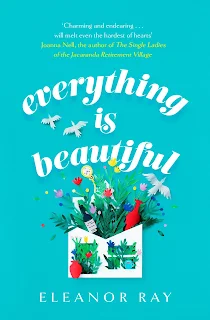
Review: Everything is Beautiful by Eleanor Ray

Everything is Beautiful by Eleanor Ray book cover
* Copy courtesy of Hachette Australia *

Readers of Carpe Librum will know that I love reading - and watching documentaries - about hoarders. There's something uniquely fascinating to me about the physical manifestation of their grief, personal trauma or mental illness and the appeal of the before/after transformation process and subsequent recovery - albeit rarely achieved - is irresistible.

In Everything is Beautiful, Eleanor Ray has created the perfect setting and background story for a hoarding character in the form of Amy Ashton. I was really able to get inside Amy's head and understand just how her hoarding started and how difficult it was for her to make any space in her house - or her life - for anything else.

The introduction of new neighbours and the way in which they immediately inserted themselves into Amy's life reminded me a little of A Man Called Ove by Fredrik Backman but in a good way. Like Amy, I don't have children, but the neighbour's children and their interactions with Amy were instantly relatable and heartwarming and I loved their presence in the novel.

There's also a compelling mystery that is slowly unravelled and I was eager to find out what happened to Amy's boyfriend after he and her best friend disappeared twelve years ago. Right around the time Amy's hoarding started.

This book is being marketed at fans of Eleanor Oliphant is Completely Fine and I can see why. I actually had the same reading experience with both books, despite the many differences between the two main characters. I became heavily invested in the wellbeing of Amy (as I did Eleanor), and I wanted to see her character grow and heal from her trauma. 

Everything Is Beautiful by Eleanor Ray is a heartwarming contemporary novel and I found myself enjoying an unexpected five star reading experience. Highly recommended.

My Rating:


08 March 2021

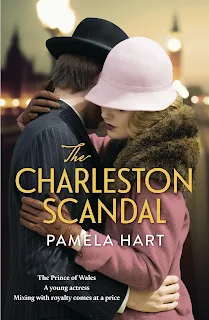
Guest Review: The Charleston Scandal by Pamela Hart

The Charleston Scandal by Pamela Hart book cover
* Copy courtesy of Hachette Australia *

Intro

Today the media is abuzz with news of Harry and Meghan's interview with Oprah Winfrey and the royal scandal of Megxit continues. It's not the first royal scandal, nor will it be the last. Today guest reviewer Neil Béchervaise shares his thoughts on The Charleston Scandal, an historical fiction novel by Australian author Pamela Hart about a scandal involving a member of the royal family in the 1920s.

Neil's Review

It is 1923. The Great War that killed about 40 million ended five years ago, it is history. The suffragettes will be marching their case through the streets of London until 1928. A promising young ex-serviceman-turned-politician named Hitler has floated some interesting ideas in Germany. Homosexual acts between men over 21 will remain a jailable offence in Britain until 1967. Actresses are considered, at best, to be whores in polite society, and the Prince of Wales, son of the ruling monarch Queen Victoria, Bertie to his friends, is a renowned, if rather embarrassing, playboy of questionable morals.

Against this confusing and conflicted background, Pamela Hart presents The Charleston Scandal. Hart features the life of an actress, Kit Scott, and her acting/dancing partner, Zeke Gardiner as Kit stumbles uncertainly between the ever-tenuous life of the ingenue actress and her potential acceptance among the ‘titled gentry’ who ‘play’ on the margins of the Prince of Wales debauchery.

It is 1923. Women in Australia have had the right to vote for over 20 years. The automobile has become a common feature on the roads. Women can attend university – even become doctors and lawyers. Some actors and actresses are well recognised in society: In Melbourne, in 1921, Sarah Bernhardt played to “a critical and intelligent audience” and Nellie Melba was a leading soprano at Covent Garden from 1888. Out of this background of emerging acceptance of theatre as a respectable career - even for women - Kit Scott has left Australia, to the consternation of her father, Dean of St Andrews cathedral, and the horror of her mother and sister to confirm her career as an actress in London. It was a common path for young women in pursuit of an acting career.

The scandal of Kit having her photo published in the tabloid press dancing the highly risqué (for the time) Charleston with the Prince of Wales provides the title for this novel. However, it is the presentation of the characters with their various social backgrounds – Kit is Australian (a colonial! Yikes!) while Zeke is a Canadian with a farming background and an abusive father. These events and key characters offer Hart the opportunity to explore and present the stolid resistance of the upper classes to any threat to their entitled existence and, simultaneously, to review the living conditions and aspirations of young, mostly working class, women.

Zeke and Kit seem to be an unlikely pairing but their common aspirations and their rapidly emerging acting skills generate a sharing of emotions and thoughts, an empathy which they strain to deny to themselves is love, albeit a necessarily platonic love.

While there is romance, and even recrimination, The Charleston Scandal presents a highly enjoyable exploration of the upper-class demand for total subjugation of those ‘beneath’ them. It illuminates their adherence to a world which Jane Austen presented a century before them. In contrast, Hart demonstrates, sometimes maybe too sympathetically, the generosity, the vivacity, the professional determination of the actresses who compete in audition for too few roles.

As a side-bar, the arrival of Zeke’s father, the abusive farmer from British Columbia, from whom Zeke is trying to free his mother, offers a convenient opportunity to review the issues of domestic violence, care for the poor, ill and aged and the uncertainty of future care for the working class family as they become unemployed.

The Charleston Scandal is a romance-filled romp through life in London a century ago. At the same time, it confronts its readers with issues which are all-too prevalent a century on. After all, it is now 2021! Pamela Hart has given us a novel of tough love. To read of the maintenance of a Jane Austen society one century on must give us pause to reflect on what still remains entrenched in our current social structures one further century on.

Neil's Rating:


07 March 2021

Review: Peanut Butter - Breakfast, Lunch Dinner Midnight by Tim Lannan & James Annabel

Peanut Butter - Breakfast, Lunch Dinner Midnight by Tim Lannan & James Annabel book cover
Do you like peanut butter? I enjoyed peanut butter well enough as a kid, but my love for peanut butter started to grow around the time salted caramel became a 'thing'. All of a sudden, there were salted caramel milkshakes and ice creams and peanut butter flavoured treats became more available. Fuelling my expanding appreciation for peanut butter was a Reese's Pieces milkshake from Misty's Diner in Prahran (since closed down) which was the stuff of dreams. A now extinct flavour of Ben & Jerry's ice cream called Clusterfluff also proved difficult to resist.

It should come as no surprise then, that this increasing love of peanut butter should one day overlap with my reading tastes. When I saw the cover of Peanut Butter - Breakfast, Lunch Dinner Midnight last year and realised the authors Tim Lannan and James Annabel owned and operated the - previously unknown to me, but now very familiar - Byron Bay Peanut Butter company, I knew this book had to be mine for Christmas.

Authors Tim Lannan and James Annabel start off by informing the reader all about peanut butter and especially the ingredients to avoid in a bad peanut butter. They then proceed to tell you how to make your own. Sounds counterintuitive doesn't it? But somehow it isn't. You can use your own homemade peanut butter, purchase their peanut butter or use supermarket brands when making their recipes. They really don't seem to mind one way or another, as long as you're enjoying their food.

They've provided a variety of flavour suggestions and recipes in this collection, some of which included ingredients I haven't used before (like coconut oil and brown rice syrup), but I'm willing to give it a go.

After reading and salivating over the book I decided to order a bunch of their products to try, including a limited edition jar of pumpkin spice peanut butter. (Spoiler alert: it's delicious!) As I write this, I'm also making satay chicken in my slow cooker using one of their sauces and fingers crossed it's as delicious as my own 'peanut butter chicken' recipe.

This recipe book is beautifully presented and contains a fun and innovative layout to extend the recipe options. It's also full of enticingly delicious recipes and drool-worthy colour photographs. Peanut Butter - Breakfast, Lunch Dinner Midnight by Tim Lannan & James Annabel is recommended for anyone who loves peanut butter or home cooks who would like to embrace the flavour in new and exciting ways.

My Rating:


04 March 2021

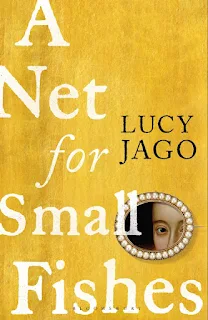
Review: A Net for Small Fishes by Lucy Jago

A Net for Small Fishes by Lucy Jago book cover
* Copy courtesy of Bloomsbury *

Lucy Jago is a new-to-me author, and A Net for Small Fishes begins in London in January 1609 during the reign of King James I, taking us through until the year 1615. Mistress Anne Turner is the wife of a Doctor, and despite all odds, she and Frances Howard, Countess of Essex meet and become friends. The differences between them are many; namely their rank and station in life and the 15 years difference in age. However the friendship between Anne and Frances (Frankie) grows as they each face their unique struggles in life.

Frankie is having problems in the marital bed, and I knew I was in safe hands after reading the advice of Dr Turner to Frances Howard in the form of the following conversation from page 30.
"A wife must not question her husband any more than I may question a King; especially a young husband, in need of the support and obedience of his spouse as he brings to bear his authority over his household. When all is in its proper place, then he will rule with kindness and mercy. I have observed that too lusty a wife can dishearten a husband. Until he sees fit to speak of it to me, I can do nothing to encourage him. However, you are wan. I suspect you are suffering from greensickness, for which I can treat you until such time as it is cured by your husband's seed." Page 30
I'd never heard of greensickness, and was eager to learn that it was an iron deficiency or anemia that left female patients with a greenish complexion. Apparently there are many causes of greensickness, but one of the cures was sex, in the belief that a husband's sperm would 'settle the womb'. Unbelievable right?

The story of Anne and Frankie's relationship is author Lucy Jago's attempt at exploring the women behind the very real Overbury scandal in more detail. In fact, the less you know about the real events depicted in the book the better.

Lucy Jago has an evocative writing style, and I loved her turns of phrase, like this one from Page 116:
"...'At this rate, you will soon be an earl,' she finished, with a little laugh that revealed her teeth and attracted the attention of the few who were not already listening to every word, lapping at their flirtation like dogs at the butcher's drain." Page 116
Jago's writing brings the period to life on the page, however she also appeals to our basic humanity, like this example from later in the book:
"I pulled threads of memory from my mind, carefully separated each one and laid it with utmost tenderness, like clean clothes, on that child's pile, until I was satisfied I had missed nothing." Page 281
Anne is a compelling character and I was completely drawn in by her first person narrative. I was also interested to learn that she was famous for patenting the recipe for saffron yellow starch and introducing yellow ruffs to court. I remember it came as a shock some years ago when I learned that ruffs, cuffs and collars were worn in colours other than white; also being produced in yellow, pink and blue during the starching process. Blue ruffs were outlawed by Queen Elizabeth I before the events in this book take place, but that's another story.

The use of yellow was extremely bold at the time, as yellow previously represented cowardice, envy, jealousy, duplicity and treachery. It's more than fitting then that the cover design for A Net for Small Fishes is a vibrant saffron yellow colour and don't you just love the cover design? The french flaps add a luxurious touch as well.

For some reason, I haven't read many books set in the Jacobean era of 1603-1625, however, it is something I'd like to remedy in the future. Until then, A Net for Small Fishes by Lucy Jago was a rare treat and one I highly recommended.

My Rating:


01 March 2021

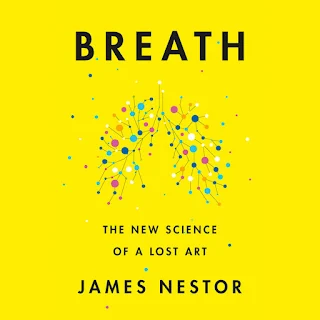
Review: Breath - The New Science of a Lost Art by James Nestor

Breath - The New Science of a Lost Art by James Nestor book cover
Breath - The New Science of a Lost Art
by James Nestor starts off really well. I listened to the audiobook and early on in the introduction, the author states:
"The missing pillar in health is breath. It all starts there."
With that kind of statement, I was an eager student, ready to learn. The first third of the book was the most informative and interesting in my opinion. I learned that the way in which we breathe and what we put into our mouths greatly influences the formation of our jaws and teeth.

Those who breathe through their mouths are more likely to suffer from a whole host of health-related problems, while the importance of eating a variety of foods that include chewing and crunching can greatly impact the formation of the jaw, teeth and facial structure.

I enjoyed the author's mention of visiting the ossuary in the Paris catacombs as he discussed the dental health of the dead. He noted that with the introduction of highly processed foods, humans suffer more now from crowded teeth and small jaws which shrinks our mouths and affects our breathing. This brought to mind a book I read in May 2017 entitled Built on Bones - 15,000 Years of Urban Life and Death by archaeologist Brenna Hassett which made this case with more science and evidence to back it up.

The author himself suffers from dental and breathing problems and underwent an experiment where he and a colleague taped their noses shut for an extended period of time which forced them to breathe through their mouths. However, you'll need to read the book to find out what happened.

In the author's words: 
"This book is a scientific adventure into the lost art and science of breathing."
However, I'd lost interest by the time I reached the sections on breathing practices like Pranayama and the exercises towards the end of the book were uninspiring. Instead, my key takeaways were from the beginning of the book and now when I see a young child sucking their thumb or putting safety blankets in their mouths, I worry for their development.

James Nestor narrated the audiobook himself, however for reasons unknown, puts on a completely different voice when quoting other researchers or people throughout the text. Unfortunately I found this incredibly distracting and it considerably detracted from my enjoyment of the book.

I did enjoy the anecdotal evidence, but Breath is by no means a medical book. Nestor is a journalist, not a medical professional or a scientist, so readers do need to keep this in mind.

Breath - The New Science of a Lost Art by James Nestor is recommended reading for all parents (even if you just read the first half of the book), anyone suffering from dental difficulties and naturally anyone experiencing breathing problems, like asthma, snoring or sleep apnea.

My Rating: