21 February 2012

Review: The Corpse Walker and Other True Stories of Life in China by Liao Yiwu

The Corpse Walker and Other True Stories of Life in China by Liao Yiwu book coverI learned more about China from reading Liao Yiwu's The Corpse Walker and Other True Stories of Life in China than I'd previously learned in a lifetime.

The book comprises twenty-seven true life interviews with Chinese citizens from all walks of life and Liao Yiwu has been imprisoned for 4 years for writing the truth and recording oral history.  In fact, he is legally unable to leave China to promote his book or attend international literary festivals. 

His collection takes its name from an old practice in China of 'walking a corpse'.  When a person died far from home, the family would hire a corpse walker to transport the corpse home if they could afford to.  

The corpse was covered with a huge dark robe including a hood covering the face.  The 'corpse walker' walked ahead giving verbal commands to the corpse whilst holding a white paper lantern and tossing fake money every now and again to 'buy their way into the other world'.  It appeared to anyone passing them on the road that the corpse was walking, however the secret was that there was a second corpse walker underneath and the corpse was actually tied to his back.  Fascinating!

The author interviewed many interesting people including the following: 
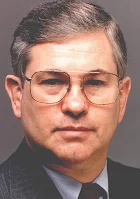
Author Liao Yiwu

  • The professional mourner
  • The human trafficker
  • The public toilet manager
  • The leper
  • The rightist
  • The former landowner
  • The mortician
  • The former red guard
  • The Tiananmen father
  • The Falun Gong practitioner
  • The blind erhu player
  • The street singer
  • The migrant worker
  • The survivor
It was from reading these interviews and personal accounts that I learned about the Cultural Revolution in China, the Great Leap Forward and the Great Chinese Famine in detail.  I was also able to understand how each related to the other and put the political pieces together.  I was incredibly shocked to learn of the millions of Chinese who lost their lives in the Chinese Famine in the early '60s (approx 20-40 million people!) and to read of the cannibalism going on; families in rural areas killing their daughters to feed their families.  Just unthinkable!

It was only in reading their individual stories that I realised just how ignorant I had been about the real China.  It also highlighted to me how effective the Chinese Government has been in keeping the West in the dark and how thankful I am to author Liao Yiwu for taking the risks he has in getting them to us in the West.

It wasn't all doom and gloom though.  There were some uplifting and inspiring stories too, stories of incredible strength, forgiveness and spiritual endurance.

The Corpse Walker and Other True Stories of Life in China is an incredible book written by a fearless author who was imprisoned for his work and beliefs.  I can't recommend it highly enough.

My rating = *****
15 February 2012

Follow Up Interview with William F. Brown, author of Amongst My Enemies

Author image of William F. Brown
William F. Brown
Hi Bill, welcome back and congratulations on the release of your latest novel Amongst My Enemies.

You mentioned in your last interview with me that the concept for each novel you write begins with a simple concept; a one-liner. What was the one-liner that kicked off the writing for Amongst My Enemies?
Amongst My Enemies began with a thing – the Amber Room, which I came across in my reading. It was a large reception room in the Ekaterininsky Palace outside St. Petersburg, the walls of which were made of amber panels, encrusted with precious stones. They were there when the Germans swept past in 1941, and gone when the Russians took it back in 1944, and have never been seen since. It is priceless and remains one of the world’s great art mysteries. The Russians still believe the Germans know where it is, and they in turn have kept a lot of art they took from Berlin.

I had a double major in history, and WW II, the Cold War, and the current era of terrorism offer an endless supply of action, emotion and good stories. Good fiction, however, is about compelling characters, not background, and I completely rewrote Amongst many times until I got the characters right.

Amongst My Enemies is set in WWII and the majority of the story takes place overseas. Was it difficult for you to write a novel vastly different from The Undertaker or was that your intention?
I spent last year and will spend this year putting my existing books out as e-books, so I find myself working on a number of projects in different stages of development at the same time. Amongst My Enemies is partly WW II and mostly early Cold War, and had to be meatier, richer story to establish the background and motivation for what happens. The Undertaker, which by design is more of a fast, snarky, character-based, contemporary, ‘chase’ book didn’t need that help.

Thursday at Noon, which I’m now polishing up and will release in April, is also a fast paced story set in a few days in 1962, in Egypt. Winner Lose All, my newest, which is off with my agent, is mostly WW II, but an action, character-based story. One Good Shot, which will come out later this year, is a contemporary Middle-East terrorist thriller set in Washington and Virginia. As you know, The Undertaker is told in 1st person, which was my first attempt at that. It adds some immediacy and emotion, and I may do more of that.

I have another story in its infancy, Through the Glass Darkly, which may be first person, and may bring back Pete and Sandy from The Undertaker, since I had so many favorable comments on them. I’ve never tried a continuing character, but they are popular with readers, so we’ll see. As you can tell, I did not immediately shift gears from Undertaker to Amongst, but they are the opposite extremes of what I do. I was very concerned about that when I put Amongst out, but the early reviewers are people who reviewed and liked The Undertaker, and I’m very pleased to see they all liked both.

Did the fact that you've travelled to Germany and Russia help you when writing the novel? If so, can you tell us more?

Yes, for color and images. I’ve spent a lot of time in Germany, East, West, and Berlin, but only went to Russia two years ago, when my wife and I were able to spend 2 ½ weeks in Moscow, the Golden Ring, and St. Petersburg, including a visit to the Ekaterininsky Palace, where the Amber Room is.

It has taken the Russians almost 60 years to rebuild them, including a perfect copy of The Amber Room. It is very impressive, and no amount of photos can give the same impression as being there. Our tour guide was a young Russian woman whose parents and grandparents were Siege survivors, and you could feel the pride she took in her heritage.

What was the best book you read in 2011?
I can read or I can write, but it is hard to do both. In non-fiction, I read The Coming of the Third Reich by Richard Evans, the first volume of his three volume study of Nazi Germany which I think is a fascinating study of how tyranny can take over a country. It completely changed my understanding of the subject, and I highly recommend it to anyone.

In fiction, I read Daniel Silva’s The Rembrandt Affair and David Baldacci’s Divine Justice. Along with Michael Connolly, Robert Crais, and Dennis Lehane, they are my favorites, and always good.

Is there anything else you'd like to add?
No, just thanks for the interview and the review.

Thanks again for your time Bill.
14 February 2012

Review: Words You Thought You Knew - 1001 Commonly Misused and Misunderstood Words and Phrases by Jenna Glatzer

Words You Thought You Knew: 1001 Commonly Misused and Misunderstood Words and Phrases by Jenna Glatzer book cover
Instead of reviewing Jenna Glatzer's Words You Thought You Knew - 1001 Commonly Misused and Misunderstood Words and Phrases, I thought I would list the words from her book I discovered I misuse (the horror).  I'd also like to share with you the gems I learned from her along the way.

Words this reviewer is guilty of misusing

Adorable 
Adorable means worthy of being adored, and is not another word for cute.

Because/Since
People often use since as a synonym for because, but it is not. Since refers to time, from a time in the past until the present.

Comprise/Compose
Comprise means "to be made up of" so the of is already included. You can say composed of, but it is incorrect to say comprised of. I'm guilty of this many times over, oops.

Half-mast/Half-staff
I was really surprised to learn that flags are only at half-mast if they're on a ship or a Naval base. Everywhere else, they are at half-staff. I wonder if this is applies to Australia too.

Healthy/Healthful
Did you know there's no such thing as a healthy meal? Healthy means having good health, but your food is healthful, bringing about good health. This mistake is everywhere you look and especially when it comes to packaging and marketing material.

Nauseated/Nauseous
I didn't know that nauseous means sickening, disgusting or gross, so that something that is nauseous causes nausea or makes somebody feel nauseated.

Plan
It's incorrect to plan on something and I'm definitely guilty of this one. It's correct to plan it, plan to or plan for something.

Presently
I definitely didn't know this one, but presently doesn't mean now, it means soon. If something is happening now, it's happening currently.

Raise/Rear
I'm guilty of misusing raise and rear - animals are raised and children are reared - but even now that I know the correct usage, I'm still reluctant to use them in this way. It just feels wrong, what do you think?  

Vital
The word vital comes from the Latin vita meaning life and should only be used to describe living things. Saying things like "it's vital that I have at least one can of Pepsi Max per day" is incorrect," because technically I can live without it.

Another think coming/Another thing coming
Even though we've all probably said and heard the phrase: "If that's what you think, you have another thing coming," apparently it's incorrect! The correct expression is: "if that's what you think, you have another think coming." It's surprising and even though it sounds grammatically incorrect, this is the correct phrase.

Even now that I know the correct phrase, I think I'm just going to avoid this expression altogether, rather than have people trying to correct me each time.

What about you?
So, what about you? Were you guilty of misusing any of the above words, or were there any surprises for you too? I'd love to hear your comments, or hear about other words that bug you.

My rating = ****

Carpe Librum!
09 February 2012

The Fantastic Flying Books of Mr. Morris Lessmore


I just watched the animated clip of The Fantastic Flying Books of Mr. Morris Lessmore and it was so touching and beautiful I want to share it with as many people as I can.

It begins with a storm that takes the main character to a place where books can fly, walk around and have their own personality. Not a single word was spoken during the entire story (it runs for approx 15 mins), however it was very expressive and the ending was incredibly moving.

I thoroughly recommend it to everyone, even if you're not a fan of reading, you must see this.

Carpe Librum!
05 February 2012

Review: Amongst My Enemies by William F. Brown


* From author for review *

Amongst My Enemies is the second novel I've read from author William F. Brown, and I was eager to review it based on how much I enjoyed his previous novel The Undertaker, giving it 4 stars.

It was clear from the front cover alone that this novel was going to be different, however I didn't quite expect that it would be so different from The Undertaker that it could almost have been written by a different author.  

Sometimes an author will stick to the same genre, time period, subject matter, plot mechanism or writing style but not Brown.  As I was reading Amongst My Enemies, I was surprised at the author's ability to move so seamlessly between projects  and write a book that was a stark contrast in comparison to The Undertaker.

I mentioned the front cover earlier, and I must admit that it does kind of look like a Tom Clancy spy thriller but I can reassure you that the plot is completely accessible to the average reader.  Mike Randall is an American POW in Germany towards the end of WWII, and stows away on a U-boat in an attempt to survive the war.  What he doesn't expect is to be discovered and set free off the coast of Sweden by the U-boat Captain, only to witness it being bombed, carrying it's precious cargo - crew, gold, jewels and art - to the ocean floor.

Mike has survivor guilt, but he also wants revenge, while the Germans want their gold back and will stop at nothing to get it.  Brown writes really good villains, and there are certainly a couple in Amongst My Enemies.

Sometimes the plots of spy thrillers can be hard to keep up with, however this definitely isn't the case here.  This was an easy and enjoyable introduction to WWII thrillers and a really great place to start if you're new to the genre. (Here's a list from Amazon.com of 13 WWII Thriller Novels if you'd like to do any further list making of books to read).

When it comes to ratings though, I didn't find Amongst My Enemies as gripping and as engrossing as The Undertaker if I'm completely honest. 

My rating = ***

Carpe Librum!
28 January 2012

Review: The Blood Countess by Tara Moss

I've been a fan of Tara Moss for quite a while now, watching her interview other famous authors on Tara Moss in Conversation, watching her on Tough Nuts - Australia's Hardest Criminals, and following her comments on Twitter.

So you might be surprised to learn The Blood Countess is the first Tara Moss book I've read. The reason for my hesitation until now was the fear I might not enjoy her work as much as I enjoy her in the mediums mentioned above, and that it could damage the high regard in which I hold her. 

I needn't have worried. I deliberated before settling on The Blood Countess, and I must confess I was a little influenced by the front cover.

Pandora English moves to New York City to live with her eccentric Great Aunt Celia and pursue her dream as a writer with a fashion magazine. Her Aunt lives on the top floor of a gothic revival style Victorian building located in Spektor, in Manhattan. I thoroughly enjoyed the references to the history and description of the mansion, and I share Tara's enthusiasm for gothic architecture and Victorian influence.  I was keen to learn more about the building, it's history and it's architect Edmund Barrett, the founding member of the Global Society for Psychical Research. My interest was piqued but the plot moved on, and I almost felt like Tara was teasing the reader with a whiff of what could be interesting enough for another book altogether!

The fashion angle in The Blood Countess is something largely outside my normal reading patterns; another reason why I chose this novel over one of Tara's many crime novels. However I was relieved to find that the writing wasn't dripping in fashion lingo, nor would I categorise this novel as 'chic lit' (which I detest). The Blood Countess by Tara Moss is a light and enjoyable read with a likeable main character in Pandora English and a supernatural undercurrent.

My rating = ***

Carpe Librum!
25 January 2012

Keep Calm and Read On

Whenever I look at my TBR (To Be Read) pile or feel overwhelmed by the number of books out there I want to read, I have to remind myself that I can only read one page at a time.

I saw this poster today, 'Keep Calm and Read On' and it made me smile.  I thought it was a timely reminder for all book-lovers at the beginning of the year who may have set ambitious reading goals for themselves; if you keep calm, keep your head down and press on, you can get there.  

Those of you who enjoyed the extra reading time over Christmas, remember you don't have to stop when the holidays are over.   I do the majority of my reading in bed before sleep, in waiting rooms before appointments or on public transport.  Where do you do yours?  Where can you find time for the activities you love doing?  What can you do without?

When people tell me "I don't have time to read," what they're really saying is that they prefer to spend their time doing something other than reading.  If reading is important enough to someone, they'll put it at the top of their priority list, and find time for that activity.  Of course, some of us wish we could read more, but that's only natural.  As for me, I don't wish I could spend more time reading, I wish that in the time I spent reading, I could get through more books.

At the moment I'm reading: Words You Thought You Knew - 1001 Commonly Misused and Misunderstood Words and Phrases by Jenna Glatzer while watching the Australian Tennis Open.  It's the perfect book to read during the ads and quieter moments of each match.

I'd love to hear your thoughts and ideas, so please feel free to leave a comment below and share your thoughts.  But, let's Keep Calm and Read On.

Carpe Librum!
22 January 2012

Review: Literally the Best Language Book Ever - Annoying Words and Abused Phrases You Should Never Use Again by Paul Yeager

Literally the Best Language Book Ever - Annoying Words and Abused Phrases You Should Never Use Again by Paul Yeager book cover
I reserved this book from the library with plans to leave it on the coffee table over Christmas for everyone to dip into and enjoy; it's just that type of book.

Sadly I didn't get it in time, but I enjoyed it just the same.

Yeager has divided his book into chapters, some of which include: Illogical Words and Phrases, Excessively Trendy Words and Expressions, Inarticulate Language and more.

I was shocked to find that I was guilty of committing one of his offences in the very first chapter, Grammar Errors.  I didn't know this, but firstly, secondly and lastly is poor grammar, as first, second, and last are already adverbs and therefore don't need the additional -ly added.  I've always done this, and I'll probably forget this rule and do it again.  And this was only on page 3!

However; after this chapter I laughed at the cliches and phrases, buzz words and double speak that irritate the author, and found myself wanting to read out every second entry to whoever was near.  At the end the author also included the phrases that annoy and irritate his wife which was amusing.

Literally the Best Language Book Ever - Annoying Words and Abused Phrases You Should Never Use Again is a great book to share with others, with short sharp entries, a sense of humour and a light approach.

Highly Recommended.

My rating = ****

Carpe Librum!
17 January 2012

Interview with Andrew Hudson, author of Drift

Andrew Cyrus Hudson
Andrew Hudson is the author of Drift, and put his current novel writing aside for a few minutes to participate in an interview.

Thanks for joining us Andrew, when did you know you wanted to be a writer? 
I'm not one of those people who dreamed of being a writer since I was four. But I always wanted to be a storyteller. There was a time in my life when I wanted to write movie scripts. Then another time when I wanted to make video games and another time when I wanted to write songs. 

As far as writing books go, it was actually during the early part of my college years. Like I said, I always wanted to tell stories but it never occurred to me to write novels. Then I took a class in 20th Century English and had a wonderful professor (Professor Kramer). Long story short, I got into writing prose (starting with short stories) and learned in that class that a story is much more than simply having a good idea.

In your novel Drift Travis Benson was a music producer and you mention bands like Pearl Jam and Guns 'N' Roses.  Do you personally like these bands?  Do you listen to music when you write?
I think in some ways it was an unconscious nod to the later part of my high school years and the beginning of my college years. When I first started college, I wanted to be a music producer and I was into bands like Pearl Jam and Guns N' Roses. Not to say that Travis Benson is similar to myself but a lot of the music such as the Foo Fighters were a huge influence on the story.

Actually, I don't listen to music when I write. I have a hard enough time focusing on one thing, let alone two things at the same time. Although music definitely is a way for me to tap into a creative well and set the tone for things.

When do you do your best work?
There isn't any rituals I need to do or places I need to go in order for me to do my best work. All it needs is three factors. One, is that I have to have a good night's rest. Two, is that I have to be in a good mood. And three, is that the passage needs to be emotionally engaging for me. The last factor is the hardest because I can't control it. Some passages are emotional while others are simply a necessity to the story. But when I do find something that grips me and I'm in a good mood, then I try to ride that wave as best I can.

Recently Australian author Tara Moss Tweeted that she used the program Scrivener to assist in her novel writing.  What tools or program/s do you use as a writer to manage your manuscripts?
Actually, I'm pretty unorthodox with my manuscripts. I write the first draft in longhand with notebooks and pens and then write the subsequent drafts on Microsoft Word (which is the easiest to send to a formatter or editor). The only time I use a special program is Movie Magic Screenwriter for scripts or comic books. However, now that you mention it, I might give Scrivener a look.

You mentioned to me that Stephen King was one of your biggest influences; can you tell us some more about this?  Did he influence your writing in Drift?
My two favorite elements in a story are characters and character relationship, which is why Stephen King is one of my biggest influences. It's not about the horror as it is about the characters in his stories and how their horrific circumstances change the characters and their relationships (The Stand is a good example of that). Not to mention that On Writing was very helpful in teaching me how to write a novel/short story.

I never said to myself "Hmm...I think I'll write a Stephen King story today" when I sat down to write Drift. And I think there's a lot of other influences and styles to where I feel comfortable enough to say that it's not a Stephen King tribute. However, there are similar elements such as characters being affected by a violent circumstance, a small town, and how the story is just as much about the internal struggles as it is about the external struggles. Not to mention that I was reading a lot of Stephen King novels during that time.

What are some of your other favourite books/authors?
Even though he's not an author, John Hughes is perhaps my biggest influence. I love his films (Breakfast Club, Ferris Bueler's Day Off, Home Alone, etc.) and his characters. My other favorite authors are Philip K Dick, Bret Easton Ellis, Neil Gaiman, you can check out my Goodreads Profile for more favorites.

Recently I've read L.A Confidential by James Ellroy which I loved, Cancelled by fellow indie author Elizabeth Ann West. Plus, I've really gotten into Jay McInerney's works, which I'm sure will be influential with my third novel.

What are you working on now?
I'm writing a science-fiction collection of short stories called Strange Happenings that will hopefully be released mid May. It's kind of science-fiction but most of it takes place during the present day and is Twilight Zoneish.

Then there's the second novel I'm working on (near the end of the second draft as of this interview) called Poem for the Wolves. It's twice as long as Drift and is epic in scope (even though the events of Poem for the Wolves cover about a month and a half). This one's going to be action packed and will contain a lot of poetry. Hopefully it'll be ready to be published mid December or early January 2013.

Anything else you'd like to add?
Thanks for interviewing me. Aside from giving a shameless self promotion I'd also like to recommend comicattack.net, which is the site I occasionally review for and is filled with awesome people. 

Also, if anyone wants to contact me to give/receive book recommendations, ask questions, or talk about anything else, you can contact me at ahkirbyzook@gmail.com

Thanks Andrew, and thanks for being my guest.
16 January 2012

Review: Drift by Andrew Hudson

* From author for review*

Andrew Hudson's debut novel Drift, opens with a murder, then moves to introduce Travis Benson, who seems a little stressed in his marketing role with hints to a major incident or trauma in his past.

Travis soon takes his bosses advice to take some time off and sets off across the country in his truck, although the reader is not sure where.  Hudson does a fantastic job here of building suspense and I think it would be fair to say that for the first half of the book I enjoyed following Travis and was really keen to unearth the trauma in his recent past.  Suspense is the major driver here.

Self-published as an e-book, it was certainly obvious to this reader that the novel lacked the expert editing and polish from a publishing house.  Typos and errors can be skimmed over, such as: "And where there any passersby? No." on page 211.  However, the use of the word 'skeptics' in relation to hiding a car in the following sentence also on page 211, was a little odd: "Branches and pines hid it out of site, keeping it at bay from skeptics' eyes."

Having said that, Hudson's writing of a character's suicide note within the novel was so deep and moving, I would go so far as saying that it was one of the most touching and intimate letters I've seen incorporated in a novel.  

Ultimately I enjoyed reading Drift, the suspense was real and I enjoyed the backstory of the killer; one of the best parts of the novel.  It was a relief to read a book like this after the heaviness of The Name of the Rose, however I can't give Drift a higher rating than The Name of the Rose.

My rating = ***

Carpe Librum!
13 January 2012

Review: The Name Of The Rose by Umberto Eco

The Name Of The Rose by Umberto Eco book cover
Well, it took 3 1/2 weeks, but I finally finished Umberto Eco's The Name of the Rose, and I've got to admit, it was pretty heavy going. Set in 1327, the tale is narrated by Adso of Melk, a young German monk who accompanies his master, William of Baskerville to a prosperous and wondrous abbey in Italy.

Upon arrival, William is asked by the Abbot to put his powers of observation to work and investigate the death of a monk in the abbey.

Meanwhile, the abbey is home to one of the richest libraries in the land, which is off limits to everyone in the abbey except for the librarian and assistant librarian. Adso and William are keen to unlock the secrets of the labyrinth library, as more monks turn up dead in what appears to be the work of the devil.

What made The Name of the Rose so heavy going for me were the religious discussions and scholarly debates in between the narrative outlined above. The monks discussed whether or not Jesus lived in poverty, whether laughter is a sin and the histories of various sects were discussed in such detail that I found it difficult to follow at times.

There were also frequent latin words and phrases without translation or footnotes, scattered throughout the book; almost one on every page. This was incredibly frustrating and I often felt I was missing out on key information at important junctures.

Having said all of that, I enjoyed the main plot, especially the adventures in the library (now there's a surprise). The Name of the Rose frequently appears on Top 100 and Must Read book lists and I'm glad I've finally read it, however Umberto Eco made me work as a reader and I could certainly tell that this was an Italian to English translation.

Those of you who have seen the 80s movie The Name of The Rose with Sean Connery playing the role of William and Christian Slater playing Adso, will know how the movie ends, however even knowing the ending didn't ruin the reading experience for me.

I was so glad to get to the end though, I can't honestly give it more than three stars.

My rating = ***

Carpe Librum!
12 January 2012

Historical Fiction Reading Challenge 2012

The Historical Fiction Reading Challenge 2012 was hosted over at the Historical Tapestry blog again this year.

There were several levels in the challenge for readers to choose from: 

  • Out of my comfort zone = 2 books
  • Daring and curious = 5 books
  • Struggling the addiction = 10 books
  • Undoubtedly obsessed = 15 books
  • Severe bookaholism = 20 books
I decided to choose 'Struggling the addiction' and challenge myself to read 10 historical fiction books in 2012.  

Here is a list of the books I read and reviewed for the challenge:
1. The Name of the Rose | Umberto Eco
2. The White Queen | Philippa Gregory
3. The Light Between Oceans | M. L. Stedman
4. The Turn of the Screw | Henry James
5. The Red Queen | Philippa Gregory
6. The Car Thief | Theodore Weesner
7. Thursday At Noon | William F. Brown
8. Bitter Greens | Kate Forsyth
9. Only Time Will Tell | Jeffrey Archer
10.Heresy | S.J. Parris
06 January 2012

New Year and Reading Pleasures

My TBR pile
Well, 2012 has arrived, and I've been thinking about my year of reading in 2011. I fell just short of my goal to read 60 books, bugger! My original goal when I set out in January was 55 though, so when I achieved that I increased it to 60, so I guess from that perspective I should be happy. My final tally was 57 books and a total of 19,035 pages read; a personal best!

I was lucky enough to receive some books under the Christmas tree this year, and picked up 3 more on the weekend at a book sale where all books were $4.95; a bibliophile's dream wouldn't you agree? So I thought I'd share a photo of my TBR (To Be Read) pile with you, as it appears at the beginning of the year. Two in the photo are competition winners from 2011, and I have 3 additional ebooks from authors to add to the pile. Lots of reading pleasure to look forward to in 2012.

Have you set yourself any reading goals for the year ahead?  I am going to try to read 60 books again this year, so wish me luck. What reading pleasures or new releases are you looking forward to this year?  

That's my four bucks!
18 December 2011

The Years of Magic by J. Lyndon Hickman

I haven't read The Years of Magic by J. Lyndon Hickman, but I read a review from one of my favourite bloggers over at The Bibliophilic Book Blog and I instantly fell in love with the book cover!

Here's the blurb as it features on Amazon:

It was when mankind discovered how to make electricity that the world as we knew it changed profoundly. Soon generated electricity lit our streets and homes, provided heat, brought us efficient communication, modern transportation, and the effort of electro-motive force. Yet, manmade electricity carried through the wires and cables with which we fenced the land; the power lines encircling our towns and our cities, had another consequence. Generated electricity banished things of folklore and legend. Witches, werewolves, demons whose evil spirits had roamed the earth throughout time were displaced, driven off by the pain of electricity. Unfortunately also displaced were the good, those angels which had appeared to guide mankind throughout history. Then one day, in our not-too-distant past, a brilliant scientist created a machine that brought manmade electricity to a halt. That day marked the beginning of the return of the evil, as well as the good, in a time that became known as the years of magic.

I haven't decided whether I'm going to add this to my TBR pile or not, but I just had to share the book cover with you. I think it's one of my favourites this year. Have you read it? How much does the cover of a book influence your decision to read it?


Carpe Librum!
12 December 2011

Review: Utopia by Thomas More

Utopia by Thomas More book cover
I have always wanted to read Thomas More's classic Utopia, and I'm pleased to finally have read it this year.  Like most people, I knew Utopia to represent the ideal or perfect society but didn't know much more about the structure of Thomas More's classic.

It's hard to believe Thomas More was born over 500 years before me, and yet his work has endured and is still relevant to us today.  Published first in Latin in 1516, I was surprised to learn that Utopia wasn't published in English until 1551, which was sixteen years after Thomas More's unjust execution for treason.

Utupia is a short novel, containing only 135 pages - and is broken down into two sections, Book One and Book Two.

Book One
Book One commences with a letter from Thomas More to his friend Peter Gilles, explaining why it has taken so long to transcribe 'this little book about the Utopian Republic'.  This letter is followed by another and then a discussion between Thomas More, Peter Gilles and a traveller by the name of Raphael Nonsenso.  Raphael is discussing his time spent living in Utopia with Gilles and More engaging in the conversation.  Book One ends with Thomas More asking for:
"a detailed account of it from every point of view, geographical, sociological, political, legal - in fact, tell us everything you'd think we'd like to know, which means everything we don't know already."
Book Two
Book Two is the detailed account of Utopia, written by Thomas More from memory of Raphael's account.

Fact or Fiction?
The correspondence at the beginning of Utopia, certainly set a particular tone that what was to follow had an element of truth, or plausibility about it.  This technique has been used countless times since, Bram Stoker's Dracula just one example.  

However, there were various clues early on that More's novel was instead a work of fiction.  Raphael's surname of 'Nonsenso', was a clue, as was the curiosity surrounding the location of the island of Utopia, and the story that just as Raphael was discussing its location a colleague coughed loudly, and More missed hearing the details.

Thomas More used the fictional novel as a means to discuss controversial topics and ideas at the time, in particular in relation to nobility and the class system in England.

I thoroughly enjoyed reading Utopia, and I believe it is an accessible classic for almost all readers.  I think it is just as relevant and as important a piece of literature today as it was 500 years ago.  Have you read it and if so, would you want to live in Utopia?

My rating = *****

Carpe Librum!
08 December 2011

Interview with Barbara Forte Abate, author of The Secret of Lies

Barbara Forte Abate

Barbara Forte Abate is the author of The Secret of Lies which I recently read and thoroughly enjoyed.  You can read the full review here, where I gave it 4 stars.

Barbara, thanks for joining us today, to talk about your writing, and your debut novel The Secret of Lies.

Is it true that you originally started writing The Secret of Lies 20 years ago on yellow legal pads and then transcribed your writing onto a typewriter?
Yes, I really did and it was definitely slow going!  Even so, it felt like the only way to go. For starters, I didn't even own a typewriter so that alone narrowed down the possibilities of going another route. Besides which I wasn't especially confident starting out and so I was very secretive and highly protective of what I was up to. It took quite a long time to get past that insecure way of thinking in regard to my writing endeavours.  But then once I got to the crucial point of needing to borrow a friends typewriter, that was pretty much the end of the "closet writer era."

What made you decide to bring it out again and publish it in 2010?
Well, the manuscript was never actually put away.  There was never a point when I stopped working on The Secret of Lies. It went through 4 titles and so many rewrites that I stopped counting for fear of becoming overwhelmed by horror and depression. Once I'd finish yet another rewrite I would set it aside to simmer while I worked on one of my other novels in progress, and in that way would alternate projects, perfecting, polishing, and basically learning to write. Fast forward (though actually not so fast) to 2010 and it felt like, okay, enough already, it's time. 

When you write now, do you write straight onto a computer, or do you still prefer to write in longhand first?
First drafts are always longhand. It feels so much more up-close and personal and staring at the white screen is just intimidating - maybe even a little hostile. Once the initial draft is down I become far more modern and switch to the computer. I edit long and hard and I'm sure I don't have to tell you the supreme joys of cut, paste, and delete! 

I read on your website that you like to keep a pen and paper in every room so that you can capture ideas as they come to mind.  Do you have a love for stationery and journals, or do you have a soft spot for yellow legal pads? 
I do have a strange affection for pens and paper, so much so that I tend to squirrel away the pretty stuff because it's "too nice to use."  I'm trying to get over that, but it's taking some time. It's pitiful really that I can't trust my head to hold onto an idea long enough to walk over to my desk and jot it down, hence the notebooks.  But no, nothing fancy.  Dollar store pads small enough to tuck into a pocket are my favorites. Since they're cheap and generic I feel free to scribble at will - something I find hard to do if my paper is too pretty. I also have a love of stationery, and love to linger in stationery stores, admiring the pens, paper, journals and all the accessories etc.

The Secret of Lies features a romance between teenagers, one of whom is deaf.  This was one of my favourite elements in the novel; what was your inspiration for the deaf character of Jake and his relationship with Stephanie? 
I'm so thrilled to hear that Jake and Stephanie's relationship was one of your favorite elements of this story, because it was absolutely one of my favorite to write. Jake is actually the only character wholly inspired by a real person. I discovered him on a weekend camping trip I took with one of my best friends and her family when I was 16 (hence, a very long time ago!) and from the moment I saw him setting up camp with his family I was smitten. 

For the next 3 days I tried in vain to orchestrate chance meetings, imagined the perfect conversations we would have if I could just summon the courage to speak to him, thought I spoke endless volumes with my eyes...and it wasn't until just before he drove away on Sunday morning that I saw his father speaking to him using sign language.  Talk about an 'Ah Ha' moment! I did think about this mysterious boy for a long time afterward, yet I don't conscientiously recall inviting the far away memory of him into The Secret of Lies.  He pretty much just walked in on his own.

I also enjoyed your strong and deeply layered female characters in the novel.  Can you tell me more about the inspiration behind these characters? Are there women - authors or literary figures - you look up to in your own life? 
I generally find it impossible to bring real people into my stories because they inevitably become distracting and it's just too hard on the process of imagination. Certainly there are things we pick-up from people passing through our lives, even when we don't realize it, so there are always those elements.  I start out writing my characters as people I think I'd like to know and then somewhere along the way they take over and show me who they really are. By the time I type 'The End' I have grown very attached and care for them deeply. It's a crazy, altogether mysterious process, and I can't say I wholly understand it. I'm just continually amazed by what goes on in my otherwise quiet mind.

What was the best book you read in 2011? 
I'm so tempted to cheat and name several because it's so incredibly hard to name one!  No, honestly - I mean really really hard. But hum-mm....I think I'll have to say Unbroken by Laura Hillenbrand. I just finished this book recently and it was such an incredible masterpiece of a story. And truly, isn't it just such a thrill to come across a book that grabs you from the start and holds you by the throat even after you've read the last page? I know so many people who say they don't read - ever. And I think how sad...how impossibly sad.

What do you have planned for 2012? 
Writing.  Always writing! I'm this close to finishing up my latest novel and sending it off to my agent. She's been waiting a while, so I'm anxious to check this off my list as "goal accomplished." Then I'll start something new. I'm a slow writer so starting a new project is a long term commitment.

Anything else you'd like to add? 
When I think about all the bumps and bruises that come along with writing a book, the fact remains that regardless of how a book becomes a book, the final essential link feels to be the reader who comes along to turn the pages, enabling all that's between the covers to come out and walk around for awhile.  

I so enormously value the connection between reader and author, and I absolutely want to take the opportunity to thank you for reading and reviewing The Secret of Lies, Tracey! It's been such fun chatting with you!

It's a pleasure Barbara, thanks for being my guest! 
06 December 2011

Review: The Secret of Lies by Barbara Forte Abate

The Secret of Lies by Barbara Forte Abate book cover
* From author for review *

The Secret of Lies opens with Stevie (Stephanie) running from her home on the farm and her new husband; believing it's too late to turn back. Stevie's on the road and staying at a motel, when she begins to think about the past.

The dreary surrounds of the motel fades away and the reader is transported to Stevie's teenage years in the mid '50s with her older sister Eleanor. Each summer Eleanor and Stevie stayed with their Aunt Smyrna and Uncle Calvin in their beach house on the coast.

I enjoyed reading about Stevie's summers at the beach, particularly about the friendship developing over the years with fellow summer visitor and deaf neighbour Jake.  

These early chapters are carefree and take on a coming-of-age tone as Stevie and Eleanor live out what appears to be a 'normal' sisterly relationship. However; their relationship begins to drift away one summer when Eleanor is 17, and what occurs in that summer will haunt Stevie and her family for years to come.

I thoroughly enjoyed The Secret of Lies, and towards the end, had completely forgotten that Stevie had run away and that this was a flashback; so immersed was I in the story. The circumstances of the 'event' (no spoilers here) and the lies that resulted - from which the novel takes it's title - were well written.

There was a small mystery going on in the novel, and although I did figure it out (this never happens to me, so I was pretty pleased) there is a slightly ambiguous ending, which is appropriate. My only criticism of the writing was the author's misuse of the word 'then' in place of 'than'. It occurred on almost every page and should have been corrected at the edit stage.

Although Stevie's mother was a minor character, she was a strong and hard-working woman and I admired her fortitude and resilience. Aunt Smyrna was a significant character in the novel and her gradual decline in the first half of the book was difficult. When juxtaposed with Eleanor's character - youthful, beautiful, falling in love - it made for quite a clash and interesting reading. I certainly admire the author's ability to write strong, individual characters; each with their own complexities.

This was the story of a family torn apart by lies in a time where secrets were better kept hidden. But it is also the story of how Stevie navigates her way through the grief to find love and forgiveness. I thoroughly recommend it!

Read my interview with the author, Barbara Forte Abate here.

My rating = ****

Carpe Librum!
03 December 2011

New Look!!

I thought it was time for a new look, so I hope you all like the new look bookish wallpaper; I absolutely love it! I redesigned my Twitter profile today so now they're both the same.

Long overdue, but I'm enjoying the fresh new look and the change.

That's my four bucks!


Review: The Ice Cradle by Mary Ann Winkowski & Maureen Foley

The Ice Cradle is the second in the Ghost Files series by authors Mary Ann Winkowski and Maureen Foley; the first being The Book of Illumination. Anza O'Malley and her son Henry return in this novel, when Anza accepts a bookbinding commission on a small island community, Block Island.

One of the elements I really like about this series is the main character's occupation of bookbinder. Weaved throughout the story are references to bookbinding techniques and materials that are irresistible to book-lovers and bibliophiles.

Anza has been hired to preserve, bind and exhibit the letters, reports, photographs and artefacts surrounding the sinking in 1907 of the passenger steamship Larchmont just off the coast of Block Island. Of the 200 passengers, only 19 survived and those with an interest in preserving history will enjoy these elements of the story.

When Anza arrives, she walks into an island divided over wind turbines. She learns that half of the island's residents are in favour of the construction, the other half against, and a ghost informs her that they plan to build the turbines right where the wreckage of the Larchmont lies on the seabed!

All this is happening at the same time her young son sees his first ghost, and Anza is trying to find reasons local fisherman doesn't stack up to Henry's Dad.

This is a fabulous read, and I thoroughly enjoyed it, although you will need to be open to paranormal themes to enjoy this one. The Ice Cradle is terrific as a second installation in the series but also works as a stand alone novel. Light and easy, with a feel good ending, most readers will enjoy this one. I look forward to the next in the series!

My rating = ***1/2

Carpe Librum!
28 November 2011

Review: The House on Tradd Street by Karen White

The House on Tradd Street by Karen White book cover
The House on Tradd Street is about Melanie Middleton, successful young realtor living in Charleston, South Carolina. She is one of the most successful women in the business, prefers order, lives in a modern condo and ignores her ability to see 'ghosts'.

During her visit to a client, Mr. Vanderhorst, at his historic residence on Tradd Street she notices a female ghost in the garden. Her discussion with him doesn't go to schedule, however she finds herself warming to the old man. She is shocked to hear a few days later that he has passed away, and stunned to learn that he has left his historic crumbling house to her in his will.

The house must be lived in for at least 12 months, cannot be sold, and funds have been left for renovation and restoration. Melanie enlists help from within her network of friends who are thrilled at the opportunity to see inside the Vanderhorst house and assist with the restoration.

The house comes with a mystery that Melanie wants to solve for Mr. Vanderhorst: the disappearance of his mother at an early age. Enter Jack Trenholm who claims to be writing a book about the mystery.

This easy to read novel is primarily a mystery, with clues hidden in the past, and sub plots featuring historic restoration, a romantic interest and Melanie feeling several 'presences' in the house. The House on Tradd Street by Karen White was a light hearted read, and I enjoyed it very much.

My rating = ***1/2

Carpe Librum!